
Dative Case as an Indirect Object Effective and
Dative Case as an Indirect Object Effective and efficient note-taking hint: focus on/write down the things in red!
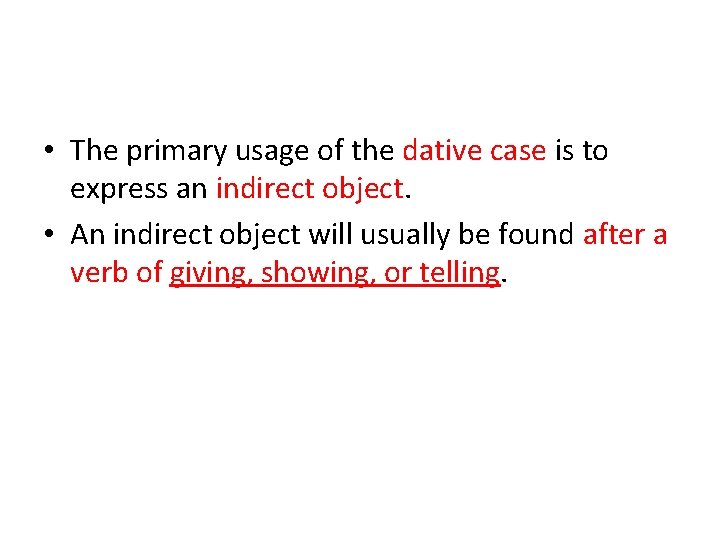
• The primary usage of the dative case is to express an indirect object. • An indirect object will usually be found after a verb of giving, showing, or telling.
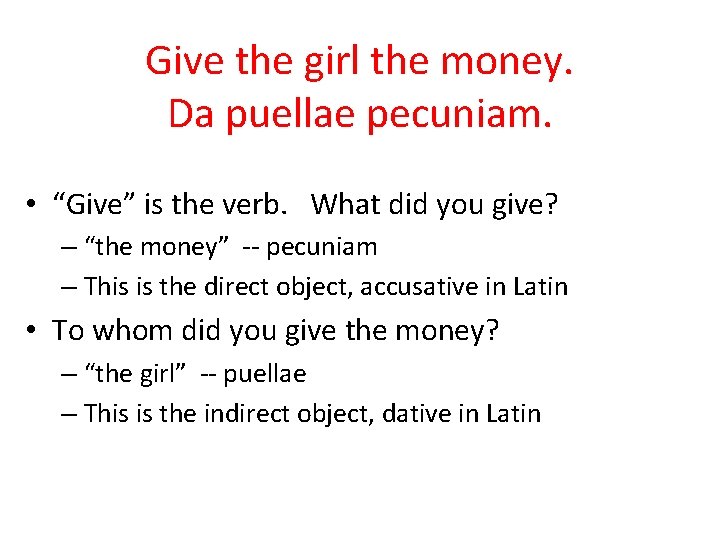
Give the girl the money. Da puellae pecuniam. • “Give” is the verb. What did you give? – “the money” -- pecuniam – This is the direct object, accusative in Latin • To whom did you give the money? – “the girl” -- puellae – This is the indirect object, dative in Latin
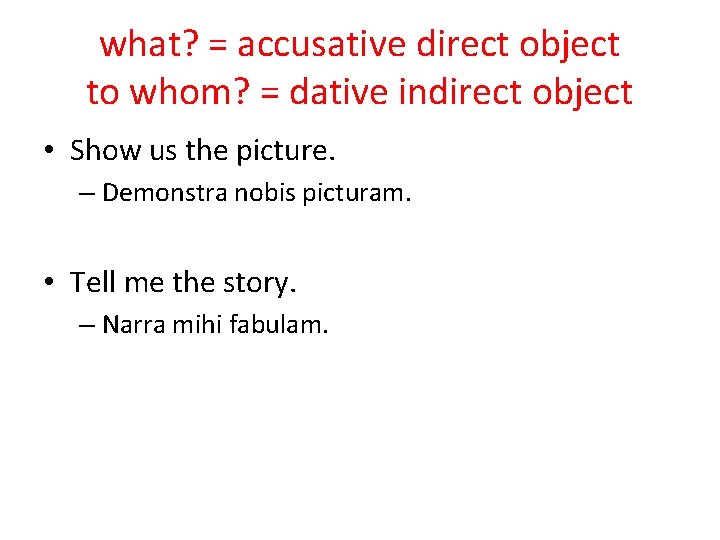
what? = accusative direct object to whom? = dative indirect object • Show us the picture. – Demonstra nobis picturam. • Tell me the story. – Narra mihi fabulam.
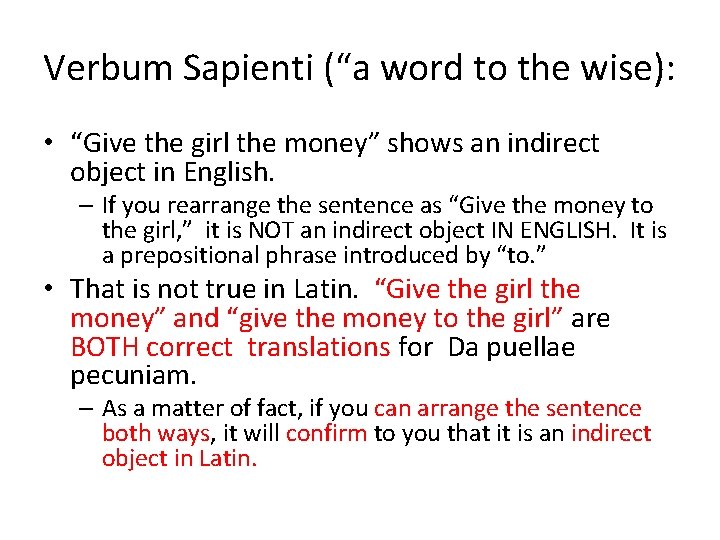
Verbum Sapienti (“a word to the wise): • “Give the girl the money” shows an indirect object in English. – If you rearrange the sentence as “Give the money to the girl, ” it is NOT an indirect object IN ENGLISH. It is a prepositional phrase introduced by “to. ” • That is not true in Latin. “Give the girl the money” and “give the money to the girl” are BOTH correct translations for Da puellae pecuniam. – As a matter of fact, if you can arrange the sentence both ways, it will confirm to you that it is an indirect object in Latin.

• Da puero stylum. – Give the boy a pencil. – Give the pencil to the boy. • Monstra matri librum. – Show your mother the book. – Show the book to your mother. • Dat liberis cibum. – He is giving the children food. – He is giving food to the children.
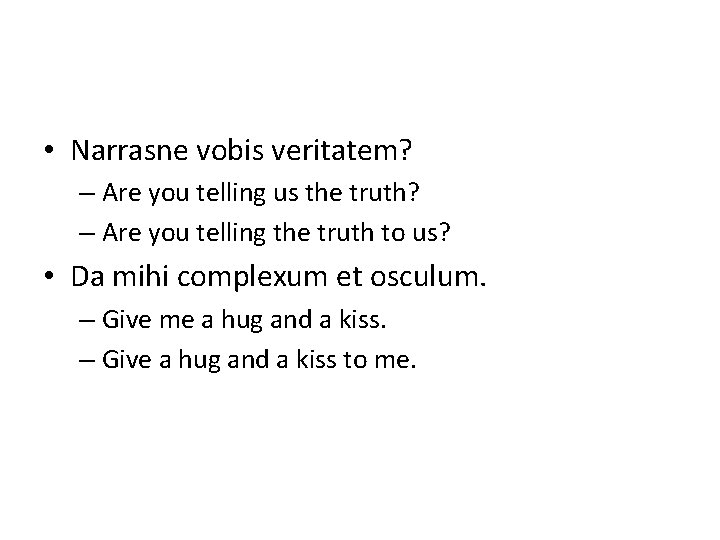
• Narrasne vobis veritatem? – Are you telling us the truth? – Are you telling the truth to us? • Da mihi complexum et osculum. – Give me a hug and a kiss. – Give a hug and a kiss to me.
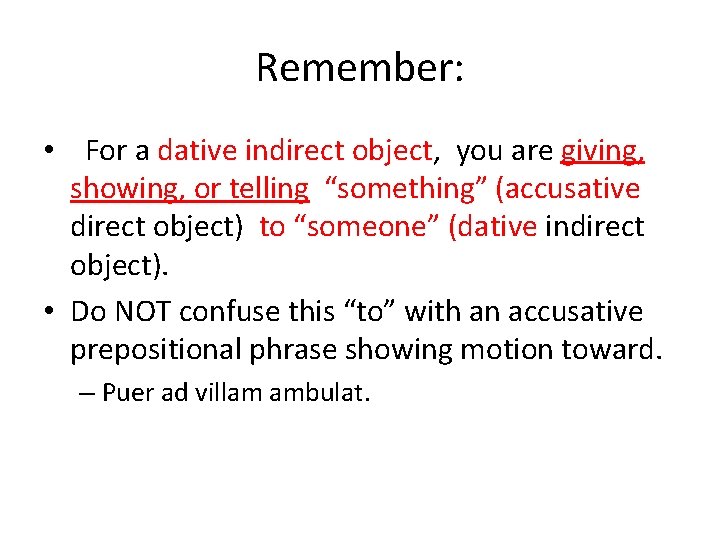
Remember: • For a dative indirect object, you are giving, showing, or telling “something” (accusative direct object) to “someone” (dative indirect object). • Do NOT confuse this “to” with an accusative prepositional phrase showing motion toward. – Puer ad villam ambulat.
- Slides: 8