
Date Version Rural Crime An Overview Michael Soper




- Slides: 26
Date. Version Rural Crime: An Overview Michael Soper, Research Manager, Cambridgeshire County Council
Contents • Definitions • General offences • Unique offences • Perceptions
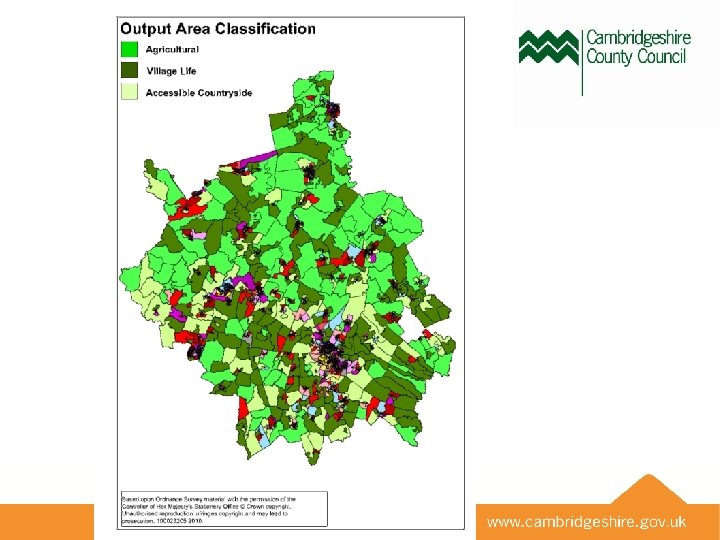
Definitions • What is rural? • Output Area Classification (OAC) - Data driven • Office of National Statistics - Population density driven
Definitions • What is a ‘rural crime’? • A crime that happens in a rural area. • A defined set of crimes that are unique to rural areas. • Consider both
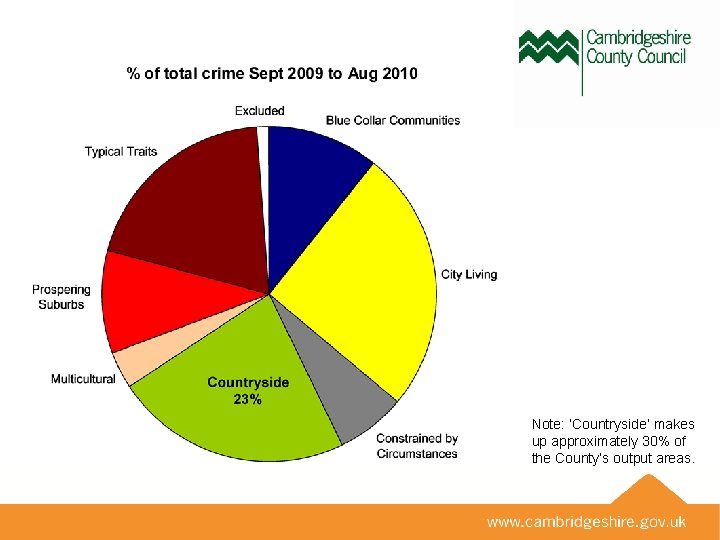
Note: ‘Countryside’ makes up approximately 30% of the County’s output areas.
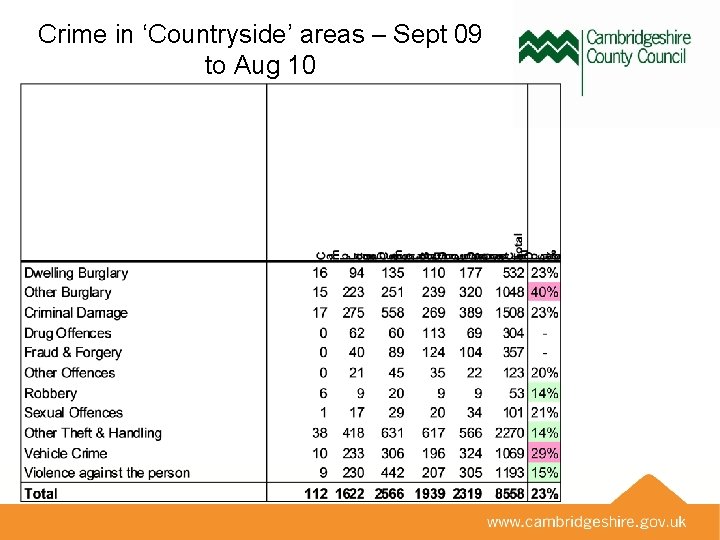
Crime in ‘Countryside’ areas – Sept 09 to Aug 10
Fenland – Case Study • 18. 5% of all recorded crime Fenland District is within rural wards. • Parson Drove & Wisbech St. Mary and Roman Bank wards have the most recorded crime in the twelve month period. • Recorded crime of particular concern includes Theft Of Motor Vehicle and Burglary Other. • In the case of Theft Of Motor Vehicle 36. 9% • In the case of Burglary Other 34. 5%
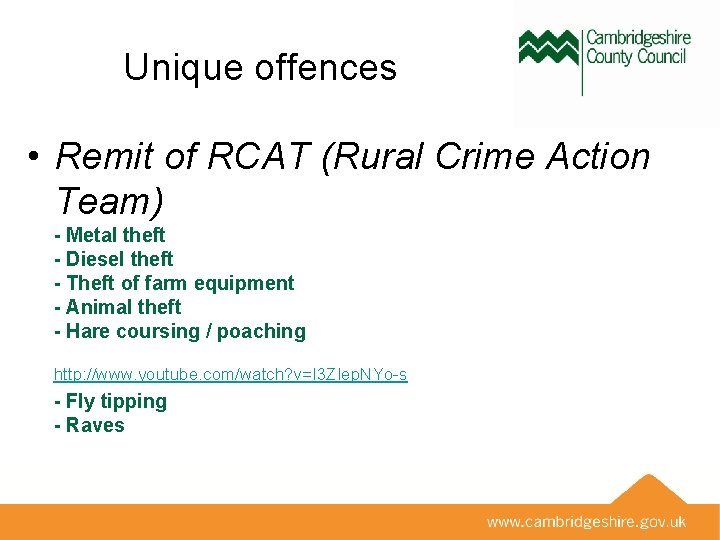
Unique offences • Remit of RCAT (Rural Crime Action Team) - Metal theft - Diesel theft - Theft of farm equipment - Animal theft - Hare coursing / poaching http: //www. youtube. com/watch? v=I 3 ZIep. NYo-s - Fly tipping - Raves
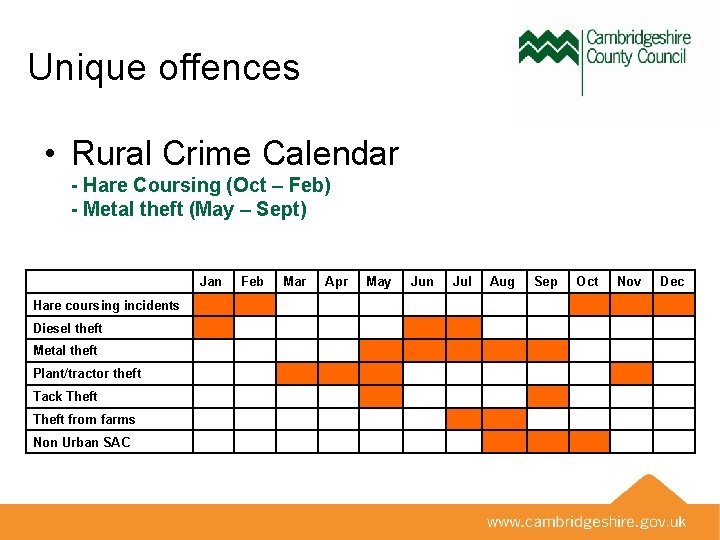
Unique offences • Rural Crime Calendar - Hare Coursing (Oct – Feb) - Metal theft (May – Sept) Jan Feb Mar Apr May Jun Jul Aug Sep Oct Nov Dec Hare coursing incidents Diesel theft Metal theft Plant/tractor theft Tack Theft Theft from farms Non Urban SAC
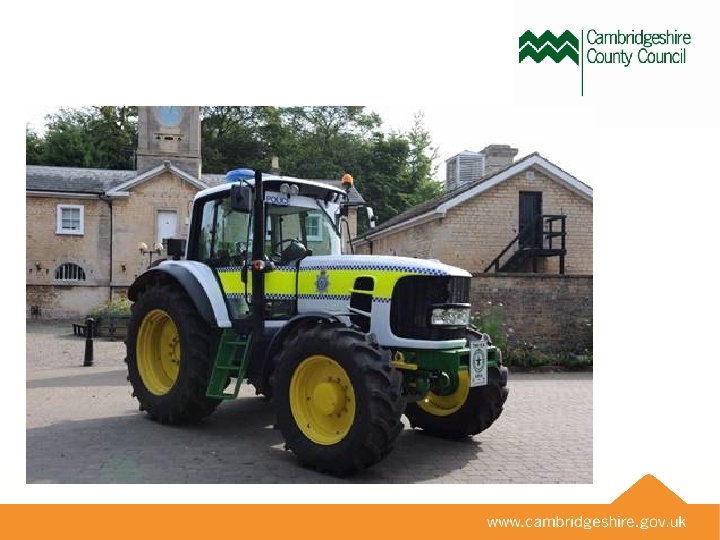
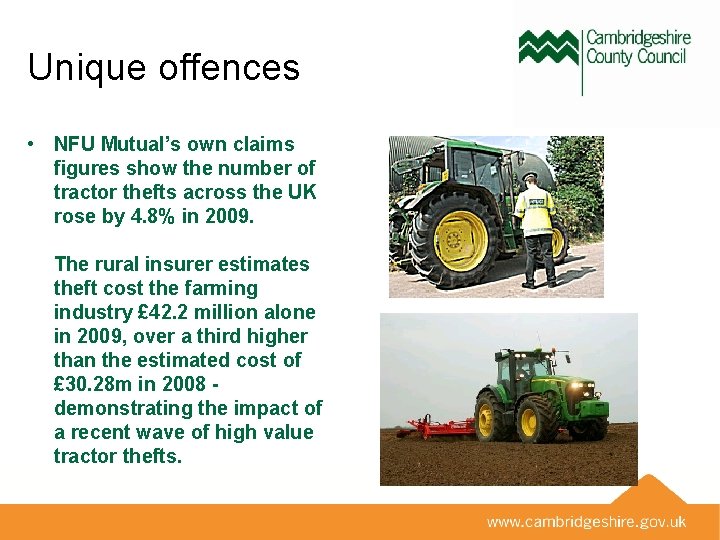
Unique offences • NFU Mutual’s own claims figures show the number of tractor thefts across the UK rose by 4. 8% in 2009. The rural insurer estimates theft cost the farming industry £ 42. 2 million alone in 2009, over a third higher than the estimated cost of £ 30. 28 m in 2008 demonstrating the impact of a recent wave of high value tractor thefts.
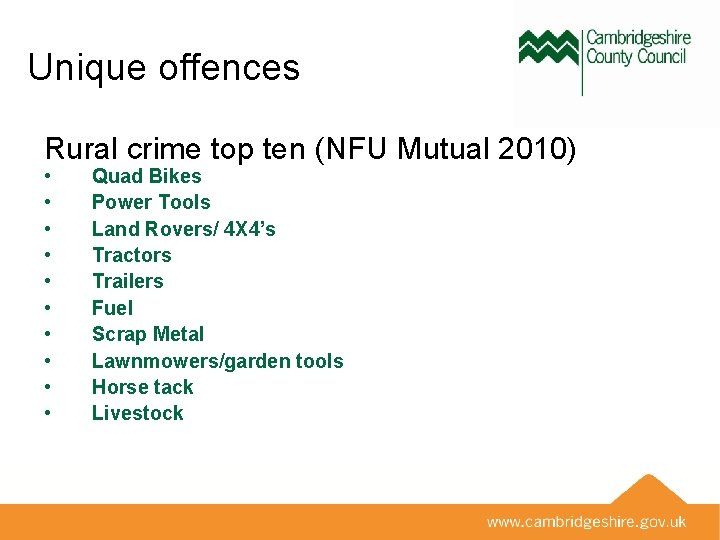
Unique offences Rural crime top ten (NFU Mutual 2010) • • • Quad Bikes Power Tools Land Rovers/ 4 X 4’s Tractors Trailers Fuel Scrap Metal Lawnmowers/garden tools Horse tack Livestock
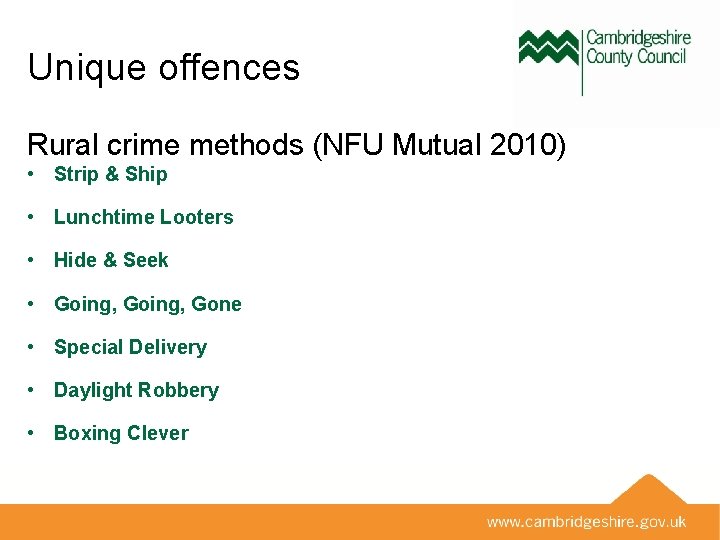
Unique offences Rural crime methods (NFU Mutual 2010) • Strip & Ship • Lunchtime Looters • Hide & Seek • Going, Gone • Special Delivery • Daylight Robbery • Boxing Clever
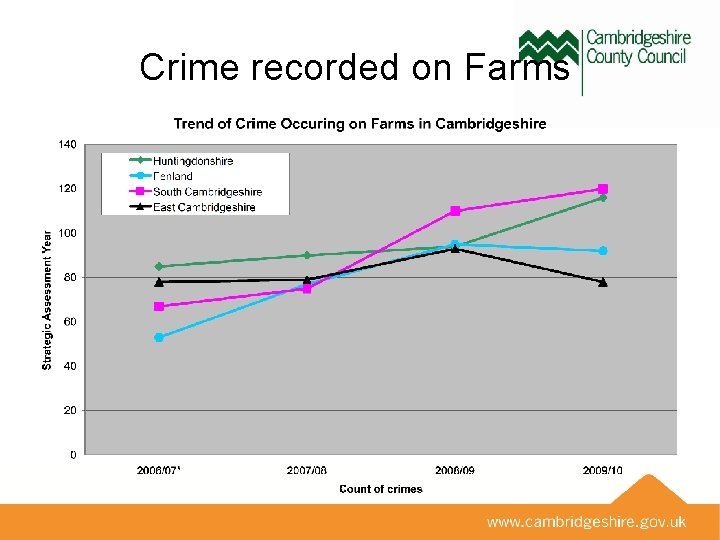
Crime recorded on Farms
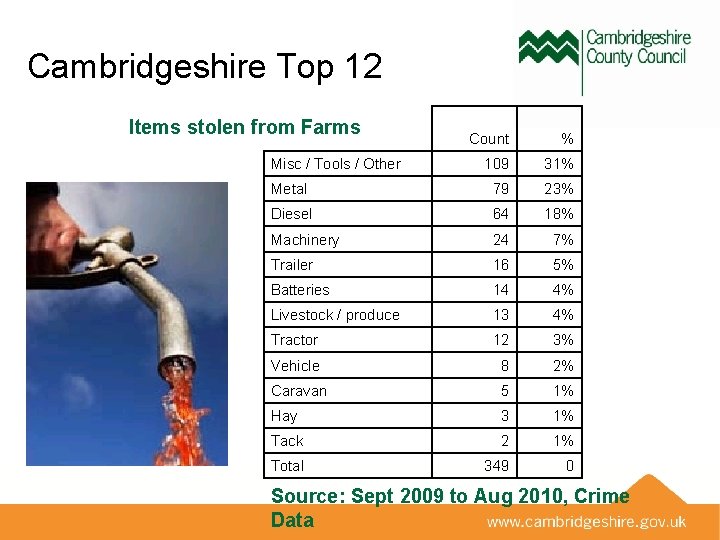
Cambridgeshire Top 12 Items stolen from Farms Count % 109 31% Metal 79 23% Diesel 64 18% Machinery 24 7% Trailer 16 5% Batteries 14 4% Livestock / produce 13 4% Tractor 12 3% Vehicle 8 2% Caravan 5 1% Hay 3 1% Tack 2 1% Total 349 0 Misc / Tools / Other Source: Sept 2009 to Aug 2010, Crime Data
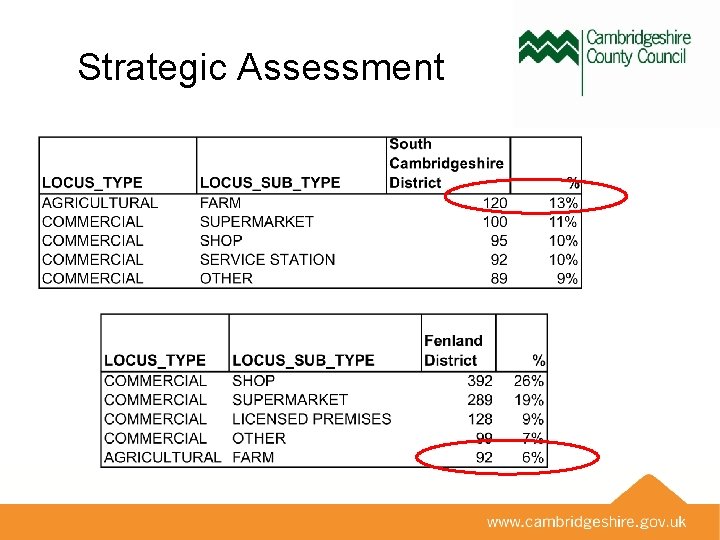
Strategic Assessment
Hare Coursing
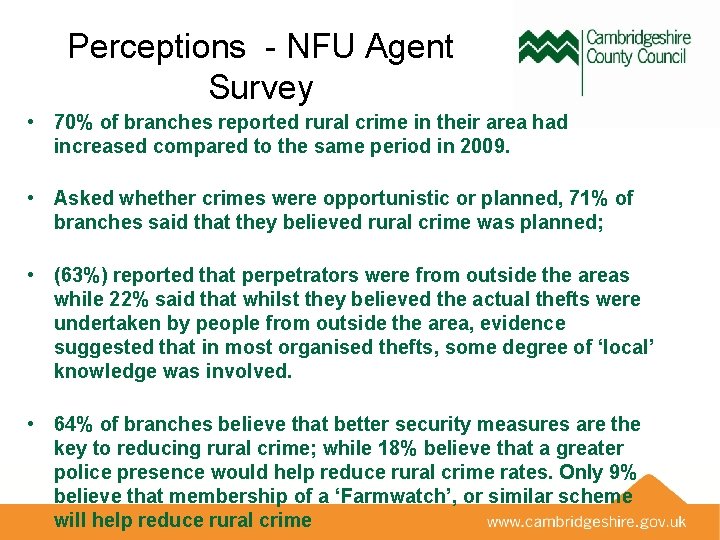
Perceptions - NFU Agent Survey • 70% of branches reported rural crime in their area had increased compared to the same period in 2009. • Asked whether crimes were opportunistic or planned, 71% of branches said that they believed rural crime was planned; • (63%) reported that perpetrators were from outside the areas while 22% said that whilst they believed the actual thefts were undertaken by people from outside the area, evidence suggested that in most organised thefts, some degree of ‘local’ knowledge was involved. • 64% of branches believe that better security measures are the key to reducing rural crime; while 18% believe that a greater police presence would help reduce rural crime rates. Only 9% believe that membership of a ‘Farmwatch’, or similar scheme will help reduce rural crime
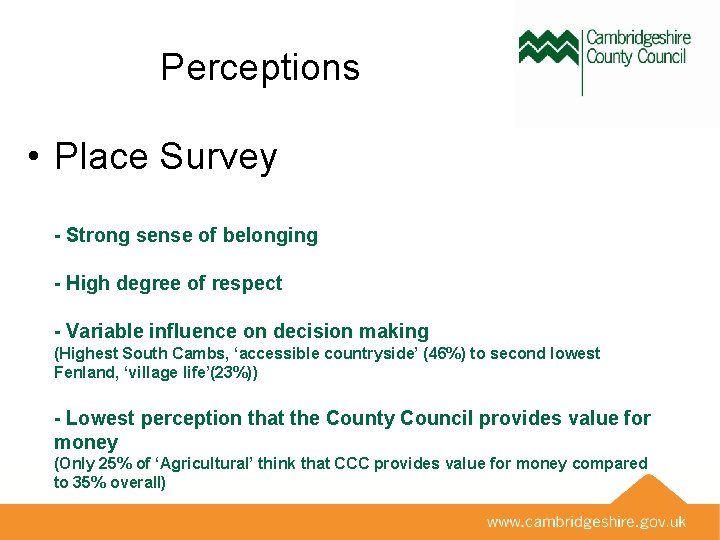
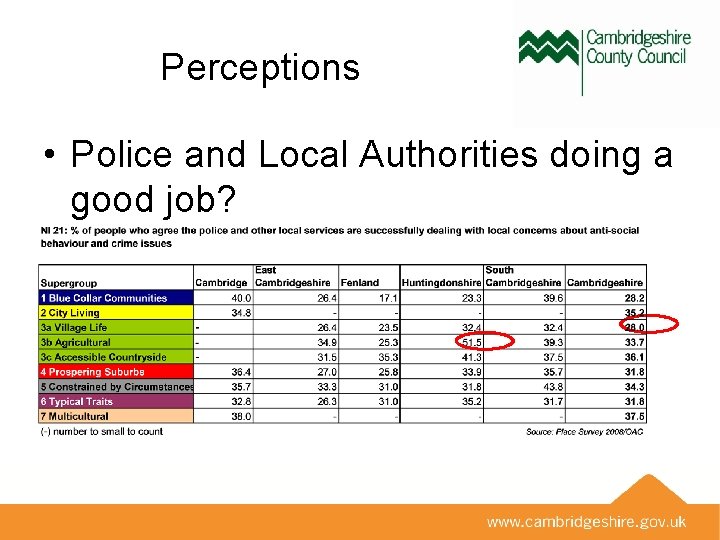
Perceptions • Place Survey - Strong sense of belonging - High degree of respect - Variable influence on decision making (Highest South Cambs, ‘accessible countryside’ (46%) to second lowest Fenland, ‘village life’(23%)) - Lowest perception that the County Council provides value for money (Only 25% of ‘Agricultural’ think that CCC provides value for money compared to 35% overall)
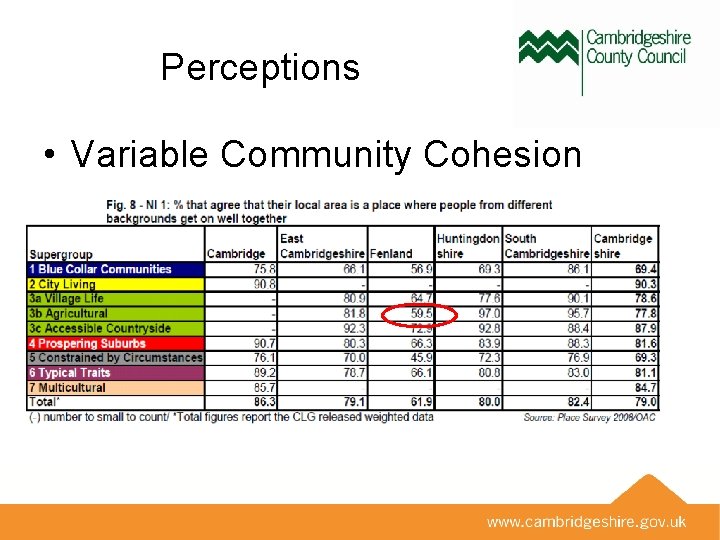
Perceptions • Variable Community Cohesion
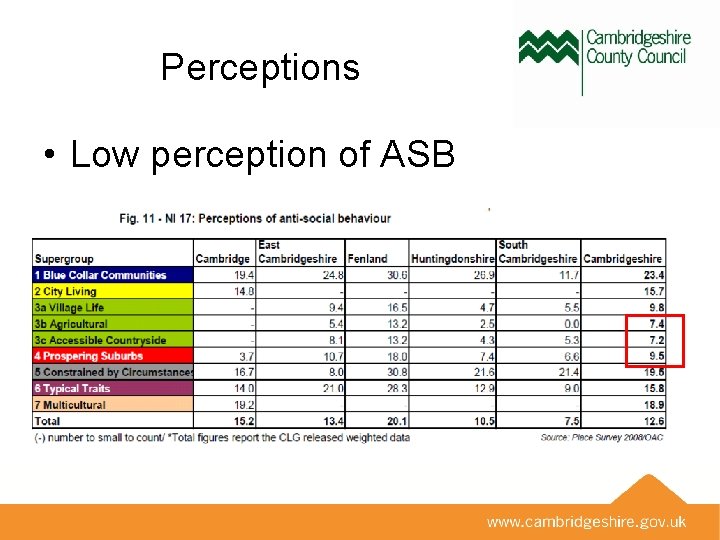
Perceptions • Low perception of ASB
Perceptions • Police and Local Authorities doing a good job?
Summary • Lower crime rates than elsewhere • However a high proportion of ‘other burglaries’ • Crime committed against farms is increasing • Is better security the key? • Low perception that we are doing a ‘good job’ amongst Cambridgeshire villages