
Dataplane probing Petr Lapukhov Facebook petrfb com Problems
Dataplane probing Petr Lapukhov, Facebook petr@fb. com
Problems we trying to solve • Detect faults • Isolate faults • Do ^^^ quickly (< 1 second)
Traditional approach • “White-box” debugging • Device counters – Standard counters (SNMP if. MIB etc) – Non-standard (fabric drop counts) • Slow to retrieve • No full coverage
Blackbox debugging • • Inject active probes to detect loss Run traceroute to discover paths Analyze and project fault locations How we do it: – UDP from dedicate machines to all servers – Time-to-detect ~10 -20 seconds • Downsides – Still slow – Not very reliable – Hard to isolate
Inband-telemetry • • Advanced silicon functionality Embed device’s state in transit packets Full line rate maintained Could be done in SW switching
What we propose • • • Build on active probing approach with UDP Define method to request telemetry data Define kinds of data to store …and format to store data Keep it simple and extensible Fallback to software
Why UDP? • • • Has to be handled by application No kernel interference (if port is open) ECMP hashed (src port) Lots of room to embed data Limitations: – Firewalls, ACLs etc – Qo. S settings (use DSCP!)
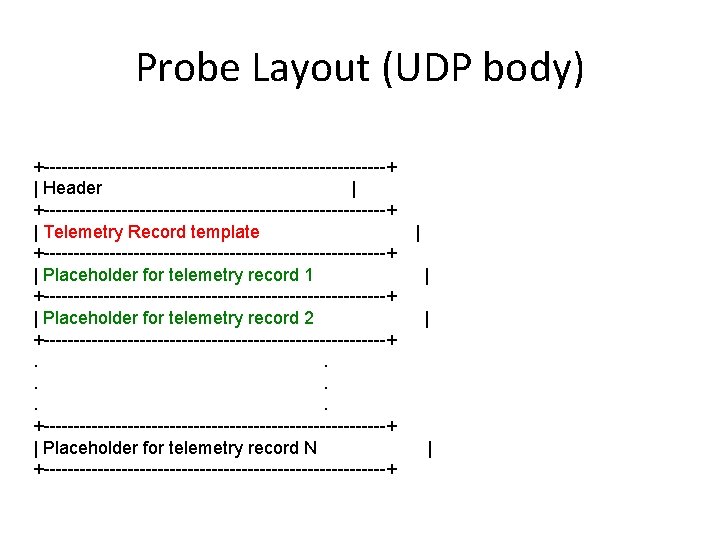
Probe Layout (UDP body) +-----------------------------+ | Header | +-----------------------------+ | Telemetry Record template +-----------------------------+ | Placeholder for telemetry record 1 +-----------------------------+ | Placeholder for telemetry record 2 +-----------------------------+. . . +-----------------------------+ | Placeholder for telemetry record N +-----------------------------+ | |
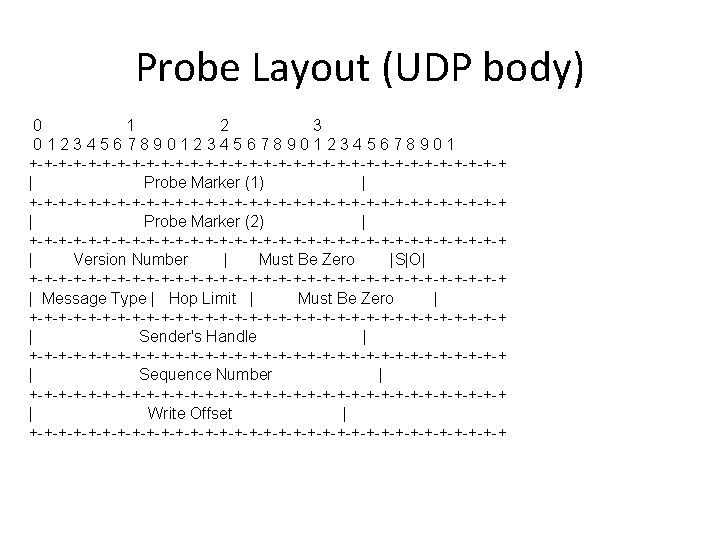
Probe Layout (UDP body) 0 1 2 3 0123456789012345678901 +-+-+-+-+-+-+-+-+-+-+-+-+-+-+-+-+ | Probe Marker (1) | +-+-+-+-+-+-+-+-+-+-+-+-+-+-+-+-+ | Probe Marker (2) | +-+-+-+-+-+-+-+-+-+-+-+-+-+-+-+-+ | Version Number | Must Be Zero |S|O| +-+-+-+-+-+-+-+-+-+-+-+-+-+-+-+-+ | Message Type | Hop Limit | Must Be Zero | +-+-+-+-+-+-+-+-+-+-+-+-+-+-+-+-+ | Sender's Handle | +-+-+-+-+-+-+-+-+-+-+-+-+-+-+-+-+ | Sequence Number | +-+-+-+-+-+-+-+-+-+-+-+-+-+-+-+-+ | Write Offset | +-+-+-+-+-+-+-+-+-+-+-+-+-+-+-+-+
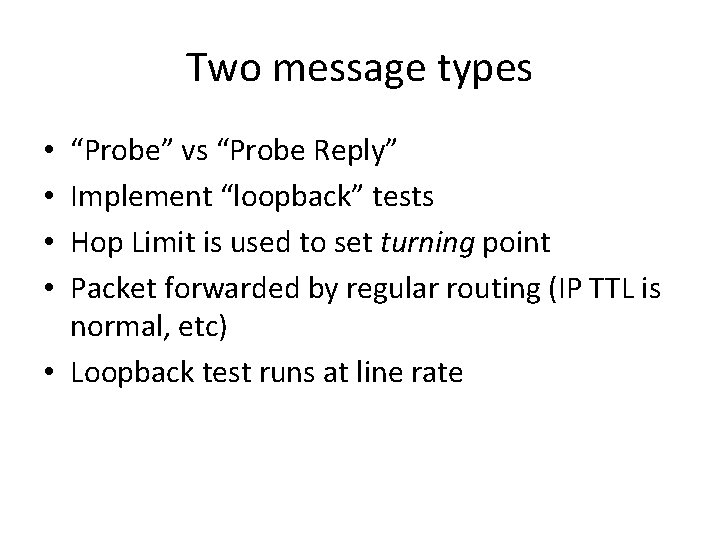
Two message types “Probe” vs “Probe Reply” Implement “loopback” tests Hop Limit is used to set turning point Packet forwarded by regular routing (IP TTL is normal, etc) • Loopback test runs at line rate • •
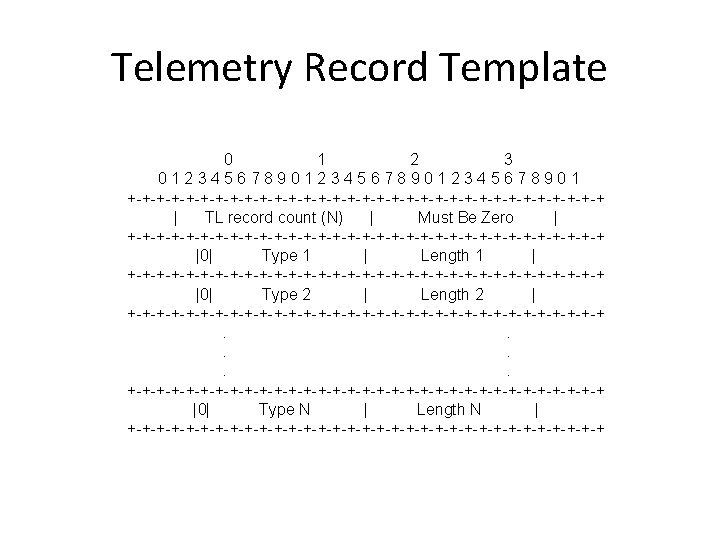
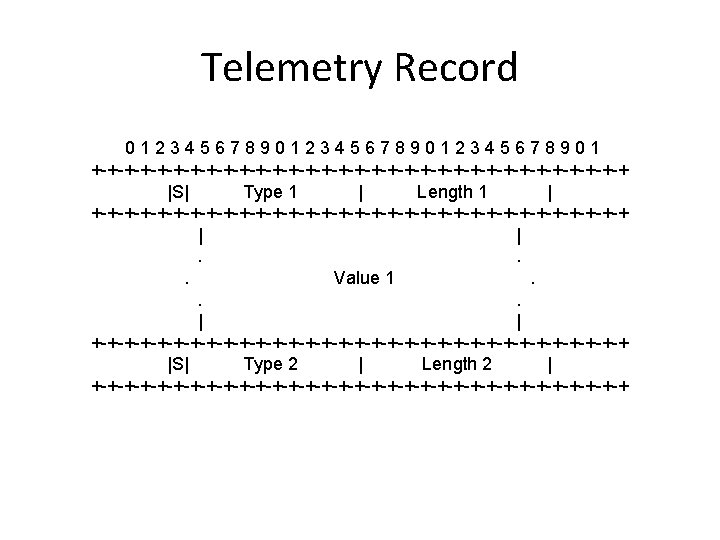
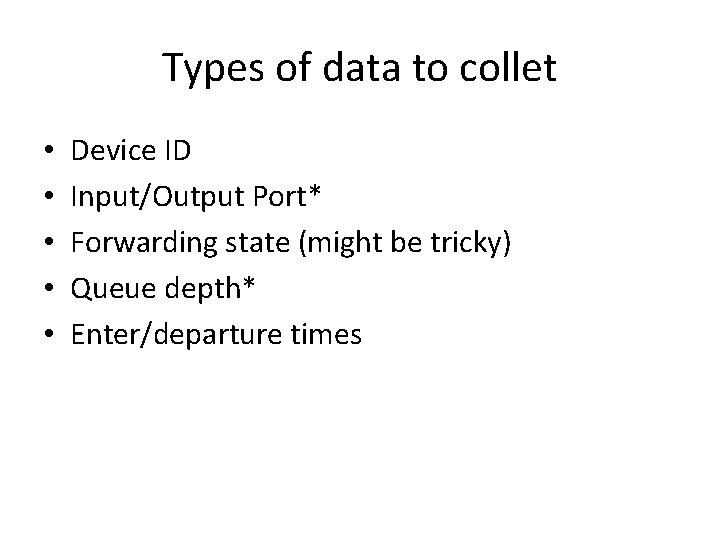
Types of data to collet • • • Device ID Input/Output Port* Forwarding state (might be tricky) Queue depth* Enter/departure times
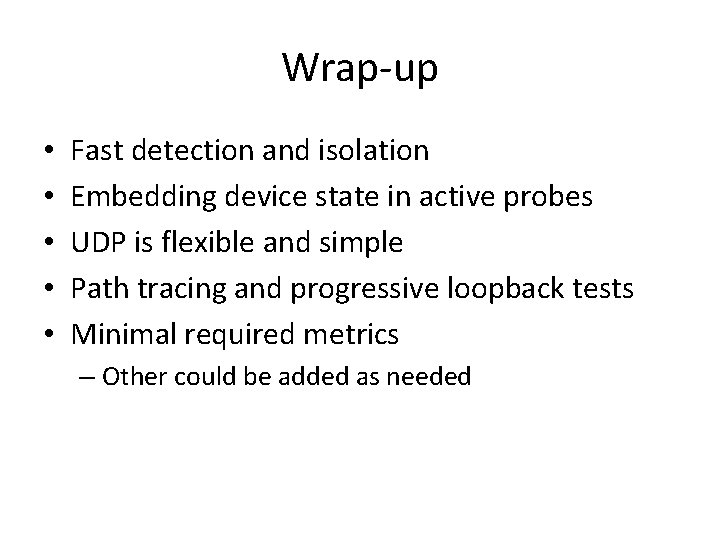
Wrap-up • • • Fast detection and isolation Embedding device state in active probes UDP is flexible and simple Path tracing and progressive loopback tests Minimal required metrics – Other could be added as needed
Other approaches • Extension headers • Tunnel header • Source routing
- Slides: 15