
Database Processing Chapter 3 The EntityRelationship Model David
Database Processing Chapter 3 The Entity-Relationship Model David M. Kroenke © 2000 Prentice Hall
Chapter 3 Data Modeling • Process of creating a logical representation of the structure of the database • The most important task in database development Page 47 © 2000 Prentice Hall
Chapter 3 Entity-Relationship Model • E-R Model • Peter Chen, 1976 Page 49 © 2000 Prentice Hall
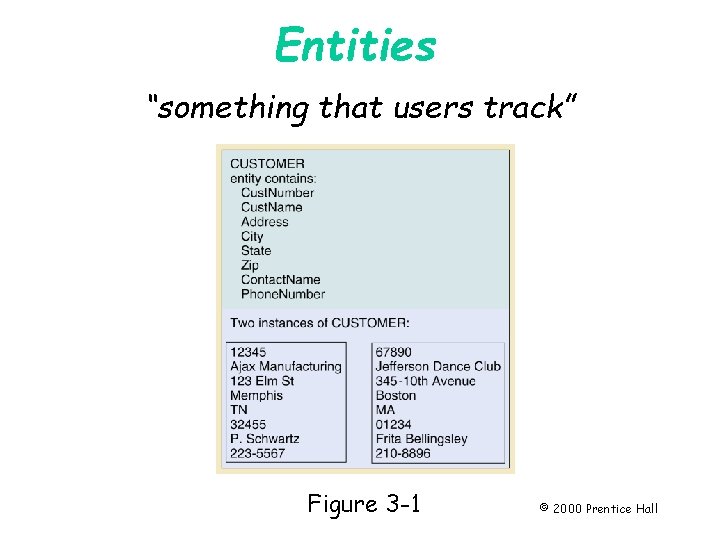
Entities “something that users track” Page 49 Figure 3 -1 © 2000 Prentice Hall
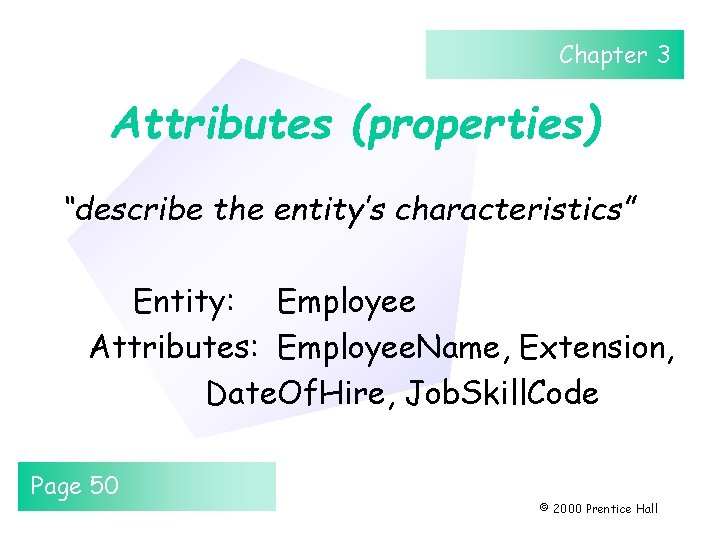
Chapter 3 Attributes (properties) “describe the entity’s characteristics” Entity: Employee Attributes: Employee. Name, Extension, Date. Of. Hire, Job. Skill. Code Page 50 © 2000 Prentice Hall

Chapter 3 Identifier “attributes that name entity instances” Entity: Employee Identifier: Social. Security. Number Page 50 © 2000 Prentice Hall
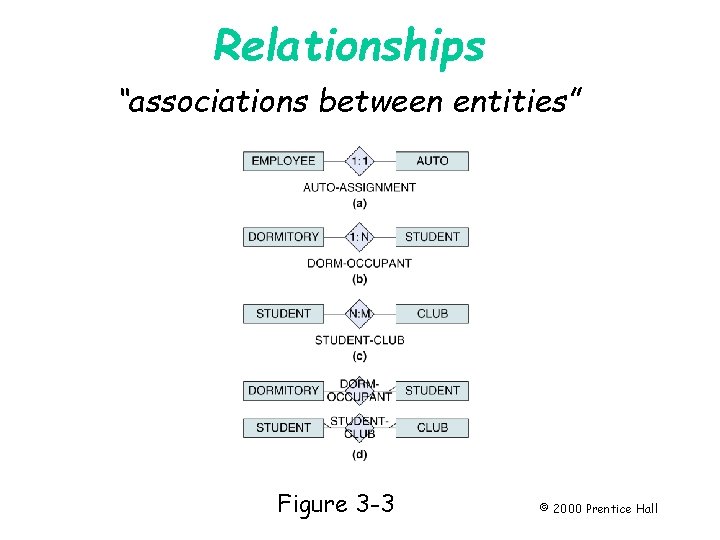
Relationships “associations between entities” Page 51 Figure 3 -3 © 2000 Prentice Hall
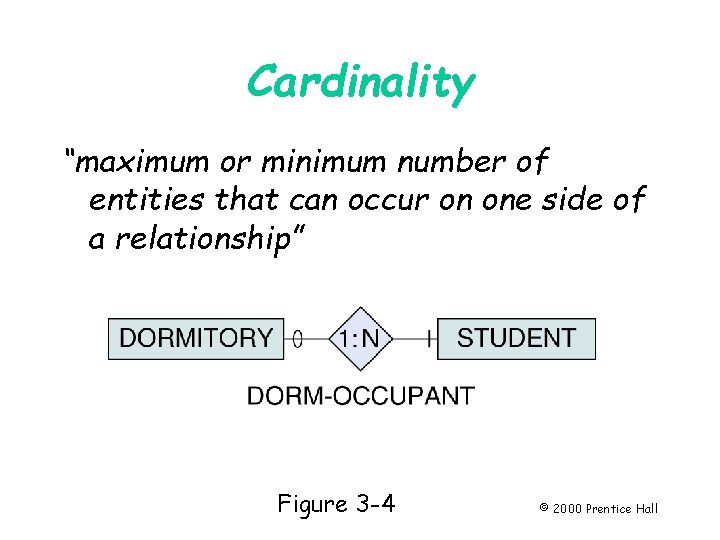
Cardinality “maximum or minimum number of entities that can occur on one side of a relationship” Page 52 Figure 3 -4 © 2000 Prentice Hall
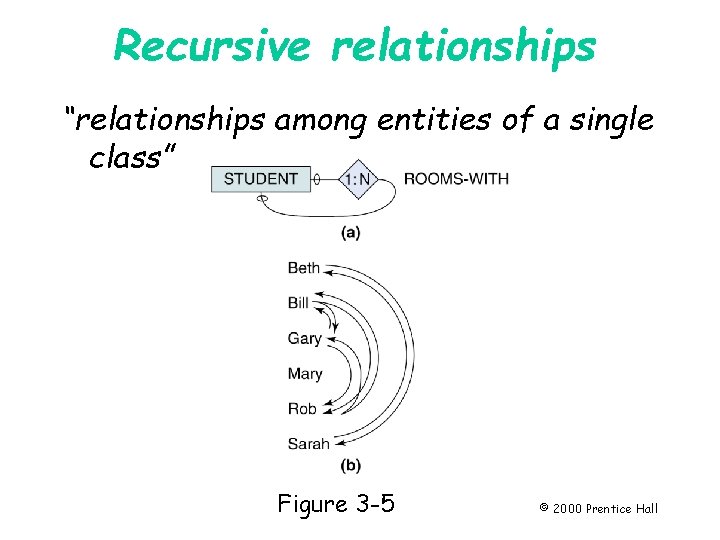
Recursive relationships “relationships among entities of a single class” Page 53 Figure 3 -5 © 2000 Prentice Hall
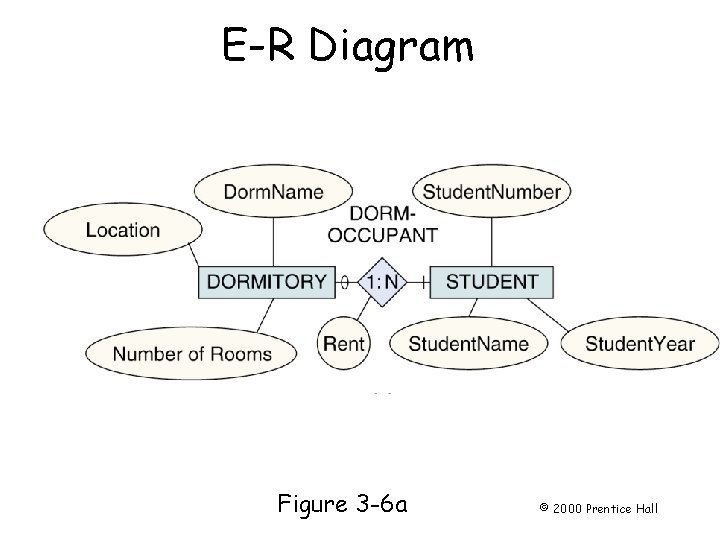
E-R Diagram Page 54 Figure 3 -6 a © 2000 Prentice Hall
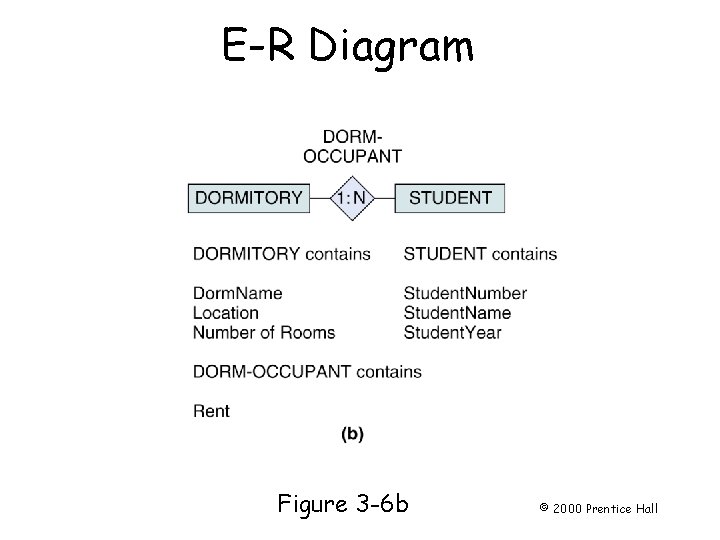
E-R Diagram Page 54 Figure 3 -6 b © 2000 Prentice Hall
Chapter 3 Weak Entities “an entity whose presence in the database depends (logically) on another entity” Page 54 © 2000 Prentice Hall
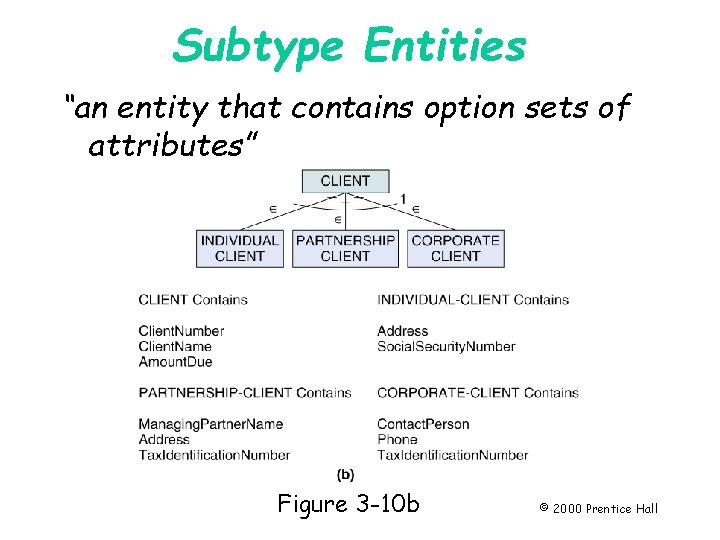
Subtype Entities “an entity that contains option sets of attributes” Page 56 Figure 3 -10 b © 2000 Prentice Hall
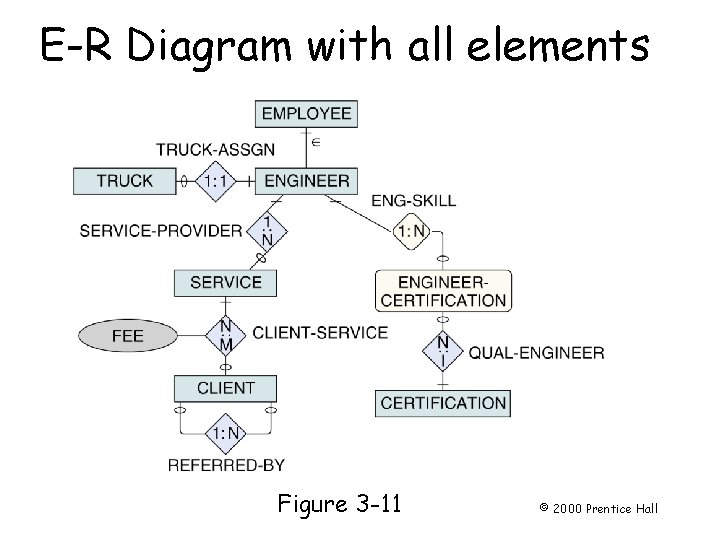
E-R Diagram with all elements Page 59 Figure 3 -11 © 2000 Prentice Hall
Chapter 3 Drawing E-R diagrams • • • IEW IEF DEFT ER-WIN Visio Page 60 © 2000 Prentice Hall
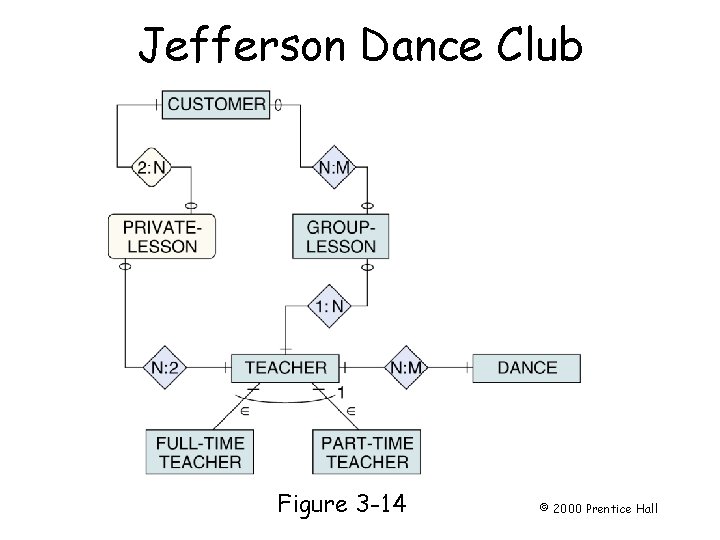
Jefferson Dance Club Page 62 Figure 3 -14 © 2000 Prentice Hall
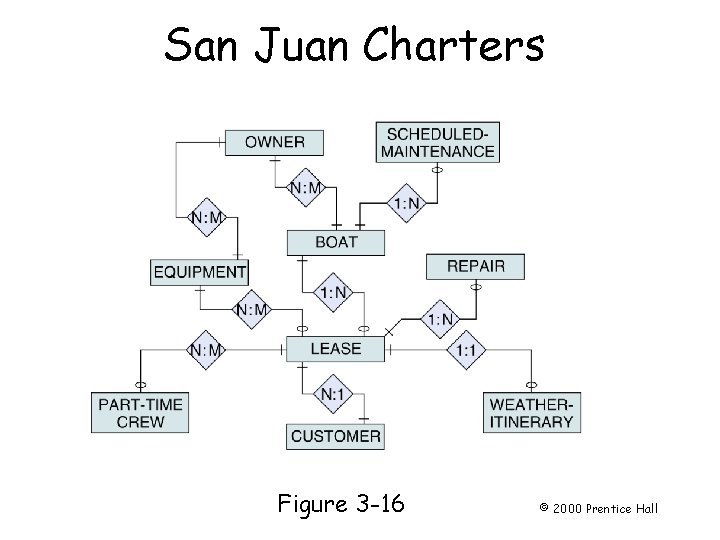
San Juan Charters Page 66 Figure 3 -16 © 2000 Prentice Hall
- Slides: 17