
Database Development Cycle Track 3 Managing Information Using
Database Development Cycle Track 3: Managing Information Using Database
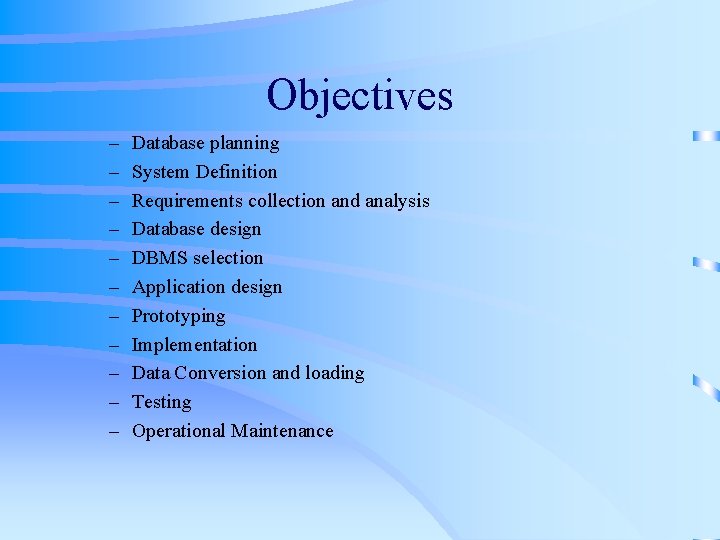
Objectives – – – Database planning System Definition Requirements collection and analysis Database design DBMS selection Application design Prototyping Implementation Data Conversion and loading Testing Operational Maintenance
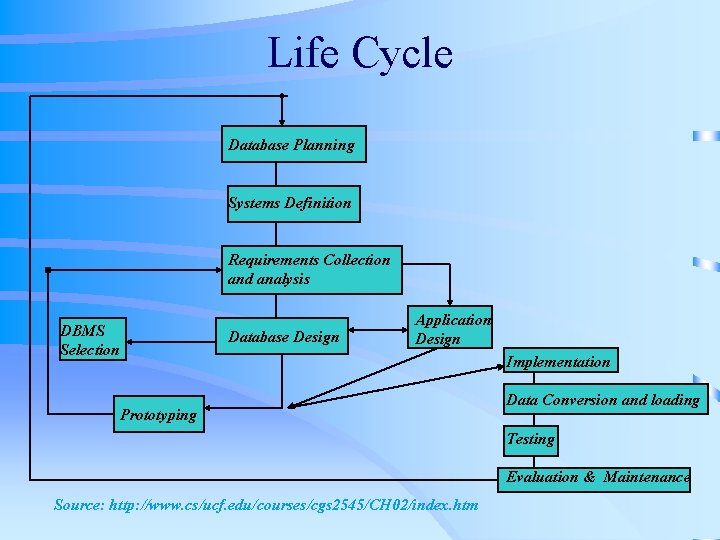
Life Cycle Database Planning Systems Definition Requirements Collection and analysis DBMS Selection Database Design Application Design Prototyping Implementation Data Conversion and loading Testing Evaluation & Maintenance Source: http: //www. cs/ucf. edu/courses/cgs 2545/CH 02/index. htm
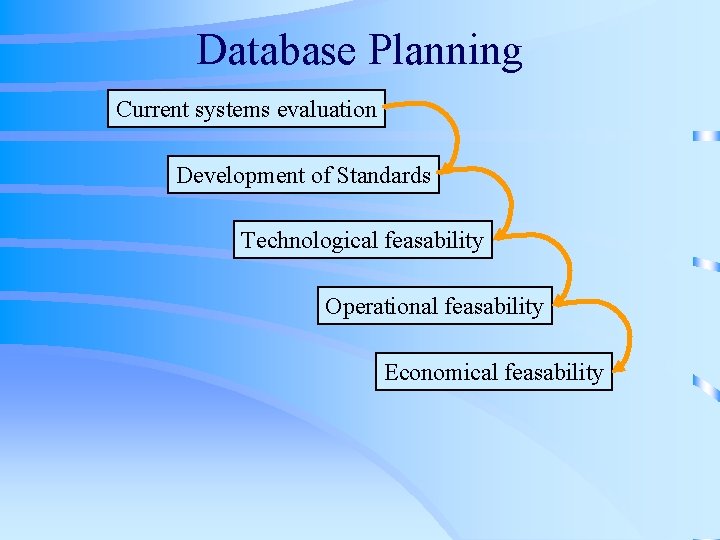
Database Planning Current systems evaluation Development of Standards Technological feasability Operational feasability Economical feasability
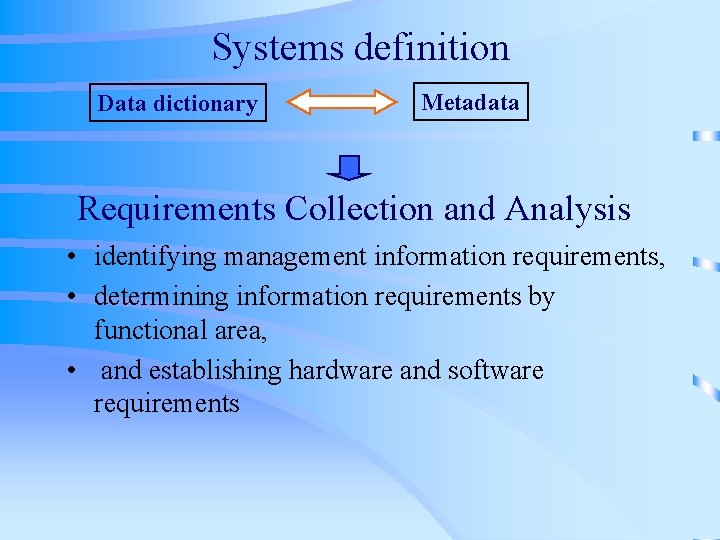
Systems definition Data dictionary Metadata Requirements Collection and Analysis • identifying management information requirements, • determining information requirements by functional area, • and establishing hardware and software requirements
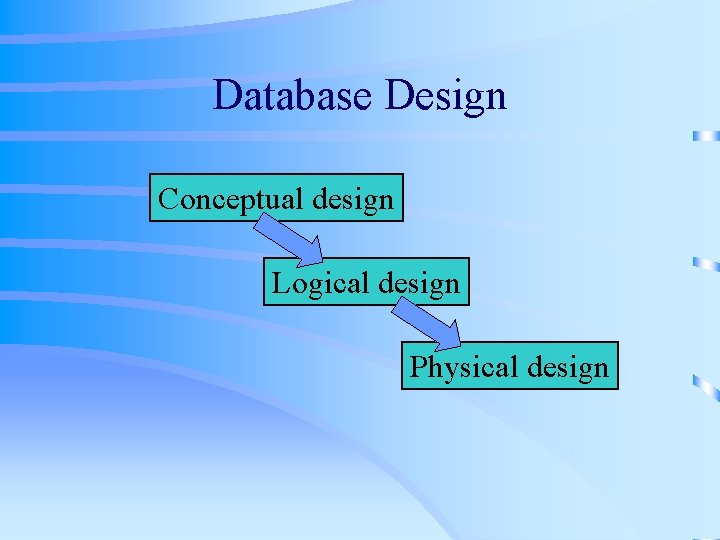
Database Design Conceptual design Logical design Physical design
DBMS Selection * Costs * Features and Tools * Underlying model * Portability * DBMS hardware requirements
Application design • Application program design • User Interface design
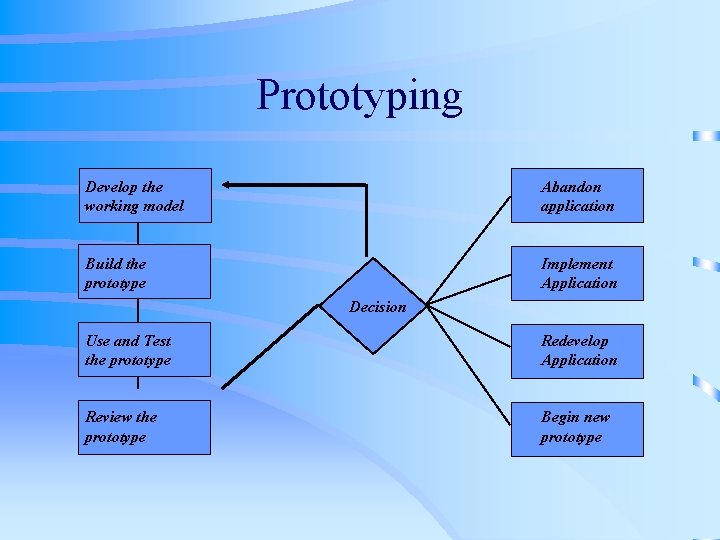
Prototyping Develop the working model Abandon application Build the prototype Implement Application Decision Use and Test the prototype Redevelop Application Review the prototype Begin new prototype
Implementation • The physical realisation of the database and application designs • the detailed model is converted to the appropriate implementation model, the data dictionary is built, the database is populated, application programs are developed and users are trained
Data Conversion and Loading & Testing • Transferring any existing data into the new database and converting any existing applications to run on the new database • Finding errors
Database Evaluation • Interviewing and polling users to determine whether any data needs are unmet.
Operational maintenance • • • preventive maintenance (backup) corrective maintenance (recovery)1 adaptive maintenance assignment of access regular monitoring & periodical check up
Data & Database administration • Data administration is the management of the data resources • Database administration is the management of physical realisation of the database application
Database design methodology • A structured approach that uses procedures, techniques, tools, and documentation aids to support and facilitate the process of design. * Conceptual database design * Logical database design * Physical database design
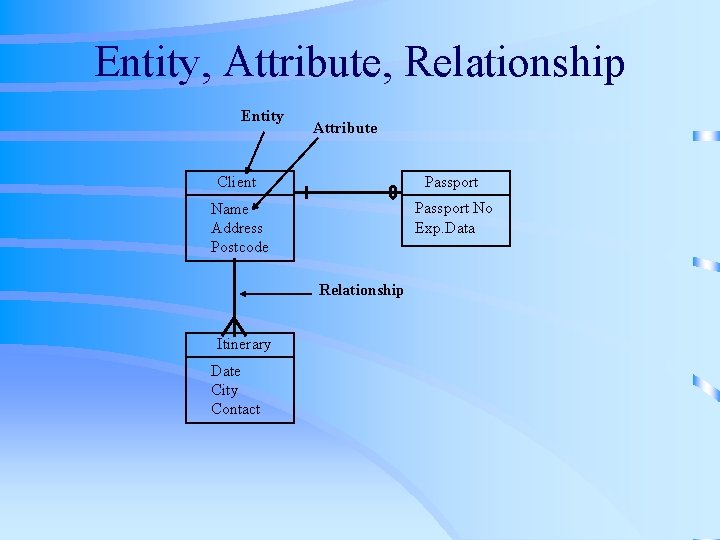
Entity, Attribute, Relationship Entity Attribute Client Passport Name Address Postcode Passport No Exp. Data Relationship Itinerary Date City Contact
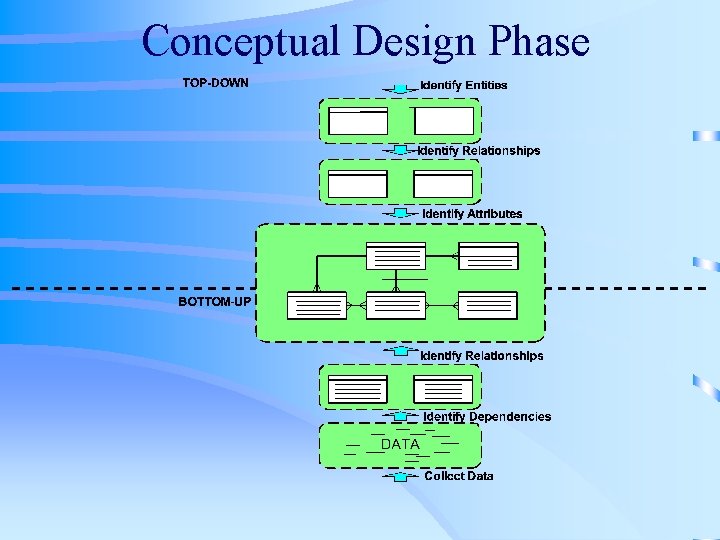
Conceptual Design Phase
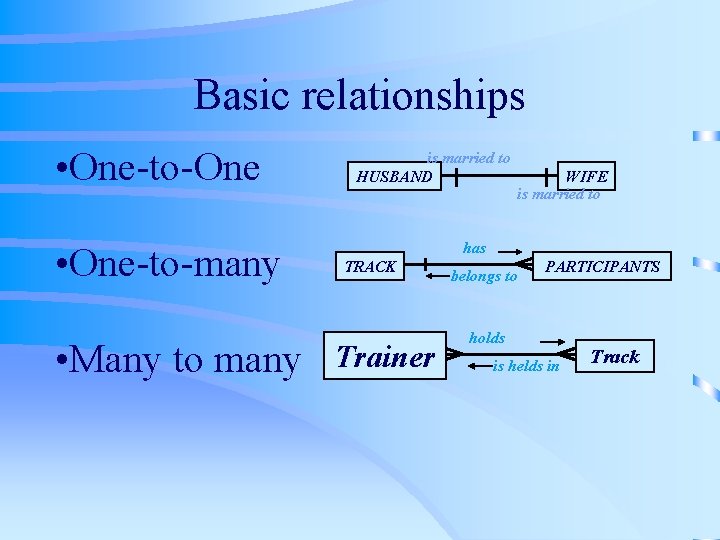
Basic relationships • One-to-One • One-to-many • Many to many is married to HUSBAND WIFE is married to has TRACK Trainer belongs to PARTICIPANTS holds is helds in Track
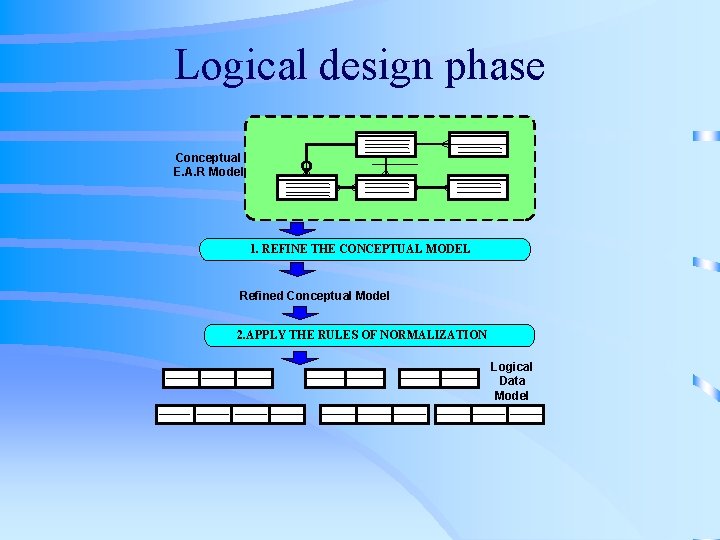
Logical design phase Conceptual E. A. R Model 1. REFINE THE CONCEPTUAL MODEL Refined Conceptual Model 2. APPLY THE RULES OF NORMALIZATION Logical Data Model
Refining the Conceptual model • Refine the attributes – example: • Synonyms • Hononyms
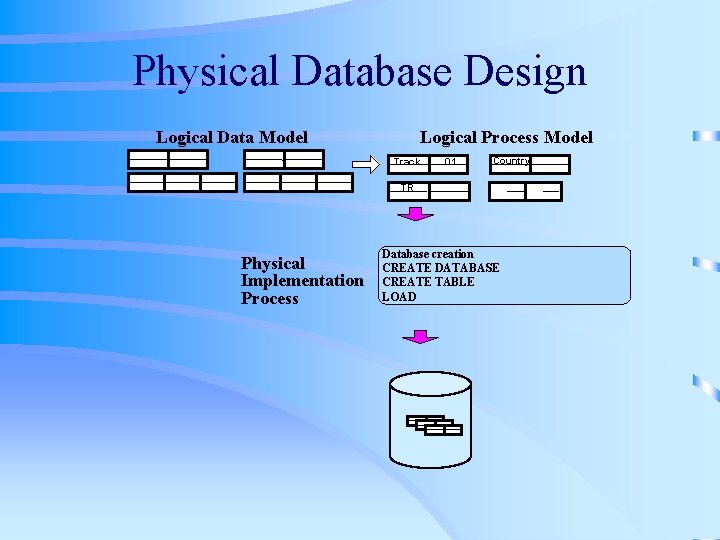
Physical Database Design Logical Data Model Logical Process Model Track 01 Country TR Physical Implementation Process Database creation CREATE DATABASE CREATE TABLE LOAD
Critical Success Factors in Database Design • Work interactively with the users as much as possible. • Follow a structured methodology throughout the data modelling process. • Incorporate structural and integrity considerations into the data models. • Combine conceptualisation, normalisation, and transaction validation techniques into the data modelling methodology.
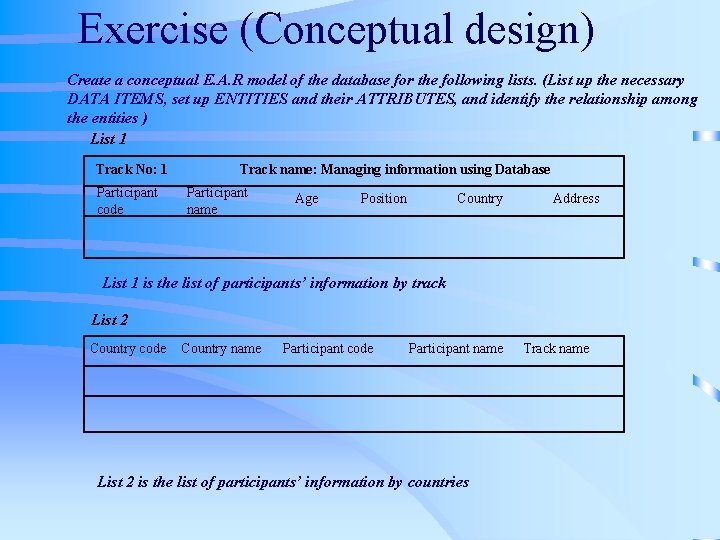
Exercise (Conceptual design) Create a conceptual E. A. R model of the database for the following lists. (List up the necessary DATA ITEMS, set up ENTITIES and their ATTRIBUTES, and identify the relationship among the entities ) List 1 Track No: 1 Participant code Track name: Managing information using Database Participant name Age Position Country Address List 1 is the list of participants’ information by track List 2 Country code Country name Participant code Participant name List 2 is the list of participants’ information by countries Track name
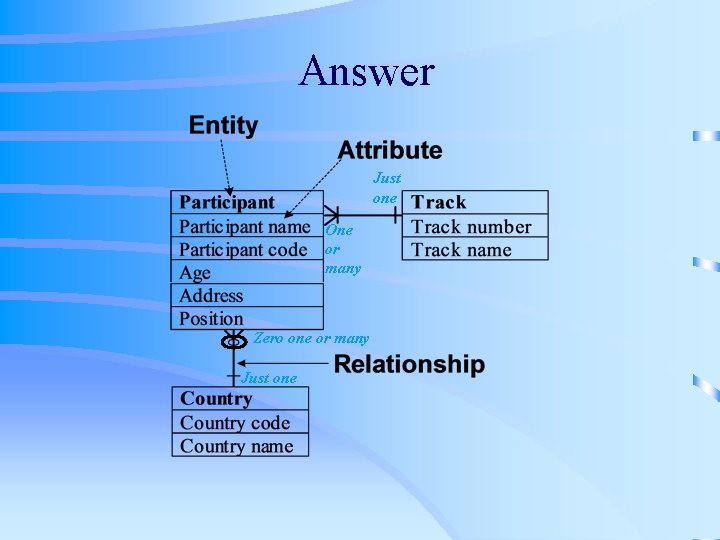
Answer Just one One or many Zero one or many Just one
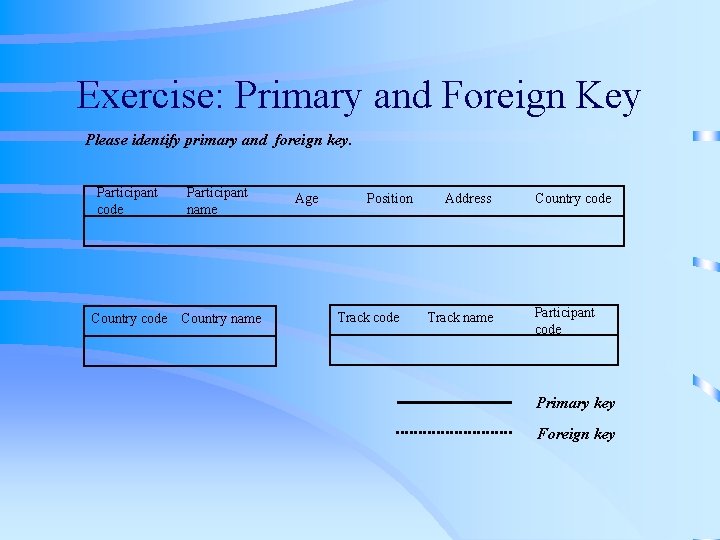
Exercise: Primary and Foreign Key Please identify primary and foreign key. Participant code Participant name Country code Country name Age Position Track code Address Track name Country code Participant code Primary key Foreign key
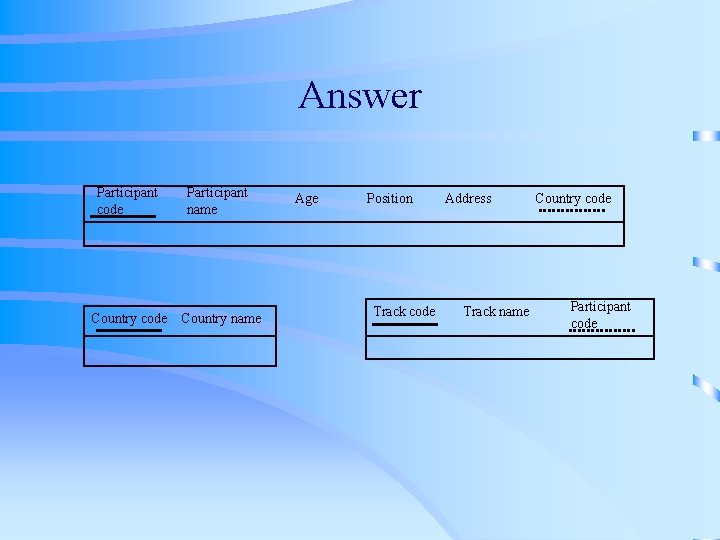
Answer Participant code Participant name Country code Country name Age Position Track code Address Track name Country code Participant code
- Slides: 26