
Database Data vs Information Data is simply raw
Database
Data vs Information • Data is simply raw facts • Example: • Paul • 21 • Johnson • Information is combining the facts so it means some thing • Ex: Paul Johnson is 21 years old
Database vs Database Management System • Database is a shared computer system that stores or houses: • Raw facts • Metadata (data about data) • DBMS: • Is normally software(programs) installed on a system that is the intermediary between the entity requesting the data and the system storing the data • Manages the data which enables • Controlling access to the data • Organization and efficient use of the data • Sharing of the data
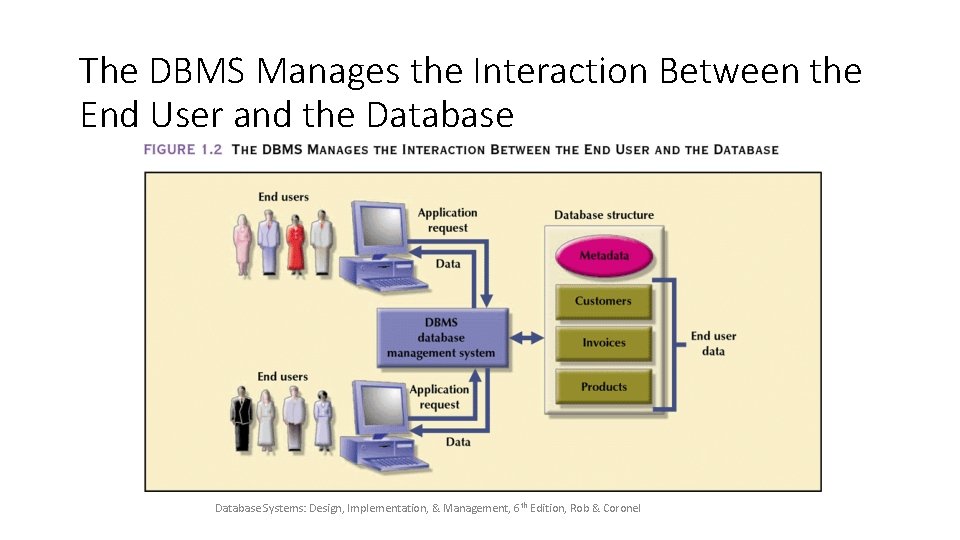
The DBMS Manages the Interaction Between the End User and the Database Systems: Design, Implementation, & Management, 6 th Edition, Rob & Coronel

Contrasting Database and File Systems Database Systems: Design, Implementation, & Management, 6 th Edition, Rob & Coronel

The Database System Environment Database Systems: Design, Implementation, & Management, 6 th Edition, Rob & Coronel
What are some types of Databases and the Importance of a Database • Single User: Only one user can used the database at a time, this is normally what you have on your desktop • Multi-User: Support multiple users • Workgroup: Use for a small company with less that 15 employees • Enterprise: Support larger companies • Importance of a database • Decision making • Transactions
Designing a Database • Structure is very important if this is not done correctly at first you can complicate your database. A single structure will not apply to all databases • In your design it is important to avoid redundancies • Use normalization • Note: Poor design cause • Bad decisions and lots of errors
Designing a Database Process 1. What are the opportunities or need for a database 2. Do an initial interview and meet with the players and take very good notes 3. Upon review of your notes identify any nouns, these will possibly become your entities(Tables) 4. Agree on a SOW(Statement of Work), if you are doing this for a client 1. History, timeline, scope and other objectives 5. Identify data Model and DBMS 1. Entity Relational Model and Relational Database Management System 6. Design the structure of the database using ERD 1. Conceptual view, logical view, physical view 7. Program and Test the database 8. Implement 9. Maintain
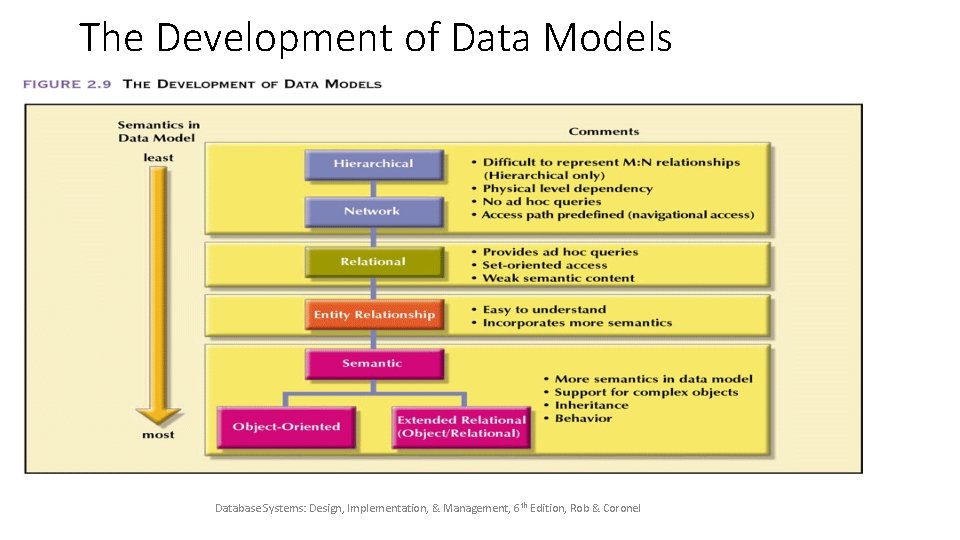
The Development of Data Models Database Systems: Design, Implementation, & Management, 6 th Edition, Rob & Coronel
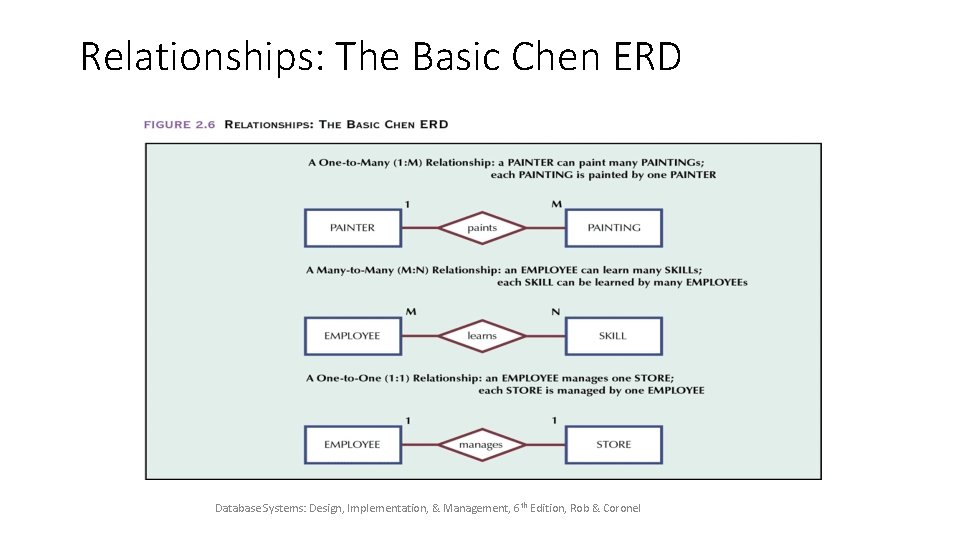
Relationships: The Basic Chen ERD Database Systems: Design, Implementation, & Management, 6 th Edition, Rob & Coronel
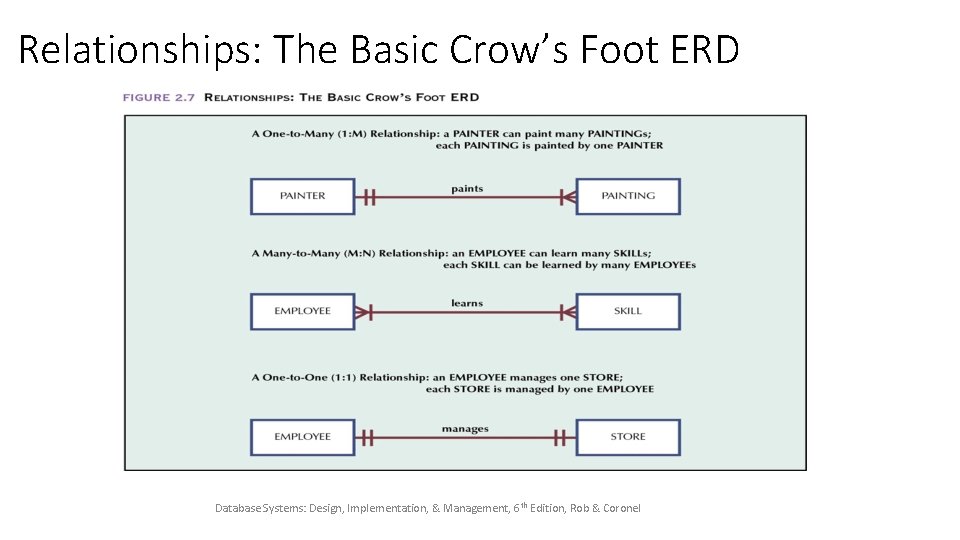
Relationships: The Basic Crow’s Foot ERD Database Systems: Design, Implementation, & Management, 6 th Edition, Rob & Coronel
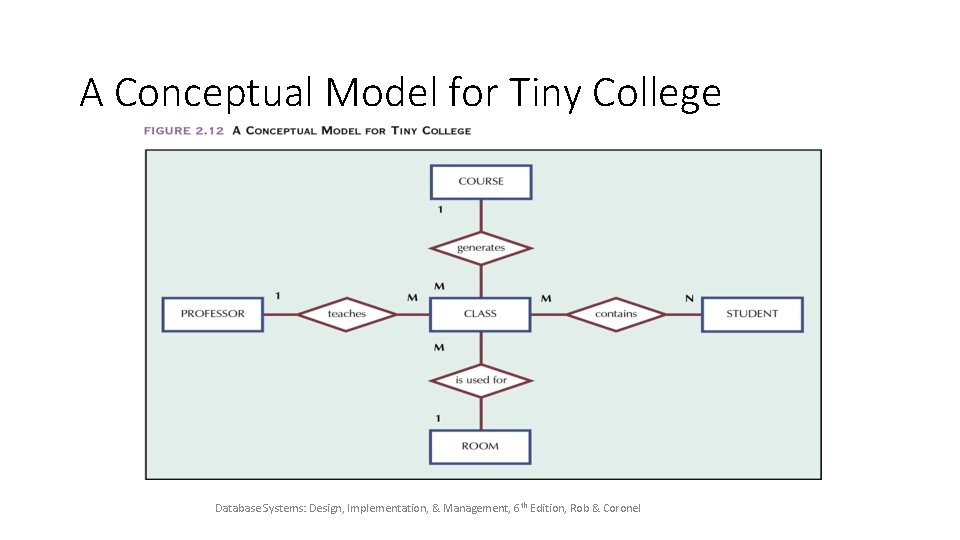
A Conceptual Model for Tiny College Database Systems: Design, Implementation, & Management, 6 th Edition, Rob & Coronel
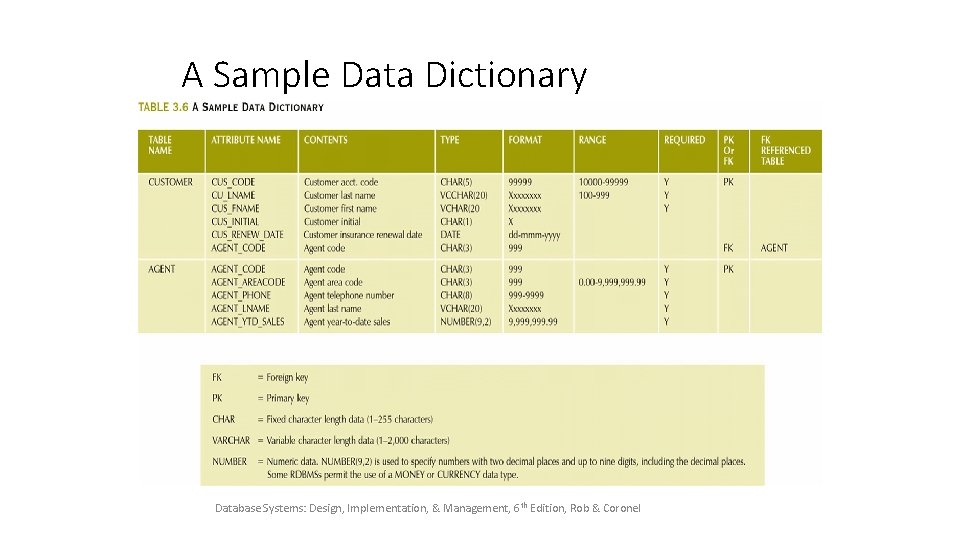
A Sample Data Dictionary Database Systems: Design, Implementation, & Management, 6 th Edition, Rob & Coronel
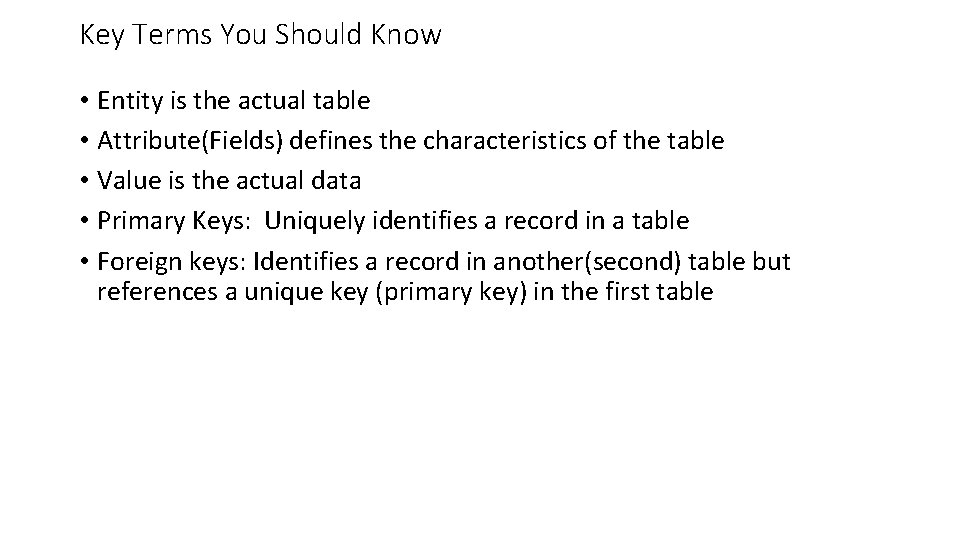
Key Terms You Should Know • Entity is the actual table • Attribute(Fields) defines the characteristics of the table • Value is the actual data • Primary Keys: Uniquely identifies a record in a table • Foreign keys: Identifies a record in another(second) table but references a unique key (primary key) in the first table
Creating a Database

Creating a Tables

Adding Fields to a Tables
Removing Fields to a Tables
Adding Records to a Tables
Modifying Records in a Tables
Deleting Records from a Tables
Obtaining Records from multiple Tables
Managing the Database
Securing the Database
- Slides: 25