
Data Wise Data Informed Instruction Nicole Staker Summer
- Slides: 27
+ Data Wise: Data Informed Instruction Nicole Staker Summer 2013
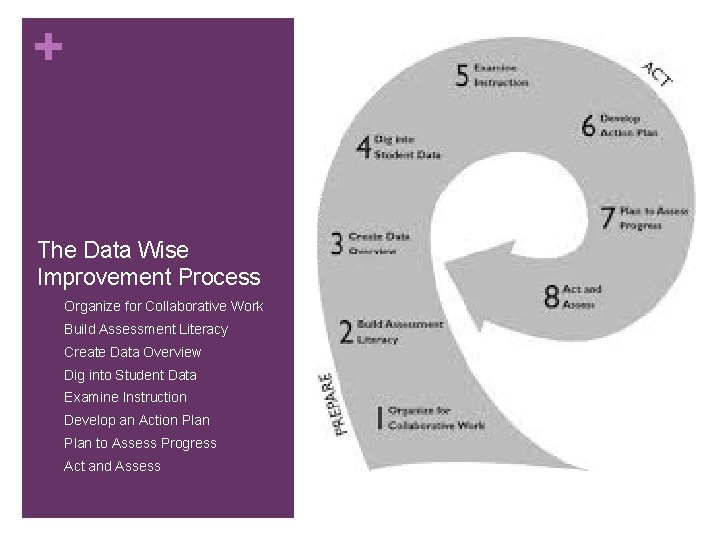
+ The Data Wise Improvement Process ① Organize for Collaborative Work ② Build Assessment Literacy ③ Create Data Overview ④ Dig into Student Data ⑤ Examine Instruction ⑥ Develop an Action Plan ⑦ Plan to Assess Progress ⑧ Act and Assess
+ Establishing structures for an improvement process and teamwork Setting the tone for meetings, collaborative work and work style preferences Taking stock of data, instructional initiatives, and current improvement practices Step 1: Organizing for Collaborative Work
+ Step 1: Organizing for Collaborative Work Current Practice n Staff meetings with agenda and expectations n We have the data-we just need to organize it so that it will be more beneficial to teachers and therefore student learning
+ Step 1: Organizing for Collaborative Work Next Steps n Discuss our current improvement process and/or adopt a new one n Create a data team, plan meetings and set norms n Discuss work style preferences n Create an inventory of data and instructional initiatives
+ Ensure that everyone is on the same page in regards to: Interpreting assessment results Assessment issues Reporting performance Trading off detail for reliability Measuring improvement Step 2: Building Assessment Literacy
+ Step 2: Building Assessment Literacy Current Practice n District office trains on-site specialists n Staff meetings regarding assessment results and interpretations
+ Step 2: Building Assessment Literacy Next Steps n Clearly define assessment principles n Discuss assessment issues, different ways of reporting performance, detail versus reliability, and how to measure improvement
+ Choose a focus area Analyze the data: find the story Display the data, make comparisons and find trends Make sense of the data by providing teachers the opportunity to work with it Step 3: Creating a Data Overview
+ Step 3: Creating a Data Overview Current Practice n Choose a focus area (based on district) n Annual meeting at beginning of the year to discuss/analyze last year’s SBA test and AYP n Display data (created by district)
+ § Teachers need more opportunities to take ownership of the data by working with it, possibly in grade level teams § Create various data displays that show different focuses and trends § Engage teachers in identifying a priority question Step 3: Creating a Data Overview Next Steps
+ Choose a starting place: Look carefully at a single data source to understand student thinking Dig into multiple data sources through Triangulation Develop common language to articulate the Learner-Centered Problem Step 4: Digging into Student Data
+ Step 4: Digging into Student Data Current Practice n Teachers have informal data based on observations and interactions with students, which may come up during conversations and meetings n Required assessments for teachers (AIMSweb, SBA), which we discuss
+ Step 4: Digging into Student Data Next Steps n Triangulation: use multiple data sources to get the “big picture” about each student n Develop common language to articulate the Learner-Centered Problem
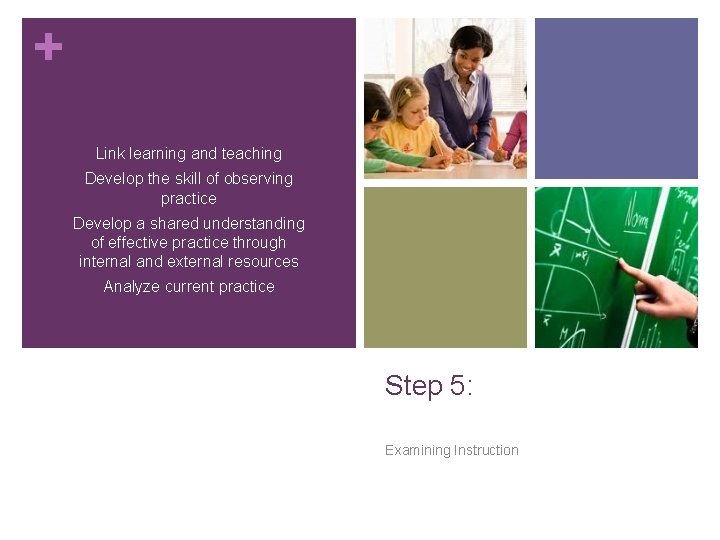
+ Link learning and teaching Develop the skill of observing practice Develop a shared understanding of effective practice through internal and external resources Analyze current practice Step 5: Examining Instruction
+ Step 5: Examining Instruction Current Practice n Principal observations, twice a year for teachers who are not on the alternative model n Various trainings incorporate teacher observation of a lesson or strategy
+ Step 5: Examining Instruction Next Steps n Link learning and teaching n Develop the skill of observing practice n Analyze current practice – find teachers who are willing to step up and create the time to observe practice
+ Brainstorm and select a solution to the identified problem Agree on what plan will look like in classrooms Make the plan official: put it in writing, assign responsibilities and time frames Look ahead: plan how to support teachers Step 6: Developing an Action Plan
+ Step 6: Developing an Action Plan Current Practice n School focus usually implemented by district n Principal finds ways to support teachers, but it is not focused on one school action plan
+ Step 6: Developing an Action Plan Next Steps n Brainstorm and select a solution to the identified problem (needs to be school driven, based on data, rather than district assigned) n Agree on plan and make it official in writing with responsibilities and time frames
+ Choose assessments to measure progress (short to long term) Set appropriate student learning goals for improvement/proficiency Step 7: Planning to Assess Progress
+ Step 7: Planning to Assess Progress Current Practice n Teachers use a variety of short, mid and long term assessments n School goals are put into place but not through the whole school data driven process
+ Step 7: Planning to Assess Progress Next Steps n Use assessments as part of data-driven process n Set student learning goals as part of the data-driven process
+ Now that you are at the end ot the process, focus on these questions: Are we on the same page? Are we following through? Are students learning more? What’s next? ? ? Step 8: Acting and Assessing
+ Step 8: Acting and Assessing Current Practice n Grade level teams are in place for accountability n Some classroom visits (observations) n Celebrate successes (“celebrations”) at meetings
+ Step 8: Acting and Assessing Next Steps n Ensure that all staff members are on the same page, work on communication n Ensure that all stakeholders are following through n Discuss next steps and adapt PD plans to meet those next steps
+ References Boudett, K. P. , City, E. A. , Murnane, R. J. (2013). Data wise: A step-bystep guide to using assessment results to improve teaching and learning (Revised & Expanded Edition). Cambridge, MA: Harvard Education Press.