
Data Walk Directions Get a Data Walk handout
- Slides: 29
Data Walk Directions: Get a “Data Walk” handout, form a trio, review data, and answer questions on the handout Data Sources: Washington Department of Commerce Census US Department of Housing and Urban Development
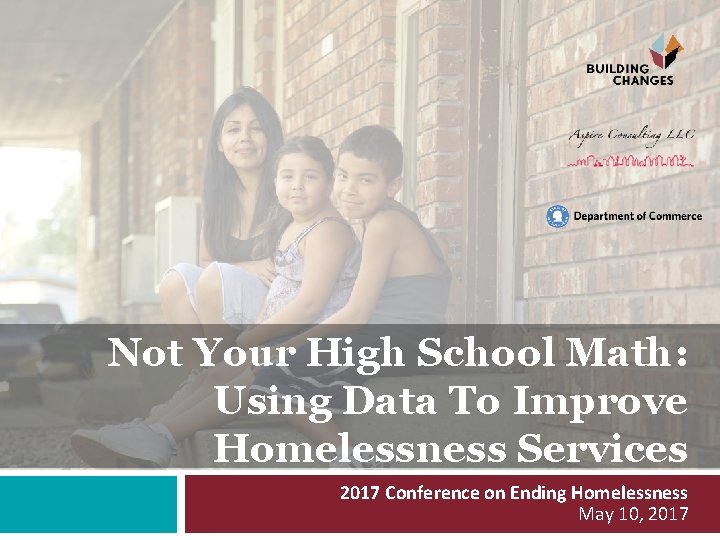
Not Your High School Math: Using Data To Improve Homelessness Services 2017 Conference on Ending Homelessness May 10, 2017
Welcome Presenters: • Sarah Cotton Rajski, Building Changes • Kathie Barkow, Aspire Consulting LLC • Ian Kinder-Pyle, Department of Commerce Data Support: • Talia Scott, Department of Commerce
Workshop Results At the end of the workshop participants will: 1. Understand how to use data to inform program design 2. Understand the value of prioritizing people from place not meant for habitation (unsheltered) 3. Have a framework for developing strategies to increase the number of unsheltered served in their community
Call to Action All unsheltered people in Washington State are served and get access to housing
Ideas About How To Use Data walk = tool to engage Data informs program design and strategies Disaggregation of data reveals disparities “BAD” = best available data Role of data quality
Checking In How familiar are you with data walks? How useful is the data set?
Credit Work comes from the Annie E Casey Foundation, Results-Based Leadership Programs http: //www. aecf. org/work/leadershipdevelopment/leadership-development/ Data tables extracted by Commerce
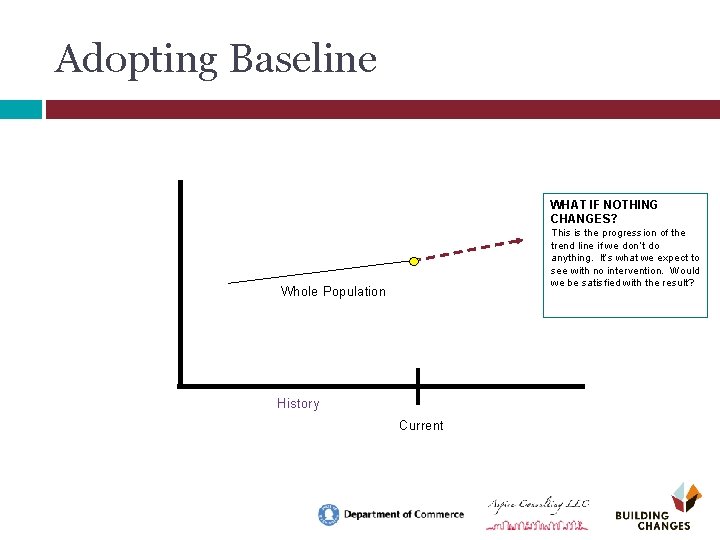
Adopting Baseline WHAT IF NOTHING CHANGES? This is the progression of the trend line if we don’t do anything. It’s what we expect to see with no intervention. Would we be satisfied with the result? Whole Population History Current
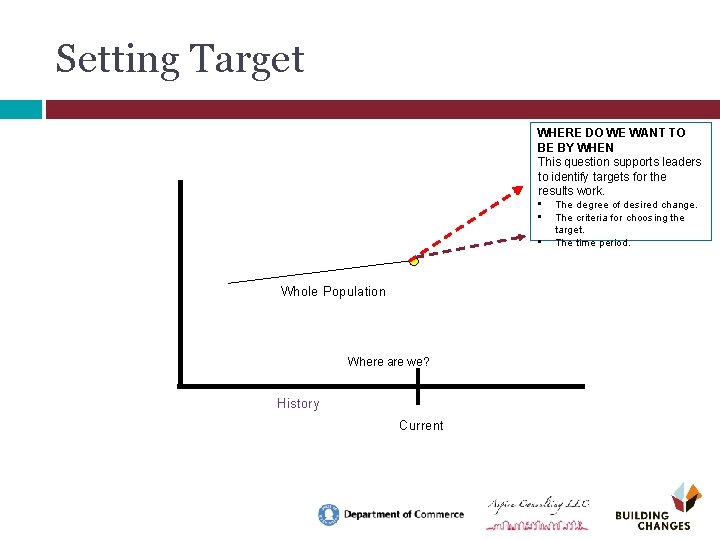
Setting Target WHERE DO WE WANT TO BE BY WHEN? This question supports leaders to identify targets for the results work. • • • Whole Population Where are we? History Current The degree of desired change. The criteria for choosing the target. The time period.
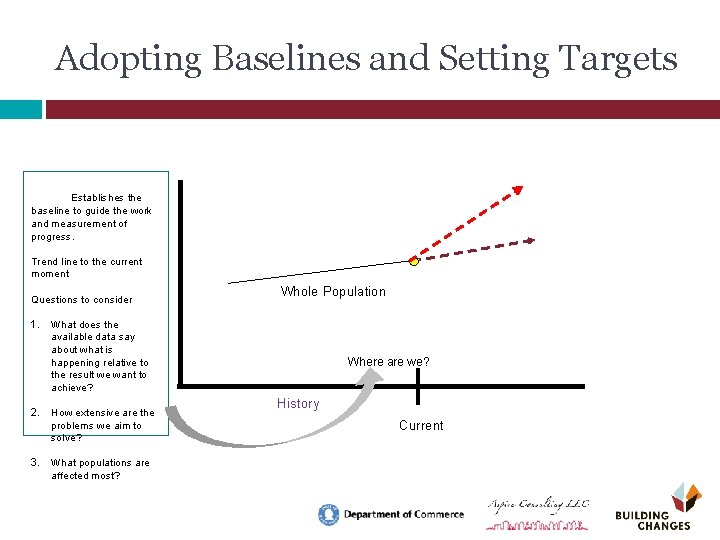
Adopting Baselines and Setting Targets WHERE ARE WE NOW? Establishes the baseline to guide the work and measurement of progress. Trend line to the current moment Questions to consider 1. Whole Population What does the available data say about what is happening relative to the result we want to achieve? 2. How extensive are the problems we aim to solve? 3. What populations are affected most? Where are we? History Current
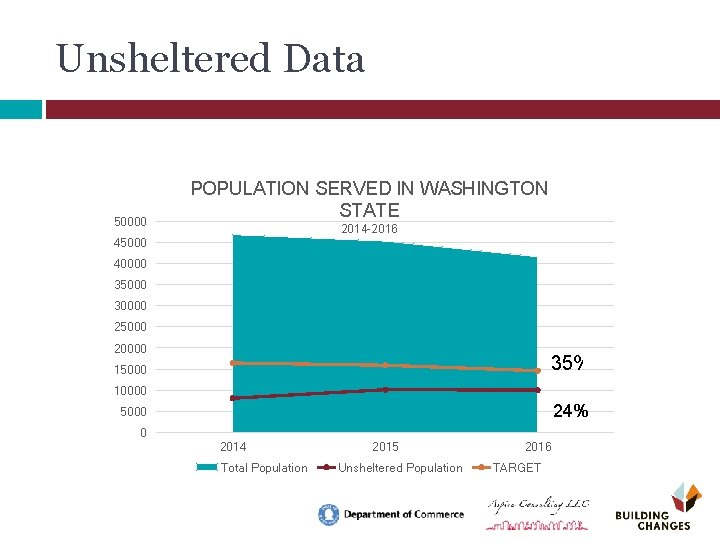
Unsheltered Data 50000 POPULATION SERVED IN WASHINGTON STATE 2014 -2016 45000 40000 35000 30000 25000 20000 35% 15000 10000 24% 5000 0 2014 Total Population 2015 Unsheltered Population 2016 TARGET
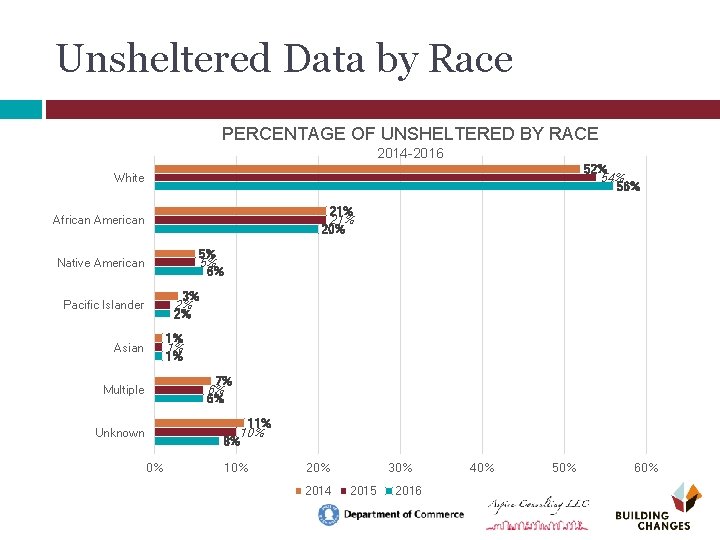
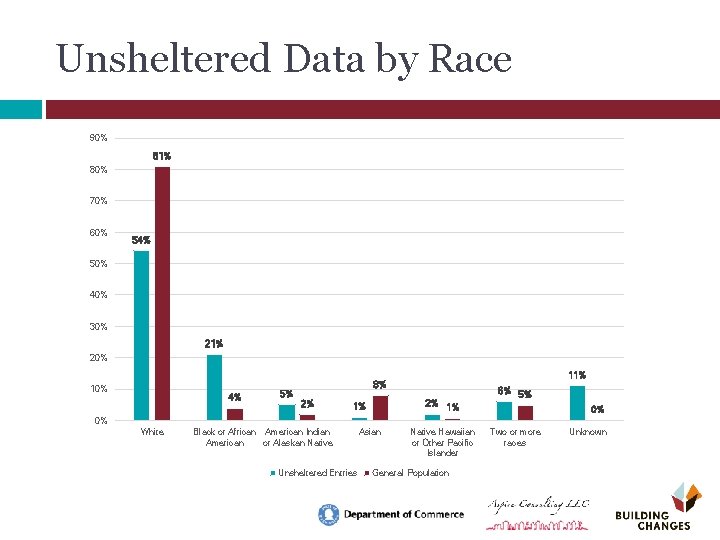
Unsheltered Data by Race PERCENTAGE OF UNSHELTERED BY RACE 2014 -2016 52% 54% White 56% 21% 20% African American 5% 5% 6% Native American 3% 2% 2% Pacific Islander 1% 1% 1% Asian 7% 6% 6% Multiple 11% 10% Unknown 8% 0% 10% 2014 30% 2015 2016 40% 50% 60%
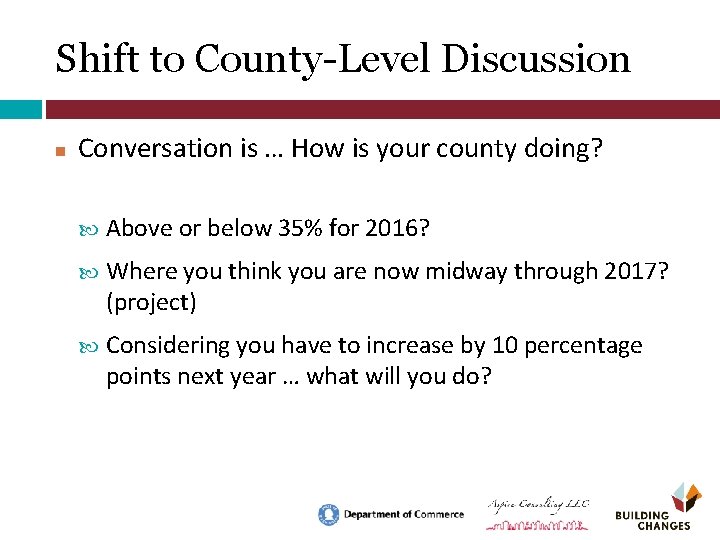
Shift to County-Level Discussion Conversation is … How is your county doing? Above or below 35% for 2016? Where you think you are now midway through 2017? (project) Considering you have to increase by 10 percentage points next year … what will you do?
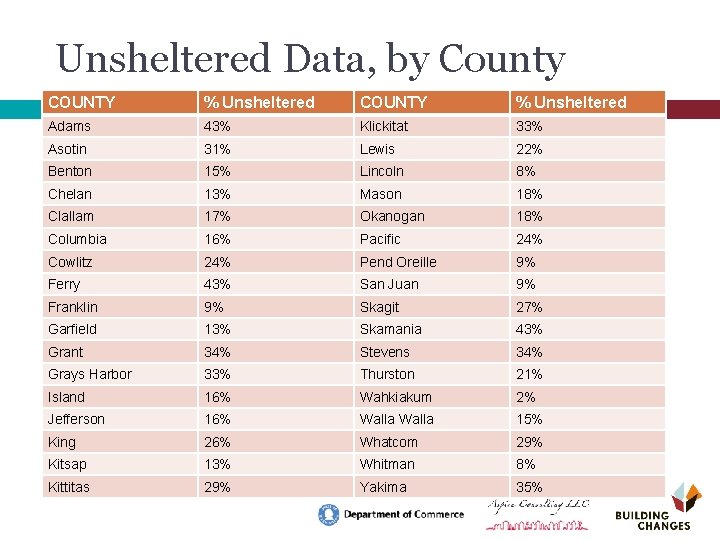
Unsheltered Data, by County COUNTY % Unsheltered Adams 43% Klickitat 33% Asotin 31% Lewis 22% Benton 15% Lincoln 8% Chelan 13% Mason 18% Clallam 17% Okanogan 18% Columbia 16% Pacific 24% Cowlitz 24% Pend Oreille 9% Ferry 43% San Juan 9% Franklin 9% Skagit 27% Garfield 13% Skamania 43% Grant 34% Stevens 34% Grays Harbor 33% Thurston 21% Island 16% Wahkiakum 2% Jefferson 16% Walla 15% King 26% Whatcom 29% Kitsap 13% Whitman 8% Kittitas 29% Yakima 35%
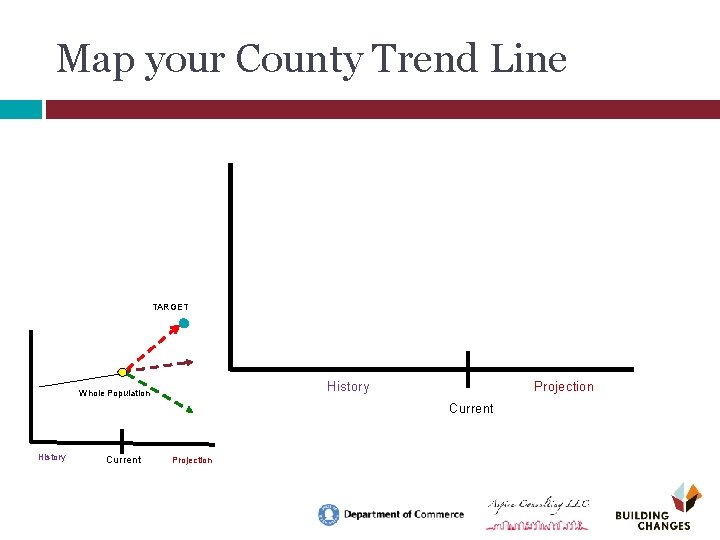
Map your County Trend Line TARGET History Whole Population Projection Current History Current Projection
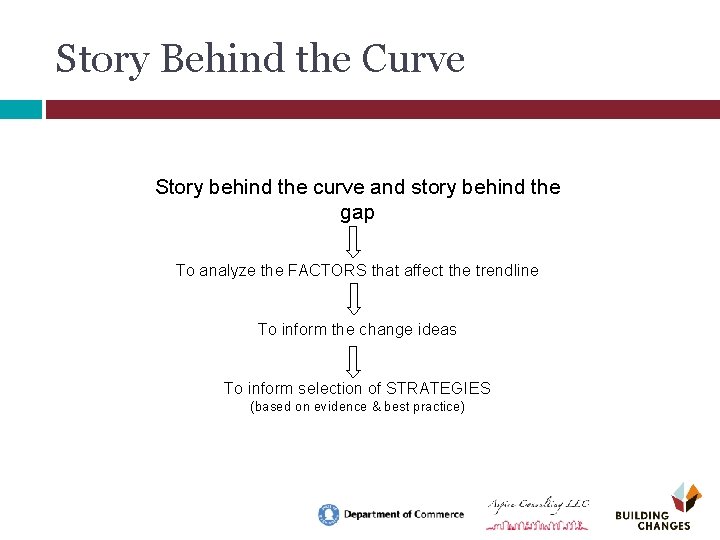
Story Behind the Curve Story behind the curve and story behind the gap To analyze the FACTORS that affect the trendline To inform the change ideas To inform selection of STRATEGIES (based on evidence & best practice)
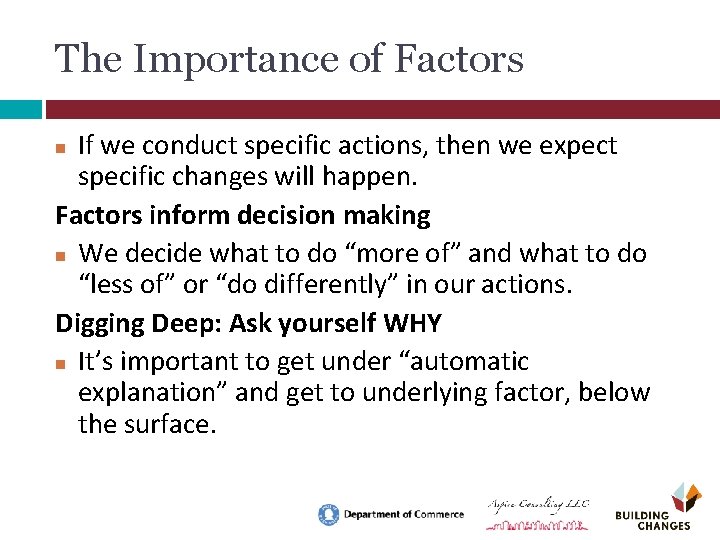
The Importance of Factors If we conduct specific actions, then we expect specific changes will happen. Factors inform decision making We decide what to do “more of” and what to do “less of” or “do differently” in our actions. Digging Deep: Ask yourself WHY It’s important to get under “automatic explanation” and get to underlying factor, below the surface.
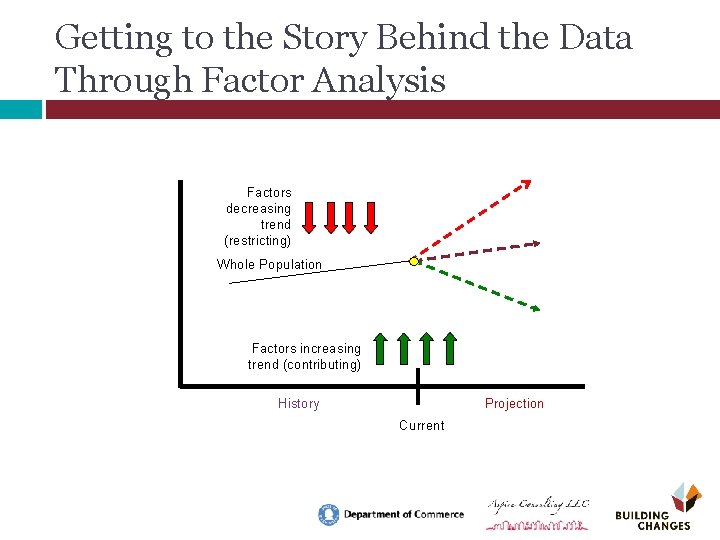
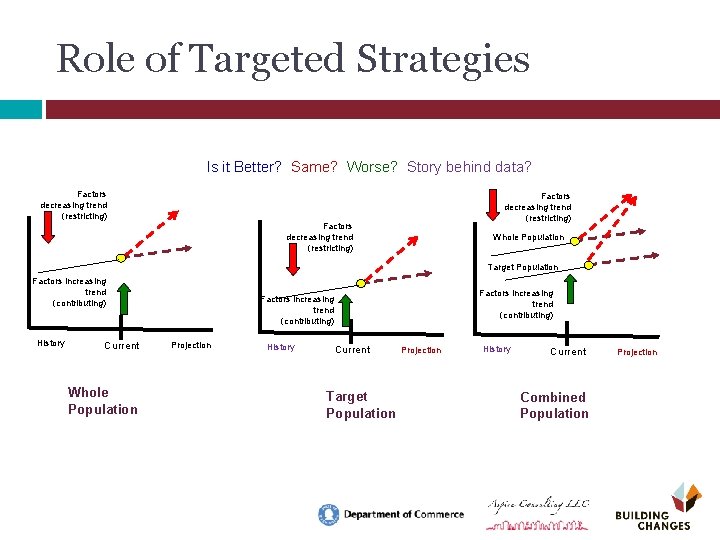
Getting to the Story Behind the Data Through Factor Analysis Factors decreasing trend (restricting) Whole Population Factors increasing trend (contributing) History Projection Current
What you can identify as factors? What is driving down? (restricting) What is driving up? (contributing)
Using Targets to Develop Strategies Considering you have to increase by 10% next year … what to do? Take a minute and write two strategies and be clear about which factor(s) they address
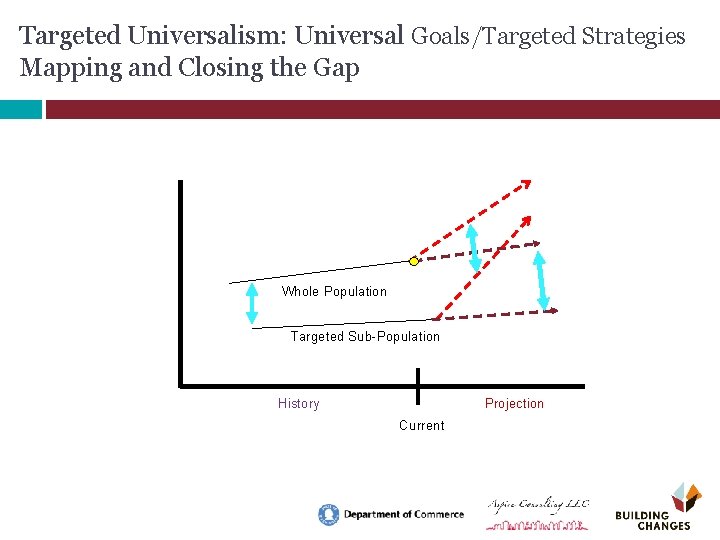
Targeted Universalism: Universal Goals/Targeted Strategies Mapping and Closing the Gap Whole Population Targeted Sub-Population History Projection Current
Role of Targeted Strategies Is it Better? Same? Worse? Story behind data? Factors decreasing trend (restricting) Whole Population Target Population Factors increasing trend (contributing) History Current Whole Population Factors increasing trend (contributing) Projection History Current Target Population Projection History Current Combined Population Projection
Unsheltered Data by Race 90% 81% 80% 70% 60% 54% 50% 40% 30% 21% 20% 10% 4% 5% 11% 8% 2% 2% 1% 1% 6% 5% 0% 0% White Black or African American Indian American or Alaskan Native Unsheltered Entries Asian Native Hawaiian or Other Pacific Islander General Population Two or more races Unknown
Targeted Strategy Brainstorm Revisit strategies and consider if there is an appropriate targeted strategy
A Few Ideas for Targeted Strategies Hire staff/peers that reflect population served Go to encampments more frequently that are comprised of overly represented populations Ensure language access Ensure cultural competence Assess use of peers in program or outreach Examine neighborhoods where housing is being offered from the lens of its racial composition Build on multigenerational or extended family housing strategies where appropriate
Recap of Process Pick the data point you want to look at Collect multiple years of data in order to create a trend line Consider the direction of the trend line and where you want it to go; set a target Brainstorm the factors that move the trend line in both directions – ideal to do this with partners Brainstorm the factors that move the trend line in both directions for disproportionately affected groups Pick one priority factor Develop strategies to address the factor Repeat to track progress
Call to Action All unsheltered people in Washington State are served and get access to housing
Contact Information Sarah Cotton Rajski Building Changes | Senior Manager 206. 805. 6123 o| 206 -660 -6719 c sarah. rajski@buildingchanges. org Kathie Barkow Aspire Consulting LLC | Principal 510. 967. 5161 c kathiebarkow@earthlink. net For data, reach out… CHG lead agency And/or HMIS licensees.