
DATA SCIENCE LABORATORY DSLAB Dorina Thanou Swiss Data

DATA SCIENCE LABORATORY (DSLAB) Dorina Thanou Swiss Data Science Center EPFL & ETH Zurich Data Science Lab – Spring 2018
Start your engines! • Head over to the course webpage • https: //dslab 2018. github. io/ • Configure & Run Oracle Virtual. Box • Download, configure & start the DSLab VM • Ubuntu linux • Anaconda (Python 3), git, Docker/ py. Spark, py. Charm • {username: student, password: student}

Solutions to Week #3 • Any questions?

TODAY’S LAB WEEK #4 DEALING WITH REAL WORLD SENSOR DATA
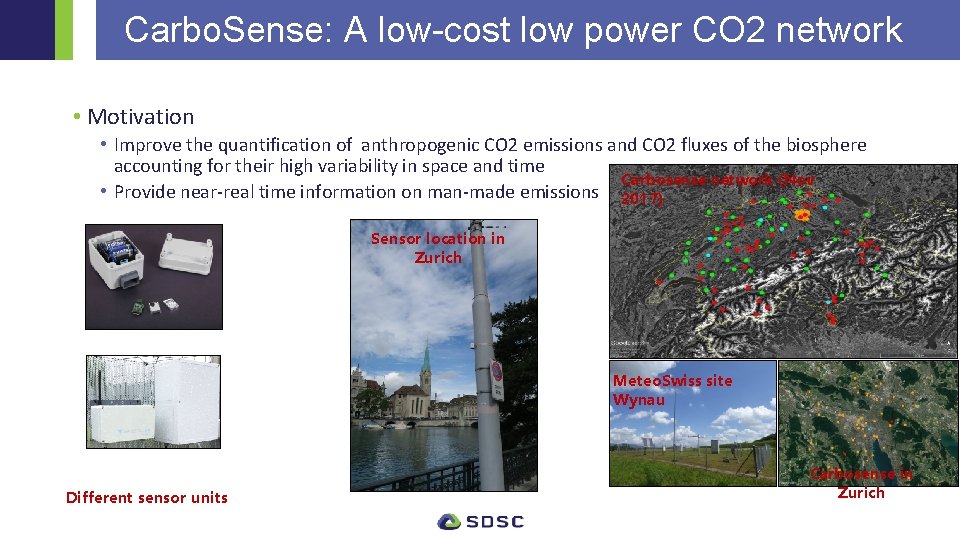
Carbo. Sense: A low-cost low power CO 2 network • Motivation • Improve the quantification of anthropogenic CO 2 emissions and CO 2 fluxes of the biosphere accounting for their high variability in space and time Carbosense network (Nov • Provide near-real time information on man-made emissions 2017) Sensor location in Zurich Meteo. Swiss site Wynau Different sensor units Carbosense in Zurich
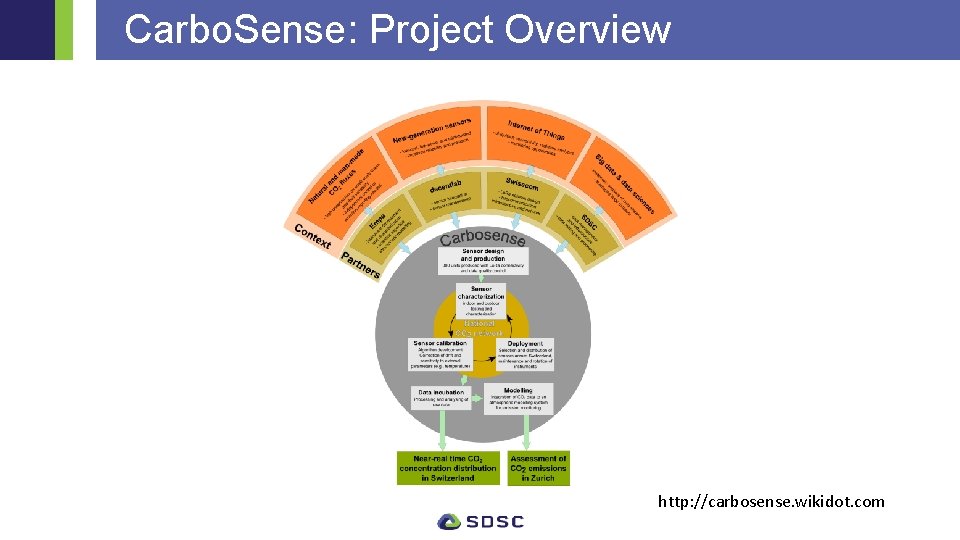
Carbo. Sense: Project Overview http: //carbosense. wikidot. com
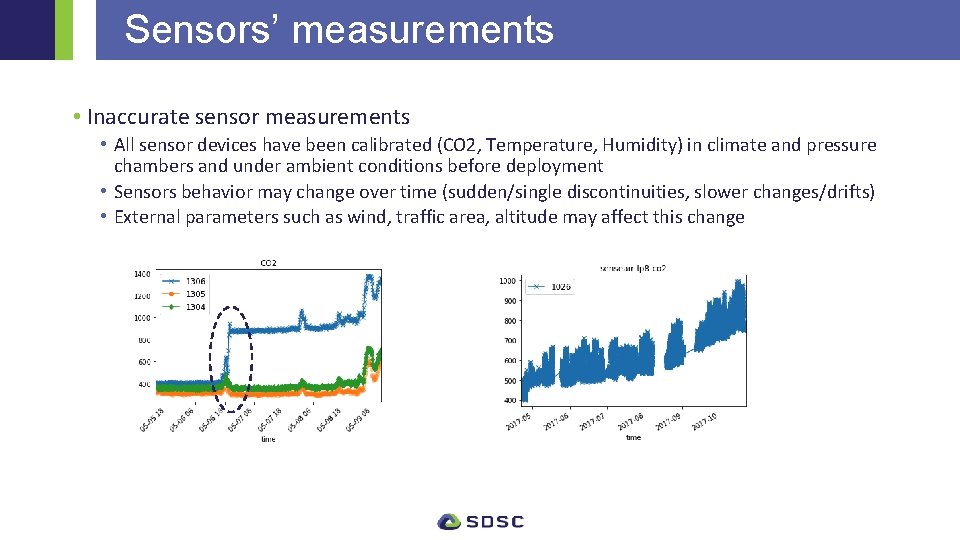
Sensors’ measurements • Inaccurate sensor measurements • All sensor devices have been calibrated (CO 2, Temperature, Humidity) in climate and pressure chambers and under ambient conditions before deployment • Sensors behavior may change over time (sudden/single discontinuities, slower changes/drifts) • External parameters such as wind, traffic area, altitude may affect this change
Today’s lab • We will focus only in the area of Zurich • 46 sites located in different part of the city • Measurements for each site • CO 2 (ppm) • Temperature • Humidity • Additional metadata • Altitude at which each sensor is located • Average daily wind pattern for the city of Zurich • Division of the city into zones with different anthropogenic emissions (e. g. , industrial, residential, forest, mountain, etc)
Objectives • Curate the CO 2 measurements, by processing jointly the sensor measurements • Fit a robust regression model to the CO 2 measurements, that takes into account all the different parameters • Use this model to detect possible inaccurate values • Prior knowledge • There is a strong dependence of the CO 2 measurements, on temperature, humidity, altitude, traffic, wind etc.
Suggested spatio-temporal modeling • Detect similar patterns: • in time (days with similar characteristics) • in space (sensors with similar topological characteristics) • For each of these patterns learn a simple linear regression model • Example: Model the behavior of sensor A for the entire month • Step 1: Find other similar sensors (B, C) • Step 2: Find cluster of days with similar characteristics (D 1, D 2, D 3) • Step 3: For all the days in Di use measurements from A, B, C to fit a regression model
Let’s get started • Get the DSLab Week 4 instructions • Please work in groups of two! • Due date: March 27 18 H 00 • Office hours: • Friday March 16 15 H 00 – 16 H 00 • Friday March 23 15 H 00 – 16 H 00 • Communications: • https: //mattermost-dslab. epfl. ch
- Slides: 11