
Data Science and Big Data Analytics Chap 1
Data Science and Big Data Analytics Chap 1: Intro to Big Data Analytics Charles Tappert Seidenberg School of CSIS, Pace University
1. 1 Big Data Overview n Industries that gather and exploit data n Credit card companies monitor purchase n n Mobile phone companies analyze calling patterns – e. g. , even on rival networks n n Good at identifying fraudulent purchases Look for customers might switch providers For social networks data is primary product n Intrinsic value increases as data grows
Attributes Defining Big Data Characteristics n Huge volume of data n n Complexity of data types and structures n n Not just thousands/millions, but billions of items Varity of sources, formats, structures Speed of new data creation and grow n High velocity, rapid ingestion, fast analysis
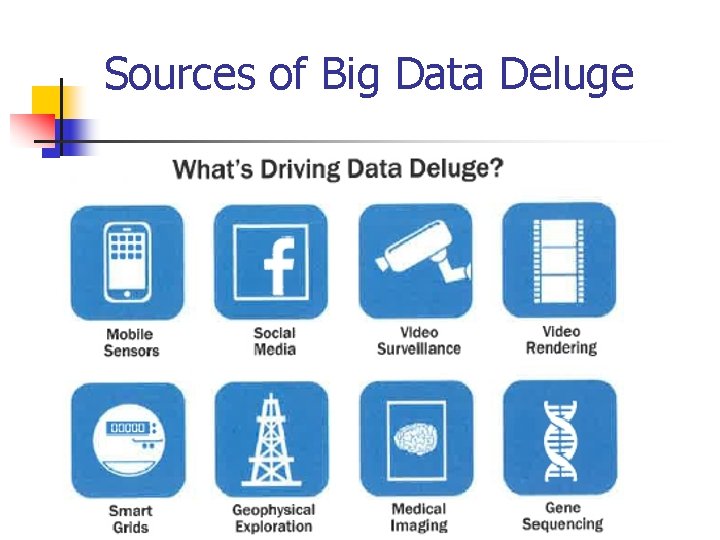
Sources of Big Data Deluge n n n n Mobile sensors – GPS, accelerometer, etc. Social media – 700 Facebook updates/sec in 2012 Video surveillance – street cameras, stores, etc. Video rendering – processing video for display Smart grids – gather and act on information Geophysical exploration – oil, gas, etc. Medical imaging – reveals internal body structures Gene sequencing – more prevalent, less expensive, healthcare would like to predict personal illnesses
Sources of Big Data Deluge
Example: Genotyping from 23 andme. com
1. 1. 1 Data Structures: Characteristics of Big Data
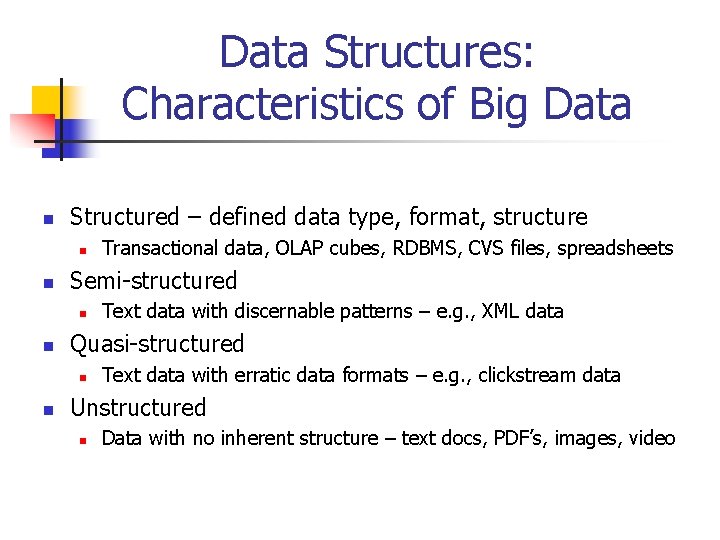
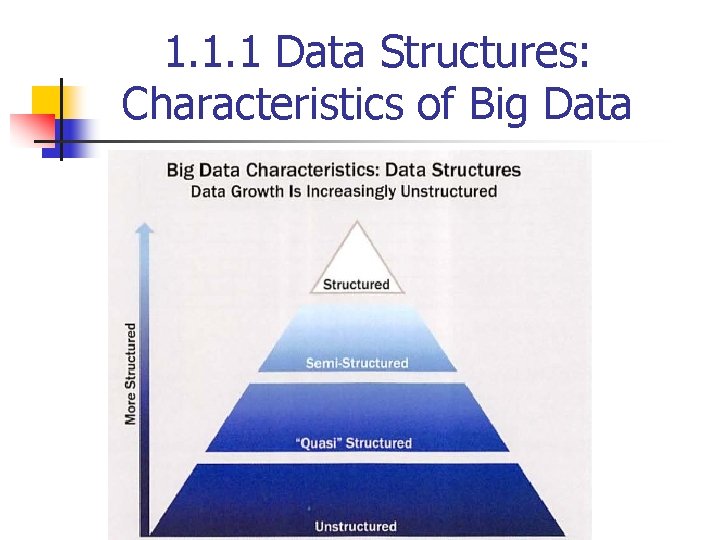
Data Structures: Characteristics of Big Data n Structured – defined data type, format, structure n n Semi-structured n n Text data with discernable patterns – e. g. , XML data Quasi-structured n n Transactional data, OLAP cubes, RDBMS, CVS files, spreadsheets Text data with erratic data formats – e. g. , clickstream data Unstructured n Data with no inherent structure – text docs, PDF’s, images, video
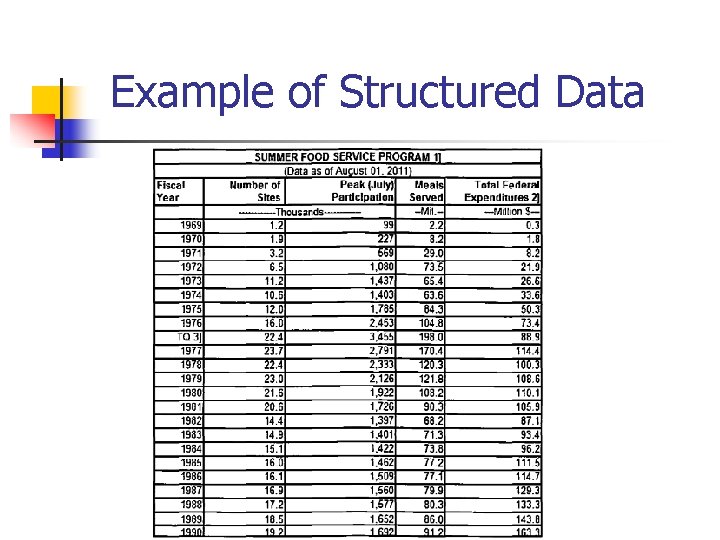
Example of Structured Data
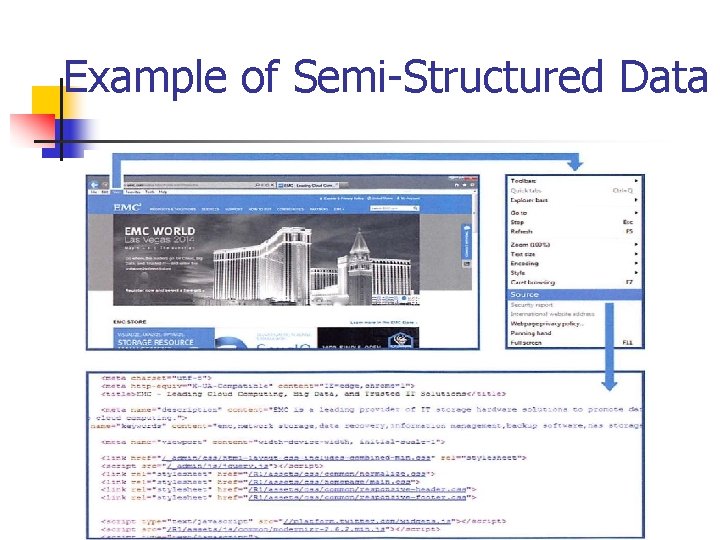
Example of Semi-Structured Data
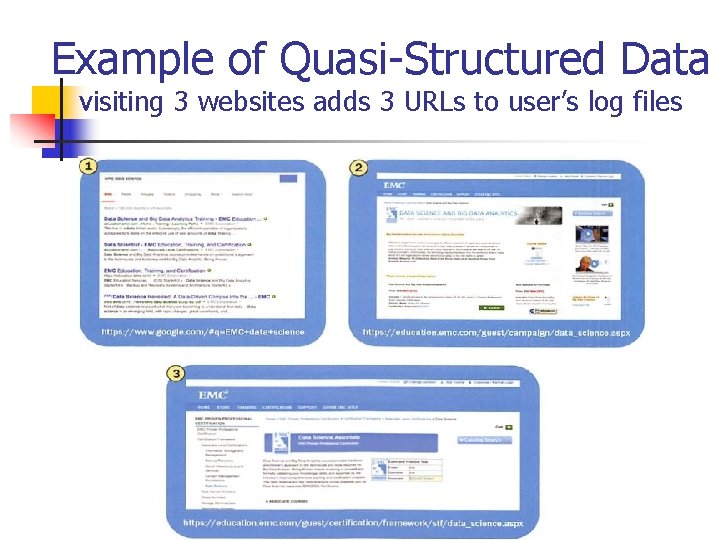
Example of Quasi-Structured Data visiting 3 websites adds 3 URLs to user’s log files
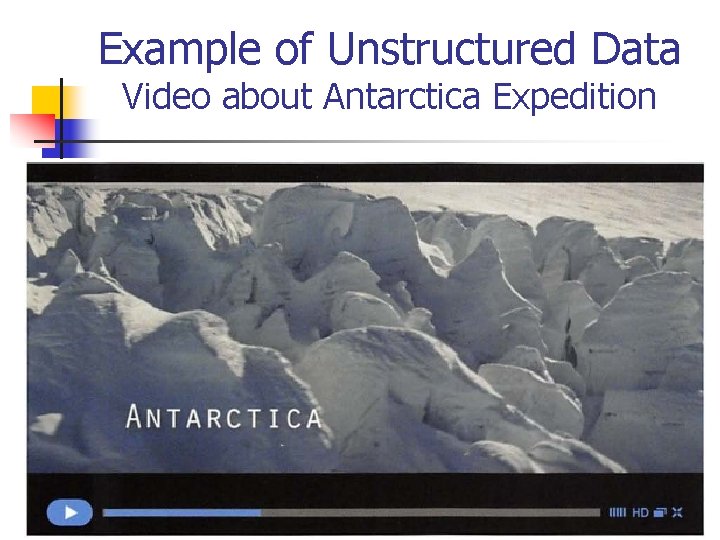
Example of Unstructured Data Video about Antarctica Expedition
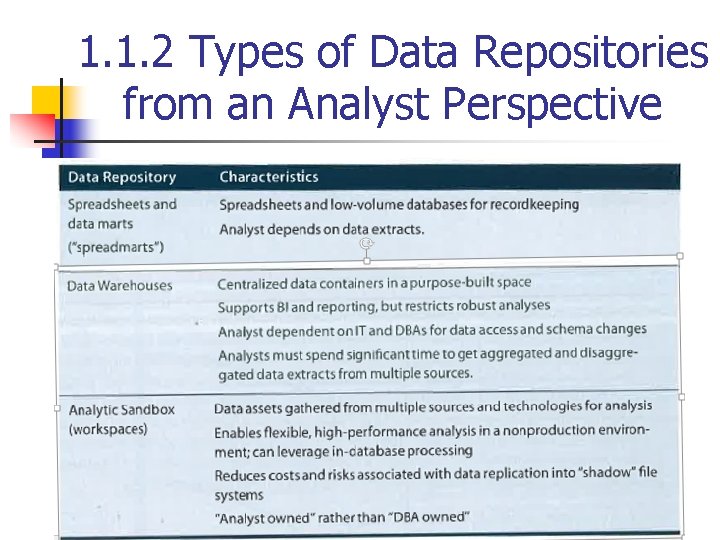
1. 1. 2 Types of Data Repositories from an Analyst Perspective
1. 2 State of the Practice in Analytics n n Business Intelligence (BI) versus Data Science Current Analytical Architecture Drivers of Big Data Emerging Big Data Ecosystem and a New Approach to Analytics
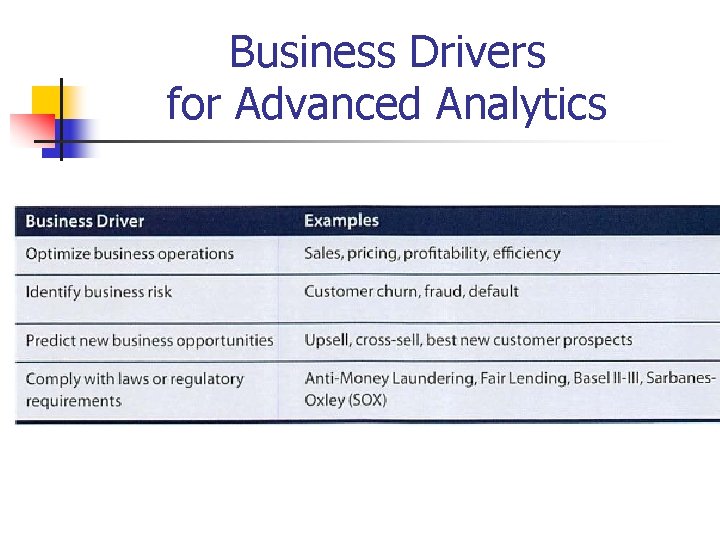
Business Drivers for Advanced Analytics
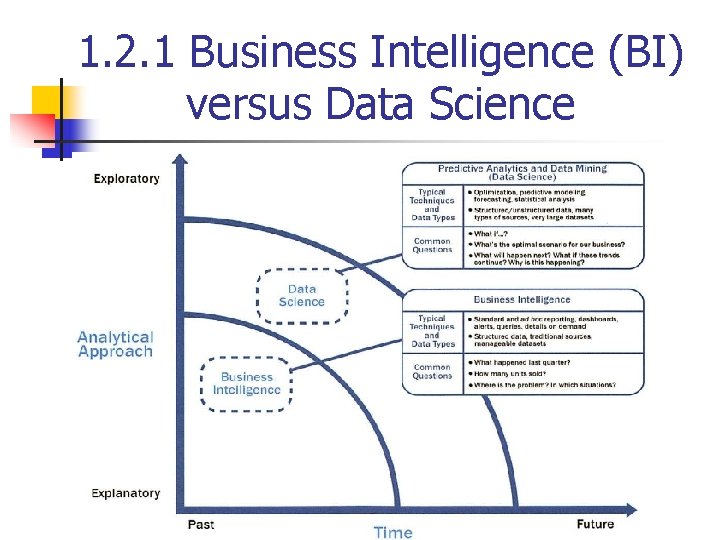
1. 2. 1 Business Intelligence (BI) versus Data Science
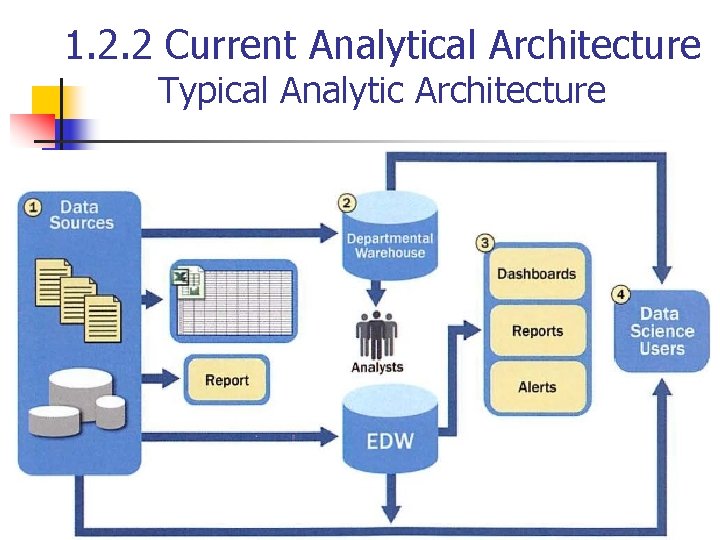
1. 2. 2 Current Analytical Architecture Typical Analytic Architecture
Current Analytical Architecture n n Data sources must be well understood EDW – Enterprise Data Warehouse From the EDW data is read by applications Data scientists get data for downstream analytics processing
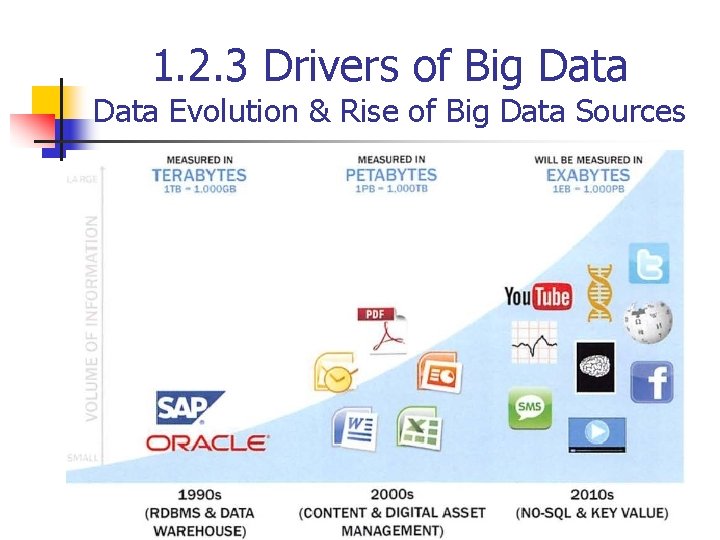
1. 2. 3 Drivers of Big Data Evolution & Rise of Big Data Sources
1. 2. 4 Emerging Big Data Ecosystem and a New Approach to Analytics n Four main groups of players n Data devices n n Data collectors n n Phone and TV companies, Internet, Gov’t, etc. Data aggregators – make sense of data n n Games, smartphones, computers, etc. Websites, credit bureaus, media archives, etc. Data users and buyers n Banks, law enforcement, marketers, employers, etc.
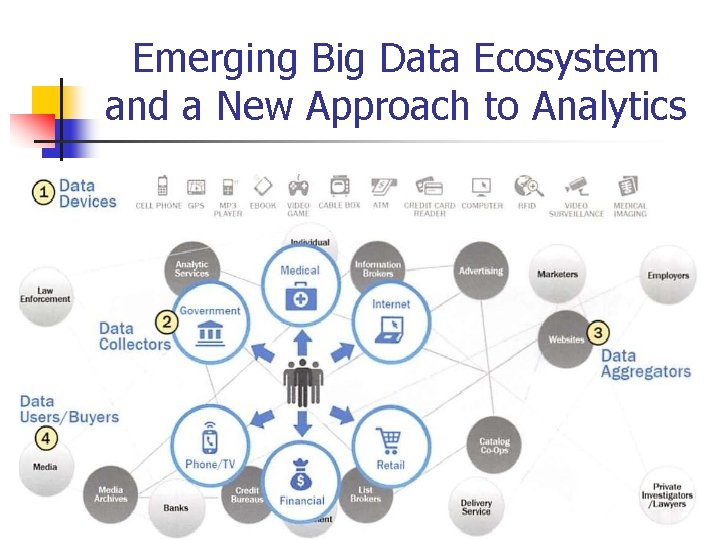
Emerging Big Data Ecosystem and a New Approach to Analytics
1. 3 Key Roles for the New Big Data Ecosystem 1. Deep analytical talent n 2. Data savvy professionals n 3. Advanced training in quantitative disciplines – e. g. , math, statistics, machine learning Savvy but less technical than group 1 Technology and data enablers n Support people – e. g. , DB admins, programmers, etc.
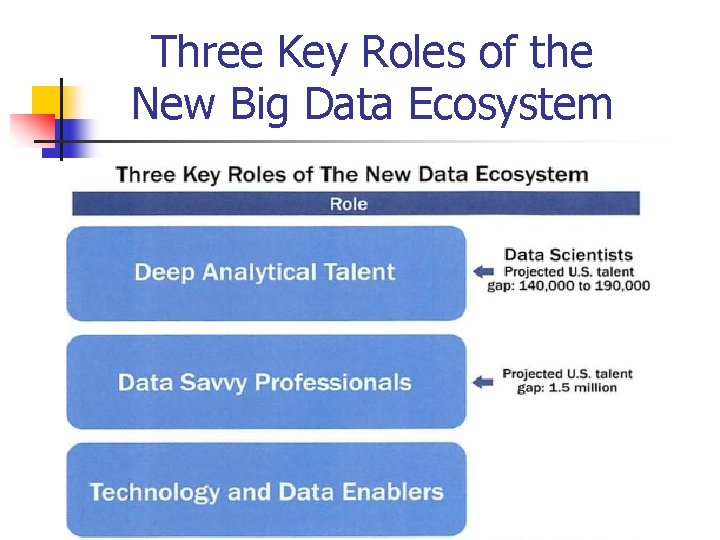
Three Key Roles of the New Big Data Ecosystem
Three Recurring Data Scientist Activities 1. 2. 3. Reframe business challenges as analytics challenges Design, implement, and deploy statistical models and data mining techniques on Big Data Develop insights that lead to actionable recommendations
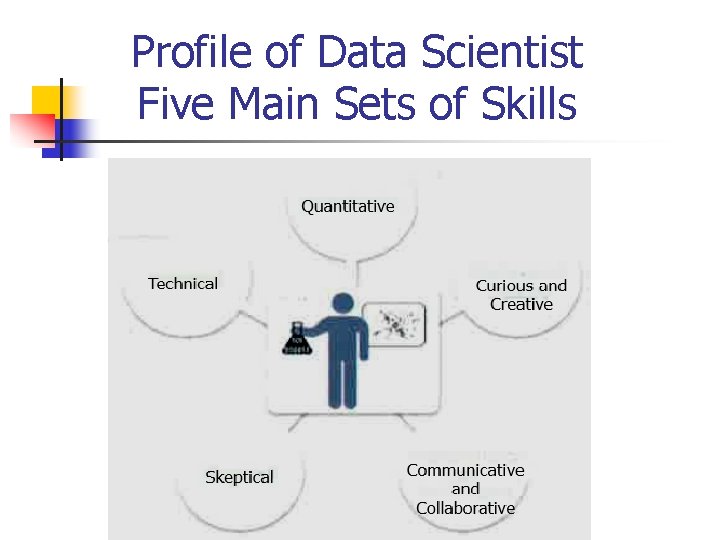
Profile of Data Scientist Five Main Sets of Skills
Profile of Data Scientist Five Main Sets of Skills n n n Quantitative skill – e. g. , math, statistics Technical aptitude – e. g. , software engineering, programming Skeptical mindset and critical thinking – ability to examine work critically Curious and creative – passionate about data and finding creative solutions Communicative and collaborative – can articulate ideas, can work with others
1. 4 Examples of Big Data Analytics n Retailer Target n n Apache Hadoop n n n Uses life events: marriage, divorce, pregnancy Open source Big Data infrastructure innovation Map. Reduce paradigm, ideal for many projects Social Media Company Linked. In n Social network for working professionals Can graph a user’s professional network 250 million users in 2014
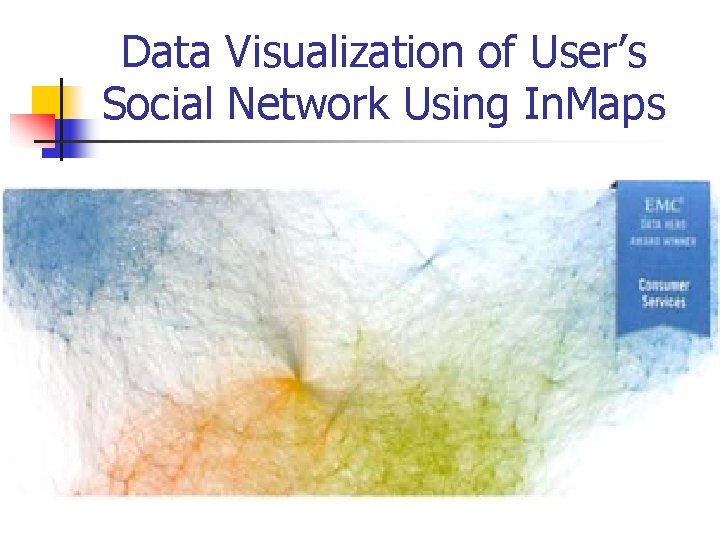
Data Visualization of User’s Social Network Using In. Maps
Summary n Big Data comes from myriad sources n n n Companies are finding creative and novel ways to use Big Data Exploiting Big Data opportunities requires n n Social media, sensors, Io. T, video surveillance, and sources only recently considered New data architectures New machine learning algorithms, ways of working People with new skill sets Always Review Chapter Exercises
Focus of Course n Focus on quantitative disciplines – e. g. , math, statistics, machine learning n Provide overview of Big Data analytics n In-depth study of a several key algorithms
- Slides: 30