
Data management aspects in the social sciences Marjan
- Slides: 26
Data management aspects in the social sciences Marjan Grootveld, DANS (Twitter @Marjan. Grootveld) Presenting also slides by Marion Wittenberg and Peter Doorn, DANS Workshop on Active DMPs – Geneva, 28 -30 June 2016 dans. knaw. nl DANS is an institute of KNAW en NWO
On the agenda • • • DANS services Social science traits Example datasets Data management training My personal concerns
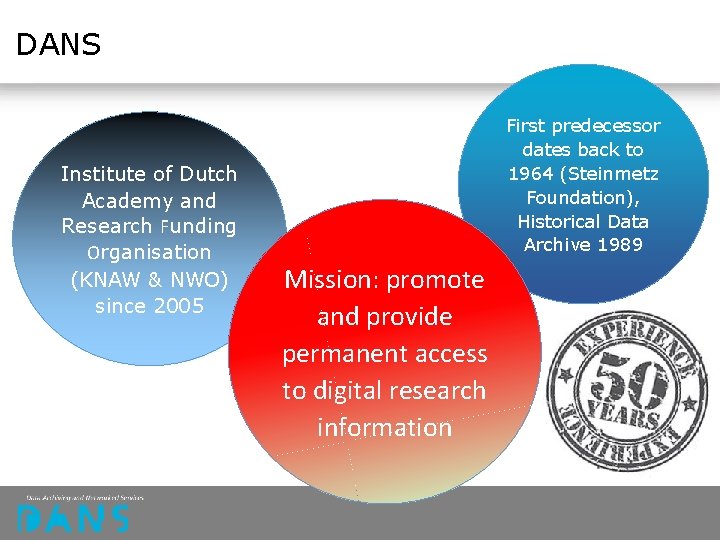
DANS Institute of Dutch Academy and Research Funding Organisation (KNAW & NWO) since 2005 First predecessor dates back to 1964 (Steinmetz Foundation), Historical Data Archive 1989 Mission: promote and provide permanent access to digital research information
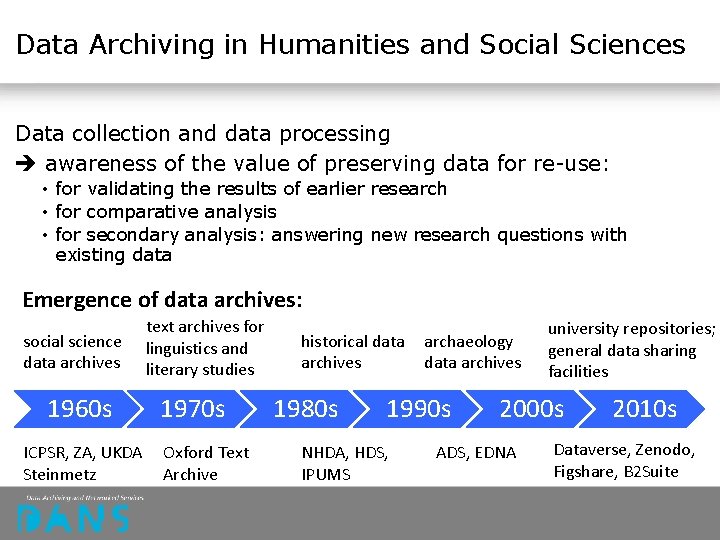
Data Archiving in Humanities and Social Sciences Data collection and data processing awareness of the value of preserving data for re-use: • for validating the results of earlier research • for comparative analysis • for secondary analysis: answering new research questions with existing data Emergence of data archives: social science data archives 1960 s ICPSR, ZA, UKDA Steinmetz text archives for linguistics and literary studies 1970 s Oxford Text Archive historical data archives 1980 s archaeology data archives 1990 s NHDA, HDS, IPUMS university repositories; general data sharing facilities 2000 s ADS, EDNA 2010 s Dataverse, Zenodo, Figshare, B 2 Suite
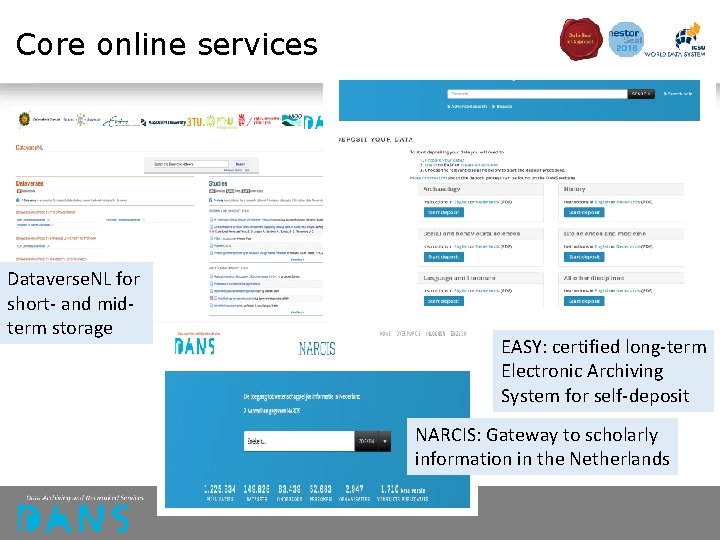
Core online services Dataverse. NL for short- and midterm storage EASY: certified long-term Electronic Archiving System for self-deposit NARCIS: Gateway to scholarly information in the Netherlands
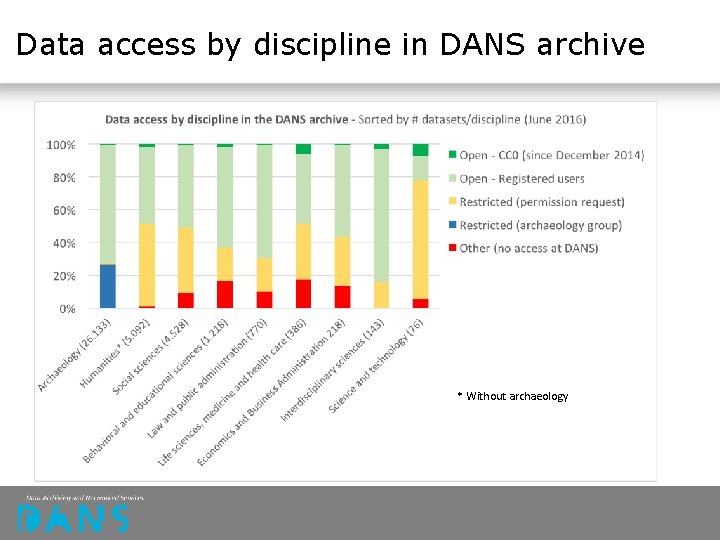
Data access by discipline in DANS archive * Without archaeology
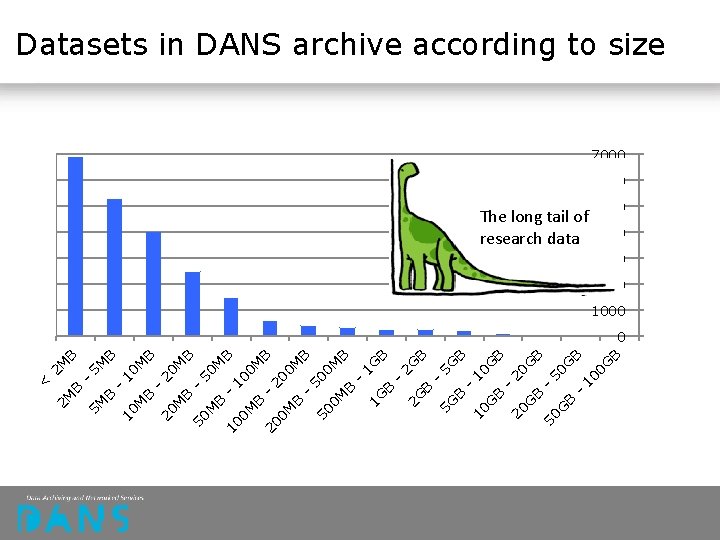
B B - 0 M M 50 B B M 20 B B B M 5 M 10 10 - - 2 M 20 B 2 0 M 00 M B B 5 0 50 0 M 0 M B B 1 G 1 G B B 2 G 2 G B B 5 G 5 G B B 10 10 G G B B 20 20 G G B B 50 50 G G B B 10 0 G B 0 M 10 M 50 B M 20 B M 10 B 5 M B 2 M < Datasets in DANS archive according to size 7000 6000 The long tail of research data 4000 5000 3000 2000 1000 0
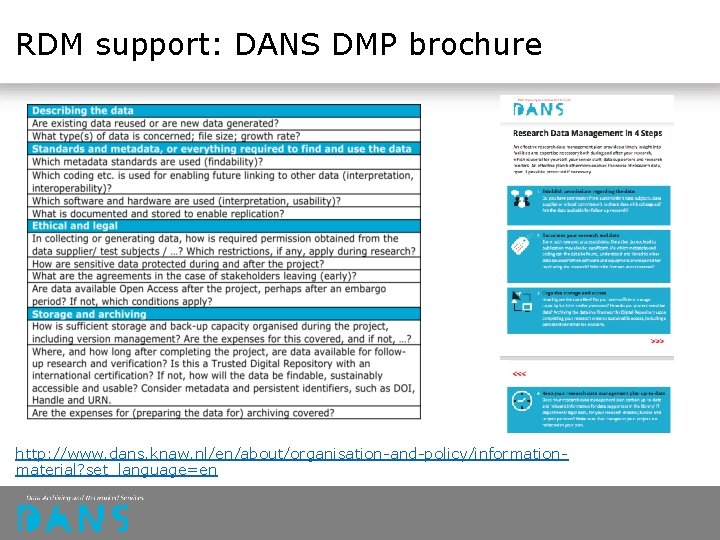
RDM support: DANS DMP brochure http: //www. dans. knaw. nl/en/about/organisation-and-policy/informationmaterial? set_language=en
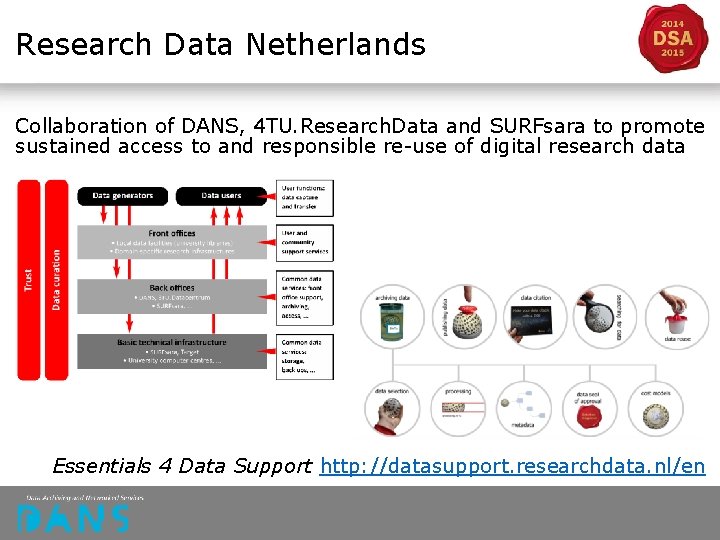
Research Data Netherlands Collaboration of DANS, 4 TU. Research. Data and SURFsara to promote sustained access to and responsible re-use of digital research data Essentials 4 Data Support http: //datasupport. researchdata. nl/en
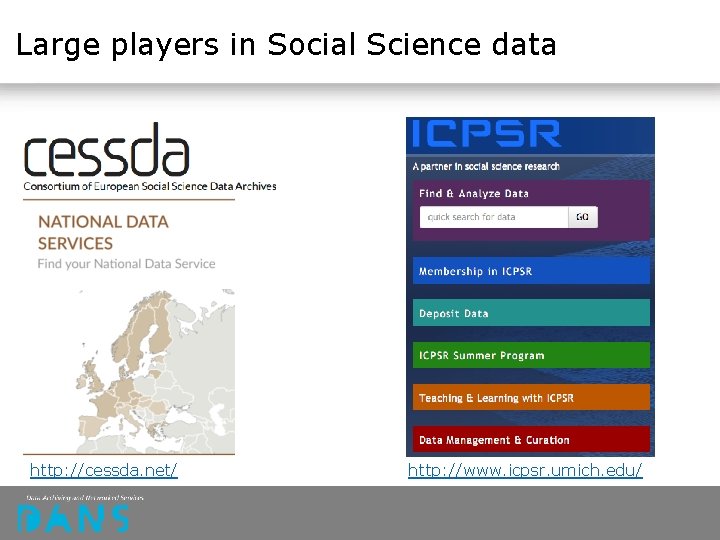
Large players in Social Science data http: //cessda. net/ http: //www. icpsr. umich. edu/
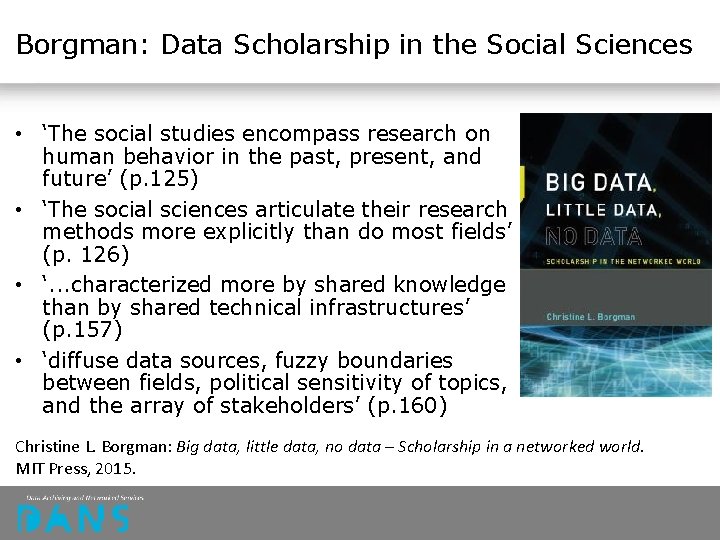
Borgman: Data Scholarship in the Social Sciences • ‘The social studies encompass research on human behavior in the past, present, and future’ (p. 125) • ‘The social sciences articulate their research methods more explicitly than do most fields’ (p. 126) • ‘. . . characterized more by shared knowledge than by shared technical infrastructures’ (p. 157) • ‘diffuse data sources, fuzzy boundaries between fields, political sensitivity of topics, and the array of stakeholders’ (p. 160) Christine L. Borgman: Big data, little data, no data – Scholarship in a networked world. MIT Press, 2015.
Social science traits (over-generalised!) • • Quantitative research, e. g. surveys (lots of variables > codebook needed) and qualitative research, e. g. interviews and observations May involve individual people > ethical issues, informed consent forms, sensitive or anonymised data Often longitudinal research (e. g. the start of the International Social Survey Programm (ISSP) was in 1972) Mixed attitude towards sharing and reusing data, e. g. • • • Political scientists are used to sharing data Economists often explore private third-party data (cannot be released or archived afterwards) Sociotechnical researchers cannot release or reproduce all materials (lab journals remain property of the lab) (Borgman, p. 149) For psychologists research methodology may have more value than the data Recent NL tendency (Oldenburg): publication packages along with publication: data + statistical syntax queries Beau Oldenburg: Integriteit en duurzaamheid in het digitale tijdperk. White paper DANS, 2015. http: //www. dans. knaw. nl/ (in Dutch)
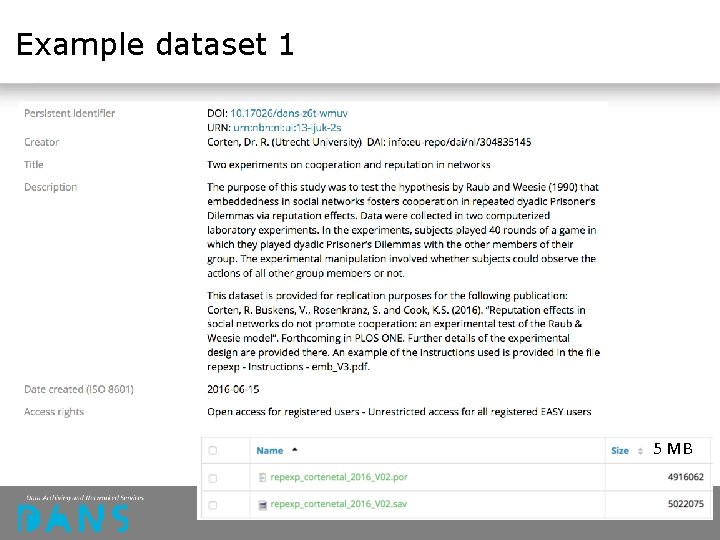
Example dataset 1 5 MB
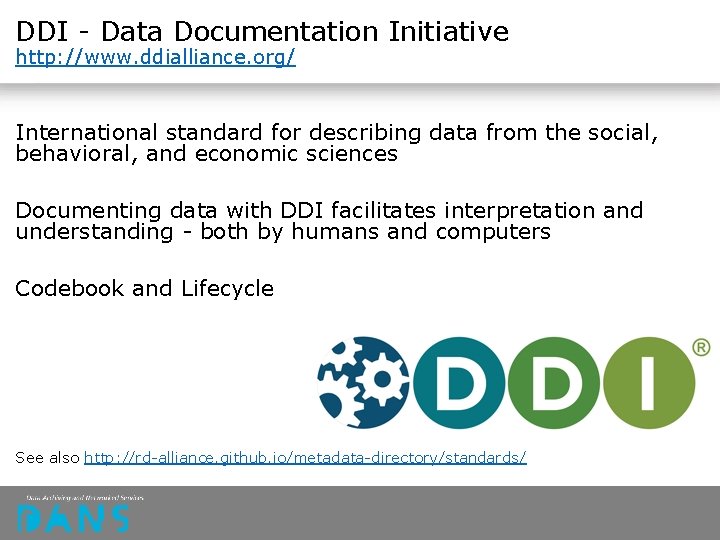
DDI - Data Documentation Initiative http: //www. ddialliance. org/ International standard for describing data from the social, behavioral, and economic sciences Documenting data with DDI facilitates interpretation and understanding - both by humans and computers Codebook and Lifecycle See also http: //rd-alliance. github. io/metadata-directory/standards/
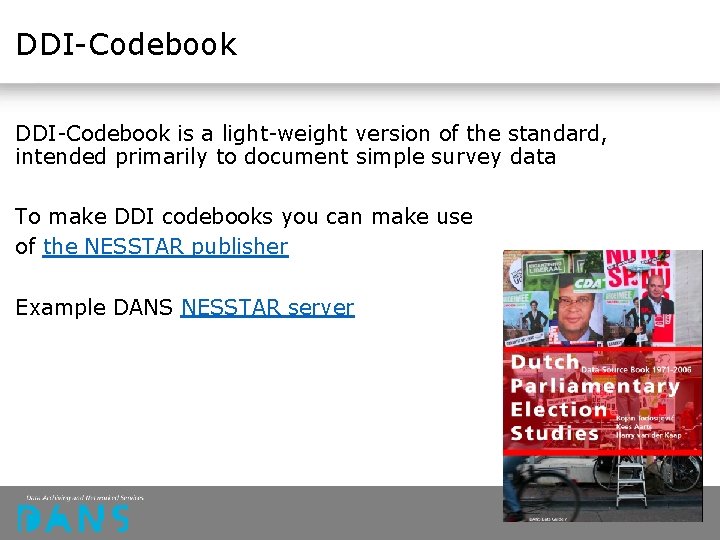
DDI-Codebook is a light-weight version of the standard, intended primarily to document simple survey data To make DDI codebooks you can make use of the NESSTAR publisher Example DANS NESSTAR server
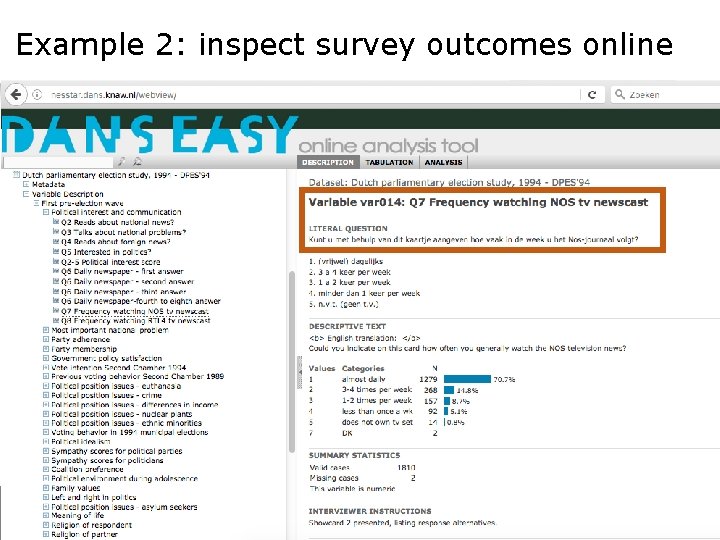
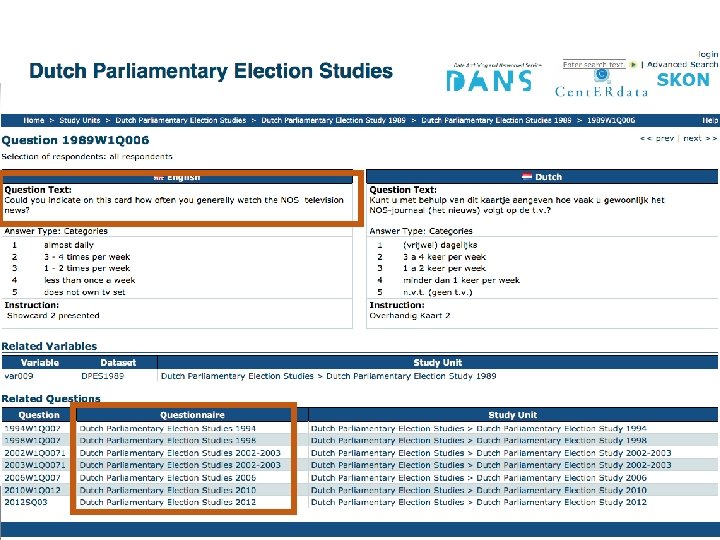
Example 2: inspect survey outcomes online
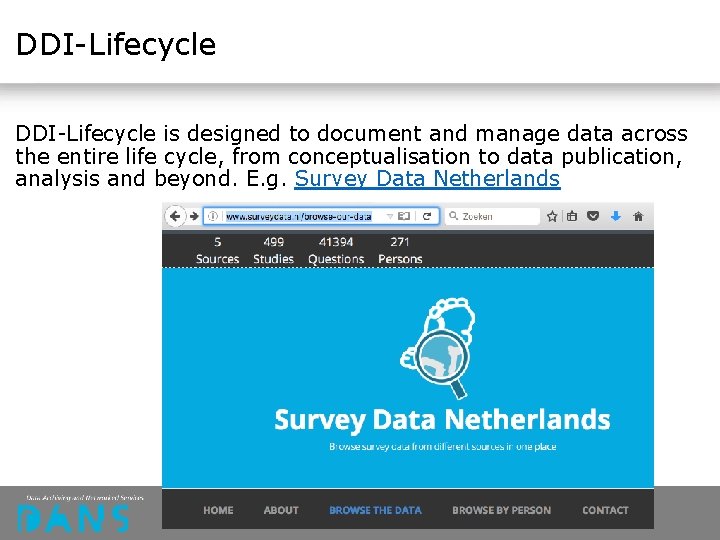
DDI-Lifecycle is designed to document and manage data across the entire life cycle, from conceptualisation to data publication, analysis and beyond. E. g. Survey Data Netherlands
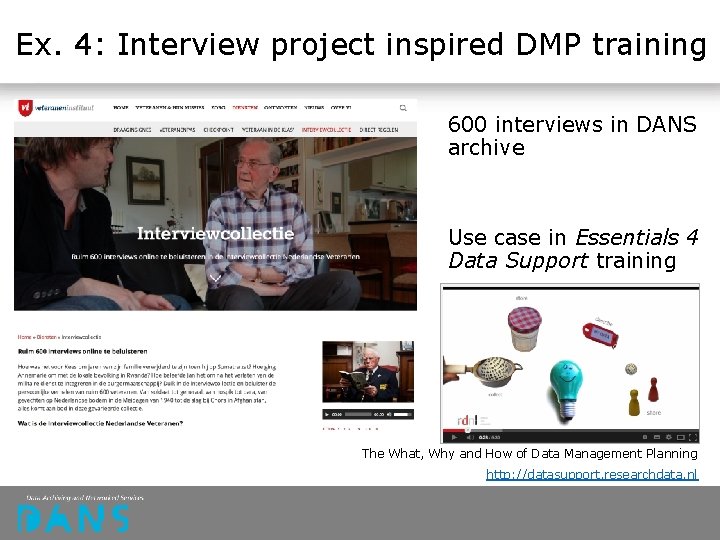
Ex. 4: Interview project inspired DMP training 600 interviews in DANS archive Use case in Essentials 4 Data Support training The What, Why and How of Data Management Planning http: //datasupport. researchdata. nl
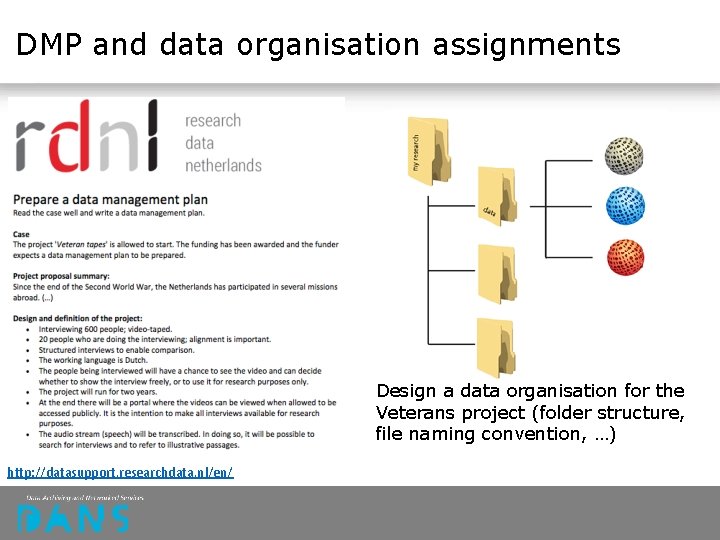
DMP and data organisation assignments Design a data organisation for the Veterans project (folder structure, file naming convention, …) http: //datasupport. researchdata. nl/en/
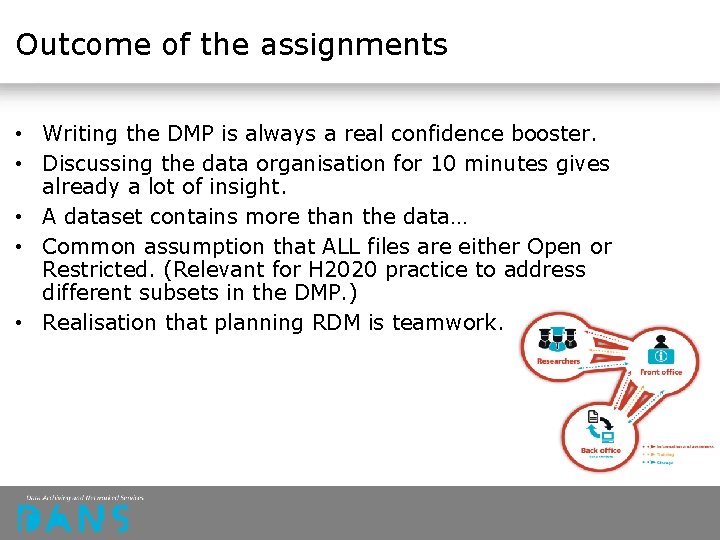
Outcome of the assignments • Writing the DMP is always a real confidence booster. • Discussing the data organisation for 10 minutes gives already a lot of insight. • A dataset contains more than the data… • Common assumption that ALL files are either Open or Restricted. (Relevant for H 2020 practice to address different subsets in the DMP. ) • Realisation that planning RDM is teamwork.
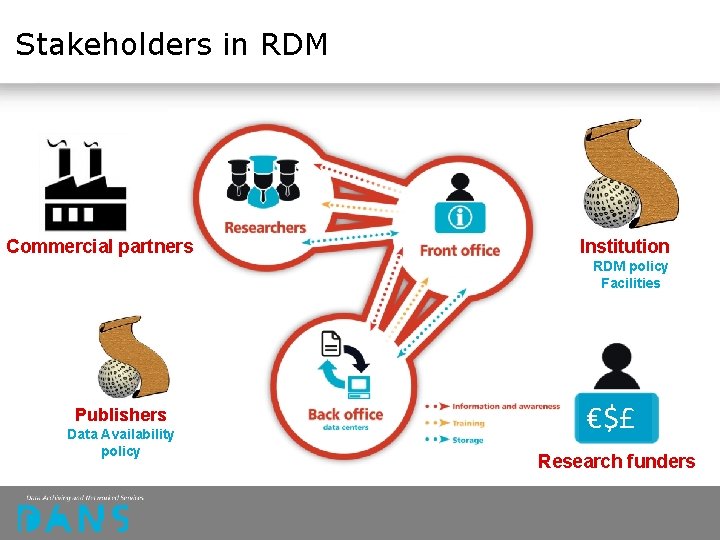
Stakeholders in RDM Commercial partners Institution RDM policy Facilities Publishers Data Availability policy €$£ Research funders
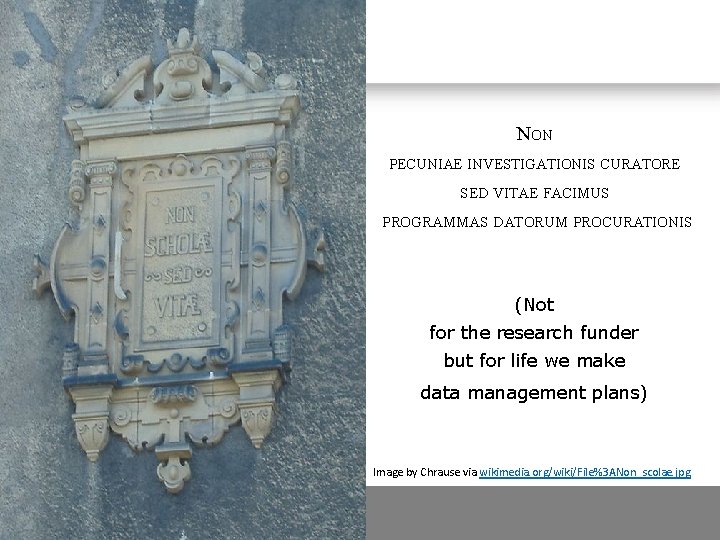
NON PECUNIAE INVESTIGATIONIS CURATORE SED VITAE FACIMUS PROGRAMMAS DATORUM PROCURATIONIS (Not for the research funder but for life we make data management plans) Image by Chrause via wikimedia. org/wiki/File%3 ANon_scolae. jpg
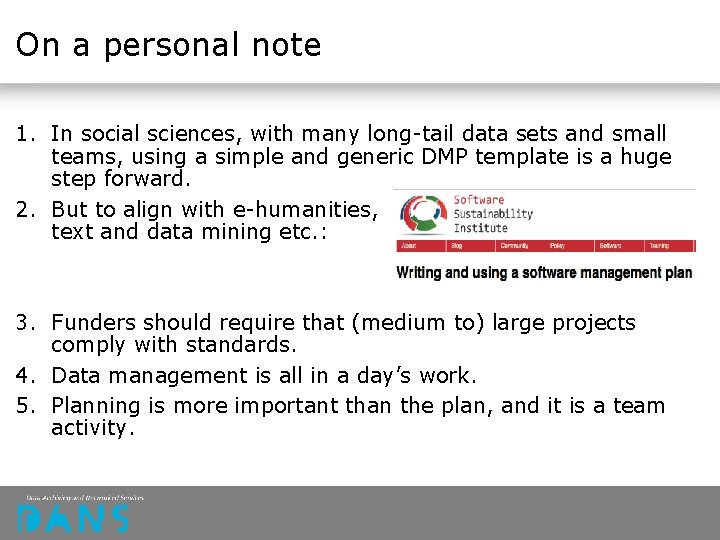
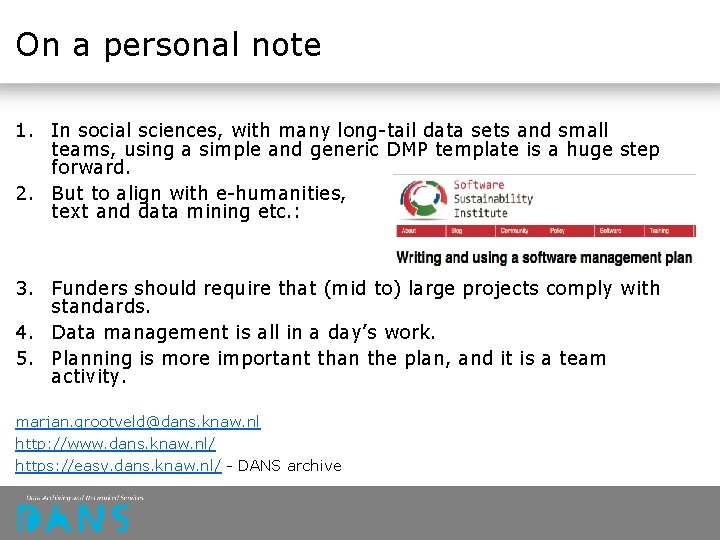
On a personal note 1. In social sciences, with many long-tail data sets and small teams, using a simple and generic DMP template is a huge step forward. 2. But to align with e-humanities, text and data mining etc. : 3. Funders should require that (medium to) large projects comply with standards. 4. Data management is all in a day’s work. 5. Planning is more important than the plan, and it is a team activity.
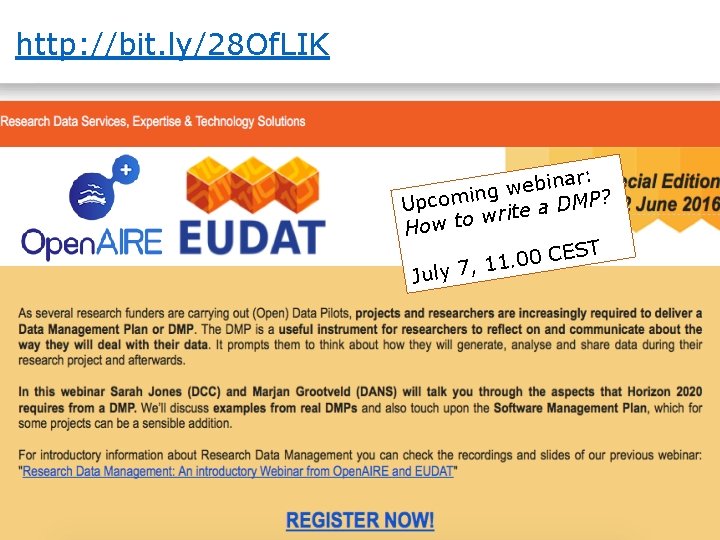
http: //bit. ly/28 Of. LIK nar: i b e w ing m o c MP? p D U a e t wri o t w o H ST E C 0 0 11. July 7,
On a personal note 1. In social sciences, with many long-tail data sets and small teams, using a simple and generic DMP template is a huge step forward. 2. But to align with e-humanities, text and data mining etc. : 3. Funders should require that (mid to) large projects comply with standards. 4. Data management is all in a day’s work. 5. Planning is more important than the plan, and it is a team activity. marjan. grootveld@dans. knaw. nl http: //www. dans. knaw. nl/ https: //easy. dans. knaw. nl/ - DANS archive