
Data Lakes and Data Integration Making it Real

- Slides: 30
Data Lakes and Data Integration Making it Real
Opening Thoughts Information architecture happens by design or by default. -Andy Fitzgerald, Independent 2
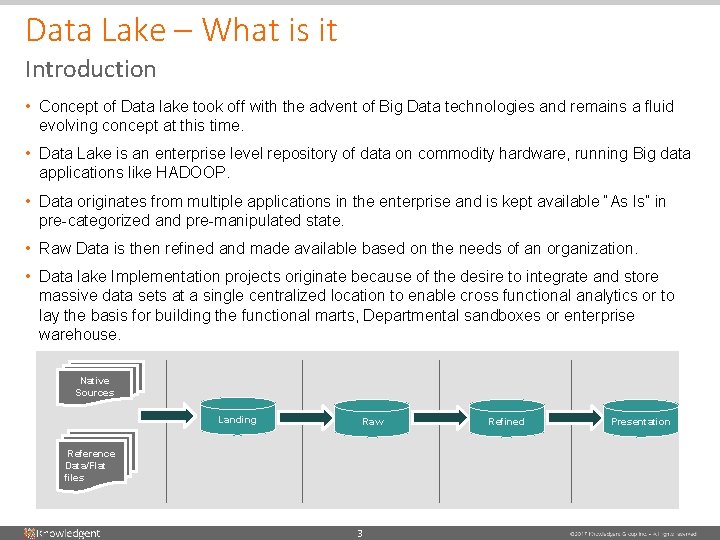
Data Lake – What is it Introduction • Concept of Data lake took off with the advent of Big Data technologies and remains a fluid evolving concept at this time. • Data Lake is an enterprise level repository of data on commodity hardware, running Big data applications like HADOOP. • Data originates from multiple applications in the enterprise and is kept available “As Is” in pre-categorized and pre-manipulated state. • Raw Data is then refined and made available based on the needs of an organization. • Data lake Implementation projects originate because of the desire to integrate and store massive data sets at a single centralized location to enable cross functional analytics or to lay the basis for building the functional marts, Departmental sandboxes or enterprise warehouse. Native Sources Landing Raw Reference Data/Flat files 3 Refined Presentation
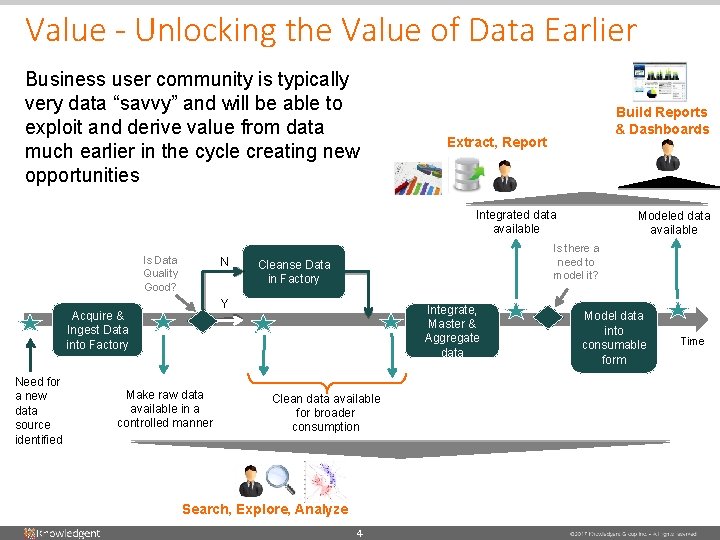
Value - Unlocking the Value of Data Earlier Business user community is typically very data “savvy” and will be able to exploit and derive value from data much earlier in the cycle creating new opportunities Build Reports & Dashboards Extract, Report Integrated data available Is Data Quality Good? N Need for a new data source identified Is there a need to model it? Cleanse Data in Factory Y Acquire & Ingest Data into Factory Make raw data available in a controlled manner Modeled data available Integrate, Master & Aggregate data Clean data available for broader consumption Search, Explore, Analyze 4 Model data into consumable form Time
Data Lake Guiding Principles • Keep original drivers and objectives “top of mind” and communicate them regularly: - “Enable easy integration of new data sources…” - “Minimize dependency on costly hardware…” • Business engagement is essential to understand how data is created and used • Adapt Incremental implementation approach to Succeed Fast or Fail Fast • Constantly evaluate tendency to fall back into “old habits”: Avoid “But that’s how we have always done it…” • Just-enough data governance necessary to prevent data lakes turning into data swamps • Select right tool for the job to provide better business value as fast as possible • Collect metadata for the not only Ingestion automation, but for Data Catalog as a perquisite of Ingesting Data into the Data Lake • Industry data models must be informed by “the art of the possible” as dictated by source system data structures and business use • Establish and automate patterns for the ingestion of data into the Data Lake and out of the Data Lake • Measure data quality upon Ingestion through implementing processes that immediately generate data profiles after ingestion. Create a data quality dashboard in a tool like Tableau to provide visibility into actual data quality 5
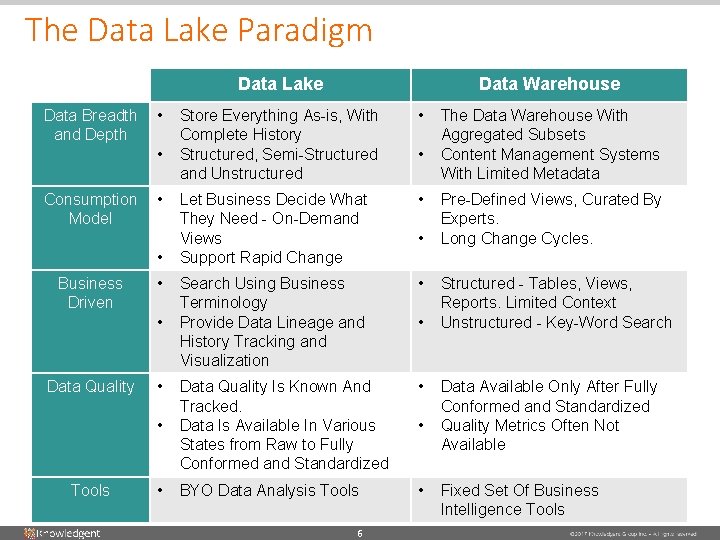
The Data Lake Paradigm Data Lake Data Breadth and Depth • Store Everything As-is, With Complete History Structured, Semi-Structured and Unstructured • Let Business Decide What They Need - On-Demand Views Support Rapid Change • Search Using Business Terminology Provide Data Lineage and History Tracking and Visualization • • • Data Quality Is Known And Tracked. Data Is Available In Various States from Raw to Fully Conformed and Standardized • BYO Data Analysis Tools • • Consumption Model • • Business Driven • • Data Quality Tools Data Warehouse • 6 • • The Data Warehouse With Aggregated Subsets Content Management Systems With Limited Metadata Pre-Defined Views, Curated By Experts. Long Change Cycles. Structured - Tables, Views, Reports. Limited Context Unstructured - Key-Word Search Data Available Only After Fully Conformed and Standardized Quality Metrics Often Not Available Fixed Set Of Business Intelligence Tools
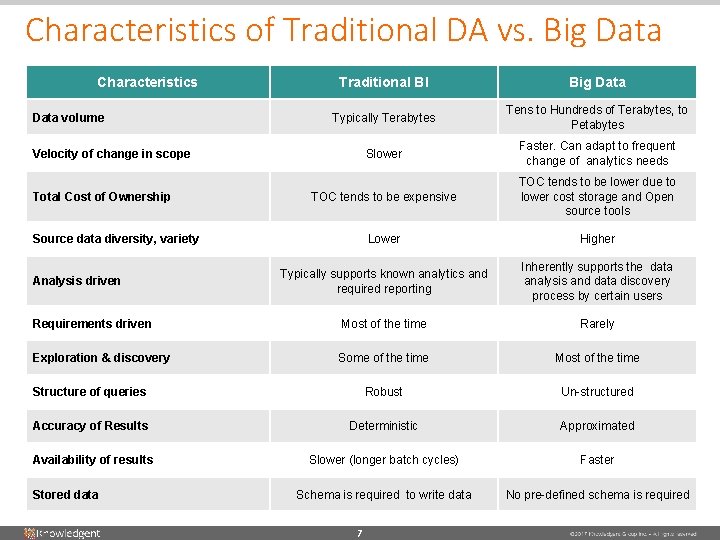
Characteristics of Traditional DA vs. Big Data Characteristics Traditional BI Big Data Typically Terabytes Tens to Hundreds of Terabytes, to Petabytes Slower Faster. Can adapt to frequent change of analytics needs TOC tends to be expensive TOC tends to be lower due to lower cost storage and Open source tools Lower Higher Typically supports known analytics and required reporting Inherently supports the data analysis and data discovery process by certain users Requirements driven Most of the time Rarely Exploration & discovery Some of the time Most of the time Structure of queries Robust Un-structured Accuracy of Results Deterministic Approximated Availability of results Slower (longer batch cycles) Faster Schema is required to write data No pre-defined schema is required Data volume Velocity of change in scope Total Cost of Ownership Source data diversity, variety Analysis driven Stored data 7
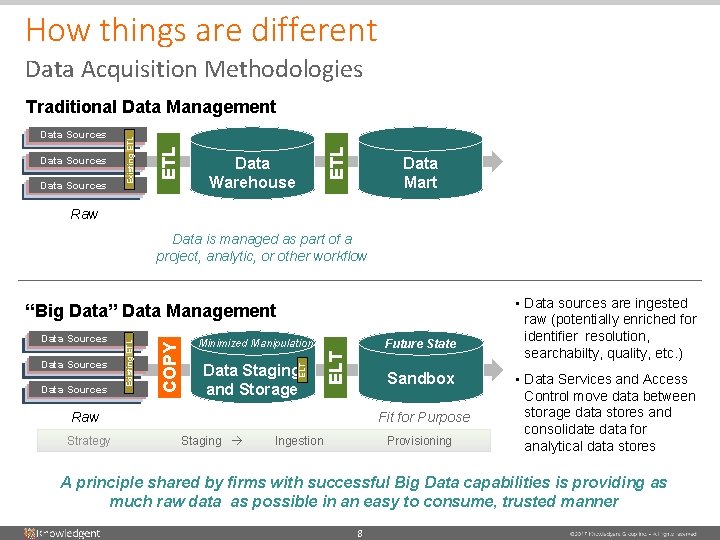
How things are different Data Acquisition Methodologies Data Sources Raw ETL Data Sources Existing ETL Traditional Data Management Data Warehouse Data Mart Normalized Optimized Data is managed as part of a project, analytic, or other workflow Raw Strategy Data Staging and Storage ELT Data Sources Future State Minimized Manipulation ELT Data Sources COPY Data Sources Existing ETL “Big Data” Data Management Sandbox Raw/Enriched Staging Fit for Purpose Ingestion Provisioning • Data sources are ingested raw (potentially enriched for identifier resolution, searchabilty, quality, etc. ) • Data Services and Access Control move data between storage data stores and consolidate data for analytical data stores A principle shared by firms with successful Big Data capabilities is providing as much raw data as possible in an easy to consume, trusted manner 8
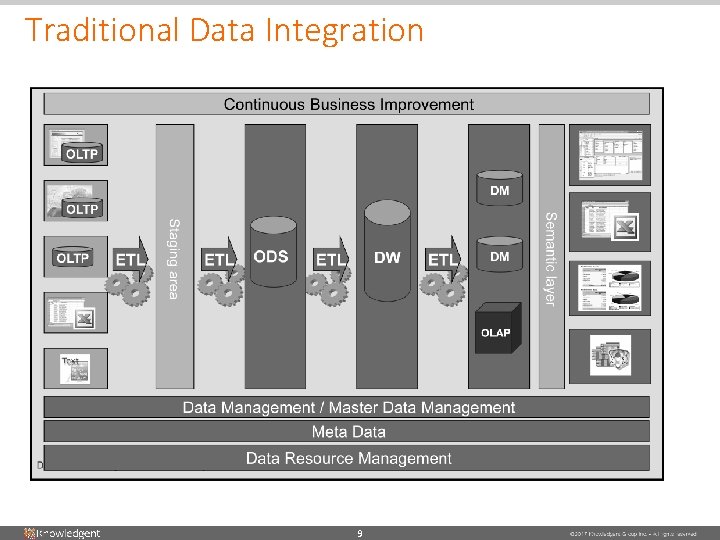
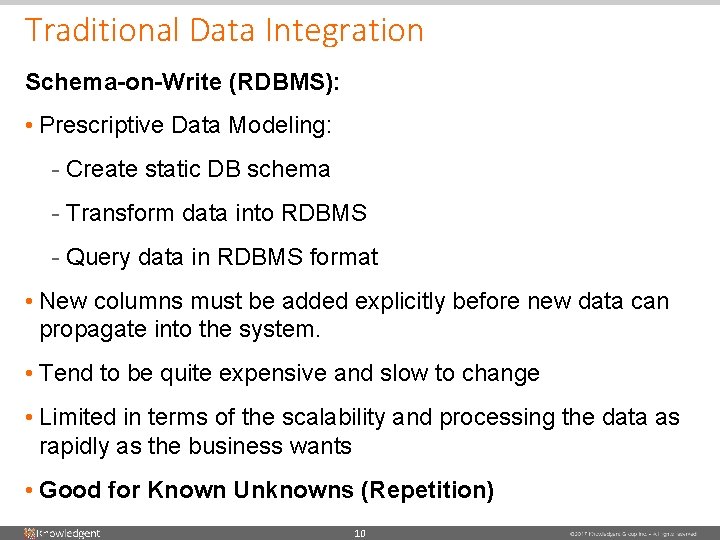
Traditional Data Integration 9
Traditional Data Integration Schema-on-Write (RDBMS): • Prescriptive Data Modeling: - Create static DB schema - Transform data into RDBMS - Query data in RDBMS format • New columns must be added explicitly before new data can propagate into the system. • Tend to be quite expensive and slow to change • Limited in terms of the scalability and processing the data as rapidly as the business wants • Good for Known Unknowns (Repetition) 10
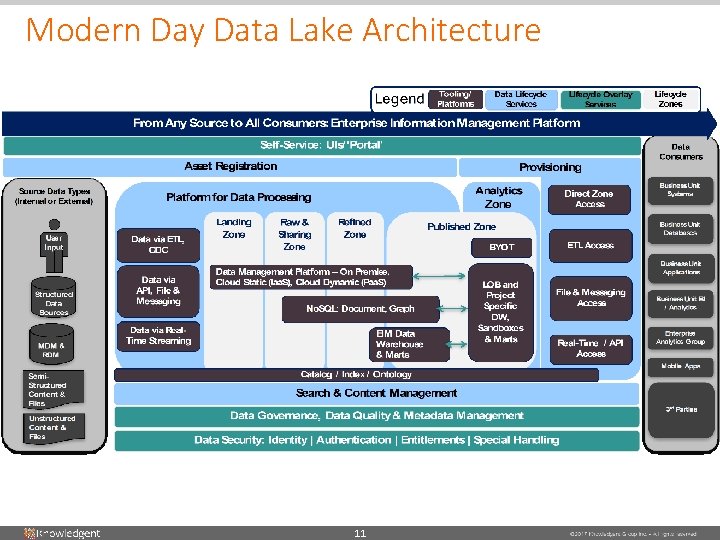
Modern Day Data Lake Architecture 11
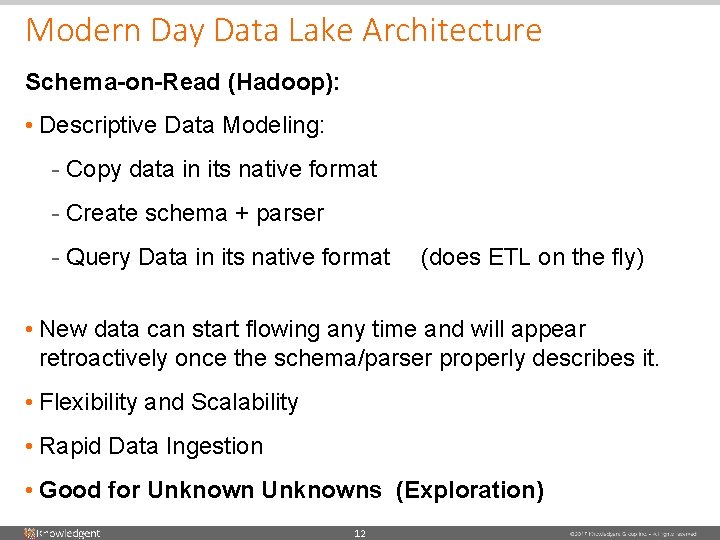
Modern Day Data Lake Architecture Schema-on-Read (Hadoop): • Descriptive Data Modeling: - Copy data in its native format - Create schema + parser - Query Data in its native format (does ETL on the fly) • New data can start flowing any time and will appear retroactively once the schema/parser properly describes it. • Flexibility and Scalability • Rapid Data Ingestion • Good for Unknowns (Exploration) 12
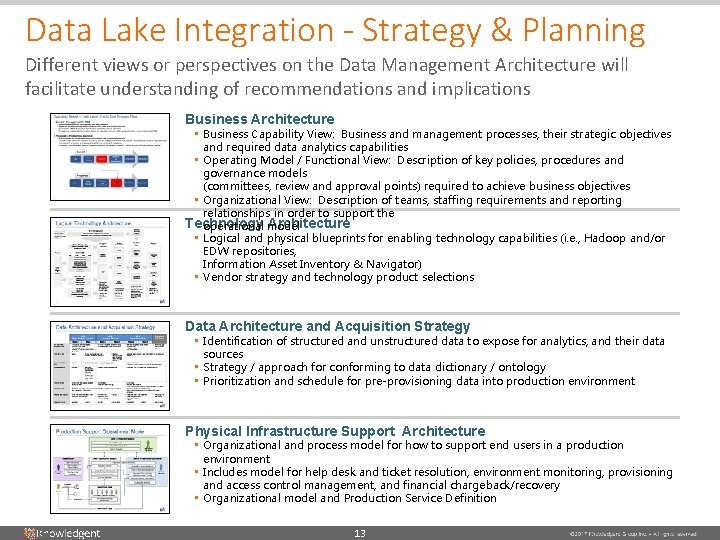
Data Lake Integration - Strategy & Planning Different views or perspectives on the Data Management Architecture will facilitate understanding of recommendations and implications Business Architecture • Business Capability View: Business and management processes, their strategic objectives and required data analytics capabilities • Operating Model / Functional View: Description of key policies, procedures and governance models (committees, review and approval points) required to achieve business objectives • Organizational View: Description of teams, staffing requirements and reporting relationships in order to support the Technology Architecture operational model • Logical and physical blueprints for enabling technology capabilities (i. e. , Hadoop and/or EDW repositories, Information Asset Inventory & Navigator) • Vendor strategy and technology product selections Data Architecture and Acquisition Strategy • Identification of structured and unstructured data to expose for analytics, and their data sources • Strategy / approach for conforming to data dictionary / ontology • Prioritization and schedule for pre-provisioning data into production environment Physical Infrastructure Support Architecture • Organizational and process model for how to support end users in a production environment • Includes model for help desk and ticket resolution, environment monitoring, provisioning and access control management, and financial chargeback/recovery • Organizational model and Production Service Definition 13
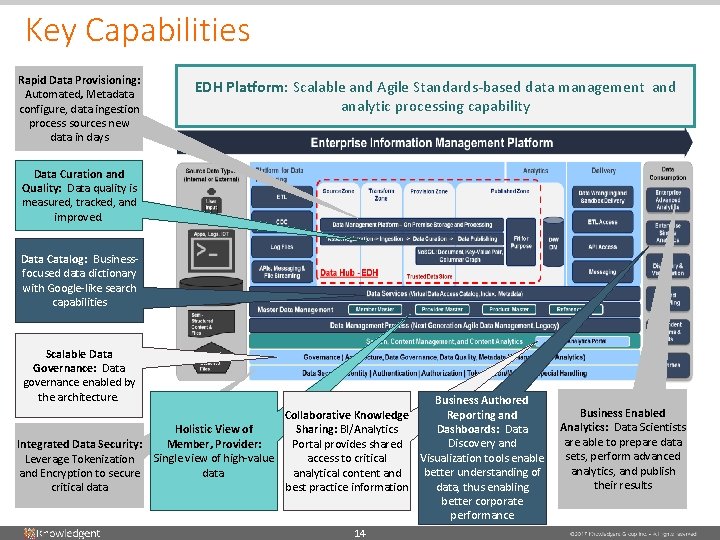
Key Capabilities Rapid Data Provisioning: Automated, Metadata configure, data ingestion process sources new data in days EDH Platform: Scalable and Agile Standards-based data management and analytic processing capability Data Curation and Quality: Data quality is measured, tracked, and improved. Data Catalog: Businessfocused data dictionary with Google-like search capabilities Scalable Data Governance: Data governance enabled by the architecture. Business Authored Reporting and Collaborative Knowledge Dashboards: Data Holistic View of Sharing: BI/Analytics Discovery and Portal provides shared Member, Provider: Integrated Data Security: Visualization tools enable Single view of high-value access to critical Leverage Tokenization better understanding of data. analytical content and Encryption to secure data, thus enabling best practice information critical data better corporate performance 14 Business Enabled Analytics: Data Scientists are able to prepare data sets, perform advanced analytics, and publish their results
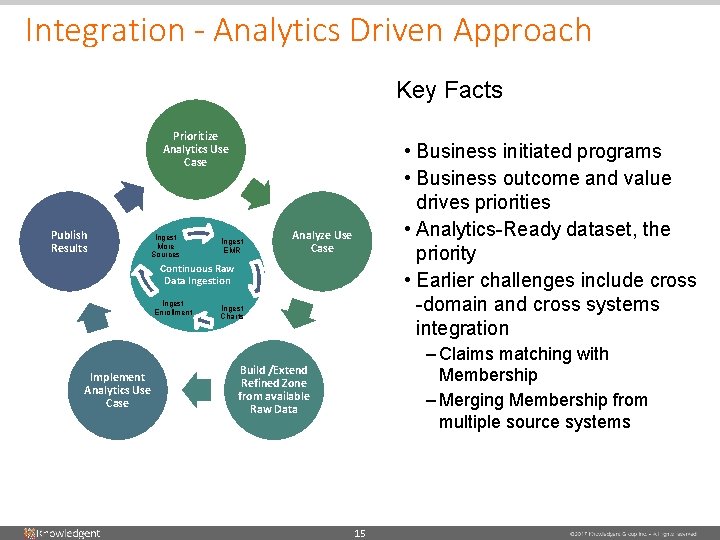
Integration - Analytics Driven Approach Key Facts Prioritize Analytics Use Case Publish Results Ingest More Sources Ingest EMR • Business initiated programs • Business outcome and value drives priorities • Analytics-Ready dataset, the priority • Earlier challenges include cross -domain and cross systems integration Analyze Use Case Continuous Raw Data Ingestion Ingest Enrollment Implement Analytics Use Case Ingest Charts – Claims matching with Membership – Merging Membership from multiple source systems Build /Extend Refined Zone from available Raw Data 15
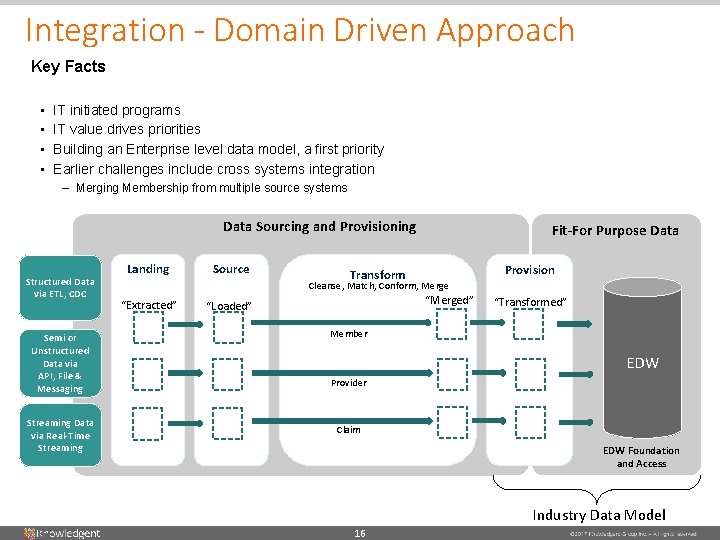
Integration - Domain Driven Approach Key Facts • • IT initiated programs IT value drives priorities Building an Enterprise level data model, a first priority Earlier challenges include cross systems integration – Merging Membership from multiple source systems Data Sourcing and Provisioning Structured Data via ETL, CDC Semi or Unstructured Data via API, File & Messaging Streaming Data via Real-Time Streaming Landing Source Fit-For Purpose Data Provision Transform Cleanse, Match, Conform, Merge “Extracted” “Merged” “Loaded” “Transformed” Member EDW Provider Claim EDW Foundation and Access Industry Data Model 16
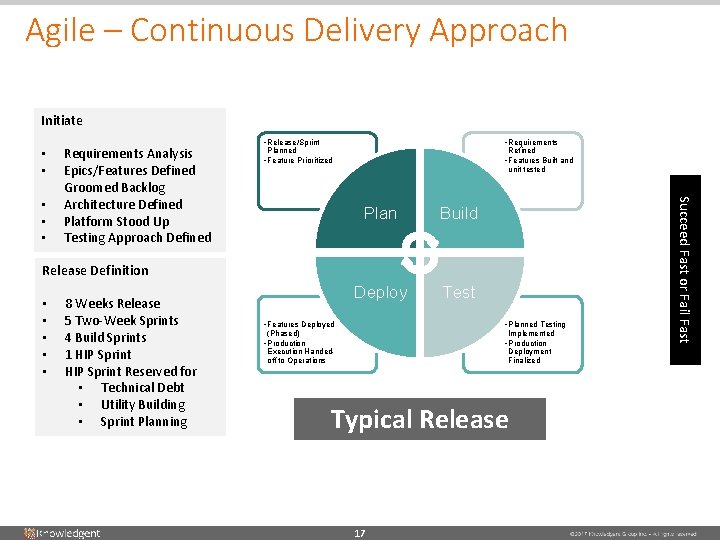
Agile – Continuous Delivery Approach Initiate • • • Release/Sprint • Requirements Planned • Feature Prioritized Refined • Features Built and unit tested Plan Build Deploy Test Release Definition • • • 8 Weeks Release 5 Two-Week Sprints 4 Build Sprints 1 HIP Sprint Reserved for • Technical Debt • Utility Building • Sprint Planning • Features Deployed • Planned Testing (Phased) • Production Execution Handedoff to Operations Implemented • Production Deployment Finalized Typical Release 17 Succeed Fast or Fail Fast • • • Requirements Analysis Epics/Features Defined Groomed Backlog Architecture Defined Platform Stood Up Testing Approach Defined
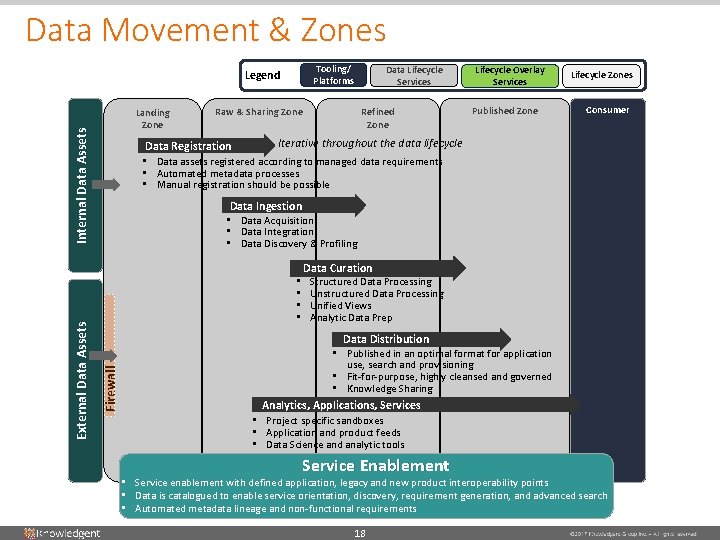
Data Movement & Zones Tooling/ Platforms Legend Refined Zone Raw & Sharing Zone Lifecycle Overlay Services Published Zone Lifecycle Zones Consumer Iterative throughout the data lifecycle Data Registration • Data assets registered according to managed data requirements • Automated metadata processes • Manual registration should be possible Data Ingestion • Data Acquisition • Data Integration • Data Discovery & Profiling • • Data Curation Structured Data Processing Unstructured Data Processing Unified Views Analytic Data Prep Data Distribution Firewall External Data Assets Internal Data Assets Landing Zone Data Lifecycle Services • Published in an optimal format for application use, search and provisioning • Fit-for-purpose, highly cleansed and governed • Knowledge Sharing Analytics, Applications, Services • Project specific sandboxes • Application and product feeds • Data Science and analytic tools Service Enablement • Service enablement with defined application, legacy and new product interoperability points • Data is catalogued to enable service orientation, discovery, requirement generation, and advanced search • Automated metadata lineage and non-functional requirements 18
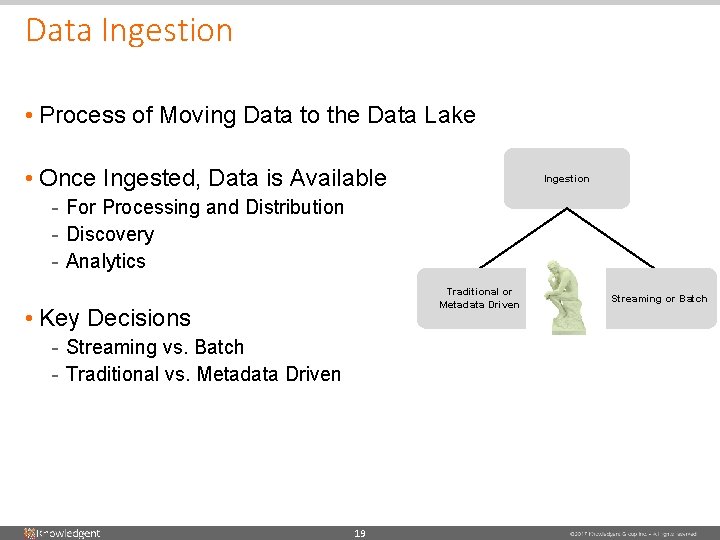
Data Ingestion • Process of Moving Data to the Data Lake • Once Ingested, Data is Available Ingestion - For Processing and Distribution - Discovery - Analytics Traditional or Metadata Driven • Key Decisions - Streaming vs. Batch - Traditional vs. Metadata Driven 19 Streaming or Batch
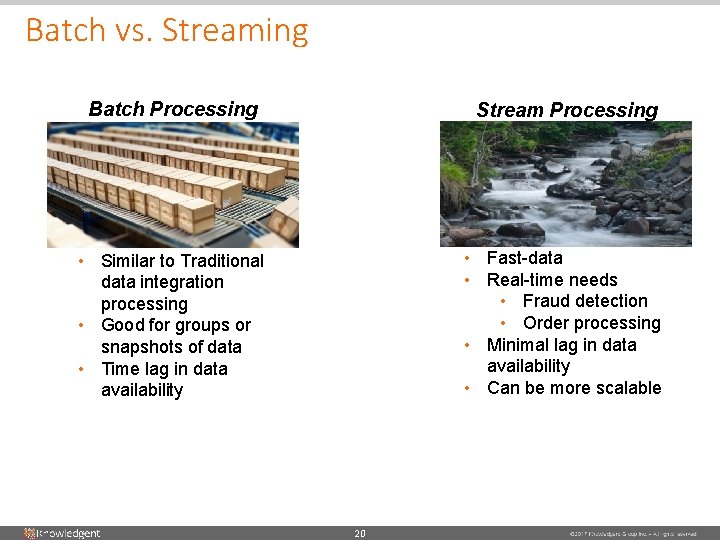
Batch vs. Streaming Batch Processing Stream Processing • Similar to Traditional data integration processing • Good for groups or snapshots of data • Time lag in data availability • Fast-data • Real-time needs • Fraud detection • Order processing • Minimal lag in data availability • Can be more scalable 20
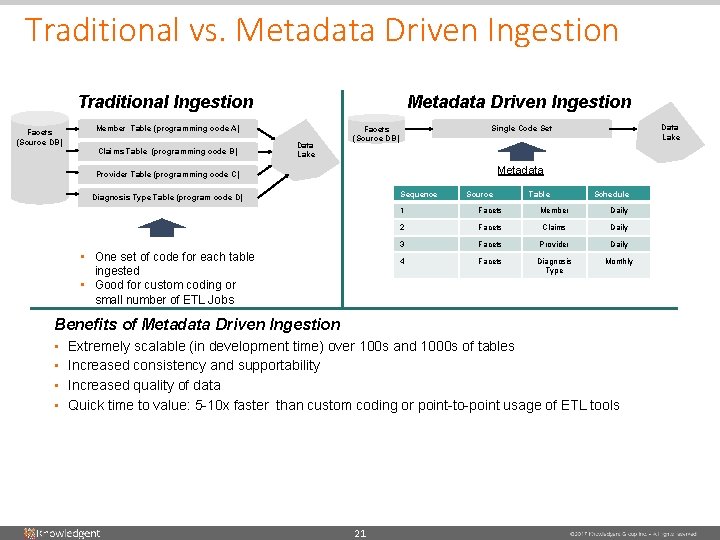
Traditional vs. Metadata Driven Ingestion Traditional Ingestion Facets (Source DB) Metadata Driven Ingestion Member Table (programming code A) Claims Table (programming code B) Data Lake Single Code Set Facets (Source DB) Metadata Provider Table (programming code C) Sequence Diagnosis Type Table (program code D) • One set of code for each table ingested • Good for custom coding or small number of ETL Jobs Source Table Schedule 1 Facets Member Daily 2 Facets Claims Daily 3 Facets Provider Daily 4 Facets Diagnosis Type Monthly Benefits of Metadata Driven Ingestion • • Extremely scalable (in development time) over 100 s and 1000 s of tables Increased consistency and supportability Increased quality of data Quick time to value: 5 -10 x faster than custom coding or point-to-point usage of ETL tools 21
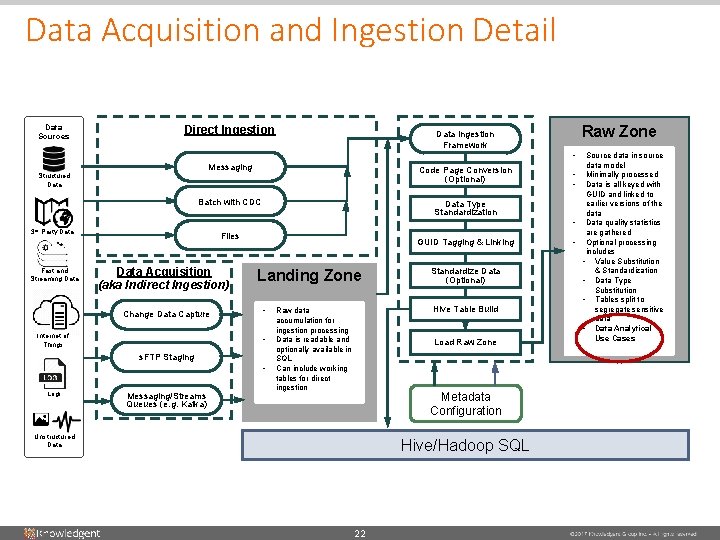
Data Acquisition and Ingestion Detail Data Sources Direct Ingestion Raw Zone Data Ingestion Framework • Messaging Code Page Conversion (Optional) Batch with CDC Data Type Standardization Structured Data • • • 3 rd Party Data Fast and Streaming Data Files Data Acquisition (aka Indirect Ingestion) Change Data Capture Internet of Things GUID Tagging & Linking Landing Zone • • s. FTP Staging • Logs Messaging/Streams Queues (e. g. Kafka) Standardize Data (Optional) Hive Table Build Raw data accumulation for ingestion processing Data is readable and optionally available in SQL Can include working tables for direct ingestion Load Raw Zone Metadata Configuration Unstructured Data Hive/Hadoop SQL 22 • Source data in source data model Minimally processed Data is all keyed with GUID and linked to earlier versions of the data Data quality statistics are gathered Optional processing includes • Value Substitution & Standardization • Data Type Substitution • Tables split to segregate sensitive data • Data Analytical Use Cases
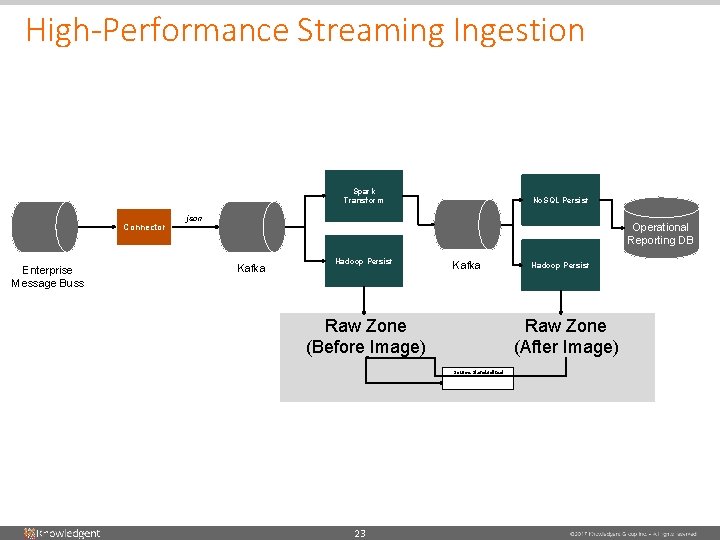
High-Performance Streaming Ingestion Spark Transform Connector Enterprise Message Buss No. SQL Persist json Operational Reporting DB Kafka Hadoop Persist Kafka Raw Zone (Before Image) Raw Zone (After Image) Source Standardized 23 Hadoop Persist
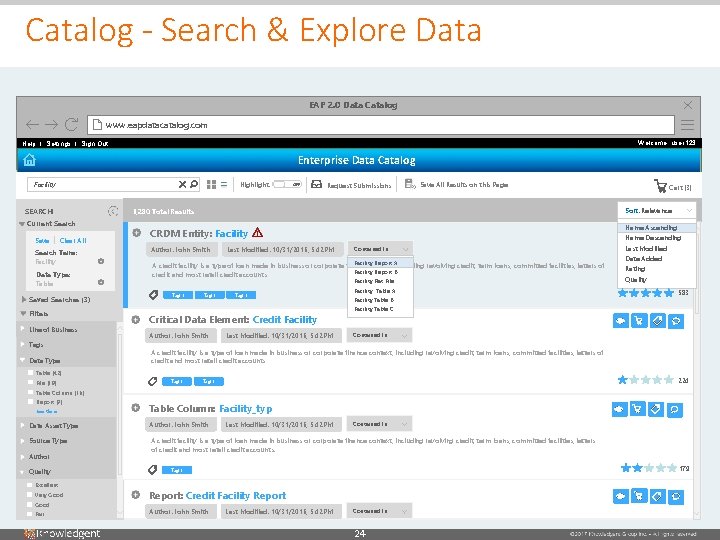
Catalog - Search & Explore Data EAP 2. 0 Data Catalog www. eapdatacatalog. com Welcome, user 123 Help I Settings I Sign Out Enterprise Data Catalog Highlight: Facility SEARCH Request Submissions Save All Results on this Page Clear All Search Term: Facility Data Type: Table Saved Searches (3) Filters Line of Business Tags Data Type CRDM Entity: Facility Author: John Smith Last Modified: 10/31/2016, 5: 42 PM Contained In Facility Report A A credit facility is a type of loan made in business or corporate finance context, including revolving credit, term loans, committed facilities, letters of Facility Report B credit and most retail credit accounts Facility Flat File Tag 1 Critical Data Element: Credit Facility Author: John Smith Last Modified: 10/31/2016, 5: 42 PM Facility Table A Facility Table B Name Ascending Name Descending Last Modified Date Added Rating Quality 583 Facility Table C Contained In A credit facility is a type of loan made in business or corporate finance context, including revolving credit, term loans, committed facilities, letters of credit and most retail credit accounts Table (42) File (19) Cart (3) Sort: Relevance 1, 280 Total Results Current Search Save OFF Tag 1 224 Tag 1 Table Column (16) Report (9) See More Table Column: Facility_typ Author: John Smith Source Type A credit facility is a type of loan made in business or corporate finance context, including revolving credit, term loans, committed facilities, letters of credit and most retail credit accounts. Author Quality Excellent Very Good Fair Last Modified: 10/31/2016, 5: 42 PM Contained In Data Asset Type 179 Tag 1 Format Report: Credit Facility Report Author: John Smith Last Modified: 10/31/2016, 5: 42 PM Contained In 24
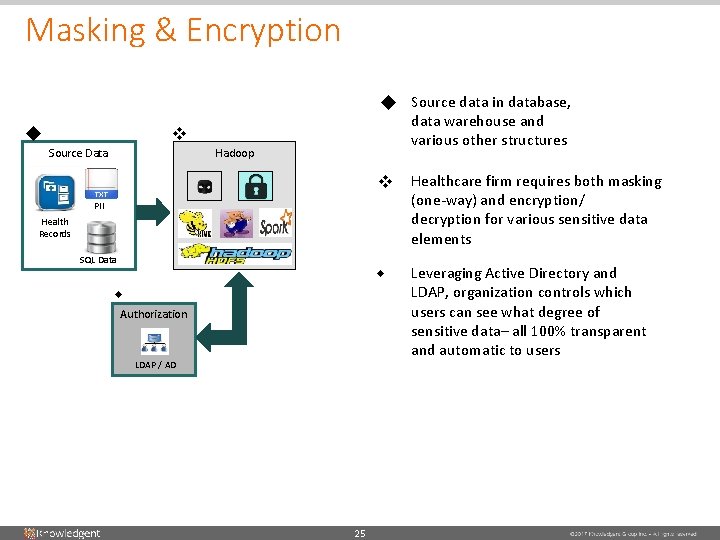
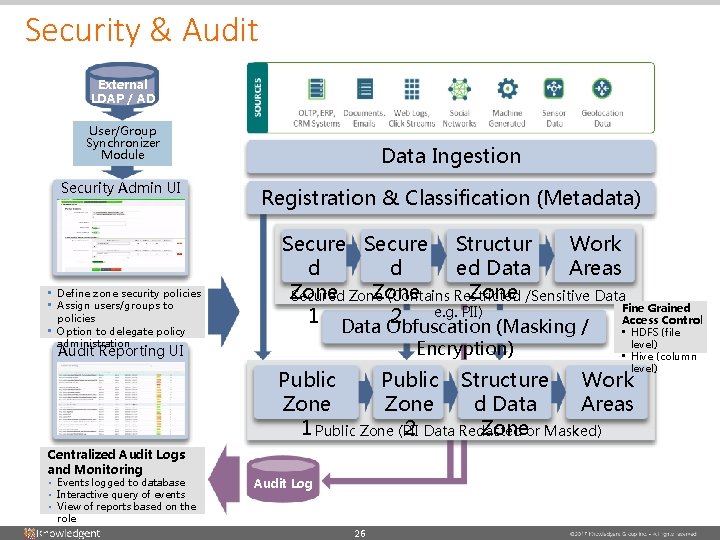
Masking & Encryption u Source data in database, u data warehouse and various other structures v Source Data Hadoop v Healthcare firm requires both masking (one-way) and encryption/ decryption for various sensitive data elements PII Health Records SQL Data w w Authorization LDAP / AD 25 Leveraging Active Directory and LDAP, organization controls which users can see what degree of sensitive data– all 100% transparent and automatic to users
Security & Audit External LDAP / AD User/Group Synchronizer Module Security Admin UI • Define zone security policies • Assign users/groups to policies • Option to delegate policy administration Data Ingestion Registration & Classification (Metadata) Secure Structur Work d d ed Data Areas Zone /Sensitive Data Secured Zone (Contains Restricted Fine Grained e. g. PII) 1 2 Access Control Data Obfuscation (Masking / Encryption) Audit Reporting UI • HDFS (file level) • Hive (column level) Public Structure Work Zone d Data Areas 1 Public Zone (PII 2 Data Redacted Zoneor Masked) Centralized Audit Logs and Monitoring • Events logged to database • Interactive query of events • View of reports based on the role Audit Log 26
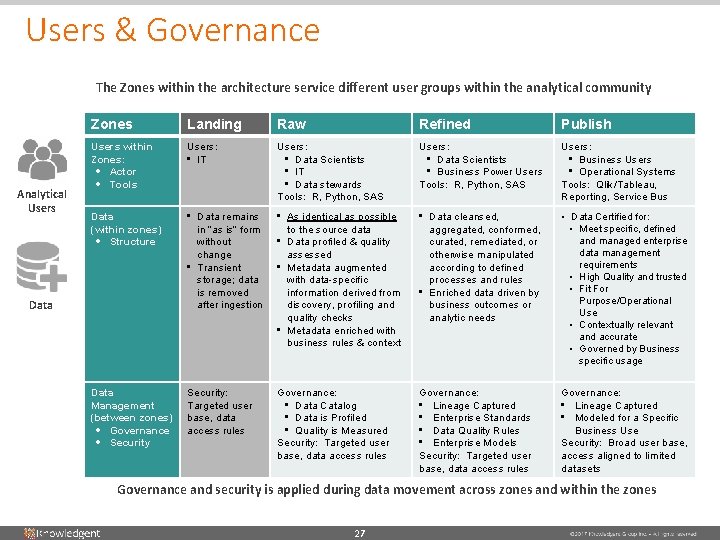
Users & Governance The Zones within the architecture service different user groups within the analytical community Analytical Users Zones Landing Raw Refined Publish Users within Zones: Actor Tools Users: • IT Users: • Data Scientists • IT • Data stewards Tools: R, Python, SAS Users: • Data Scientists • Business Power Users Tools: R, Python, SAS Users: • Business Users • Operational Systems Tools: Qlik/Tableau, Reporting, Service Bus Data (within zones) Structure • Data remains in “as is” form without change • Transient storage; data is removed after ingestion • As identical as possible to the source data • Data profiled & quality assessed • Metadata augmented with data-specific information derived from discovery, profiling and quality checks • Metadata enriched with business rules & context • Data cleansed, aggregated, conformed, curated, remediated, or otherwise manipulated according to defined processes and rules • Enriched data driven by business outcomes or analytic needs • Data Certified for: • Meet specific, defined and managed enterprise data management requirements • High Quality and trusted • Fit For Purpose/Operational Use • Contextually relevant and accurate • Governed by Business specific usage Data Management (between zones) Governance Security: Targeted user base, data access rules Governance: • Data Catalog • Data is Profiled • Quality is Measured Security: Targeted user base, data access rules Governance: • Lineage Captured • Enterprise Standards • Data Quality Rules • Enterprise Models Security: Targeted user base, data access rules Governance: • Lineage Captured • Modeled for a Specific Business Use Security: Broad user base, access aligned to limited datasets Data Governance and security is applied during data movement across zones and within the zones 27
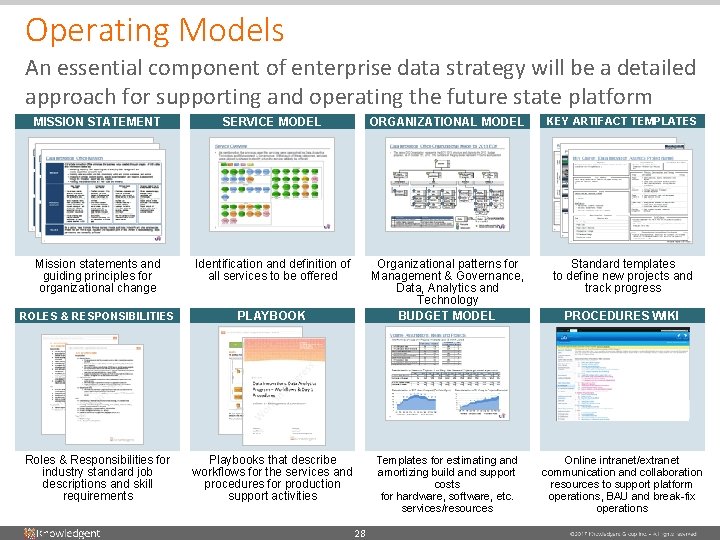
Operating Models An essential component of enterprise data strategy will be a detailed approach for supporting and operating the future state platform MISSION STATEMENT SERVICE MODEL ORGANIZATIONAL MODEL KEY ARTIFACT TEMPLATES Mission statements and guiding principles for organizational change Identification and definition of all services to be offered Standard templates to define new projects and track progress ROLES & RESPONSIBILITIES PLAYBOOK Organizational patterns for Management & Governance, Data, Analytics and Technology BUDGET MODEL Roles & Responsibilities for industry standard job descriptions and skill requirements Playbooks that describe workflows for the services and procedures for production support activities Templates for estimating and amortizing build and support costs for hardware, software, etc. services/resources Online intranet/extranet communication and collaboration resources to support platform operations, BAU and break-fix operations 28 PROCEDURES WIKI
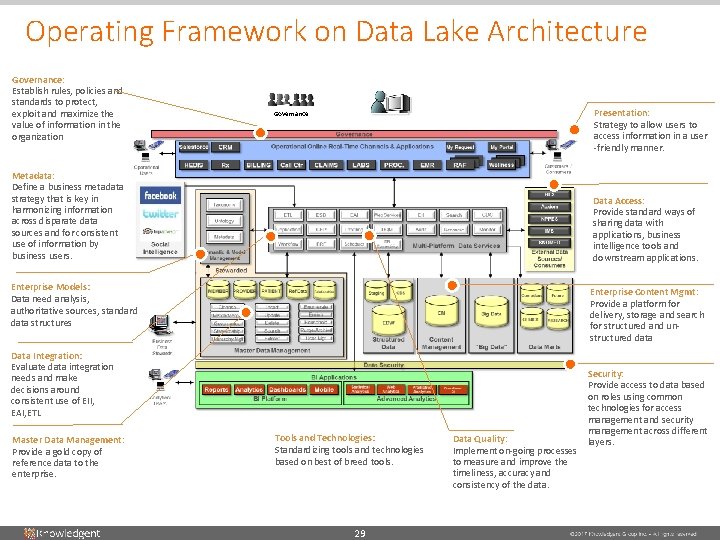
Operating Framework on Data Lake Architecture Governance: Establish rules, policies and standards to protect, exploit and maximize the value of information in the organization Presentation: Strategy to allow users to access information in a user -friendly manner. Governance Metadata: Define a business metadata strategy that is key in harmonizing information across disparate data sources and for consistent use of information by business users. Data Access: Provide standard ways of sharing data with applications, business intelligence tools and downstream applications. Enterprise Models: Data need analysis, authoritative sources, standard data structures Enterprise Content Mgmt: Provide a platform for delivery, storage and search for structured and unstructured data Data Integration: Evaluate data integration needs and make decisions around consistent use of EII, EAI, ETL Master Data Management: Provide a gold copy of reference data to the enterprise. Tools and Technologies: Standardizing tools and technologies based on best of breed tools. 29 Data Quality: Implement on-going processes to measure and improve the timeliness, accuracy and consistency of the data. Security: Provide access to data based on roles using common technologies for access management and security management across different layers.
Thanks