
Data its not just about breaches Patrick Sefton
Data: it’s not just about breaches Patrick Sefton | Principal, Brightline Lawyers
Intro and perspective • data is a problem child for lawyers (and accountants) • meanwhile: – exponential data creation, storage – rapidly falling costs, improving accessibility, new tools – new uses for large data repositories in particular Machine Learning type AI • worth considering some broader legal issues around data
Is data “property”? • No. • Victoria Park Racing v Taylor • Breen v Williams • Your Response v Datateam Business Media • Dixon v R

Does copyright protect data? • No. (well, not unless the data originated by an author from some independent intellectual effort) • Ice. TV v Nine • Telstra v Phone Directories Company
Can data be “confidential”? • YES! • but a personal obligation, not proprietary • and only where criteria are met: – in fact confidential – disclosed in circumstances of confidence • or, contract with confidentiality terms
Proving confidentiality • “In fact confidential” – Identify confidential data, use different process – Internal access controls, “need to know” – Practical external controls, eg, parts only, query only, throttles on queries or access – Audit trail and audit of access • “Imparted in circumstances of confidence” – Confidentiality notice or click-wrap before access – Warnings in communications disclosing data – Marking on screen or printouts
Leveraging data • Trade-off between keeping essentials… – reduce risk of breach, minimize attractiveness as target – minimise compliance costs – [personal information] comply with APP 3. 1, 3. 2, 11. 2 • and keeping everything… – storage/processing now very, very low cost – you never know when something might be useful (Machine Learning AI being a case in point) – increase organizational value – improve decision-making
Risks of being data-driven • “In God We Trust, all others bring data” (W. Edwards Deming) • More learning-oriented than received-wisdom • BUT • Data-reliance / Machine Learning AI may entrench discrimination/bias already present in training data • Examples: im. Situ SRL, California PSA System, Pred. Pol
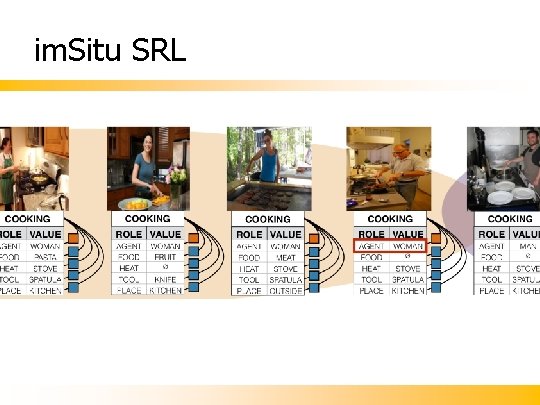
im. Situ SRL
De- and Re-identification • August 2016 • de-identified MBS/PBS claim data on 10% of population – 2. 9 M individuals • badly flawed encryption • linkage attacks (with enough data points, everyone is unique) • potentially identified entire medical history of multiple individuals
MBS/PBS 10% outcomes • data withdrawn • the mathematics is important • de-identification guidelines cannot be assumed to guarantee privacy protection • some datasets can never be published in a useful form while retaining individual privacy • proposed re-identification offence
De-identification decision-making framework • OAIC & Data 61 (CSIRO) • comprehensive and non-technical approach • model of issues, areas for investigation • basis for scoping/briefing/discussion with experts • focus on “data situation, ” ie, data in context • emphasis on understanding, identifying, planning • may still be judgement calls, including whether to release at all (cf MBS/PBS release)
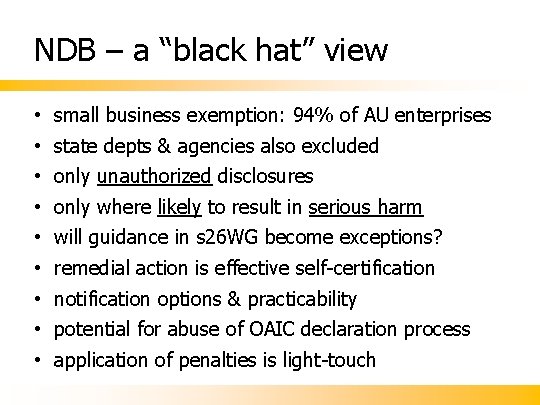
NDB – a “black hat” view • • • small business exemption: 94% of AU enterprises state depts & agencies also excluded only unauthorized disclosures only where likely to result in serious harm will guidance in s 26 WG become exceptions? remedial action is effective self-certification notification options & practicability potential for abuse of OAIC declaration process application of penalties is light-touch
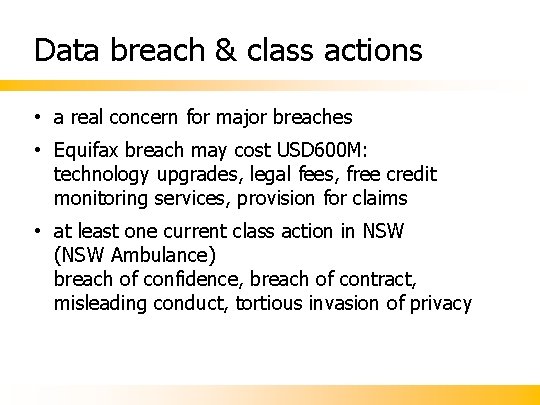
Data breach & class actions • a real concern for major breaches • Equifax breach may cost USD 600 M: technology upgrades, legal fees, free credit monitoring services, provision for claims • at least one current class action in NSW (NSW Ambulance) breach of confidence, breach of contract, misleading conduct, tortious invasion of privacy
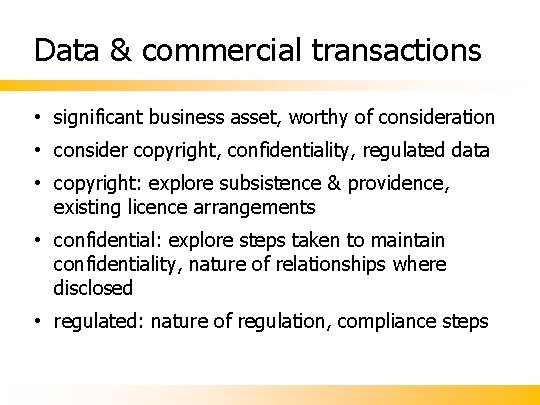
Data & commercial transactions • significant business asset, worthy of consideration • consider copyright, confidentiality, regulated data • copyright: explore subsistence & providence, existing licence arrangements • confidential: explore steps taken to maintain confidentiality, nature of relationships where disclosed • regulated: nature of regulation, compliance steps
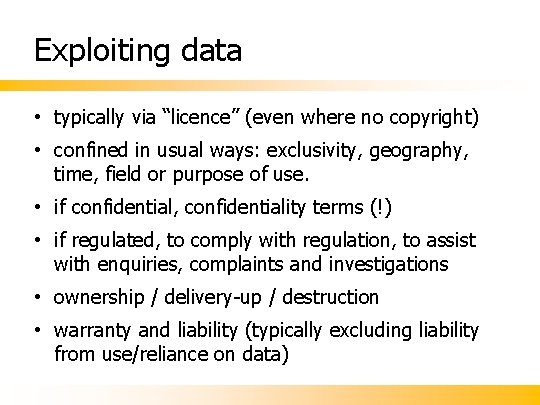
Exploiting data • typically via “licence” (even where no copyright) • confined in usual ways: exclusivity, geography, time, field or purpose of use. • if confidential, confidentiality terms (!) • if regulated, to comply with regulation, to assist with enquiries, complaints and investigations • ownership / delivery-up / destruction • warranty and liability (typically excluding liability from use/reliance on data)
Thank you Patrick Sefton Principal, Brightline Lawyers Phone 07 3160 9249 Mobile 0407 756 568 patrick. sefton@brightline. com. au
- Slides: 18