
Data Integrity without knowledge is weak and useless
- Slides: 34
Data Integrity without knowledge is weak and useless, and knowledge without integrity is dangerous Samuel Johnson, 1759
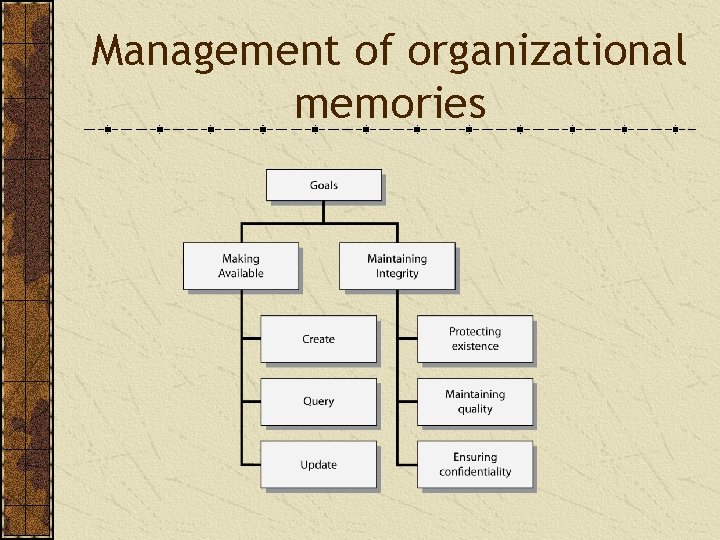
Management of organizational memories
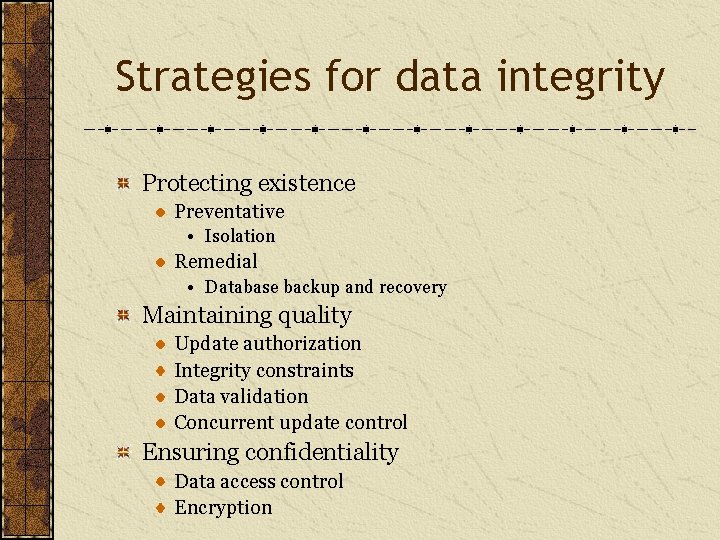
Strategies for data integrity Protecting existence Preventative • Isolation Remedial • Database backup and recovery Maintaining quality Update authorization Integrity constraints Data validation Concurrent update control Ensuring confidentiality Data access control Encryption
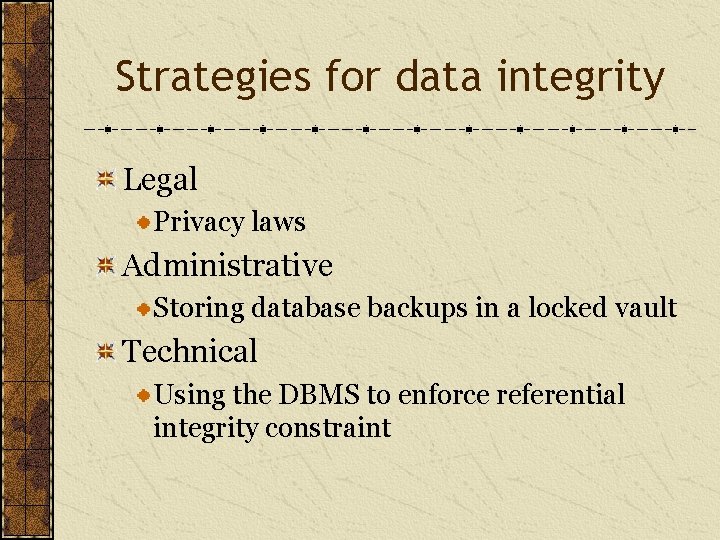
Strategies for data integrity Legal Privacy laws Administrative Storing database backups in a locked vault Technical Using the DBMS to enforce referential integrity constraint
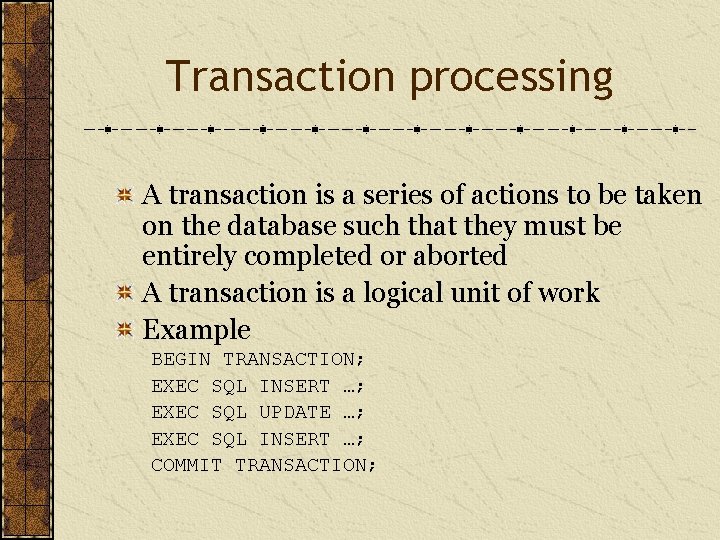
Transaction processing A transaction is a series of actions to be taken on the database such that they must be entirely completed or aborted A transaction is a logical unit of work Example BEGIN TRANSACTION; EXEC SQL INSERT …; EXEC SQL UPDATE …; EXEC SQL INSERT …; COMMIT TRANSACTION;
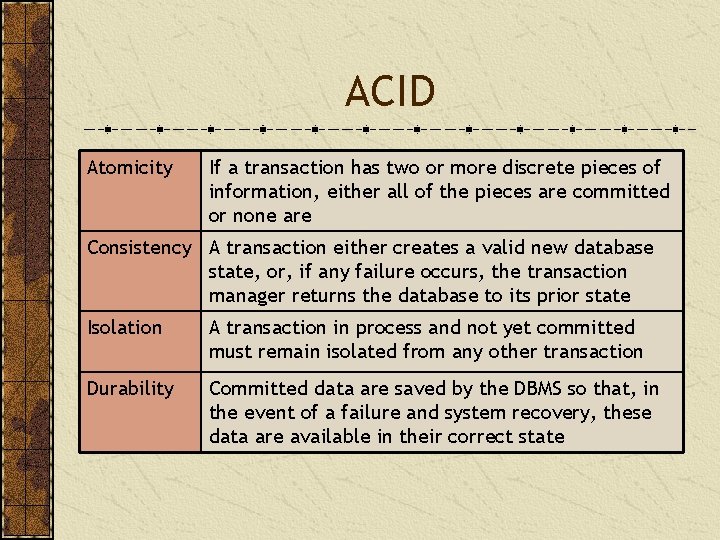
ACID Atomicity If a transaction has two or more discrete pieces of information, either all of the pieces are committed or none are Consistency A transaction either creates a valid new database state, or, if any failure occurs, the transaction manager returns the database to its prior state Isolation A transaction in process and not yet committed must remain isolated from any other transaction Durability Committed data are saved by the DBMS so that, in the event of a failure and system recovery, these data are available in their correct state
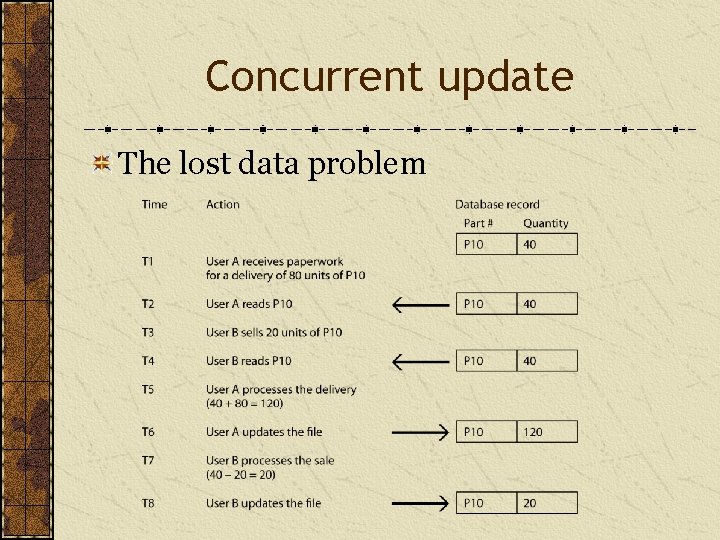
Concurrent update The lost data problem
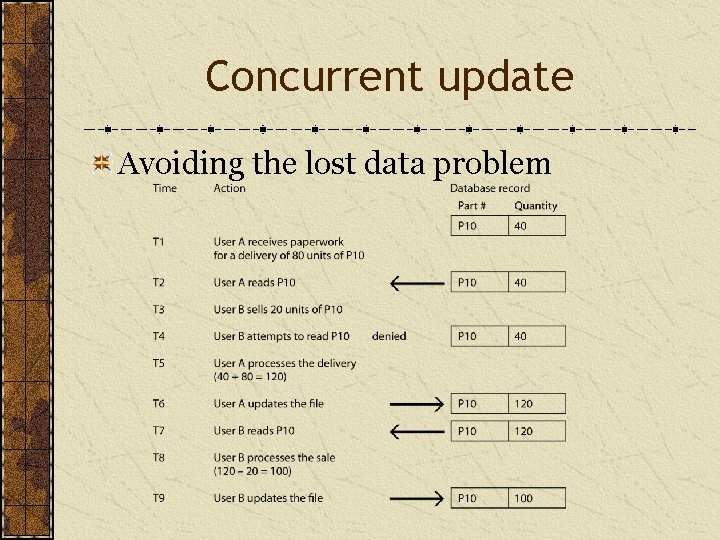
Concurrent update Avoiding the lost data problem
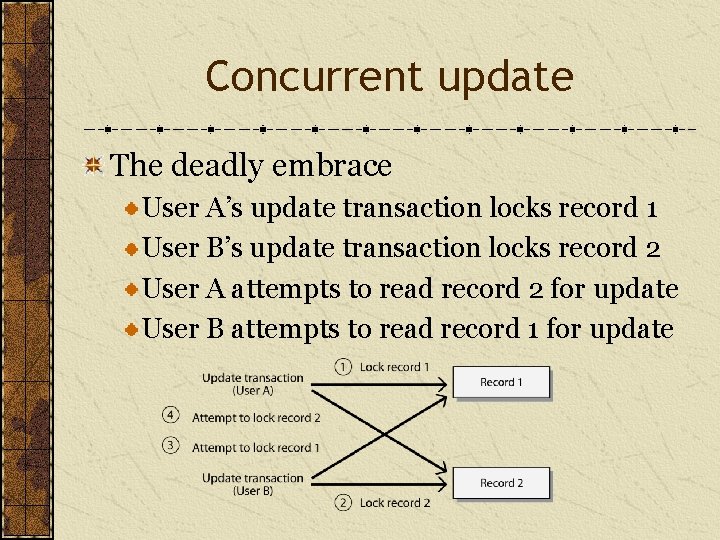
Concurrent update The deadly embrace User A’s update transaction locks record 1 User B’s update transaction locks record 2 User A attempts to read record 2 for update User B attempts to read record 1 for update
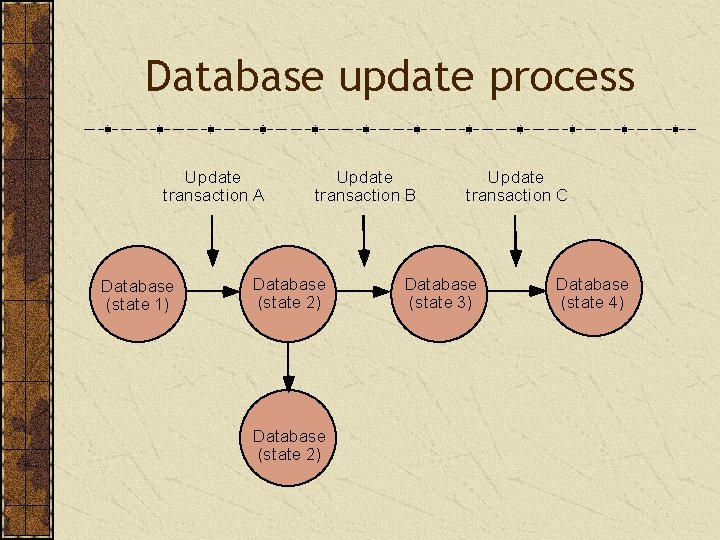
Database update process Update transaction A Database (state 1) Update transaction B Database (state 2) Update transaction C Database (state 3) Database (state 4)
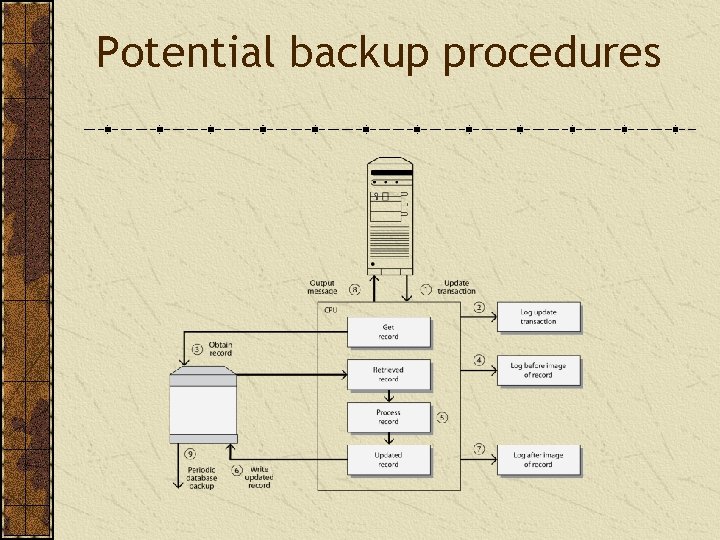
Potential backup procedures
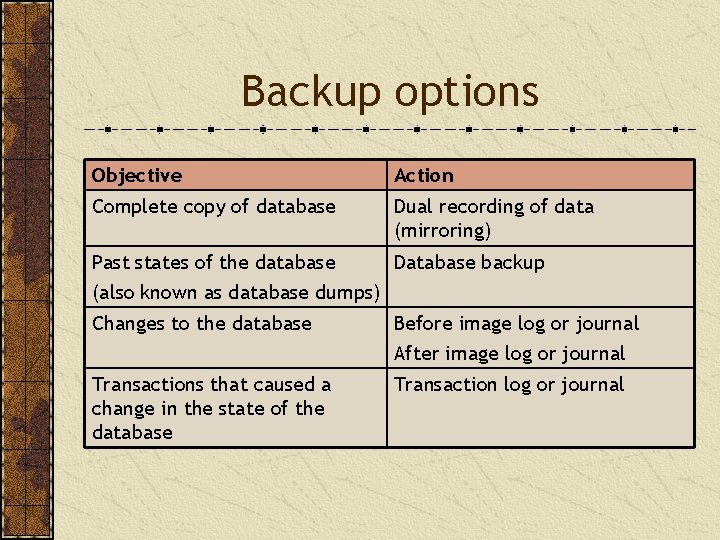
Backup options Objective Action Complete copy of database Dual recording of data (mirroring) Past states of the database Database backup (also known as database dumps) Changes to the database Before image log or journal After image log or journal Transactions that caused a change in the state of the database Transaction log or journal
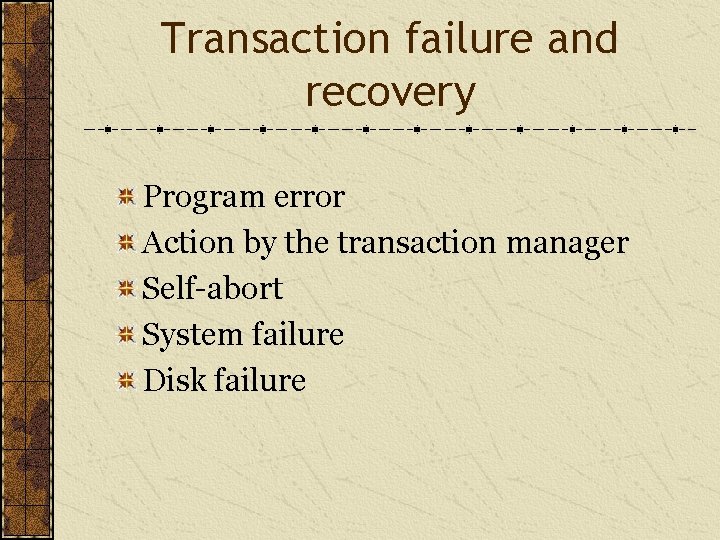
Transaction failure and recovery Program error Action by the transaction manager Self-abort System failure Disk failure
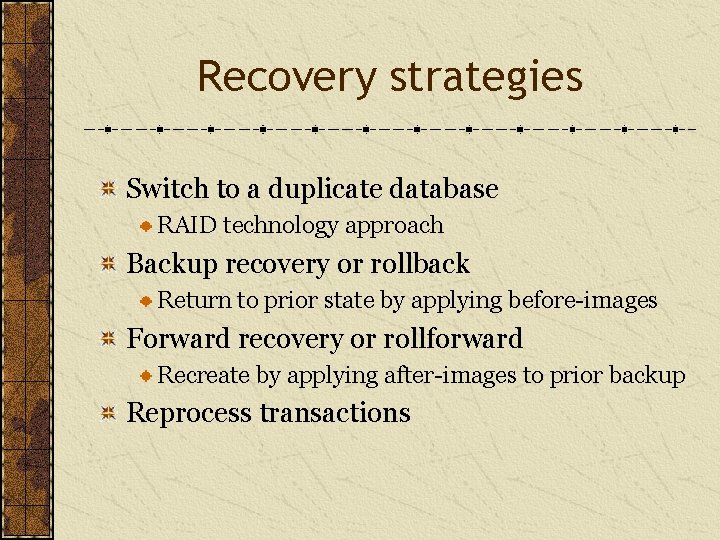
Recovery strategies Switch to a duplicate database RAID technology approach Backup recovery or rollback Return to prior state by applying before-images Forward recovery or rollforward Recreate by applying after-images to prior backup Reprocess transactions
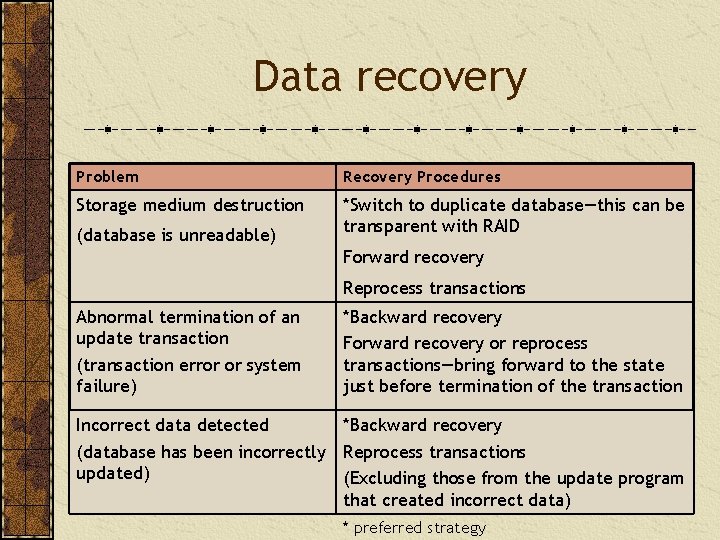
Data recovery Problem Recovery Procedures Storage medium destruction *Switch to duplicate database—this can be transparent with RAID (database is unreadable) Forward recovery Reprocess transactions Abnormal termination of an update transaction (transaction error or system failure) *Backward recovery Forward recovery or reprocess transactions—bring forward to the state just before termination of the transaction Incorrect data detected *Backward recovery (database has been incorrectly Reprocess transactions updated) (Excluding those from the update program that created incorrect data) * preferred strategy
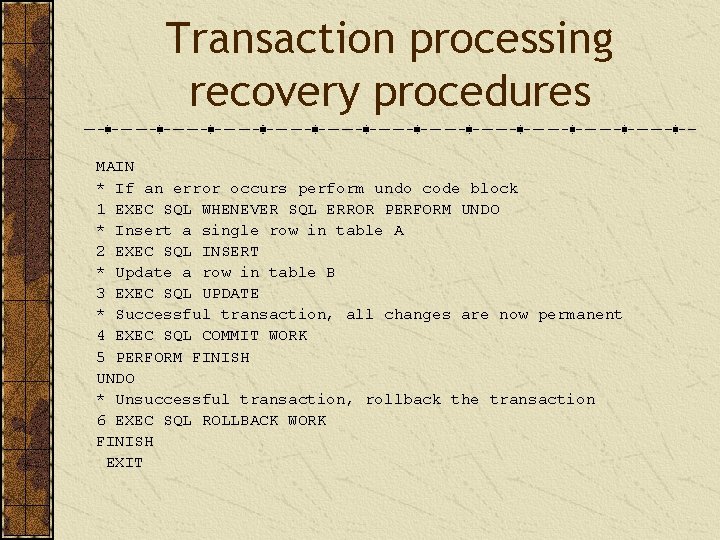
Transaction processing recovery procedures MAIN * If an error occurs perform undo code block 1 EXEC SQL WHENEVER SQL ERROR PERFORM UNDO * Insert a single row in table A 2 EXEC SQL INSERT * Update a row in table B 3 EXEC SQL UPDATE * Successful transaction, all changes are now permanent 4 EXEC SQL COMMIT WORK 5 PERFORM FINISH UNDO * Unsuccessful transaction, rollback the transaction 6 EXEC SQL ROLLBACK WORK FINISH EXIT
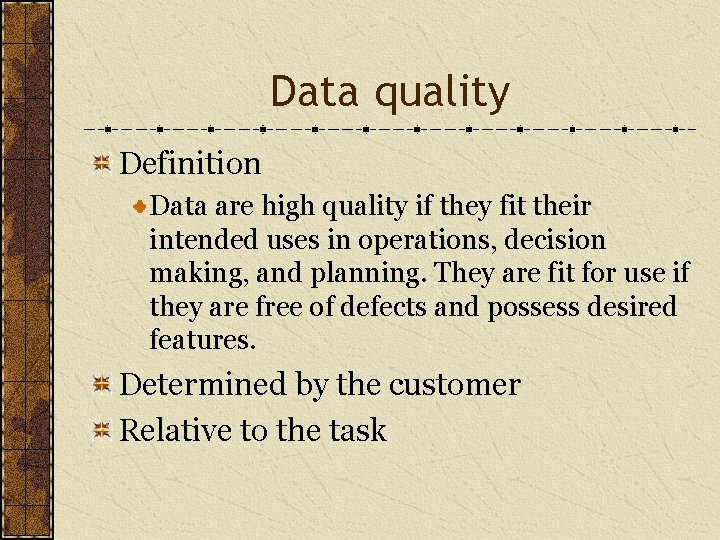
Data quality Definition Data are high quality if they fit their intended uses in operations, decision making, and planning. They are fit for use if they are free of defects and possess desired features. Determined by the customer Relative to the task
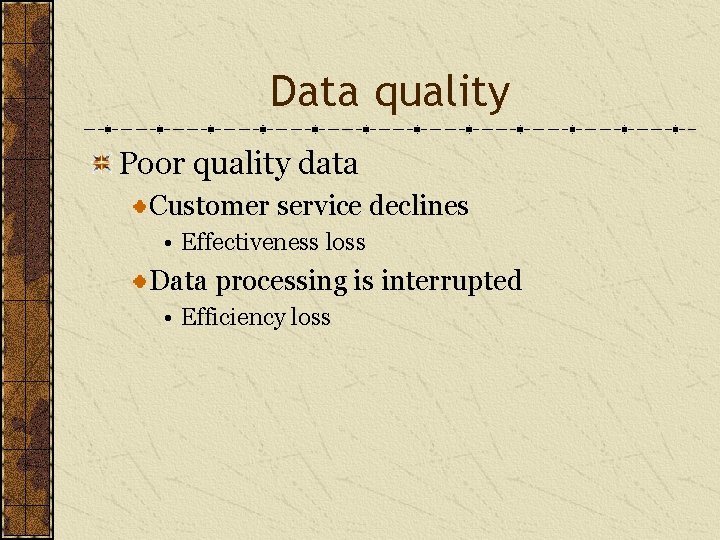
Data quality Poor quality data Customer service declines • Effectiveness loss Data processing is interrupted • Efficiency loss
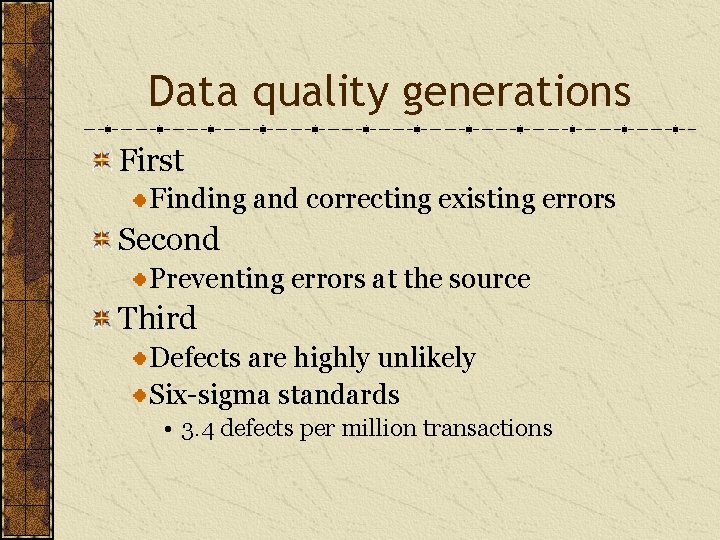
Data quality generations First Finding and correcting existing errors Second Preventing errors at the source Third Defects are highly unlikely Six-sigma standards • 3. 4 defects per million transactions
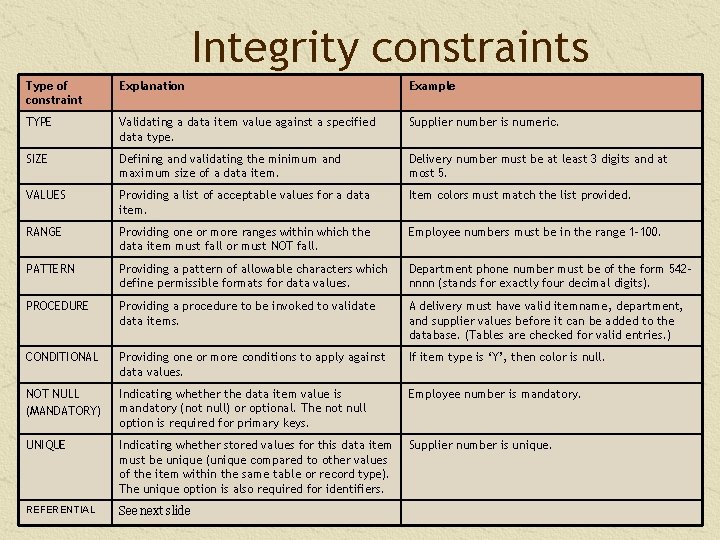
Integrity constraints Type of constraint Explanation Example TYPE Validating a data item value against a specified data type. Supplier number is numeric. SIZE Defining and validating the minimum and maximum size of a data item. Delivery number must be at least 3 digits and at most 5. VALUES Providing a list of acceptable values for a data item. Item colors must match the list provided. RANGE Providing one or more ranges within which the data item must fall or must NOT fall. Employee numbers must be in the range 1 -100. PATTERN Providing a pattern of allowable characters which define permissible formats for data values. Department phone number must be of the form 542 nnnn (stands for exactly four decimal digits). PROCEDURE Providing a procedure to be invoked to validate data items. A delivery must have valid itemname, department, and supplier values before it can be added to the database. (Tables are checked for valid entries. ) CONDITIONAL Providing one or more conditions to apply against data values. If item type is ‘Y’, then color is null. NOT NULL (MANDATORY) Indicating whether the data item value is mandatory (not null) or optional. The not null option is required for primary keys. Employee number is mandatory. UNIQUE Indicating whether stored values for this data item must be unique (unique compared to other values of the item within the same table or record type). The unique option is also required for identifiers. Supplier number is unique. REFERENTIAL See next slide
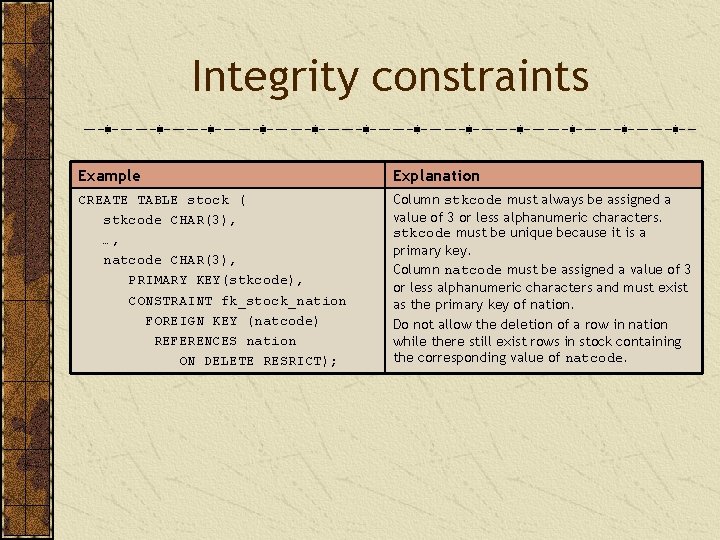
Integrity constraints Example Explanation CREATE TABLE stock ( stkcode CHAR(3), …, natcode CHAR(3), PRIMARY KEY(stkcode), CONSTRAINT fk_stock_nation FOREIGN KEY (natcode) REFERENCES nation ON DELETE RESRICT); Column stkcode must always be assigned a value of 3 or less alphanumeric characters. stkcode must be unique because it is a primary key. Column natcode must be assigned a value of 3 or less alphanumeric characters and must exist as the primary key of nation. Do not allow the deletion of a row in nation while there still exist rows in stock containing the corresponding value of natcode.
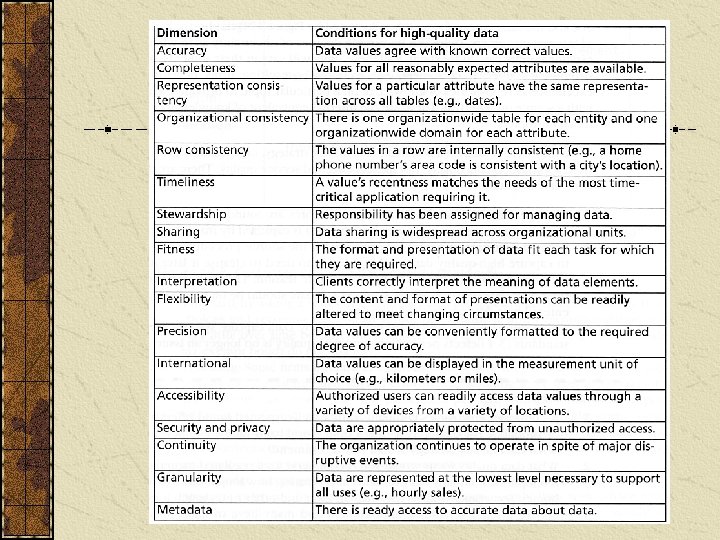
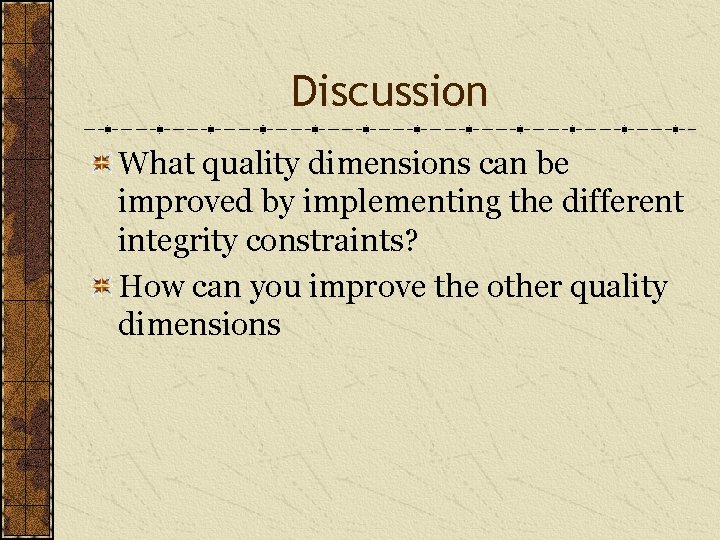
Discussion What quality dimensions can be improved by implementing the different integrity constraints? How can you improve the other quality dimensions
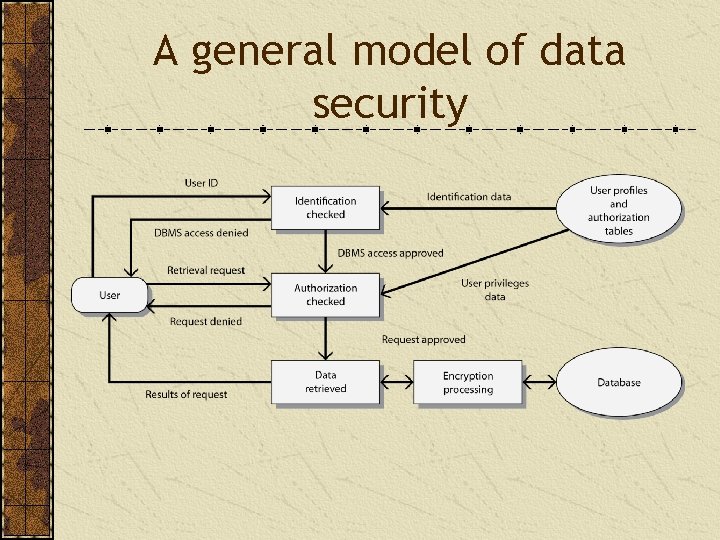
A general model of data security
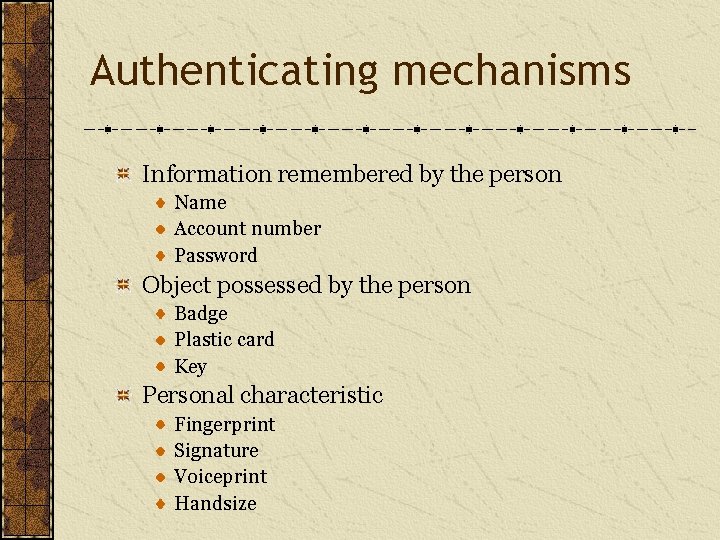
Authenticating mechanisms Information remembered by the person Name Account number Password Object possessed by the person Badge Plastic card Key Personal characteristic Fingerprint Signature Voiceprint Handsize
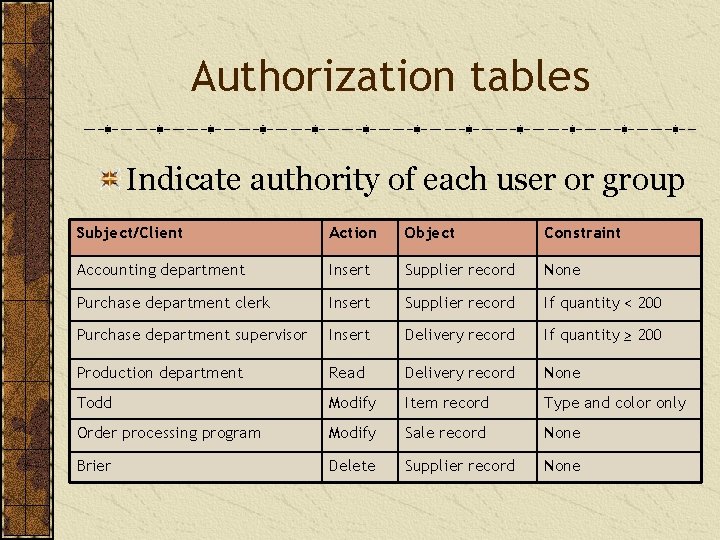
Authorization tables Indicate authority of each user or group Subject/Client Action Object Constraint Accounting department Insert Supplier record None Purchase department clerk Insert Supplier record If quantity < 200 Purchase department supervisor Insert Delivery record If quantity ≥ 200 Production department Read Delivery record None Todd Modify Item record Type and color only Order processing program Modify Sale record None Brier Delete Supplier record None
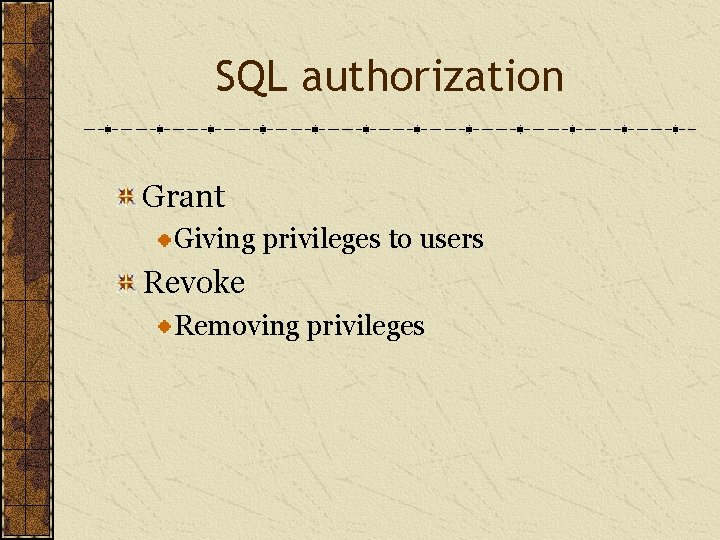
SQL authorization Grant Giving privileges to users Revoke Removing privileges
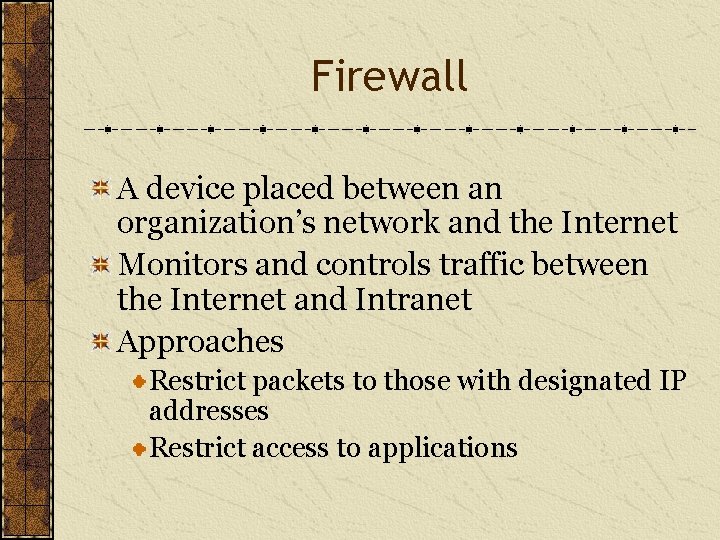
Firewall A device placed between an organization’s network and the Internet Monitors and controls traffic between the Internet and Intranet Approaches Restrict packets to those with designated IP addresses Restrict access to applications
Encryption is as old as writing Sensitive information needs to remain secure Critical to electronic commerce Encryption hides the meaning of a message Decryption reveals the meaning of an encrypted message
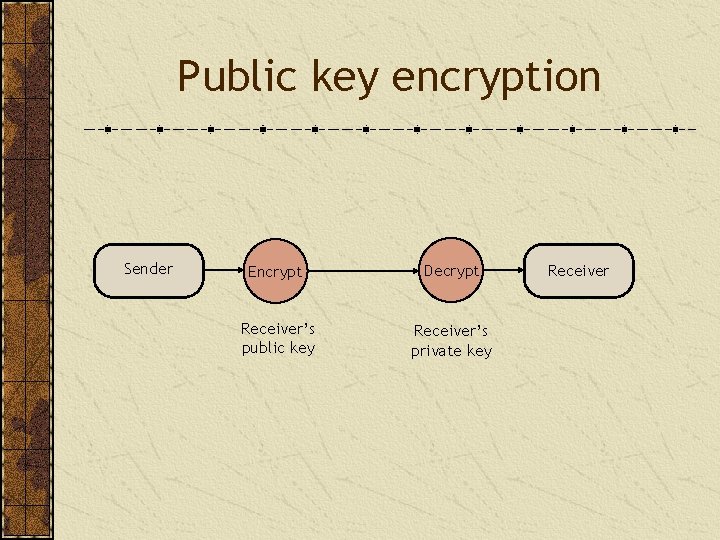
Public key encryption Sender Encrypt Decrypt Receiver’s public key Receiver’s private key Receiver
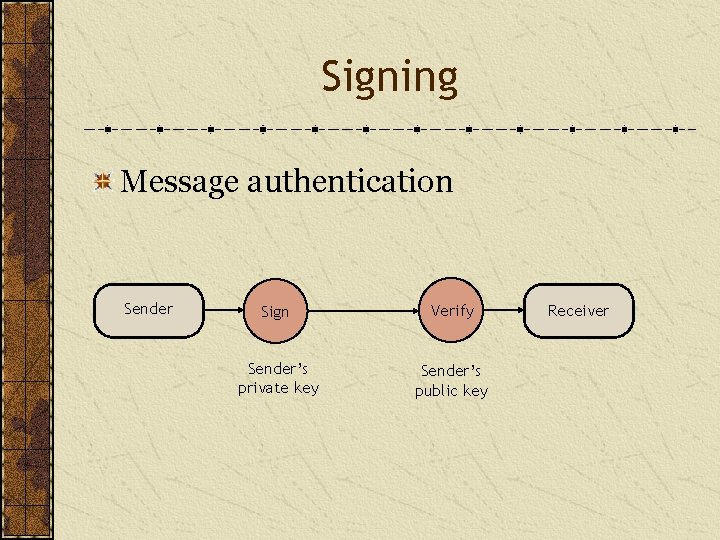
Signing Message authentication Sender Sign Verify Sender’s private key Sender’s public key Receiver
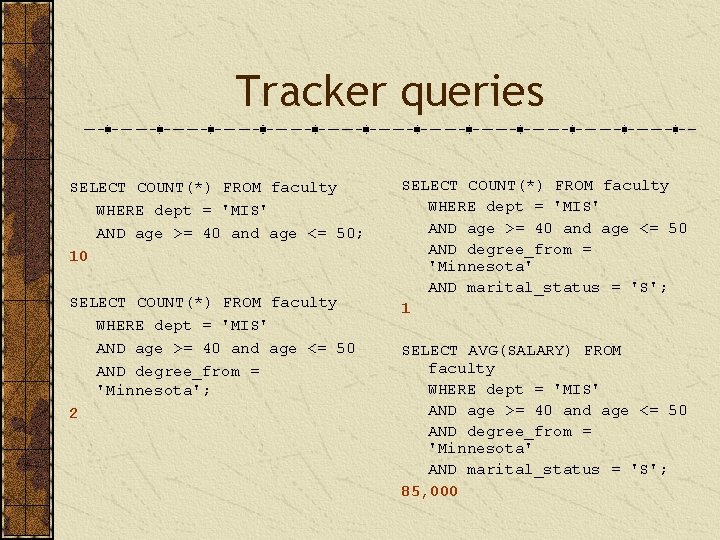
Monitoring activity Audit trail analysis Time and date stamp all transactions Monitor a sequence of queries Tracker queries
Tracker queries SELECT COUNT(*) FROM faculty WHERE dept = 'MIS' AND age >= 40 and age <= 50; 10 SELECT COUNT(*) FROM faculty WHERE dept = 'MIS' AND age >= 40 and age <= 50 AND degree_from = 'Minnesota'; 2 SELECT COUNT(*) FROM faculty WHERE dept = 'MIS' AND age >= 40 and age <= 50 AND degree_from = 'Minnesota' AND marital_status = 'S'; 1 SELECT AVG(SALARY) FROM faculty WHERE dept = 'MIS' AND age >= 40 and age <= 50 AND degree_from = 'Minnesota' AND marital_status = 'S'; 85, 000
Conclusion Data integrity is essential for quality decision making Many actions need to be taken to ensure high levels of data integrity Protecting existence Authentication Backup and recovery Encryption