
Data House in Humanitarian Analysis and Decision Making
- Slides: 2
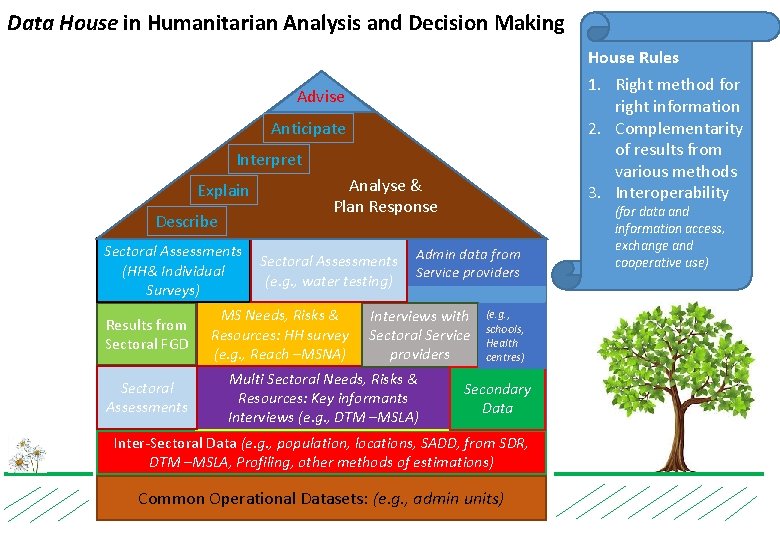
Data House in Humanitarian Analysis and Decision Making House Rules 1. Right method for right information 2. Complementarity of results from various methods 3. Interoperability Advise Anticipate Interpret Explain Describe Sectoral Assessments (HH& Individual Surveys) Results from Sectoral FGD Sectoral Assessments Analyse & Plan Response Sectoral Assessments (e. g. , water testing) MS Needs, Risks & Resources: HH survey (e. g. , Reach –MSNA) Admin data from Service providers Interviews with Sectoral Service providers Multi Sectoral Needs, Risks & Resources: Key informants Interviews (e. g. , DTM –MSLA) (e. g. , schools, Health centres) Secondary Data Inter-Sectoral Data (e. g. , population, locations, SADD, from SDR, DTM –MSLA, Profiling, other methods of estimations) Common Operational Datasets: (e. g. , admin units) (for data and information access, exchange and cooperative use)
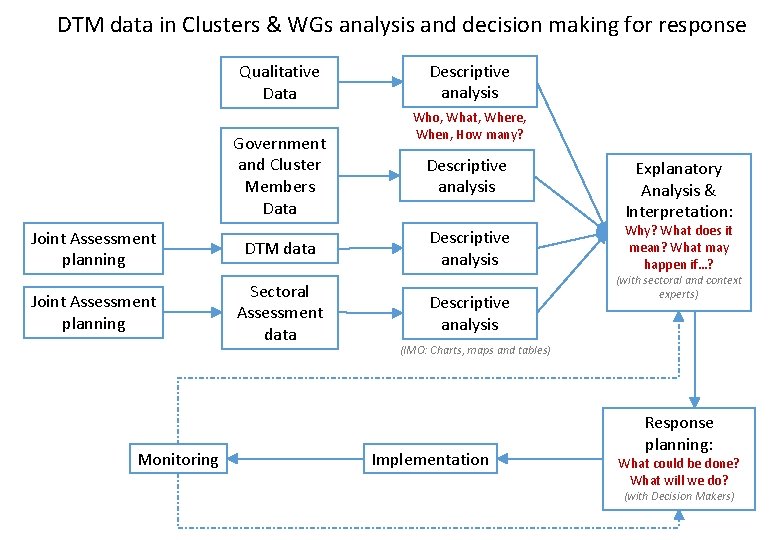
DTM data in Clusters & WGs analysis and decision making for response Qualitative Data Government and Cluster Members Data Joint Assessment planning Monitoring DTM data Sectoral Assessment data Descriptive analysis Who, What, Where, When, How many? Descriptive analysis Explanatory Analysis & Interpretation: Why? What does it mean? What may happen if…? (with sectoral and context experts) (IMO: Charts, maps and tables) Implementation Response planning: What could be done? What will we do? (with Decision Makers)