
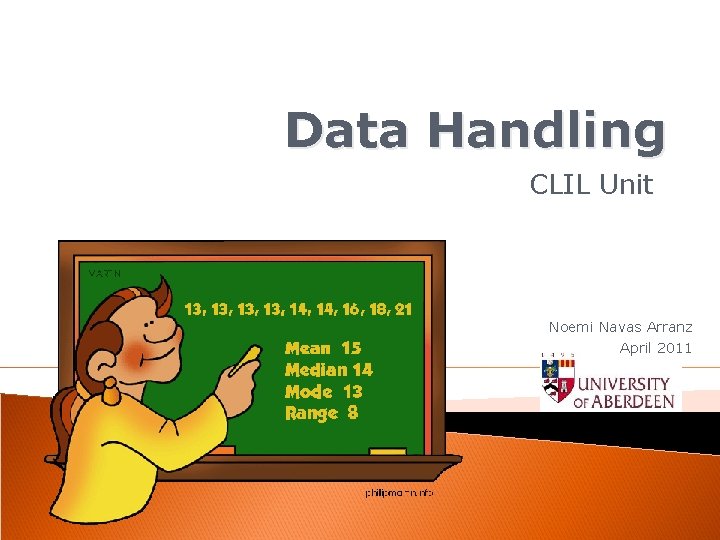
Data Handling CLIL Unit Noemi Navas Arranz April
- Slides: 15
Data Handling CLIL Unit Noemi Navas Arranz April 2011
Let’s look at. . . � Background. CLIL experiences � Theoretical principles. Unit planning � Materials. Scaffolding Assessment � Reflection. C G LIN D AN I H TA A L D
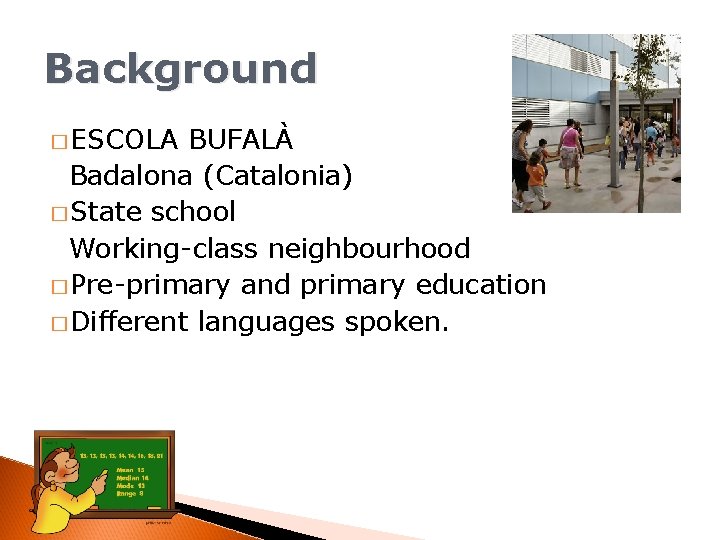
Background � ESCOLA BUFALÀ Badalona (Catalonia) � State school Working-class neighbourhood � Pre-primary and primary education � Different languages spoken.
CLIL experiences � First experience Pre-primary: routines Primary: CI – Art CM & CS– Art, Experiments and Mental Arithmetic � Nowadays Pre-primary: routines Primary: CI – Art CM & CS– Maths and Science
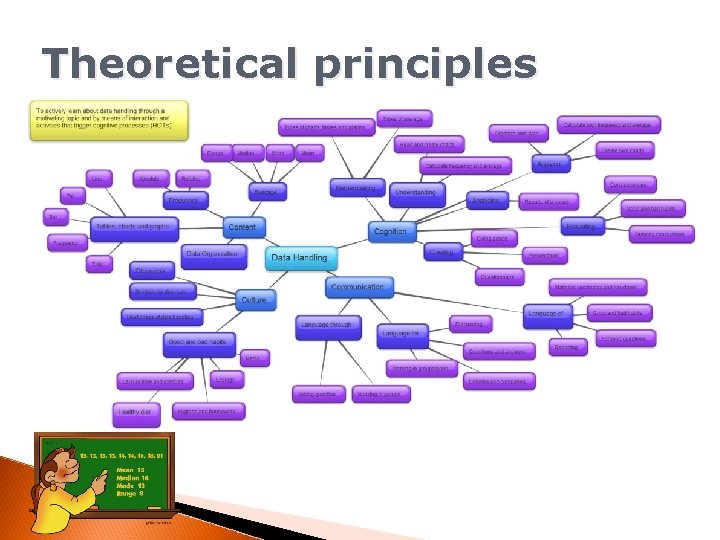
Theoretical principles � The 4 Cs Framework Content: carefully selected Cognition: trigger HOTs to develop pupils’ cognitive processes Communication: Real language (of, for and through) Culture: Awareness in globalized world
Theoretical principles
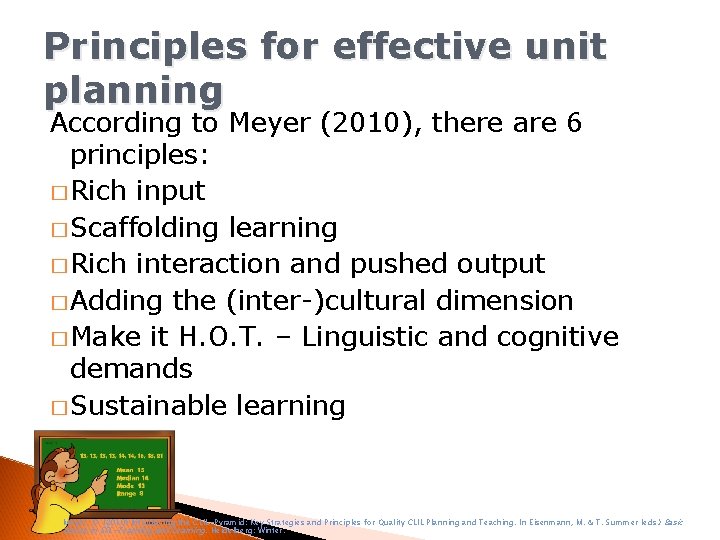
Principles for effective unit planning According to Meyer (2010), there are 6 principles: � Rich input � Scaffolding learning � Rich interaction and pushed output � Adding the (inter-)cultural dimension � Make it H. O. T. – Linguistic and cognitive demands � Sustainable learning Meyer, O. (2010) Introducing the CLIL-Pyramid: Key Strategies and Principles for Quality CLIL Planning and Teaching. In Eisenmann, M. & T. Summer (eds. ) Basic Issues in EFL-Teaching and Learning. Heidelberg: Winter.
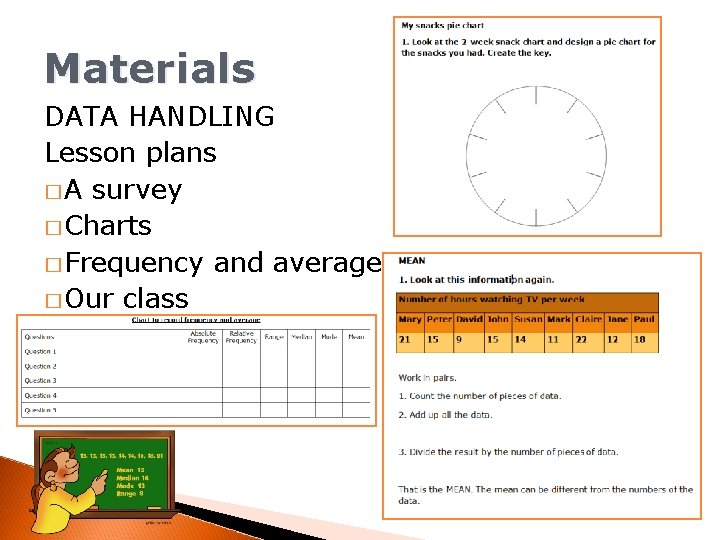
Materials DATA HANDLING Lesson plans � A survey � Charts � Frequency and average � Our class
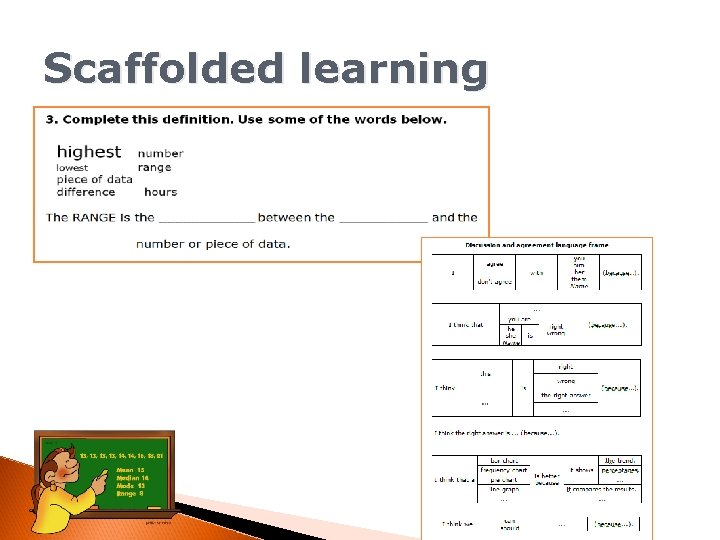
Scaffolded learning
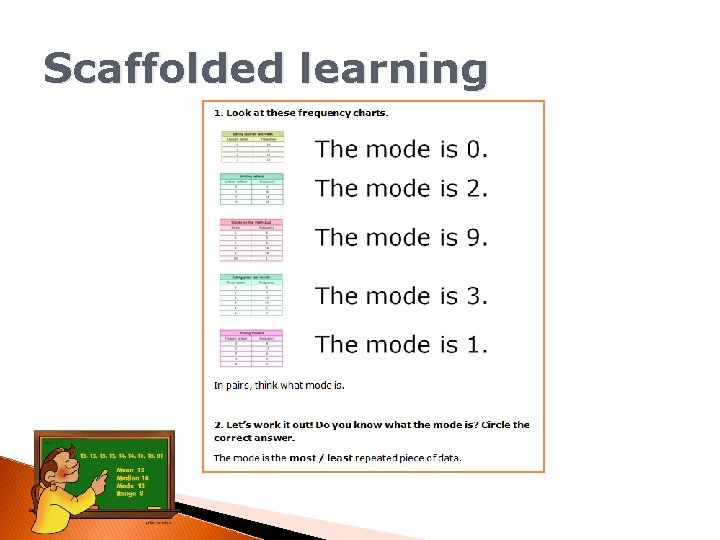
Scaffolded learning
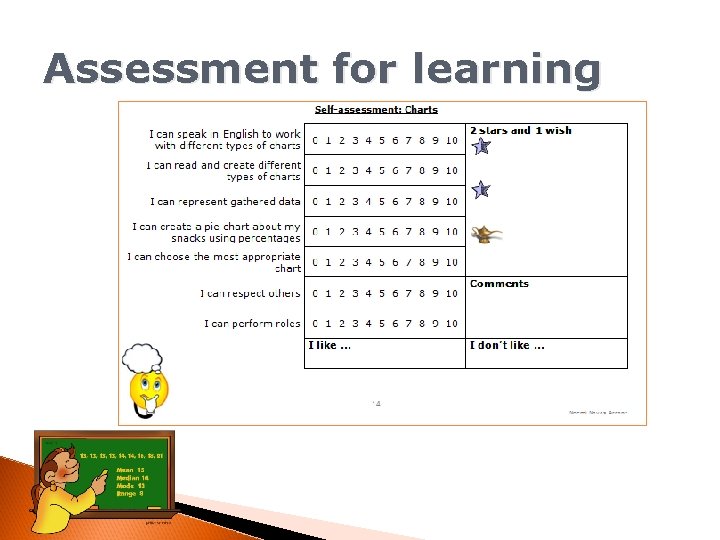
Assessment for learning
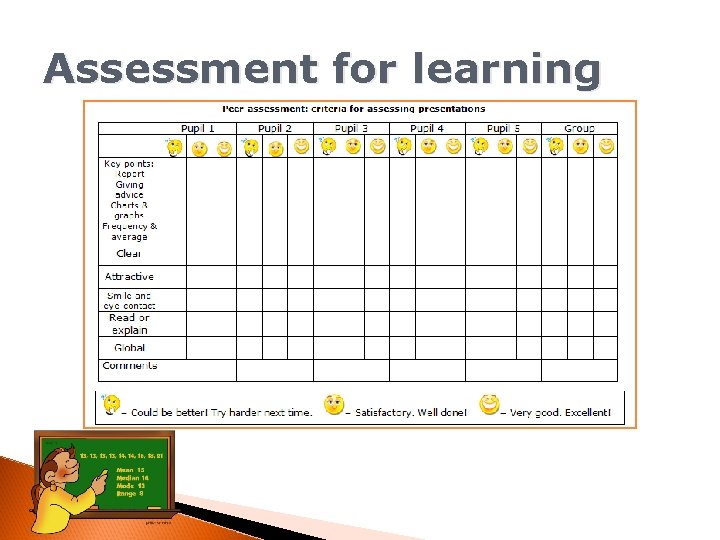
Assessment for learning
To sum up. . . When planning a CLIL unit, take into account � school context and previous CLIL experiences. � theories supporting CLIL: 4 Cs framework and quality principles. � vision and mind map. � progression, scaffolding and assessment.
Reflection Driving my way towards CLIL � CLIL is not easy. � No magic wands. � Different possible answers. � Not everything works. � Always ready. � Open our minds. � We are all CLIL learners. C I
� Thank C I you!