
Data Governance in Data Ecosystems Insights from Organizations
- Slides: 15
Data Governance in Data Ecosystems – Insights from Organizations Dominik Lis, Fraunhofer Institute for Software and Systems Engineering (ISST) Boris Otto– Fraunhofer Institute for Software and Systems Engineering (ISST)
Agenda 01 Motivation & Research Goal 02 Research Design 03 Results & Outlook 2
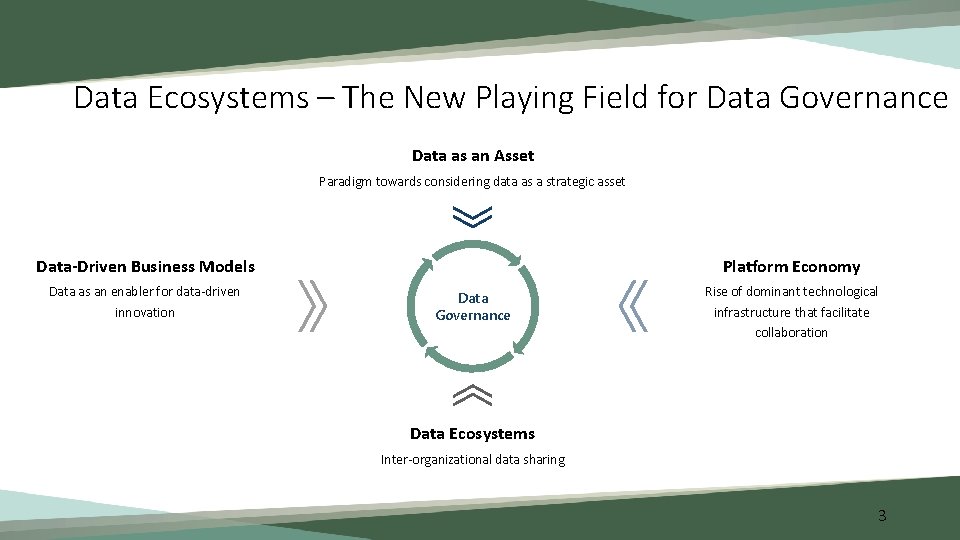
Data Ecosystems – The New Playing Field for Data Governance Data as an Asset Paradigm towards considering data as a strategic asset Data-Driven Business Models Data as an enabler for data-driven innovation Platform Economy Data Governance Rise of dominant technological infrastructure that facilitate collaboration Data Ecosystems Inter-organizational data sharing 3
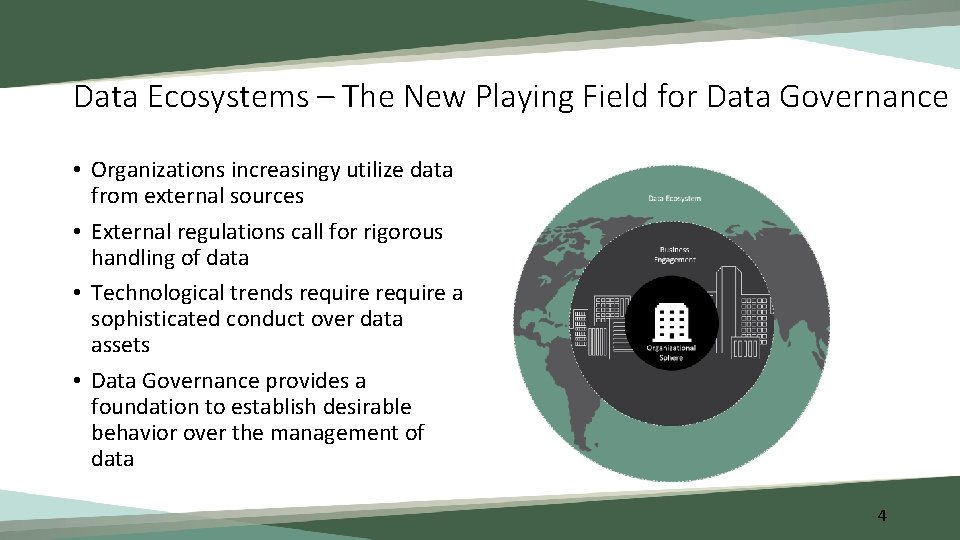
Data Ecosystems – The New Playing Field for Data Governance • Organizations increasingy utilize data from external sources • External regulations call for rigorous handling of data • Technological trends require a sophisticated conduct over data assets • Data Governance provides a foundation to establish desirable behavior over the management of data 4
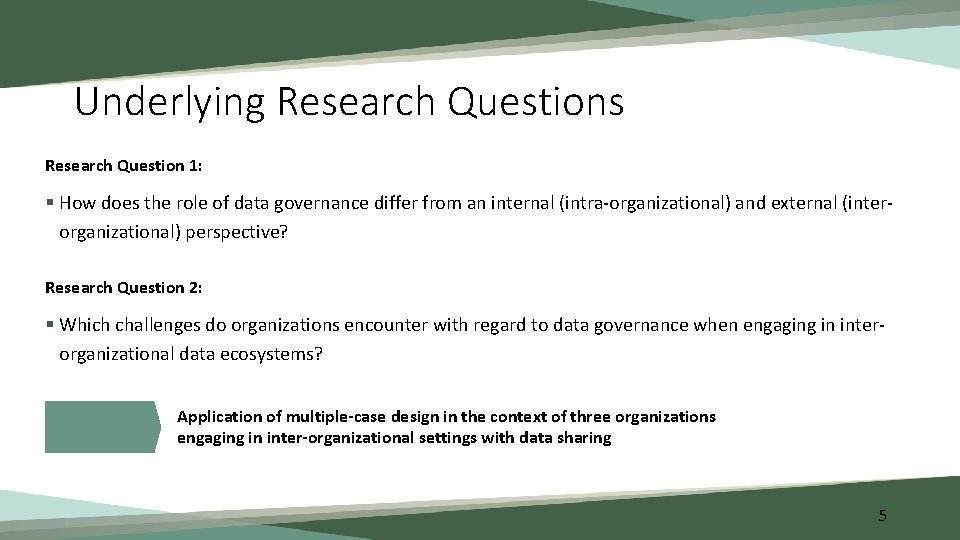
Underlying Research Questions Research Question 1: § How does the role of data governance differ from an internal (intra-organizational) and external (interorganizational) perspective? Research Question 2: § Which challenges do organizations encounter with regard to data governance when engaging in interorganizational data ecosystems? Application of multiple-case design in the context of three organizations engaging in inter-organizational settings with data sharing 5
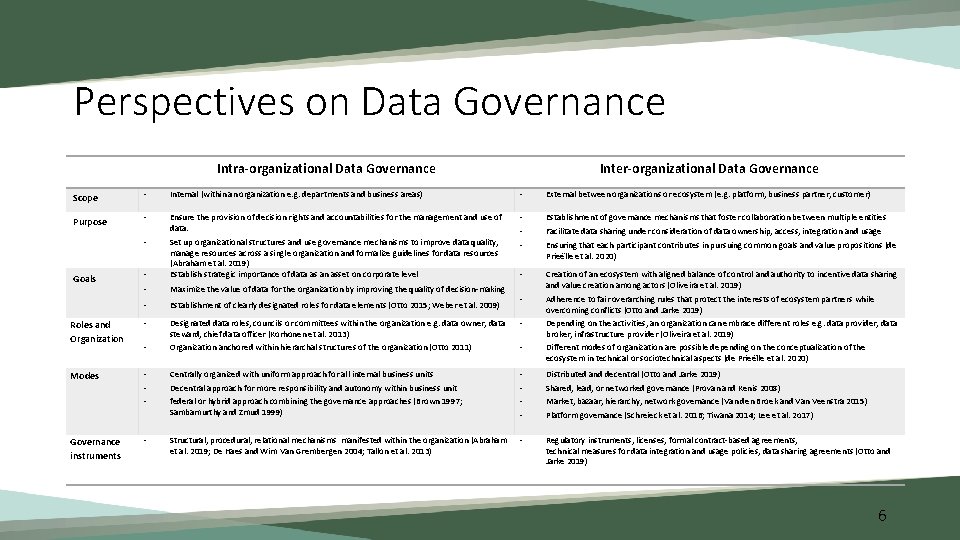
Perspectives on Data Governance Intra-organizational Data Governance Inter-organizational Data Governance Scope - Internal (within an organization e. g. departments and business areas) - External between organizations or ecosystem (e. g. platform, business partner, customer) Purpose - Ensure the provision of decision rights and accountabilities for the management and use of data. Establishment of governance mechanisms that foster collaboration between multiple entities - Set up organizational structures and use governance mechanisms to improve data quality, manage resources across a single organization and formalize guidelines for data resources (Abraham et al. 2019) Establish strategic importance of data as an asset on corporate level - - Maximize the value of data for the organization by improving the quality of decision-making Creation of an ecosystem with aligned balance of control and authority to incentive data sharing and value creation among actors (Oliveira et al. 2019) - Establishment of clearly designated roles for data elements (Otto 2015; Weber et al. 2009) - Roles and Organization - Designated data roles, councils or committees within the organization e. g. data owner, data steward, chief data officer (Korhonen et al. 2013) - Adherence to fair overarching rules that protect the interests of ecosystem partners while overcoming conflicts (Otto and Jarke 2019) Depending on the activities, an organization can embrace different roles e. g. data provider, data broker, infrastructure provider (Oliveira et al. 2019) - Organization anchored within hierarchal structures of the organization (Otto 2011) - Different modes of organization are possible depending on the conceptualization of the ecosystem in technical or sociotechnical aspects (de Prieëlle et al. 2020) Modes - Centrally organized with uniform approach for all internal business units - Distributed and decentral (Otto and Jarke 2019) - Regulatory instruments, licenses, formal contract-based agreements, technical measures for data integration and usage policies, data sharing agreements (Otto and Jarke 2019) Goals Governance instruments - Decentral approach for more responsibility and autonomy within business unit federal or hybrid approach combining the governance approaches (Brown 1997; Sambamurthy and Zmud 1999) Structural, procedural, relational mechanisms manifested within the organization (Abraham et al. 2019; De Haes and Wim Van Grembergen 2004; Tallon et al. 2013) Facilitate data sharing under consideration of data ownership, access, integration and usage Ensuring that each participant contributes in pursuing common goals and value propositions (de Prieëlle et al. 2020) Shared, lead, or networked governance (Provan and Kenis 2008) Market, bazaar, hierarchy, network governance (Van den Broek and Van Veenstra 2015) Platform governance (Schreieck et al. 2016; Tiwana 2014; Lee et al. 2 o 17) 6
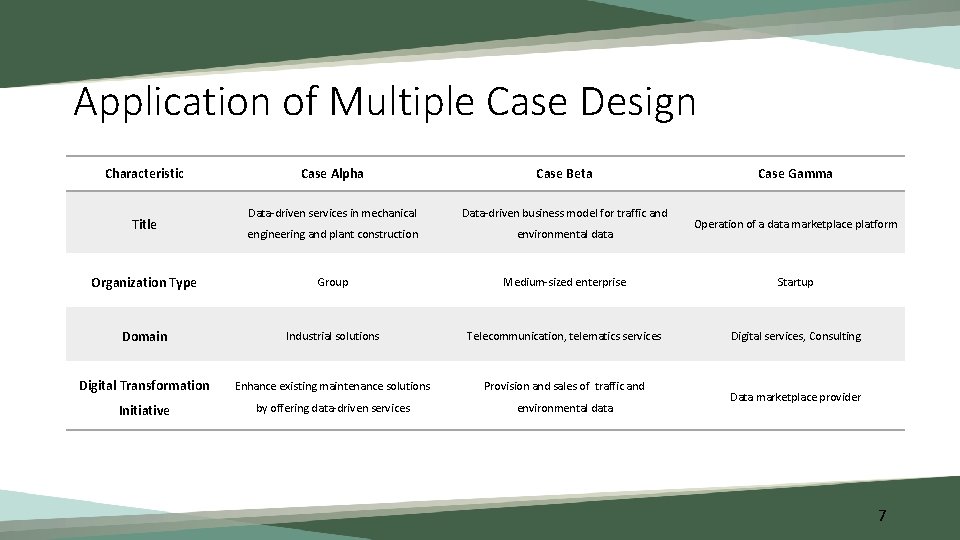
Application of Multiple Case Design Characteristic Case Alpha Case Beta Data-driven services in mechanical Data-driven business model for traffic and engineering and plant construction environmental data Organization Type Group Medium-sized enterprise Startup Domain Industrial solutions Telecommunication, telematics services Digital services, Consulting Digital Transformation Enhance existing maintenance solutions Provision and sales of traffic and Initiative by offering data-driven services environmental data Title Case Gamma Operation of a data marketplace platform Data marketplace provider 7
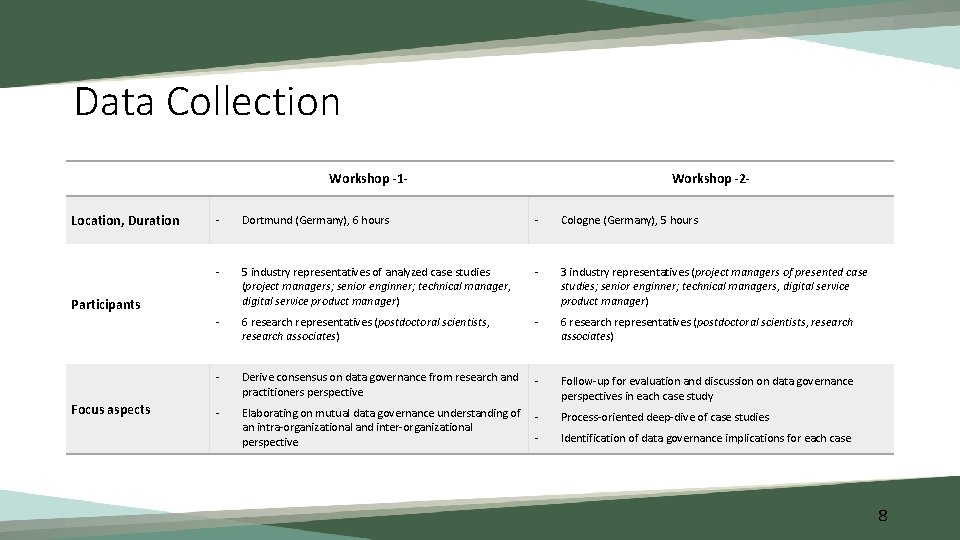
Data Collection Location, Duration Workshop -1 - - Dortmund (Germany), 6 hours - Cologne (Germany), 5 hours - 5 industry representatives of analyzed case studies (project managers; senior enginner; technical manager, digital service product manager) - 3 industry representatives (project managers of presented case studies; senior enginner; technical managers, digital service product manager) - 6 research representatives (postdoctoral scientists, research associates) - Derive consensus on data governance from research and practitioners perspective - Follow-up for evaluation and discussion on data governance perspectives in each case study - Elaborating on mutual data governance understanding of an intra-organizational and inter-organizational perspective Participants Focus aspects Workshop -2 - Process-oriented deep-dive of case studies Identification of data governance implications for each case 8
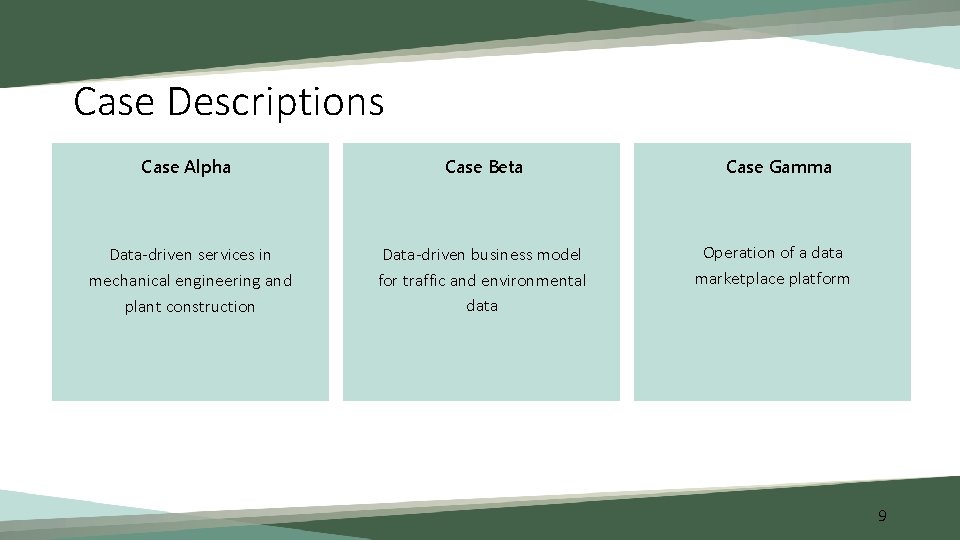
Case Descriptions Case Alpha Case Beta Data-driven services in mechanical engineering and plant construction Data-driven business model for traffic and environmental data Case Gamma Operation of a data marketplace platform 9
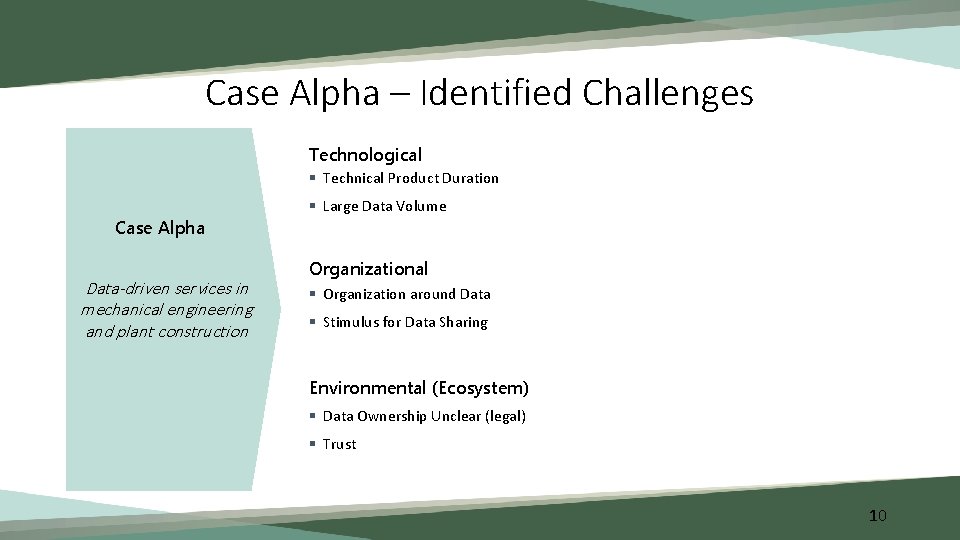
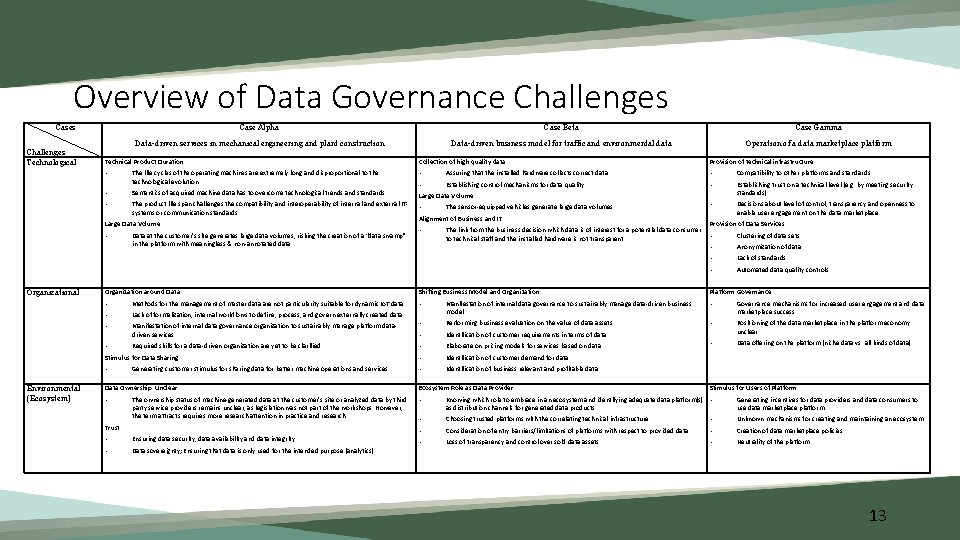
Case Alpha – Identified Challenges Technological § Technical Product Duration Case Alpha Data-driven services in mechanical engineering and plant construction § Large Data Volume Organizational § Organization around Data § Stimulus for Data Sharing Environmental (Ecosystem) § Data Ownership Unclear (legal) § Trust 10
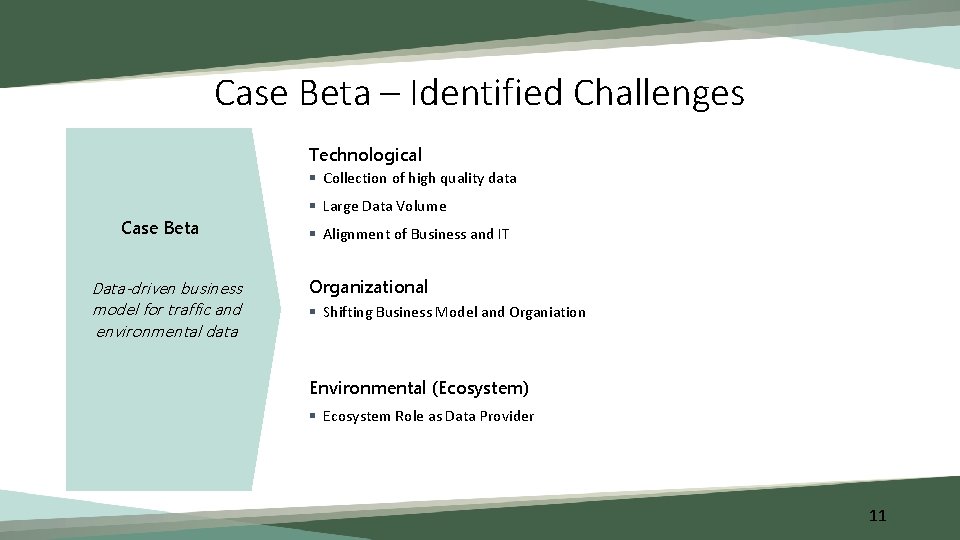
Case Beta – Identified Challenges Technological § Collection of high quality data Case Beta Data-driven business model for traffic and environmental data § Large Data Volume § Alignment of Business and IT Organizational § Shifting Business Model and Organiation Environmental (Ecosystem) § Ecosystem Role as Data Provider 11
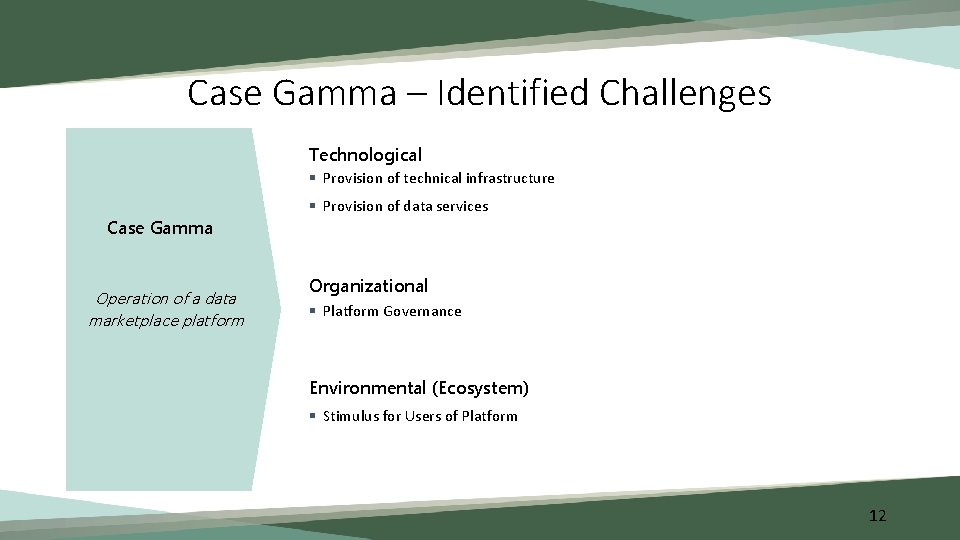
Case Gamma – Identified Challenges Technological § Provision of technical infrastructure Case Gamma Operation of a data marketplace platform § Provision of data services Organizational § Platform Governance Environmental (Ecosystem) § Stimulus for Users of Platform 12
Overview of Data Governance Challenges Cases Challenges Technological Case Alpha Case Beta Case Gamma Data-driven services in mechanical engineering and plant construction Data-driven business model for traffic and environmental data Operation of a data marketplace platform Technical Product Duration Collection of high quality data Provision of technical infrastructure - The life cycles of the operating machines are extremely long and disproportional to the technological evolution - Assuring that the installed hardware collects correct data - Compatibility to other platforms and standards - Semantics of acquired machine data has to overcome technological trends and standards. - Establishing control mechanisms for data quality - Establishing trust on a technical level (e. g. by meeting security standards) - The product life span challenges the compatibility and interoperability of internal and external ITsystems or communication standards Large Data Volume - Decisions about level of control, transparency and openness to enable user engagement on the data marketplace Large Data Volume - Organizational Environmental (Ecosystem) Data at the customer’s site generates large data volumes, risking the creation of a “data swamp” in the platform with meaningless & non-annotated data - The sensor-equipped vehicles generate large data volumes Alignment of Business and IT - Provision of Data Services The link from the business decision which data is of interest for a potential data consumer Clustering of data sets to technical staff and the installed hardware is not transparent Anonymization of data - Lack of standards - Automated data quality controls Organization around Data Shifting Business Model and Organization Platform Governance - Methods for the management of master data are not particularity suitable for dynamic Io. T data - - - Lack of formalization, internal workflows to define, process, and govern externally created data Manifestation of internal data governance to sustainably manage data-driven business model Governance mechanisms for increased user engagement and data marketplace success - Manifestation of internal data governance organization to sustainably manage platform datadriven services - Performing business evaluation on the value of data assets - - Identification of customer requirements in terms of data Positioning of the data marketplace in the platform economy unclear - Required skills for a data-driven organization are yet to be clarified - Data offering on the platform (niche data vs. all kinds of data) - Elaborate on pricing models for services based on data Stimulus for Data Sharing - Identification of customer demand for data - - Identification of business relevant and profitable data Generating customer stimulus for sharing data for better machine operations and services Data Ownership Unclear Ecosystem Role as Data Provider - - Knowing which role to embrace in an ecosystem and identifying adequate data platform(s) as distribution channels for generated data products - Choosing trusted platforms with the correlating technical infrastructure - Unknown mechanisms for creating and maintaining an ecosystem - Consideration of entry barriers/limitations of platforms with respect to provided data - Creation of data marketplace policies - Loss of transparency and control over sold data assets - Neutrality of the platform The ownership status of machine-generated data at the customer’s site or analyzed data by third party service providers remains unclear, as legislation was not part of the workshops. However, the term attracts requires more research attention in practice and research. Trust - Ensuring data security, data availability and data integrity - Data sovereignty; Ensuring that data is only used for the intended purpose (analytics) Stimulus for Users of Platform Generating incentives for data providers and data consumers to use data marketplace platform 13
Contact Dominik Lis Research Associate & Advisor to Institute Management Fraunhofer Institute for Software and Systems Engineering Dortmund, Germany dominik. lis@isst. fraunhofer. de 14
Data Governance in Data Ecosystems – Insights from Organizations Dominik Lis, Fraunhofer Institute for Software and Systems Engineering (ISST) Boris Otto– Fraunhofer Institute for Software and Systems Engineering (ISST)