
Data for Environmental Modeling Background and Example Applications
Data for Environmental Modeling: Background and Example Applications Kurt L. Wolfe, Rajbir S. Parmar, Gerard F. Laniak, Aaron B. Parks, Laura Wilson, Jo Ellen Brandmeyer, Daniel P. Ames, Mark H. Gray Photo image area measures 2” H x 6. 93” W and can be masked by a collage strip of one, two or three images. The photo image area is located 3. 19” from left and 3. 81” from top of page. Each image used in collage should be reduced or cropped to a maximum of 2” high, stroked with a 1. 5 pt white frame and positioned edge-to-edge with accompanying images. United States Environmental Protection Agency Office of Research and Development | National Exposure Research Lab, Ecosystems Research Division National Exposure Research Laboratory, Ecosystems Research Division 28 October 2020
Overview • Motivation for D 4 EM • Software evolution • Description of software • The Future Office of Research and Development United States Environmental Protection Agency National Exposure Research Laboratory, Ecosystems Research Division Office of Research and Development | National Exposure Research Lab, Ecosystems Research Division 1
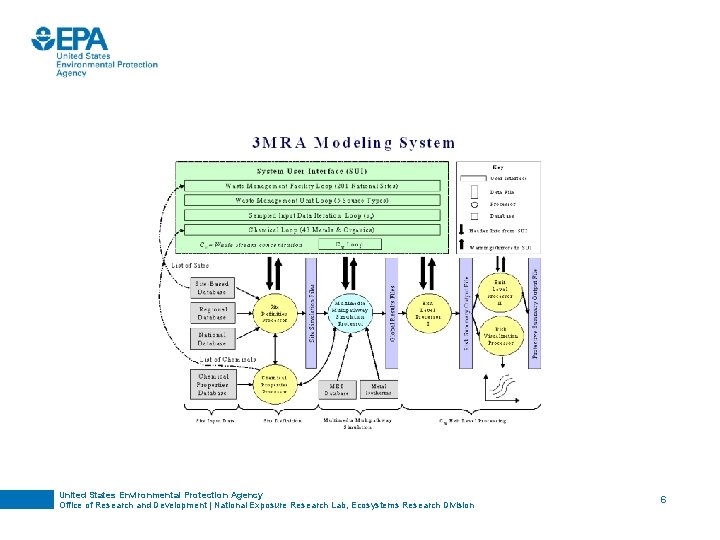
3 MRA • Multi-media, Multi-receptor, Multi-pathway Risk Assessment • Monte Carlo simulation modeling chemical source release, multimedia fate and transport, foodwebs, exposure, and health effects on people and ecosystems • Extensive manual data collection done to populate database for model parameters • Currently simulations can only be performed at the national scale • Moving towards site specific application Office of Research and Development United States Environmental Protection Agency National Exposure Research Laboratory, Ecosystems Research Division Office of Research and Development | National Exposure Research Lab, Ecosystems Research Division 2
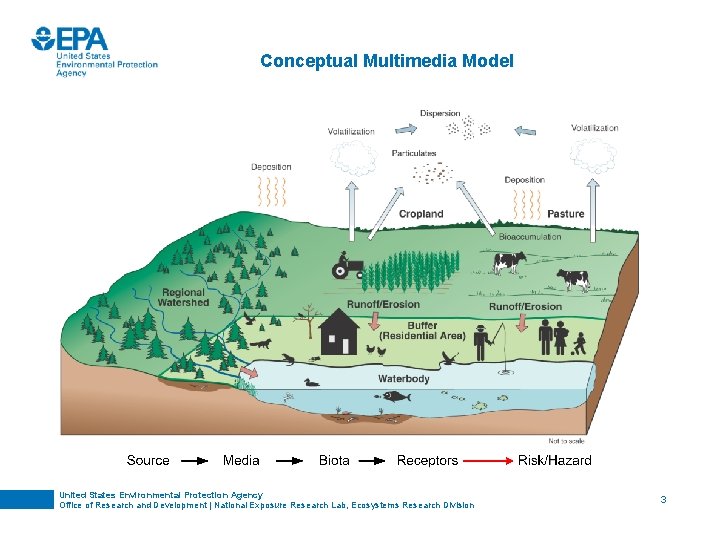
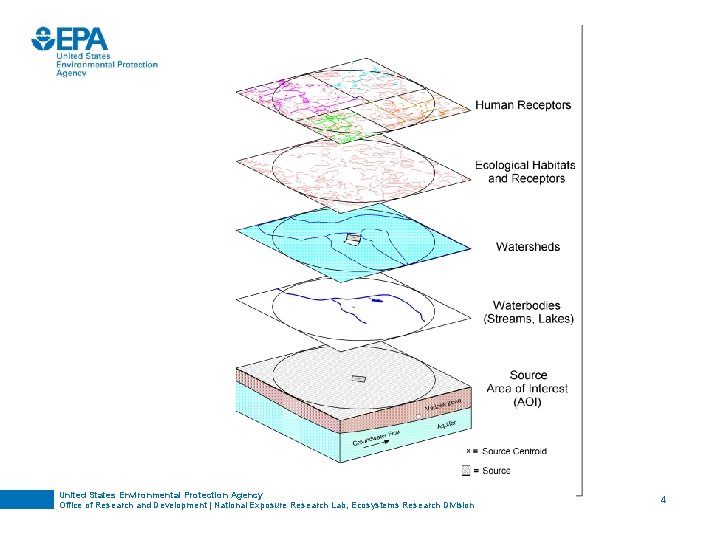
Conceptual Multimedia Model Office of Research and Development United States Environmental Protection Agency National Exposure Research Laboratory, Ecosystems Research Division Office of Research and Development | National Exposure Research Lab, Ecosystems Research Division 3
Office of Research and Development United States Environmental Protection Agency National Exposure Research Laboratory, Ecosystems Research Division Office of Research and Development | National Exposure Research Lab, Ecosystems Research Division 4
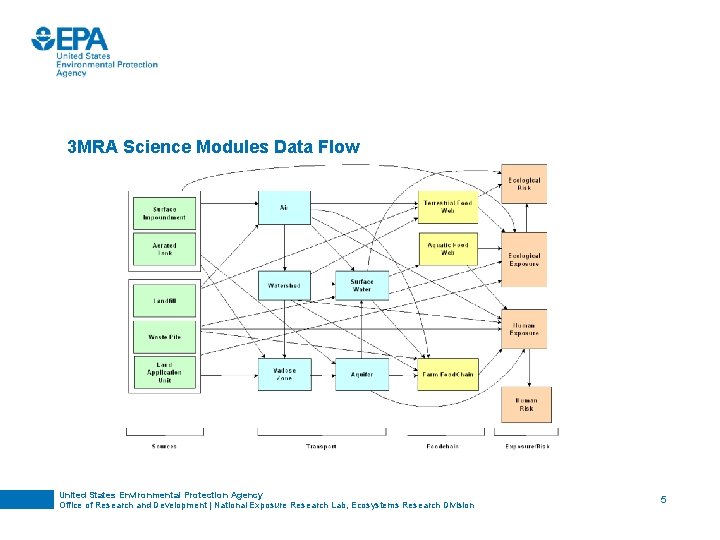
3 MRA Science Modules Data Flow Office of Research and Development United States Environmental Protection Agency National Exposure Research Laboratory, Ecosystems Research Division Office of Research and Development | National Exposure Research Lab, Ecosystems Research Division 5
Office of Research and Development United States Environmental Protection Agency National Exposure Research Laboratory, Ecosystems Research Division Office of Research and Development | National Exposure Research Lab, Ecosystems Research Division 6
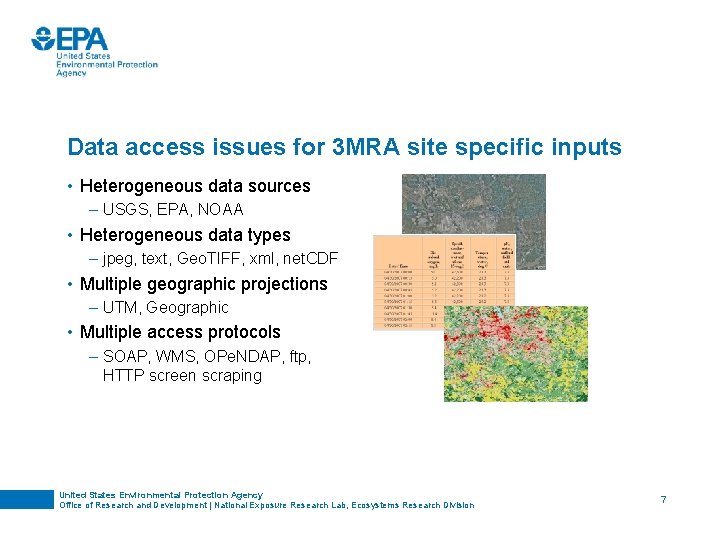
Data access issues for 3 MRA site specific inputs • Heterogeneous data sources – USGS, EPA, NOAA • Heterogeneous data types – jpeg, text, Geo. TIFF, xml, net. CDF • Multiple geographic projections – UTM, Geographic • Multiple access protocols – SOAP, WMS, OPe. NDAP, ftp, HTTP screen scraping Office of Research and Development United States Environmental Protection Agency National Exposure Research Laboratory, Ecosystems Research Division Office of Research and Development | National Exposure Research Lab, Ecosystems Research Division 7
D 4 EM – Data for Environmental Modeling • Provide a mechanism for accessing heterogeneous data • Abstract complexity of data access and conversion from model user • Reusable, extensible component based architecture • Automate common tasks • Public domain software written with. Net framework Office of Research and Development United States Environmental Protection Agency National Exposure Research Laboratory, Ecosystems Research Division Office of Research and Development | National Exposure Research Lab, Ecosystems Research Division 8
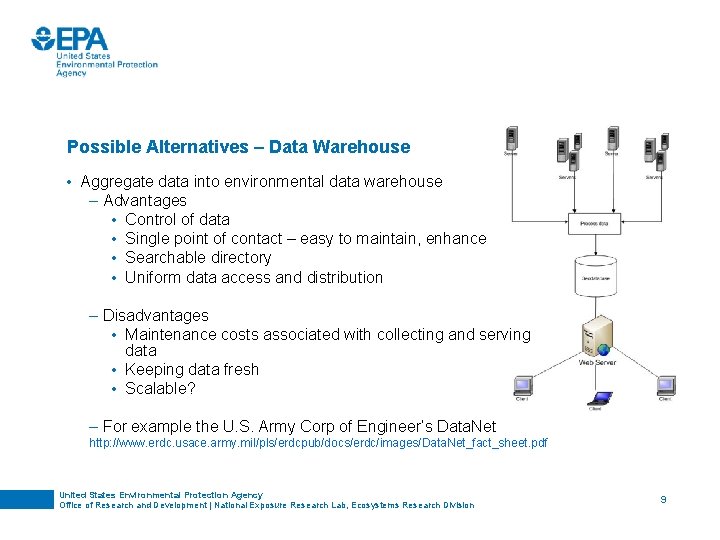
Possible Alternatives – Data Warehouse • Aggregate data into environmental data warehouse – Advantages • Control of data • Single point of contact – easy to maintain, enhance • Searchable directory • Uniform data access and distribution – Disadvantages • Maintenance costs associated with collecting and serving data • Keeping data fresh • Scalable? – For example the U. S. Army Corp of Engineer’s Data. Net http: //www. erdc. usace. army. mil/pls/erdcpub/docs/erdc/images/Data. Net_fact_sheet. pdf Office of Research and Development United States Environmental Protection Agency National Exposure Research Laboratory, Ecosystems Research Division Office of Research and Development | National Exposure Research Lab, Ecosystems Research Division 9
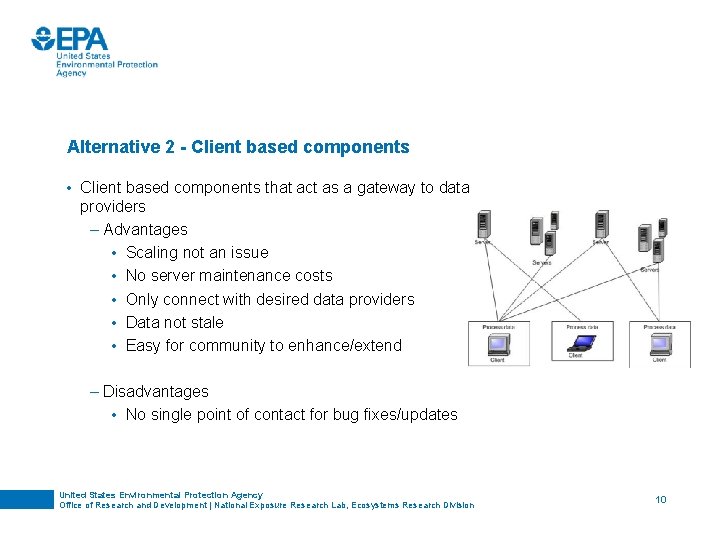
Alternative 2 - Client based components • Client based components that act as a gateway to data providers – Advantages • Scaling not an issue • No server maintenance costs • Only connect with desired data providers • Data not stale • Easy for community to enhance/extend – Disadvantages • No single point of contact for bug fixes/updates Office of Research and Development United States Environmental Protection Agency National Exposure Research Laboratory, Ecosystems Research Division Office of Research and Development | National Exposure Research Lab, Ecosystems Research Division 10
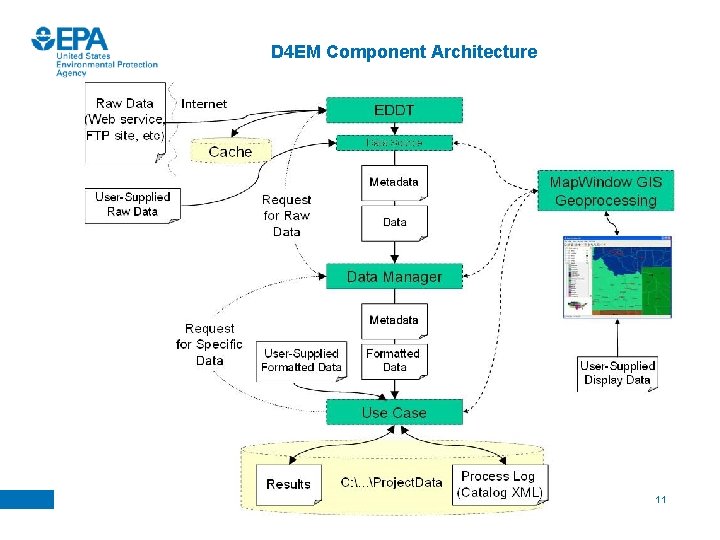
D 4 EM Component Architecture Office of Research and Development National Exposure Research Laboratory, Ecosystems Research Division 11
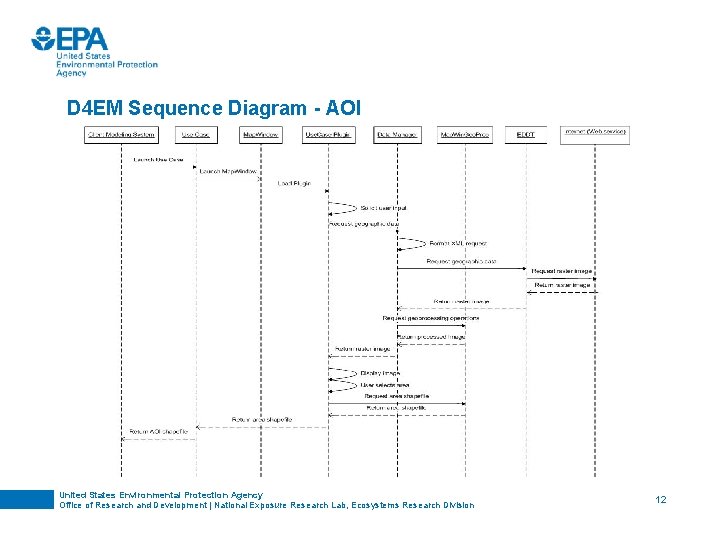
D 4 EM Sequence Diagram - AOI Office of Research and Development United States Environmental Protection Agency National Exposure Research Laboratory, Ecosystems Research Division Office of Research and Development | National Exposure Research Lab, Ecosystems Research Division 12
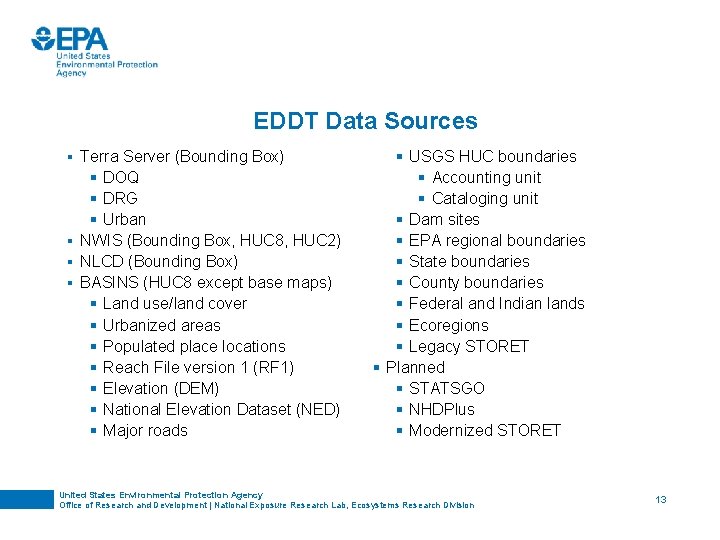
EDDT Data Sources § Terra Server (Bounding Box) § DOQ § DRG § Urban § NWIS (Bounding Box, HUC 8, HUC 2) § NLCD (Bounding Box) § BASINS (HUC 8 except base maps) § Land use/land cover § Urbanized areas § Populated place locations § Reach File version 1 (RF 1) § Elevation (DEM) § National Elevation Dataset (NED) § Major roads § USGS HUC boundaries § Accounting unit § Cataloging unit § Dam sites § EPA regional boundaries § State boundaries § County boundaries § Federal and Indian lands § Ecoregions § Legacy STORET § Planned § STATSGO § NHDPlus § Modernized STORET Office of Research and Development United States Environmental Protection Agency National Exposure Research Laboratory, Ecosystems Research Division Office of Research and Development | National Exposure Research Lab, Ecosystems Research Division 13
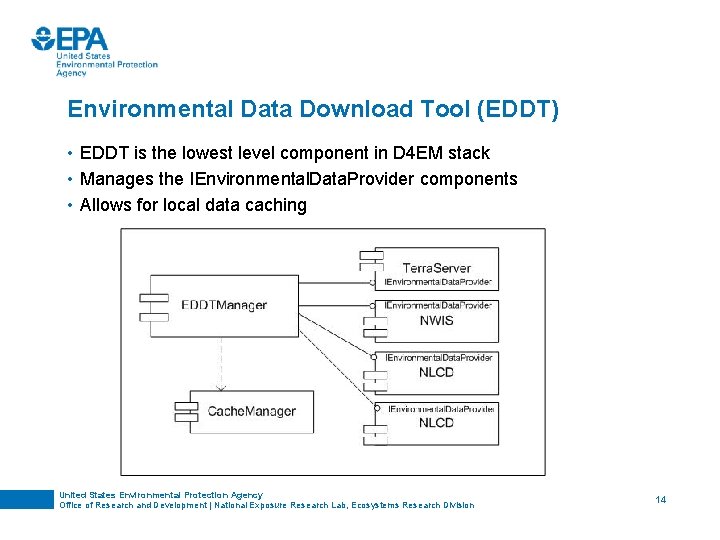
Environmental Data Download Tool (EDDT) • EDDT is the lowest level component in D 4 EM stack • Manages the IEnvironmental. Data. Provider components • Allows for local data caching Office of Research and Development United States Environmental Protection Agency National Exposure Research Laboratory, Ecosystems Research Division Office of Research and Development | National Exposure Research Lab, Ecosystems Research Division 14
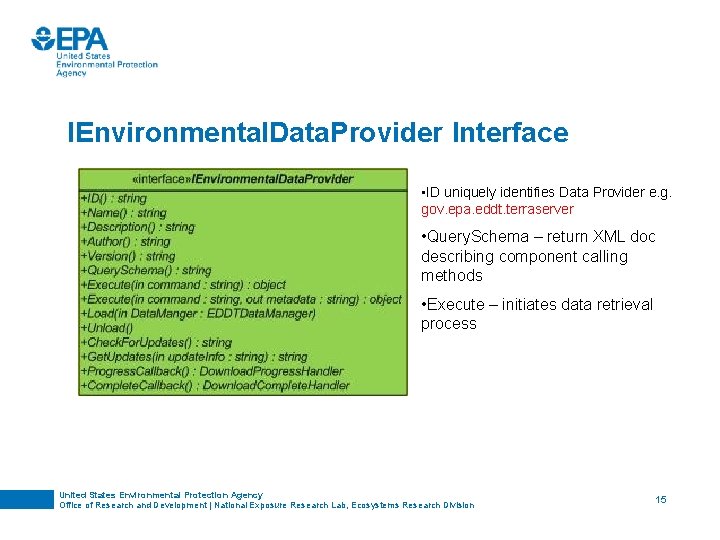
IEnvironmental. Data. Provider Interface • ID uniquely identifies Data Provider e. g. gov. epa. eddt. terraserver • Query. Schema – return XML doc describing component calling methods • Execute – initiates data retrieval process Office of Research and Development United States Environmental Protection Agency National Exposure Research Laboratory, Ecosystems Research Division Office of Research and Development | National Exposure Research Lab, Ecosystems Research Division 15
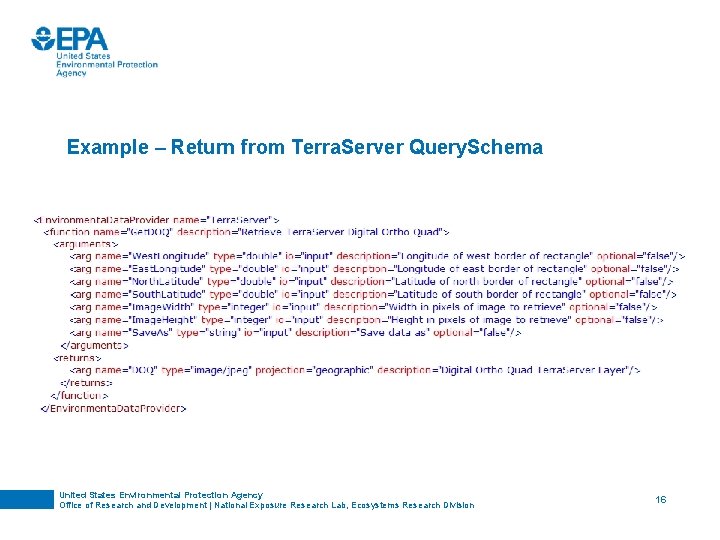
Example – Return from Terra. Server Query. Schema Office of Research and Development United States Environmental Protection Agency National Exposure Research Laboratory, Ecosystems Research Division Office of Research and Development | National Exposure Research Lab, Ecosystems Research Division 16
Data Manager • Provides interface between Use Cases and EDDT • Translates data request from general parameter names to data • • source-specific parameters Projects spatial data to requested projection Clips spatial data as requested Converts data from units in data source to units requested by Use Case Augments metadata with information on all data processing Office of Research and Development United States Environmental Protection Agency National Exposure Research Laboratory, Ecosystems Research Division Office of Research and Development | National Exposure Research Lab, Ecosystems Research Division 17
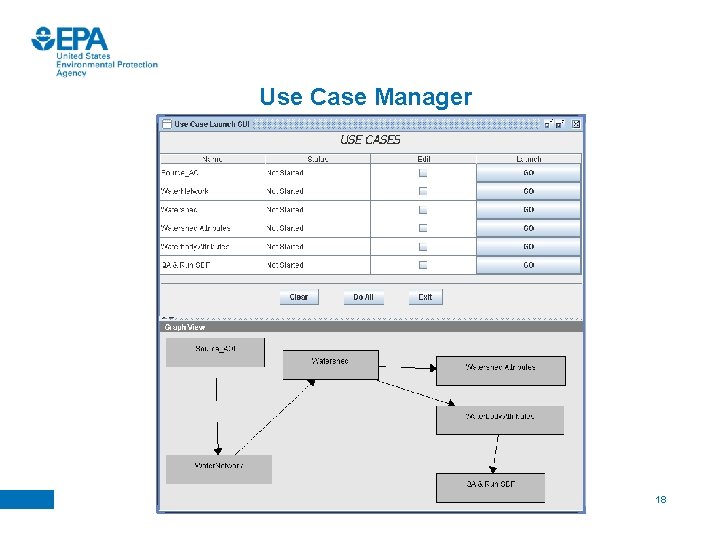
Use Case Manager Office of Research and Development National Exposure Research Laboratory, Ecosystems Research Division 18
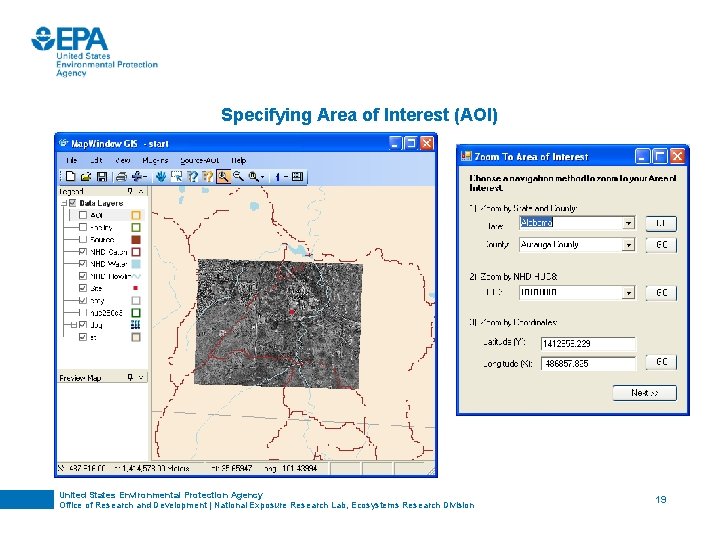
Specifying Area of Interest (AOI) Office of Research and Development United States Environmental Protection Agency National Exposure Research Laboratory, Ecosystems Research Division Office of Research and Development | National Exposure Research Lab, Ecosystems Research Division 19
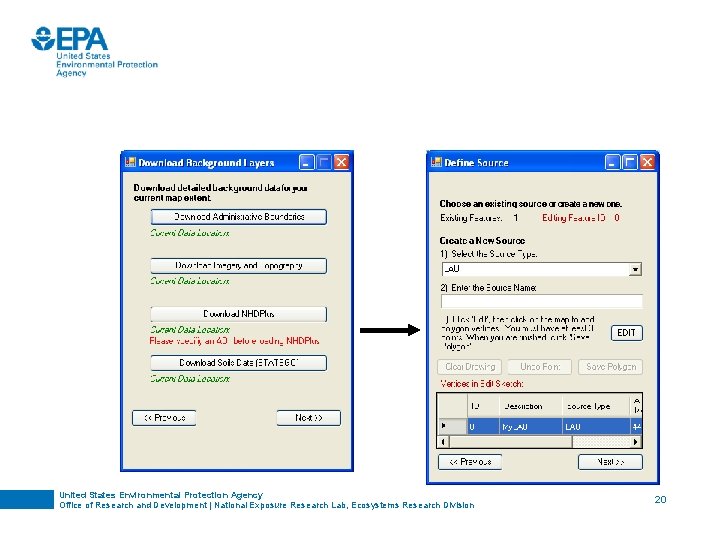
Office of Research and Development United States Environmental Protection Agency National Exposure Research Laboratory, Ecosystems Research Division Office of Research and Development | National Exposure Research Lab, Ecosystems Research Division 20
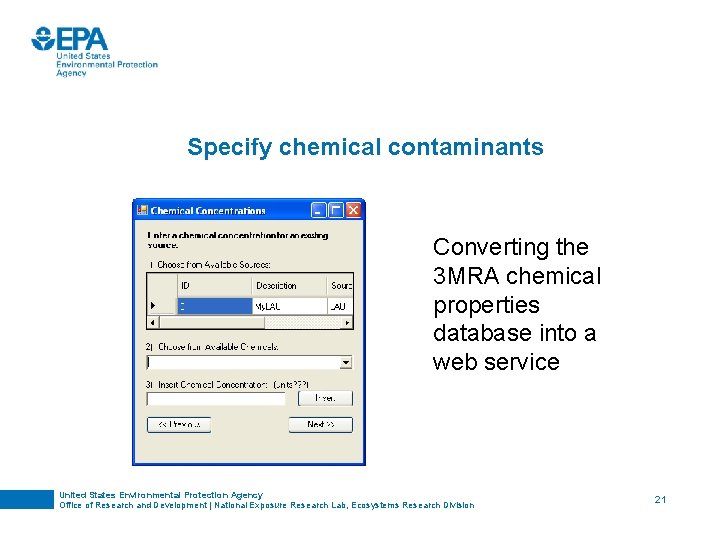
Specify chemical contaminants Converting the 3 MRA chemical properties database into a web service Office of Research and Development United States Environmental Protection Agency National Exposure Research Laboratory, Ecosystems Research Division Office of Research and Development | National Exposure Research Lab, Ecosystems Research Division 21
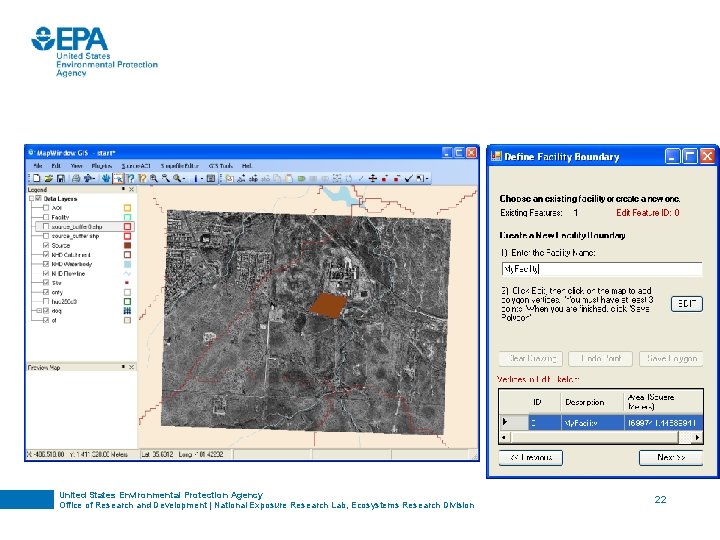
Office of Research and Development United States Environmental Protection Agency National Exposure Research Laboratory, Ecosystems Research Division Office of Research and Development | National Exposure Research Lab, Ecosystems Research Division 22
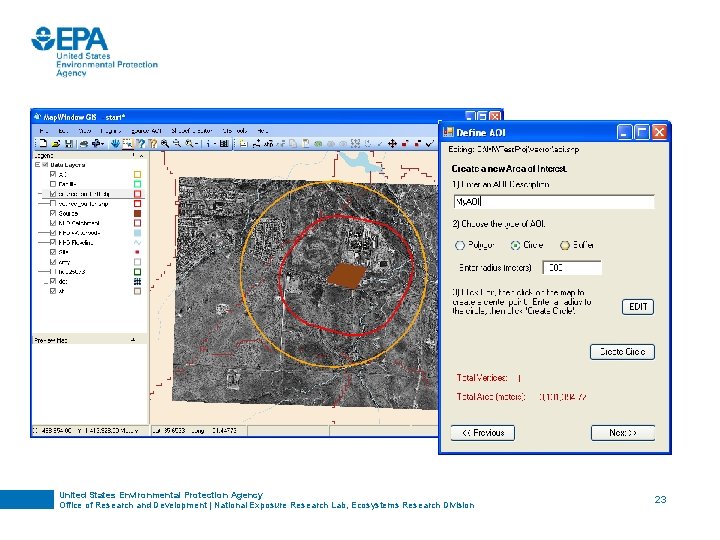
Office of Research and Development United States Environmental Protection Agency National Exposure Research Laboratory, Ecosystems Research Division Office of Research and Development | National Exposure Research Lab, Ecosystems Research Division 23
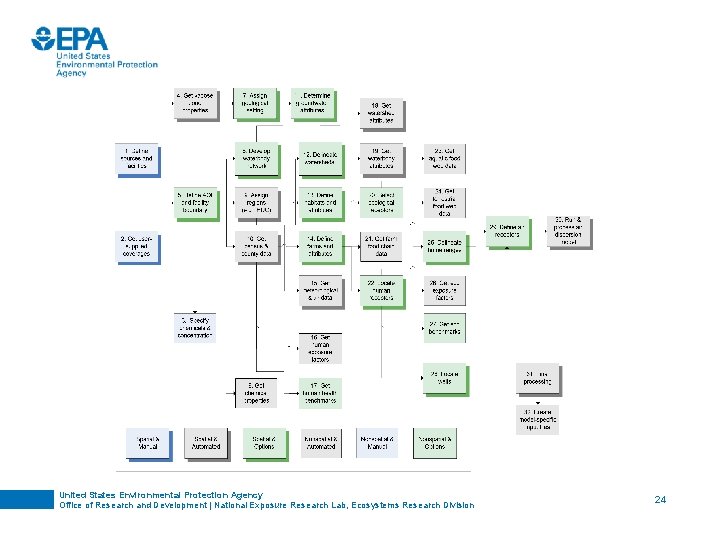
Office of Research and Development United States Environmental Protection Agency National Exposure Research Laboratory, Ecosystems Research Division Office of Research and Development | National Exposure Research Lab, Ecosystems Research Division 24
Future Work • Continue to work with open source community to enhance D 4 EM functionality • Increase the number data sources for which D 4 EM can provide access • Enable ‘intelligent’ data retrieval through enhanced meta data querying in Data Manager • Application of D 4 EM to regional ecosystems services assessment Office of Research and Development United States Environmental Protection Agency National Exposure Research Laboratory, Ecosystems Research Division Office of Research and Development | National Exposure Research Lab, Ecosystems Research Division 25
D 4 EM Core Team • U. S. EPA • • – Gerry Laniak, Rajbir Parmar, Kurt Wolfe RTI International – Jo Ellen Brandmeyer, Steve Beaulieu, Robert Truesdale, Linda Andrews, Jay Rineer, Laura Wilson, Aaron Parks, Sunil Rao Aqua. Terra – Jack Kittle, Mark Gray Idaho State University – Daniel Ames and graduate students CSC – Mike Galvin, Ron Beloin Although this work has been reviewed by EPA and approved for presentation it may not necessarily reflect official agency policy. Office of Research and Development United States Environmental Protection Agency National Exposure Research Laboratory, Ecosystems Research Division Office of Research and Development | National Exposure Research Lab, Ecosystems Research Division 26
Convergence • Models that require large amounts of data • Sensors, models, and databases that produce vast quantities of data • Internet makes it possible to move data efficiently • Emergence of standards –Representing data – XML, GML –Moving data - Web services, OGC standards Office of Research and Development National Exposure Research Laboratory, Ecosystems Research Division 27
- Slides: 28