
DATA DRIVING CHANGE FRAMEWORK for SCHOOL IMPROVEMENT explicit





- Slides: 22
DATA DRIVING CHANGE
FRAMEWORK for SCHOOL IMPROVEMENT • explicit improvement agenda • analysis of discussion and data • culture that promotes learning sport • targeted use of school resources • expert teaching sport leadership team • effective teaching sport practices • differentiated classroom learning sports programme
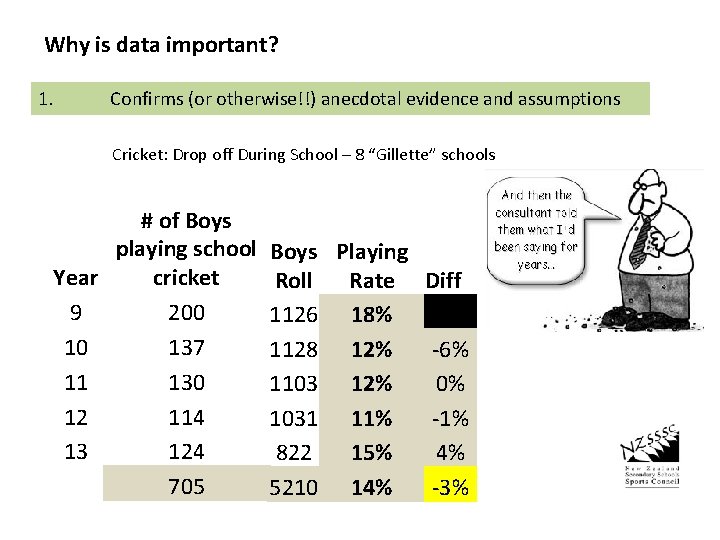
Why is data important? 1. Confirms (or otherwise!!) anecdotal evidence and assumptions Cricket: Drop off During School – 8 “Gillette” schools # of Boys playing school Year cricket 9 200 10 137 11 130 12 114 13 124 705 Boys Playing Roll Rate Diff 1126 18% 1128 12% -6% 1103 12% 0% 1031 11% -1% 822 15% 4% 5210 14% -3%
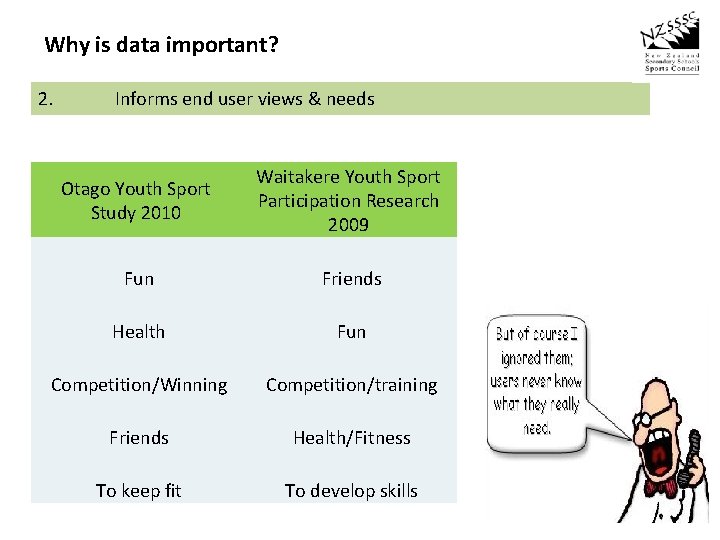
Why is data important? 2. Informs end user views & needs Otago Youth Sport Study 2010 Waitakere Youth Sport Participation Research 2009 Fun Friends Health Fun Competition/Winning Competition/training Friends Health/Fitness To keep fit To develop skills
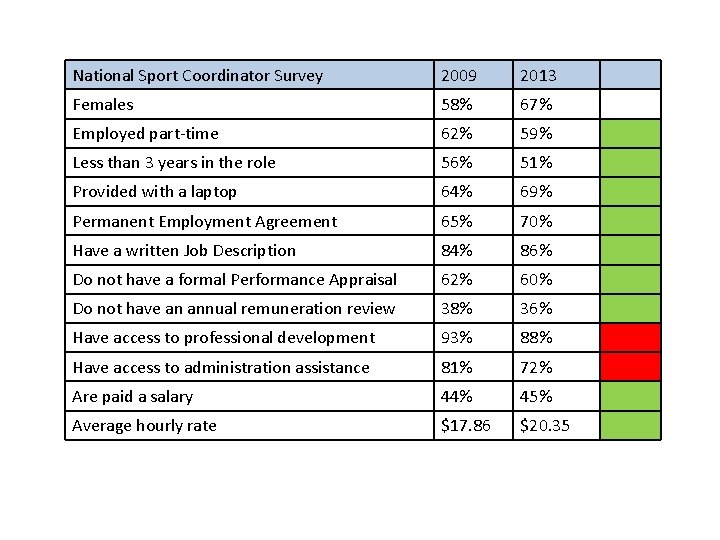
National Sport Coordinator Survey 2009 2013 Females 58% 67% Employed part-time 62% 59% Less than 3 years in the role 56% 51% Provided with a laptop 64% 69% Permanent Employment Agreement 65% 70% Have a written Job Description 84% 86% Do not have a formal Performance Appraisal 62% 60% Do not have an annual remuneration review 38% 36% Have access to professional development 93% 88% Have access to administration assistance 81% 72% Are paid a salary 44% 45% Average hourly rate $17. 86 $20. 35
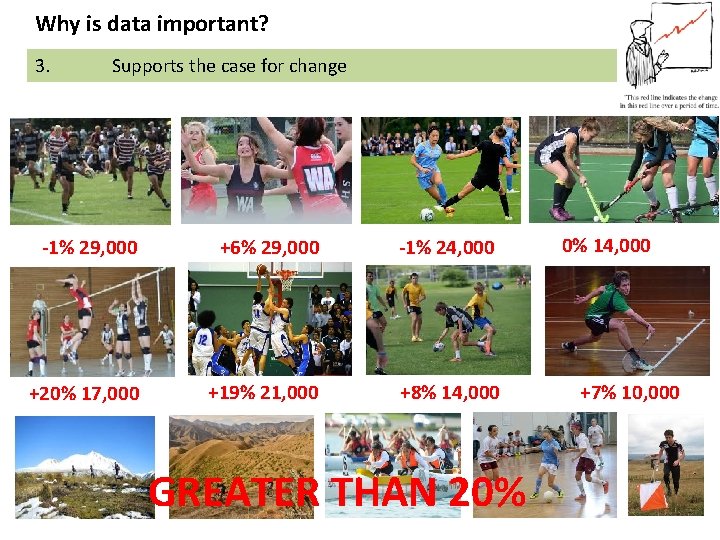
Why is data important? 3. Supports the case for change -1% 29, 000 +6% 29, 000 -1% 24, 000 +20% 17, 000 +19% 21, 000 +8% 14, 000 GREATER THAN 20% 0% 14, 000 +7% 10, 000
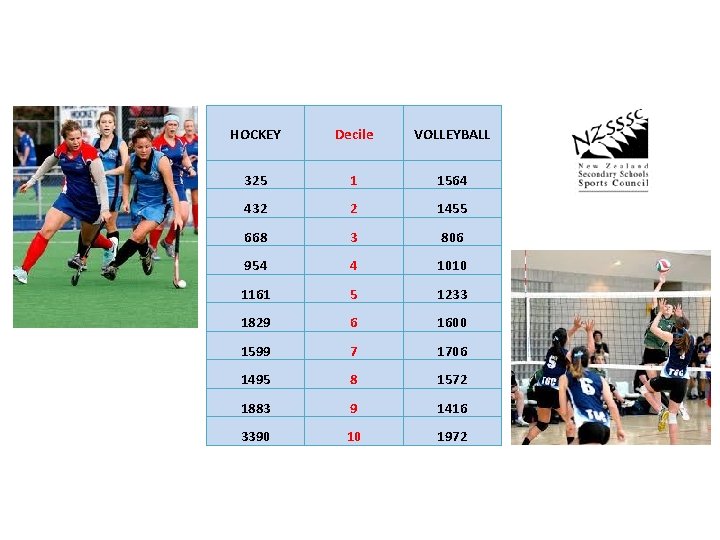
HOCKEY Decile VOLLEYBALL 325 1 1564 432 2 1455 668 3 806 954 4 1010 1161 5 1233 1829 6 1600 1599 7 1706 1495 8 1572 1883 9 1416 3390 10 1972
1. What data may be useful to us? • participation • leadership – coaching & managing • effect on school culture, social and academic outcomes • student wants – esp. the non participant • barriers to participating 2. What is already available? • NZSSSC census – national, regional, school • Young Peoples Survey 3. How can we collect our own? • Student Voice – surveys vs focus groups? • Survey Monkey • Parent Voice What do we do with it? PLAN & ADVOCATE for CHANGE
Why is data important? 4. Informs planning
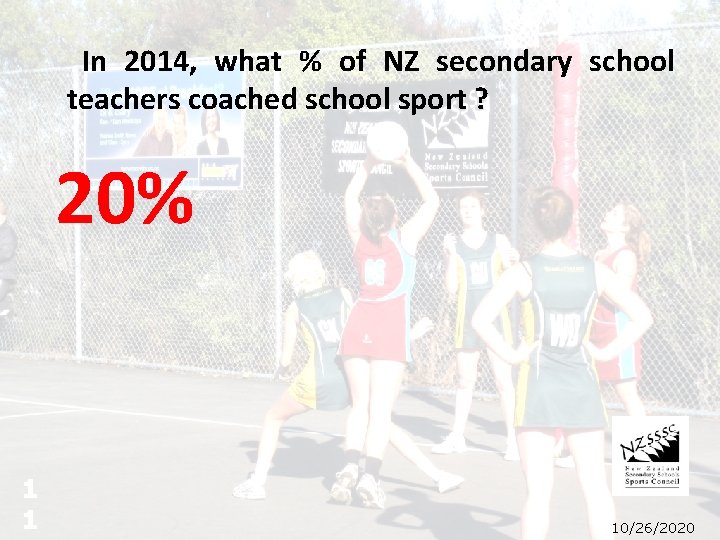
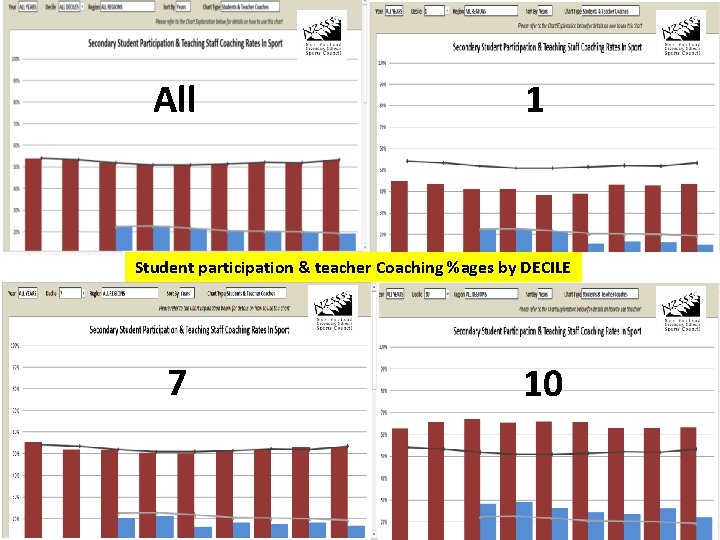
In 2014, what % of NZ secondary school teachers coached school sport ? 20% 1 1 10/26/2020
All 1 Student participation & teacher Coaching %ages by DECILE 7 10
The School Gates. . Keeping Kids In. . . and Everyone Else Out?
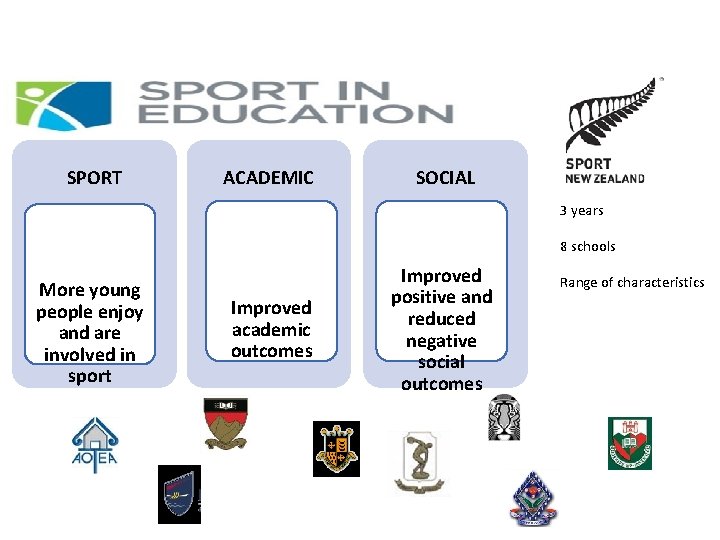
SPORT ACADEMIC SOCIAL 3 years 8 schools More young people enjoy and are involved in sport Improved academic outcomes Improved positive and reduced negative social outcomes Range of characteristics
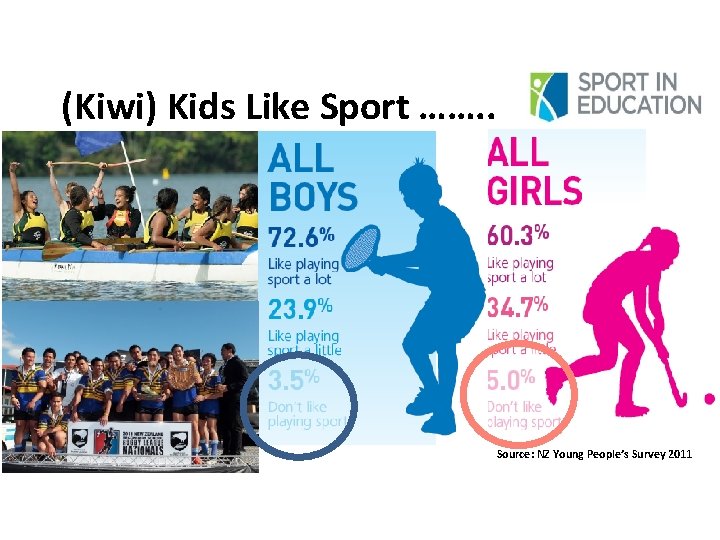
(Kiwi) Kids Like Sport ……. . Source: NZ Young People’s Survey 2011
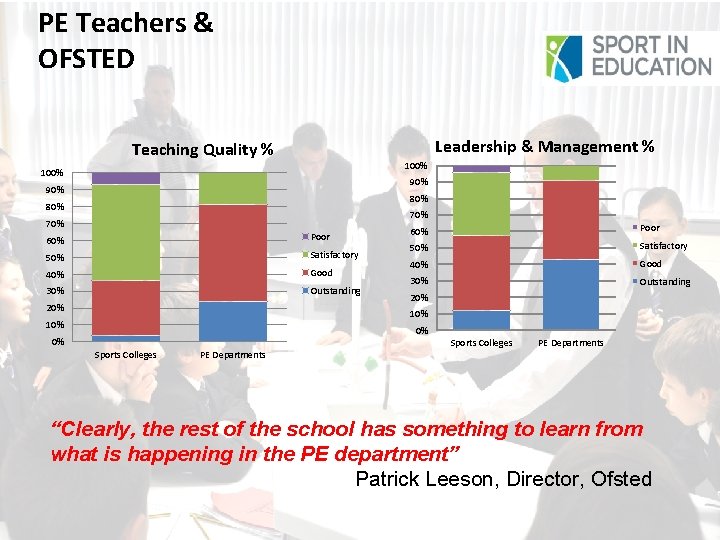
PE Teachers & OFSTED Leadership & Management % Teaching Quality % 100% 90% 80% 70% 60% Poor 50% Satisfactory 40% Good 30% Outstanding 20% 10% 0% 0% Sports Colleges PE Departments “Clearly, the rest of the school has something to learn from what is happening in the PE department” Patrick Leeson, Director, Ofsted
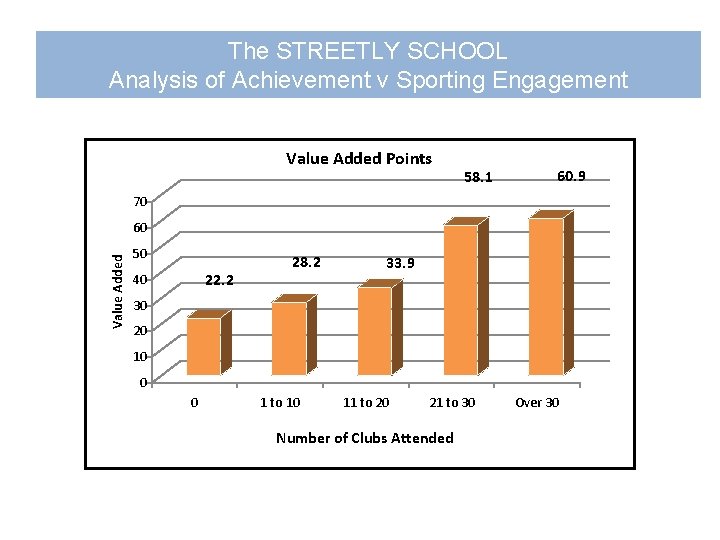
The STREETLY SCHOOL Analysis of Achievement v Sporting Engagement Value Added Points 58. 1 60. 9 70 Value Added 60 50 22. 2 40 28. 2 33. 9 30 20 10 0 0 1 to 10 11 to 20 21 to 30 Number of Clubs Attended Over 30
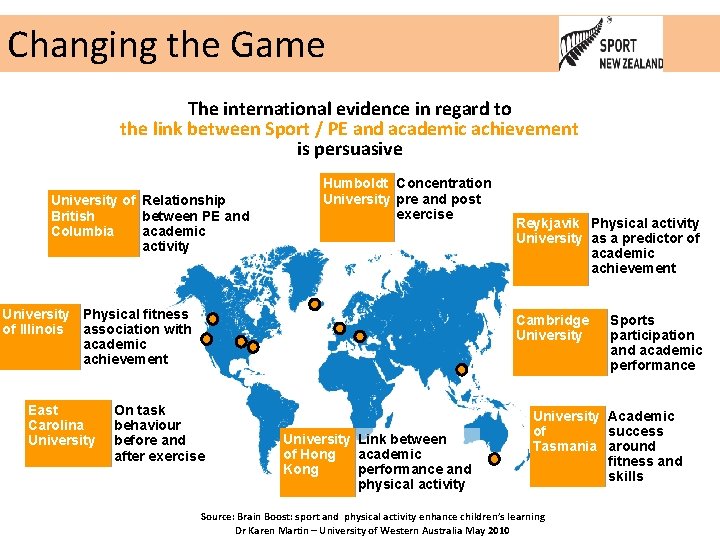
Changing the Game The international evidence in regard to the link between Sport / PE and academic achievement is persuasive University of Relationship British between PE and Columbia academic activity Humboldt Concentration University pre and post exercise University Physical fitness of Illinois association with academic achievement East Carolina University Reykjavik Physical activity University as a predictor of academic achievement Cambridge University On task behaviour before and after exercise University Link between of Hong academic Kong performance and physical activity Sports participation and academic performance University Academic of success Tasmania around fitness and skills Source: Brain Boost: sport and physical activity enhance children’s learning Dr Karen Martin – University of Western Australia May 2010
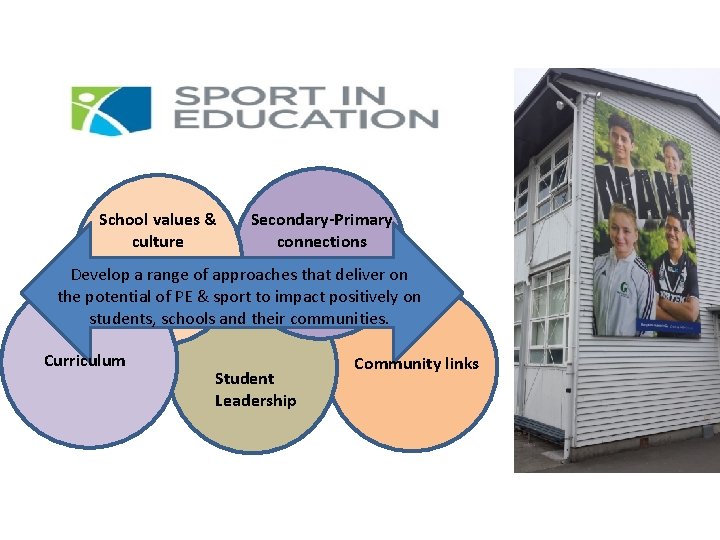
School values & culture Secondary-Primary connections Develop a range of approaches that deliver on the potential of PE & sport to impact positively on students, schools and their communities. Curriculum Student Leadership Community links
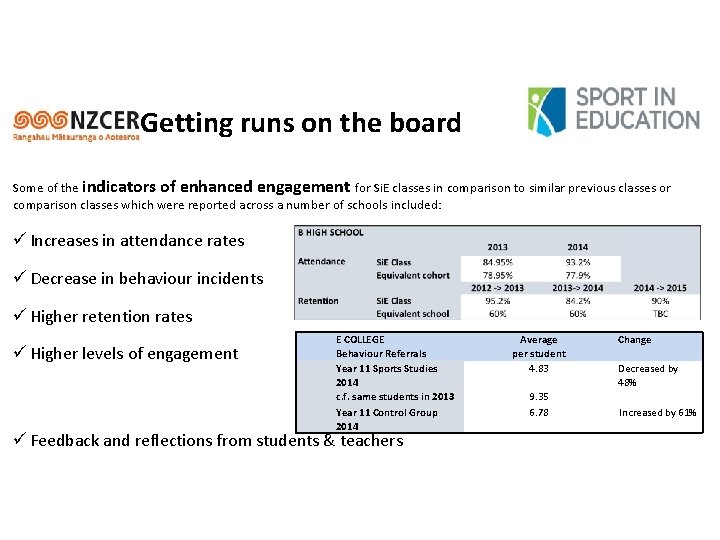
Getting runs on the board Some of the indicators of enhanced engagement for Si. E classes in comparison to similar previous classes or comparison classes which were reported across a number of schools included: ü Increases in attendance rates ü Decrease in behaviour incidents ü Higher retention rates ü Higher levels of engagement E COLLEGE Behaviour Referrals Year 11 Sports Studies 2014 c. f. same students in 2013 Year 11 Control Group 2014 ü Feedback and reflections from students & teachers Average per student 4. 83 9. 35 6. 78 Change Decreased by 48% Increased by 61%
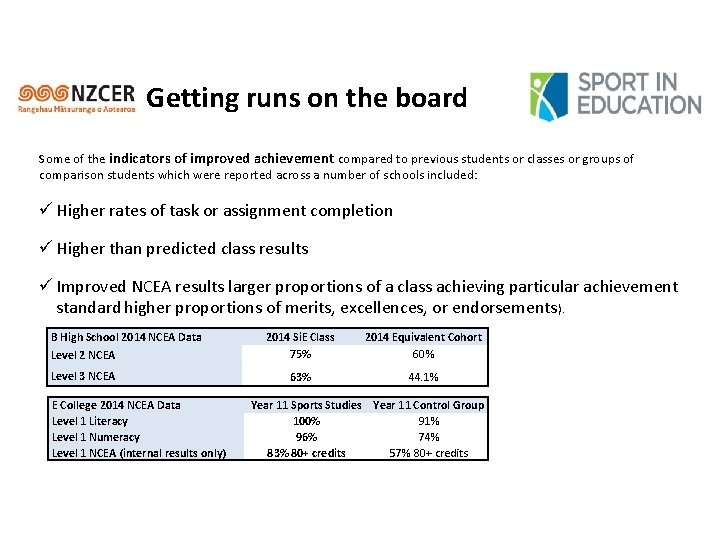
Getting runs on the board Some of the indicators of improved achievement compared to previous students or classes or groups of comparison students which were reported across a number of schools included: ü Higher rates of task or assignment completion ü Higher than predicted class results ü Improved NCEA results larger proportions of a class achieving particular achievement standard higher proportions of merits, excellences, or endorsements). B High School 2014 NCEA Data Level 2 NCEA 2014 Si. E Class 75% 2014 Equivalent Cohort 60% Level 3 NCEA 63% 44. 1% E College 2014 NCEA Data Level 1 Literacy Level 1 Numeracy Level 1 NCEA (internal results only) Year 11 Sports Studies Year 11 Control Group 100% 91% 96% 74% 83% 80+ credits 57% 80+ credits
What is the issue I want to address? Who do I need to influence? What will they want to know? WHAT DATA WILL I NEED? WHERE WILL I FIND IT? HOW AM I GOING TO COLLECT IT? PREPARE MY CASE…. .