
Data Archiving and Networked Services Costs and benefits
Data Archiving and Networked Services Costs and benefits of preserving digital research data Peter Doorn Director, DANS APA Conference Frascati, 6 th November 2012 Value from data now and into the future DANS is an institute of KNAW en NWO
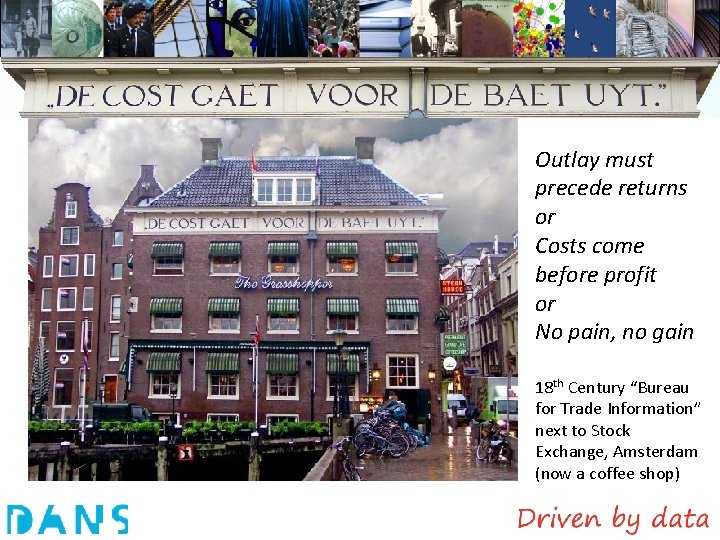
Outlay must precede returns or Costs come before profit or No pain, no gain 18 th Century “Bureau for Trade Information” next to Stock Exchange, Amsterdam (now a coffee shop)
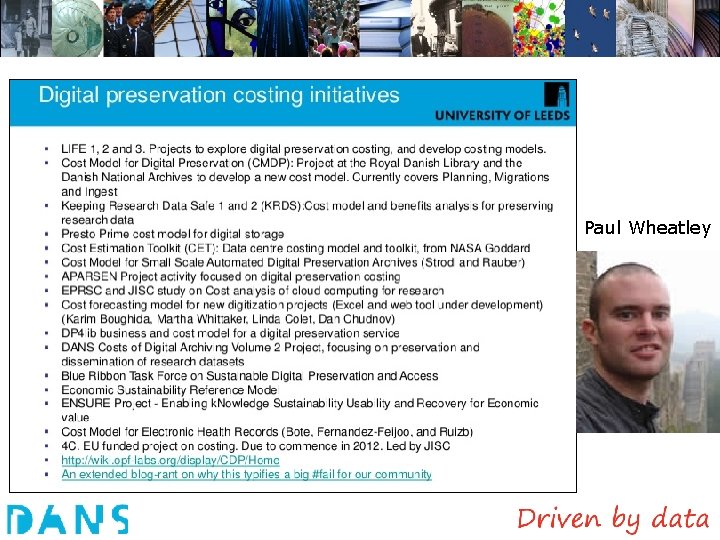
Paul Wheatley
So many cost models and approaches… • Most preservation activities (for research data) are publicly funded: non-profit organizations working for subsidized clients • Open data <? > Valorization • Preservation does not come alone: providing access, projects, … • Which activities (personnel costs) to include in cost calculations? • Costs and funding of hardware (storage and servers) and software (development of archiving systems) vary a lot
The value of data • Hard to quantify: investment, depreciation, added value… • Not for profit, but for scientific progress • Valorization: value of data increases by re-use • Limits to growth: sustain the success of the operation: increasing data volumes lead to increasing costs of storage and making data accessible • Archiving services – charge re-use of data: <-> open access – charge deposit of data: ± gold open access • Treat commercial customers differently?
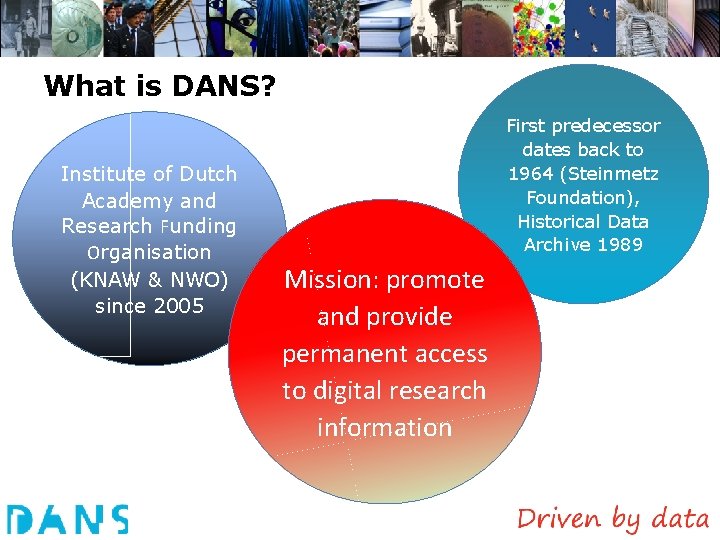
What is DANS? Institute of Dutch Academy and Research Funding Organisation (KNAW & NWO) since 2005 First predecessor dates back to 1964 (Steinmetz Foundation), Historical Data Archive 1989 Mission: promote and provide permanent access to digital research information
Our main activities and services • Encourage researchers to self-archive and reuse data by means of our Electronic Archiving SYstem EASY • Our largest digital collections are in archaeology, social sciences and history (moving into other domains) • Provide access, through Narcis. nl, to thousands of scientific datasets, e-publications and other research information in the Netherlands • Data projects in collaboration with research communities and partner organisations • Advice, training and support (Data Seal of Approval, Persistent Identifier Infrastructure) • R&D into archiving of and access to digital information
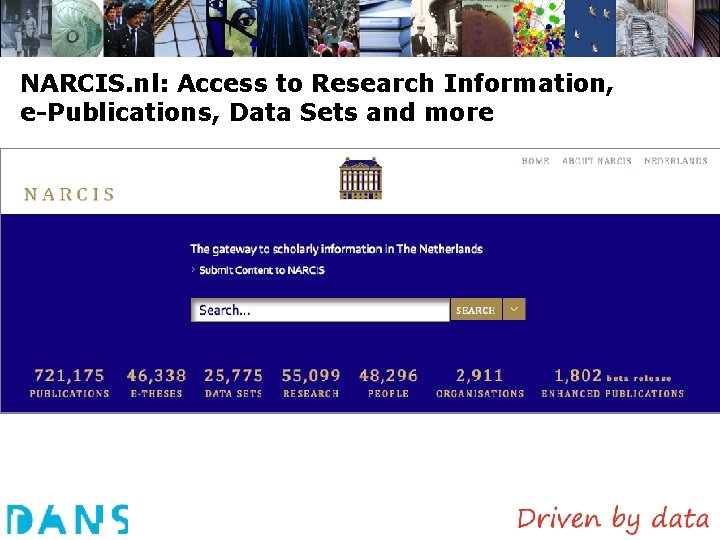
NARCIS. nl: Access to Research Information, e-Publications, Data Sets and more
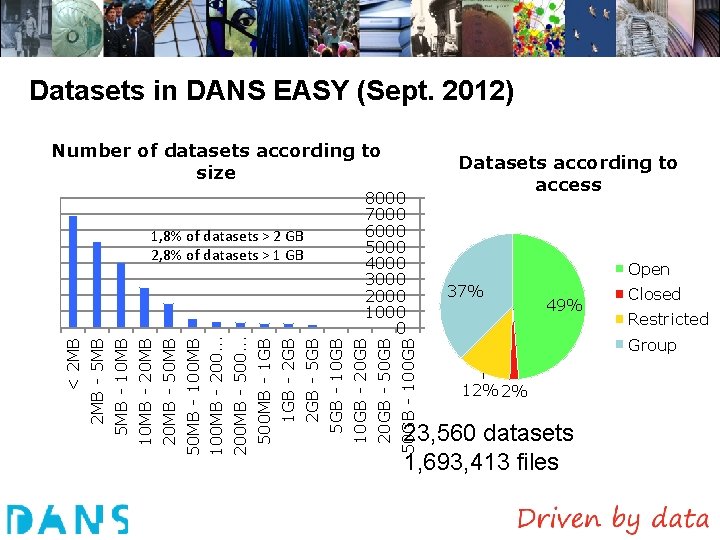
Datasets in DANS EASY (Sept. 2012) Number of datasets according to size < 2 MB - 5 MB - 10 MB - 20 MB - 50 MB - 100 MB - 200. . . 200 MB - 500. . . 500 MB - 1 GB - 2 GB - 5 GB - 10 GB - 20 GB - 50 GB - 100 GB 1, 8% of datasets > 2 GB 2, 8% of datasets > 1 GB 8000 7000 6000 5000 4000 3000 2000 1000 0 Datasets according to access Open 37% 49% Closed Restricted Group 12% 2% 23, 560 datasets 1, 693, 413 files
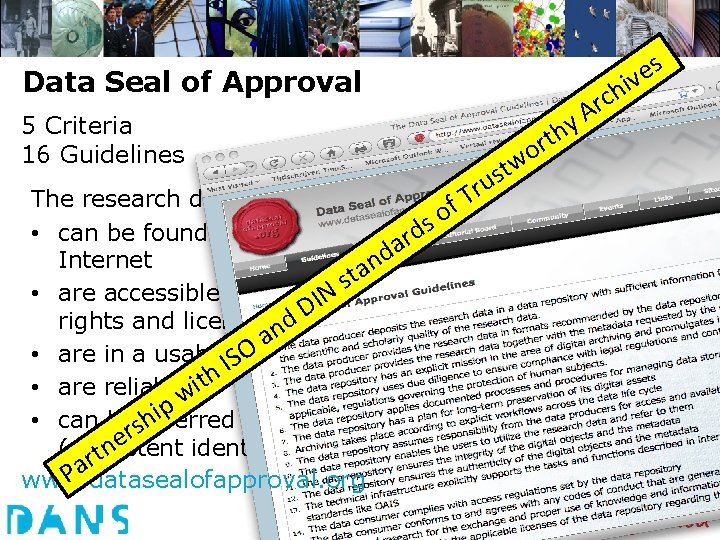
s e iv Data Seal of Approval 5 Criteria 16 Guidelines T The research data: f o s • can be found on the rd a d Internet n ta s • are accessible (clear IN rights and licenses)nd D a O • are in a usable. ISformat • are reliablewith ip • can be sreferred to h r e (persistent identifier) n t r a P www. datasealofapproval. org t s ru y h t r o w ch r A
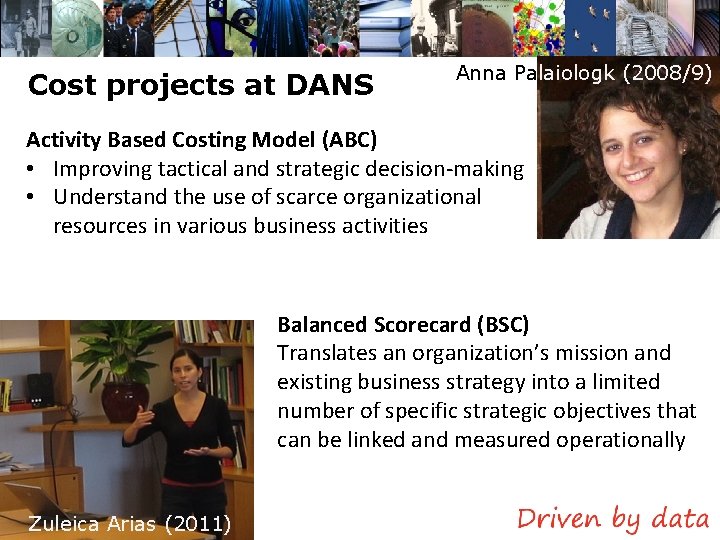
Cost projects at DANS Anna Palaiologk (2008/9) Activity Based Costing Model (ABC) • Improving tactical and strategic decision-making • Understand the use of scarce organizational resources in various business activities Balanced Scorecard (BSC) Translates an organization’s mission and existing business strategy into a limited number of specific strategic objectives that can be linked and measured operationally Zuleica Arias (2011)
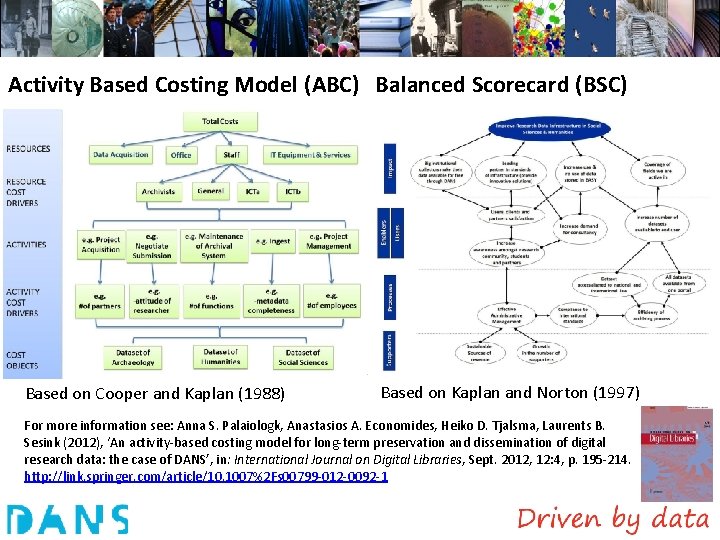
Activity Based Costing Model (ABC) Balanced Scorecard (BSC) Based on Cooper and Kaplan (1988) Based on Kaplan and Norton (1997) For more information see: Anna S. Palaiologk, Anastasios A. Economides, Heiko D. Tjalsma, Laurents B. Sesink (2012), ‘An activity-based costing model for long-term preservation and dissemination of digital research data: the case of DANS’, in: International Journal on Digital Libraries, Sept. 2012, 12: 4, p. 195 -214. http: //link. springer. com/article/10. 1007%2 Fs 00799 -012 -0092 -1
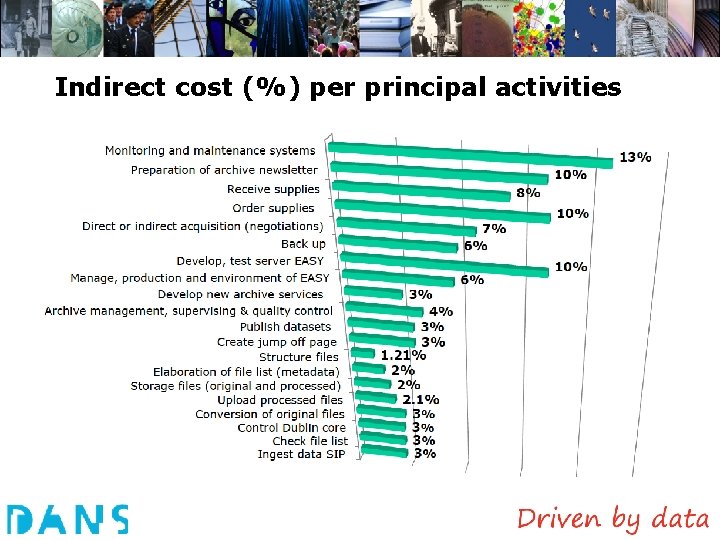
Indirect cost (%) per principal activities
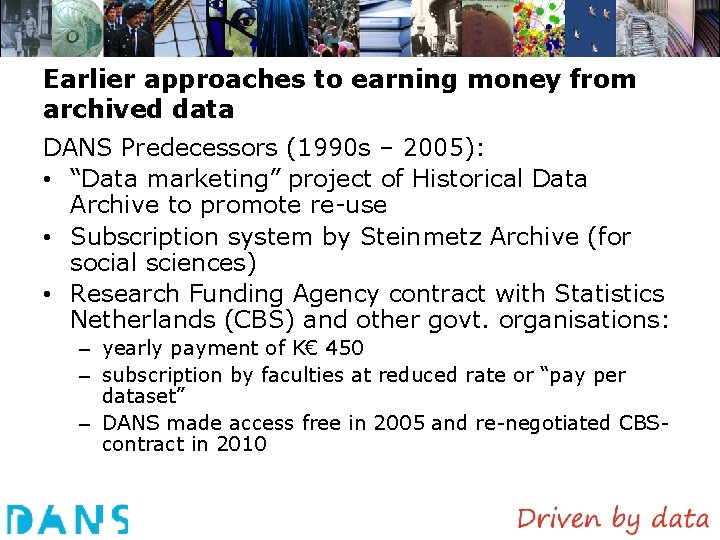
Earlier approaches to earning money from archived data DANS Predecessors (1990 s – 2005): • “Data marketing” project of Historical Data Archive to promote re-use • Subscription system by Steinmetz Archive (for social sciences) • Research Funding Agency contract with Statistics Netherlands (CBS) and other govt. organisations: – yearly payment of K€ 450 – subscription by faculties at reduced rate or “pay per dataset” – DANS made access free in 2005 and re-negotiated CBScontract in 2010
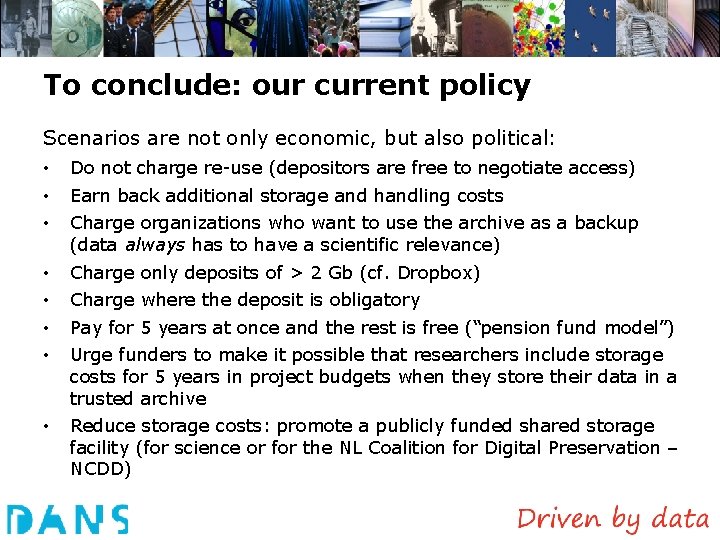
To conclude: our current policy Scenarios are not only economic, but also political: • • • Do not charge re-use (depositors are free to negotiate access) • • Charge only deposits of > 2 Gb (cf. Dropbox) • Reduce storage costs: promote a publicly funded shared storage facility (for science or for the NL Coalition for Digital Preservation – NCDD) Earn back additional storage and handling costs Charge organizations who want to use the archive as a backup (data always has to have a scientific relevance) Charge where the deposit is obligatory Pay for 5 years at once and the rest is free (“pension fund model”) Urge funders to make it possible that researchers include storage costs for 5 years in project budgets when they store their data in a trusted archive
Data Archiving and Networked Services Thank you for your attention and visit us at: www. dans. knaw. nl www. narcis. nl peter. doorn@dans. knaw. nl DANS is an institute of KNAW en NWO
- Slides: 16