
Data and Computer Communications Chapter 8 Multiplexing Techniques
- Slides: 54
Data and Computer Communications Chapter 8 Multiplexing Techniques
Transmission Efficiency: Multiplexing z Several data sources share a common transmission medium, with each source having its own channel z Line sharing saves transmission costs z Higher data rates mean more cost-effective transmission z Most individual data sources require relatively low data rates
Transmission Efficiency: Data compression z Reduces the size of data files to move more information with fewer bits z Used for transmission and for storage ye. g. ZIP z Often combined with multiplexing to increase efficiency
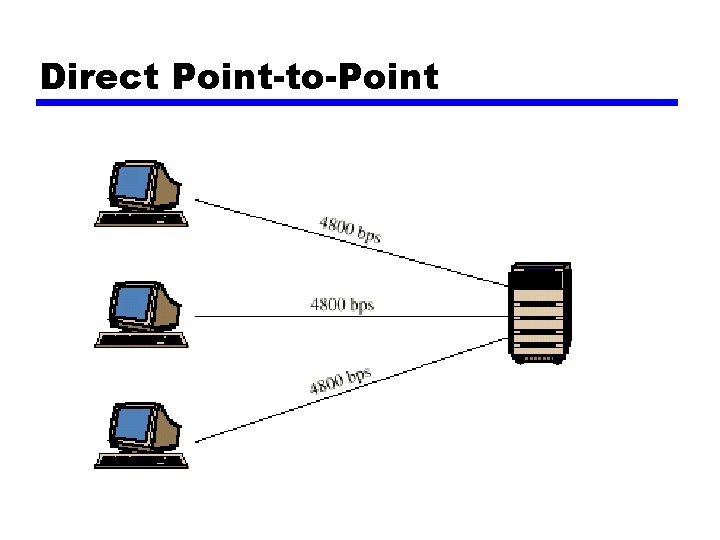
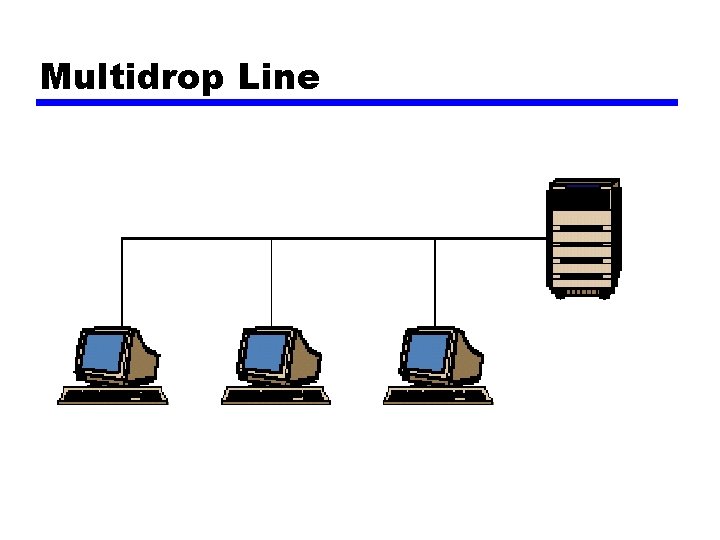
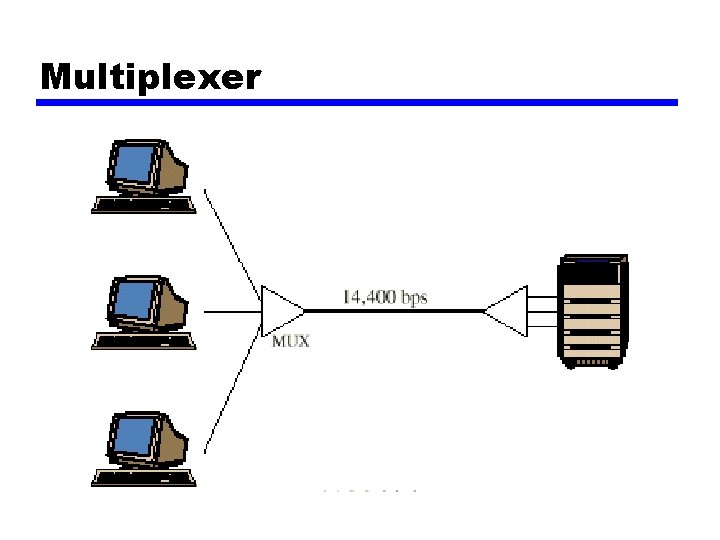
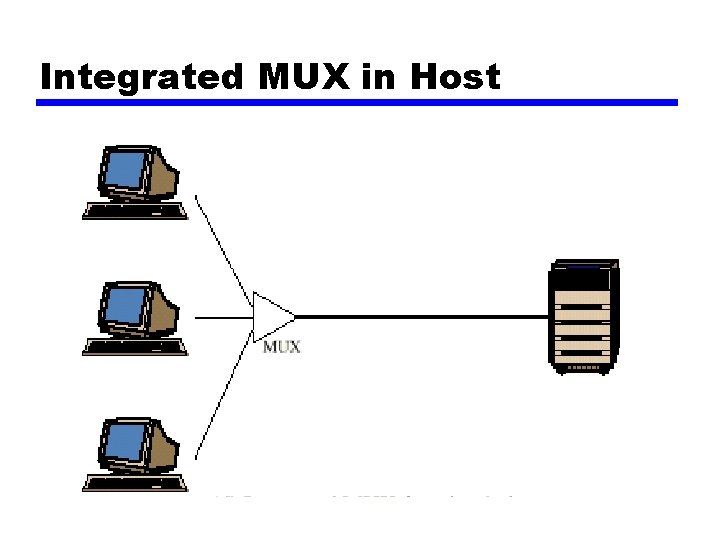
Alternate Approaches to Terminal Support z Direct point-to-point links z Multidrop line z Multiplexer z Integrated MUX function in host
Direct Point-to-Point
Multidrop Line
Multiplexer
Integrated MUX in Host
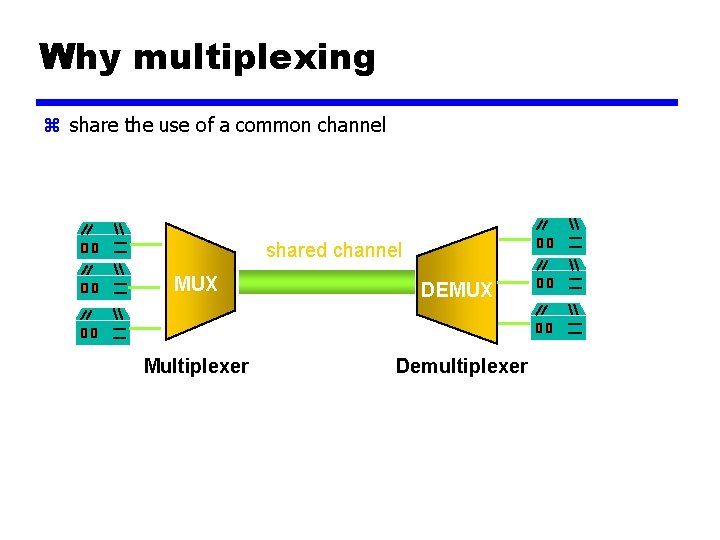
Why multiplexing z share the use of a common channel shared channel MUX DEMUX Multiplexer Demultiplexer
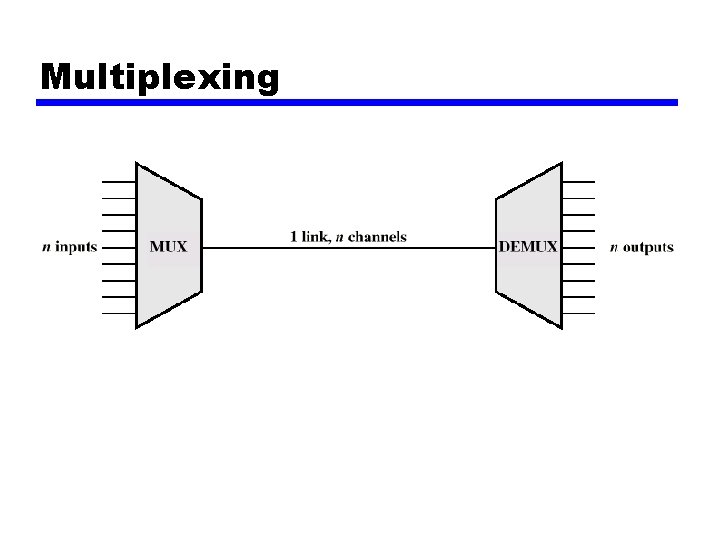
Multiplexing
Types of Multiplexer z FDM (Frequency Division Multiplexer) l TDM (Time Division Multiplexer)
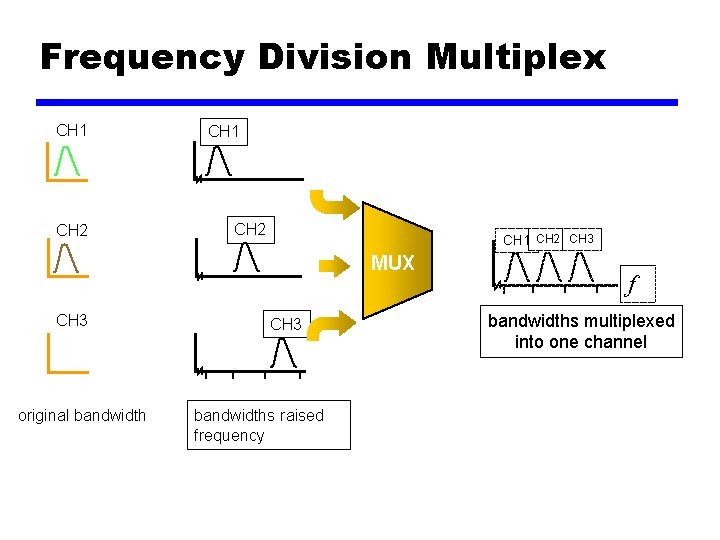
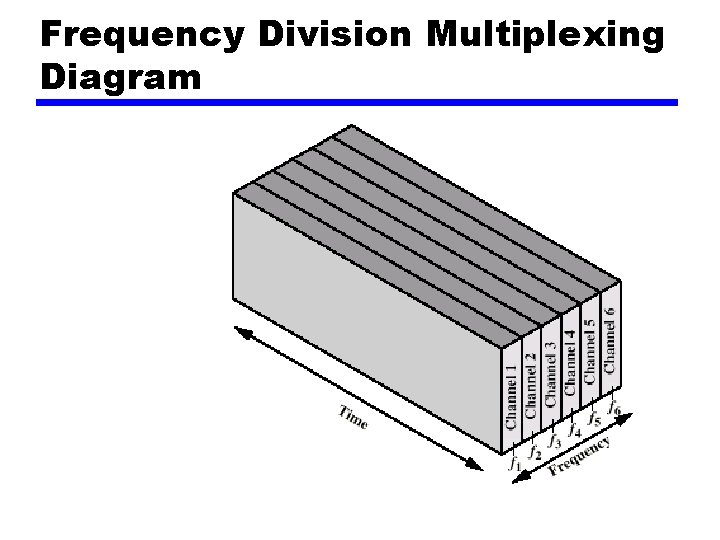
Frequency Division Multiplexing z FDM z Useful bandwidth of medium exceeds required bandwidth of channel z Each signal is modulated to a different carrier frequency z Carrier frequencies separated so signals do not overlap (guard bands) z e. g. broadcast radio z Channel allocated even if there is no data
Frequency Division Multiplexing z Requires analog signaling & transmission z Bandwidth = sum of inputs + guardbands z Modulates signals so that each occupies a different frequency band z Standard for radio broadcasting, analog telephone network, and television (broadcast, cable, & satellite)
Frequency Division Multiplex CH 1 CH 2 CH 3 MUX CH 3 original bandwidth CH 3 bandwidths raised in frequency f bandwidths multiplexed into one channel
Frequency Division Multiplexing Diagram
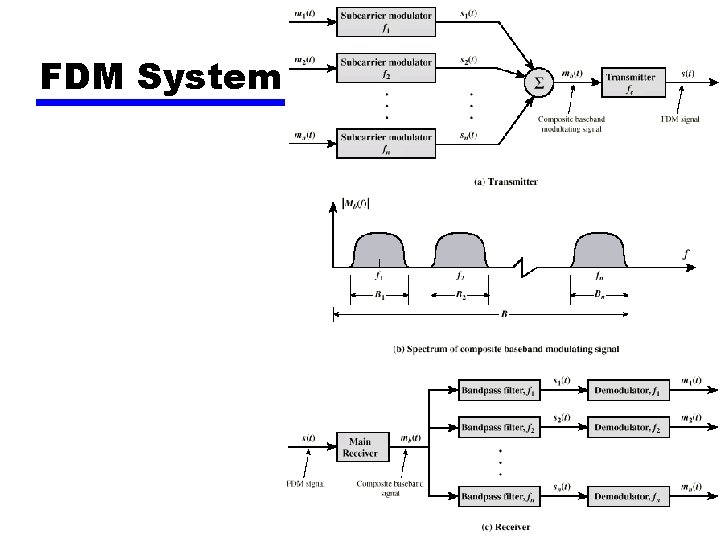
FDM System
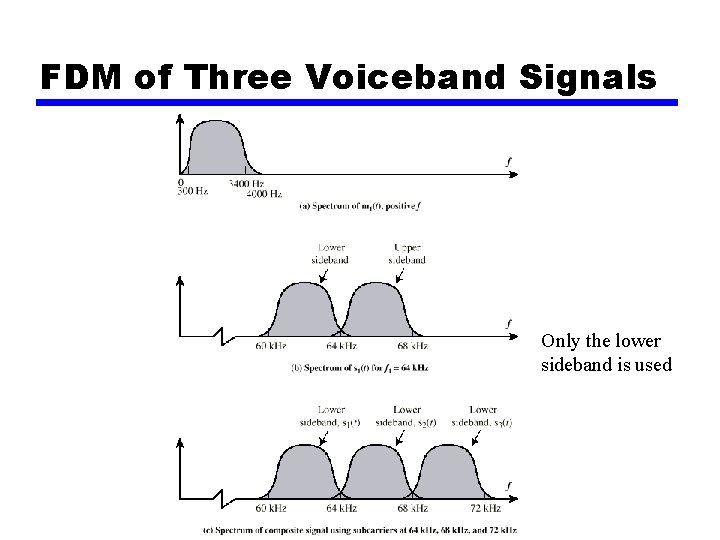
FDM of Three Voiceband Signals Only the lower sideband is used
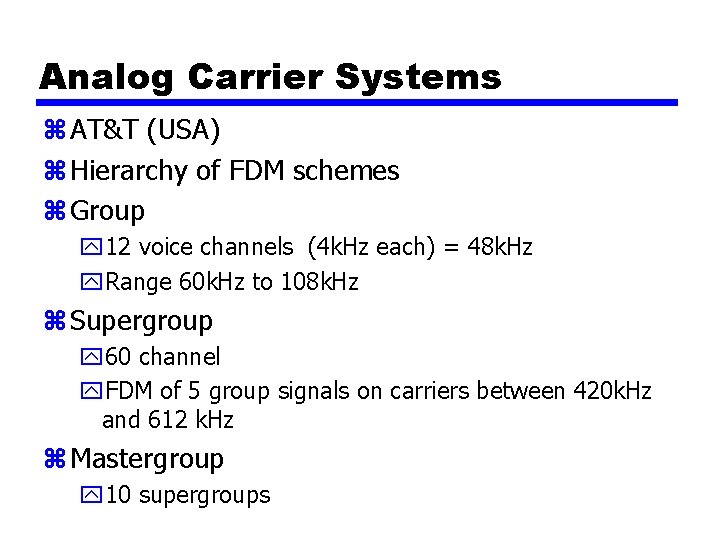
Analog Carrier Systems z AT&T (USA) z Hierarchy of FDM schemes z Group y 12 voice channels (4 k. Hz each) = 48 k. Hz y. Range 60 k. Hz to 108 k. Hz z Supergroup y 60 channel y. FDM of 5 group signals on carriers between 420 k. Hz and 612 k. Hz z Mastergroup y 10 supergroups
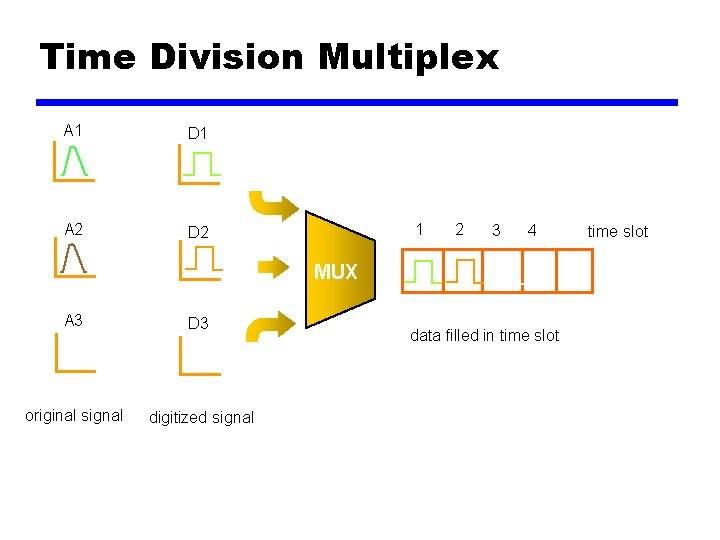
Synchronous Time Division Multiplexing z Data rate of medium exceeds data rate of digital signal to be transmitted z Multiple digital signals interleaved in time z Time slots pre-assigned to sources and fixed z Time slots allocated even if there is no data z Time slots do not have to be evenly distributed amongst sources
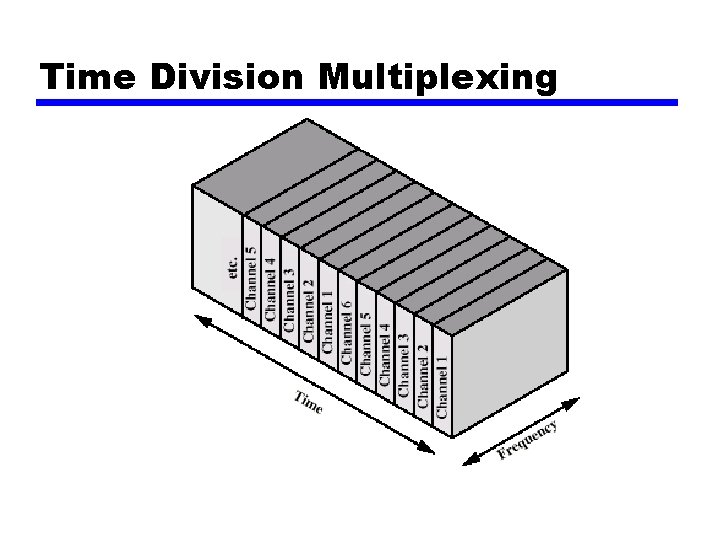
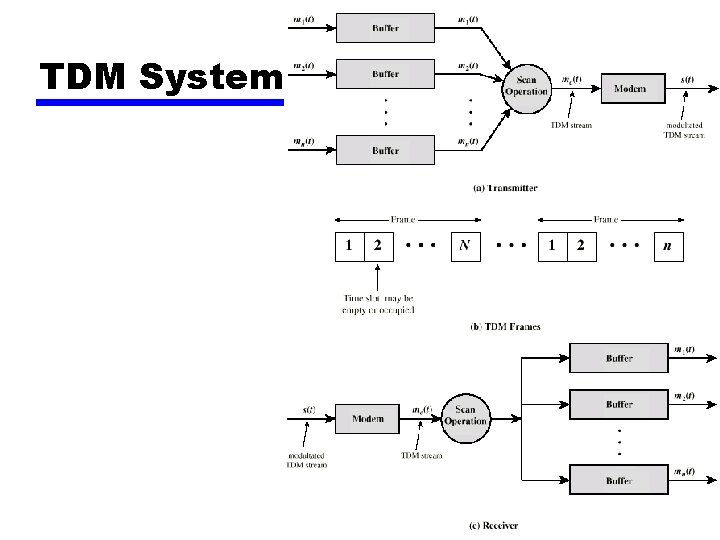
Synchronous Time-Division Multiplexing (TDM) z Used in digital transmission z Requires data rate of the medium to exceed data rate of signals to be transmitted z Signals “take turns” over medium z Slices of data are organized into frames
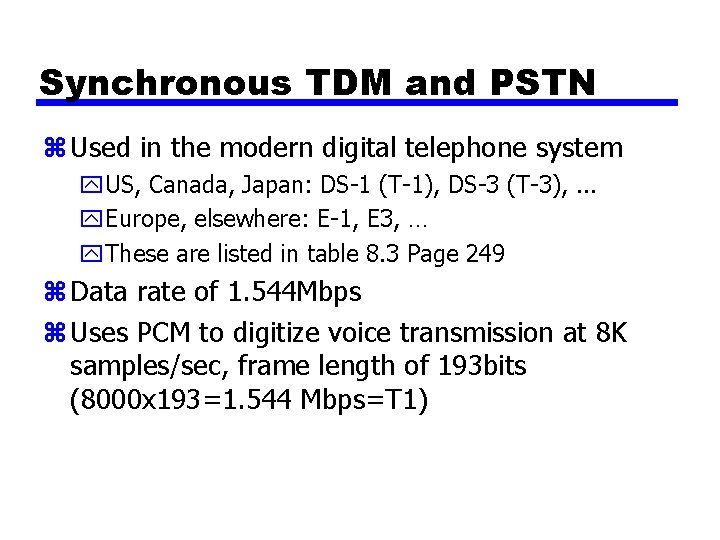
Synchronous TDM and PSTN z Used in the modern digital telephone system y. US, Canada, Japan: DS-1 (T-1), DS-3 (T-3), . . . y. Europe, elsewhere: E-1, E 3, … y. These are listed in table 8. 3 Page 249 z Data rate of 1. 544 Mbps z Uses PCM to digitize voice transmission at 8 K samples/sec, frame length of 193 bits (8000 x 193=1. 544 Mbps=T 1)
Time Division Multiplex A 1 D 1 A 2 D 2 1 2 3 4 MUX A 3 D 3 original signal digitized signal data filled in time slot
Time Division Multiplexing
TDM System
TDM Link Control z No headers and trailers z Data link control protocols not needed z Flow control y. Data rate of multiplexed line is fixed y. If one channel receiver cannot receive data, the others must carry on y. The corresponding source must be quenched y. This leaves empty slots z Error control y. Errors are detected and handled by individual channel systems
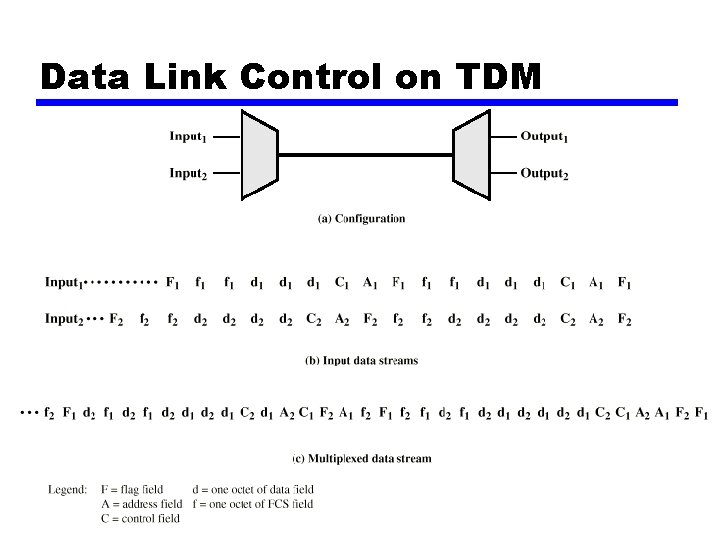
Data Link Control on TDM
Framing z No flag or SYNC characters bracketing TDM frames z Must provide synchronizing mechanism z Added digit framing y. One control bit added to each TDM frame x. Looks like another channel - “control channel” y. Identifiable bit pattern used on control channel ye. g. alternating 0101…unlikely on a data channel y. Can compare incoming bit patterns on each channel with sync pattern
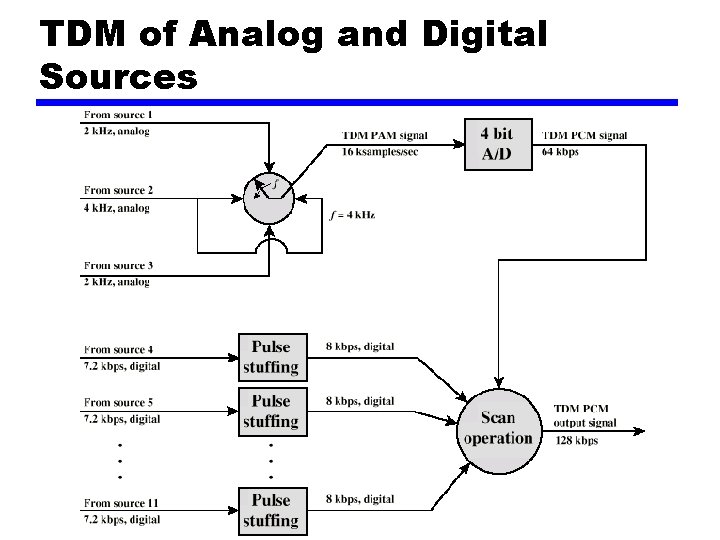
Pulse Stuffing z Problem - Synchronizing data sources z Clocks in different sources drifting z Data rates from different sources not related by simple rational number z Solution - Pulse Stuffing y. Outgoing data rate (excluding framing bits) higher than sum of incoming rates y. Stuff extra dummy bits or pulses into each incoming signal until it matches local clock y. Stuffed pulses inserted at fixed locations in frame and removed at demultiplexer
TDM of Analog and Digital Sources
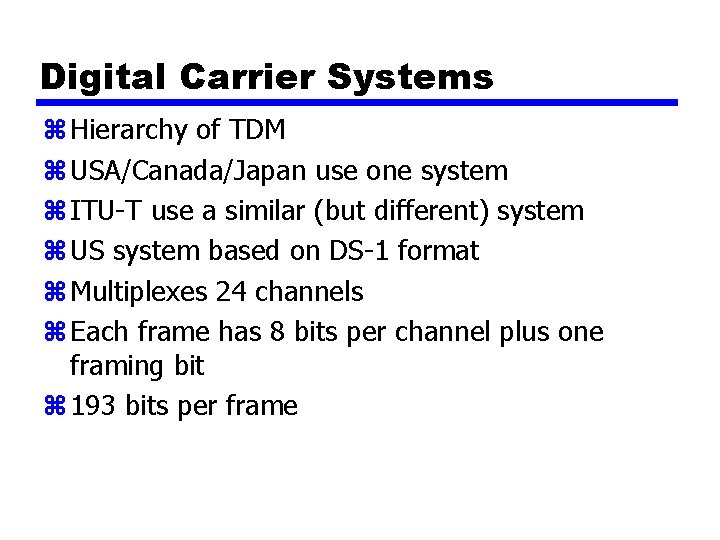
Digital Carrier Systems z Hierarchy of TDM z USA/Canada/Japan use one system z ITU-T use a similar (but different) system z US system based on DS-1 format z Multiplexes 24 channels z Each frame has 8 bits per channel plus one framing bit z 193 bits per frame
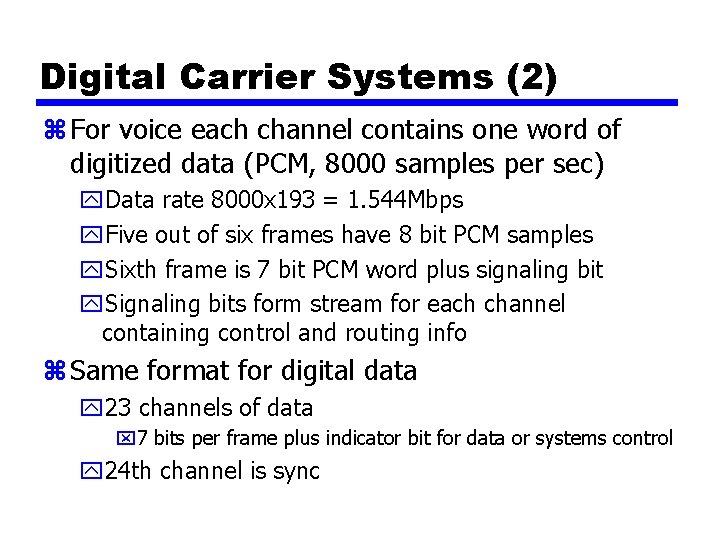
Digital Carrier Systems (2) z For voice each channel contains one word of digitized data (PCM, 8000 samples per sec) y. Data rate 8000 x 193 = 1. 544 Mbps y. Five out of six frames have 8 bit PCM samples y. Sixth frame is 7 bit PCM word plus signaling bit y. Signaling bits form stream for each channel containing control and routing info z Same format for digital data y 23 channels of data x 7 bits per frame plus indicator bit for data or systems control y 24 th channel is sync
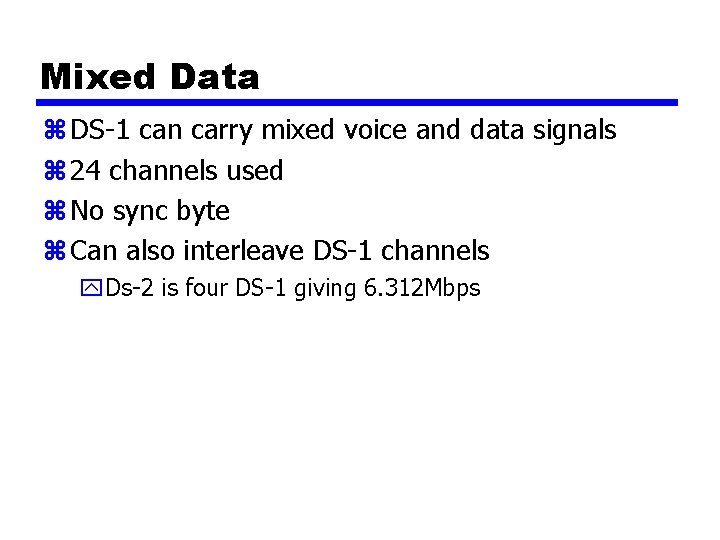
Mixed Data z DS-1 can carry mixed voice and data signals z 24 channels used z No sync byte z Can also interleave DS-1 channels y. Ds-2 is four DS-1 giving 6. 312 Mbps
ISDN User Network Interface z ISDN allows multiplexing of devices over single ISDN line z Two interfaces y. Basic ISDN Interface y. Primary ISDN Interface
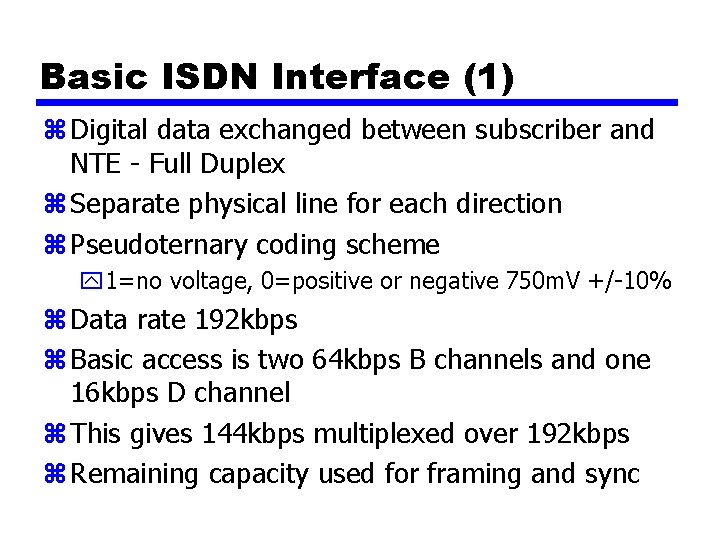
Basic ISDN Interface (1) z Digital data exchanged between subscriber and NTE - Full Duplex z Separate physical line for each direction z Pseudoternary coding scheme y 1=no voltage, 0=positive or negative 750 m. V +/-10% z Data rate 192 kbps z Basic access is two 64 kbps B channels and one 16 kbps D channel z This gives 144 kbps multiplexed over 192 kbps z Remaining capacity used for framing and sync
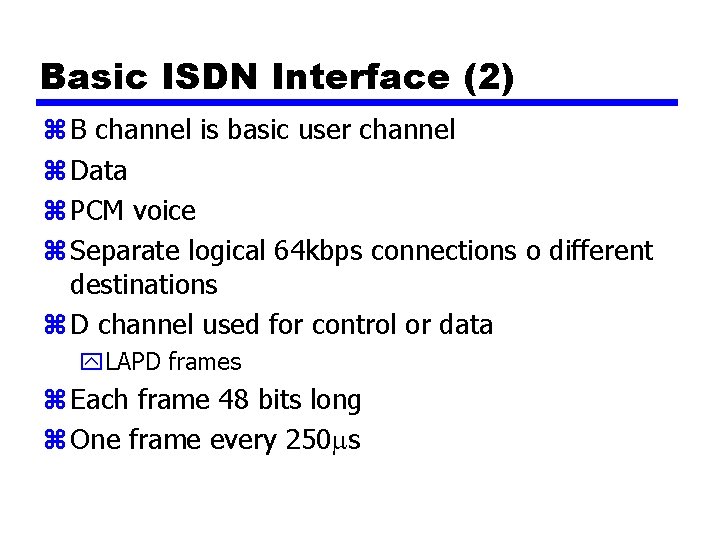
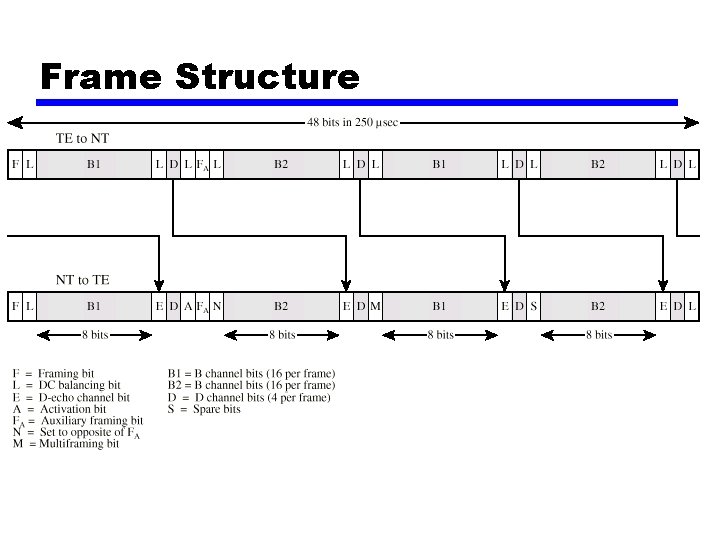
Basic ISDN Interface (2) z B channel is basic user channel z Data z PCM voice z Separate logical 64 kbps connections o different destinations z D channel used for control or data y. LAPD frames z Each frame 48 bits long z One frame every 250 s
Frame Structure
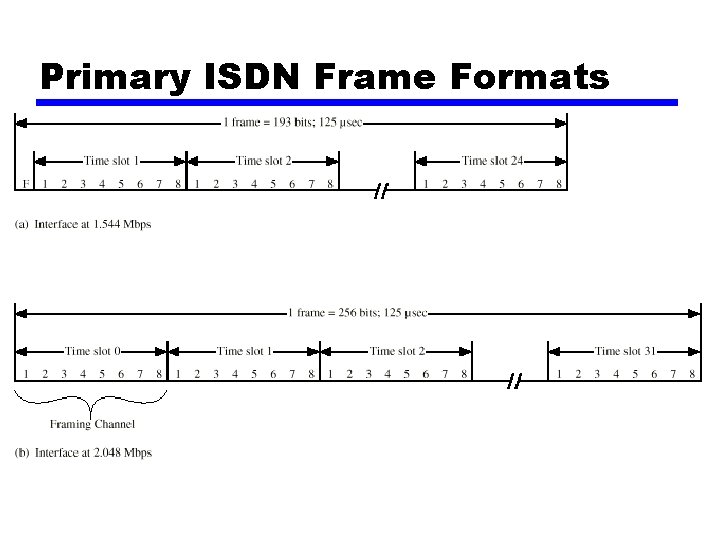
Primary ISDN z Point to point z Typically supporting PBX z 1. 544 Mbps y. Based on US DS-1 y. Used on T 1 services y 23 B plus one D channel z 2. 048 Mbps y. Based on European standards y 30 B plus one D channel y. Line coding is AMI using. HDB 3
Primary ISDN Frame Formats
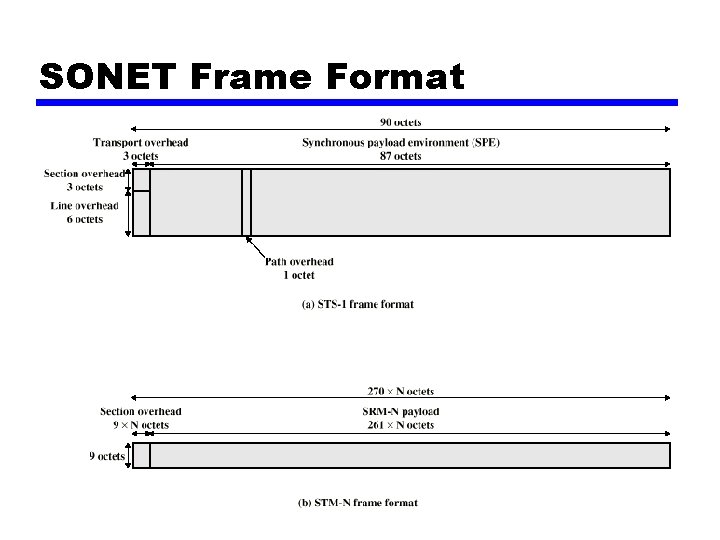
SONET: Synchronous Optical Network z Specification for high-speed digital transfer via optical fiber z Rates from 51. 84 Mbps to 13. 2 Gbps z Uses Synchronous TDM
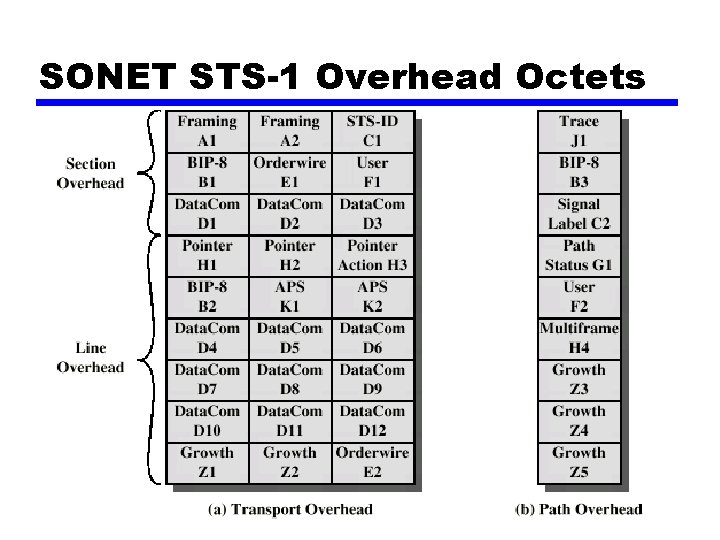
Sonet/SDH z Synchronous Optical Network (ANSI) z Synchronous Digital Hierarchy (ITU-T) z Compatible z Signal Hierarchy y. Synchronous Transport Signal level 1 (STS-1) or Optical Carrier level 1 (OC-1) y 51. 84 Mbps y. Carry DS-3 or group of lower rate signals (DS 1 C DS 2) plus ITU-T rates (e. g. 2. 048 Mbps) y. Multiple STS-1 combined into STS-N signal y. ITU-T lowest rate is 155. 52 Mbps (STM-1)
SONET Frame Format
SONET STS-1 Overhead Octets
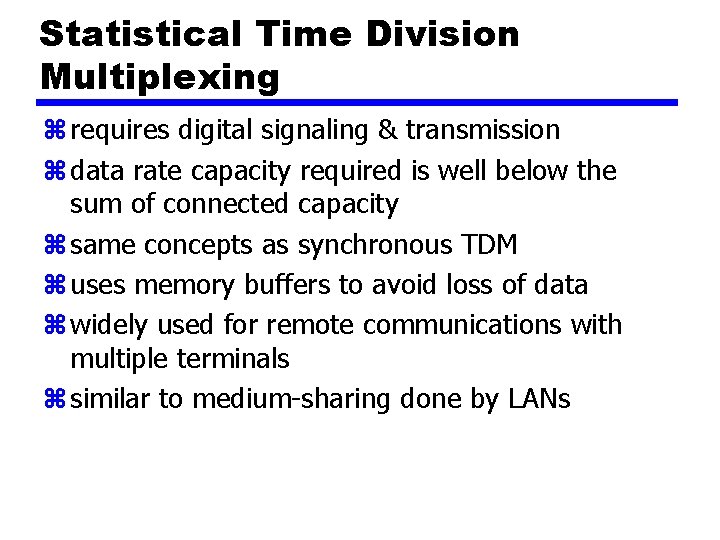
Statistical Time Division Multiplexing z requires digital signaling & transmission z data rate capacity required is well below the sum of connected capacity z same concepts as synchronous TDM z uses memory buffers to avoid loss of data z widely used for remote communications with multiple terminals z similar to medium-sharing done by LANs
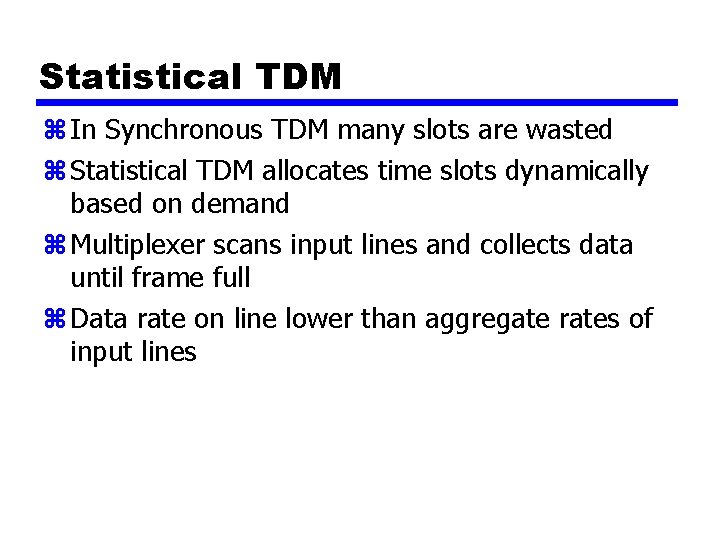
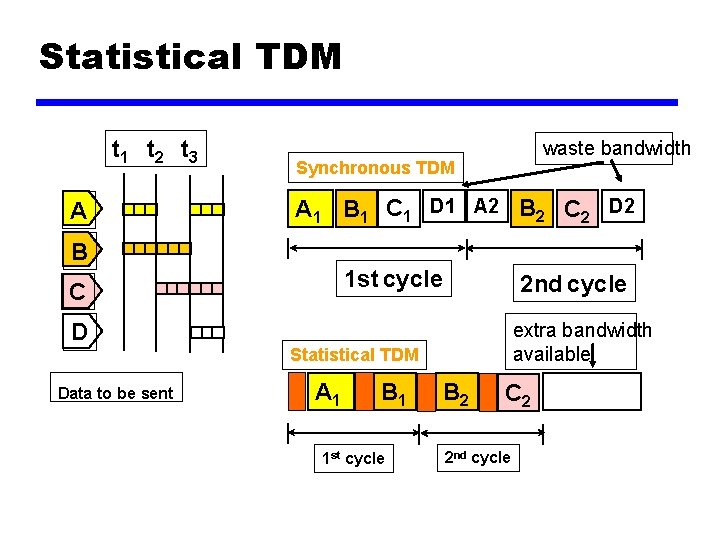
Statistical TDM z In Synchronous TDM many slots are wasted z Statistical TDM allocates time slots dynamically based on demand z Multiplexer scans input lines and collects data until frame full z Data rate on line lower than aggregate rates of input lines
Statistical TDM t 1 t 2 t 3 A waste bandwidth Synchronous TDM A 1 B 1 C 1 D 1 A 2 B 2 C 2 D 2 B 1 st cycle C D Data to be sent 2 nd cycle extra bandwidth available Statistical TDM A 1 B 1 1 st cycle B 2 C 2 2 nd cycle
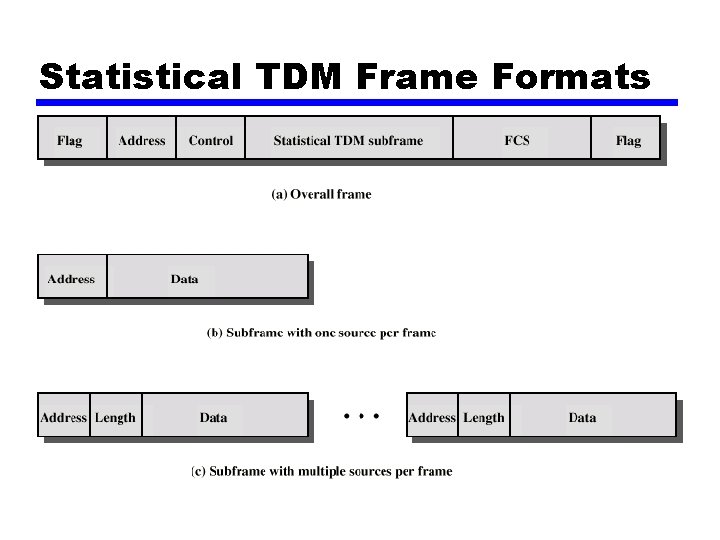
Statistical TDM Frame Formats
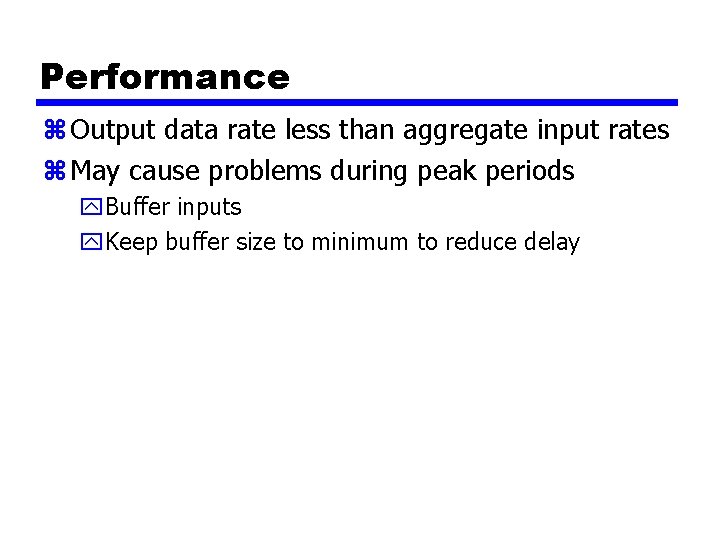
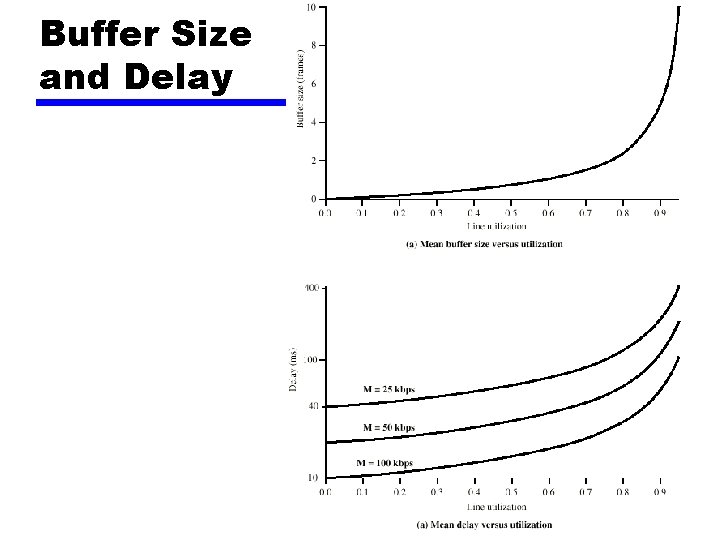
Performance z Output data rate less than aggregate input rates z May cause problems during peak periods y. Buffer inputs y. Keep buffer size to minimum to reduce delay
Buffer Size and Delay
Asymmetrical Digital Subscriber Line z ADSL z Link between subscriber and network y. Local loop z Uses currently installed twisted pair cable y. Can carry broader spectrum y 1 MHz or more
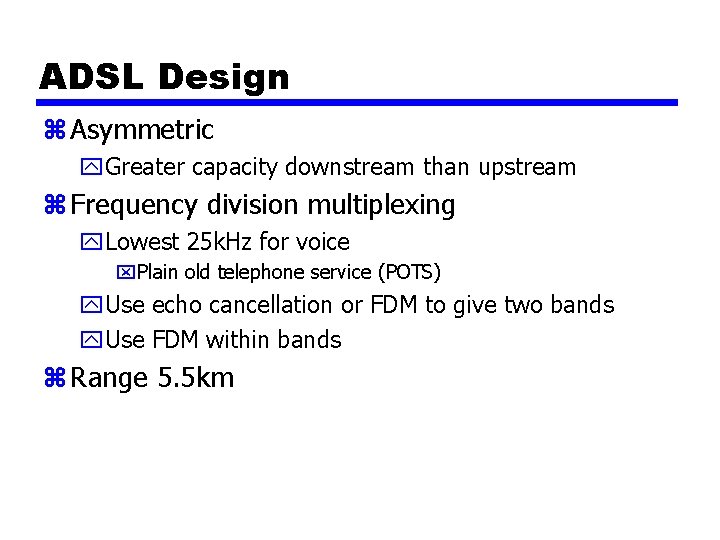
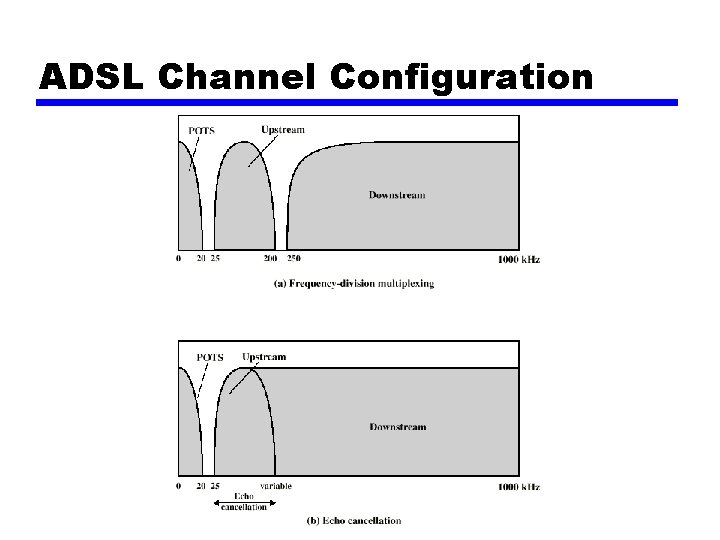
ADSL Design z Asymmetric y. Greater capacity downstream than upstream z Frequency division multiplexing y. Lowest 25 k. Hz for voice x. Plain old telephone service (POTS) y. Use echo cancellation or FDM to give two bands y. Use FDM within bands z Range 5. 5 km
ADSL Channel Configuration
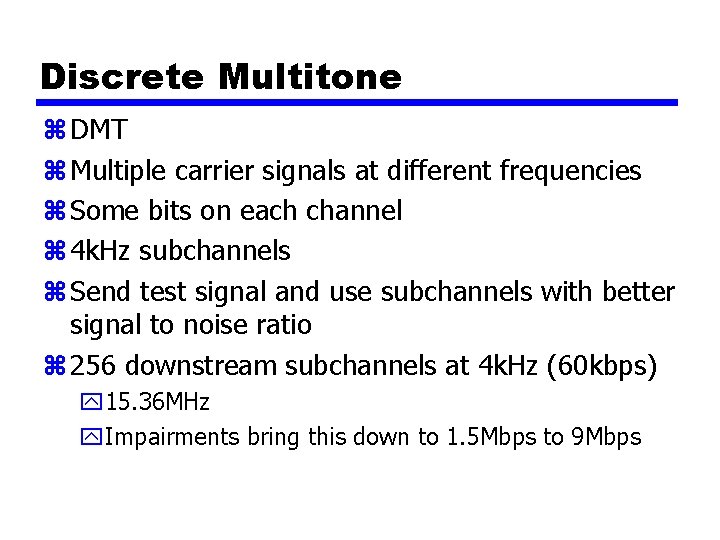
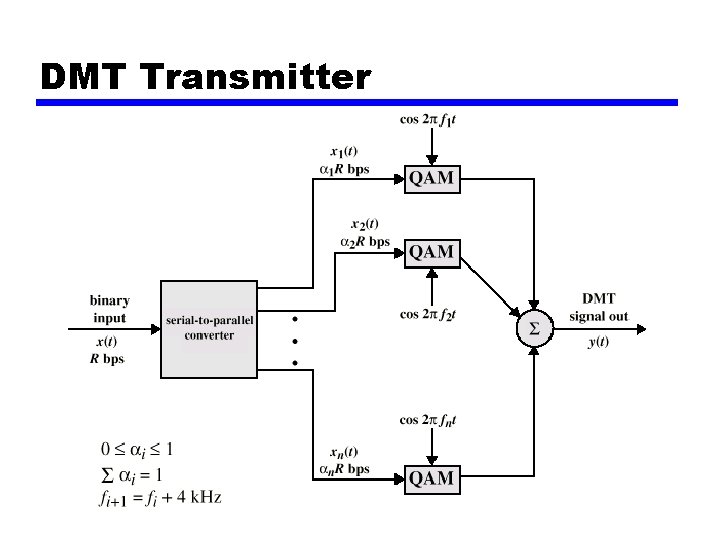
Discrete Multitone z DMT z Multiple carrier signals at different frequencies z Some bits on each channel z 4 k. Hz subchannels z Send test signal and use subchannels with better signal to noise ratio z 256 downstream subchannels at 4 k. Hz (60 kbps) y 15. 36 MHz y. Impairments bring this down to 1. 5 Mbps to 9 Mbps
DMT Transmitter
x. DSL z High data rate DSL z Single line DSL z Very high data rate DSL