
DAT 2343 Basic Information Encoding In Binary Circuits
DAT 2343 Basic Information Encoding In Binary Circuits © Alan T. Pinck / Algonquin College; 2003
Digital Computers Purpose: n to manipulate information or “data” Functional Composition: binary circuits n logic gates which can manipulate binary circuit signals n
Problems: How can information be “encoded” using binary circuits? (this lecture) How can such encoded information be processed? (subsequent lecture)
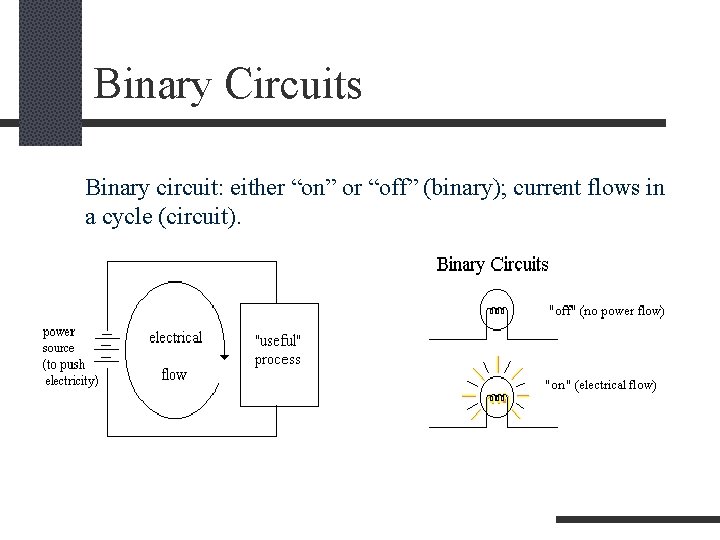
Binary Circuits Binary circuit: either “on” or “off” (binary); current flows in a cycle (circuit).
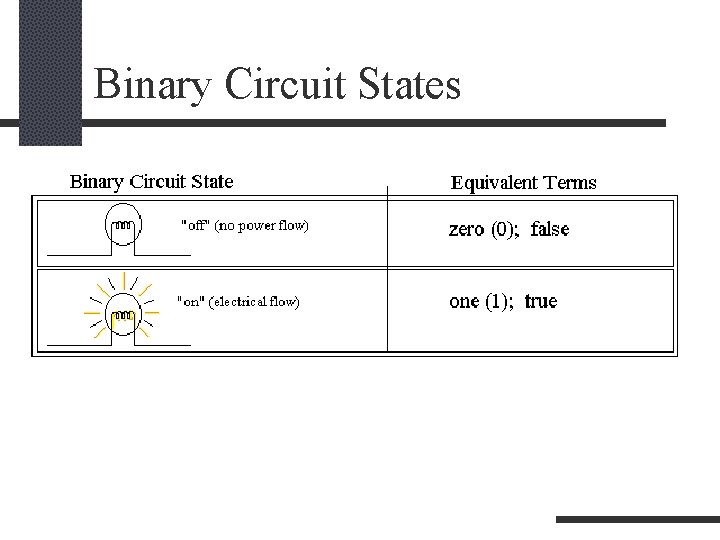
Binary Circuit States

Sample 2 -State Encoding
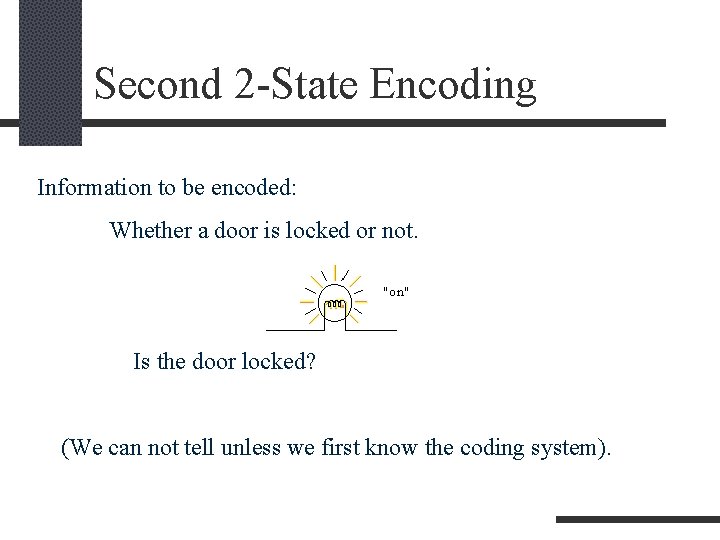
Second 2 -State Encoding Information to be encoded: Whether a door is locked or not. Is the door locked? (We can not tell unless we first know the coding system).
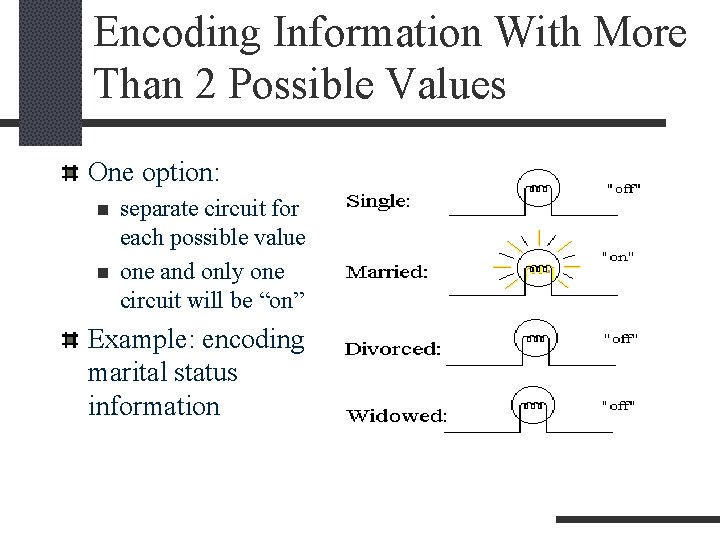
Encoding Information With More Than 2 Possible Values One option: n n separate circuit for each possible value one and only one circuit will be “on” Example: encoding marital status information
Encoding Information With More Than 2 Possible Values Sample circuit for each possible value is not reasonable when there a large number of possible values. Example: n n Number of people who have entered a shopping center since the beginning of the year. Assuming an average of 5000 people per day for 365 days. : n n n Initial value (1 January): 0 Final value (31 December): over 1. 5 million With separate circuits for each possible value, over 1. 5 million circuits would be needed for this one value!
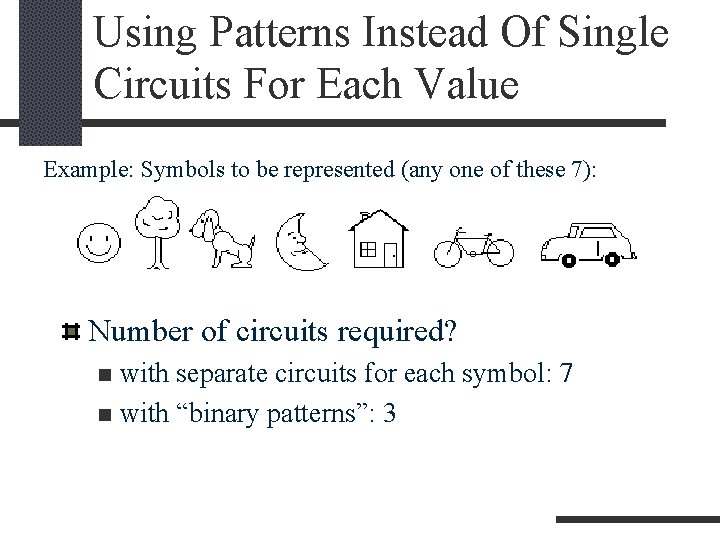
Using Patterns Instead Of Single Circuits For Each Value Example: Symbols to be represented (any one of these 7): Number of circuits required? with separate circuits for each symbol: 7 n with “binary patterns”: 3 n
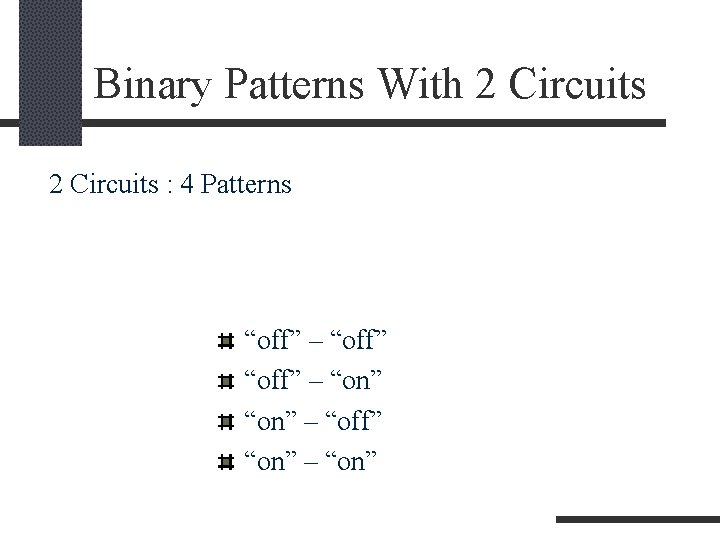
Binary Patterns With 2 Circuits : 4 Patterns “off” – “on” – “off” “on” – “on”
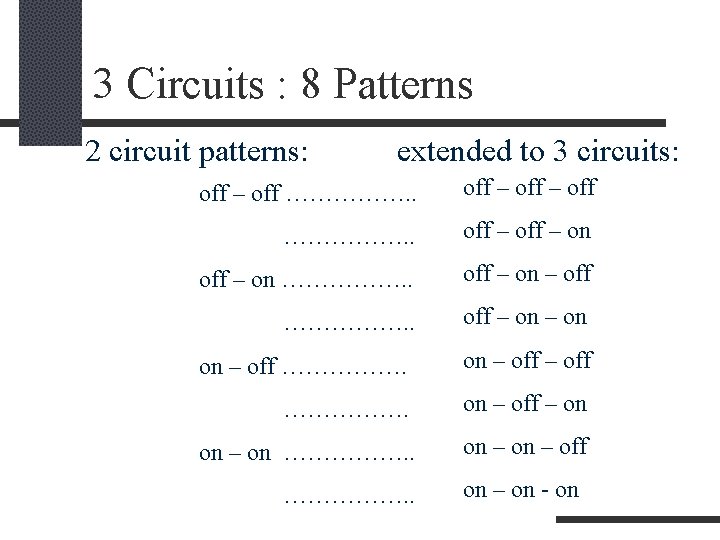
3 Circuits : 8 Patterns 2 circuit patterns: extended to 3 circuits: off – off ……………. . off – on ……………. . off – on – off ……………. . off – on on – off ……………. on – off – on on – on ……………. . on – off ……………. . on – on - on
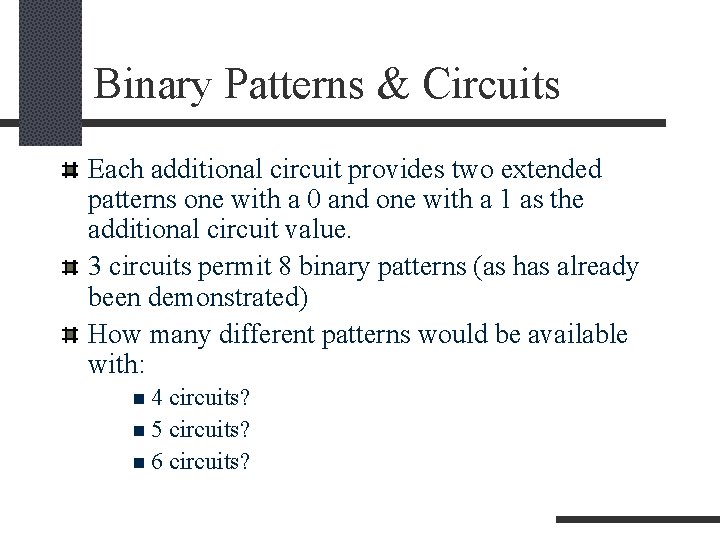
Binary Patterns & Circuits Each additional circuit provides two extended patterns one with a 0 and one with a 1 as the additional circuit value. 3 circuits permit 8 binary patterns (as has already been demonstrated) How many different patterns would be available with: n 4 circuits? n 5 circuits? n 6 circuits?
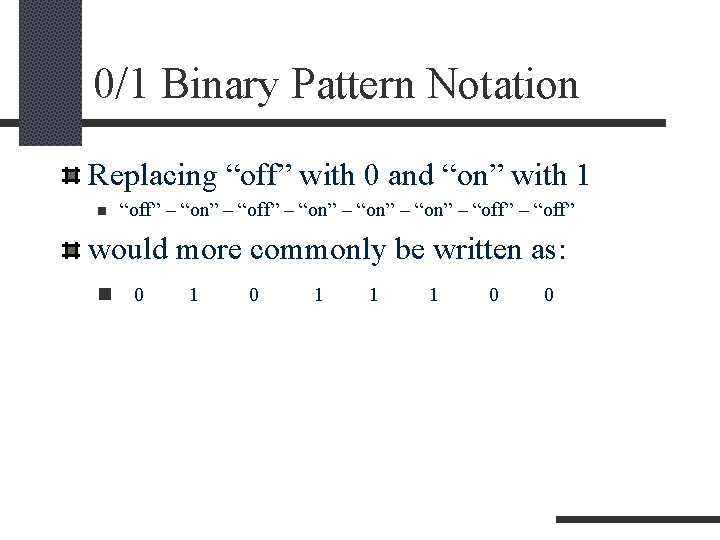
0/1 Binary Pattern Notation Replacing “off” with 0 and “on” with 1 n “off” – “on” – “off” would more commonly be written as: n 0 1 1 1 0 0
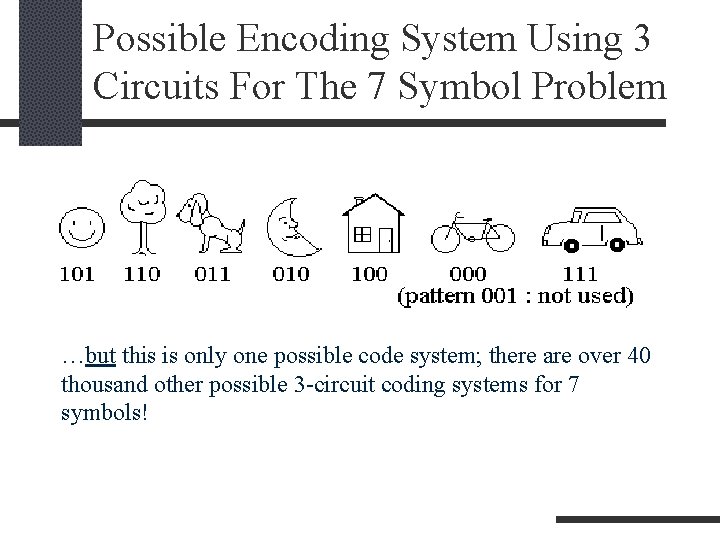
Possible Encoding System Using 3 Circuits For The 7 Symbol Problem …but this is only one possible code system; there are over 40 thousand other possible 3 -circuit coding systems for 7 symbols!

End of Lecture
- Slides: 16