
DAs Despicable DVT PE Prophylaxis November 4 2009
DA’s Despicable DVT / PE Prophylaxis November 4, 2009 Surgery Rotation Sandra Katalinic Pharmacy Resident
Outline • Objectives • Patient Profile – – Presentation Medications Review of Systems Lab Values • Disease States – – Signs and Symptoms Risk Factors Pathophysiology Treatment Options
Outline • Pharmacy Assessment – Drug Related Problems – Goals of Therapy – Clinical Question • Literature Review – Chest Guidelines – 1˚ article – Therapeutic Options • Outcome – Monitoring
Objectives • Explain the procedure of a hemicolectomy with re-anastomosis • List the risk factors for VTE • List the symptoms of DVT/PE and diagnostic options • State the Chest Guideline’s DVT / PE prophylaxis recommendation for cancer patients undergoing surgery for their cancer
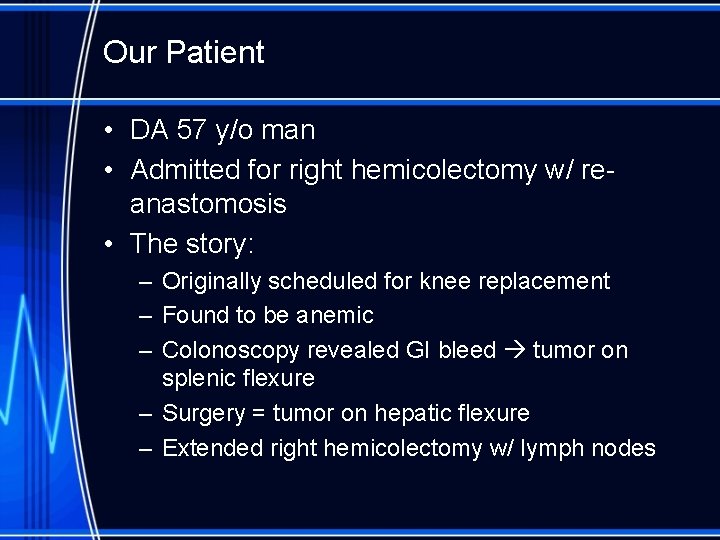
Our Patient • DA 57 y/o man • Admitted for right hemicolectomy w/ reanastomosis • The story: – Originally scheduled for knee replacement – Found to be anemic – Colonoscopy revealed GI bleed tumor on splenic flexure – Surgery = tumor on hepatic flexure – Extended right hemicolectomy w/ lymph nodes
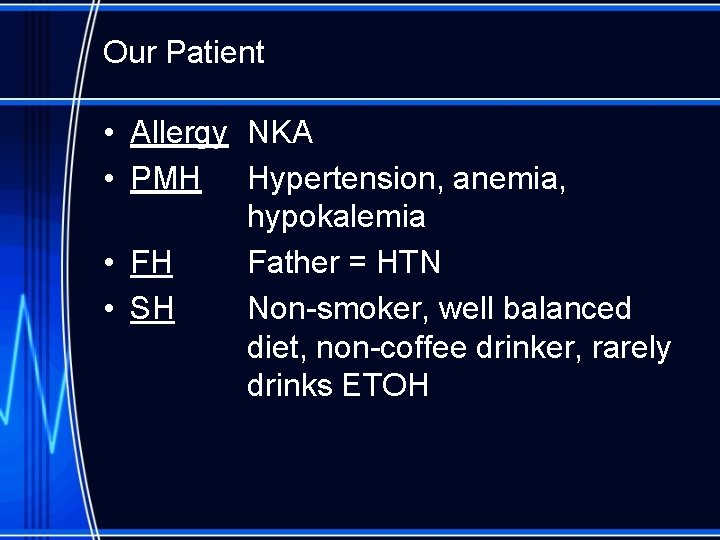
Our Patient • Allergy NKA • PMH Hypertension, anemia, hypokalemia • FH Father = HTN • SH Non-smoker, well balanced diet, non-coffee drinker, rarely drinks ETOH
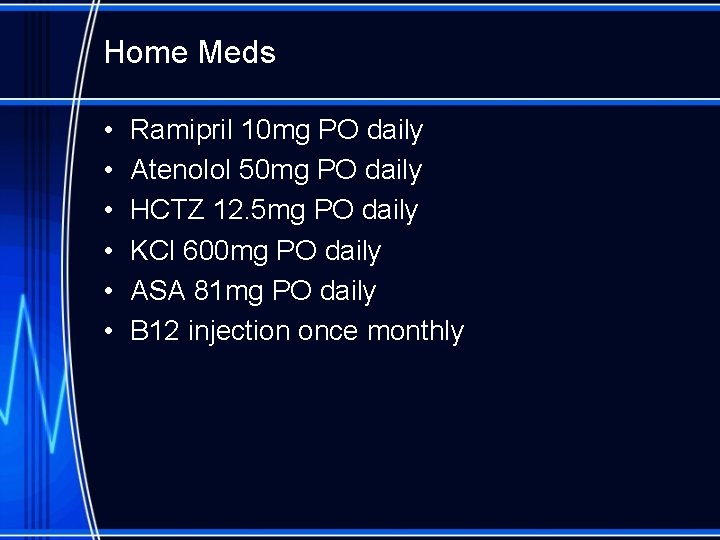
Home Meds • • • Ramipril 10 mg PO daily Atenolol 50 mg PO daily HCTZ 12. 5 mg PO daily KCl 600 mg PO daily ASA 81 mg PO daily B 12 injection once monthly
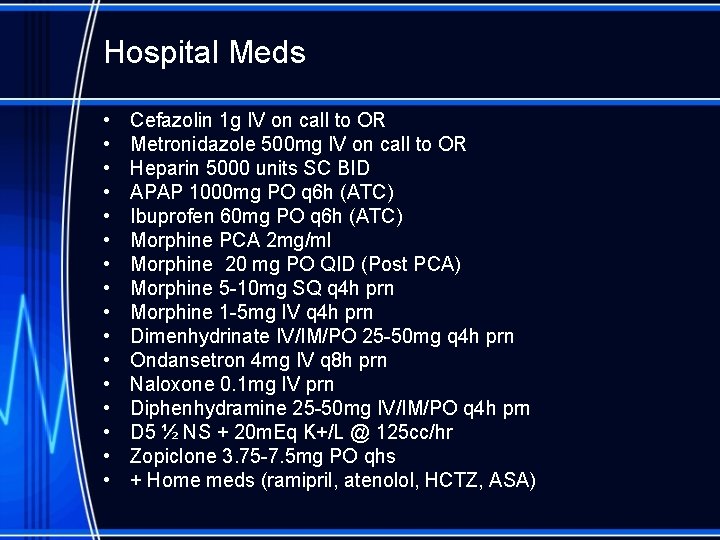
Hospital Meds • • • • Cefazolin 1 g IV on call to OR Metronidazole 500 mg IV on call to OR Heparin 5000 units SC BID APAP 1000 mg PO q 6 h (ATC) Ibuprofen 60 mg PO q 6 h (ATC) Morphine PCA 2 mg/ml Morphine 20 mg PO QID (Post PCA) Morphine 5 -10 mg SQ q 4 h prn Morphine 1 -5 mg IV q 4 h prn Dimenhydrinate IV/IM/PO 25 -50 mg q 4 h prn Ondansetron 4 mg IV q 8 h prn Naloxone 0. 1 mg IV prn Diphenhydramine 25 -50 mg IV/IM/PO q 4 h prn D 5 ½ NS + 20 m. Eq K+/L @ 125 cc/hr Zopiclone 3. 75 -7. 5 mg PO qhs + Home meds (ramipril, atenolol, HCTZ, ASA)
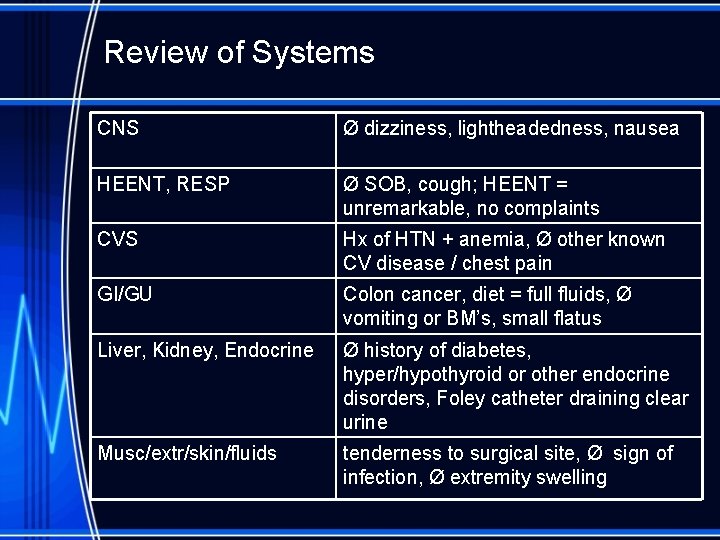
Review of Systems CNS Ø dizziness, lightheadedness, nausea HEENT, RESP Ø SOB, cough; HEENT = unremarkable, no complaints CVS Hx of HTN + anemia, Ø other known CV disease / chest pain GI/GU Colon cancer, diet = full fluids, Ø vomiting or BM’s, small flatus Liver, Kidney, Endocrine Ø history of diabetes, hyper/hypothyroid or other endocrine disorders, Foley catheter draining clear urine Musc/extr/skin/fluids tenderness to surgical site, Ø sign of infection, Ø extremity swelling
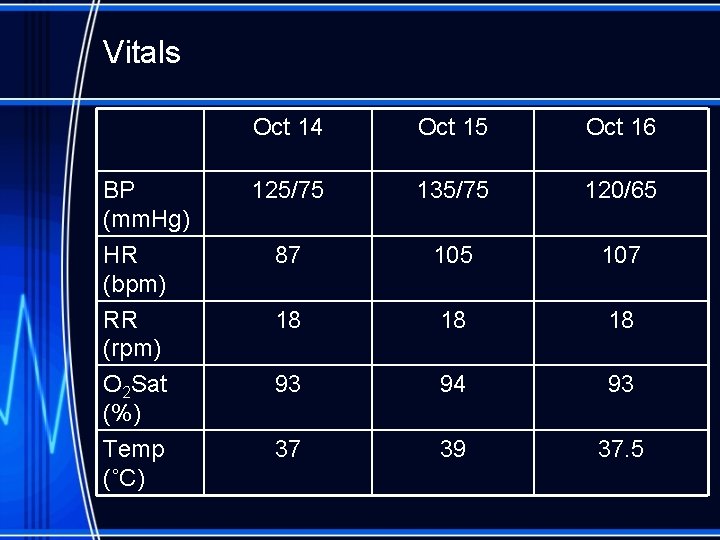
Vitals Oct 14 Oct 15 Oct 16 125/75 135/75 120/65 HR (bpm) RR (rpm) 87 105 107 18 18 18 O 2 Sat (%) Temp (˚C) 93 94 93 37 39 37. 5 BP (mm. Hg)
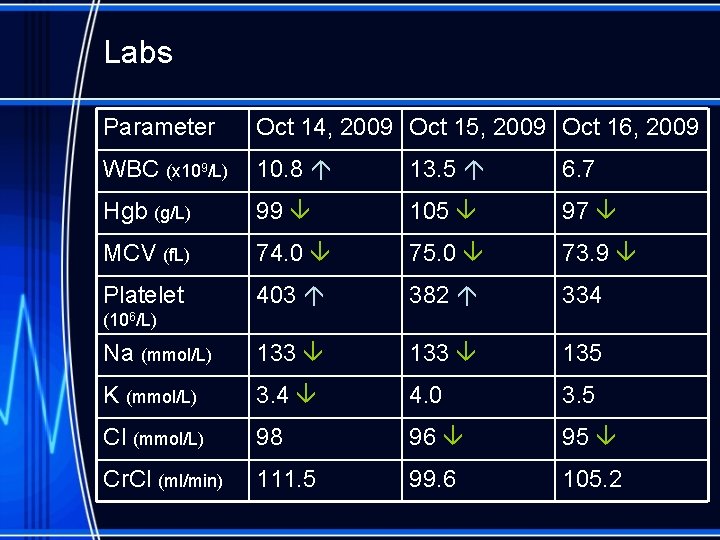
Labs Parameter Oct 14, 2009 Oct 15, 2009 Oct 16, 2009 WBC (x 109/L) 10. 8 13. 5 6. 7 Hgb (g/L) 99 105 97 MCV (f. L) 74. 0 75. 0 73. 9 Platelet 403 382 334 Na (mmol/L) 133 135 K (mmol/L) 3. 4 4. 0 3. 5 Cl (mmol/L) 98 96 95 Cr. Cl (ml/min) 111. 5 99. 6 105. 2 (106/L)
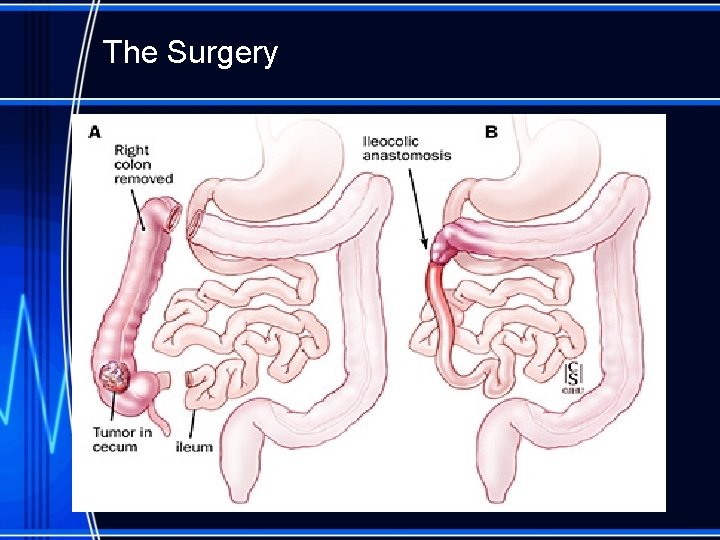
The Surgery
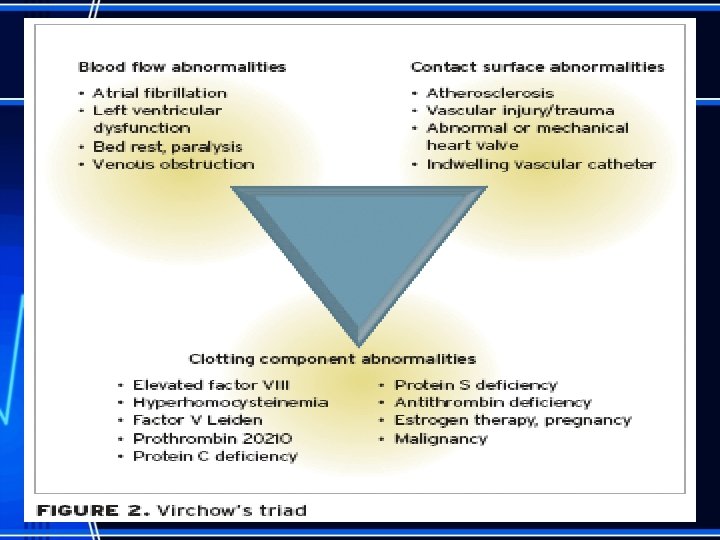
Risk Factors • • • • Increased age Previous VTE Major illness (CHF) Major surgery (general anesthesia >30 min) Paralysis Obesity Trauma Orthopedic surgery Indwelling venous catheter Genetic hypercoagulabilities Estrogen replacement SERMs HIT
Venous Thromboembolism • A blood clot which typically forms in lower extremities – Stays there = DVT – Dislodges to lungs = PE • Can occur anywhere, typically presents in the lungs or lower extremities • Presentation differs depending on where the clot is
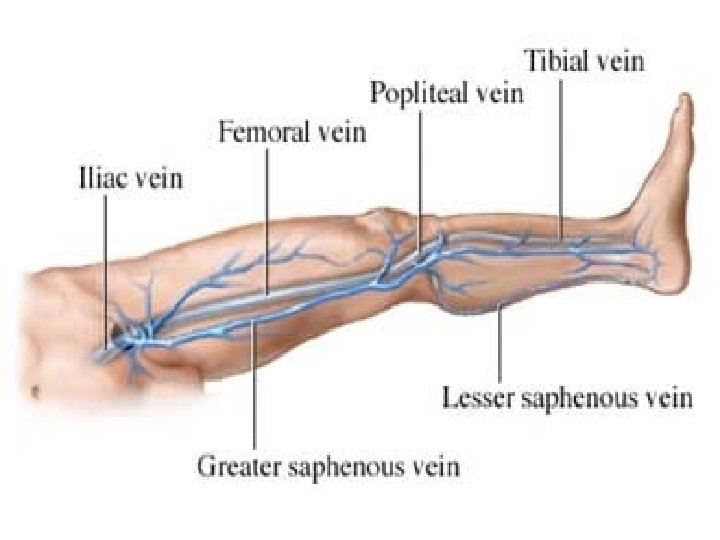
Deep Vein Thrombosis • Occurs in the deep veins of the legs • Symptoms occur below the clot typically occur in the calf • Symptoms: calf pain, swelling, redness, heat • 10 -20% of general surgery patients get DVT • Diagnosis: ultrasound, D-dimer, venography
Pulmonary Embolism • Clot in the pulmonary artery of the lungs or one of its branches • Symptoms: dyspnea, tachypnea, and tachycardia, chest pain, cough • Hemoptysis < 1/3 of patients • Cardiovascular collapse (cyanosis, shock, and oliguria)
Complications • The post-thrombotic syndrome: a long-term complication of DVT from damage to the venous valves • Symptoms are similar to an acute thrombotic event: chronic lower-extremity swelling, pain, tenderness, skin discoloration, ulceration.
Cancer patients • Cancer surgery seems to have at least 2 x the risk of postoperative DVT and >3 x the risk of fatal PE than similar procedures in noncancer patients • Tumor cells secrete pro-coagulants activate coagulation cascade and suppress levels of protein C, S and antithrombin
Prevention • Post operatively: – Low molecular weight heparin – Unfractionated heparin – Fondaparinux • All considered equally efficacious by the Chest Guidelines
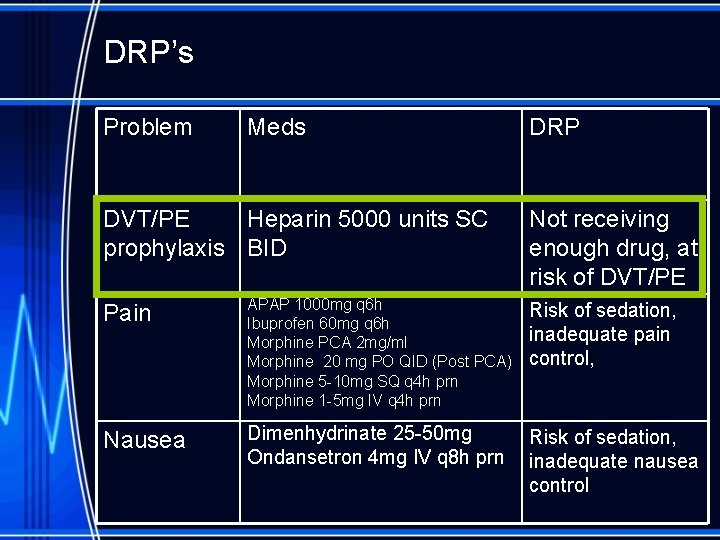
DRP’s Problem Meds DVT/PE Heparin 5000 units SC prophylaxis BID DRP Not receiving enough drug, at risk of DVT/PE Pain APAP 1000 mg q 6 h Ibuprofen 60 mg q 6 h Morphine PCA 2 mg/ml Morphine 20 mg PO QID (Post PCA) Morphine 5 -10 mg SQ q 4 h prn Morphine 1 -5 mg IV q 4 h prn Risk of sedation, inadequate pain control, Nausea Dimenhydrinate 25 -50 mg Ondansetron 4 mg IV q 8 h prn Risk of sedation, inadequate nausea control
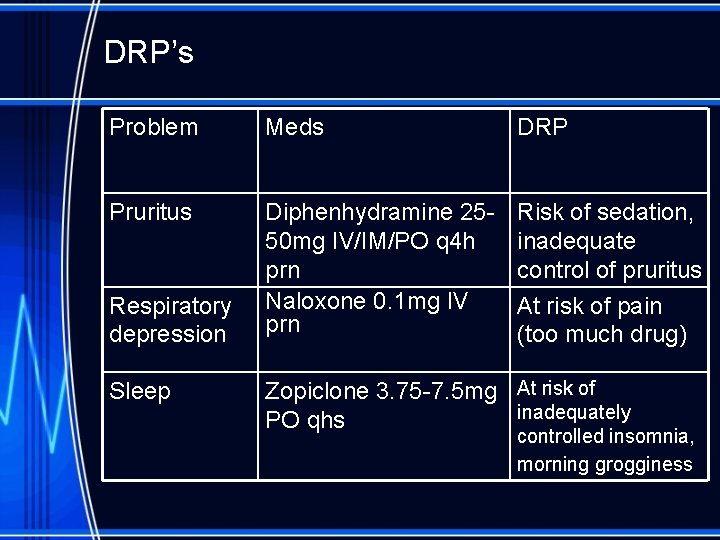
DRP’s Problem Meds DRP Pruritus Diphenhydramine 2550 mg IV/IM/PO q 4 h prn Naloxone 0. 1 mg IV prn Risk of sedation, inadequate control of pruritus Respiratory depression Sleep At risk of pain (too much drug) Zopiclone 3. 75 -7. 5 mg At risk of inadequately PO qhs controlled insomnia, morning grogginess
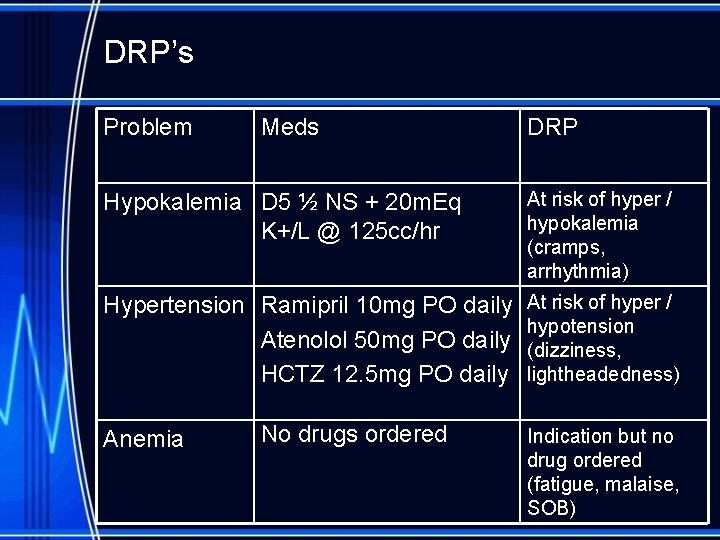
DRP’s Problem Meds DRP Hypokalemia D 5 ½ NS + 20 m. Eq K+/L @ 125 cc/hr At risk of hyper / hypokalemia (cramps, arrhythmia) Hypertension Ramipril 10 mg PO daily Atenolol 50 mg PO daily HCTZ 12. 5 mg PO daily At risk of hyper / hypotension (dizziness, lightheadedness) Anemia No drugs ordered Indication but no drug ordered (fatigue, malaise, SOB)
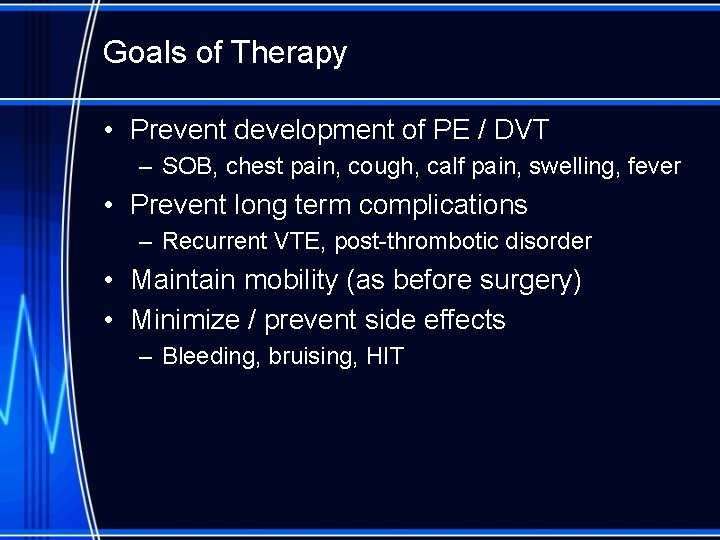
Goals of Therapy • Prevent development of PE / DVT – SOB, chest pain, cough, calf pain, swelling, fever • Prevent long term complications – Recurrent VTE, post-thrombotic disorder • Maintain mobility (as before surgery) • Minimize / prevent side effects – Bleeding, bruising, HIT
PICO questions • P = 57 year old male with newly discovered colon cancer who has undergone a right hemicolectomy for cancer treatment • I = unfractionated heparin (UFH) regimen • C = Low molecular weight heparin (LMWH) regimen • O = post-operative DVT/PE prophylaxis? • In a 57 y/o male with newly discovered colon cancer who has undergone a right hemicolectomy for cancer treatment, what is the recommended regimen for DVT/PE prophylaxis with either LMWH or UFH?
2008 Chest Guidelines • 2. 1. 3. For higher-risk general surgery patients who are undergoing a major procedure for cancer, we recommend thromboprophylaxis with LMWH, LDUH three times daily, or fondaparinux (each Grade 1 A) • What is the evidence behind this?
Study #1 Low molecular weight heparin for the prevention of venous thromboembolism after abdominal surgery. Bergqvist D. British Journal of Surgery 2004; 91: 965– 974.
Study #1 • 16 comparative studies published between 1980 -2003 • Search: “heparin”, “surgery”, “abdominal or rectal or colorectal or rectum or colon”, “clinical trials” • Evaluated general abdominal surgery, surgery in patients with abdominal surgery, colorectal surgery
Study #1 • Surgery in patients with abdominal cancer: • Multiple studies demonstrating therapeutic equivalence of UFH and LMWH • TID dosing of UFH = LMWH daily or BID – enoxaparin & nadroparin studied • Higher dose LMWH is >effective than low dose (5000 units vs. 2500 units dalteparin) w/ no increased bleeding complications – Hypercoagulable state in cancer?
Study #1 • Additionally, this study claims – Colorectal surgeries carry ++ VTE risk (30%) and 4 x risk for PE (compared to? )
Study #2 A Randomized Study Comparing the Efficacy and Safety of Nadroparin 2850 IU (0. 3 m. L) vs. Enoxaparin 4000 IU (40 mg) in the Prevention of Venous Thromboembolism after Colorectal Surgery for Cancer Simonneau G. et al. Journal of Thrombosis and Haemostasis. 2006; Vol 4: p. 1693– 1700.
Study #2 • 950 patients randomized to receive – Nadroparin 2850 units SC once daily + enoxaparin placebo – Enoxaparin 4000 units SC once daily + nadroparin placebo • Results – Non-inferiority was not established (power? ) – Nadroparin asymptomatic distal DVT symptomatic DVT or PE, anemia, profuse perioperative bleed, post-operative transfusions, total transfusions • Study concluded: nadroparin = attractive option for colorectal cancer surgery
Therapeutic Options • Unfractionated heparin – Equally as efficacious as LMWH – Cheaper than other alternatives – Currently in hospital = can be monitored as required • Low molecular weight heparin • Fondaparinux
Risk Vs. Benefit • Clotting Risk – – Cancer Colorectal surgery / surgery in general Immobility post-op Advanced age (>40) • Bleed risk – Cancer surgery – Ibuprofen + ASA (no hx of ulcer / GI bleed)
Monitoring • Low molecular weight heparin – – – Sx of DVT – leg pain, swelling, redness Sx of PE – chest pain, SOB, cough, fever Bleeding / bruising Hemoglobin, platelets HIT (drop in platelets >50% or count <100)
Outcome • Recommended heparin 5000 units SC TID – Suggest consider d/c ibuprofen if concerned about bleed risk • Resident took my recommendation • Patient completed hospital stay (10 days) without symptoms of DVT/PE or bleed • DVT/PE usually occur in first 2 weeks post-op risk continues up to 3 months
Duration of therapy • For selected high-risk general surgery patients, including some of those who have undergone major cancer surgery or have previously had VTE, we suggest that continuing thromboprophylaxis after hospital discharge with LMWH for up to 28 days be considered (Grade 2 A).
References • • • First Consult http: //www. mdconsult. com/das/pdxmd/lookup/168950262 -2? type=med Di. Piro JT. Et al. Pharmacotherapy: A Pathophysiologic Approach 7 th Ed. Mc. Graw Hill. New York. 2008; p. 331. 370 Chest Guidelines The Perioperative Management of Antithrombotic Therapy. Chest. 2008; 133: p. 299 S-339 S. Bergqvist D. Low molecular weight heparin for the prevention of venous thromboembolism after abdominal surgery. British Journal of Surgery 2004; 91: 965– 974. A Randomized Study Comparing the Efficacy and Safety of Nadroparin 2850 IU (0. 3 m. L) vs. Enoxaparin 4000 IU (40 mg) in the Prevention of Venous Thromboembolism after Colorectal Surgery for Cancer. Simonneau G. et al. Journal of Thrombosis and Haemostasis. 2006; Vol 4: p. 1693– 1700. Comparison of a Low Molecular Weight Heparin and Unfractionated Heparin for the Prevention of Deep Vein Thrombosis in Patients Undergoing Abdominal Surgery. The European Fraxiparin Study (EFS) Group. British Journal of Surgery. 1988; Vol 75(11): 1058 -1063.
- Slides: 38