
Darwins Theory of Evolution Darwins Theory of Evolution
- Slides: 41
Darwin’s Theory of Evolution
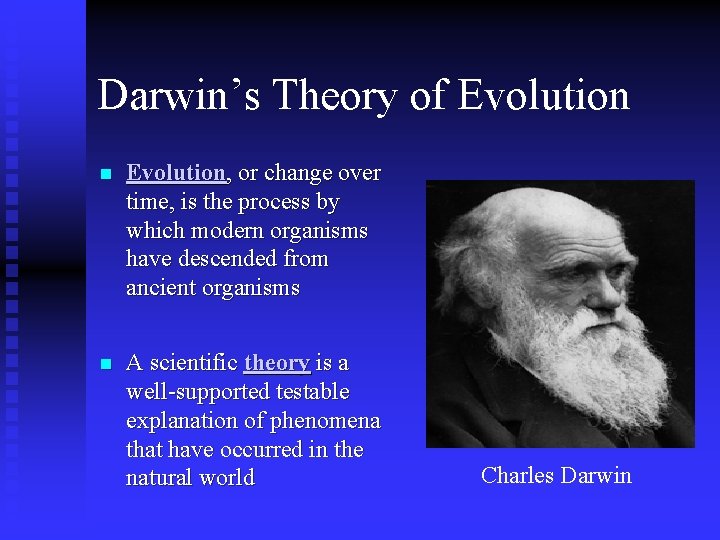
Darwin’s Theory of Evolution n Evolution, or change over time, is the process by which modern organisms have descended from ancient organisms n A scientific theory is a well-supported testable explanation of phenomena that have occurred in the natural world Charles Darwin
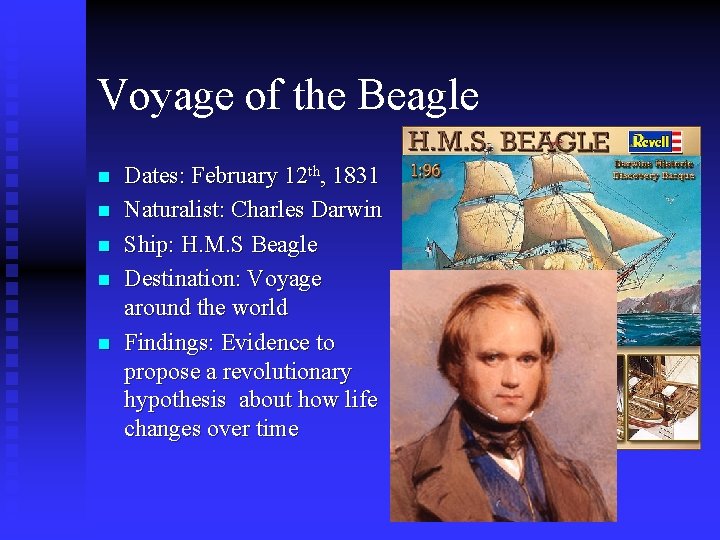
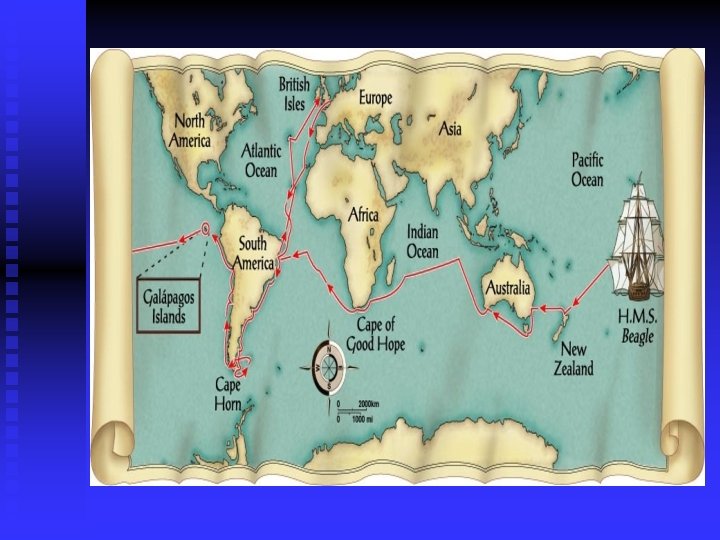
Voyage of the Beagle n n n Dates: February 12 th, 1831 Naturalist: Charles Darwin Ship: H. M. S Beagle Destination: Voyage around the world Findings: Evidence to propose a revolutionary hypothesis about how life changes over time
Patterns of Diversity n Darwin visited Argentina and Australia which had similar grassland ecosystems. u u those grasslands were inhabited by very different animals. neither Argentina nor Australia was home to the sorts of animals that lived in European grasslands.
Patterns of Diversity n Darwin posed challenging questions. u Why were there no rabbits in Australia, despite the presence of habitats that seemed perfect for them? u Why were there no kangaroos in England?
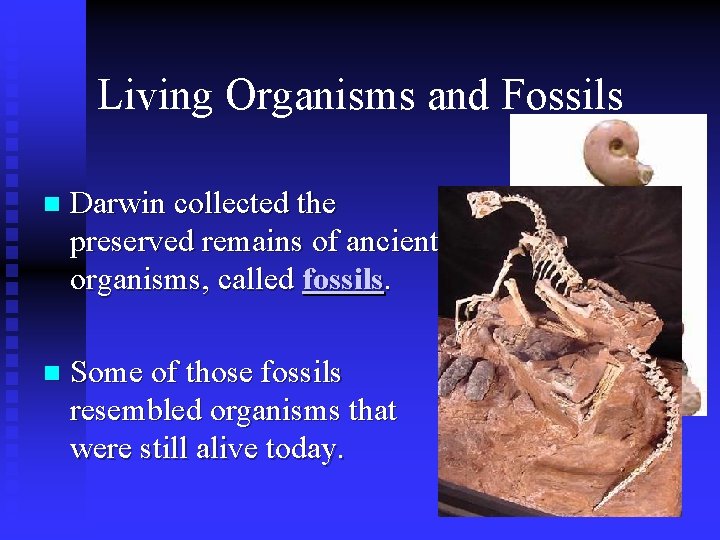
Living Organisms and Fossils n Darwin collected the preserved remains of ancient organisms, called fossils. n Some of those fossils resembled organisms that were still alive today.
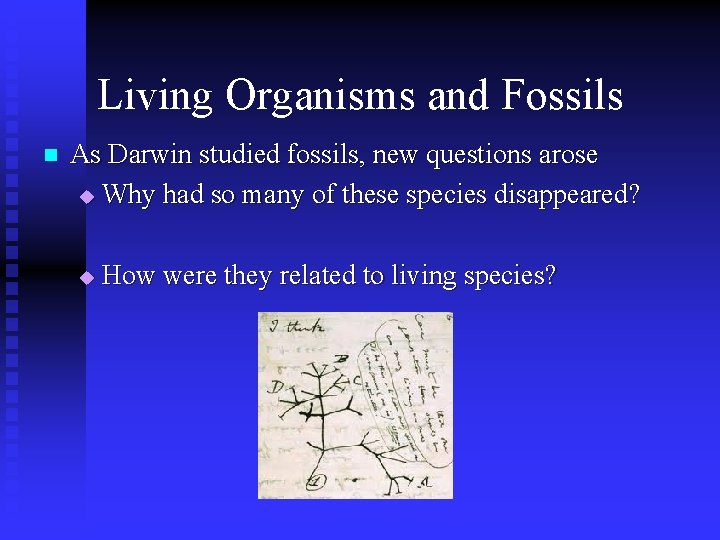
Living Organisms and Fossils n As Darwin studied fossils, new questions arose u Why had so many of these species disappeared? u How were they related to living species?
THE GALAPAGOS ISLAND n The smallest, lowest islands were hot, dry, and nearly barren-Hood Island-sparse vegetation n The higher islands had greater rainfall and a different assortment of plants and animals-Isabela- Island had rich vegetation.
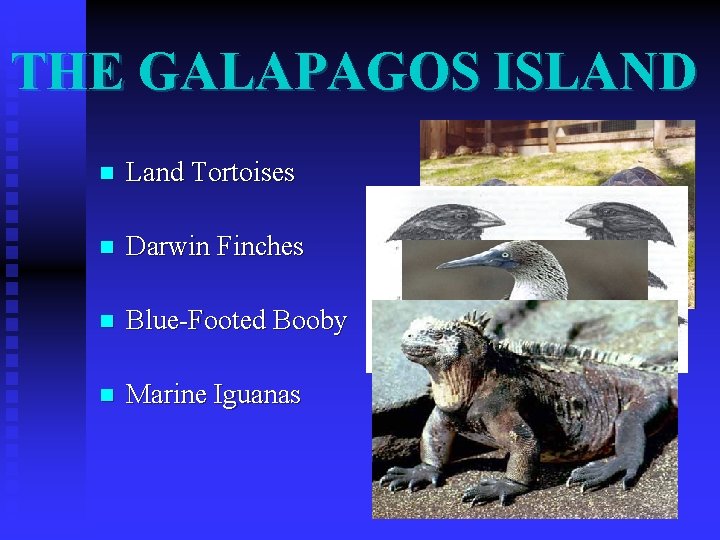
THE GALAPAGOS ISLAND n Land Tortoises n Darwin Finches n Blue-Footed Booby n Marine Iguanas
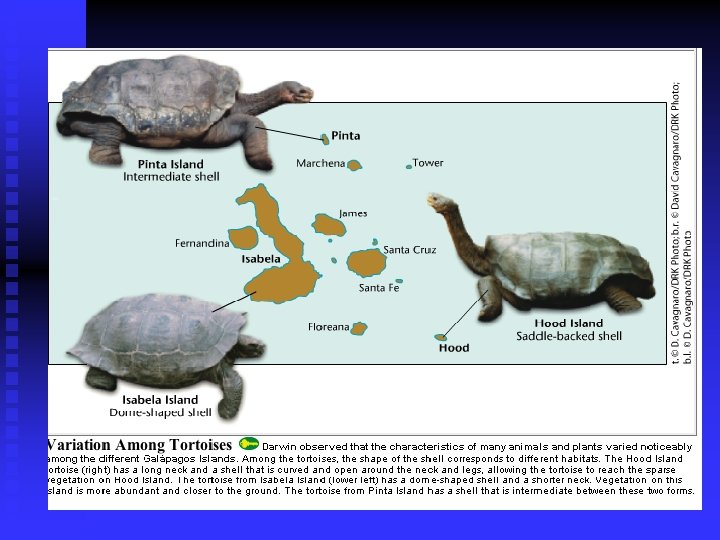
THE GALAPAGOS ISLAND n Darwin was fascinated in particular by the land tortoises and marine iguanas in the Galápagos. n Giant tortoises varied in predictable ways from one island to another. n The shape of a tortoise's shell could be used to identify which island a particular tortoise inhabited.
The Journey Home n Darwin Observed that characteristics of many plants and animals vary greatly among the islands n Hypothesis: Separate species may have arose from an original ancestor
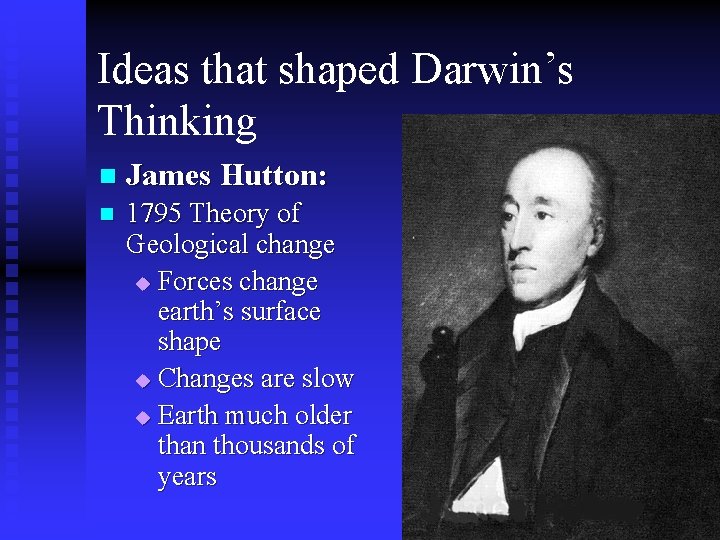
Ideas that shaped Darwin’s Thinking n James Hutton: n 1795 Theory of Geological change u Forces change earth’s surface shape u Changes are slow u Earth much older than thousands of years
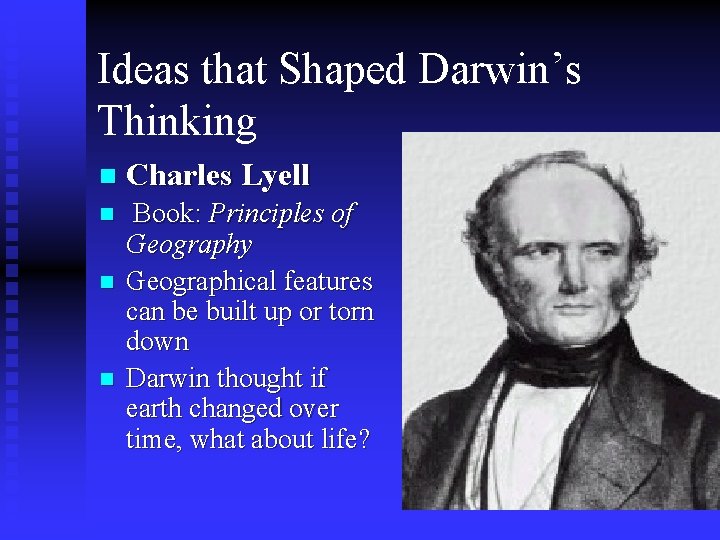
Ideas that Shaped Darwin’s Thinking n Charles Lyell n Book: Principles of Geography Geographical features can be built up or torn down Darwin thought if earth changed over time, what about life? n n
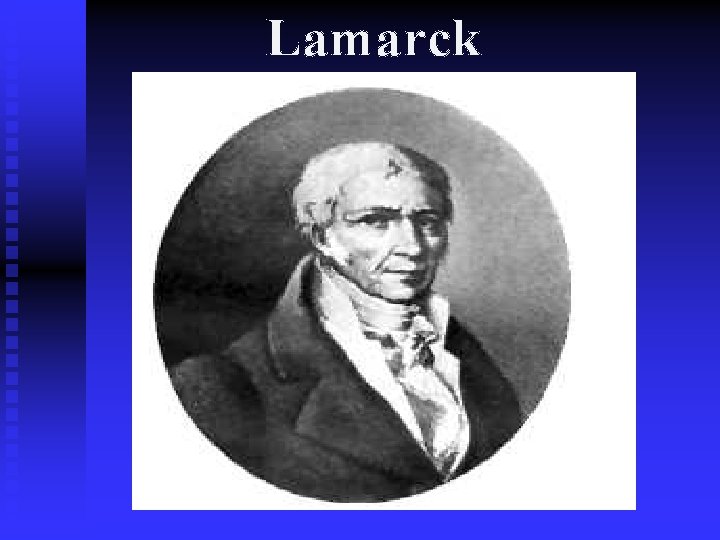
Lamarck
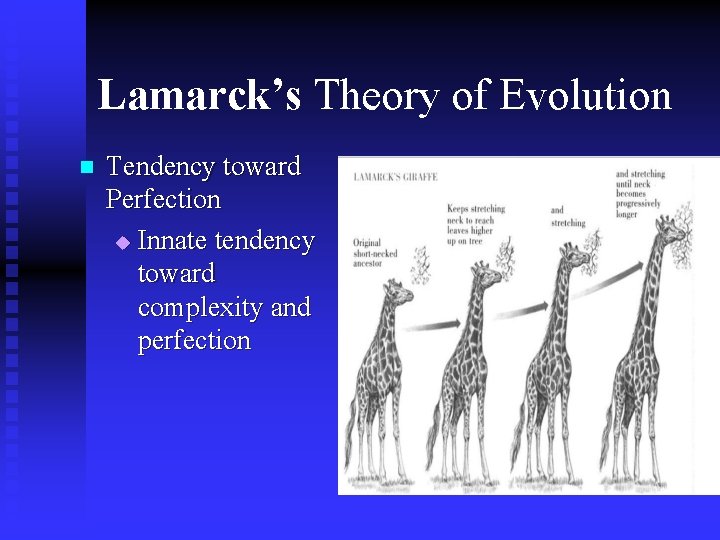
Lamarck’s Theory of Evolution n Tendency toward Perfection u Innate tendency toward complexity and perfection
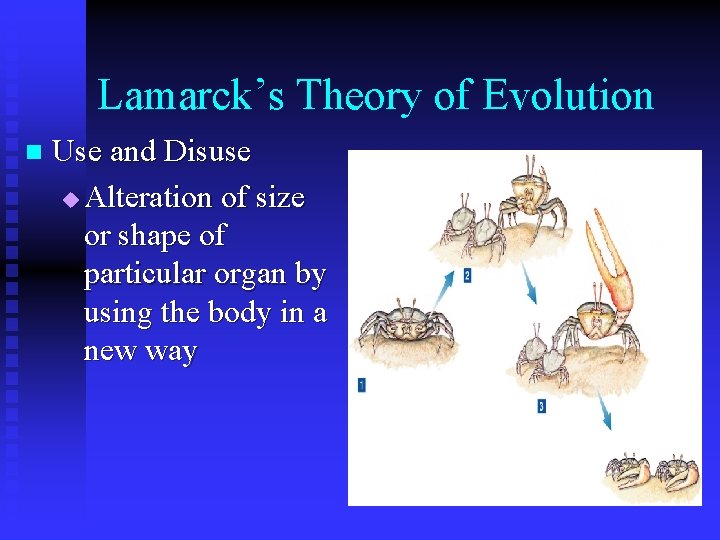
Lamarck’s Theory of Evolution n Use and Disuse u Alteration of size or shape of particular organ by using the body in a new way
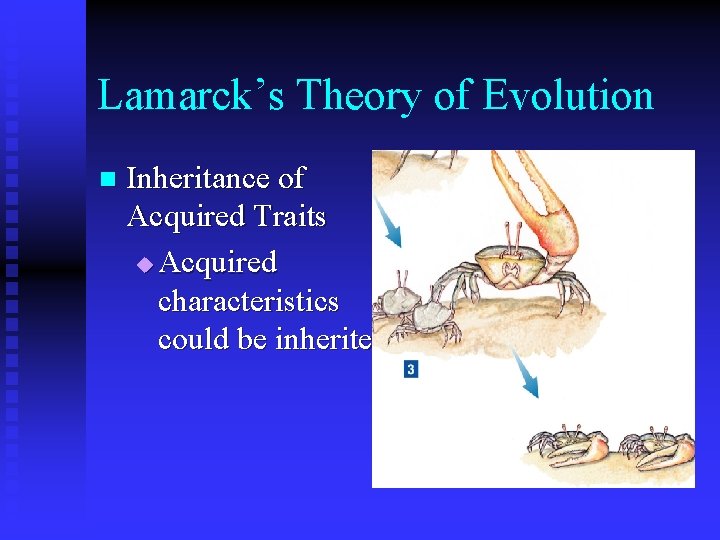
Lamarck’s Theory of Evolution n Inheritance of Acquired Traits u Acquired characteristics could be inherited
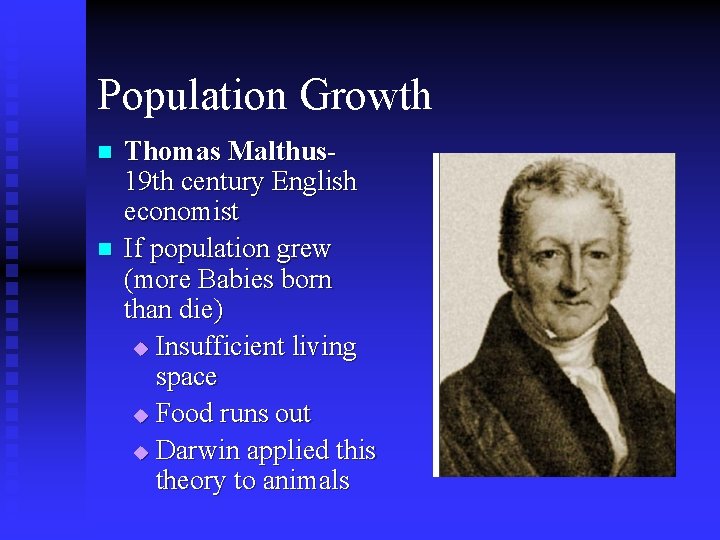
Population Growth n n Thomas Malthus 19 th century English economist If population grew (more Babies born than die) u Insufficient living space u Food runs out u Darwin applied this theory to animals
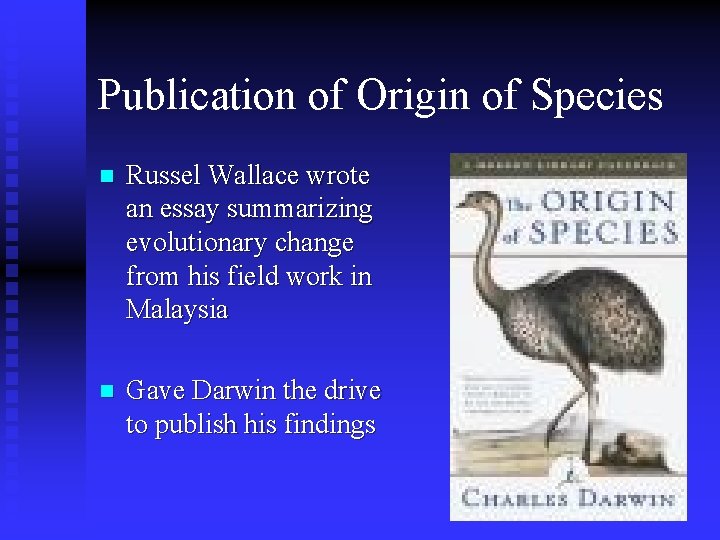
Publication of Origin of Species n Russel Wallace wrote an essay summarizing evolutionary change from his field work in Malaysia n Gave Darwin the drive to publish his findings
Artificial & Natural Selection n Natural variation--differences among individuals of a species n Artificial selection- nature provides the variation among different organisms, and humans select those variations they find useful.
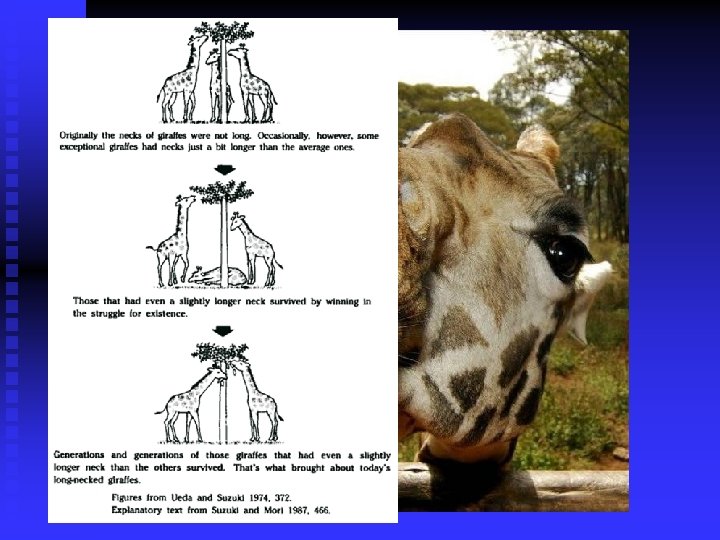
Evolution by Natural Selection n The Struggle for Existence-members of each species have to compete for food, shelter, other life necessities n Survival of the Fittest-Some individuals better suited for the environment
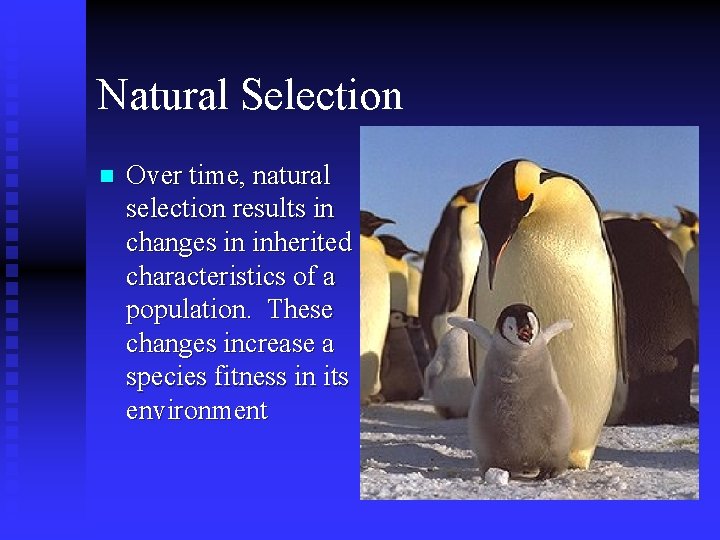
Natural Selection n Over time, natural selection results in changes in inherited characteristics of a population. These changes increase a species fitness in its environment
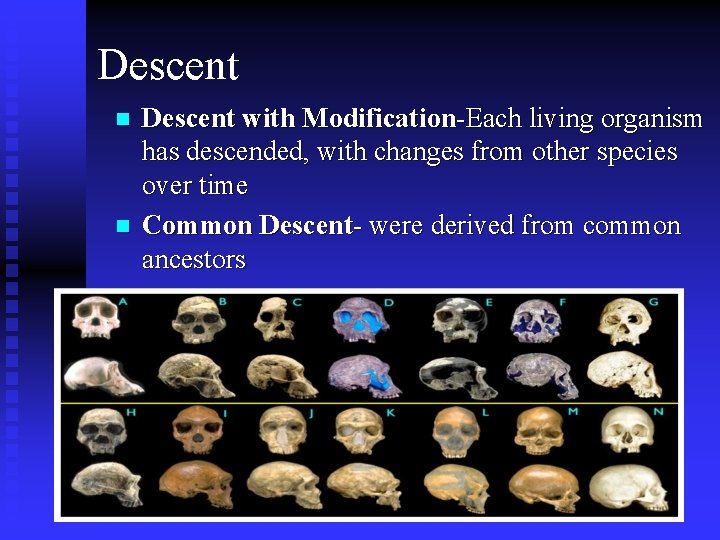
Descent n n Descent with Modification-Each living organism has descended, with changes from other species over time Common Descent- were derived from common ancestors
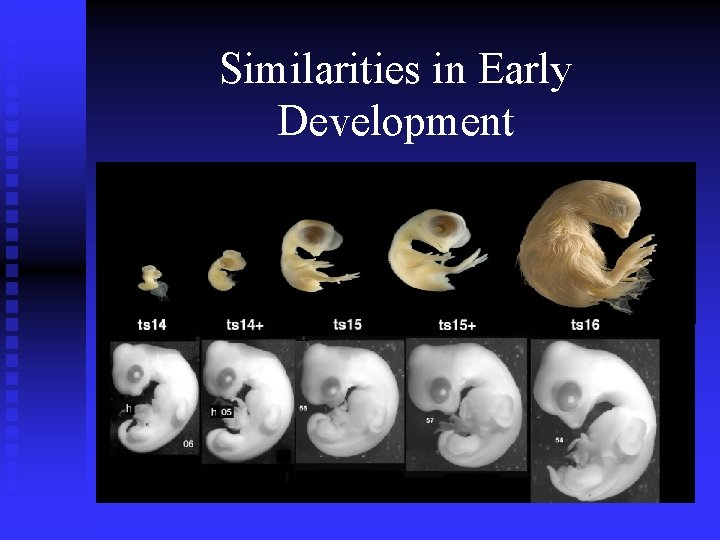
Evidence of Evolution n The Fossil Record n Geographic Distribution of Living Things n Homologous Body Structures n Similarities in Early Development
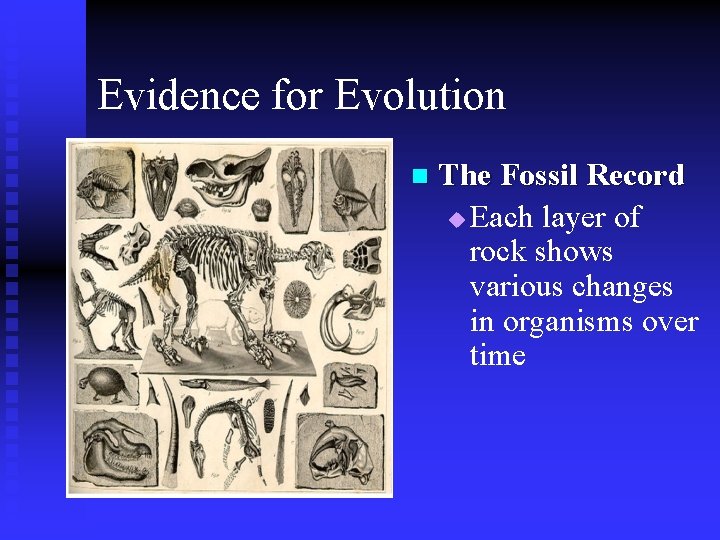
Evidence for Evolution n The Fossil Record u Each layer of rock shows various changes in organisms over time
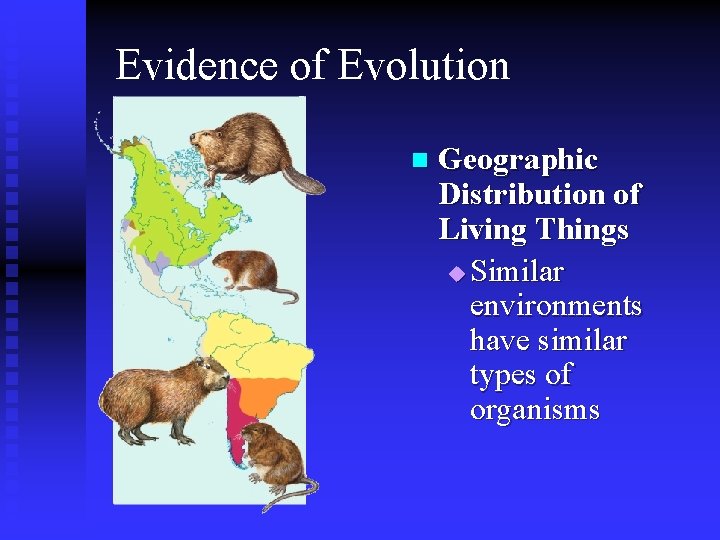
Evidence of Evolution n Geographic Distribution of Living Things u Similar environments have similar types of organisms
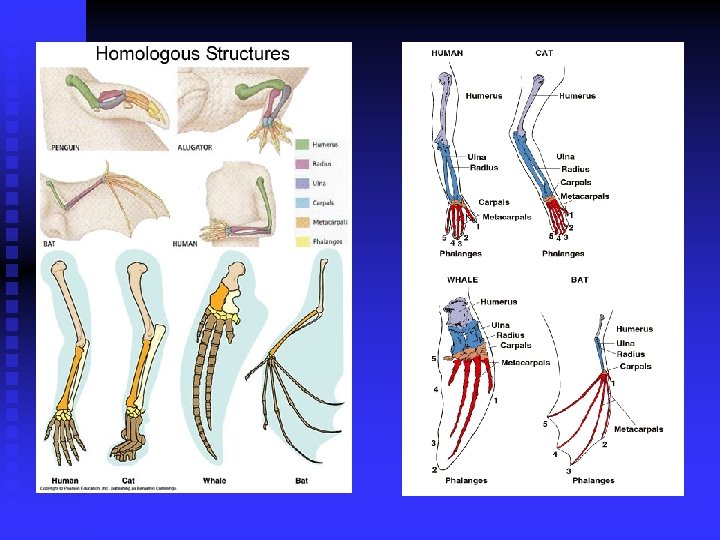
Evidence of Evolution n Homologous Structures u structures that have different mature forms in different organisms, but develop from the same embryonic tissue
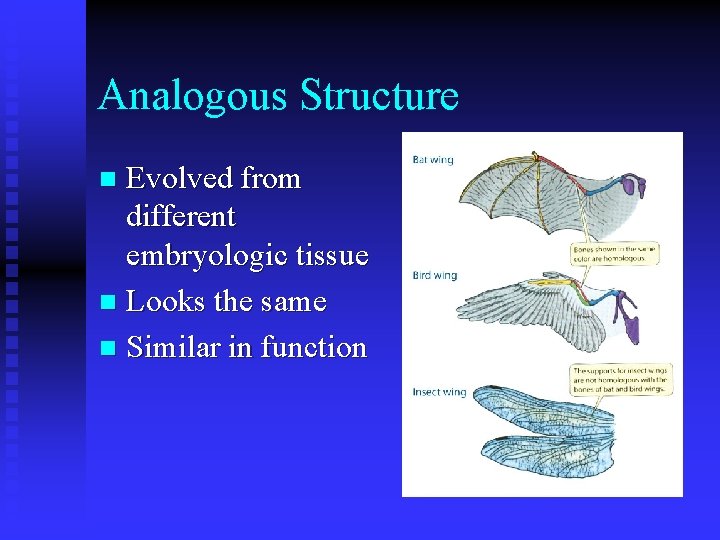
Analogous Structure Evolved from different embryologic tissue n Looks the same n Similar in function n
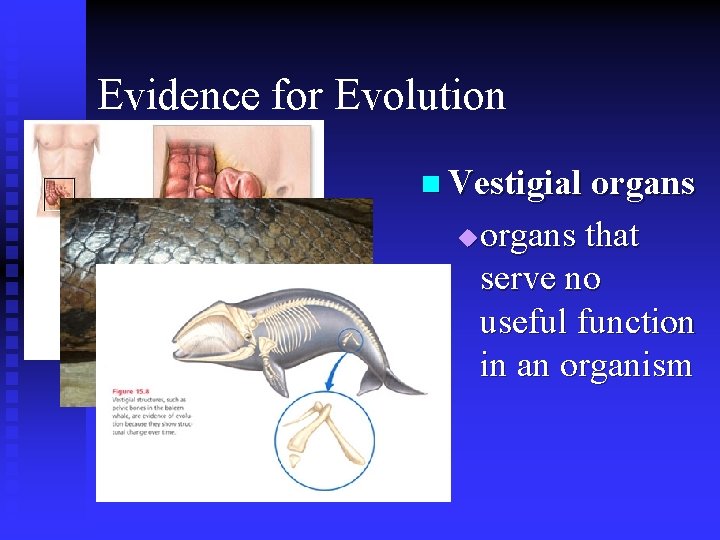
Evidence for Evolution n Vestigial organs that serve no useful function in an organism u
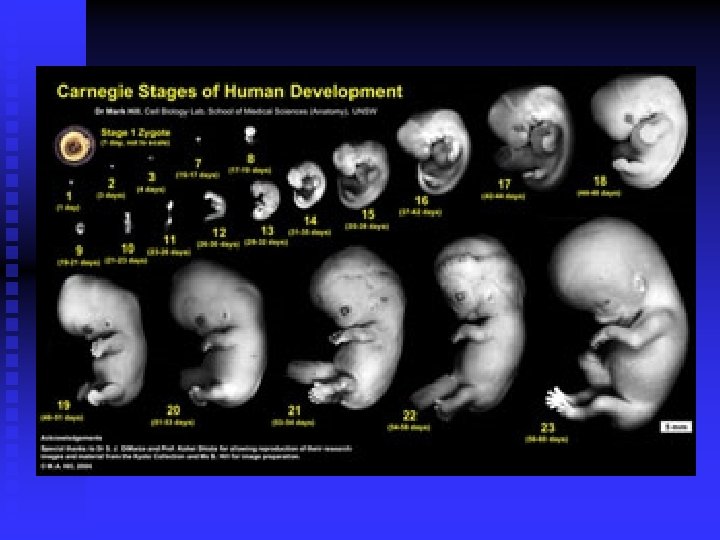
Similarities in Early Development
Summary of Darwin’s Theory n Individuals in nature differ from one another n Organisms in nature produce more offspring than can survive, and many of those who do not survive do not reproduce.
Summary of Darwin’s Theory n Because more organisms are produced than can survive, each species must struggle for resources n Each organism is unique, each has advantages and disadvantages in the struggle for existence
Summary of Darwin’s Theory n Individuals best suited for the environment survive and reproduce most successful n Species change over time
Summary of Darwin’s Theory n Species alive today descended with modification from species that lived in the past n All organisms on earth are united into a single family tree of life by common descent
Strengths and Weaknesses of Evolutionary Theory Scientific advances u Geology and physics u Confirmed and expanded n Change is continuous u How species arise? u Why species become extinct? u How did life begin? n
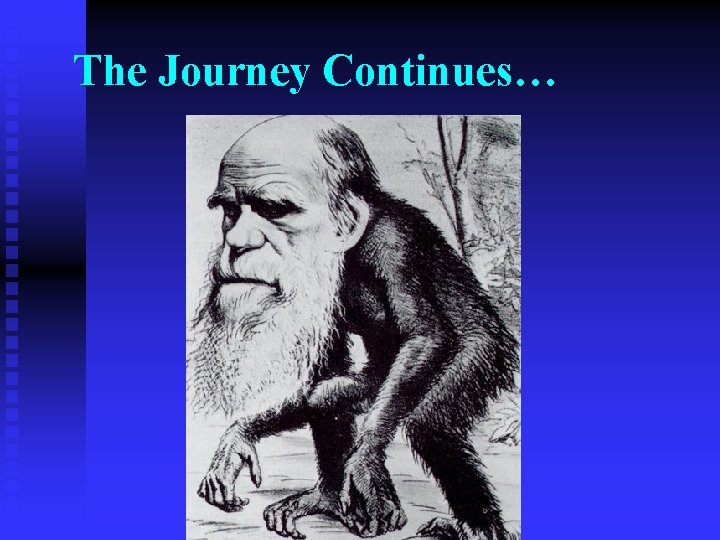
The Journey Continues…