
Darwins Theory of Evolution Charles Darwin Define evolution
- Slides: 42
Darwin’s Theory of Evolution
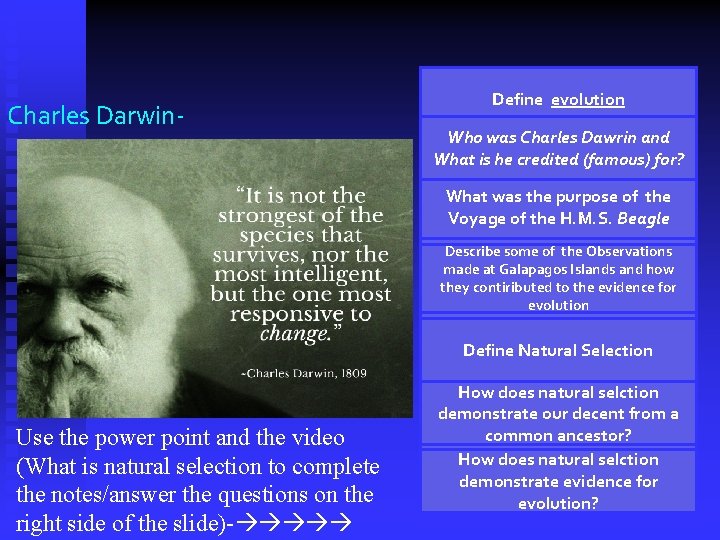
Charles Darwin- Define evolution Who was Charles Dawrin and What is he credited (famous) for? What was the purpose of the Voyage of the H. M. S. Beagle Describe some of the Observations made at Galapagos Islands and how The Or they contiributed to the evidence for evolution Define Natural Selection Use the power point and the video (What is natural selection to complete the notes/answer the questions on the right side of the slide)- How does natural selction demonstrate our decent from a common ancestor? How does natural selction demonstrate evidence for evolution?
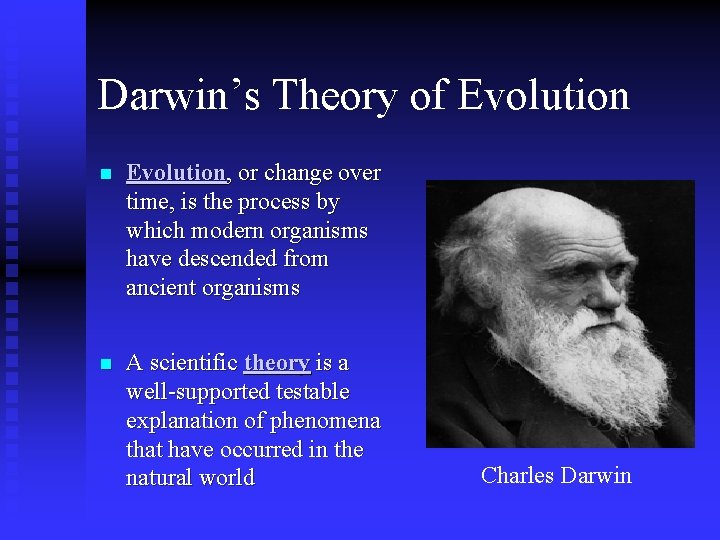
Darwin’s Theory of Evolution n Evolution, or change over time, is the process by which modern organisms have descended from ancient organisms n A scientific theory is a well-supported testable explanation of phenomena that have occurred in the natural world Charles Darwin
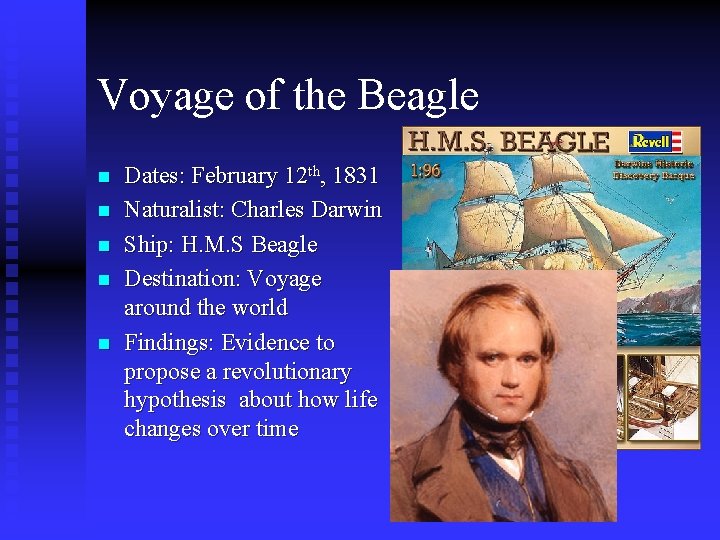
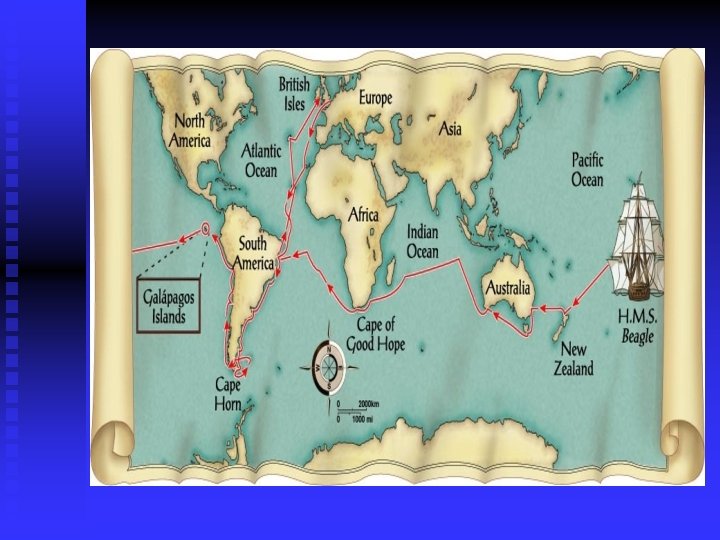
Voyage of the Beagle n n n Dates: February 12 th, 1831 Naturalist: Charles Darwin Ship: H. M. S Beagle Destination: Voyage around the world Findings: Evidence to propose a revolutionary hypothesis about how life changes over time
Patterns of Diversity n Darwin visited Argentina and Australia which had similar grassland ecosystems. those grasslands were inhabited by very different animals. u neither Argentina nor Australia was home to the sorts of animals that lived in European grasslands. He wondered why there were different types of animals in different areas of the world u n
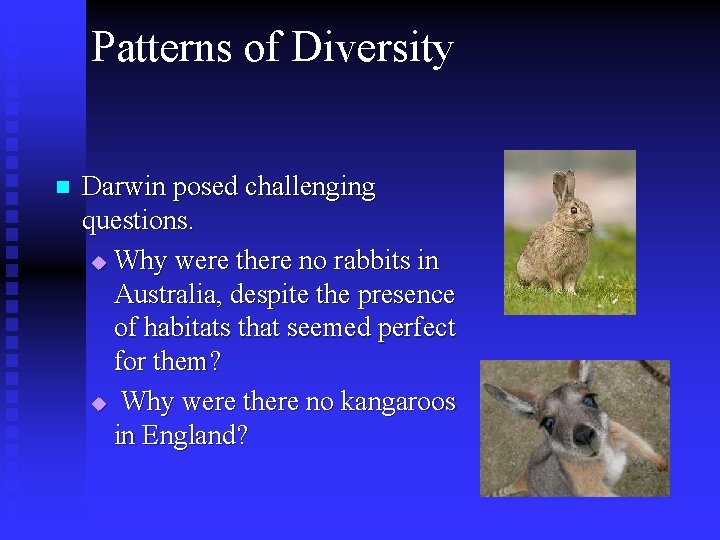
Patterns of Diversity n Darwin posed challenging questions. u Why were there no rabbits in Australia, despite the presence of habitats that seemed perfect for them? u Why were there no kangaroos in England?
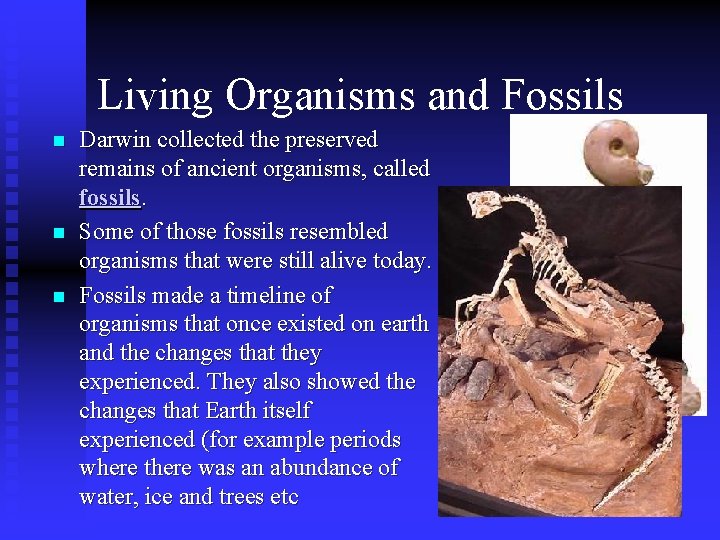
Living Organisms and Fossils n n n Darwin collected the preserved remains of ancient organisms, called fossils. Some of those fossils resembled organisms that were still alive today. Fossils made a timeline of organisms that once existed on earth and the changes that they experienced. They also showed the changes that Earth itself experienced (for example periods where there was an abundance of water, ice and trees etc
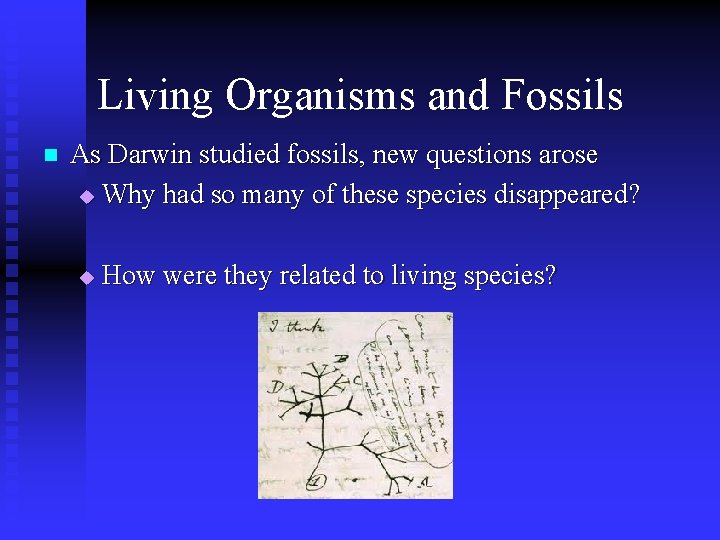
Living Organisms and Fossils n As Darwin studied fossils, new questions arose u Why had so many of these species disappeared? u How were they related to living species?
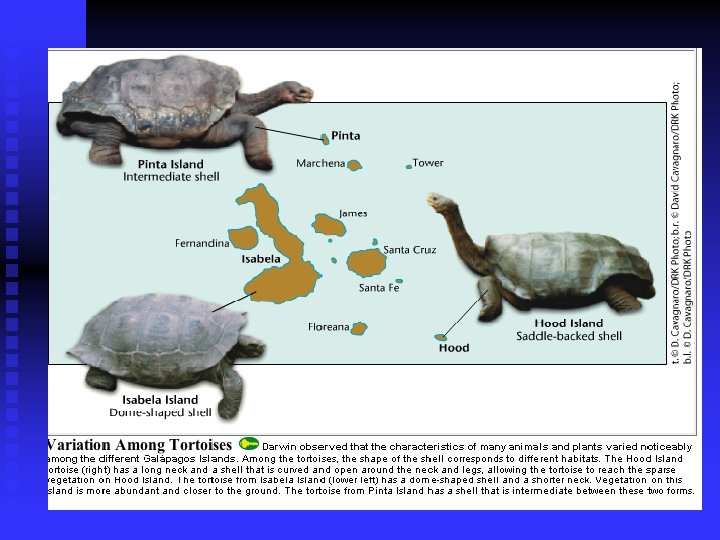
THE GALAPAGOS ISLAND n The Islands had very different environments: u u The smallest, lowest islands were hot, dry, and nearly barren-Hood Island-sparse vegetation The higher islands had greater rainfall and a different assortment of plants and animals-Isabela- Island had rich vegetation.
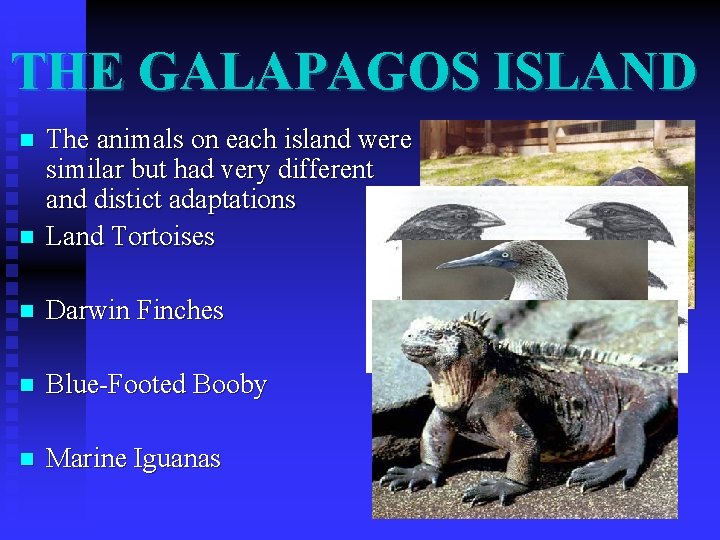
THE GALAPAGOS ISLAND n The animals on each island were similar but had very different and distict adaptations Land Tortoises n Darwin Finches n Blue-Footed Booby n Marine Iguanas n
THE GALAPAGOS ISLAND n Darwin was fascinated in particular by the land tortoises and marine iguanas in the Galápagos. n Giant tortoises varied in predictable ways from one island to another. n The shape of a tortoise's shell could be used to identify which island a particular tortoise inhabited.
The Journey Home n Darwin Observed that characteristics of many plants and animals vary greatly among the islands n Hypothesis: Separate species may have arose from an original ancestor
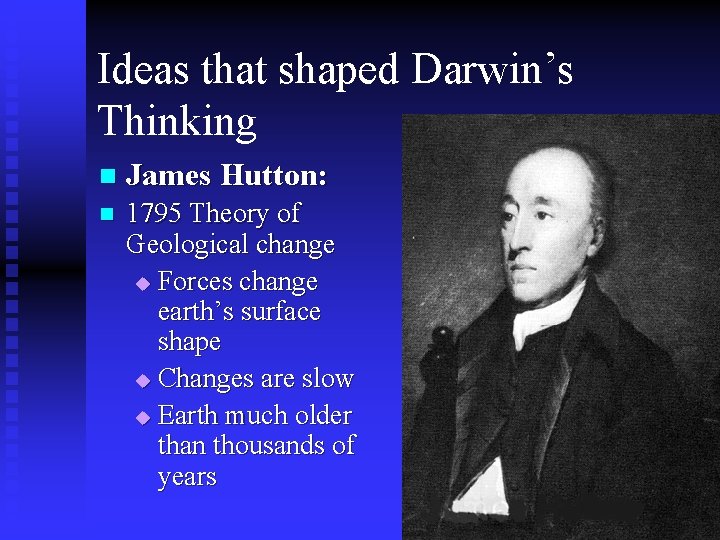
Ideas that shaped Darwin’s Thinking n James Hutton: n 1795 Theory of Geological change u Forces change earth’s surface shape u Changes are slow u Earth much older than thousands of years
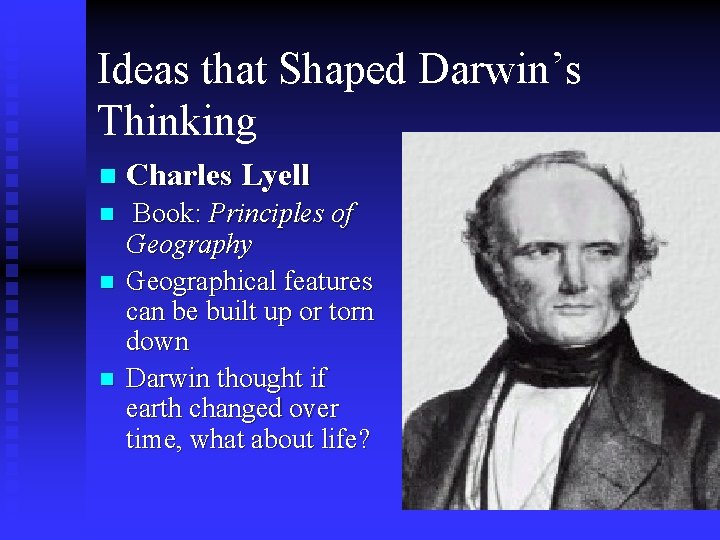
Ideas that Shaped Darwin’s Thinking n Charles Lyell n Book: Principles of Geography Geographical features can be built up or torn down Darwin thought if earth changed over time, what about life? n n
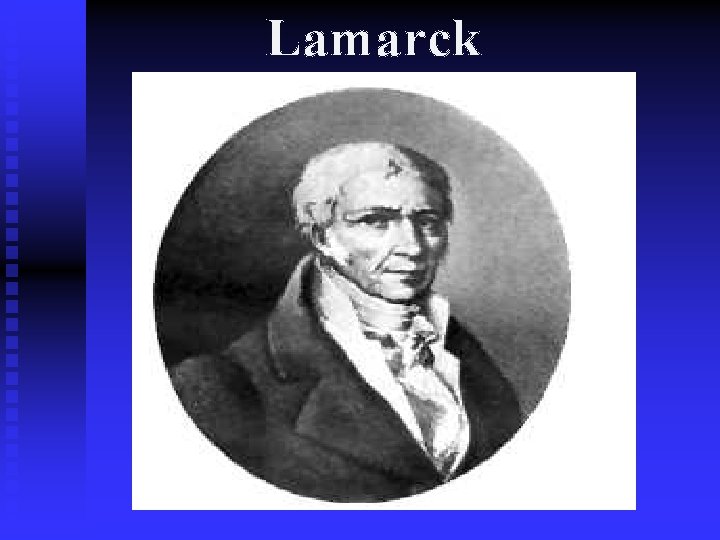
Lamarck
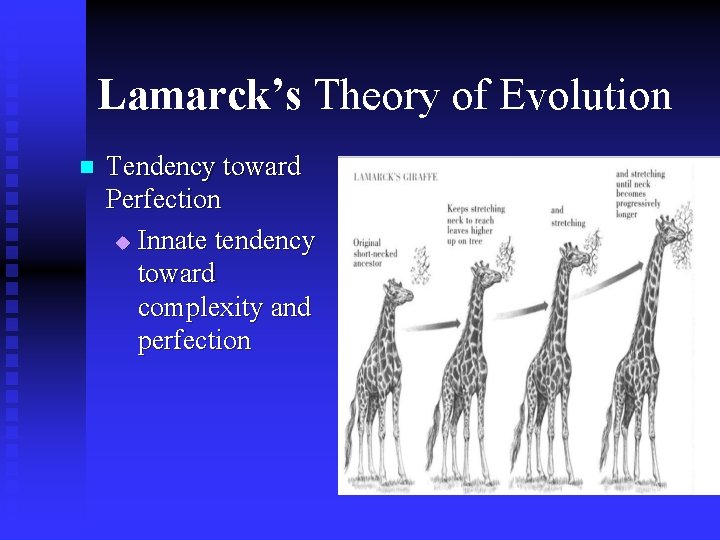
Lamarck’s Theory of Evolution n Tendency toward Perfection u Innate tendency toward complexity and perfection
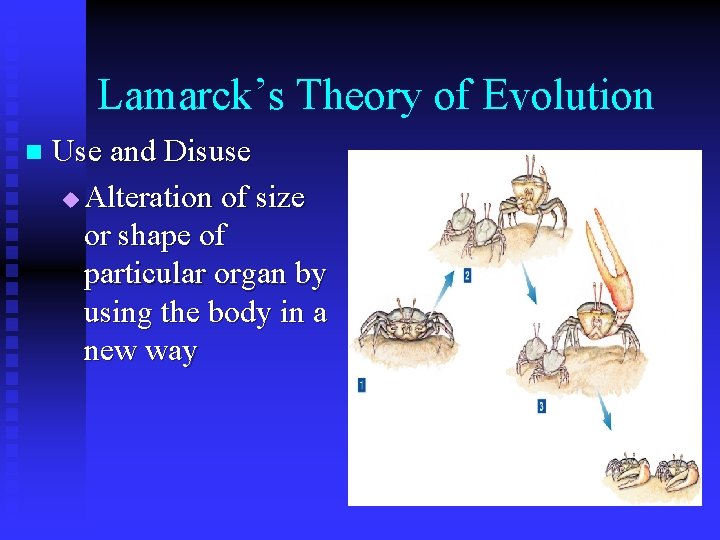
Lamarck’s Theory of Evolution n Use and Disuse u Alteration of size or shape of particular organ by using the body in a new way
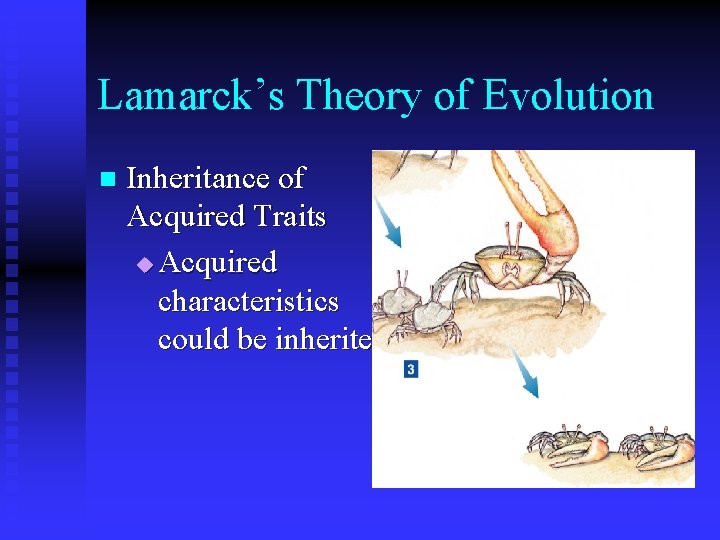
Lamarck’s Theory of Evolution n Inheritance of Acquired Traits u Acquired characteristics could be inherited
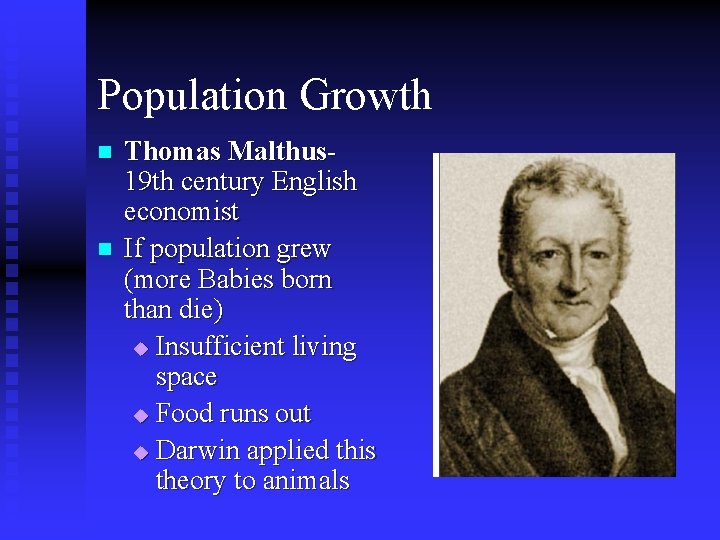
Population Growth n n Thomas Malthus 19 th century English economist If population grew (more Babies born than die) u Insufficient living space u Food runs out u Darwin applied this theory to animals
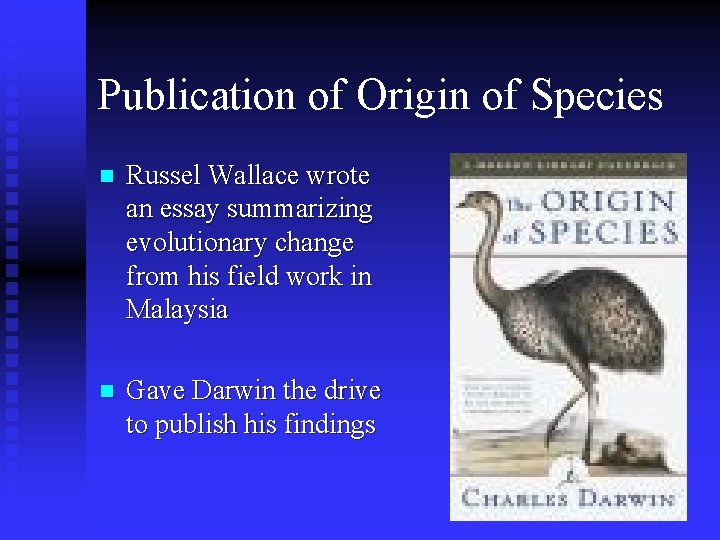
Publication of Origin of Species n Russel Wallace wrote an essay summarizing evolutionary change from his field work in Malaysia n Gave Darwin the drive to publish his findings
Artificial & Natural Selection n Natural variation--differences among individuals of a species n Artificial selection- nature provides the variation among different organisms, and humans select those variations they find useful.
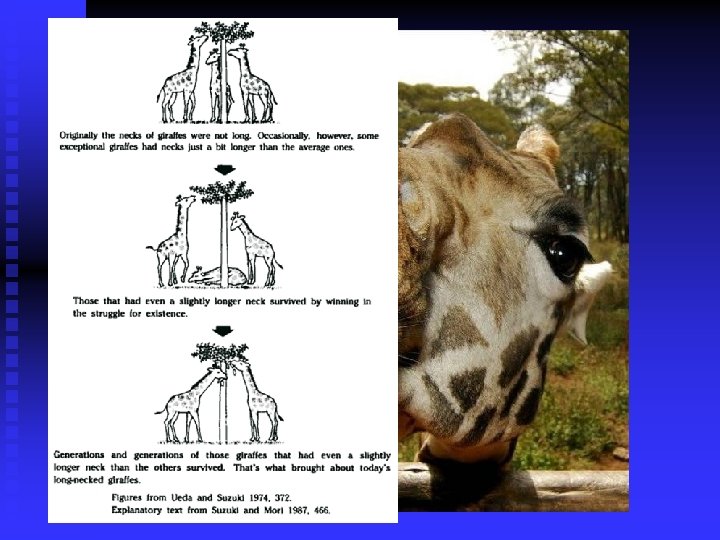
Evolution by Natural Selection n The Struggle for Existence-members of each species have to compete for food, shelter, other life necessities n Survival of the Fittest-Some individuals better suited for the environment
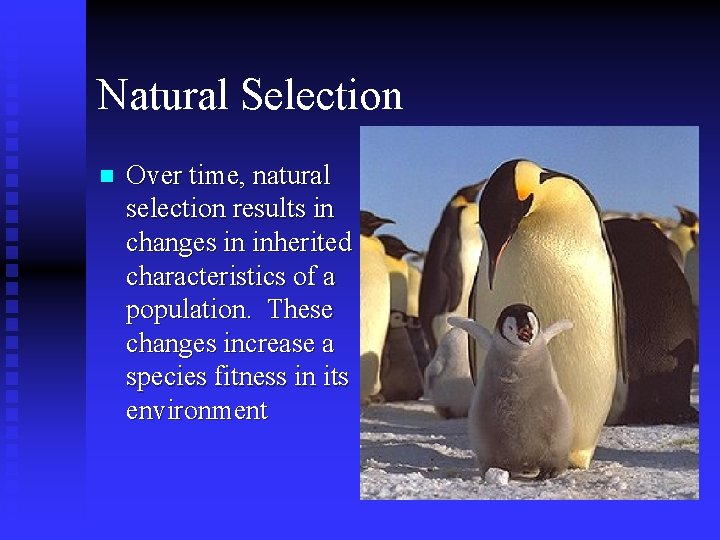
Natural Selection n Over time, natural selection results in changes in inherited characteristics of a population. These changes increase a species fitness in its environment
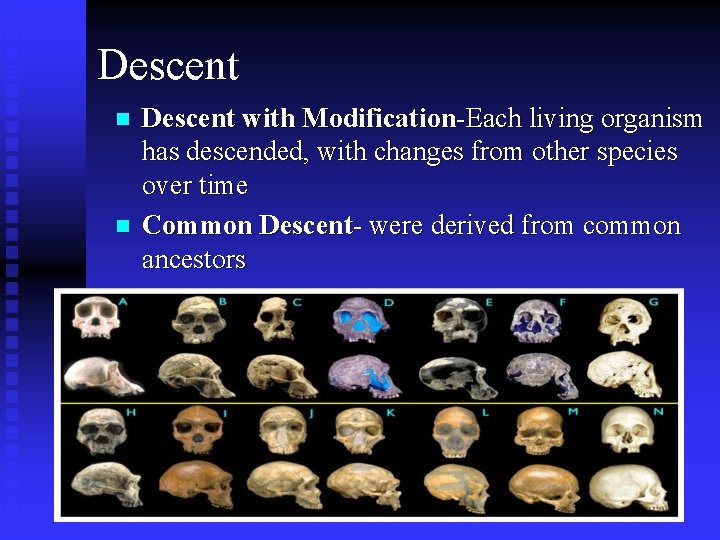
Descent n n Descent with Modification-Each living organism has descended, with changes from other species over time Common Descent- were derived from common ancestors
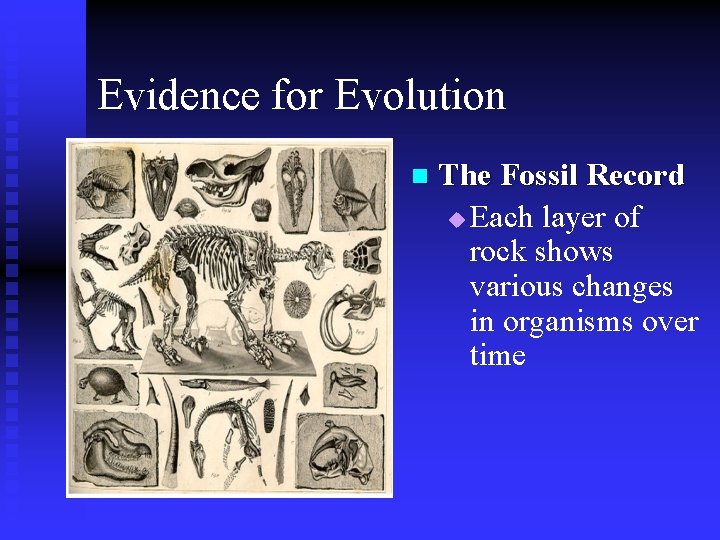
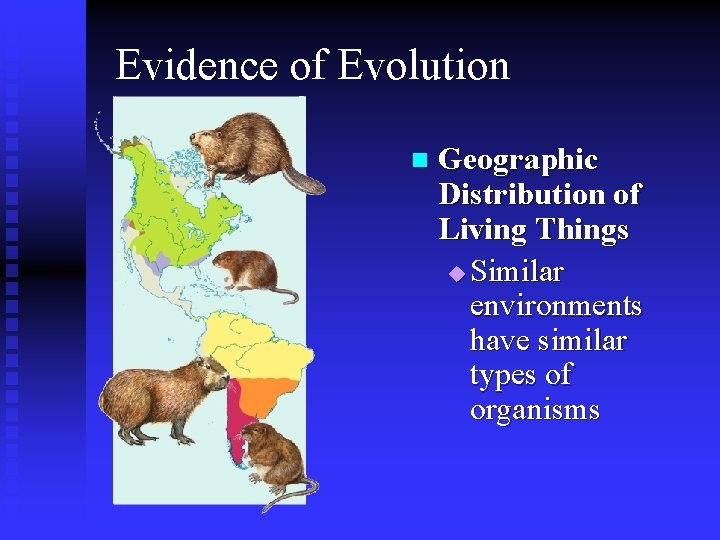
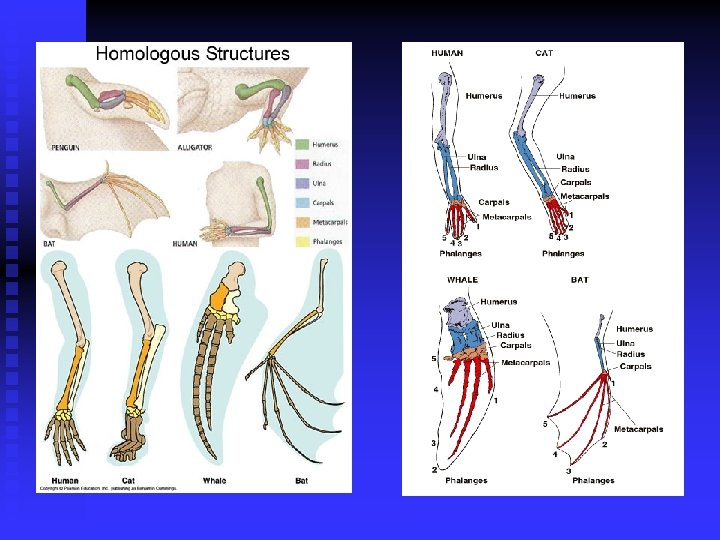
Evidence of Evolution n The Fossil Record n Geographic Distribution of Living Things n Homologous Body Structures n Similarities in Early Development
Evidence for Evolution n The Fossil Record u Each layer of rock shows various changes in organisms over time
Evidence of Evolution n Geographic Distribution of Living Things u Similar environments have similar types of organisms
Evidence of Evolution n Homologous Structures u structures that have different mature forms in different organisms, but develop from the same embryonic tissue
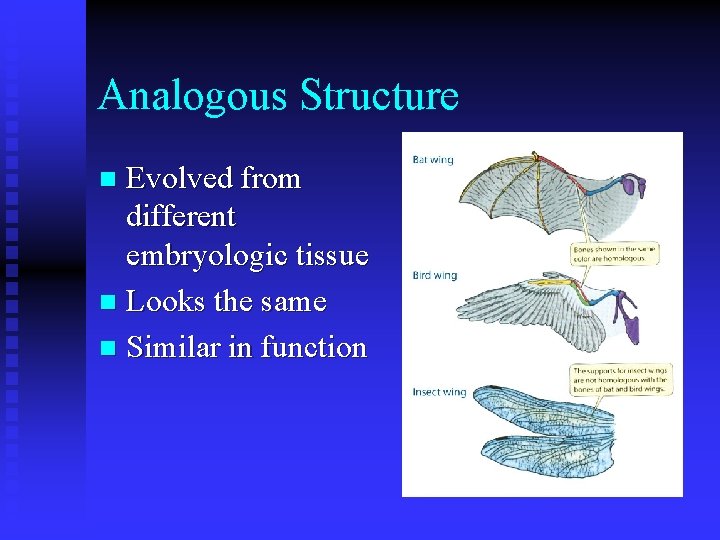
Analogous Structure Evolved from different embryologic tissue n Looks the same n Similar in function n
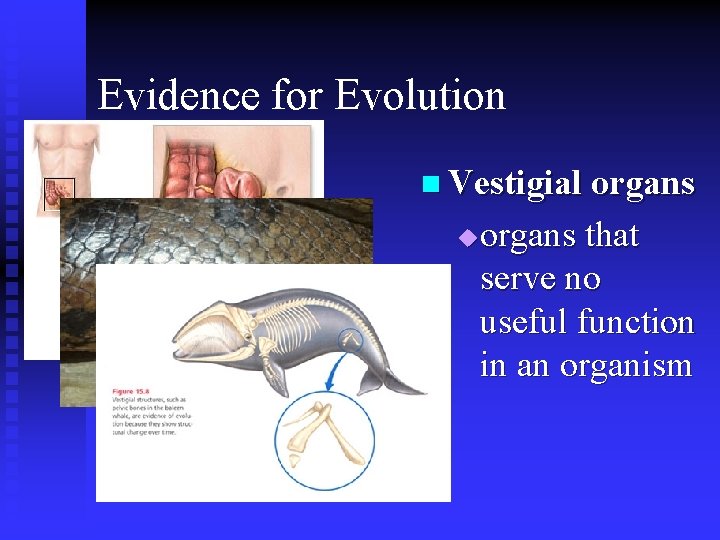
Evidence for Evolution n Vestigial organs that serve no useful function in an organism u
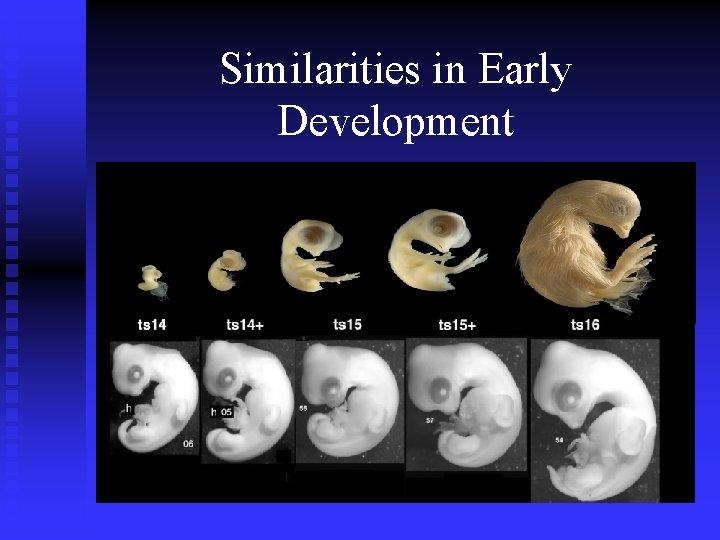
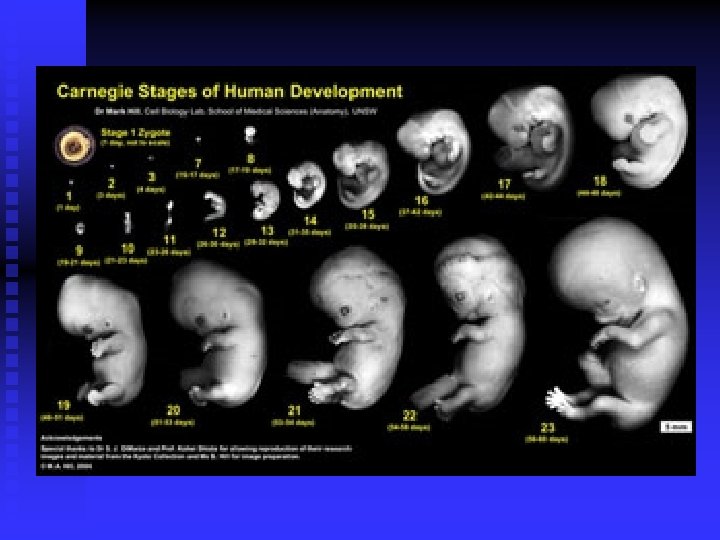
Similarities in Early Development
Summary of Darwin’s Theory n Individuals in nature differ from one another n Organisms in nature produce more offspring than can survive, and many of those who do not survive do not reproduce.
Summary of Darwin’s Theory n Because more organisms are produced than can survive, each species must struggle for resources n Each organism is unique, each has advantages and disadvantages in the struggle for existence
Summary of Darwin’s Theory n Individuals best suited for the environment survive and reproduce most successful n Species change over time
Summary of Darwin’s Theory n Species alive today descended with modification from species that lived in the past n All organisms on earth are united into a single family tree of life by common descent
Strengths and Areas of Growth for Evolutionary Theory Scientific advances u Geology and physics u Confirmed and expanded n Change is continuous u How species arise? u Why species become extinct? u How did life begin? n
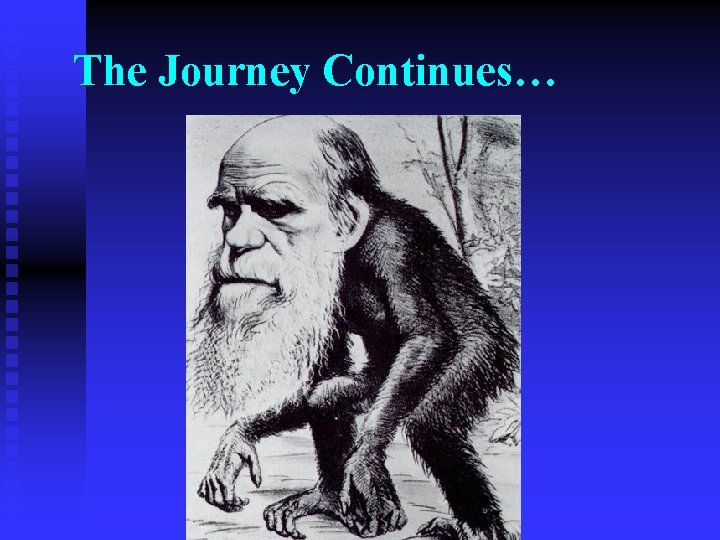
The Journey Continues…