
Darwins Theory of Evolution Chapter 16 Section 16
- Slides: 24
Darwin’s Theory of Evolution Chapter 16
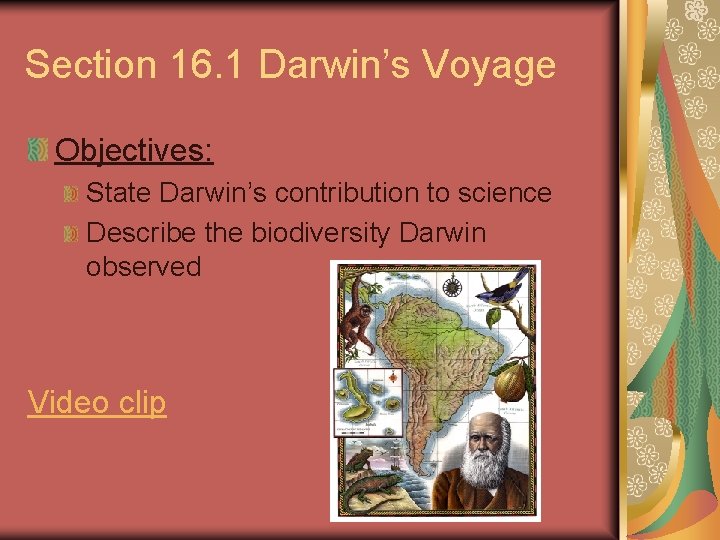
Section 16. 1 Darwin’s Voyage Objectives: State Darwin’s contribution to science Describe the biodiversity Darwin observed Video clip
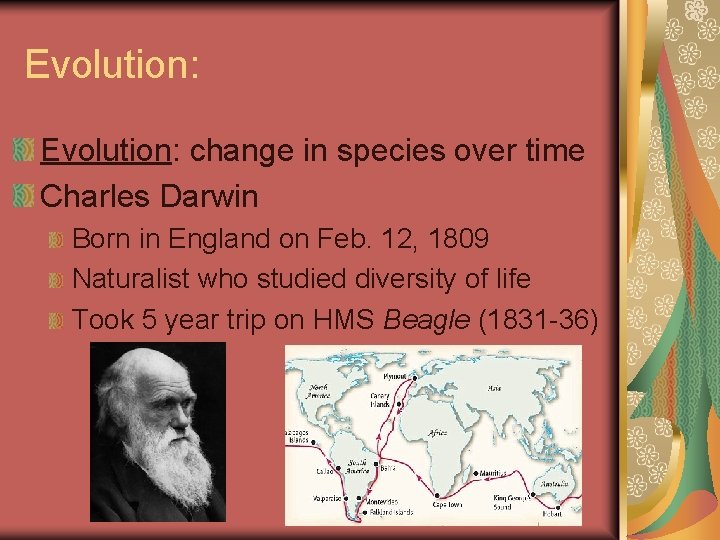
Evolution: change in species over time Charles Darwin Born in England on Feb. 12, 1809 Naturalist who studied diversity of life Took 5 year trip on HMS Beagle (1831 -36)
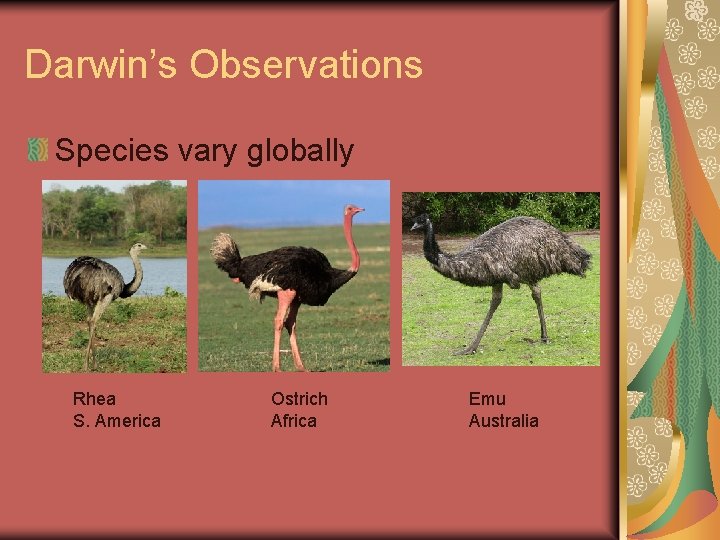
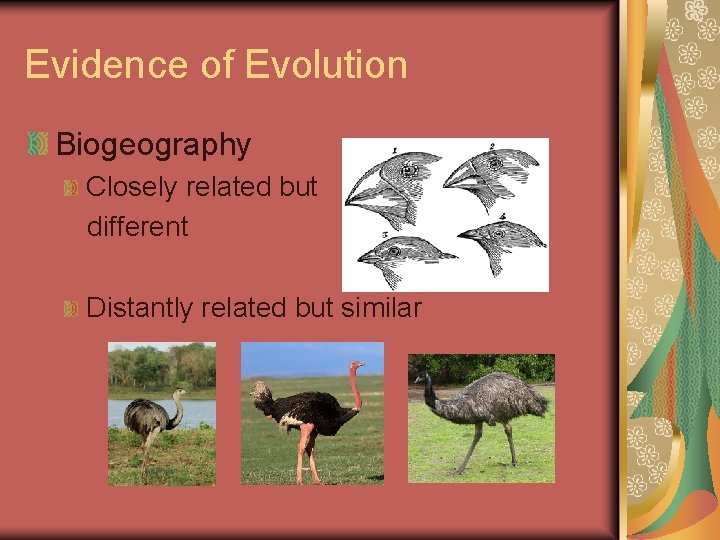
Darwin’s Observations Species vary globally Rhea S. America Ostrich Africa Emu Australia
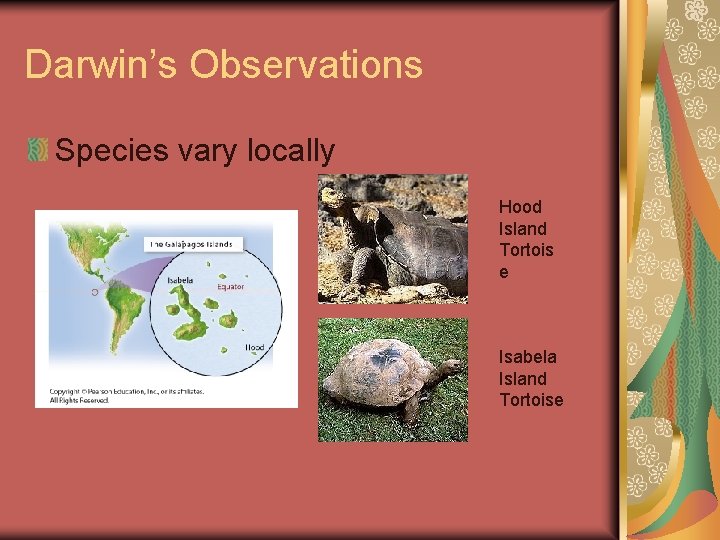
Darwin’s Observations Species vary locally Hood Island Tortois e Isabela Island Tortoise
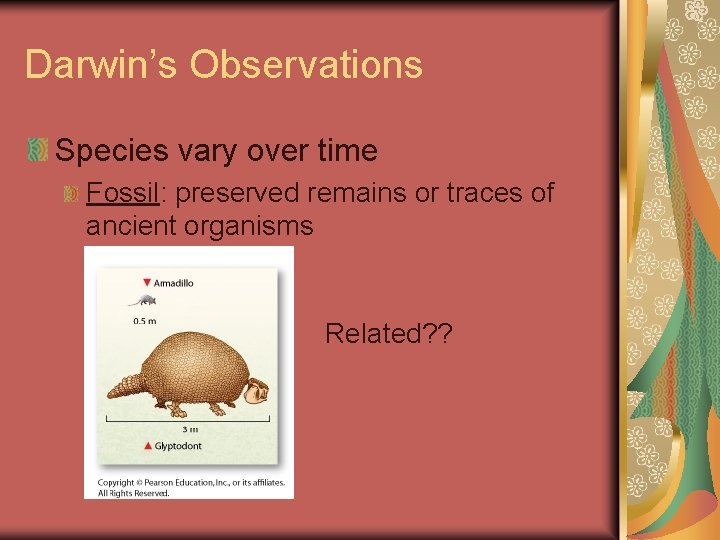
Darwin’s Observations Species vary over time Fossil: preserved remains or traces of ancient organisms Related? ?
Check-in What is evolution? Change in species over time Contrast the pattern Darwin observed among the large, flightless birds and the pattern he observed among the tortoises. Similar environments seem to result in similarities among organisms. Different environments result in differences among organisms.
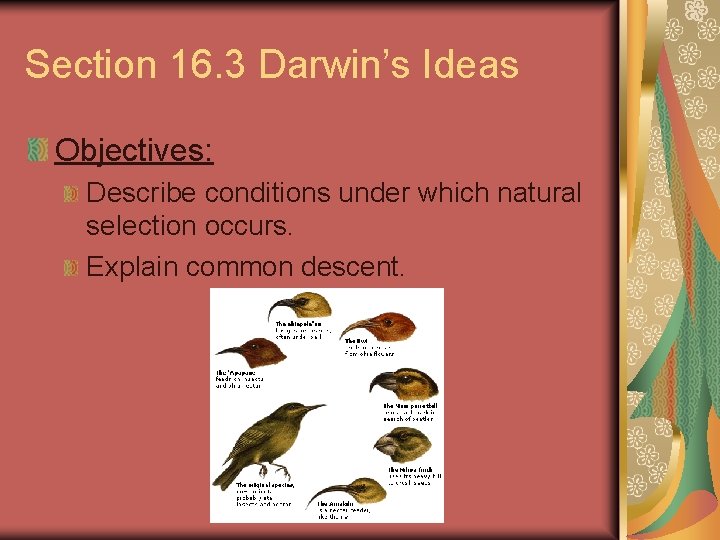
Section 16. 3 Darwin’s Ideas Objectives: Describe conditions under which natural selection occurs. Explain common descent.
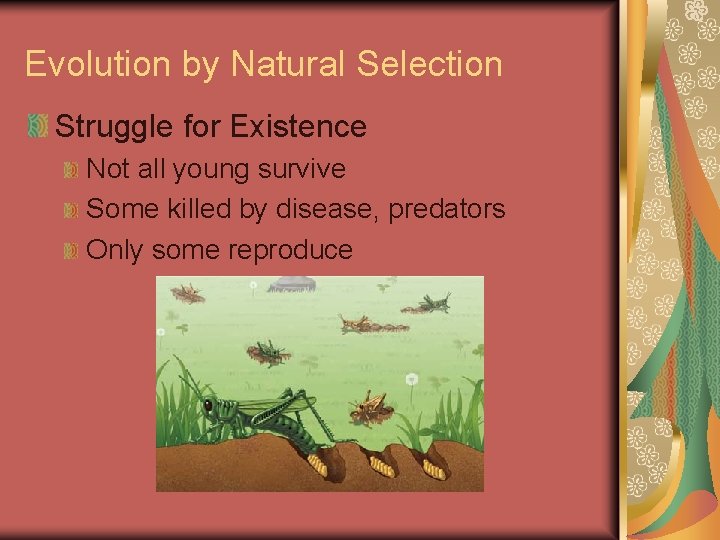
Evolution by Natural Selection Struggle for Existence Not all young survive Some killed by disease, predators Only some reproduce
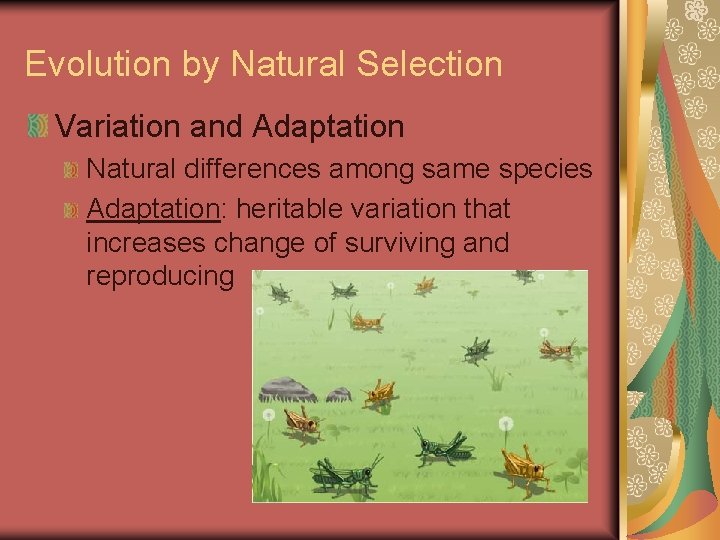
Evolution by Natural Selection Variation and Adaptation Natural differences among same species Adaptation: heritable variation that increases change of surviving and reproducing
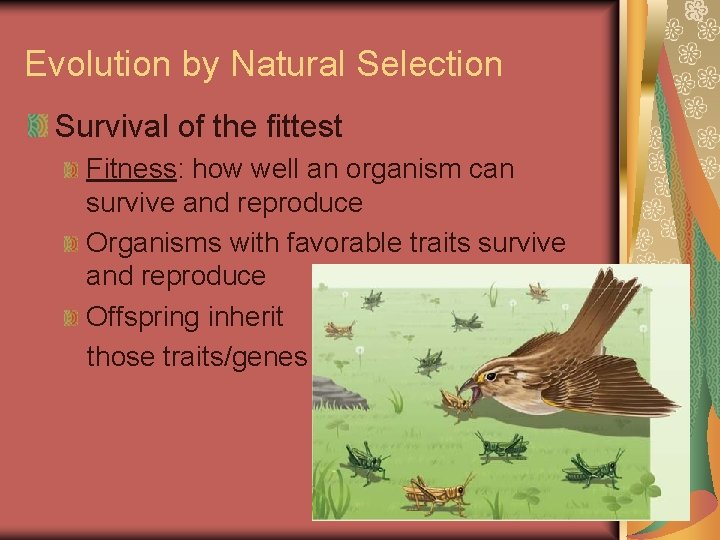
Evolution by Natural Selection Survival of the fittest Fitness: how well an organism can survive and reproduce Organisms with favorable traits survive and reproduce Offspring inherit those traits/genes
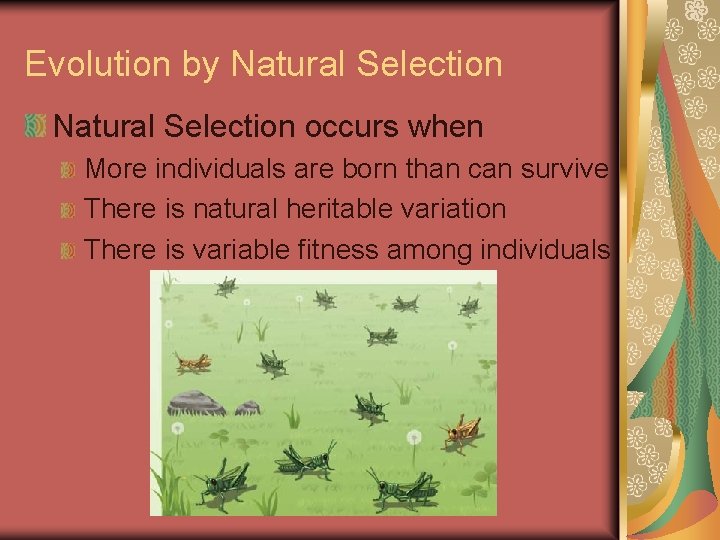
Evolution by Natural Selection occurs when More individuals are born than can survive There is natural heritable variation There is variable fitness among individuals
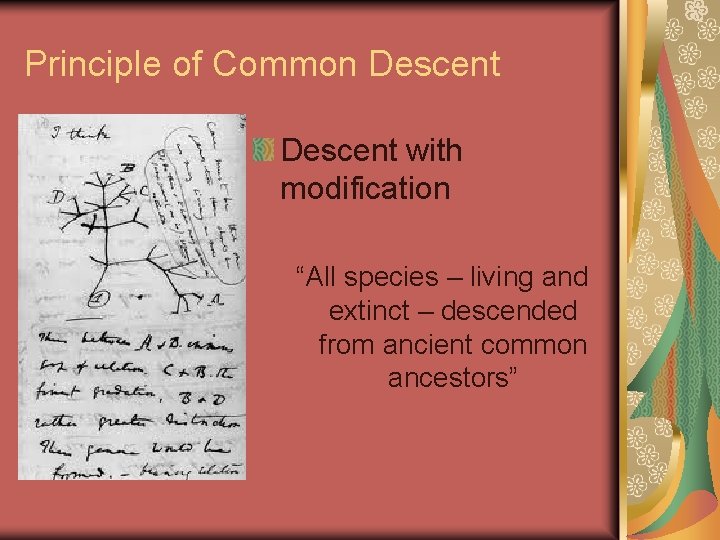
Principle of Common Descent with modification “All species – living and extinct – descended from ancient common ancestors”
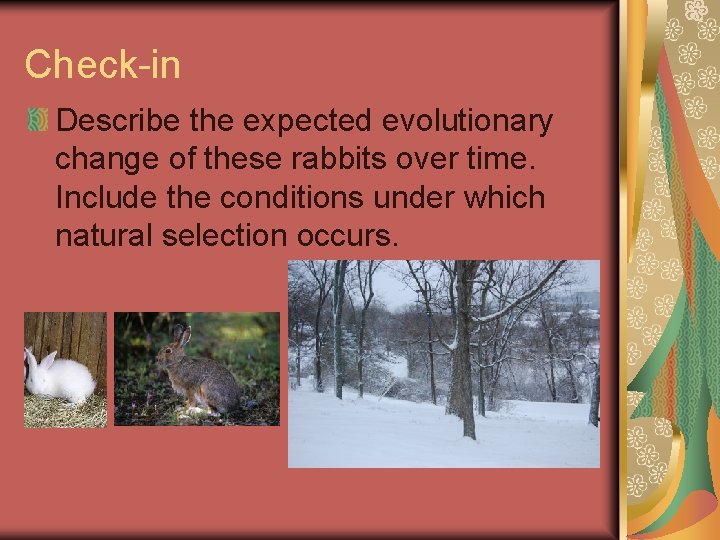
Check-in Describe the expected evolutionary change of these rabbits over time. Include the conditions under which natural selection occurs.
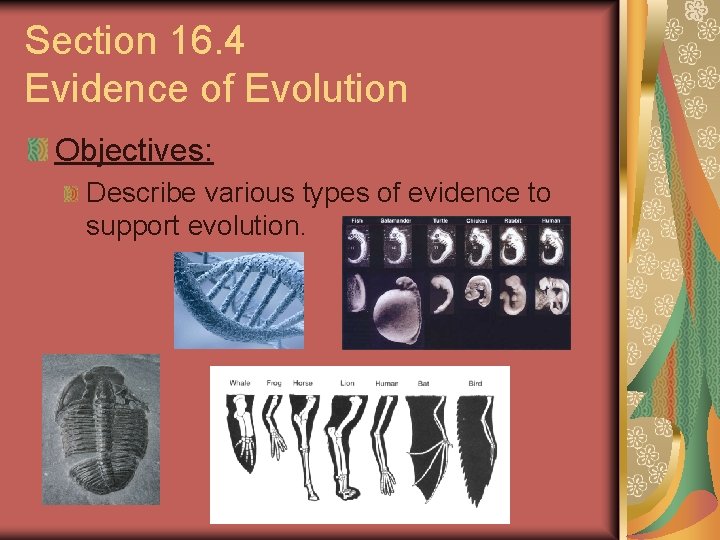
Section 16. 4 Evidence of Evolution Objectives: Describe various types of evidence to support evolution.
Evidence of Evolution Biogeography Closely related but different Distantly related but similar
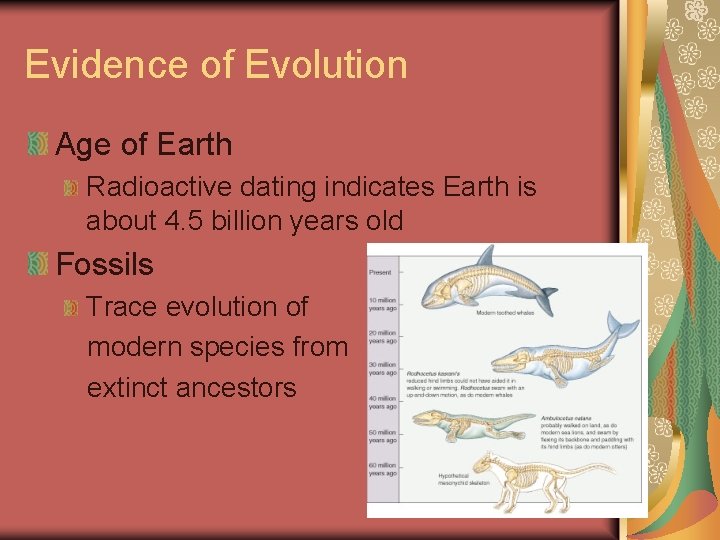
Evidence of Evolution Age of Earth Radioactive dating indicates Earth is about 4. 5 billion years old Fossils Trace evolution of modern species from extinct ancestors
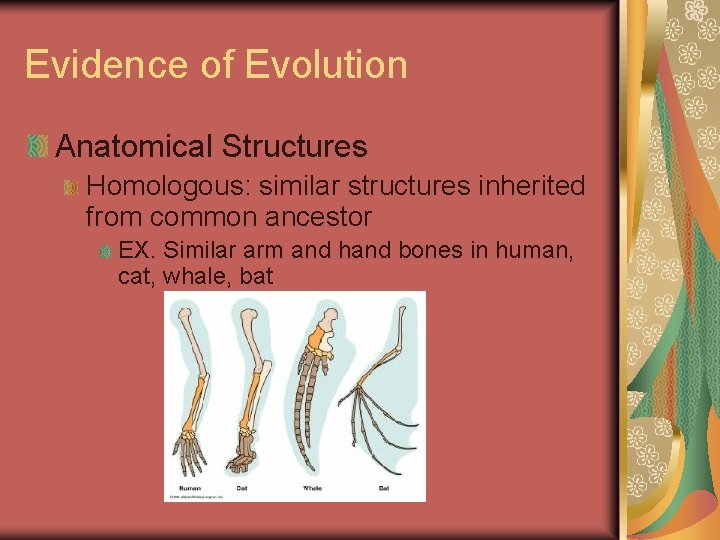
Evidence of Evolution Anatomical Structures Homologous: similar structures inherited from common ancestor EX. Similar arm and hand bones in human, cat, whale, bat
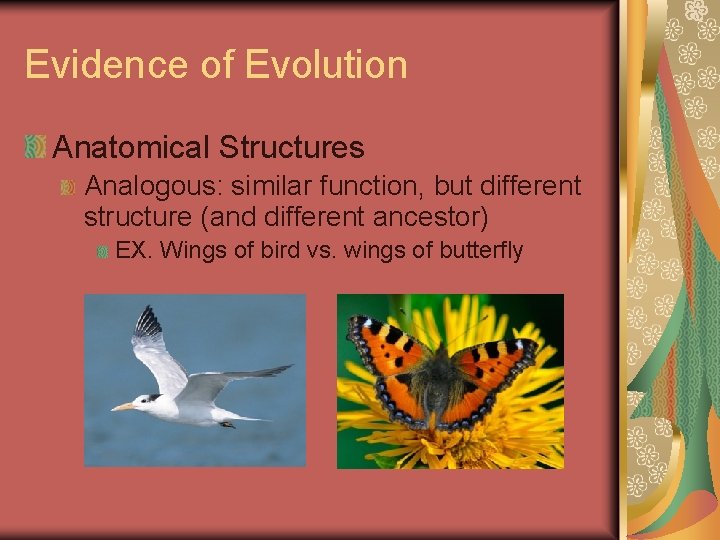
Evidence of Evolution Anatomical Structures Analogous: similar function, but different structure (and different ancestor) EX. Wings of bird vs. wings of butterfly
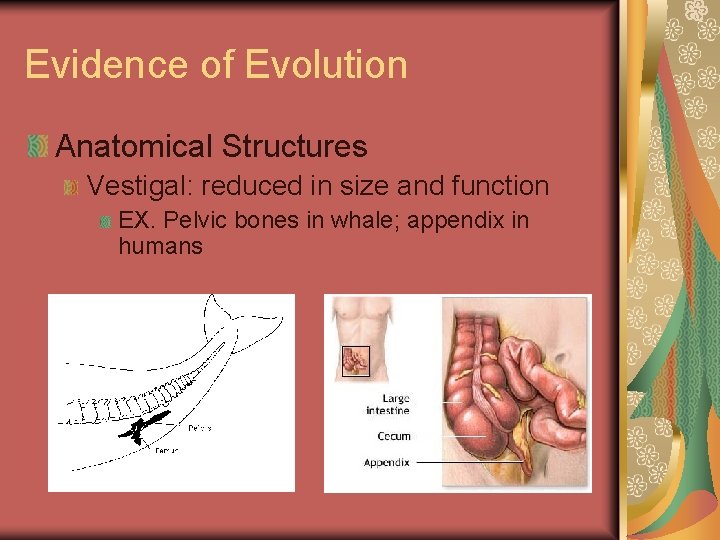
Evidence of Evolution Anatomical Structures Vestigal: reduced in size and function EX. Pelvic bones in whale; appendix in humans
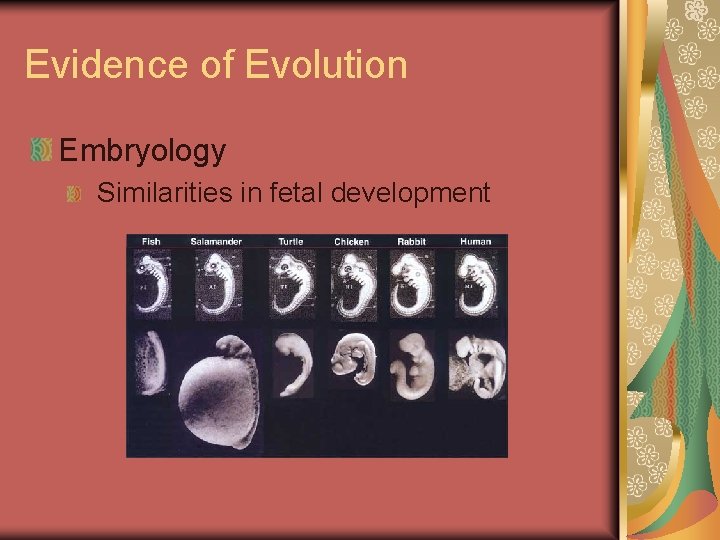
Evidence of Evolution Embryology Similarities in fetal development
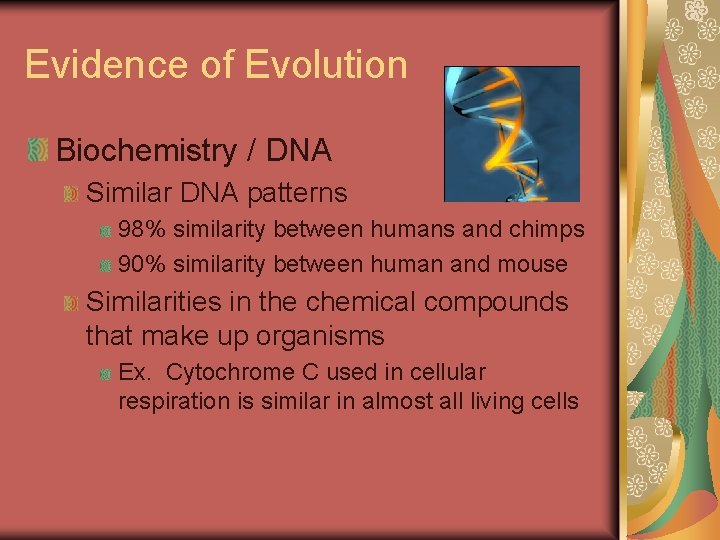
Evidence of Evolution Biochemistry / DNA Similar DNA patterns 98% similarity between humans and chimps 90% similarity between human and mouse Similarities in the chemical compounds that make up organisms Ex. Cytochrome C used in cellular respiration is similar in almost all living cells
Check-in List some things that provide evidence to support theory of evolution. Biogeography, age of Earth, fossils, anatomical structures, embryology, biochemistry/DNA Give an example of biogeography in which species are closely related but different. Finches, tortoises
Check-in What type of structure is each of the following an example of: Wings of bird and wings of bee Analogous structure Human appendix Vestigal structure Wing of chicken and foreleg of alligator Homologous structure