
Darwin and the Theory of EvolutionChanges over Time
- Slides: 49
Darwin and the Theory of Evolution-Changes over Time
Evolution What’s the Standard? S 7 L 5. Students will examine the evolution of living organisms through inherited characteristics that promote survival of organisms and the survival of successive generations of their offspring. a. Explain that physical characteristics of organisms have changed over successive generations (e. g. Darwin’s finches and peppered moths of Manchester).
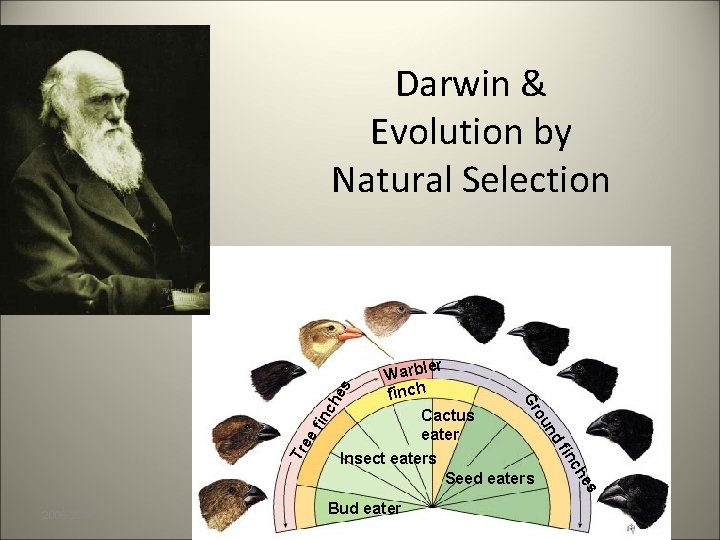
es Tr ee fin c Bud eater ch fin Insect eaters Seed eaters 2006 -2007 nd ou er Warbl finch Cactus eater Gr he s Darwin & Evolution by Natural Selection
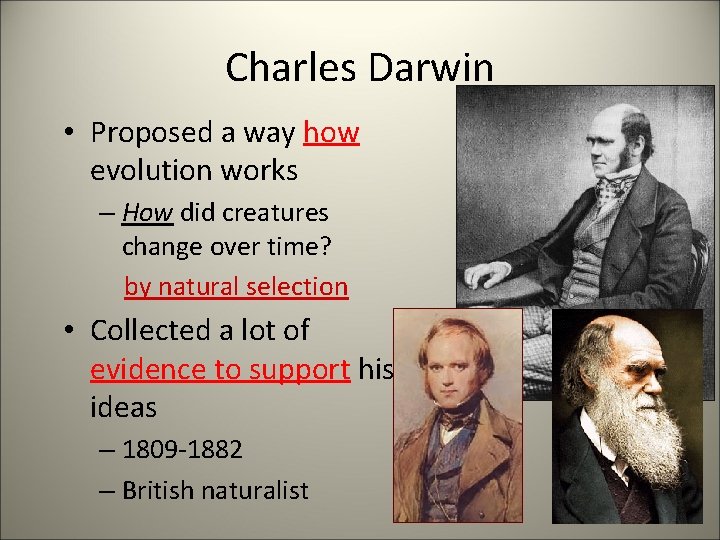
Charles Darwin • Proposed a way how evolution works – How did creatures change over time? by natural selection • Collected a lot of evidence to support his ideas – 1809 -1882 – British naturalist
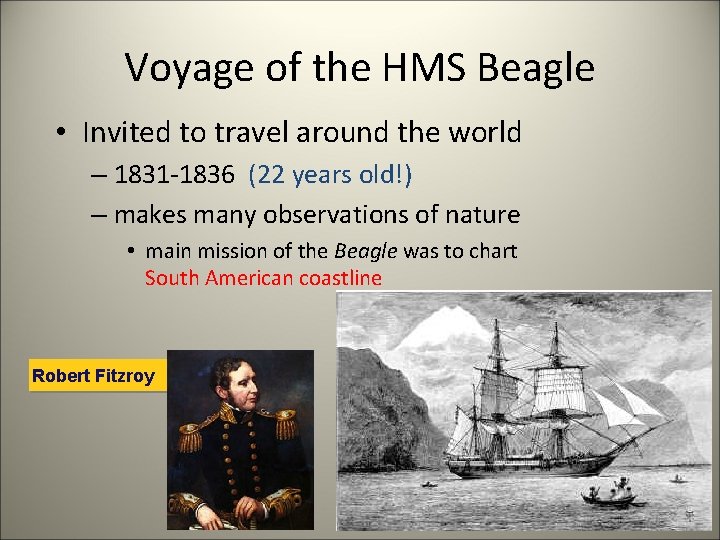
Voyage of the HMS Beagle • Invited to travel around the world – 1831 -1836 (22 years old!) – makes many observations of nature • main mission of the Beagle was to chart South American coastline Robert Fitzroy
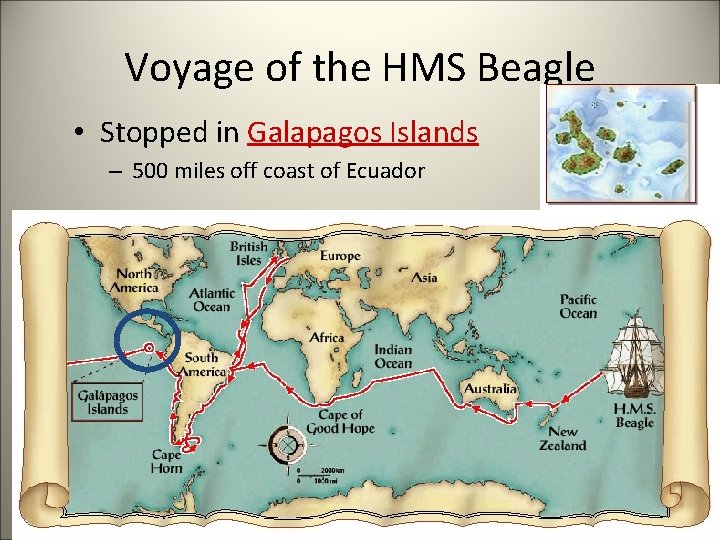
Voyage of the HMS Beagle • Stopped in Galapagos Islands – 500 miles off coast of Ecuador
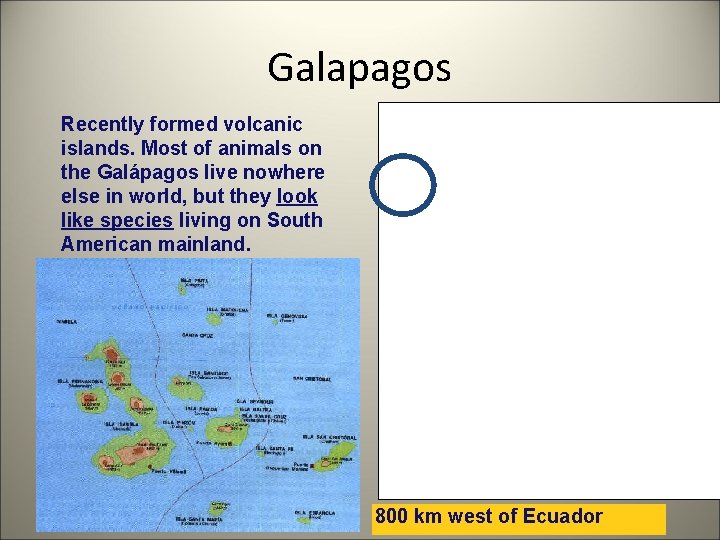
Galapagos Recently formed volcanic islands. Most of animals on the Galápagos live nowhere else in world, but they look like species living on South American mainland. 800 km west of Ecuador
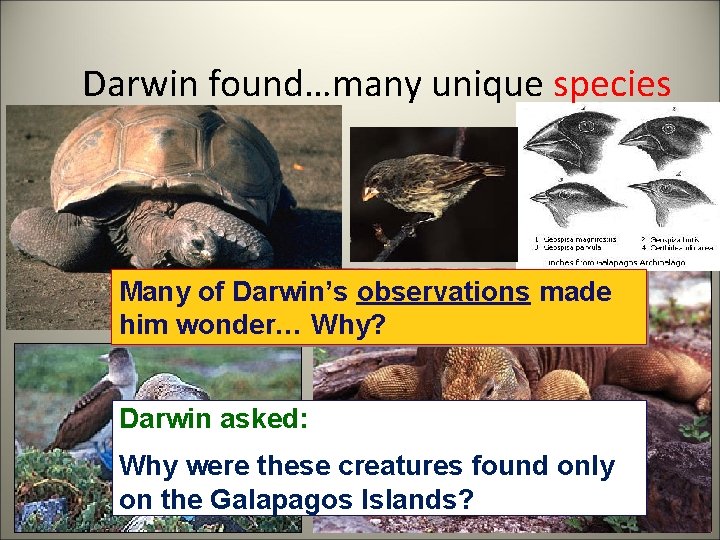
Darwin found…many unique species Many of Darwin’s observations made him wonder… Why? Darwin asked: Why were these creatures found only on the Galapagos Islands?
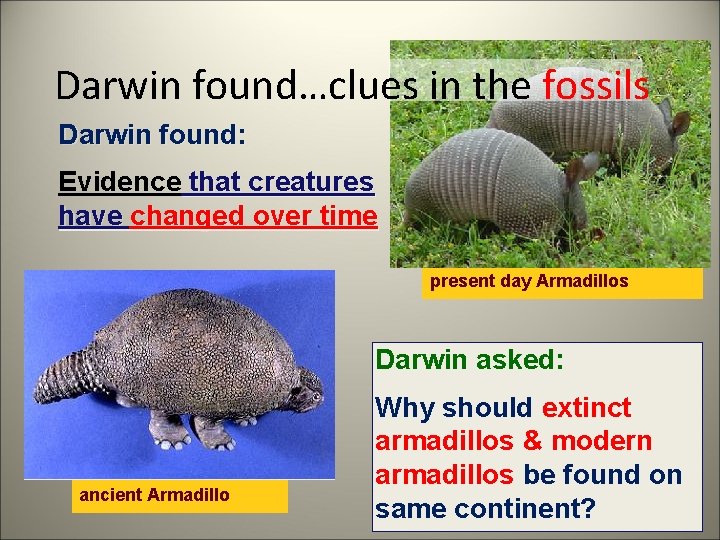
Darwin found…clues in the fossils Darwin found: Evidence that creatures have changed over time present day Armadillos Darwin asked: ancient Armadillo Why should extinct armadillos & modern armadillos be found on same continent?
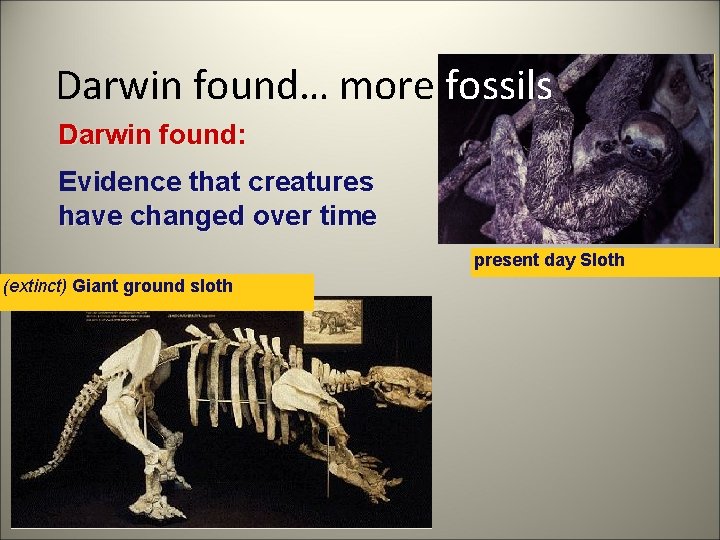
Darwin found… more fossils Darwin found: Evidence that creatures have changed over time present day Sloth (extinct) Giant ground sloth
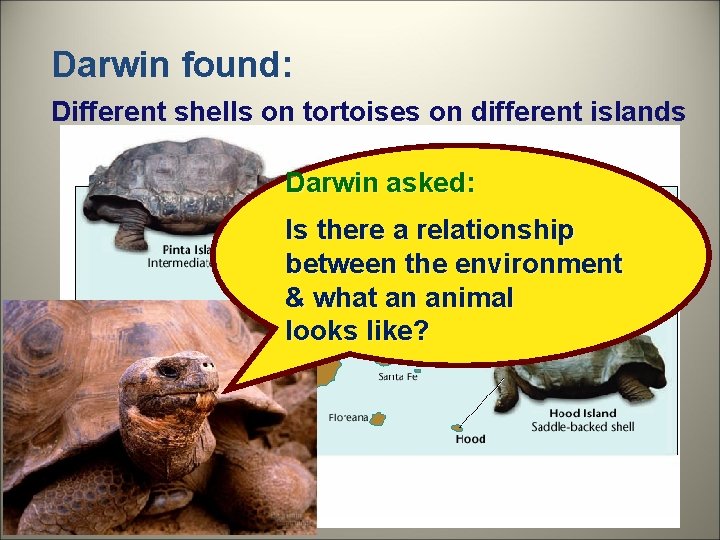
Darwin found: Different shells on tortoises on different islands Darwin asked: Is there a relationship between the environment & what an animal looks like?
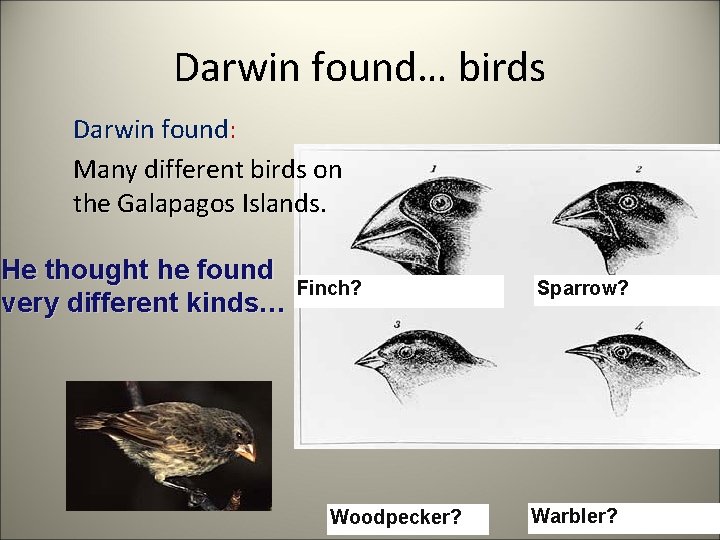
Darwin found… birds Darwin found: Many different birds on the Galapagos Islands. He thought he found very different kinds… Finch? Woodpecker? Sparrow? Warbler?
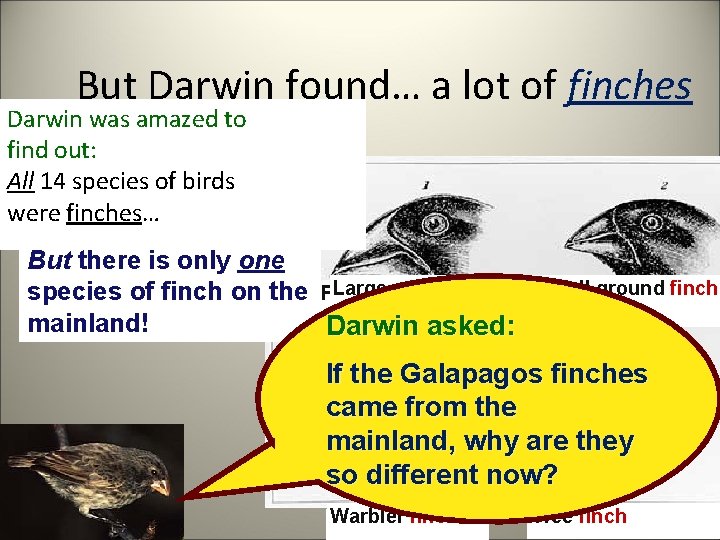
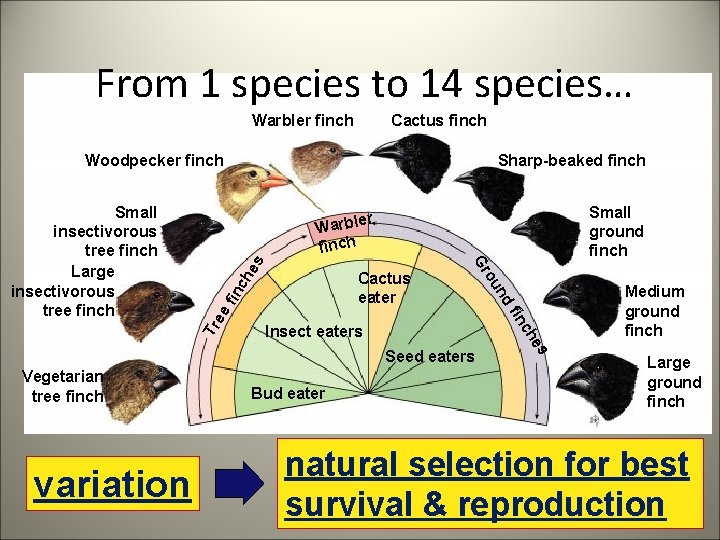
But Darwin found… a lot of finches Darwin was amazed to find out: All 14 species of birds were finches… But there is only one Large ground species of finch on the Finch? finch mainland! Darwin asked: Small ground finch Sparrow? If the Galapagos finches came from the mainland, why are they so different now? Warbler finch Woodpecker? Tree finch Warbler?
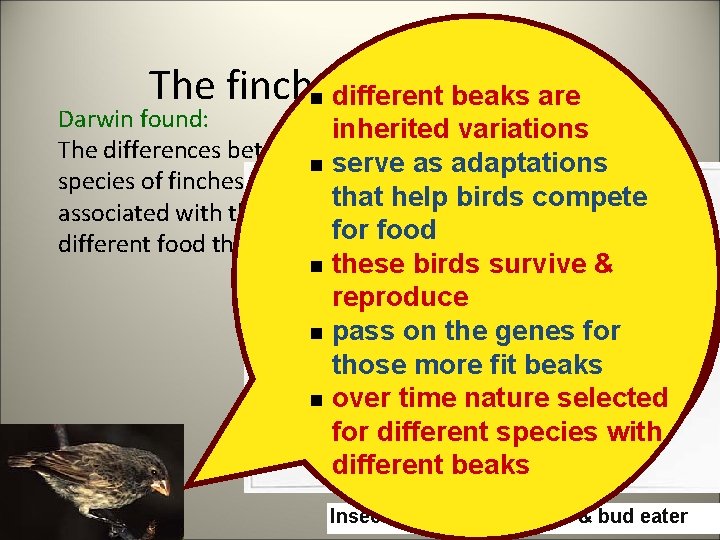
The finches cinched it!are n different beaks Darwin found: The differences between n species of finches were associated with the different food they ate. inherited variations serve as adaptations that help birds Darwin said: compete for food Ahaaaa! n these birds survive & Aground flock Large Big seed eater of South Small seed ground eater finch reproduce finch. American finches n pass on the genes for were stranded on the those more fit beaks Galapagos… n over time nature selected for different species with different beaks Warbler Insect eater finch Tree & Leaf finch bud eater
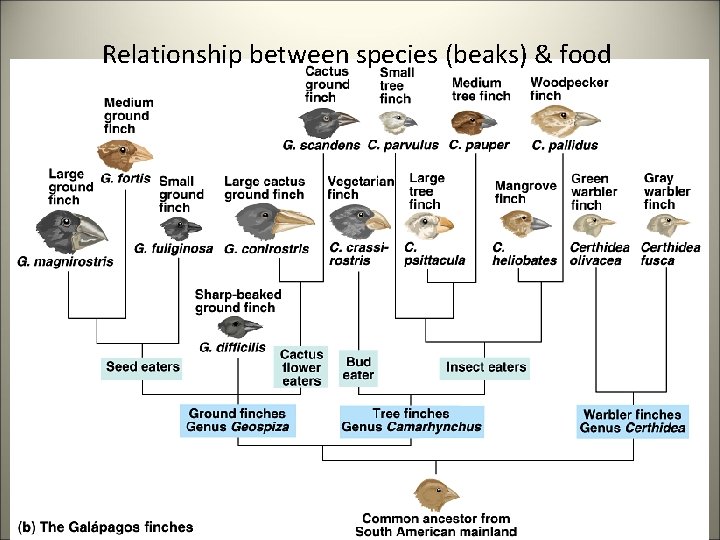
Relationship between species (beaks) & food
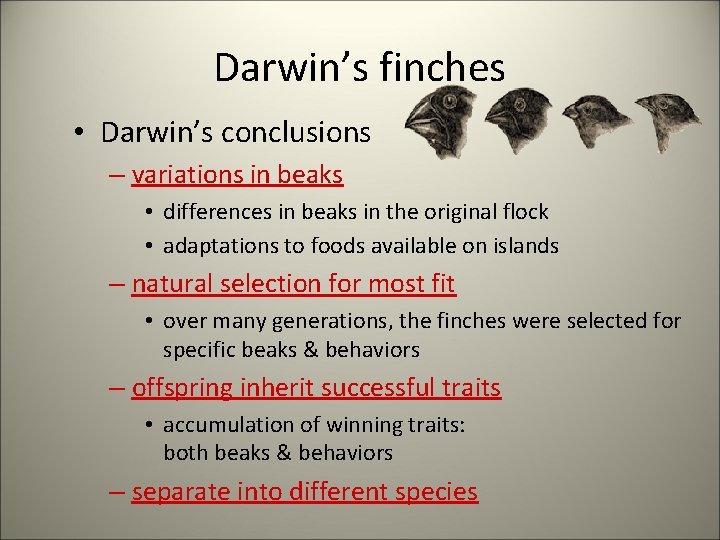
Darwin’s finches • Darwin’s conclusions – variations in beaks • differences in beaks in the original flock • adaptations to foods available on islands – natural selection for most fit • over many generations, the finches were selected for specific beaks & behaviors – offspring inherit successful traits • accumulation of winning traits: both beaks & behaviors – separate into different species
From 1 species to 14 species… Warbler finch Cactus finch Woodpecker finch Small ground finch he s er Warbl finch variation ee fin c Bud eater es ch Tr fin Insect eaters Seed eaters Vegetarian tree finch nd Cactus eater ou Gr Small insectivorous tree finch Large insectivorous tree finch Sharp-beaked finch Medium ground finch Large ground finch natural selection for best survival & reproduction
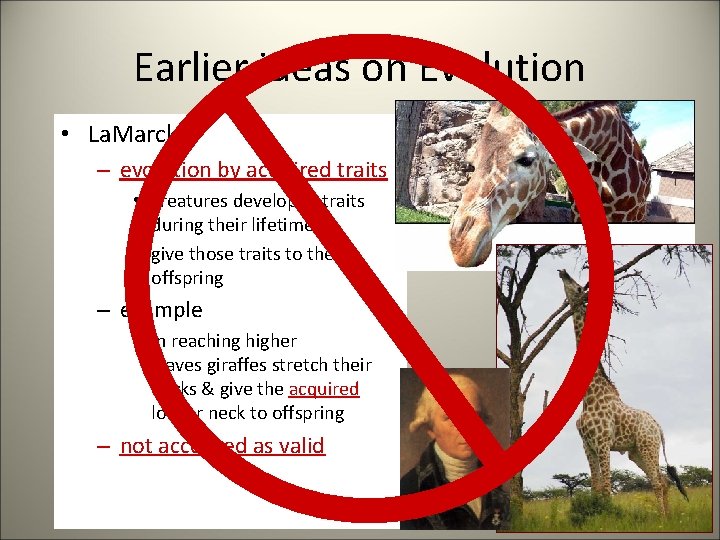
Earlier ideas on Evolution • La. Marck – evolution by acquired traits • creatures developed traits during their lifetime • give those traits to their offspring – example • in reaching higher leaves giraffes stretch their necks & give the acquired longer neck to offspring – not accepted as valid
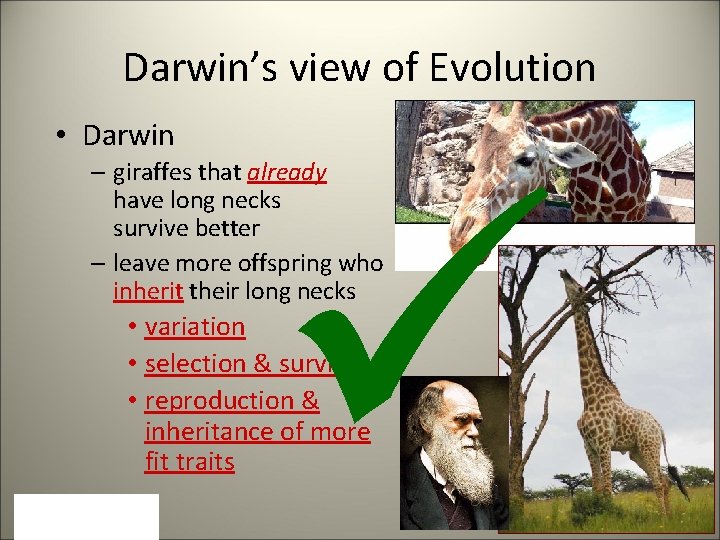
Darwin’s view of Evolution • Darwin – giraffes that already have long necks survive better – leave more offspring who inherit their long necks • variation • selection & survival • reproduction & inheritance of more fit traits
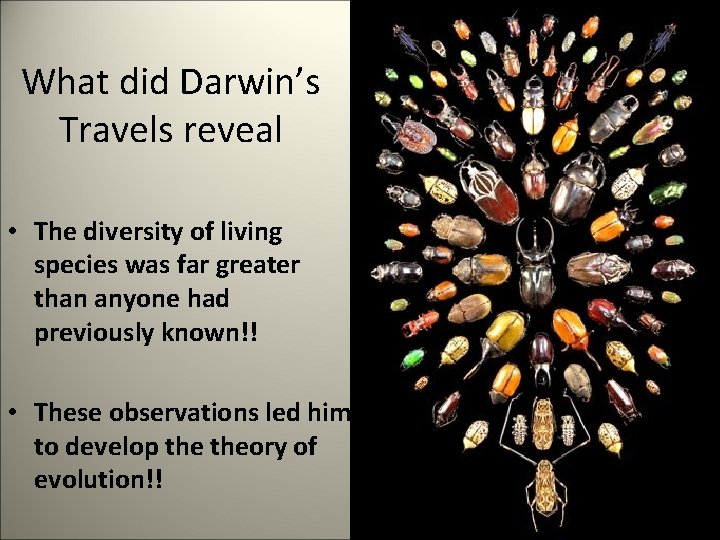
What did Darwin’s Travels reveal • The diversity of living species was far greater than anyone had previously known!! • These observations led him to develop theory of evolution!!
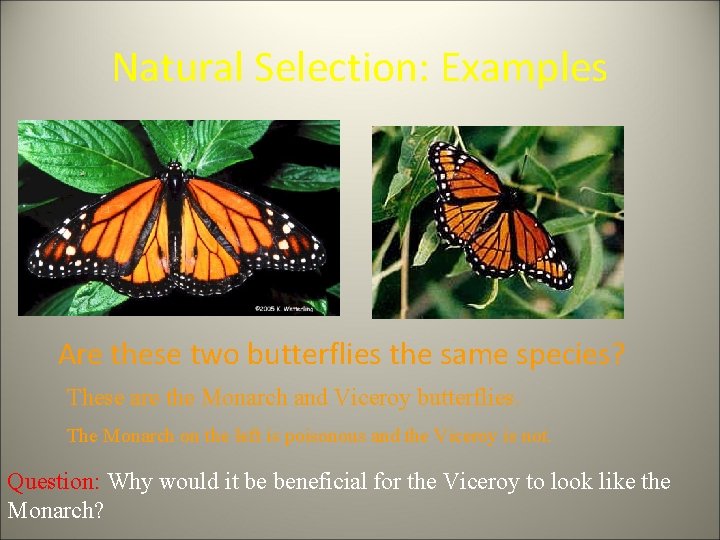
Natural Selection: Examples Are these two butterflies the same species? These are the Monarch and Viceroy butterflies. The Monarch on the left is poisonous and the Viceroy is not. Question: Why would it be beneficial for the Viceroy to look like the Monarch?
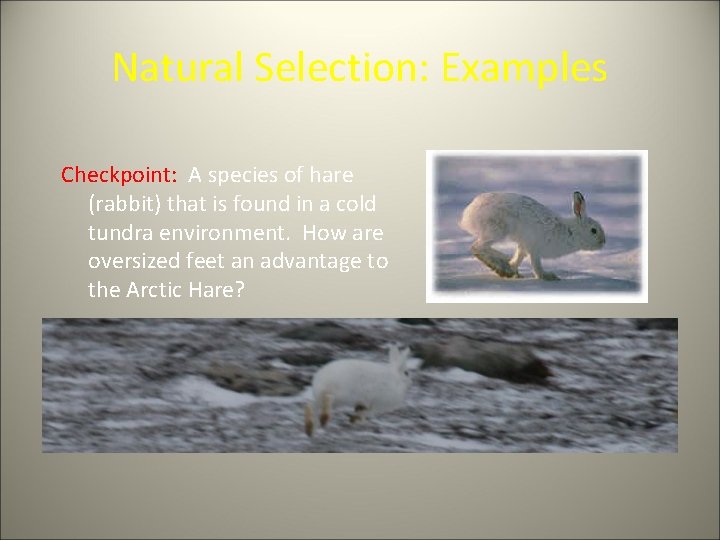
Natural Selection: Examples Checkpoint: A species of hare (rabbit) that is found in a cold tundra environment. How are oversized feet an advantage to the Arctic Hare?
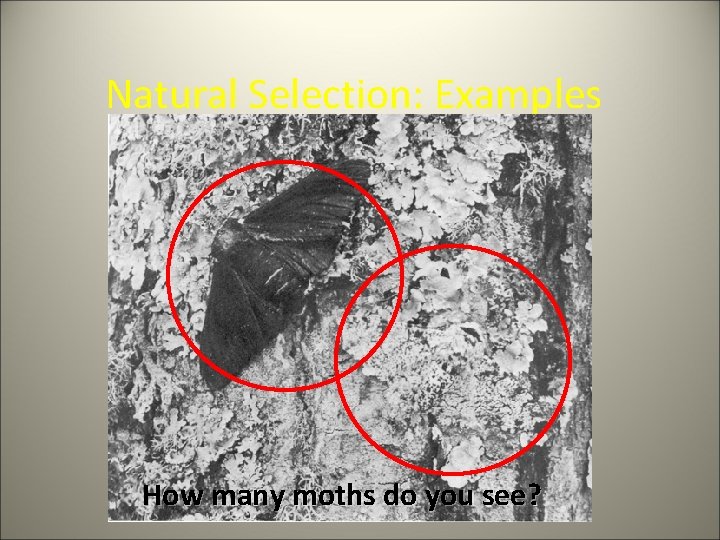
Natural Selection: Examples How many moths do you see?
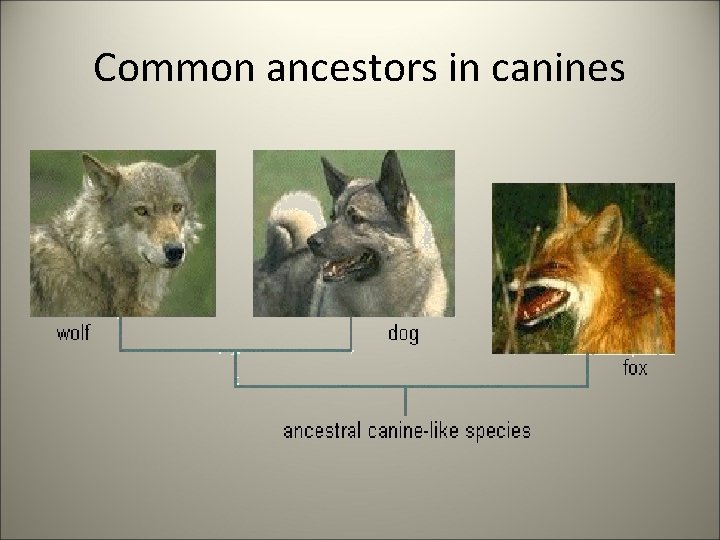
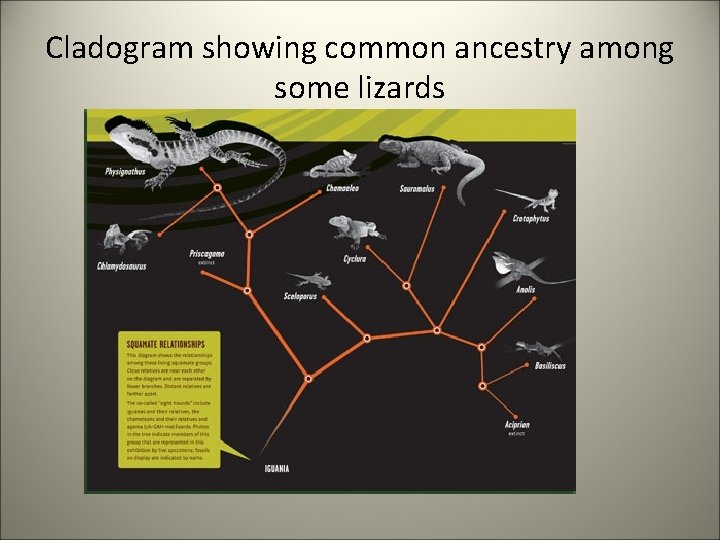
Darwin’s Theory: REVIEW…. 1. Organisms differ; variation is inherited 2. Organisms produce more offspring than survive 3. Organisms compete for resources 4. Organisms with advantages survive to pass those advantages to their children 5. Species alive today are descended with modifications from common ancestors
Evolution is a Theory – Just like Gravity! • Evolution is a well supported explanation of phenomena that have occurred in the natural world • A theory in science is a well tested hypothesis, not just a guess
Differences among Organisms • Adaptation-a different characteristic that helps an individual survive • Species-a group of organisms that can mate and produce fertile offspring • Within any population there are variations among members • Some variations are helpful and some are not
Evolution • Those variations that are helpful accumulate in the population • Eventually a new species forms with the new variations • This is Evolution – Defined as the process in which populations change over time to form new species.
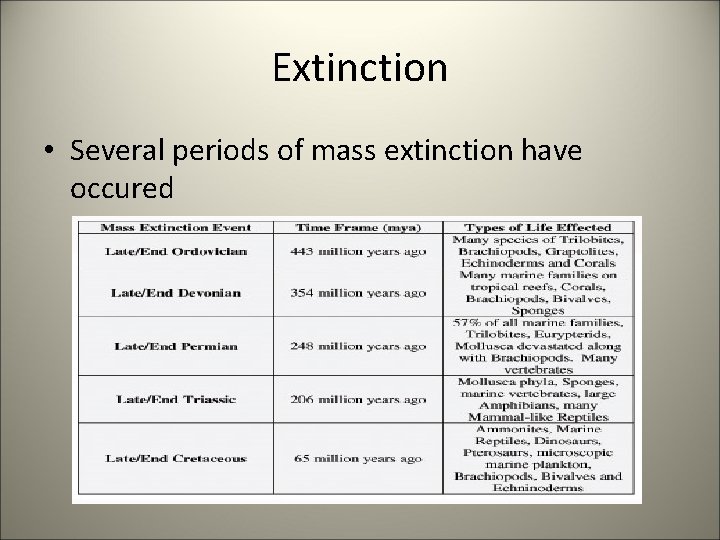
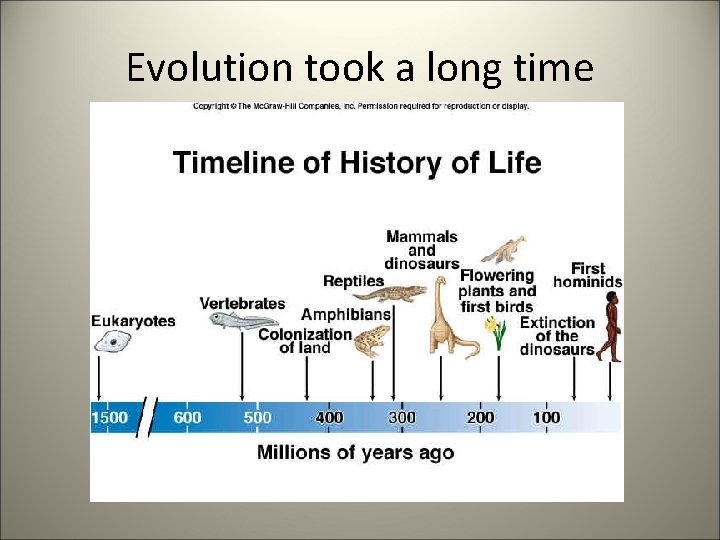
Do species change over time? • Evidence suggests that species have changed over time. • Many organisms have appeared and died out. • As populations change over time new species arose and other species became extinct.
Extinction • Several periods of mass extinction have occured
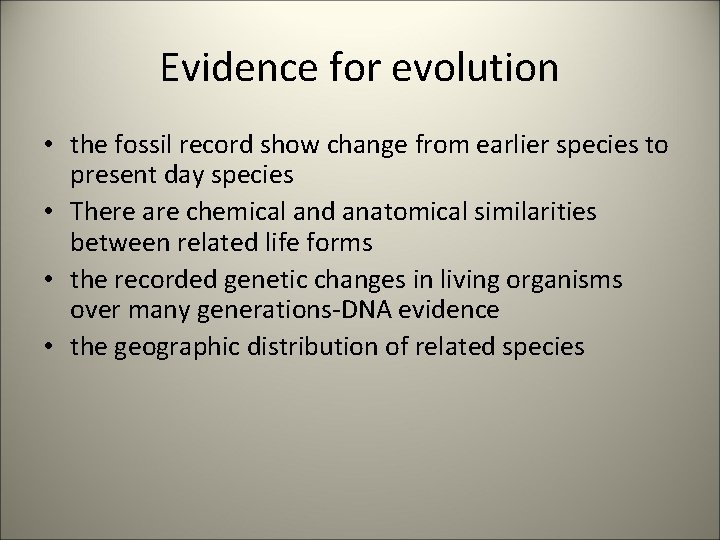
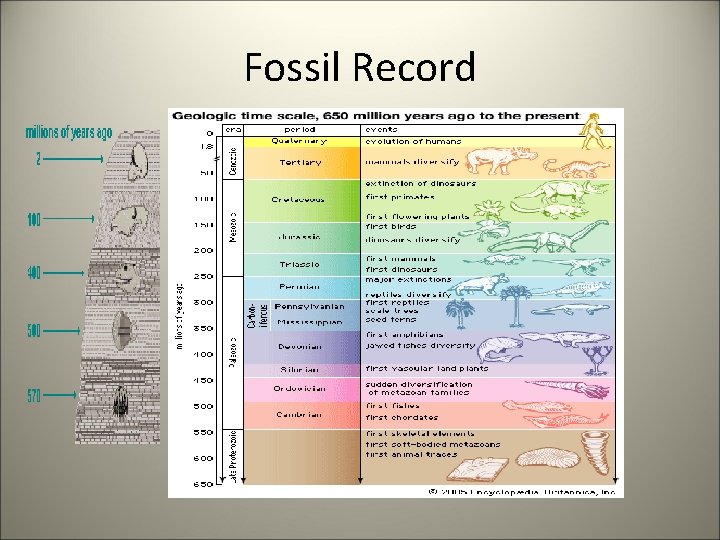
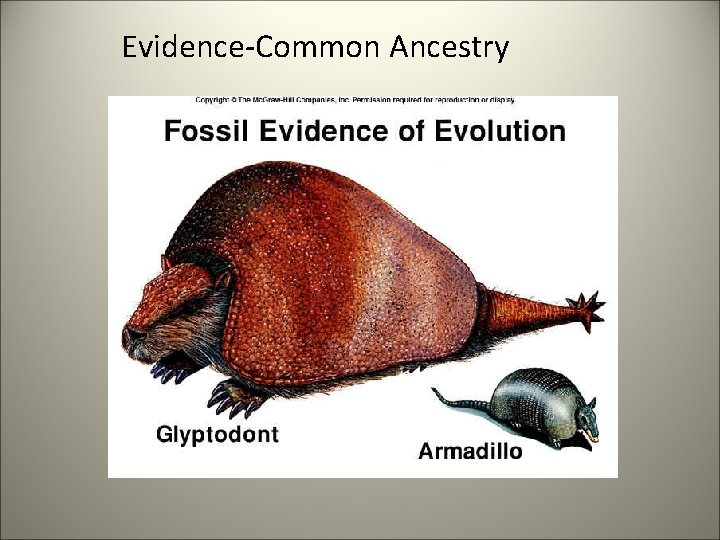
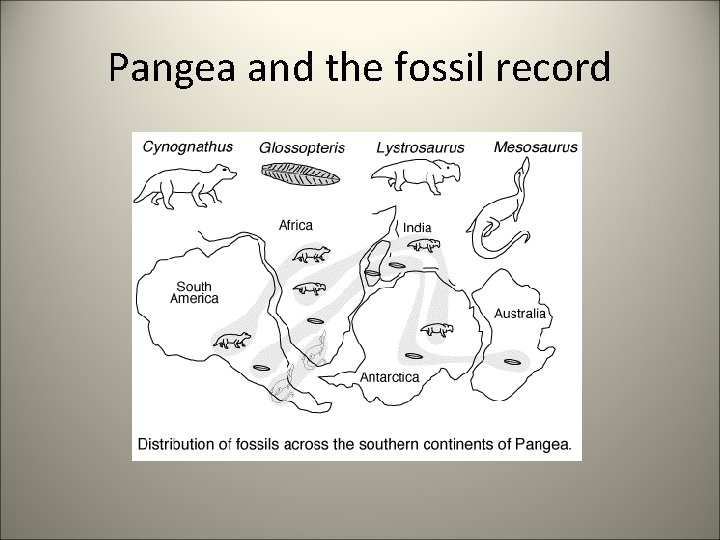
Evidence for evolution • the fossil record show change from earlier species to present day species • There are chemical and anatomical similarities between related life forms • the recorded genetic changes in living organisms over many generations-DNA evidence • the geographic distribution of related species
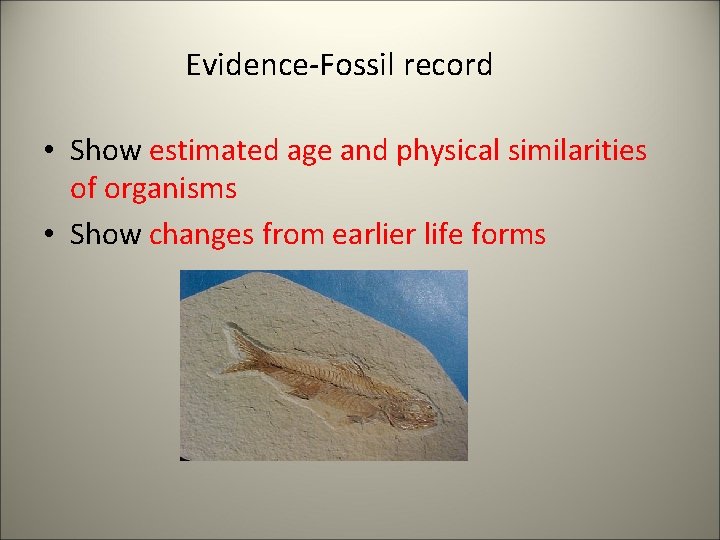
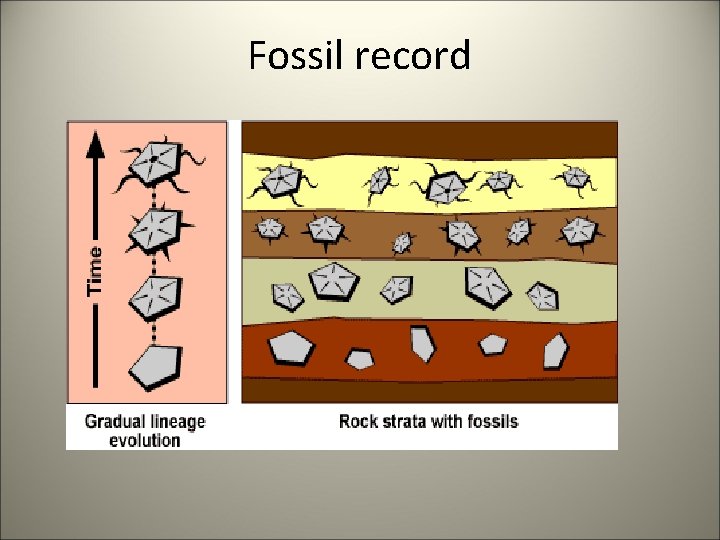
Evidence-Fossil record • Show estimated age and physical similarities of organisms • Show changes from earlier life forms
Fossil record
Fossil Record
Evidence-Common Ancestry
Common ancestors in canines
Cladogram showing common ancestry among some lizards
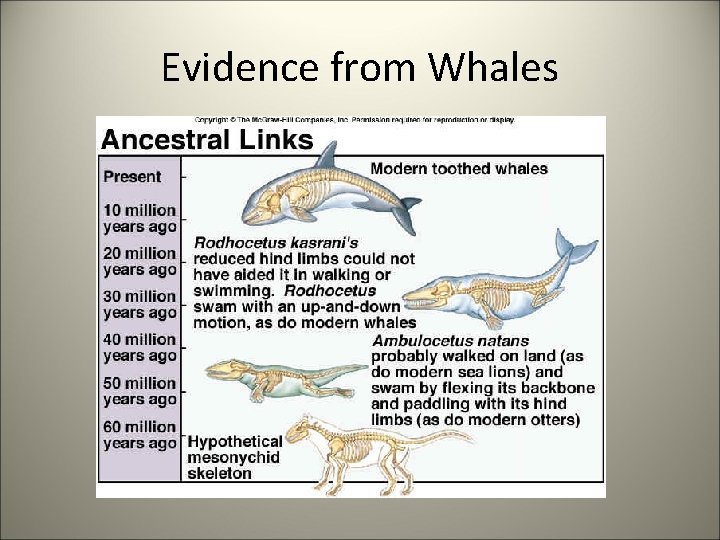
Evidence from Whales
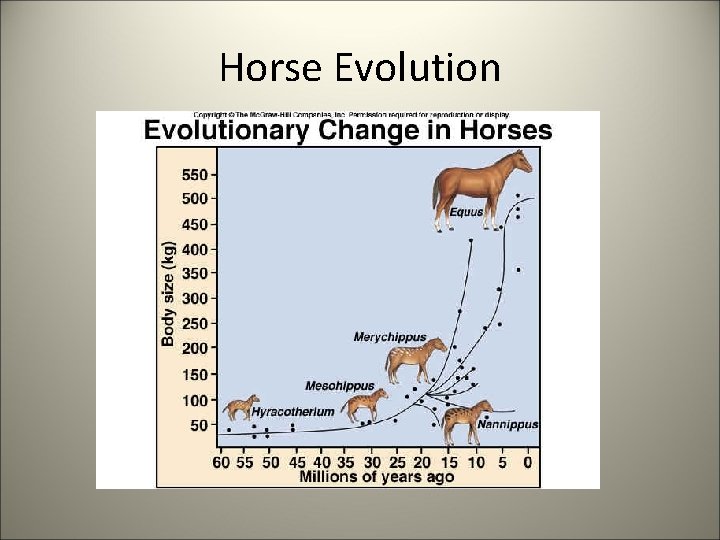
Horse Evolution
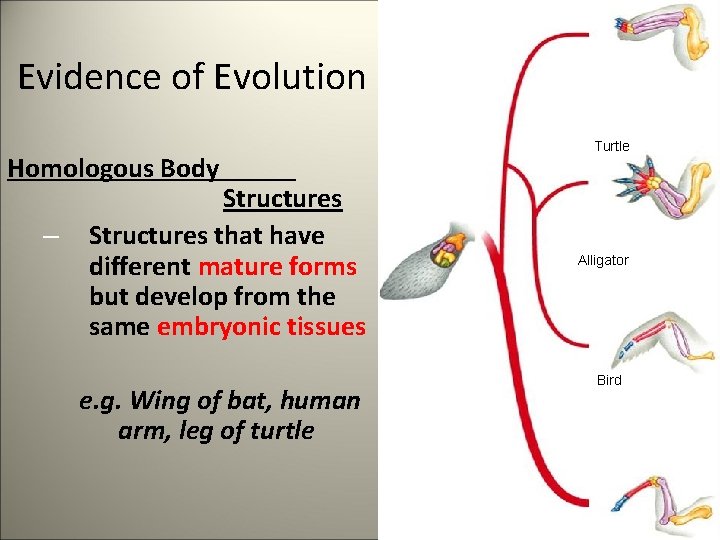
Evidence of Evolution Homologous Body – Structures that have different mature forms but develop from the same embryonic tissues e. g. Wing of bat, human arm, leg of turtle Turtle Alligator Bird
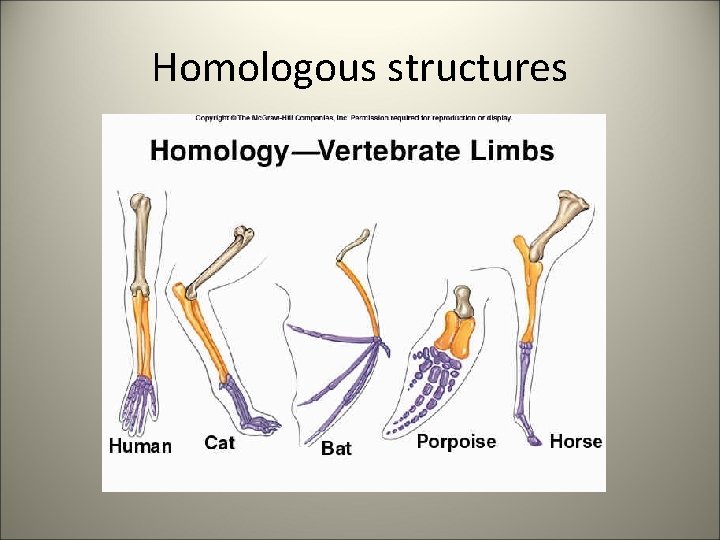
Homologous structures
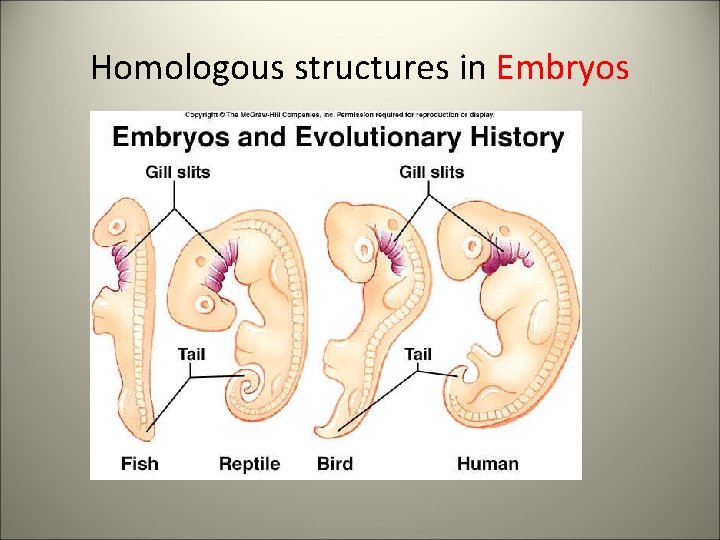
Homologous structures in Embryos
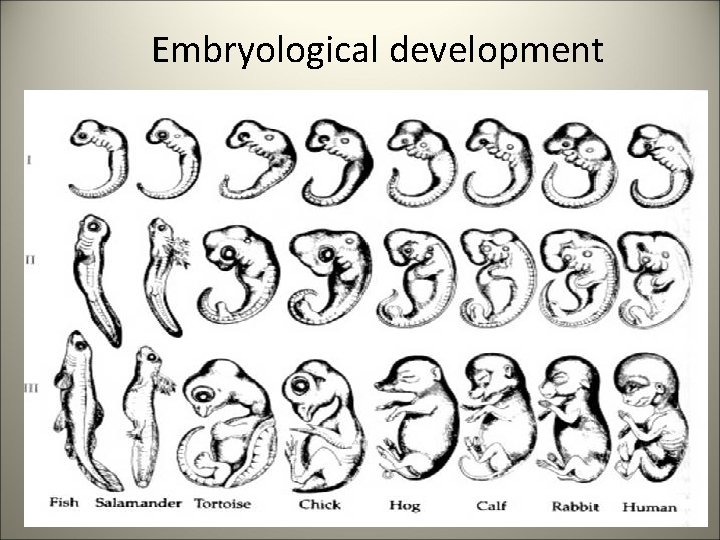
Embryological development
DNA evidence • Many organisms share common DNA • The more DNA that is shared, the more closely related the two organisms are
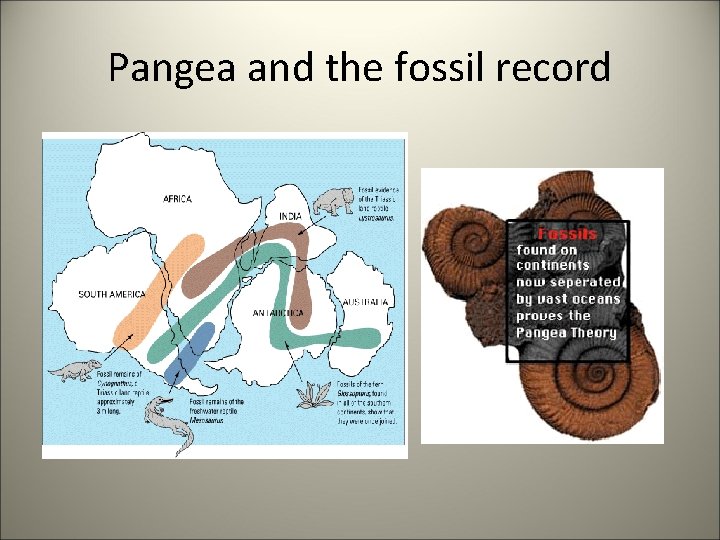
Pangea and the fossil record
Pangea and the fossil record
Evolution took a long time
Evidence for Evolution The Fossil Record: These imprints allow scientists to see an entire evolutionary history, including “in between” fossils. Homologous Body Structures: Why else use the same skeletal plan for very different appendages? And Similarities in Embroylogy: During the very early stages of life (in the womb), many organisms go through similar stages of development. DNA evidence-shows close relationship between different species