
DARPA TMR Program Collaborative Mobile Robots for HighRisk
DARPA TMR Program Collaborative Mobile Robots for High-Risk Urban Missions Third Quarterly IPR Meeting May 11, 1999 P. I. s: Leonidas J. Guibas and Jean-Claude Latombe Computer Science Department Stanford University http: //underdog. stanford. edu/tmr 1
Research Group u u P. I. s: Profs. Leonidas J. Guibas and Jean-Claude Latombe. Post-docs: – – – u Alon Efrat: map building, target finding. T. M. Murali: map building, target finding. Rafael Murrieta: target tracking, robot experiments. Ph. D. Students: – – – H. Gonzalez-Banos: map building, target tracking. Cheng-Yu Lee: target finding in 3 D. David Lin: target finding in 2 D. 2
Research Focus u Gather information in an urban environment. – Automatic generation of motion strategies. – Multiple autonomous but coordinated robots. u Three primary tasks: – Map building: Given no or partial a priori map, navigate robots in the environment to collect data to form a 2 D/3 D map. – Target finding: Sweep environment with the robots to detect and localise potential targets in 3 D. – Target tracking: Move robots to maintain visibility of detected targets in 3 D environment. 3
Research Philosophy u u Plan in 2 D, sense/respond in 3 D Robots move in 2 D but sensors are 3 D. – – – u Build 3 D models. Find targets even if they are not on the floor. Track targets when they move off the floor. Sensor independence – Software takes sensor parameters as input. – Software adapts to different sensor properties. 4
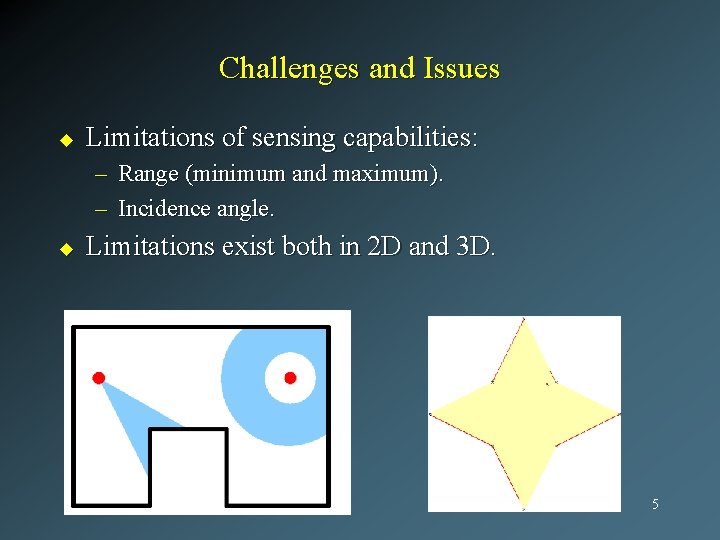
Challenges and Issues u Limitations of sensing capabilities: – Range (minimum and maximum). – Incidence angle. u Limitations exist both in 2 D and 3 D. 5
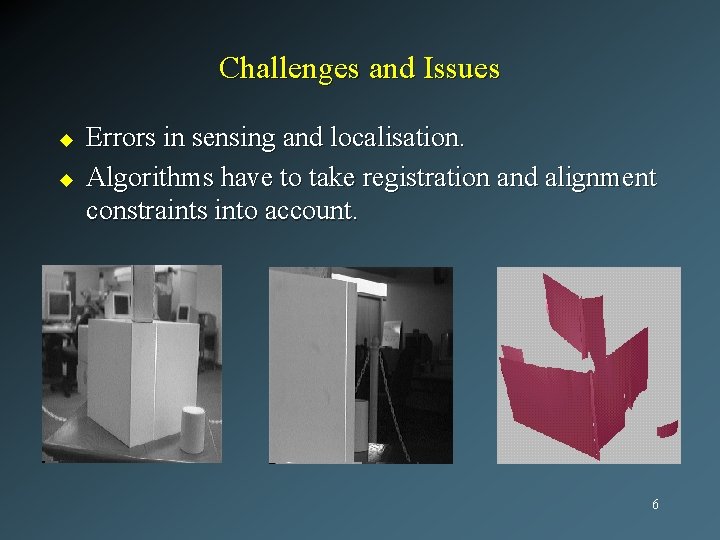
Challenges and Issues u u Errors in sensing and localisation. Algorithms have to take registration and alignment constraints into account. 6
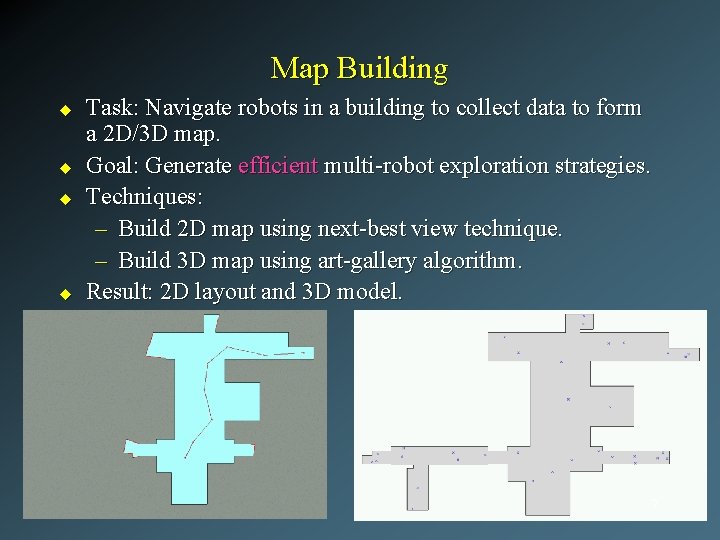
Map Building u u Task: Navigate robots in a building to collect data to form a 2 D/3 D map. Goal: Generate efficient multi-robot exploration strategies. Techniques: – Build 2 D map using next-best view technique. – Build 3 D map using art-gallery algorithm. Result: 2 D layout and 3 D model. 7
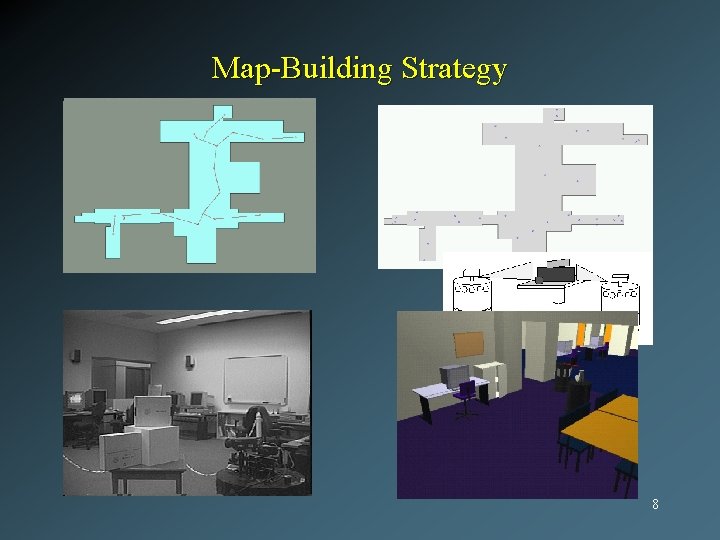
Map-Building Strategy 8
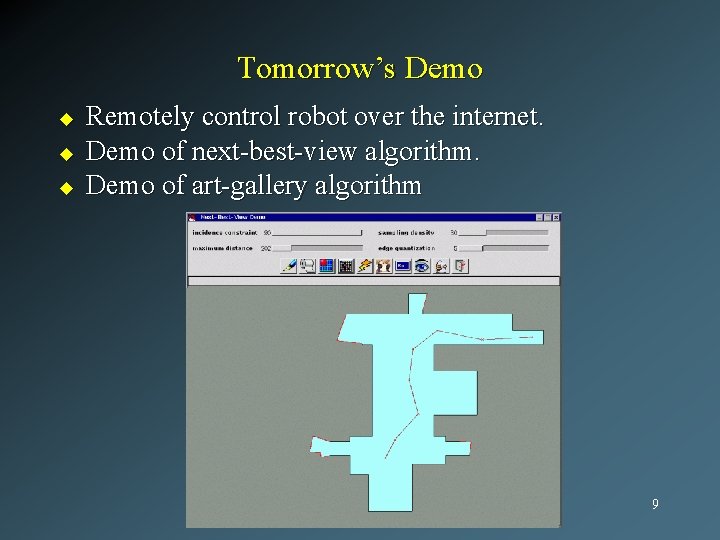
Tomorrow’s Demo u u u Remotely control robot over the internet. Demo of next-best-view algorithm. Demo of art-gallery algorithm 9
2 D Map: Next-Best-View Algorithm u Task: Given current view and a partial model, compute the next sensing location. – – – u take sensor limitations into account. reach next viewpoint without collision. ensure overlap between views to allow registration. Goal: reduce number of sensing locations. 10
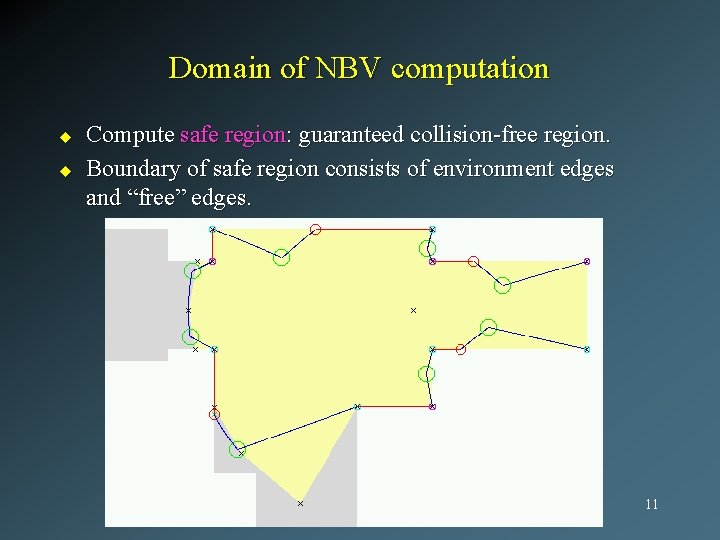
Domain of NBV computation u u Compute safe region: guaranteed collision-free region. Boundary of safe region consists of environment edges and “free” edges. 11
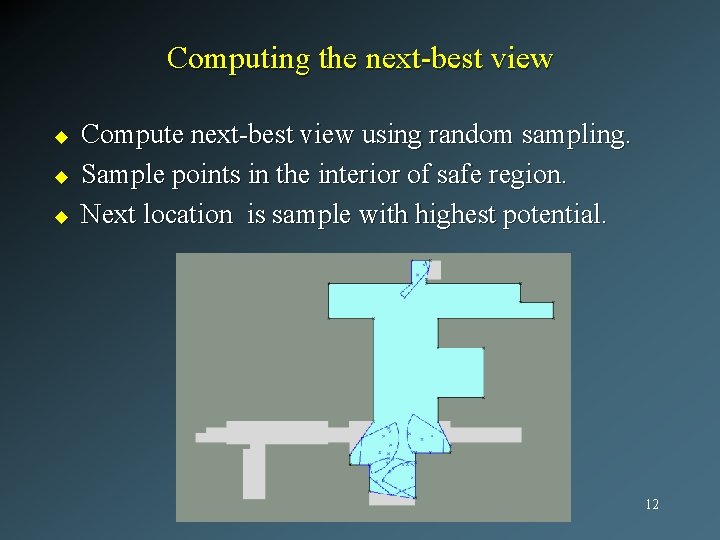
Computing the next-best view u u u Compute next-best view using random sampling. Sample points in the interior of safe region. Next location is sample with highest potential. 12
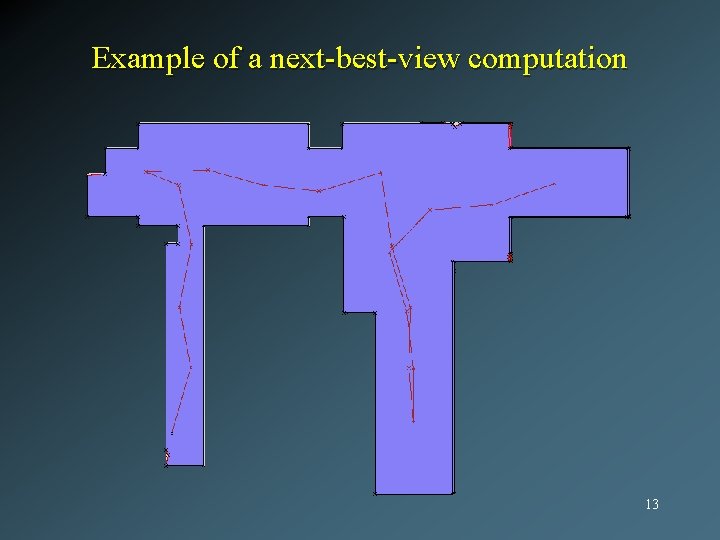
Example of a next-best-view computation 13
3 D Map: Art-Gallery Algorithm u Task: given a 2 D map, compute a set of locations in the map for 3 D sensing. – each boundary point should be visible from some location. – take sensor’s 3 D limitations into account. – ensure overlap between views to allow registration. u Goal: compute a small set of locations. 14
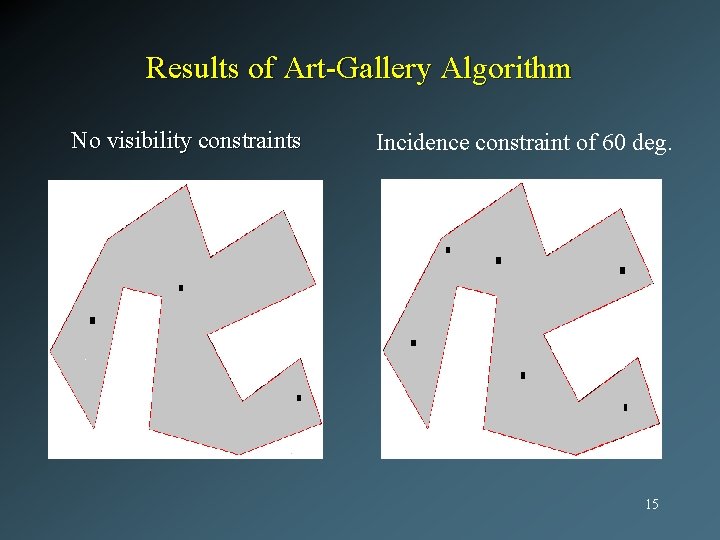
Results of Art-Gallery Algorithm No visibility constraints Incidence constraint of 60 deg. 15
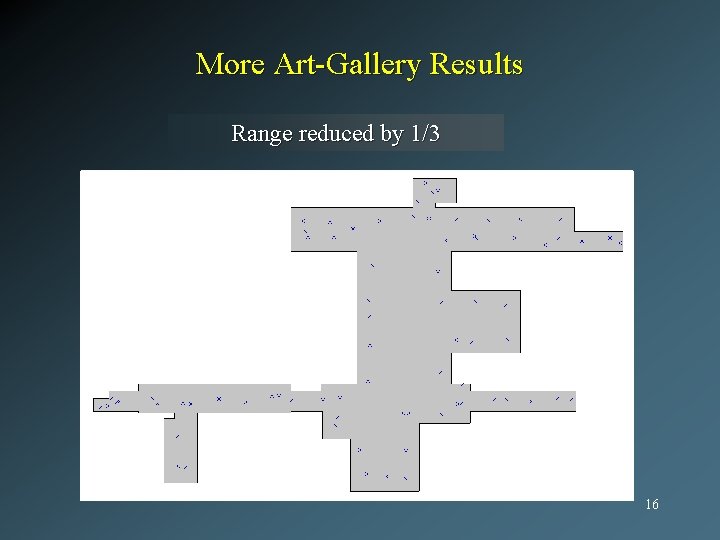
More Art-Gallery Results Visibility in 1/3 range Range bounded reduced by 16
Features of Map-Building Algorithm u Makes global decisions. – Reduces total distance travelled, number of sensing locations. u Scales to multiple robots: – in 2 D: Send robots to sampled locations with high potential that are far apart. – in 3 D: Cluster sensing locations, send robots to different clusters. u Minimises number of 3 D sensing operations. 17
Achievements u u u Implemented next-best view planner for constructing 2 D model of an urban environment. Implemented target-finding planner for robots with cone vision. Implemented target-finding algorithm for aerial observer moving in a set of buildings. Developed algorithms for target-finding for a team of robots that maintain communication links. Implemented real-time planner for motion in the presence of moving obstacles. 18
Collaboration u SRI: – combining mapping and next-best-view software. – combining human tracking with target-tracking planner. u SAIC: – multi-robot target finding and target tracking algorithms. 19

Progress to Date 20
- Slides: 20