
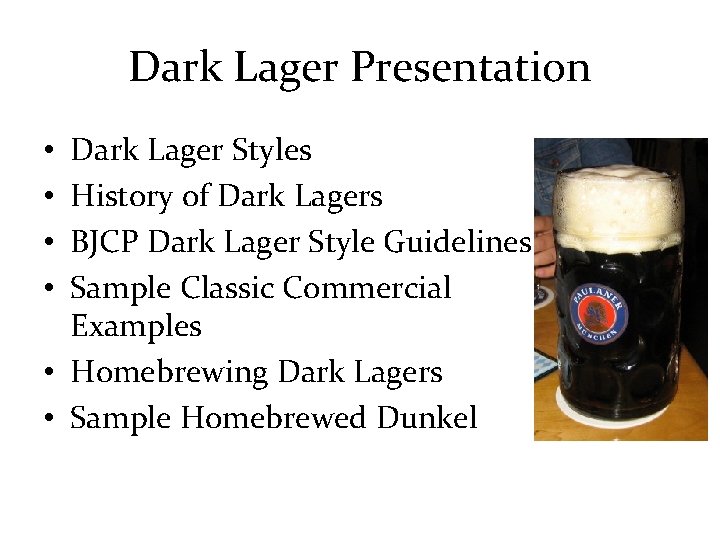
Dark Lager Presentation Dark Lager Styles History of
- Slides: 24
Dark Lager Presentation Dark Lager Styles History of Dark Lagers BJCP Dark Lager Style Guidelines Sample Classic Commercial Examples • Homebrewing Dark Lagers • Sample Homebrewed Dunkel • •
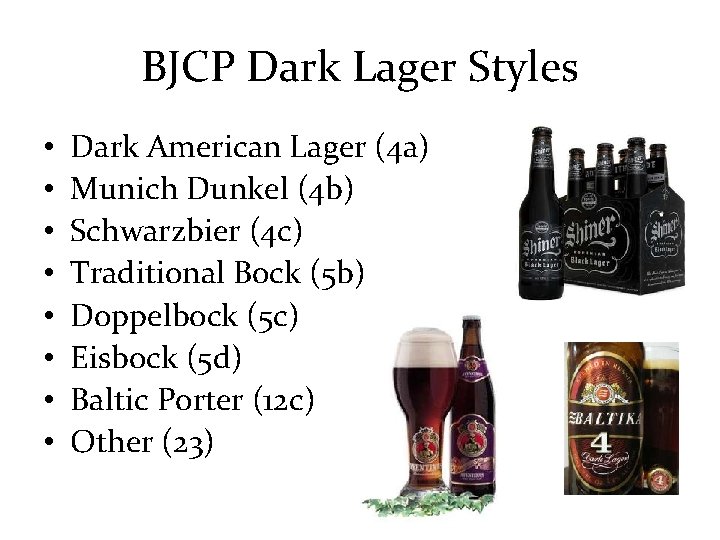
BJCP Dark Lager Styles • • Dark American Lager (4 a) Munich Dunkel (4 b) Schwarzbier (4 c) Traditional Bock (5 b) Doppelbock (5 c) Eisbock (5 d) Baltic Porter (12 c) Other (23)
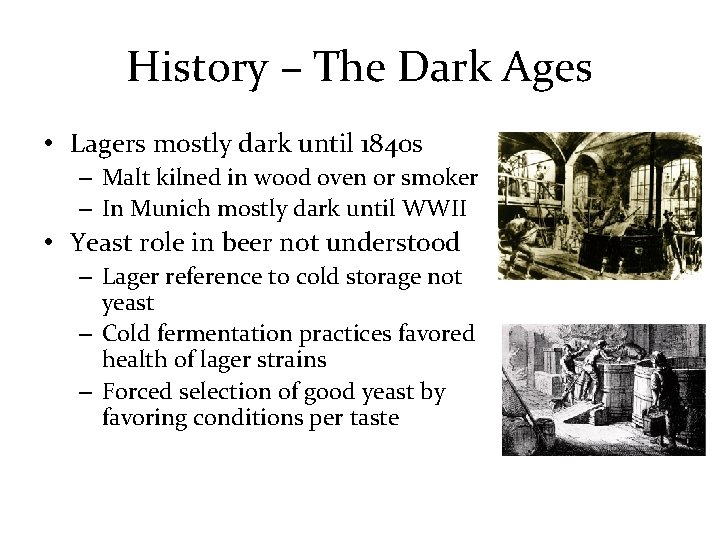
History – The Dark Ages • Lagers mostly dark until 1840 s – Malt kilned in wood oven or smoker – In Munich mostly dark until WWII • Yeast role in beer not understood – Lager reference to cold storage not yeast – Cold fermentation practices favored health of lager strains – Forced selection of good yeast by favoring conditions per taste
History – Quality Improvements • 1516 Reinheitsgebot – German Purity Law – Malt, hops and water used for beer • 1553 Summer brewing outlawed in Bavaria – Recognition that cold fermentation improves quality • 1817 Hot air kilned drum roaster invented – Uniform malt kilning leads to Munich malt • 1840 Modern techniques introduced to Germany by Gabriel Sedlmayr
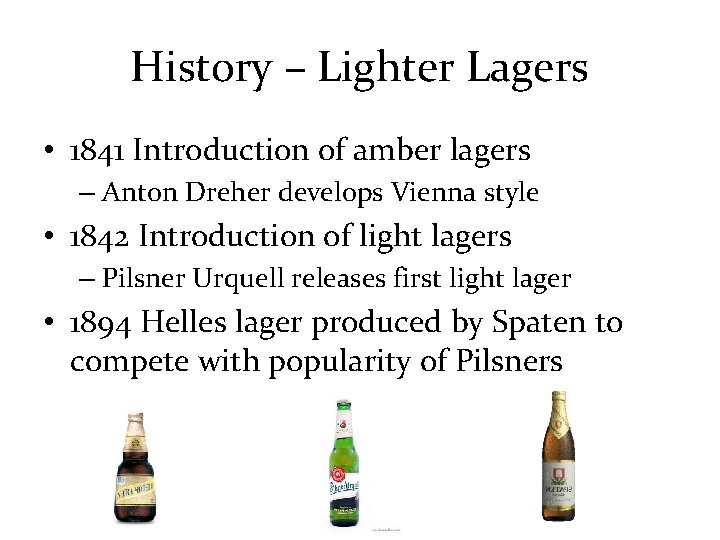
History – Lighter Lagers • 1841 Introduction of amber lagers – Anton Dreher develops Vienna style • 1842 Introduction of light lagers – Pilsner Urquell releases first light lager • 1894 Helles lager produced by Spaten to compete with popularity of Pilsners
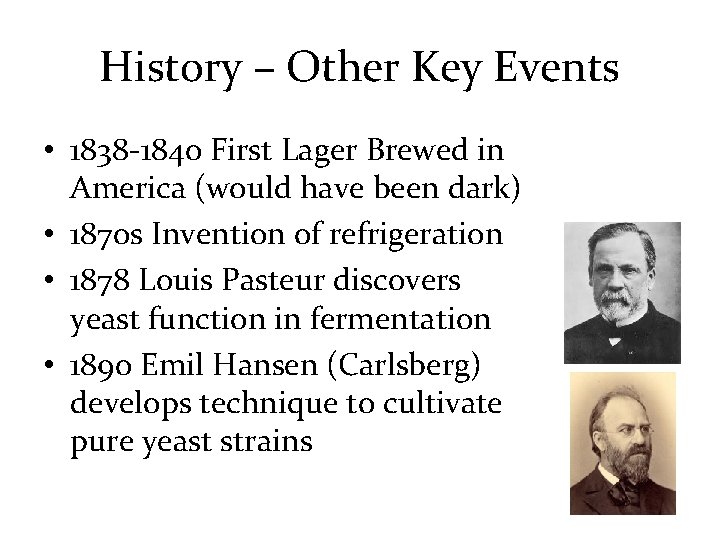
History – Other Key Events • 1838 -1840 First Lager Brewed in America (would have been dark) • 1870 s Invention of refrigeration • 1878 Louis Pasteur discovers yeast function in fermentation • 1890 Emil Hansen (Carlsberg) develops technique to cultivate pure yeast strains
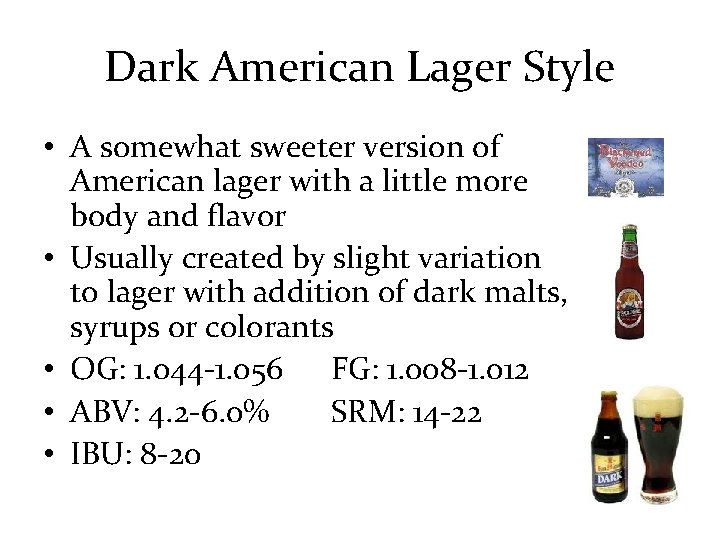
Dark American Lager Style • A somewhat sweeter version of American lager with a little more body and flavor • Usually created by slight variation to lager with addition of dark malts, syrups or colorants • OG: 1. 044 -1. 056 FG: 1. 008 -1. 012 • ABV: 4. 2 -6. 0% SRM: 14 -22 • IBU: 8 -20
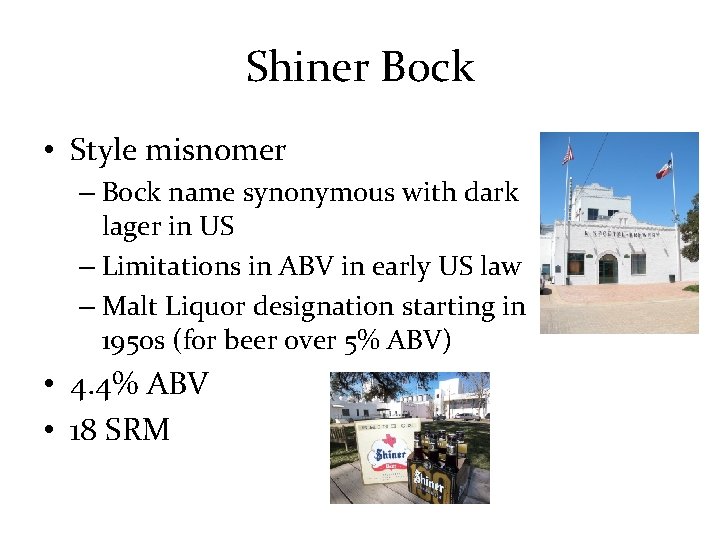
Shiner Bock • Style misnomer – Bock name synonymous with dark lager in US – Limitations in ABV in early US law – Malt Liquor designation starting in 1950 s (for beer over 5% ABV) • 4. 4% ABV • 18 SRM
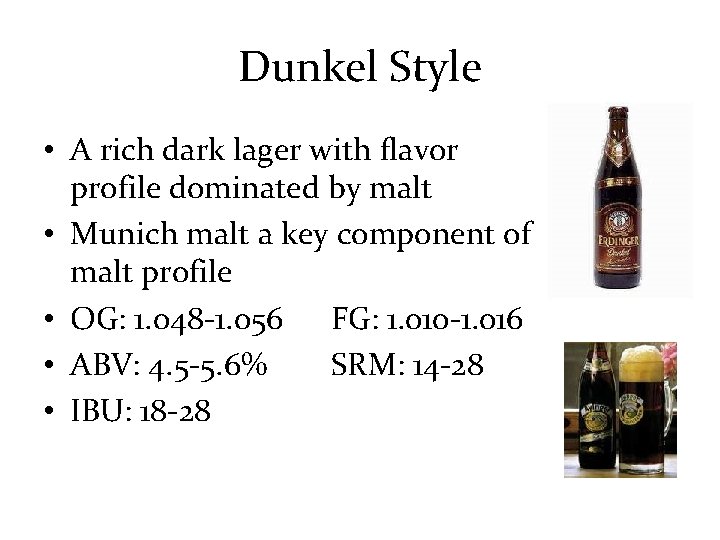
Dunkel Style • A rich dark lager with flavor profile dominated by malt • Munich malt a key component of malt profile • OG: 1. 048 -1. 056 FG: 1. 010 -1. 016 • ABV: 4. 5 -5. 6% SRM: 14 -28 • IBU: 18 -28
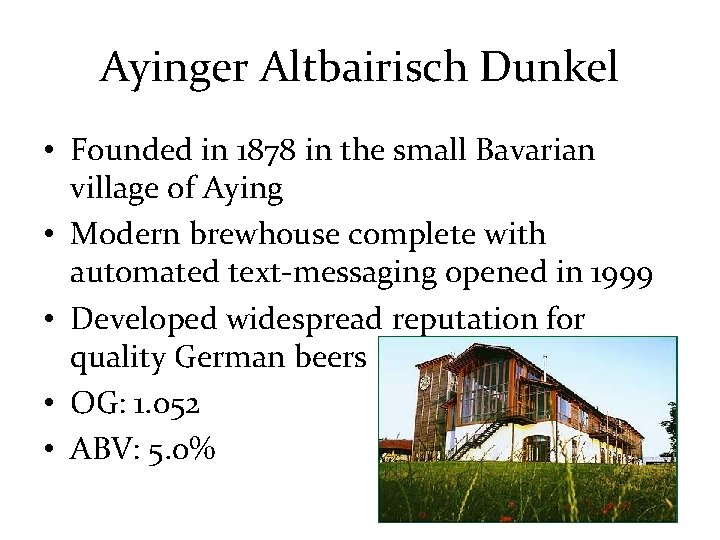
Ayinger Altbairisch Dunkel • Founded in 1878 in the small Bavarian village of Aying • Modern brewhouse complete with automated text-messaging opened in 1999 • Developed widespread reputation for quality German beers • OG: 1. 052 • ABV: 5. 0%
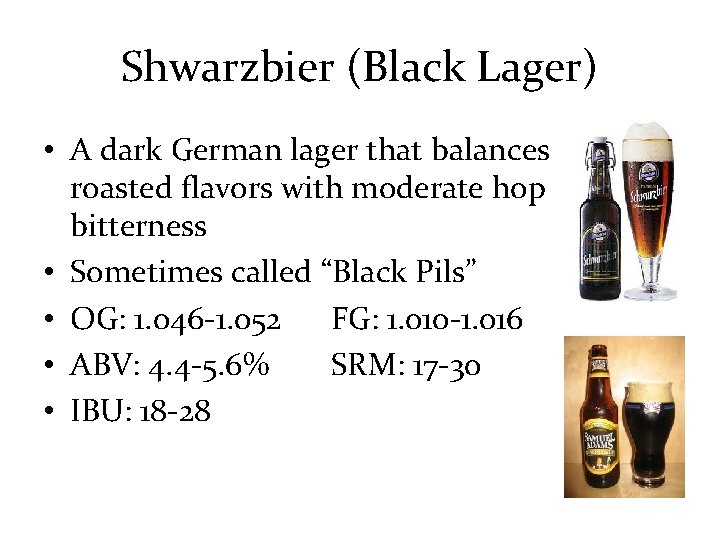
Shwarzbier (Black Lager) • A dark German lager that balances roasted flavors with moderate hop bitterness • Sometimes called “Black Pils” • OG: 1. 046 -1. 052 FG: 1. 010 -1. 016 • ABV: 4. 4 -5. 6% SRM: 17 -30 • IBU: 18 -28
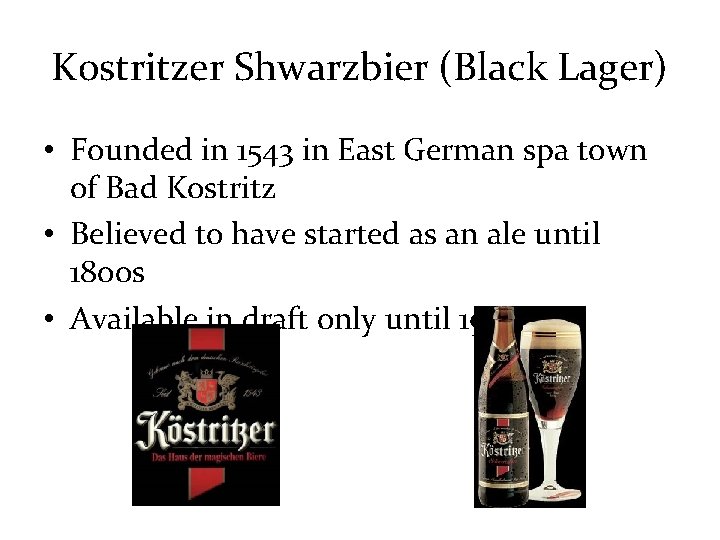
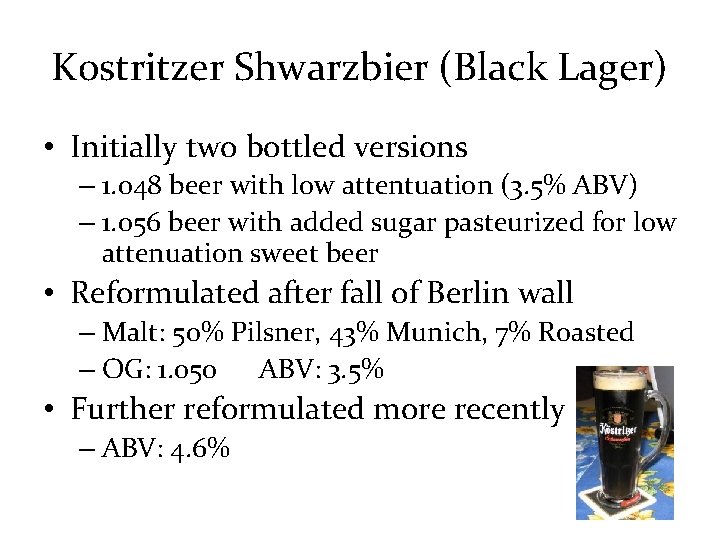
Kostritzer Shwarzbier (Black Lager) • Founded in 1543 in East German spa town of Bad Kostritz • Believed to have started as an ale until 1800 s • Available in draft only until 1950 s
Kostritzer Shwarzbier (Black Lager) • Initially two bottled versions – 1. 048 beer with low attentuation (3. 5% ABV) – 1. 056 beer with added sugar pasteurized for low attenuation sweet beer • Reformulated after fall of Berlin wall – Malt: 50% Pilsner, 43% Munich, 7% Roasted – OG: 1. 050 ABV: 3. 5% • Further reformulated more recently – ABV: 4. 6%
Brewing Dark Lagers – Malt Munich malt base (up to 100%) for Dunkel Munich & Pilsner malt base for Shwarzbier Pale lager malt base for American Dark “coloring malts” used sparingly to minimize roasted flavors (more liberally in Schwarzbier) • Carafa makes a good choice for “coloring malt” • •
Brewing Dark Lagers – Malt • Melanoidin malt can be used to enhance malt flavor • Aromatic malt can be used to enhance malt aroma • Avoid crystal malts (undesirable residual sweetness) • Use mild un-hopped malt extracts
Brewing Dark Lagers – Hops • Low-alpha acid hops with delicate flavors for bitterness preferred • Hallertauer derivatives work well for bittering (Mt. Hood, Liberty, Perle, Hersbrucker) • Finishing hops should be minimal if any • Noble finishing hops such as Saaz or Tettnang preferred
Brewing Dark Lagers – Water • Use carbonate water to buffer acidity from dark malts • RO Water + 1 tsp/5 gal Ca. CO 3 • San Diego filtered water okay – could be blended with RO water to soften the water • Avoid high sulfate water – may accentuate a harsh bitterness in finish
Brewing Dark Lagers – Yeast • Use attenuative lager yeast – BJCP guidelines result in 71 -82% attenuation • Create a large yeast starter – Re-pitching from a previous fermentation is recommended for large yeast pitch
Brewing Dark Lagers – Brewing Techniques • Decoction mashing – Traditional German technique that produces full malt flavor and aroma – More likely to be an asset for Bock beers • Infusion mashing – Simpler technique that works well for these Dark Lager styles – Works well for today’s fully modified grains
Brewing Dark Lagers – Fermentation • Cool wort to fermentation temperature prior to pitching • Aerate the wort vigorously – 100% oxygen works best • Fermenation temp < 55 F (50 F preferred) • Fermentation process is exothermic, so monitor internal fermentor temperature • No refrigeration required to make lagers in San Diego winters
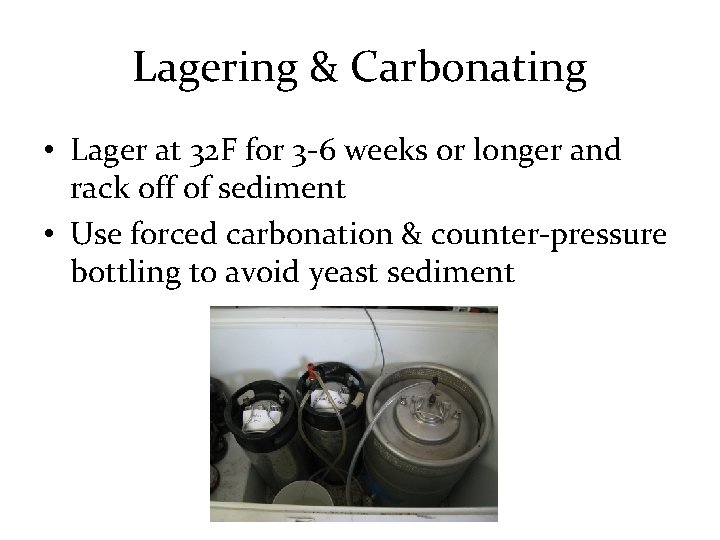
Lagering & Carbonating • Lager at 32 F for 3 -6 weeks or longer and rack off of sediment • Use forced carbonation & counter-pressure bottling to avoid yeast sediment
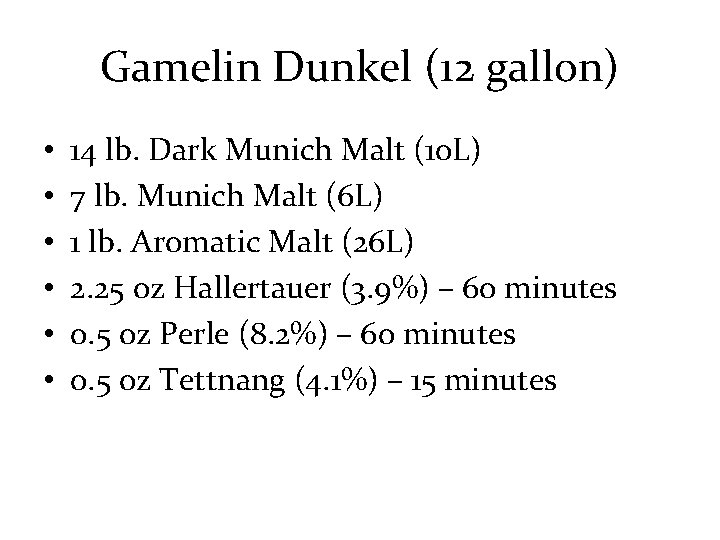
Gamelin Dunkel (12 gallon) • • • 14 lb. Dark Munich Malt (10 L) 7 lb. Munich Malt (6 L) 1 lb. Aromatic Malt (26 L) 2. 25 oz Hallertauer (3. 9%) – 60 minutes 0. 5 oz Perle (8. 2%) – 60 minutes 0. 5 oz Tettnang (4. 1%) – 15 minutes
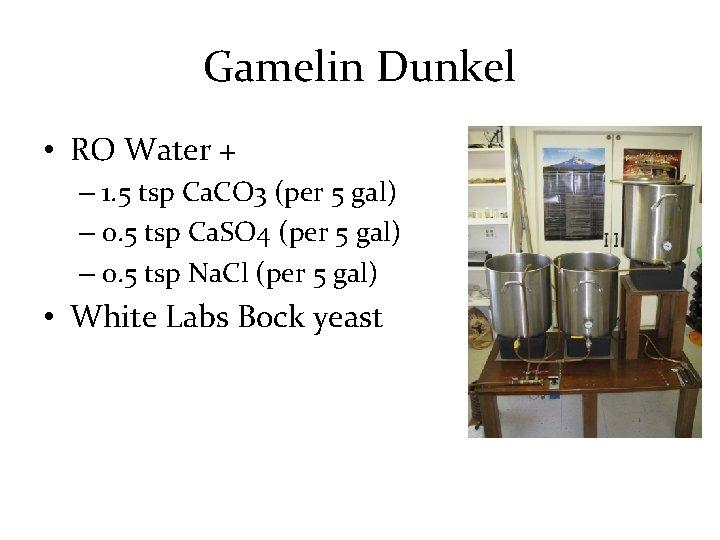
Gamelin Dunkel • RO Water + – 1. 5 tsp Ca. CO 3 (per 5 gal) – 0. 5 tsp Ca. SO 4 (per 5 gal) – 0. 5 tsp Na. Cl (per 5 gal) • White Labs Bock yeast
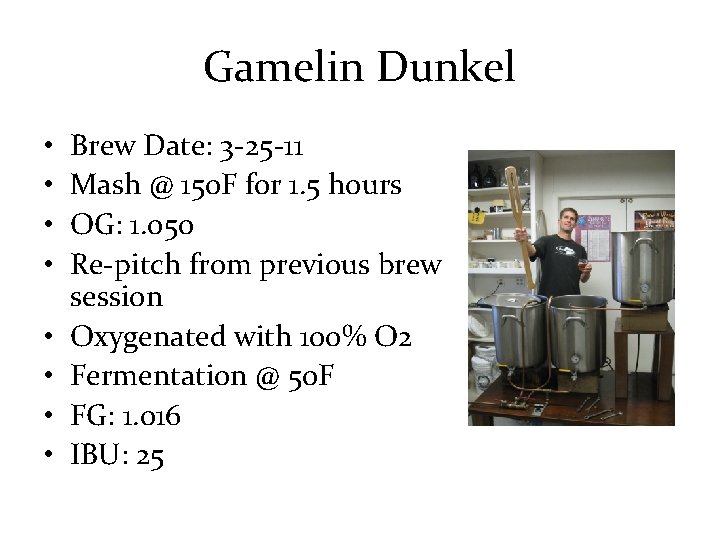
Gamelin Dunkel • • Brew Date: 3 -25 -11 Mash @ 150 F for 1. 5 hours OG: 1. 050 Re-pitch from previous brew session Oxygenated with 100% O 2 Fermentation @ 50 F FG: 1. 016 IBU: 25