
DARK AGES The Middle Ages of Europe Germanic

- Slides: 8
DARK AGES The Middle Ages of Europe
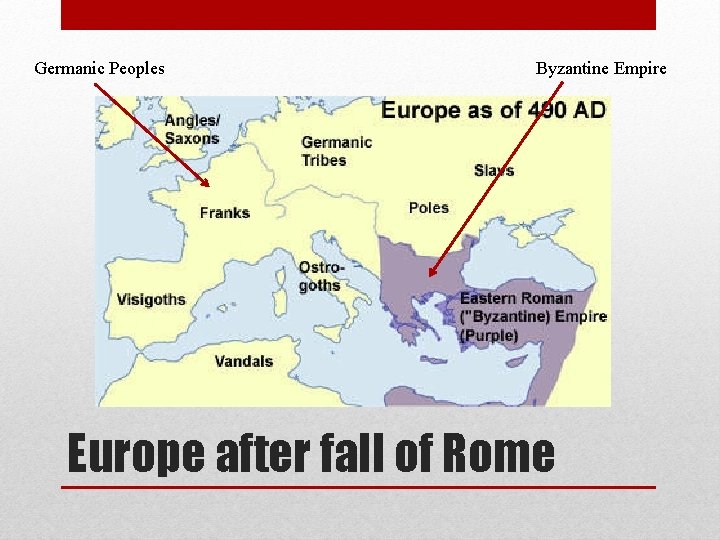
Germanic Peoples Byzantine Empire Europe after fall of Rome
During the early Middle Ages much of Europe passed through a time of turmoil and confusion, of ignorance and lawlessness. . . The early Middle Ages may justly be called the Dark Age. . . During the early Middle Ages, from 476 to about 1100, European civilization slipped back into semi-barbarism. The chief cause of this decline was lack of a government which could keep order. The Germanic Kingdoms which had been set up by 476 were unable to suppress violence. There were so many highway robbers that travel became dangerous. Europe suffered a decline in commerce and manufacturing, in education, in literature and the arts, and in almost all that makes possible a high civilization. Cities grew smaller and in some cases practically disappeared, and western Europe became a region of poverty-stricken farming communities, each virtually isolated from the rest of the world. Source: Roehm, A. , Buske, M. , Webster, H. & Wesley, E, . (1954). The Record of Mankind. Heath and Company. DARK AGES
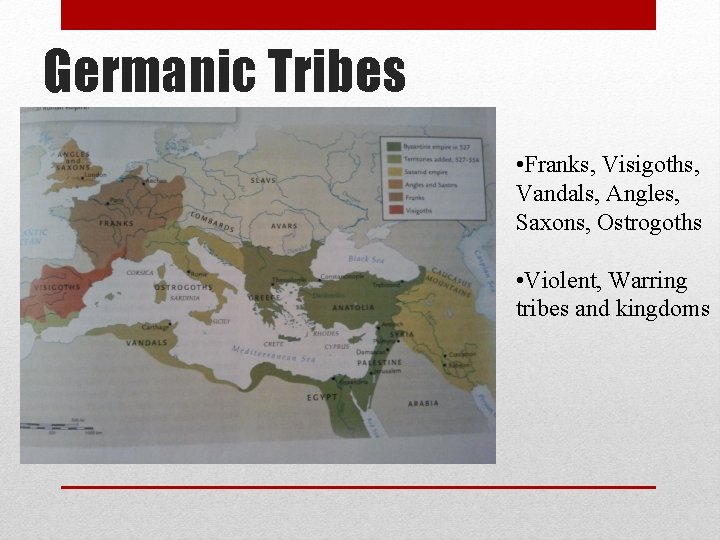
Germanic Tribes • Franks, Visigoths, Vandals, Angles, Saxons, Ostrogoths • Violent, Warring tribes and kingdoms
• Political and class system where nobles were granted the use of the land that legally belonged to the king • Why did this come about? Feudalism
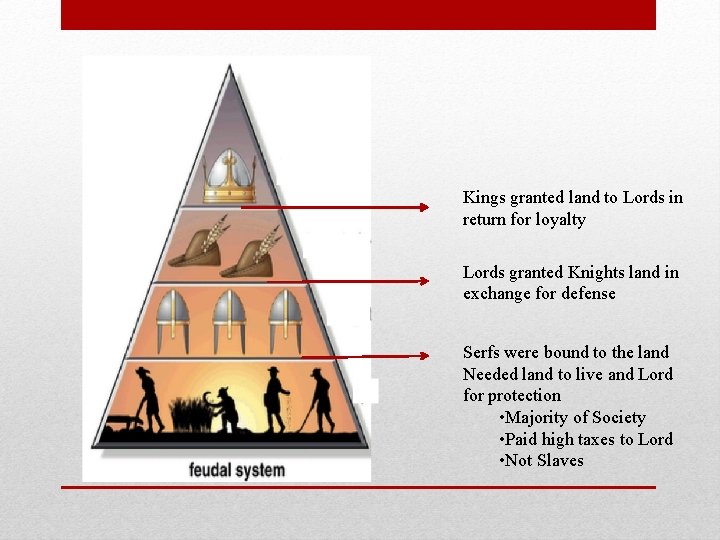
Kings granted land to Lords in return for loyalty Lords granted Knights land in exchange for defense Serfs were bound to the land Needed land to live and Lord for protection • Majority of Society • Paid high taxes to Lord • Not Slaves
• • • Paid tax on all their food Paid tax on marriage Paid 1/10 of income to village priest Lived in crowded cottages Couldn’t travel more than 25 miles away from homes Didn’t live very long (avg. life=35 years) Life of Serf
• http: //www. youtube. com/watch? v=r. Aa. Wv. VFERVA Monte Python