
Danielle M Bronk Ph D ABPd N Board
Danielle M. Bronk, Ph. D, ABPd. N Board Certified Pediatric Neuropsychologist Neurodevelopmental Health Services THE PERFECT STORM: ADDICTIVE BEHAVIOR AND THE DEVELOPING BRAIN: UNDERSTANDING ADOLESCENT VULNERABILITY TO ADDICTION AND THE IMPACT ON DEVELOPMENT
Discussion Overview Ø A focus on relevant structural and neurochemical changes in the adolescent brain and the relationship of the developing brain on behavior. Ø We will review vulnerability factors associated with addictive behavior during adolescence. Ø We will discuss common addictions during adolescence and the effects of addiction on the developing brain. Ø Lastly, we will discuss screening as well as behavioral strategies and treatment resources for the more common adolescent addictions.
Poll Question #1 Is the adolescent brain more susceptible to addictive behavior? True or False
Part 1: The Significance of Adolescence Ø It’s not just about hormones…. . Ø More important than the specific effects of hormones are the broader developmental changes that occur in the adolescent brain. Ø “Perhaps the most fundamental change—and the discovery that seems to have driven us to rethink how the teenage brain works— comes from neuroimaging studies revealing that white matter and gray matter in the brain undergo significant changes during the adolescent years” (Armstrong, 2016).
The Brain v. Hormones Ø Hormones certainly play in driving adolescent behaviors. Ø Estrogen and testosterone play a role in structural connections in the brain and affect neurotransmitters in the brain Ø However, structural changes in the brain during adolescence serve as the primary basis to understanding this key period in development.
The Adolescent Brain: Pedal to the Metal Ø The most profound changes that take place in the brain during adolescence involve rewiring, reassembling, and upgrading of neural tissue. Ø Beefing up white matter and reducing gray matter
Poll Question #2 Name one brain region that undergoes major development during adolescence?
The Adolescent Brain “Human brains are genetically engineered to prioritize emotions over logic in our adolescent and early adult years” (Shatkin, 2017).
Why is this? The answer lies in the specific regions and type of changes occurring in the adolescent brain– ØIncreased synaptic pruning and myelination in the prefrontal cortex ØEnhanced amgydala reactivity to emotional stimuli ØExaggerated reactivity to rewarding stimuli ØReduced sensitivity to aversive stimuli
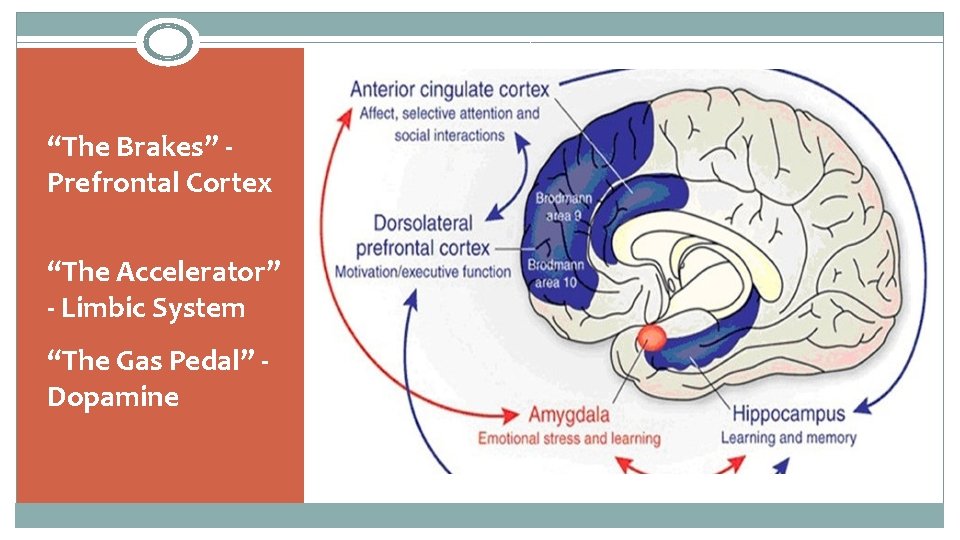
“The Brakes” Prefrontal Cortex “The Accelerator” - Limbic System “The Gas Pedal” Dopamine
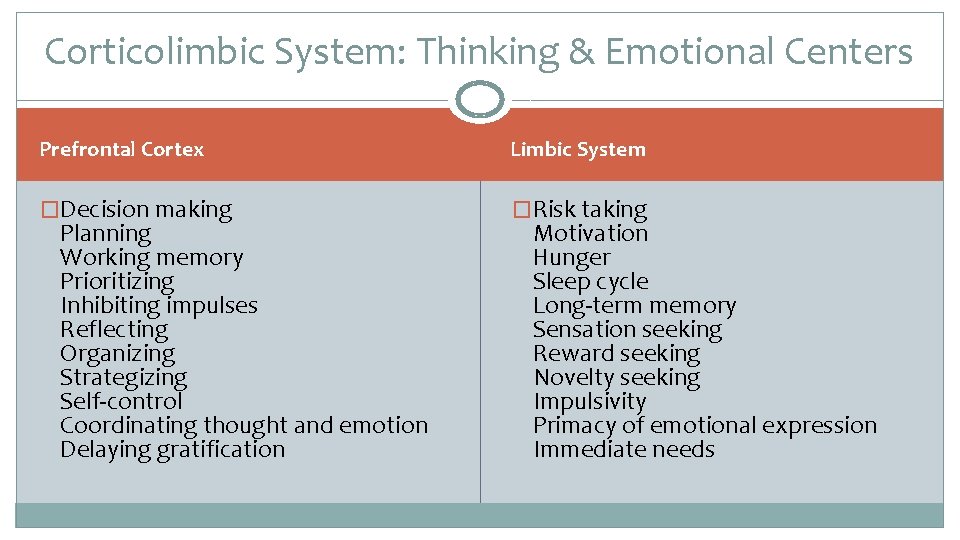
Corticolimbic System: Thinking & Emotional Centers Prefrontal Cortex Limbic System �Decision making �Risk taking Planning Working memory Prioritizing Inhibiting impulses Reflecting Organizing Strategizing Self‐control Coordinating thought and emotion Delaying gratification Motivation Hunger Sleep cycle Long‐term memory Sensation seeking Reward seeking Novelty seeking Impulsivity Primacy of emotional expression Immediate needs
Corticolimbic System: Frontal Lobe Ø Frontal lobe is the brain’s action/direction cortex Ø The prefrontal cortex is the area responsible for planning, making decisions, setting priorities, forming strategies, and inhibiting impulses and inappropriate behavior. These activities are often referred to collectively as executive functions. Ø Different areas of the frontal lobe in particular, the prefrontal cortex are involved in different executive functions
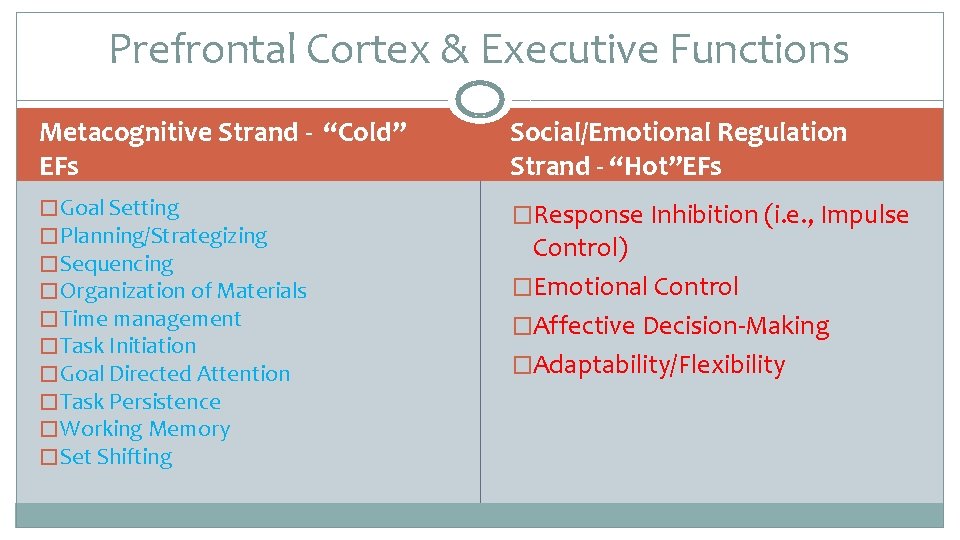
Prefrontal Cortex & Executive Functions Metacognitive Strand - “Cold” EFs Social/Emotional Regulation Strand - “Hot”EFs � Goal Setting � Planning/Strategizing � Sequencing � Organization of Materials � Time management � Task Initiation � Goal Directed Attention � Task Persistence � Working Memory � Set Shifting �Response Inhibition (i. e. , Impulse Control) �Emotional Control �Affective Decision‐Making �Adaptability/Flexibility
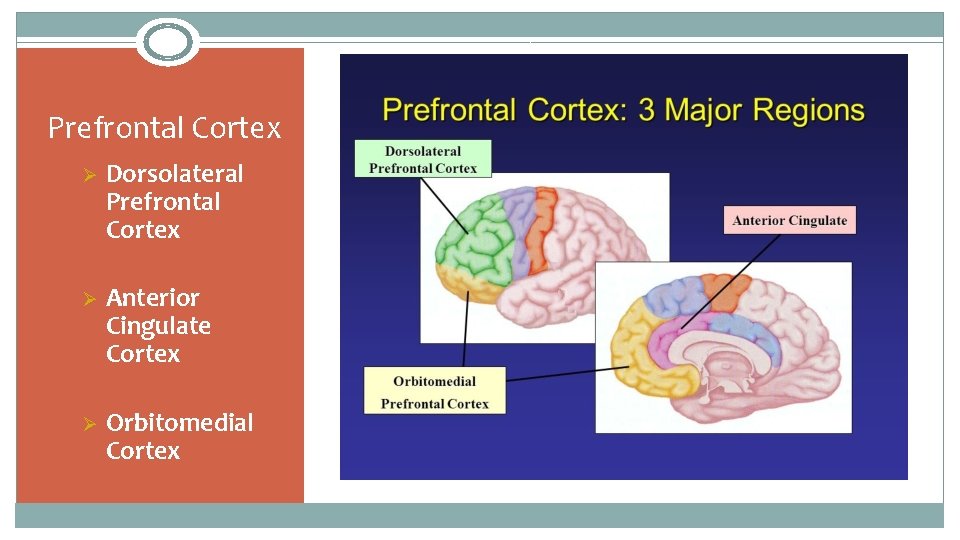
Prefrontal Cortex Ø Dorsolateral Prefrontal Cortex Ø Anterior Cingulate Cortex Ø Orbitomedial Cortex
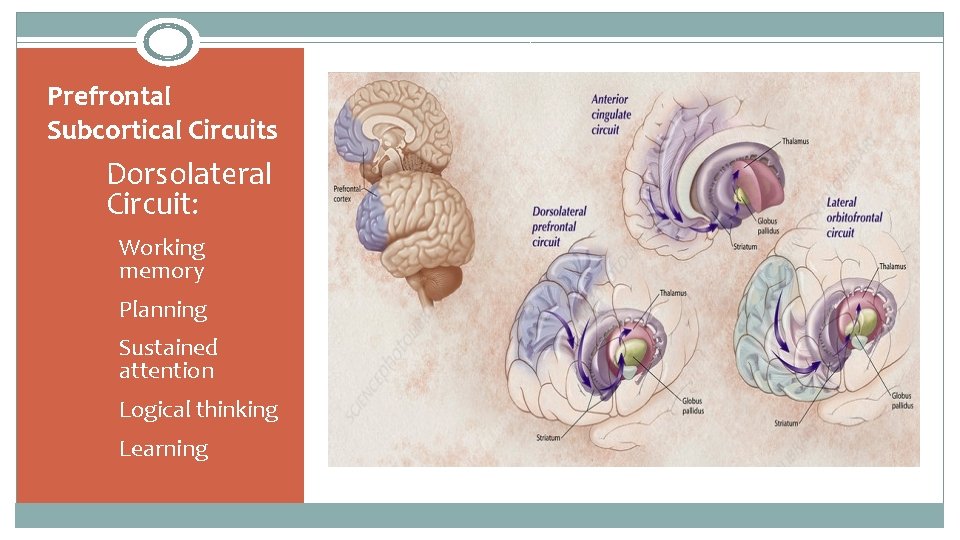
Prefrontal Subcortical Circuits 1. Dorsolateral Circuit: Working memory Planning Sustained attention Logical thinking Learning
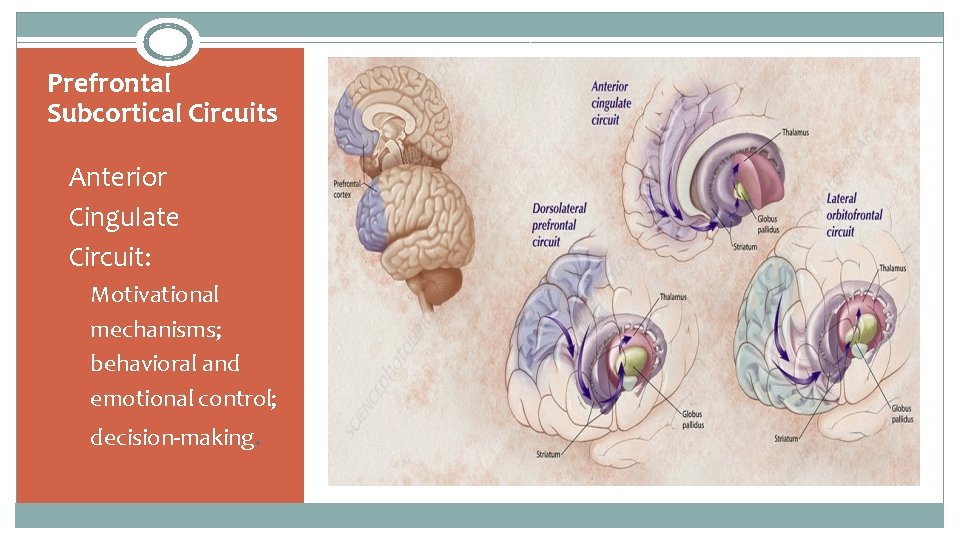
Prefrontal Subcortical Circuits Anterior Cingulate Circuit: Motivational mechanisms; behavioral and emotional control; decision‐making.
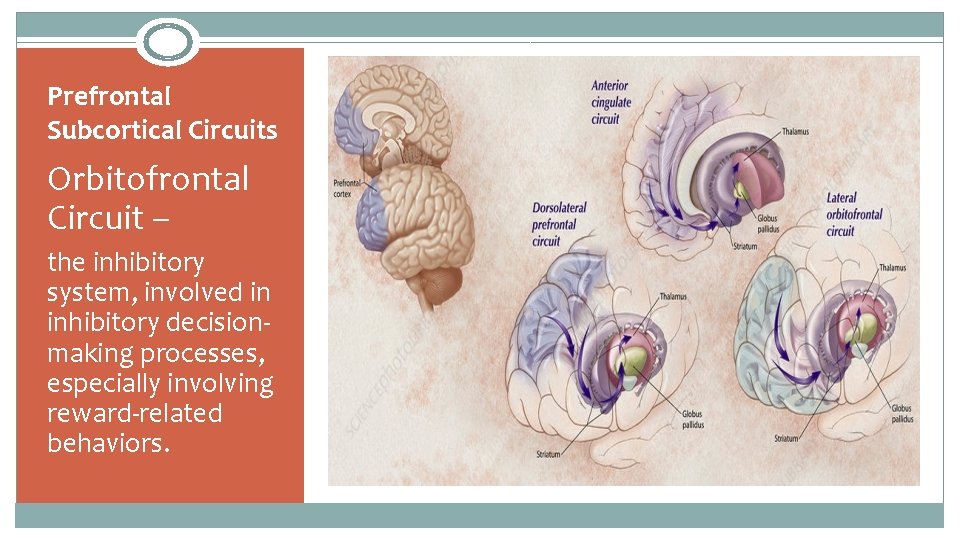
Prefrontal Subcortical Circuits Orbitofrontal Circuit – the inhibitory system, involved in inhibitory decision‐ making processes, especially involving reward‐related behaviors.
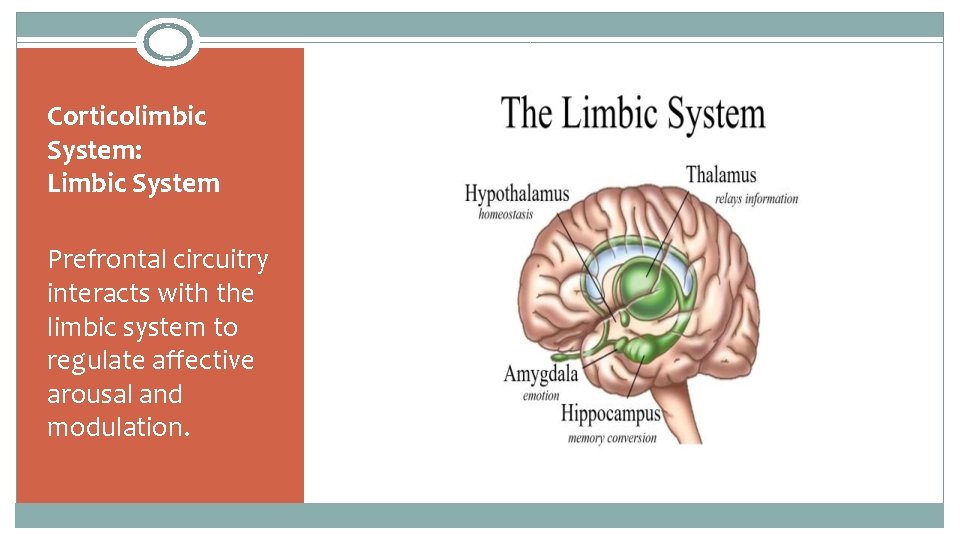
Corticolimbic System: Limbic System Prefrontal circuitry interacts with the limbic system to regulate affective arousal and modulation.
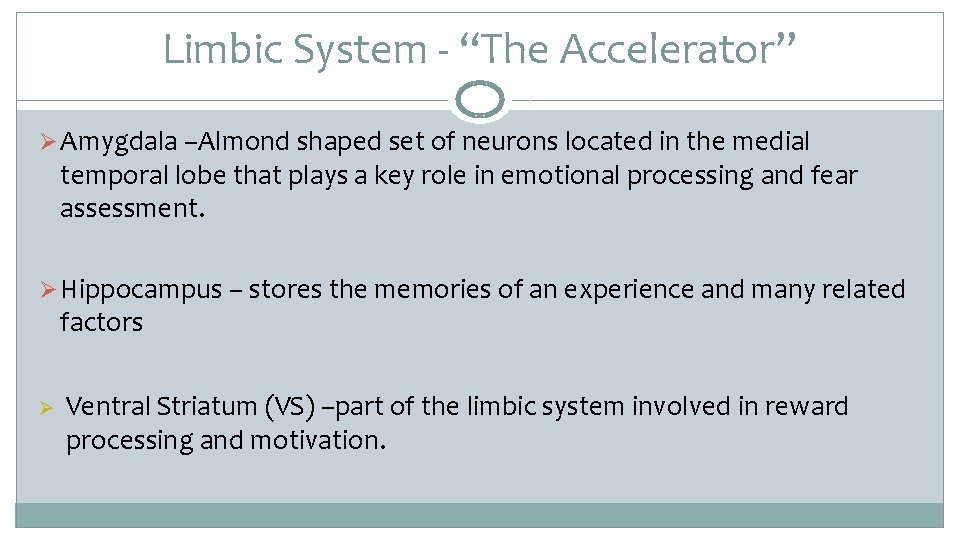
Limbic System ‐ “The Accelerator” Ø Amygdala –Almond shaped set of neurons located in the medial temporal lobe that plays a key role in emotional processing and fear assessment. Ø Hippocampus – stores the memories of an experience and many related factors Ø Ventral Striatum (VS) –part of the limbic system involved in reward processing and motivation.
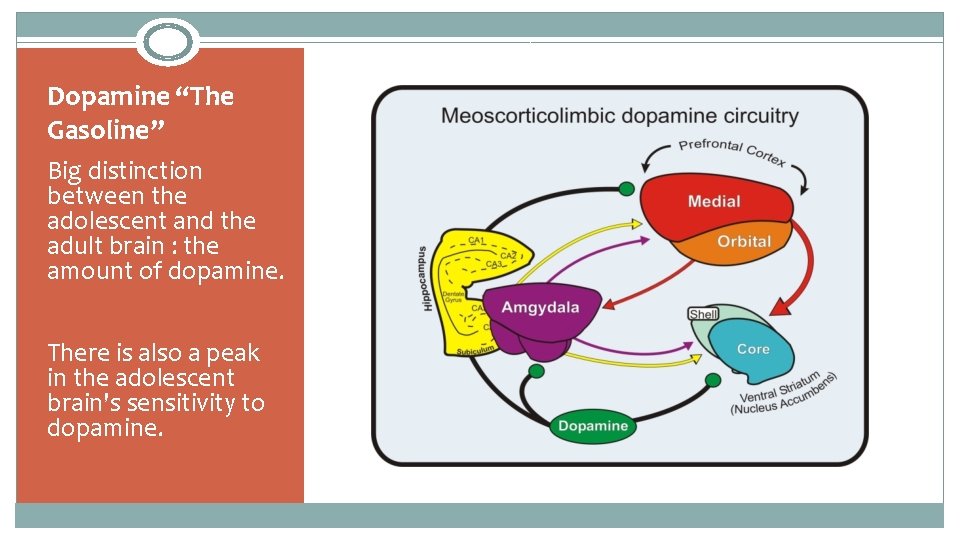
Dopamine “The Gasoline” Big distinction between the adolescent and the adult brain : the amount of dopamine. There is also a peak in the adolescent brain's sensitivity to dopamine.
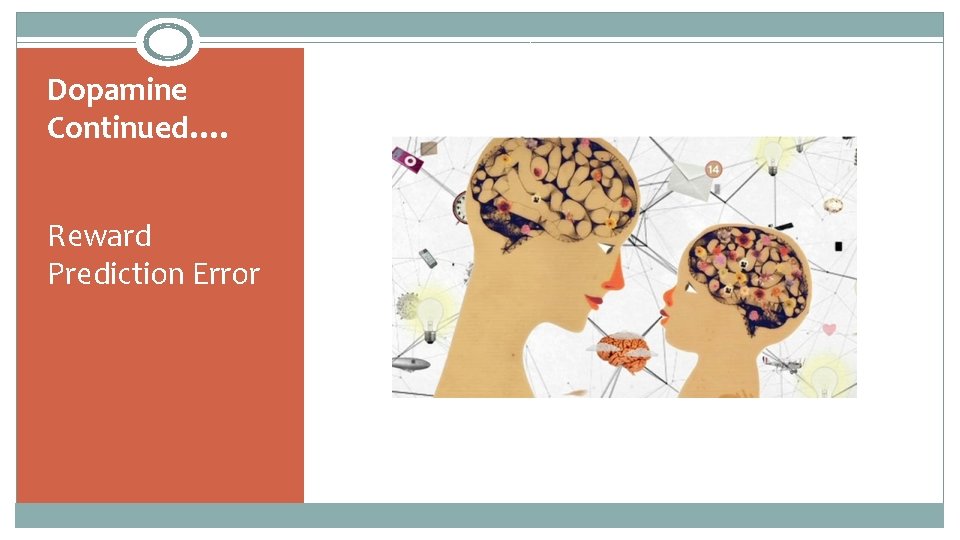
Dopamine Continued…. Reward Prediction Error
Dopamine Continued…. Sex hormones ‐ directly (e. g. , adolescents' acquisition of sex‐specific physical traits and sexual attraction to others) and indirectly (e. g. , influencing neurotransmitter activity in the brain) influence dopamine and other neurotransmitters. During adulthood the brakes (PFC) and the accelerator (emotional center) are better connected and thus dopamine is better shared between the two, resulting in the brakes being more easily applied (less impulsive and more thoughtful in decision‐making).
The Adolescent Brain �As we age, the prefrontal cortex takes the driver seat unlike during adolescence where the amygdala has a greater role �Adolescents display heightened attention and reactivity to reward and threat �Adolescents display greater reliance on limbic emotional regions than on prefrontal control regions.
Neurodevelopmental Takeaways �Sex hormones have an important role in affecting adolescent development �During adolescence, white matter in the brain increases and gray matter decreases. Pruning of gray matter occurs from the back of the brain to the front, meaning that the prefrontal cortex , the site of executive functions is the last area of the brain to be fine‐tuned in adolescence. �The limbic system, or emotional brain, matures before the prefrontal cortex does, meaning that emotion, sensation seeking, and social salience often override more rational ways of thinking and behaving until late adolescence or the early 20 s. �During adolescence, fluctuations in neurotransmitter systems that involve dopamine, oxytocin, and serotonin can contribute to reward‐based risk taking, intense desire for social connections, and mood disturbances.
Adolescent Brains are Engineered for Success �Engineered for flexibility…. . It is beneficial for the adolescent brain to be flexible, more “plastic” and not rigid like the adult brain. �Engineered for risk-taking……Evolution shaped risk‐taking in adolescence (think shorter life span) were best suited to take risks needed for exploring sources of food and land, procreating, etc. �Engineered for sensation seeking… newer research tells us adolescents tolerate ambiguity better than adults. Therefore, adolescents may be more comfortable taking risks without all the information and uncertainty regarding potential outcomes.
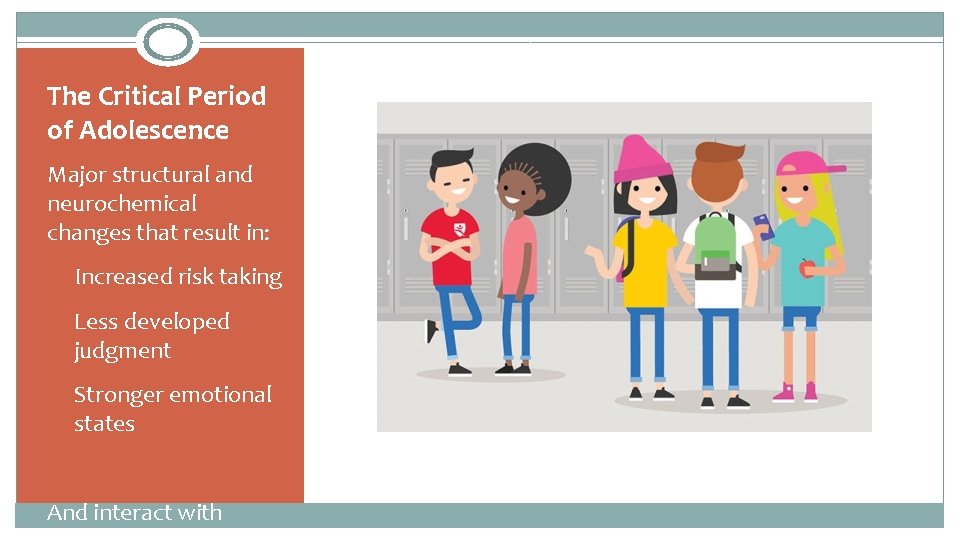
The Critical Period of Adolescence Major structural and neurochemical changes that result in: Ø Increased risk taking Ø Less developed judgment Ø Stronger emotional states And interact with
Part 2: Neurobiological Models of Addiction It appears that the brain changes characteristic of adolescence are among the most dramatic and important to occur during the human life span. —Laurence Steinberg For this reason, exposure to addictive substances/behavior during this period is critical to our neurobiological understanding of addiction during adolescence.
The Dopamine Crave Theory Ø When we engage in a dopaminergic behavior (eating M&Ms), dopamine levels increase so the reward pathway is activated, thus telling the individual to repeat the behavior for more feel‐good reward. Ø Addictive behaviors provide a short cut with less delay and a flooding of dopamine. Addicted individuals experience a dopamine reduction or shutdown to pause or reset overflooded receptors. Ø Addiction creates a reduced capacity to naturally produce dopamine so then the addicted individual needs to engage in the addicted behavior just to maintain dopamine levels.
The Dopamine Crave Continued…. �Research has shown that those with a genetic predisposition to addiction have lower baseline levels of dopamine as well as endorphins and norepinephrine, and as a result are more likely become addicted on a substance or behavior that increases dopamine.
The Dopamine Crave Continued…. Eating foods like chocolate can raise dopamine by 50% Sex can raise dopamine levels by 100% 2‐D videogames increase levels by 100% (Koepp, 1998) Snorting cocaine…. 350% Crystal meth…. 1, 200%
The Dopamine Crave & Adolescence Adolescents do not have the benefit of the fully developed prefrontal cortex to apply the brakes to control impulsivity and exert greater levels of willpower.
Myelin Disruption Theory Ø When synapses are stimulated repeatedly, the neuronal connection pattern becomes hardwired via myelination. Ø Overstimulation of pathways can damage myelin in neural pathways too. Ø Oligodendrocytes = brain cells that produce cholesterol for proper myelination are easily damaged by head trauma, environmental stressors, toxins, stress hormones, certain drugs, and overstimulation.
Myelin Disruption Theory Continued…. Ø Recent brain imaging has also shown decreased myelination with tech addiction. Ø Indiana University School of Medicine 2011 study compared f. MRI results for those that played violent videogames for one week versus controls. After one week of violent video game play, those individuals showed less activation in the left inferior frontal lobe and less activation in the anterior cingulate cortex in their baseline result and when compared to controls. Ø Once they refrained from VG play, the regions returned to a state closer to the control group highlighting the brain’s plasticity (bounce back and compensate).
The Environment Ø Environmental conditions seem to play a role in vulnerability to addiction. Rat studies by Canadian professor, Dr. Alexander highlight this as rats in cages were quick to become addicted to morphine, while rats in “parks” with other rats and opportunities for physical activities were much less likely to access the morphine. Ø Dr. Alexander applied this to humans and found those put in physical, mental or cultural isolation are more susceptible to addiction.
The Environment Continued…. Dr. Alexander went on to surmise that, “The view of addiction from Rat Park is that today’s flood of addiction is occurring because our hyperindividualistic, hypercompetitive, frantic, crisis‐ridden society makes most people feel socially and culturally isolated…. “They find temporary relief in addiction to drugs or any of the other thousand other habits and pursuits because addiction allows them to escape from their feelings, to deaden their senses and to experience an addictive lifestyle as a substitute for a full life. ”
Frontal Cognitive Dysfunction Theory Ø Chronic exposure to addictive substance or behavior negatively affects the frontal cortex…. . Ø Frontal cortical cognitive dysfunction resulting in an inability to inhibit inappropriate unconditioned or conditioned responses elicited by drugs, related stimuli or internal drive states. Ø “Faulty Brakes” – the brain’s decision‐maker (i. e. , impulse control) makes it harder for the person to “just say no. ”
Frontal Cognitive Dysfunction Theory Remember the PFC does the following: Ø Process the reward value and/or affective valence of environmental stimuli Ø Assess the future consequences of one’s actions and inhibit inappropriate behaviors Repeated exposure to addictive substance or behavior leads to dysfunction in OFC circuit that leads to an intensive drive to use or engage in the addictive behavior following exposure to “cues. ”
Frontal Cognitive Dysfunction Theory Continued…. Executive dysfunction affects the addict’s ability to maintain the correspondence between intention and action, and to compile all of the necessary information to be aware of the consequences or one’s challenges as well as the repercussions on their family and social environment. In addition, the speed to understand the information is impaired.
Frontal Cognitive Dysfunction Theory & Denial/Lack of Awareness in Addiction Ø Interpreting and processing emotional signals – The insula in PFC is a key region for processing and integrating social engagement, perception, and emotional signals. Ø Impulsive Response Pattern – being able to perceive and anticipate the negative consequences of addiction. Ø Ability to imagine future consequences – medial orbitofrontal cortex, which is often considered one of the most affected regions of addiction.
The Adolescent Paradox: Overlearning Ø Adolescence is a stage of development where there is high rates of learning and memory due to the heightened synaptic plasticity of childhood. Ø This priming to learn leaves adolescents vulnerable to learning the wrong things, as anything learned (good or bad) that stimulates dopamine production is basically a reward to the brain. Ø According to Dr. Jensen, “This means a little bit of stimulation to a teenage brain whose synapses are firing all over the place leads to a craving for more stimulation that can, in certain situations, result in a kind of overlearning. ”
Determinants of Addiction During Adolescence Risk & Protective Factors ØParent relationship ØFamily conflict ØSchool environment ØRelationships with adults in the community ØSpiritual beliefs ØEngagement in other risky behaviors
Poll Question #3 Tell me some common addictions during adolescence?
Part 3: Addiction in Adolescence For our purposes, we’ll examine…. . ØAlcohol ØVaping ØScreen Addiction
Adolescence & Alcohol Use Disorder Some stats and facts…… Adolescents are less sensitive to the sedative effects of alcohol (Silveri & Spear, 1998). 25‐ 35% of HS students begin drinking before age 13 (CESAR, 2006). Adolescents who begin drinking before age 15 are 4 x more likely to become alcohol dependent during their lifetime (Grant & Dawson, 1998).
Alcohol & the Adolescent Brain Ø Adolescent brains are much better at handling the sedative aspects of drinking due to less GABA receptors (cerebellum) Ø Alcohol effects the size and efficiency of the prefrontal cortex and hippocampus Ø Animal studies have shown a reduction in hippocampi neurons when exposed to heavy drinking Ø Alcohol impairs memory more easily in adolescents than in adults Cocktail party memory deficit The blackout
Adolescence & Alcohol Use Disorder Research has shown adolescents with alcohol use disorder have smaller prefrontal gray and white matter volumes than age matched controls. Lower volumes correlated with a higher maximum number of drinks per drinking episode (De Bellis et al. , 2005). Adolescents that engage in heavy binge drinking experience greater levels of negative mood and perform worse on executive function tasks (Townshend & Duka, 2003) secondary to disrupted synaptic remodeling (i. e. , pruning and myelination) in prefrontal cortex (Crews et al. , 2007).
Poll Questions # 4 & 5 Isn’t vaping less harmful than tobacco? True or False It is only water vaping, right? True or False
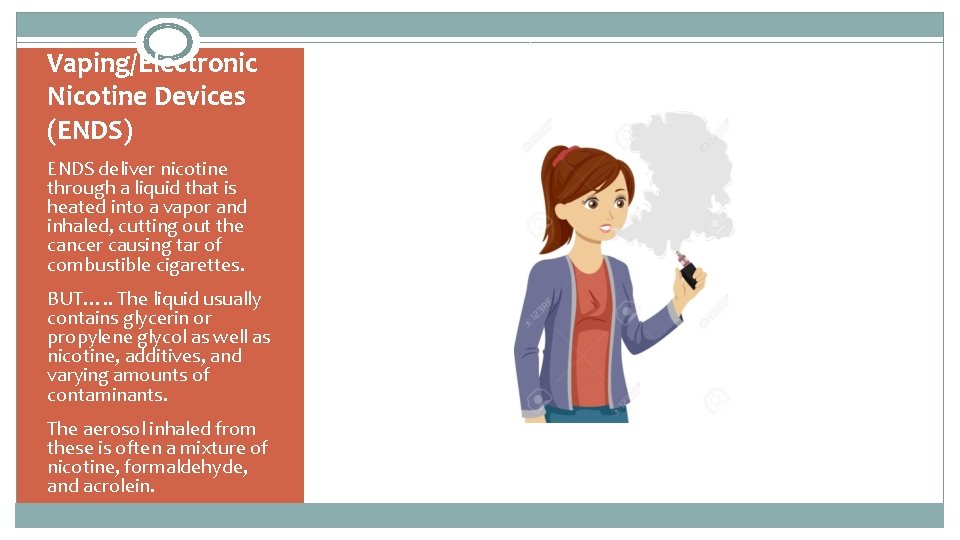
Vaping/Electronic Nicotine Devices (ENDS) ENDS deliver nicotine through a liquid that is heated into a vapor and inhaled, cutting out the cancer causing tar of combustible cigarettes. BUT…. . The liquid usually contains glycerin or propylene glycol as well as nicotine, additives, and varying amounts of contaminants. The aerosol inhaled from these is often a mixture of nicotine, formaldehyde, and acrolein.
ENDS & the Developing Brain Animal studies regarding nicotine use during adolescence have demonstrated structural and functional changes in the brain, including: 1. Upregulation of n. ACh. Rs 2. Reduced cell number and size in midbrain, cerebral cortex, and hippocampus 3. Changes in prefrontal cortex neurons
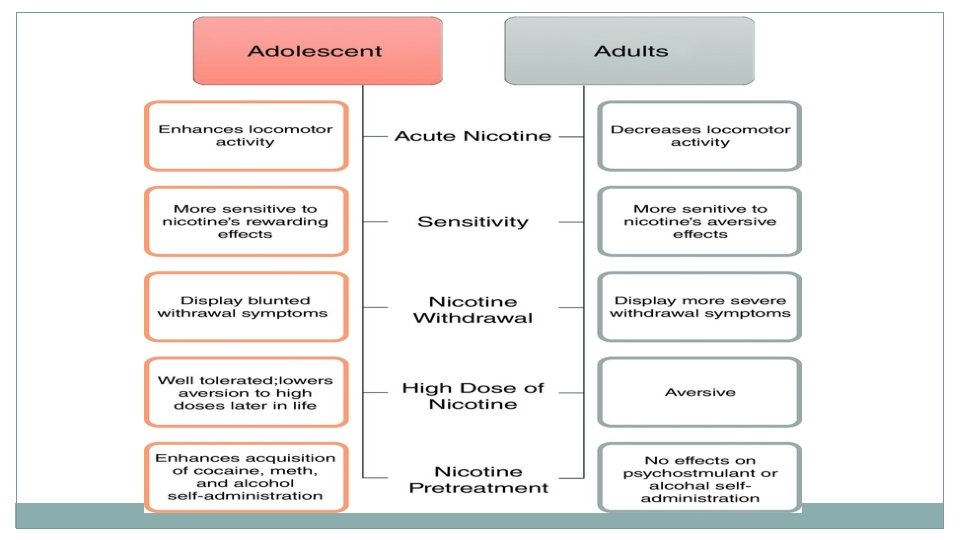
ENDS & the Developing Brain The research of Yuan et al. , 2015 along with others revealed that adolescents exhibit greater behavioral sensitivity and susceptibility to other drugs of abuse after nicotine exposure.
ENDS Addiction Ø The Lancet ranked nicotine as more addictive than alcohol and barbiturates Ø Approximately 85% of people who try to stop smoking on their own relapse. Ø The dopamine reward system is also involved in nicotine addiction. Recent animal research and human brain imaging studies have shown that environmental cues, especially those associated with drug use, can change dopamine concentrations in the brain.
ENDS & the Adolescent Brain ØNicotine exposure during adolescence leads to molecular changes that alter the functioning of synapses in the prefrontal cortex that underlie lasting effects on cognitive function (Goriounova & Mansvelder, 2012). ØAnimal studies have shown chronic adolescent nicotine exposure have resulted in adults with reduced attention span and enhanced impulsivity (Trauth et al. , 2000; Counotte et al. , 2009; Counotte et al. , 2011).
ENDS & Gender Differences ØResearch has demonstrated that females are more sensitive than males to the rewarding effects of nicotine, as well as more sensitive to the aversive effects of nicotine withdrawal (O'Dell and Torres, 2014). ØFemale adolescents have been shown to exhibit greater withdrawal‐related craving than males (Dickmann et al. , 2009).
ENDS Support Ø Parents Against Vaping E‐Cigarettes, an advocacy group committed to for stricter regulations on e‐cigarettes and resource for parents. Ø The Truth Initiative’s This is Quitting: this app supports youth quitting tobacco and ENDS. The app provides real social media posts from other youth quitters, free text messages to keep youth quitters on track, and quitting exercises that are both structured and on‐demand. Ø Smoke. Free. gov’squit. START app: quit. START is a free smartphone app that helps youth quit smoking with tailored tips, inspiration and challenges available to anyone age 13 and older. Ø Smoke. Freeteen. gov – Smokefree. TXT for teens: This mobile text messaging service is designed for young adults (13‐ 19) who are trying to quit smoking. This service runs for 6‐ 8 weeks.
ENDS Parent Resources ØThe Tobacco Prevention Toolkit – med. standford. edu ØTruth Initiative – truthinitiative. org ØPartnership for Drug Free Kids – drugfree. org
ENDS Health/Counselor Educator Resources Ø Federal Drug Administration – The Real Cost Campaign Ø Stanford Medicine – Tobacco Prevention Toolkit Ø Northern New England Poison Center – Lesson Plan @ nnepc. org Ø CATCH Global Foundation & CVS Health – “Catch My Breath” Ø CDC’s Office on Smoking and Health – Know the Risks: A Youth Guide to E‐ Cigarettes
Poll Question #6: Is there such a thing as a gaming addiction?
DSM‐ 5 Internet Gaming Disorder Ø“Condition for Further Study” ØMost common in male adolescents ages 12 through 20 ØRepetitive use of internet‐based games, often with other players, that leads to significant issues with functioning
DSM‐ 5 Internet Gaming Disorder Criteria Preoccupation or obsession with internet games. Withdrawal symptoms when not playing internet games. A build‐up tolerance – more time needs to be spent playing the games. The person has tried to stop or curb playing internet games, but has failed to do so. The person has had a loss of interest in other life activities, such as hobbies. The individual has had continued overuse of internet games even with the knowledge of how much they impact a person’s life. 7. The person lied to others about his or her internet game usage. 8. The person uses internet games to relieve anxiety or guilt – it’s a way to escape. 9. The person has lost or put at risk and opportunity or relationship because of internet games. 1. 2. 3. 4. 5. 6.
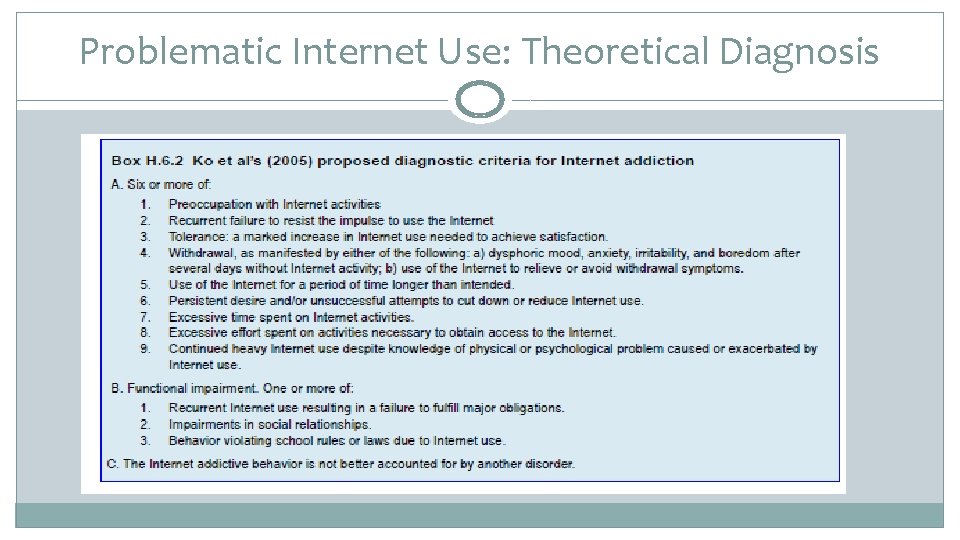
Problematic Internet Use: Theoretical Diagnosis
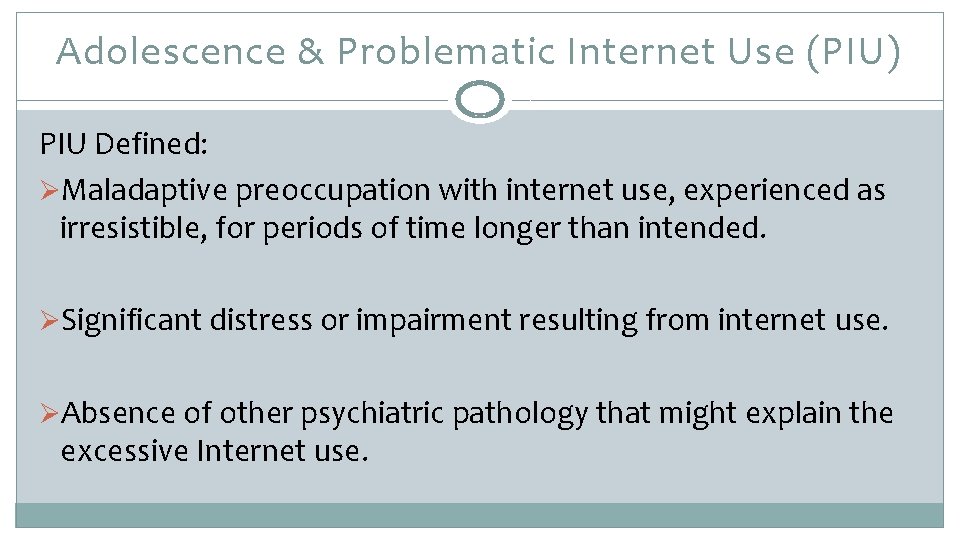
Adolescence & Problematic Internet Use (PIU) PIU Defined: ØMaladaptive preoccupation with internet use, experienced as irresistible, for periods of time longer than intended. ØSignificant distress or impairment resulting from internet use. ØAbsence of other psychiatric pathology that might explain the excessive Internet use.
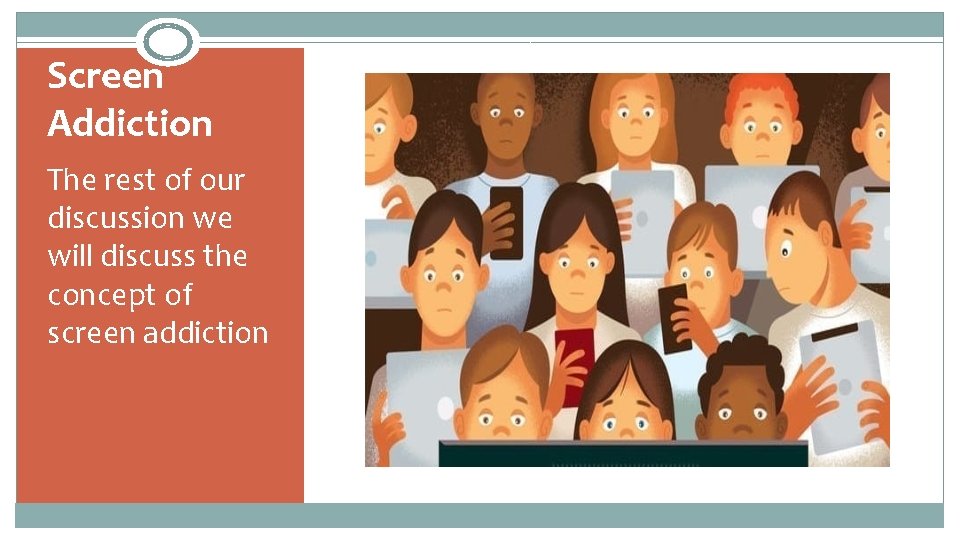
Screen Addiction The rest of our discussion we will discuss the concept of screen addiction
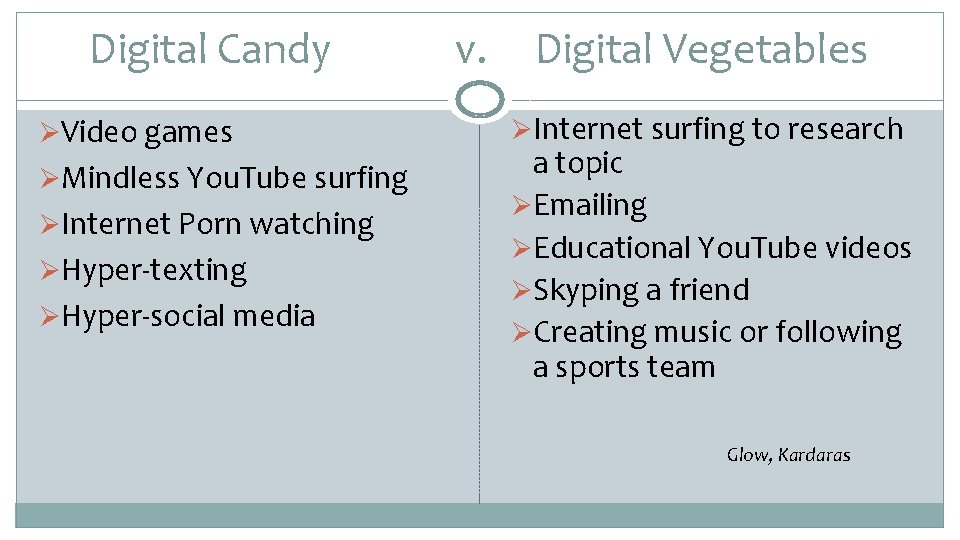
Digital Candy ØVideo games ØMindless You. Tube surfing ØInternet Porn watching ØHyper‐texting ØHyper‐social media v. Digital Vegetables ØInternet surfing to research a topic ØEmailing ØEducational You. Tube videos ØSkyping a friend ØCreating music or following a sports team Glow, Kardaras
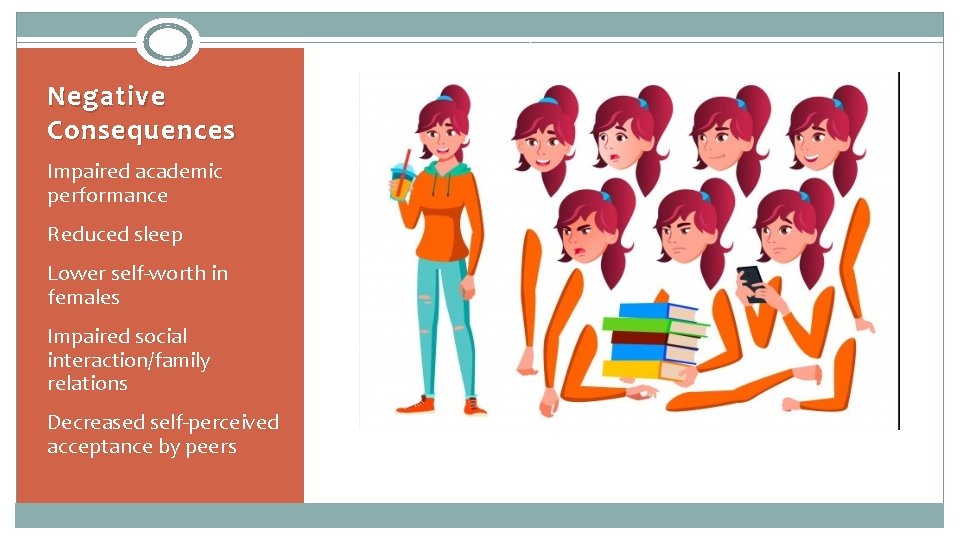
Negative Consequences Impaired academic performance Reduced sleep Lower self‐worth in females Impaired social interaction/family relations Decreased self‐perceived acceptance by peers
Excessive Screen Use & Sleep “Teens who spend three hours a day on devices are more likely to get less than seven hours of sleep” (Child Mind Institute, 2019). Sleep deprivation from excessive screen time is believed to be a significant underlying factor in the onset of depression
Screen Addiction & Adolescent Depression Ø 66% of adolescents that engage in excessive screen time are more likely to be depressed and exhibit lower self‐esteem when compared to those who engage in average screen consumption. ØLoneliness and feelings of isolation ØThe role of sleep
Poll Question #7: Is compulsive texting real? True or False
Why yes it is…. . ØWhile it does not hold it’s own DSM‐ 5 diagnosis the APA’s journal Psychology of Popular Media states, “Text messaging has increased dramatically over the past 10 years, ” and research has shown that adolescent texters display addiction symptoms and behaviors. ØThe key to a texting compulsion is not just the number of texts, but the effect that the behavior is having on the individual’s life.
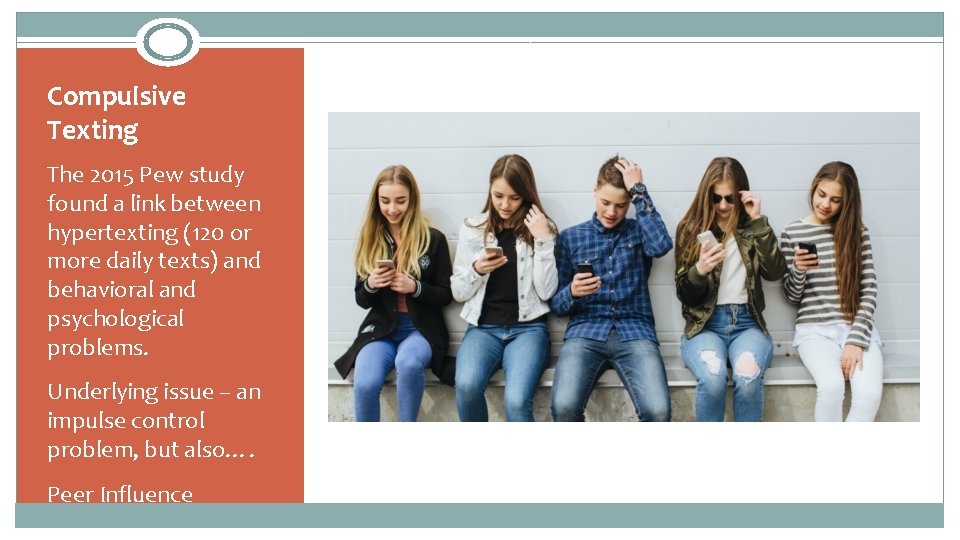
Compulsive Texting The 2015 Pew study found a link between hypertexting (120 or more daily texts) and behavioral and psychological problems. Underlying issue – an impulse control problem, but also…. Peer Influence
Screen Addiction & Mental Health Symptoms ØDepression ØPhobic anxiety ØHostility ØWithdrawal ØIrritability ØSleep Disturbance ØMood changes
Neurodevelopmental Disorders & Screen Addiction ØDr. Victoria Dunckley, a California psychiatrist theorizes that neurodevelopmental disorders may be amplified by something she coined electronic screen syndrome (ESS). ØShe hypothesized that interacting with screens overstimulates the child and shifts the nervous system into flight or fight mode, which in turn causes dsyregulation and disorganization of biological and hormonal systems.
Neurodevelopmental Disorders (ADHD/ASD) & Screen Addiction Ø “Autistic teens are much more likely to watch TV or play video games (64. 2%) than use social media or messaging (13. 2%)” (Child Mind Institute, 2019). Ø Adolescents with ASD have a higher rate of being the victim or perpetrator of cyberbullying Ø Boys with ASD spend much more time playing video games than neurotypical boys, and boys with ASD and ADHD are at greater risk for internet gaming addiction than neurotypical males. Ø Inattentive symptoms, in particular, were strongly associated with problematic video game use for both groups
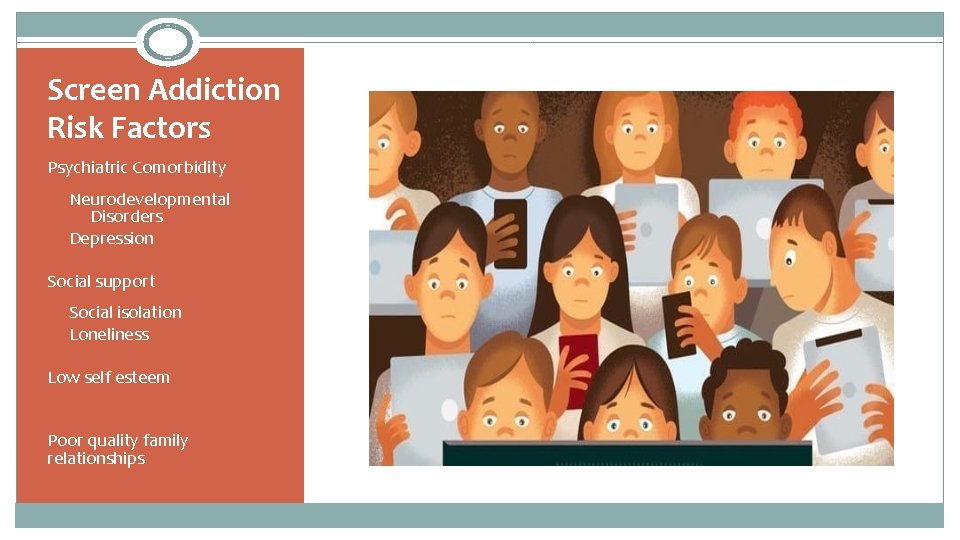
Screen Addiction Risk Factors Psychiatric Comorbidity Neurodevelopmental Disorders Depression Social support Social isolation Loneliness Low self esteem Poor quality family relationships
Screen Addiction & the Brain Øf. MRI similar to substance addiction ØChanges in orbitofrontal cortex and anterior cingulate cortex ØReduction in executive control and impulse control
Screen Addiction Assessment: Parent Interview Ø Is your child staying up later and later to stay on a screen? Ø Does your child get fidgety, anxious and/or angry if they don’t have their device? Ø Is their tech usage negatively impacting their schoolwork, family life, or other interests? Ø Is your child indicating that he is having a difficult time getting virtual imagery out of his head? Ø Is your child hiding their screen usage or hiding their device from you? From Glow by Kardaras
Screen Addiction Assessment: Parent Interview ØDoes your child seem to be having a more difficult time regulating their emotions? ØDoes your child seem more apathetic and bored more easily? ØDoes your child seem perpetually tired yet also wired? ØAre teachers complaining that your child is falling asleep in school? Taken from Glow by Kardaras
Assessment of Problematic Gaming: Clinical Interview Ø How much time do you spend gaming per day? Ø Does your gaming interfere with your sleep or eating? Ø How do you feel before, during, and after gaming? Ø Have you ever used gaming to help improve your mood or change your thoughts? Ø Have you ever felt anxious, depressed or isolated when not gaming? Ø Do you believe you have a problem with your gaming? Ø What exercise do you engage in? Ø What is your level of commitment to change your current gaming patterns? Griffiths, Kuss, & Pontes (2018)
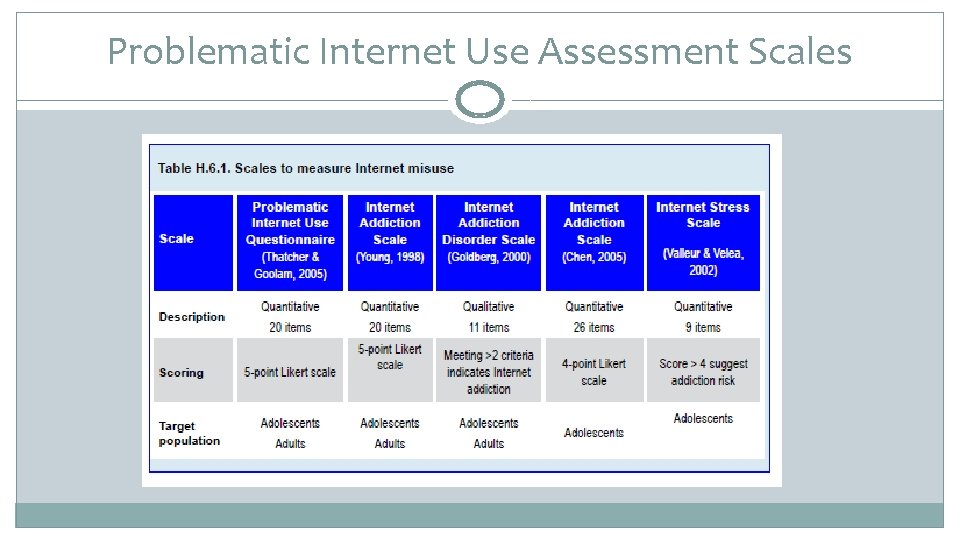
Problematic Internet Use Assessment Scales
Strategies for Healthy Screen Use ØFocus on Balance ØTurn Off Notifications ØLook out for at‐risk adolescents ØModel restraint and balance in your own screen time ØPhone free time before sleep ØTeach mindful use of social media and texting
Child Mind Institute Resources 2019 Children’s Mental Health Report: Social Media, Gaming, and Mental Health: Understanding the Online Lives of Children and Adolescents ‐ Talking to Tweens and Teens About Their Online Lives: A Supplement to the Children’s Mental Health Report on Social Media, Gaming, and Mental Health
Screen Addiction: Intervention Strategies Ø Identify pattern of use with logbook Ø Set clear, specific goals Ø Limit and shorten Internet usage time Ø Negotiate one computer free time per week Ø Use reminder cards of negative consequences of Internet use Ø Make a list of former hobbies or interests Ø Increase time spent on sports, hobbies and other non‐ Internet activities Ø Join PIU support group
Screen Addiction Treatment: Digital Detox ØCold turkey versus the gradual approach ØA slow taper – taper down an hour a day ØInclusion of alternate healthy or busy activities ØPeople connection
Intensive Treatment Options Øre. Start is just one of several residential treatment centers ØExperiential therapy – immersive wilderness programs are an option and treat those with addiction, depression and anxiety. ØPrimitive Pursuits – nonprofit nature‐based program in Ithaca that teach kids skills related to wilderness, leadership, community living and nature. ØHamptons Discovery – another experiential treatment program for teen addiction.
PIU: Additional Information Websites for problematic internet use www. netaddiction. com http: //www. netaddictionrecovery. com
- Slides: 85