
Danielle Blondel Laboratoire de Virologie Molculaire et Structurale
Danielle Blondel – Laboratoire de Virologie Moléculaire et Structurale UMR CNRS 2472 -INRA 1157 CNRS- Gif sur Yvette RNA viruses I. Introduction to viruses 1. Definition 2. Diversity : nature and structure 3. Classification II. Animal RNA viruses replication strategies 1. Plus-stranded RNA viruses (Ex : Poliovirus) 2. Negative-stranded RNA viruses 2 a) Non –segmented (Ex : Rabies virus) 2 b) Segmented (Ex : Influenza virus) 3. Double-stranded RNA viruses (Ex : Rotavirus) 4. Retroviruses 5. Variability of viral genomes
What are viruses? The viruses responsible of diseases In humans and animals Viral diseases are known since several thousands of years • 3700 BC : The first written record of a virus infection is from ancient Egypt which shows a temple priest with typical signs of paralytic poliomyelitis. • 2500 BC : chineses recognized the nature and the specific characters of small pox • 460 BC : Mumps was described by Hippocrate • 50 BC : Rabies was described by Virgile and Homère
The first success 1796 : Jenner and the vaccination against smallpox Edward Jenner used cowpox to successfully vaccinate a child. Vaccination against smallpox was almost universally adopted worldwide during the nineteenth century. 1885 : Pasteur and rabies vaccination 1881: Louis Pasteur began to study rabies in animals. Over several years, he developed methods to produce attenuated virus preparations which would protect from challenge with virulent virus. 1885, he inoculated a child, with the first artificially produced virus vaccine.
Viruses responsible of diseases In plants • Tobacco mosaic virus (VMT) (Ivanowsky 1892/ beijerink 1898) • Tomato mosaic virus In bacteria • Bacteriophages (1917, 1947, 1952)
Before the definition of virus Koch’s Postulates : 1. The agent must be present in every case of the disease. 2. The agent must be isolated from the host and grown in vitro. 3. The disease must be reproduced when a pure culture of the agent is inoculated into a healthy susceptible host. 4. The same agent must be recovered once again from the experimentally infected host.
Toward the definition of virus 1891 : Ivanowski showed that extracts from diseased tobacco plants could transmit disease to other plants after passage through ceramic filters fine enough to retain the smallest known bacteria. Tobacco mosaic virus (VMT) is filterable 1898 : Beijerinick confirmed and extended Iwanowski's results on Tobacco mosaic virus and was the first to develop the modern idea of the virus as “contagium vivum fluidum” (soluble living germ).
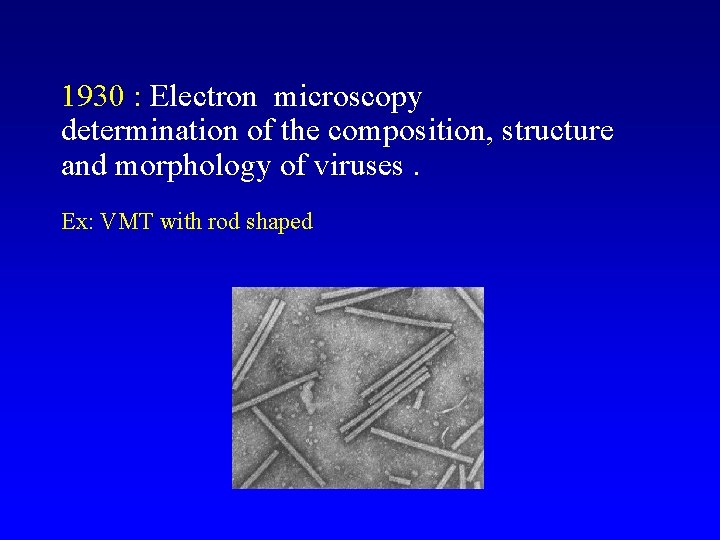
1930 : Electron microscopy determination of the composition, structure and morphology of viruses. Ex: VMT with rod shaped

Virus definition: • Virus particles (virions) themselves do not grow or undergo division • Viruses have only one type of nucleic acid · They lack the genetic information which encodes apparatus necessary for the generation of metabolic energy or for protein synthesis (ribosomes) They are therefore absolutely dependent on the host cell for this function. · Therefore, they are absolute parasites
Virus diversity • There is more biological diversity within viruses than in all the rest of the bacterial, plant and animal kingdoms put together. • This results comes from the success of viruses in parasitizing all known groups of living organisms. Classification was required
The basis of the classification • Initially, classification was based : - on common pathogenic properties - on common organ tropisms and common ecological and transmission characteristics • Since 1930, informations of the structure and composition of viruses started to emerge. Therefore, taxonomy was based on the structure and composition of the virus particle
Now: Viruses are classified according to the nature and structure of their genome : Order : -virales Family : -viridae Sub-family : -virinae Genus : -virus
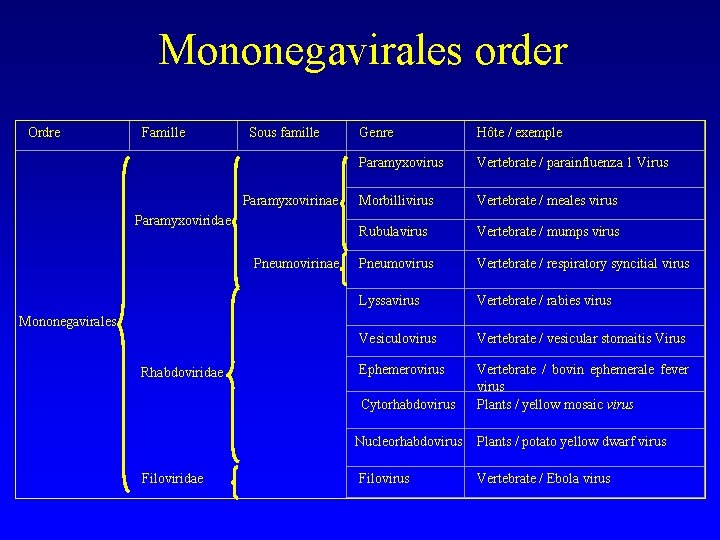
Mononegavirales order Ordre Famille Sous famille Genre Hôte / exemple Paramyxovirus Vertebrate / parainfluenza 1 Virus Morbillivirus Vertebrate / meales virus Rubulavirus Vertebrate / mumps virus Pneumovirus Vertebrate / respiratory syncitial virus Lyssavirus Vertebrate / rabies virus Vesiculovirus Vertebrate / vesicular stomaitis Virus Ephemerovirus Vertebrate / bovin ephemerale fever virus Plants / yellow mosaic virus Paramyxovirinae Paramyxoviridae Mononegavirales Pneumovirinae Rhabdoviridae Cytorhabdovirus Nucleorhabdovirus Filoviridae Filovirus Plants / potato yellow dwarf virus Vertebrate / Ebola virus
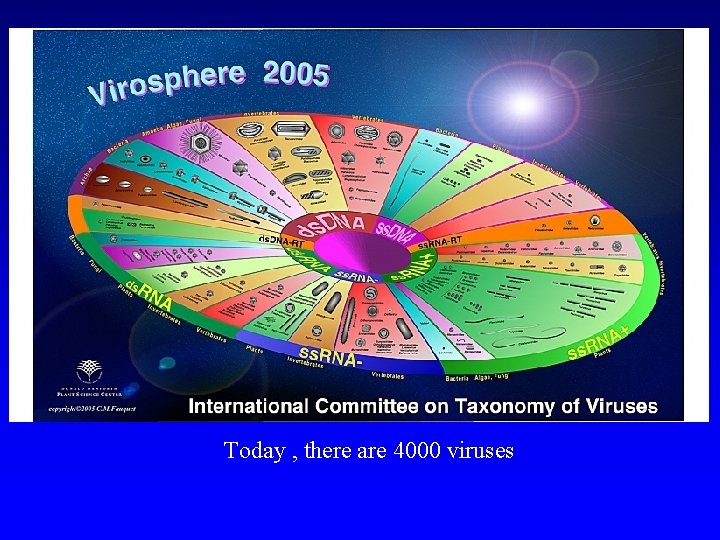
ICTV Virosphere Today , there are 4000 viruses
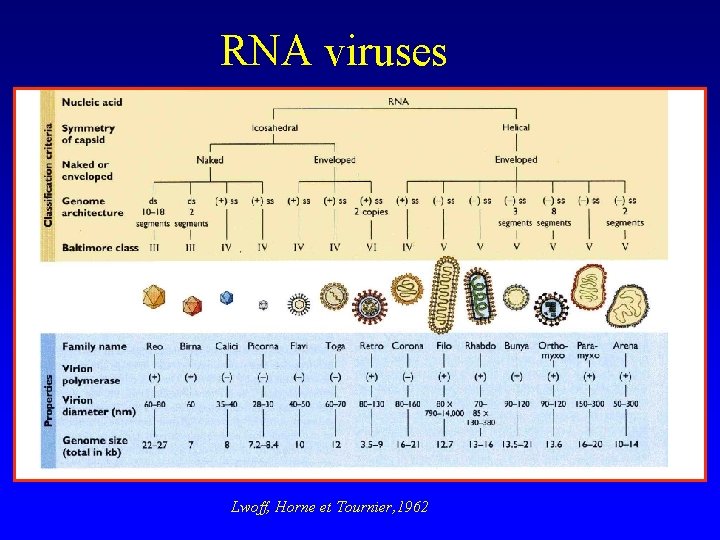
RNA viruses Lwoff, Horne et Tournier, 1962
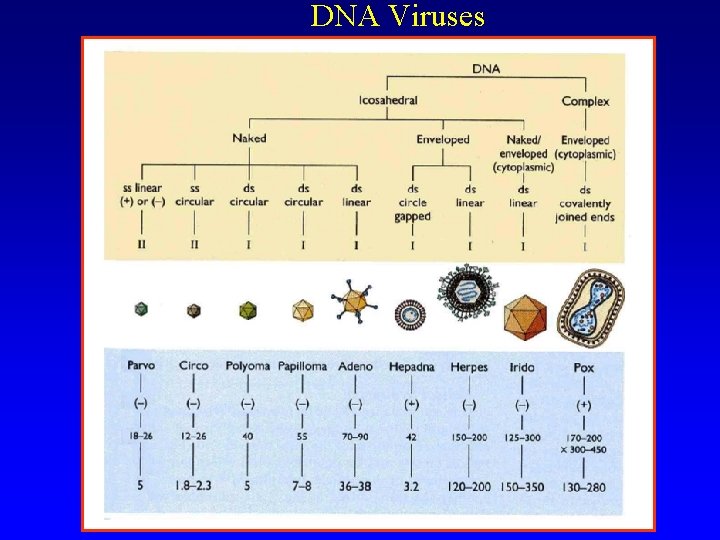
DNA Viruses
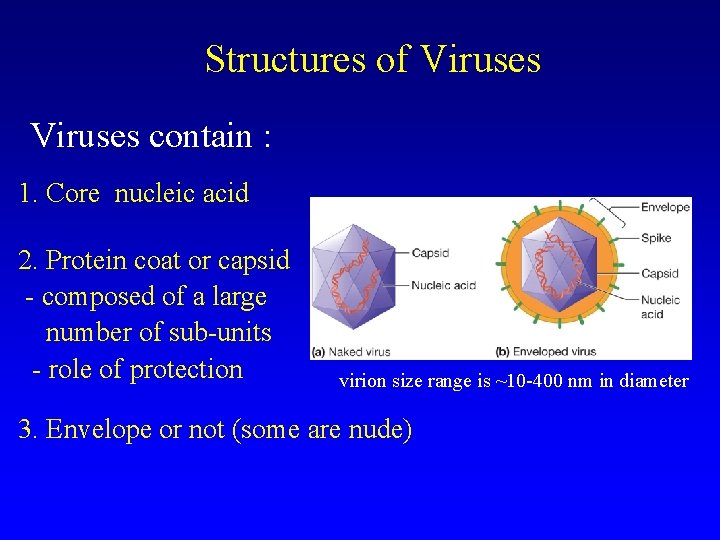
Structures of Viruses contain : 1. Core nucleic acid 2. Protein coat or capsid - composed of a large number of sub-units - role of protection virion size range is ~10 -400 nm in diameter 3. Envelope or not (some are nude)
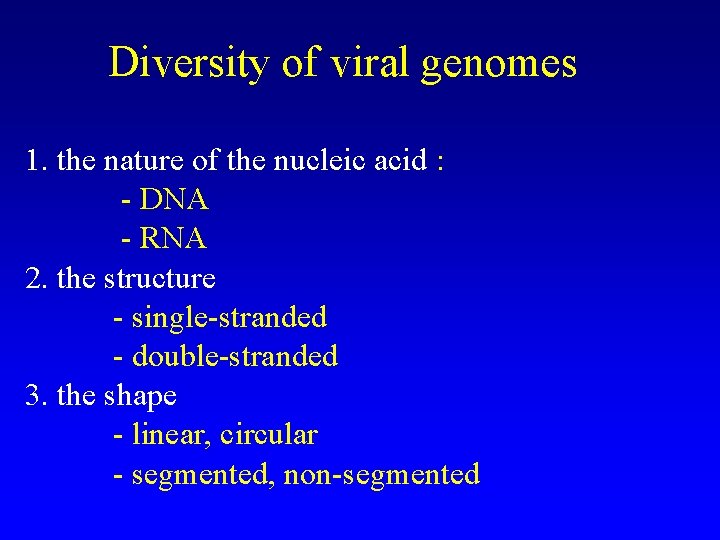
Diversity of viral genomes 1. the nature of the nucleic acid : - DNA - RNA 2. the structure - single-stranded - double-stranded 3. the shape - linear, circular - segmented, non-segmented
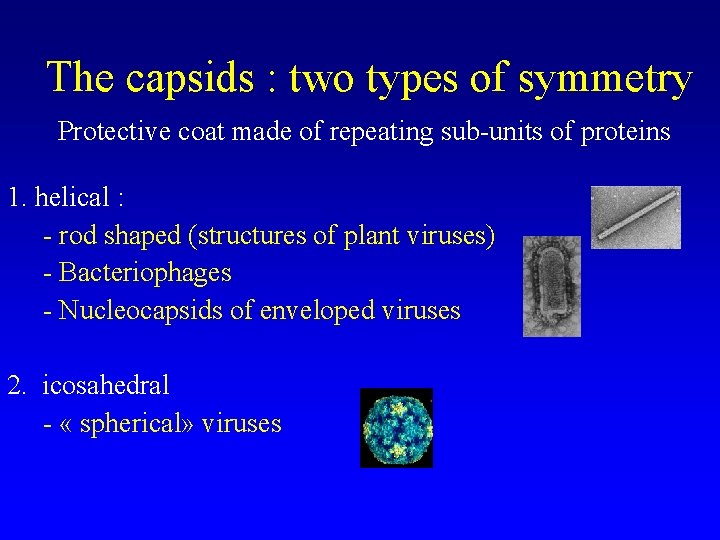
The capsids : two types of symmetry Protective coat made of repeating sub-units of proteins 1. helical : - rod shaped (structures of plant viruses) - Bacteriophages - Nucleocapsids of enveloped viruses 2. icosahedral - « spherical» viruses
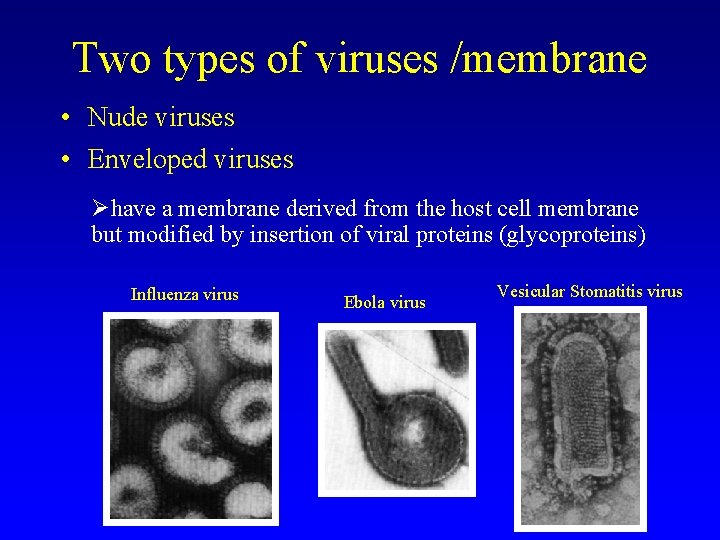
Two types of viruses /membrane • Nude viruses • Enveloped viruses have a membrane derived from the host cell membrane but modified by insertion of viral proteins (glycoproteins) Influenza virus Ebola virus Vesicular Stomatitis virus
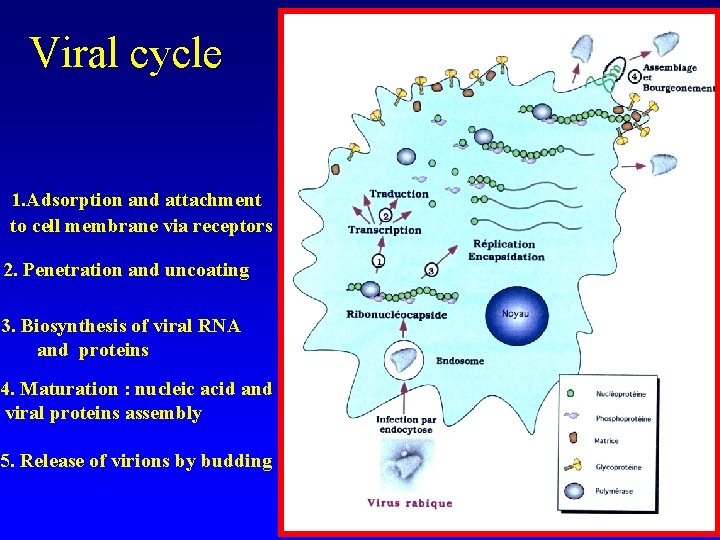
Viral cycle 1. Adsorption and attachment to cell membrane via receptors 2. Penetration and uncoating 3. Biosynthesis of viral RNA and proteins 4. Maturation : nucleic acid and viral proteins assembly 5. Release of virions by budding
Viral cycle 1. Adsorption and attachment to cell membrane via specific receptors The nature of the receptor is responsable of the viral tropism The receptor can be a protein, a sugar or a complex lipid… 2. Penetration and uncoating Envelope and capsid are removed and viral nucleic acid is released into the cell
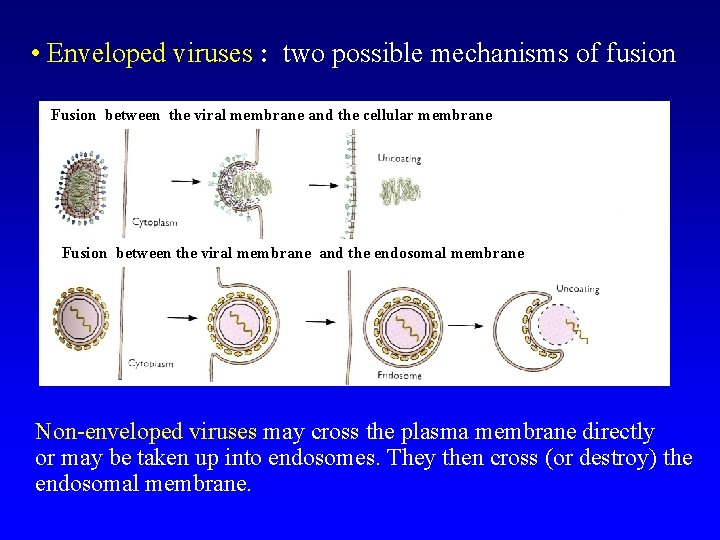
• Enveloped viruses : two possible mechanisms of fusion Fusion between the viral membrane and the cellular membrane Fusion between the viral membrane and the endosomal membrane Stratégies de décapsidation p 137 Non-enveloped viruses may cross the plasma membrane directly or may be taken up into endosomes. They then cross (or destroy) the endosomal membrane.
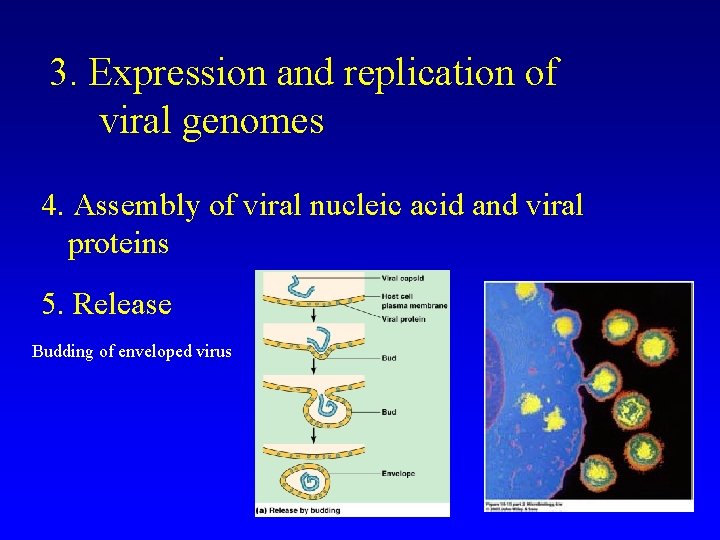
3. Expression and replication of viral genomes 4. Assembly of viral nucleic acid and viral proteins 5. Release Budding of enveloped virus
RNA viruses replication strategies The strategy of viral replication depends on the type of nucleic acid involved
Replication of RNA viruses are quite complex Single-stranded RNA viruses contain either positive-sense or negative-sense RNA. By convention, positive sense RNA serves as messenger RNA If positive sense, viral RNA serves as m. RNA for production of viral proteins If negative-sense, no viral proteins can be made until viral m. RNA is available then need to make a positive strand (by a viral RNA enzyme) Then, the different strategies of replication of RNA viruses result in the synthesis of viral messenger RNA
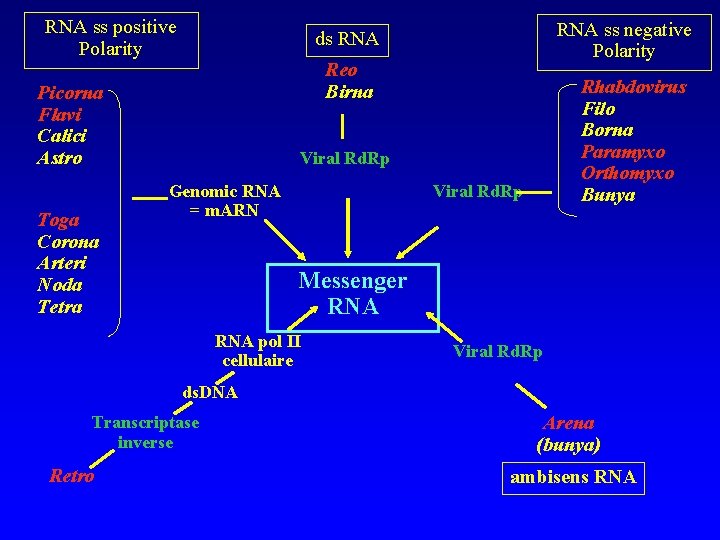
RNA ss positive Polarity Reo Birna Picorna Flavi Calici Astro Toga Corona Arteri Noda Tetra RNA ss negative Polarity ds RNA Rhabdovirus Filo Borna Paramyxo Orthomyxo Bunya Viral Rd. Rp Genomic RNA = m. ARN Viral Rd. Rp Messenger RNA pol II cellulaire Viral Rd. Rp ds. DNA Transcriptase inverse Retro Arena (bunya) ambisens RNA

Positive strand RNA viruses In these viruses, the genomic RNA is the same sense as m. RNA and so functions as m. RNA. This m. RNA is translated immediately upon infection of the host cell The genomic RNA is translated by the cellular machinery for translation of viral proteins
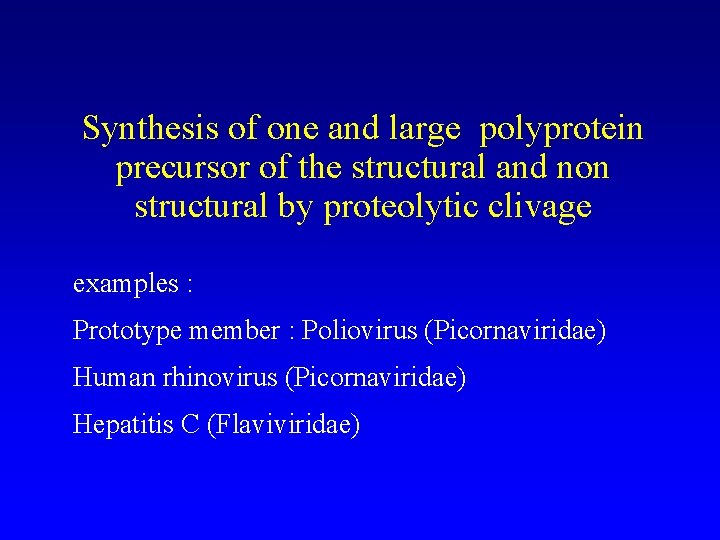
Synthesis of one and large polyprotein precursor of the structural and non structural by proteolytic clivage examples : Prototype member : Poliovirus (Picornaviridae) Human rhinovirus (Picornaviridae) Hepatitis C (Flaviviridae)
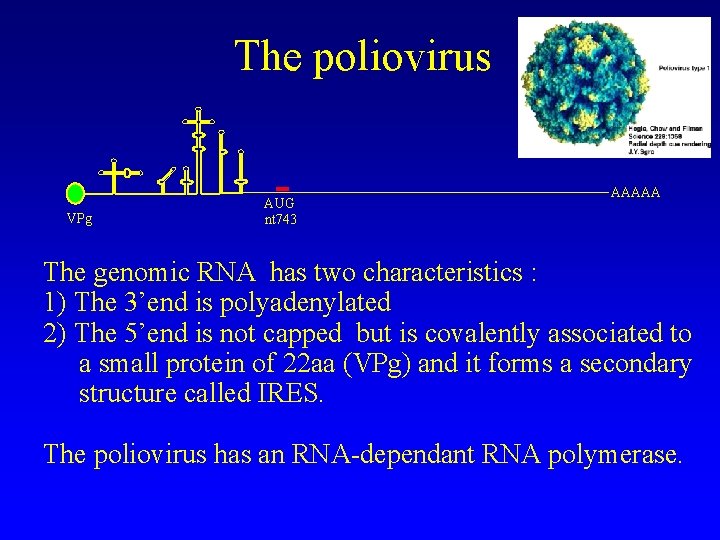
The poliovirus VPg AUG nt 743 AAAAA The genomic RNA has two characteristics : 1) The 3’end is polyadenylated 2) The 5’end is not capped but is covalently associated to a small protein of 22 aa (VPg) and it forms a secondary structure called IRES. The poliovirus has an RNA-dependant RNA polymerase.
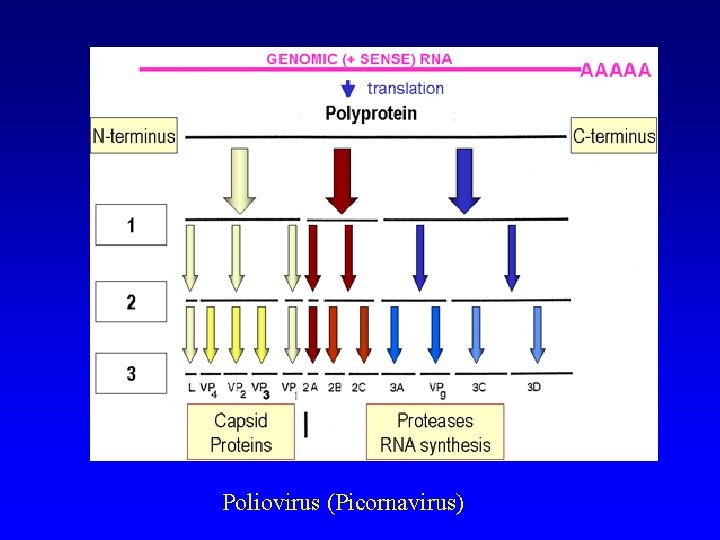
Proteases RNA synthesis Poliovirus (Picornavirus)
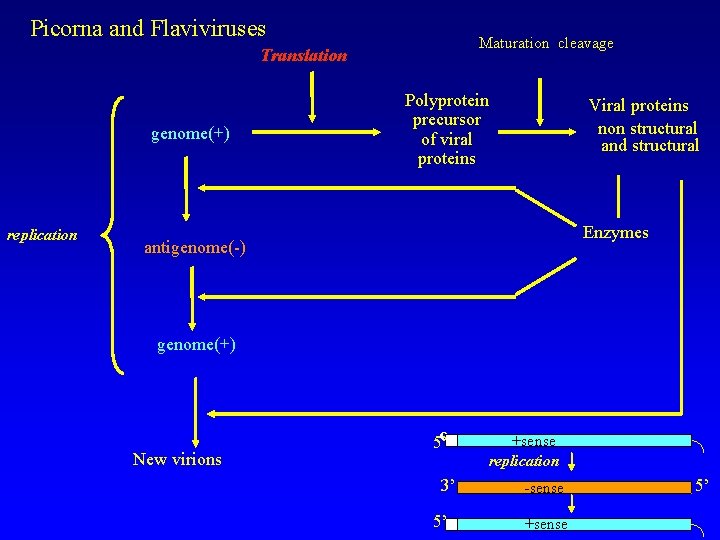
Picorna and Flaviviruses Maturation cleavage Translation genome(+) replication Polyprotein precursor of viral proteins Viral proteins non structural and structural Enzymes antigenome(-) genome(+) New virions 5’c +sense replication 3’ -sense 5’c +sense 5’
Negative strand RNA viruses The genomic RNA is negative sense (complementary to m. RNA) and must therefore be copied into the complementary plus-sense m. RNA before proteins can be made. Thus, besides needing to code for an RNAdependent RNA-polymerase (Rd. Rp), these viruses also need to package it in the virion so that they can make m. RNAs upon infecting the cell.

Non segmented negative strand viruses : the mononegavirales The genome is a single-stranded RNA of negative polarity (10 à 15 kb) associated to the nucleoprotein N. The first step is the transcription of the genome by the RNA polymerase packaged by the virus and the polymerase that has polyadenylation and capping. Genome(-) 3’ 2. Replication Antigenome (+) 5’ Genome 3’ 1. transcription 5’ m. RNA 3’ 5’
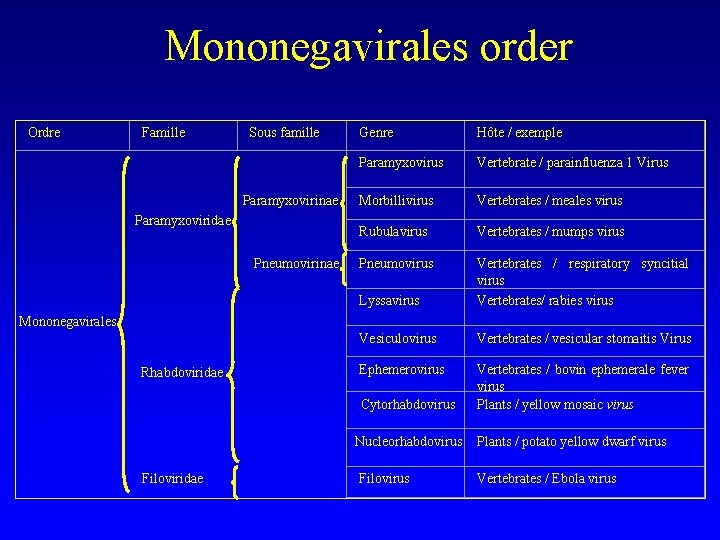
Mononegavirales order Ordre Famille Sous famille Paramyxovirinae Paramyxoviridae Mononegavirales Genre Hôte / exemple Paramyxovirus Vertebrate / parainfluenza 1 Virus Morbillivirus Vertebrates / meales virus Rubulavirus Vertebrates / mumps virus Pneumovirus Lyssavirus Vertebrates / respiratory syncitial virus Vertebrates/ rabies virus Vesiculovirus Vertebrates / vesicular stomaitis Virus Ephemerovirus Vertebrates / bovin ephemerale fever virus Plants / yellow mosaic virus Pneumovirinae Rhabdoviridae Cytorhabdovirus Nucleorhabdovirus Filoviridae Filovirus Plants / potato yellow dwarf virus Vertebrates / Ebola virus
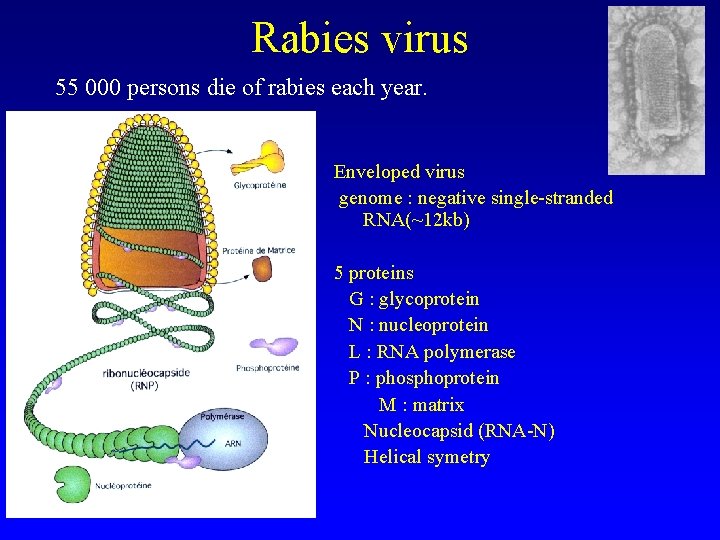
Rabies virus 55 000 persons die of rabies each year. Enveloped virus genome : negative single-stranded RNA(~12 kb) 5 proteins G : glycoprotein N : nucleoprotein L : RNA polymerase P : phosphoprotein M : matrix Nucleocapsid (RNA-N) Helical symetry

Segmented negative strand RNA viruses Besides the order of mononegavirales, there are viruses (like orthomyxoviridae) that have many fragments of negative polarity. Their genome are segmented Example: Influenza virus Their replication strategies are identical
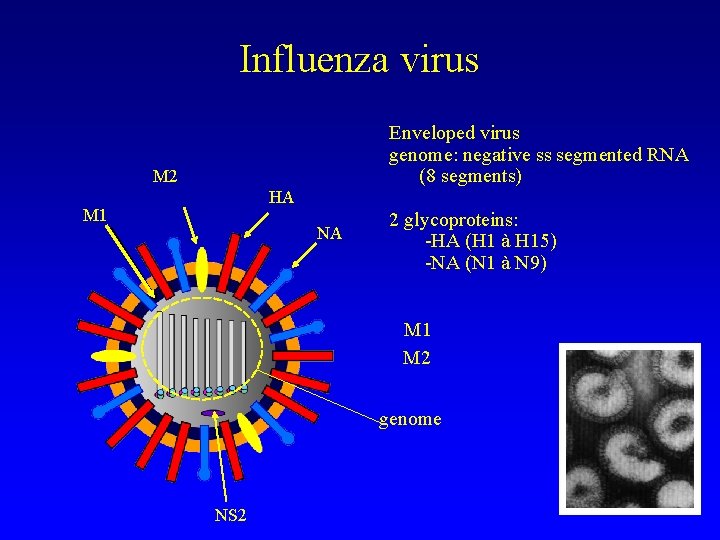
Influenza virus Enveloped virus genome: negative ss segmented RNA (8 segments) M 2 HA M 1 NA 2 glycoproteins: -HA (H 1 à H 15) -NA (N 1 à N 9) M 1 M 2 genome NS 2
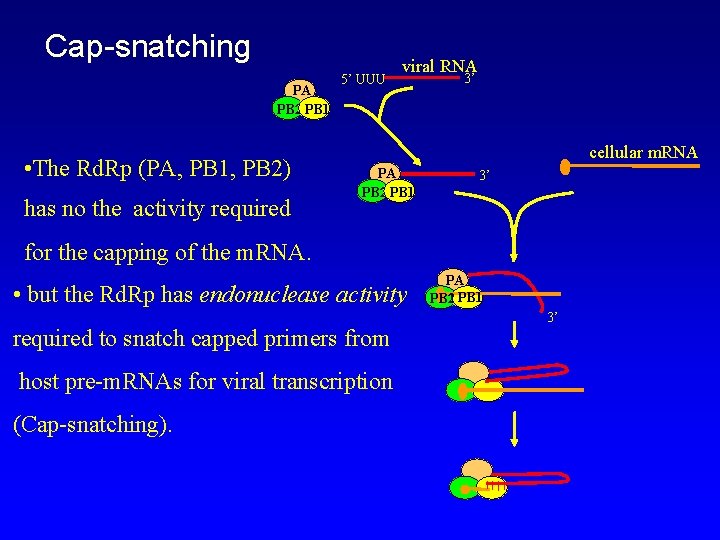
Cap-snatching PA PB 2 PB 1 • The Rd. Rp (PA, PB 1, PB 2) has no the activity required 5’ UUU viral RNA 3’ cellular m. RNA PA PB 2 PB 1 3’ for the capping of the m. RNA. • but the Rd. Rp has endonuclease activity required to snatch capped primers from host pre-m. RNAs for viral transcription (Cap-snatching). PA PB 2 PB 1 3’
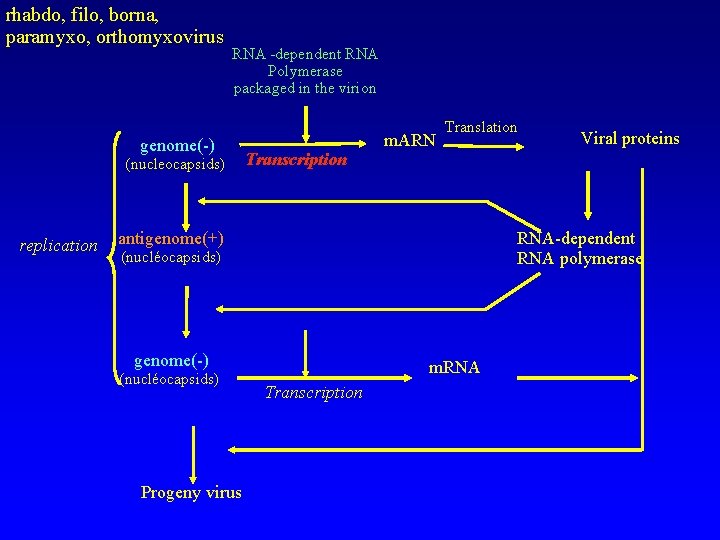
rhabdo, filo, borna, paramyxo, orthomyxovirus RNA -dependent RNA Polymerase packaged in the virion genome(-) (nucleocapsids) replication Transcription m. ARN Translation antigenome(+) RNA-dependent RNA polymerase (nucléocapsids) genome(-) (nucléocapsids) Progeny virus Viral proteins m. RNA Transcription
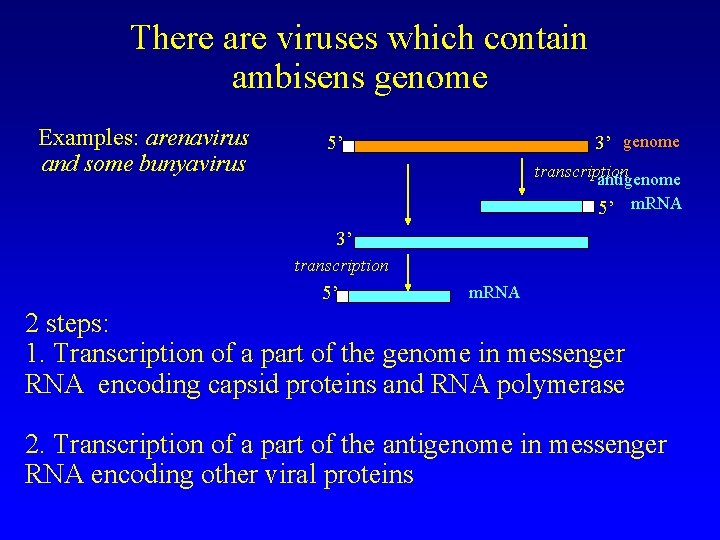
There are viruses which contain ambisens genome Examples: arenavirus and some bunyavirus 5’ 3’ genome transcription antigenome 5’ m. RNA 3’ transcription m. RNA 5’ 2 steps: 1. Transcription of a part of the genome in messenger RNA encoding capsid proteins and RNA polymerase 2. Transcription of a part of the antigenome in messenger RNA encoding other viral proteins

Double-stranded RNA Viruses Example : reoviridae (reovirus and rotavirus) • Genome with 10 and 11 segments of ds-RNA • The virus contains a ds RNA dependent RNA polymerase • The transcription is asymetric : one of the ds-strand is transcribed • The transcription takes place inside the subviral particle that contains all the activities required for the capping of messenger RNA.
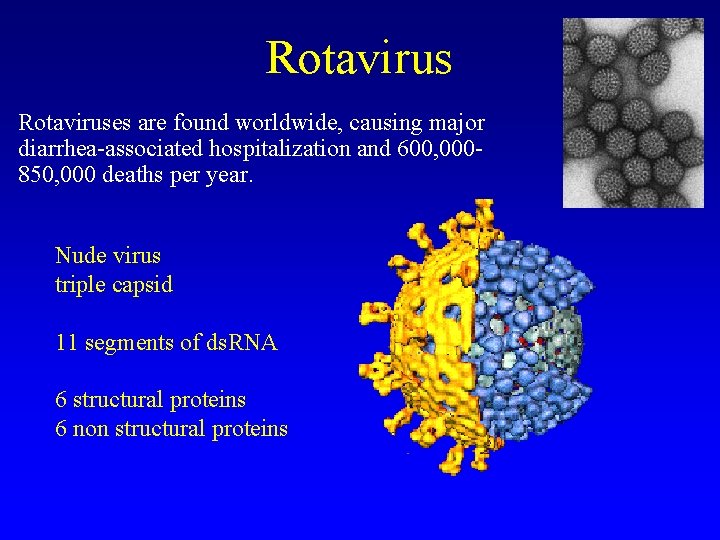
Rotavirus Rotaviruses are found worldwide, causing major diarrhea-associated hospitalization and 600, 000850, 000 deaths per year. Nude virus triple capsid 11 segments of ds. RNA 6 structural proteins 6 non structural proteins
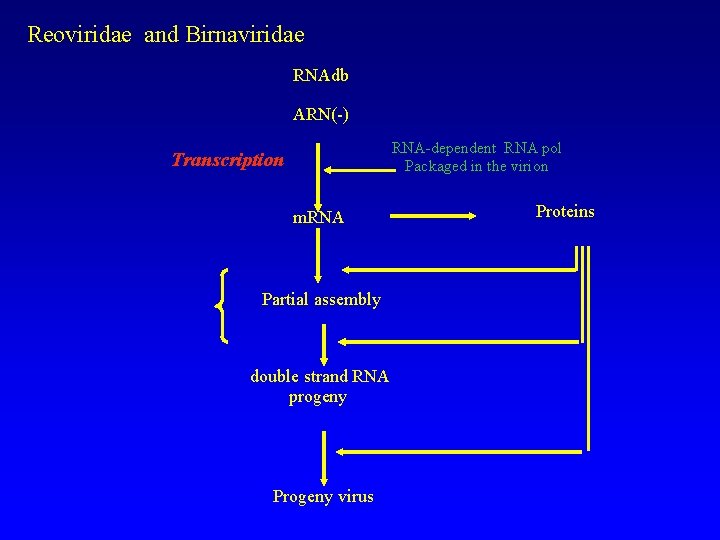
Reoviridae and Birnaviridae RNAdb ARN(-) RNA-dependent RNA pol Packaged in the virion Transcription m. RNA Partial assembly double strand RNA progeny Progeny virus Proteins
Retroviridae These viruses contain a genomic RNA that will be used as a template for the synthesis of DNA by a reverse transcriptase 2 examples: Virus de l’immunodéficience humaine (HIV 1 and 2) Virus de la leucémie des cellules T humaines (HTLV )
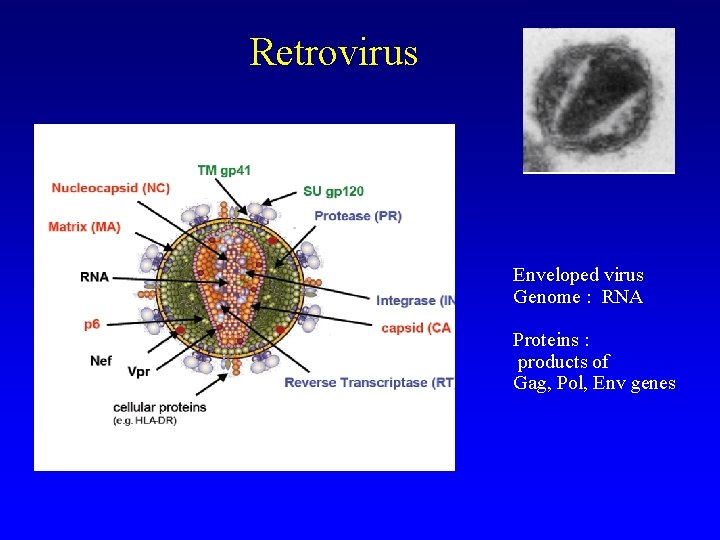
Retrovirus Enveloped virus Genome : RNA Proteins : products of Gag, Pol, Env genes
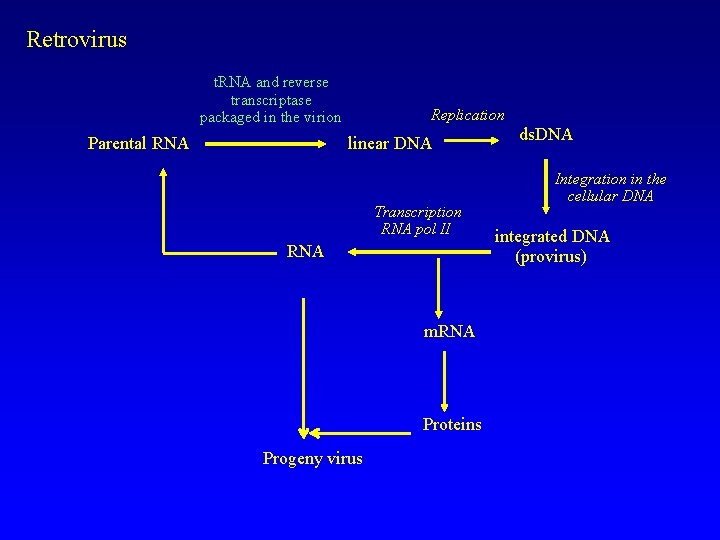
Retrovirus t. RNA and reverse transcriptase packaged in the virion Replication linear DNA Parental RNA Transcription RNA pol II RNA m. RNA Progeny virus Proteins ds. DNA Integration in the cellular DNA integrated DNA (provirus)
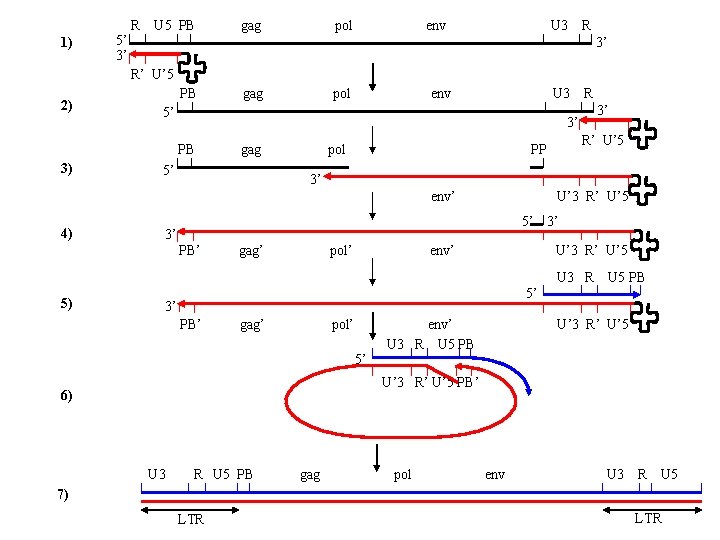
R U 5 PB gag pol env U 3 R 1) 2) 3) 5’ 3’ 3’ R’ U’ 5 PB gag pol env U 3 R 3’ 5’ 3’ R’ U’ 5 PB gag pol PP 5’ 3’ env’ U’ 3 R’ U’ 5 4) 5) 5’ 3’ 3’ PB’ gag’ pol’ env’ U’ 3 R’ U’ 5 U 3 R U 5 PB 5’ 3’ PB’ gag’ pol’ env’ U’ 3 R’ U’ 5 U 3 R U 5 PB 5’ U’ 3 R’ U’ 5 PB’ 6) U 3 R U 5 PB gag pol env U 3 R U 5 7) LTR
Viral quasispecies The virale polymerases (Rd. Rp, RT) are very inaccurate : lack of proofreading mechanism Error rate : 1/10000 This results in viral variants or quasispecies and confers significant adaptation potential through the selection of mutants best suited to a new environment. - Escape from immune responses - Faster replicating, more aggressive strains - Broader cell tropism - Escape to antiviral therapies.
- Slides: 48