
Dangerous Substances Explosive Atmospheres Dr Stephen K Ross
Dangerous Substances & Explosive Atmospheres Dr Stephen K Ross CChem FRSC, Dip NEBOSH, Grad IOSH, AFOH
• • Legislative Background Explosions- the basics LPG Paint Spraying Battery charging areas Explosive dusts 3 Real cases : the good, the bad and the ugly
Dangerous Substances Legislation: • The Health and Safety at Work Act 1974 • The Management of Health and Safety at Work Regulations 1999 • The Regulatory Reform (Fire Safety) Order 2005 • The Dangerous Substances and Explosive Atmospheres Regulations 2002 (DSEAR) • Equipment and Protective Systems Intended for use in Potentially Explosive Atmospheres Regulations 1996 (EPS)

Dangerous Substances & Explosive Atmospheres (DSEAR) Dangerous substances are: • Any substance or mixture of substances that is classified as explosive, oxidising, extremely flammable, highly flammable or flammable. • Any dust, whether in the form of solid particles or fibrous materials, which can form an explosive mixture in air.
Dangerous substances are any substances if not properly controlled, cause harm as a result of a fire or explosion. They include such things as: – Solvents, paints, thinners – Flammable gases (Charging batteries for FLT’s, Mewps) – Dusts from machining and sanding operations – Dusts from foodstuffs – Oxidisers – Catalysts/initiator based reactions – Run away reactions (scale up issues) – Incompatible metal dusts – Industrial natural gas usage
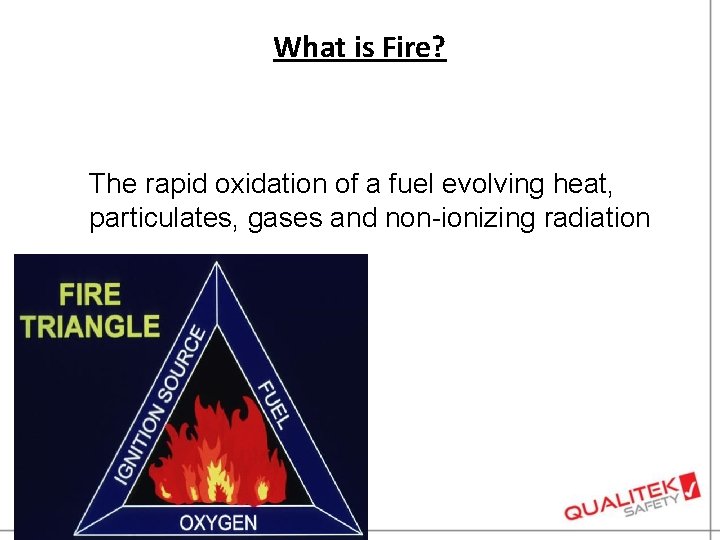
What is Fire? The rapid oxidation of a fuel evolving heat, particulates, gases and non-ionizing radiation
What is an explosion? • Very rapid oxidation generating an overpressure that compresses the gas ahead of it • Deflagration - subsonic- 220 mph ~ 0. 5 bar (often referred to as a flash fire) • Detonation – supersonic 4500 mph ~ 20 bar Flame front compresses the vapour ahead of it above its auto-ignition temperature
REG 5 • Risk assessment • 5. —(1) Where a dangerous substance is or is liable to be present at the workplace, the employer shall make a suitable and sufficient assessment of the risks to his employees which arise from that substance.
shall include consideration of (a) the hazardous properties of the substance; (b) information on safety provided by the supplier, including information contained in any relevant safety data sheet; (c) the circumstances of the work including— (i) the work processes and substances used and their possible interactions; (ii) the amount of the substance involved; (iii) where the work will involve more than one dangerous substance, the risk presented by such substances in combination; and • (a) (iv) the arrangements for the safe handling, storage and transport of dangerous substances and of waste containing dangerous substances; (d) activities, such as maintenance, where there is the potential for a high level of risk; Have I got a material that is flammable or explosive? Will the work produce a flammable or explosive material?
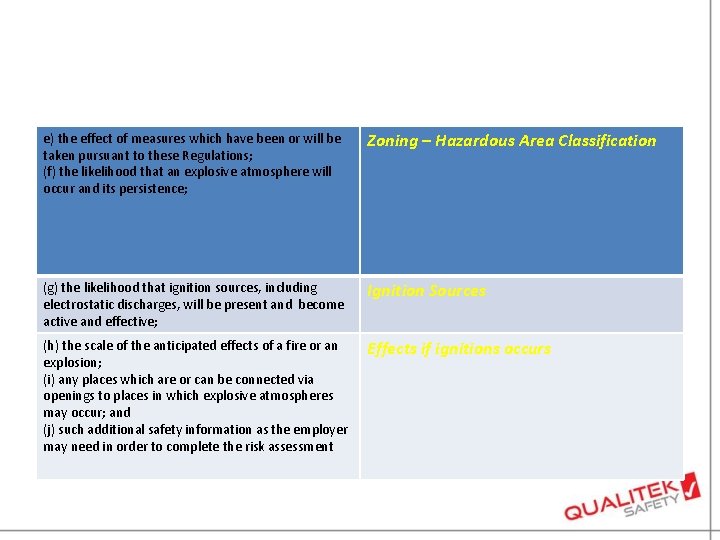
e) the effect of measures which have been or will be taken pursuant to these Regulations; (f) the likelihood that an explosive atmosphere will occur and its persistence; Zoning – Hazardous Area Classification (g) the likelihood that ignition sources, including electrostatic discharges, will be present and become active and effective; Ignition Sources (h) the scale of the anticipated effects of a fire or an explosion; (i) any places which are or can be connected via openings to places in which explosive atmospheres may occur; and (j) such additional safety information as the employer may need in order to complete the risk assessment Effects if ignitions occurs
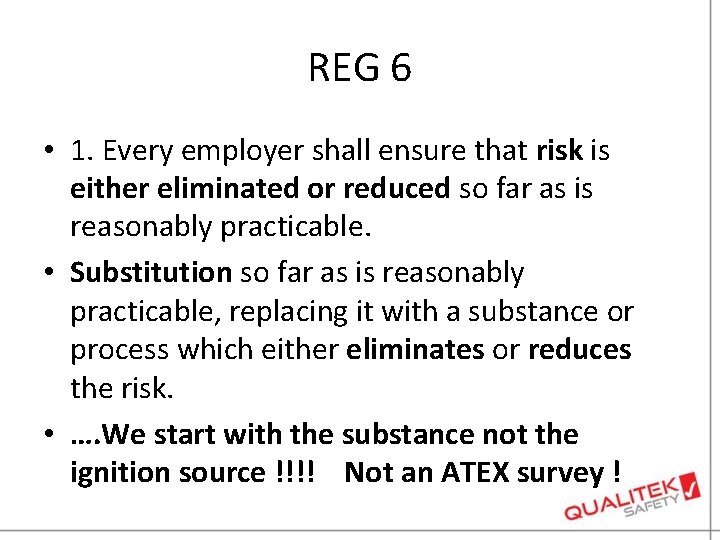
REG 6 • 1. Every employer shall ensure that risk is either eliminated or reduced so far as is reasonably practicable. • Substitution so far as is reasonably practicable, replacing it with a substance or process which either eliminates or reduces the risk. • …. We start with the substance not the ignition source !!!! Not an ATEX survey !
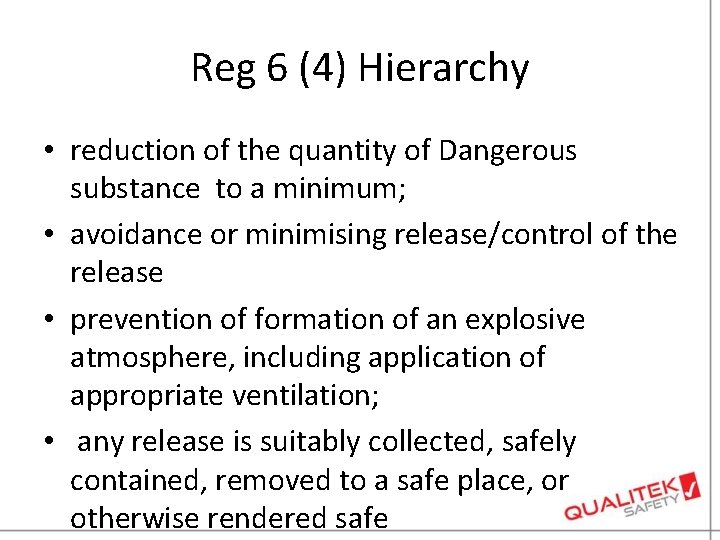
Reg 6 (4) Hierarchy • reduction of the quantity of Dangerous substance to a minimum; • avoidance or minimising release/control of the release • prevention of formation of an explosive atmosphere, including application of appropriate ventilation; • any release is suitably collected, safely contained, removed to a safe place, or otherwise rendered safe
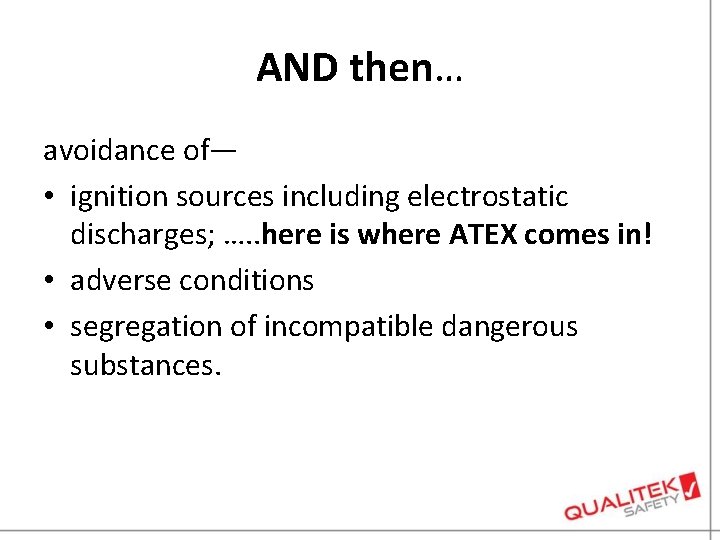
AND then… avoidance of— • ignition sources including electrostatic discharges; …. . here is where ATEX comes in! • adverse conditions • segregation of incompatible dangerous substances.
And for mitigation • reduction to a minimum of the number of employees exposed; • avoidance of propagation of fires or explosions; • provision of explosion pressure relief arrangements; • provision of explosion suppression equipment; NOT FIRE SUPPRESSION ! • plant constructed so as to withstand the pressure likely to be produced by an explosion • provision of suitable personal protective equipment.
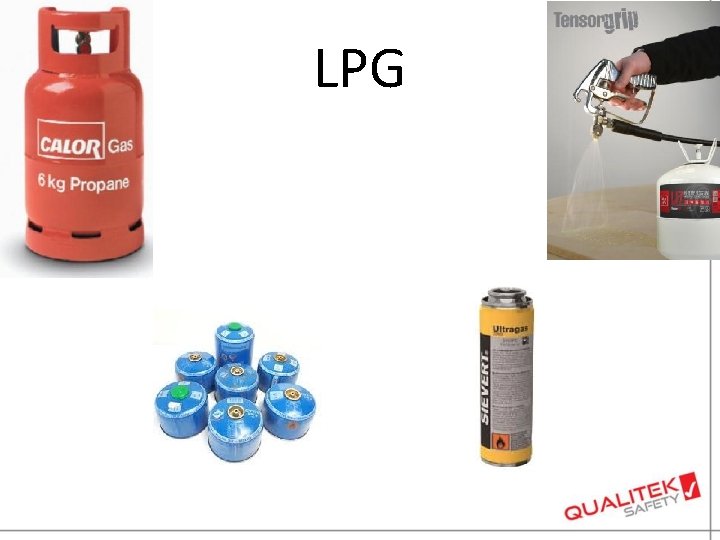
LPG
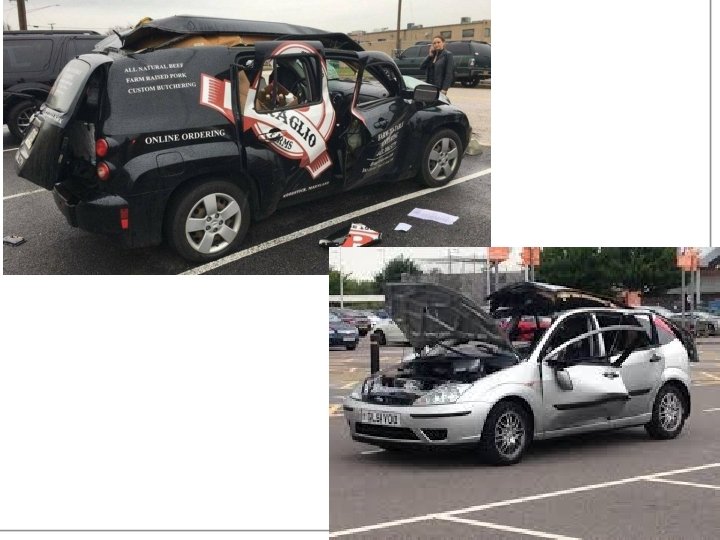
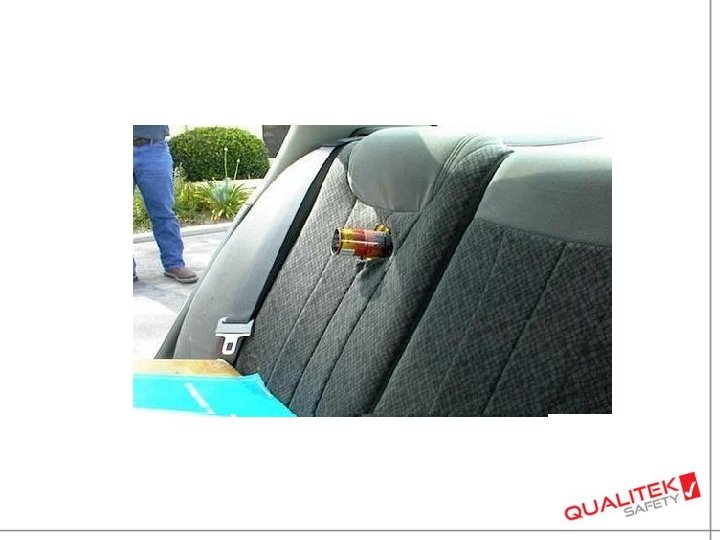
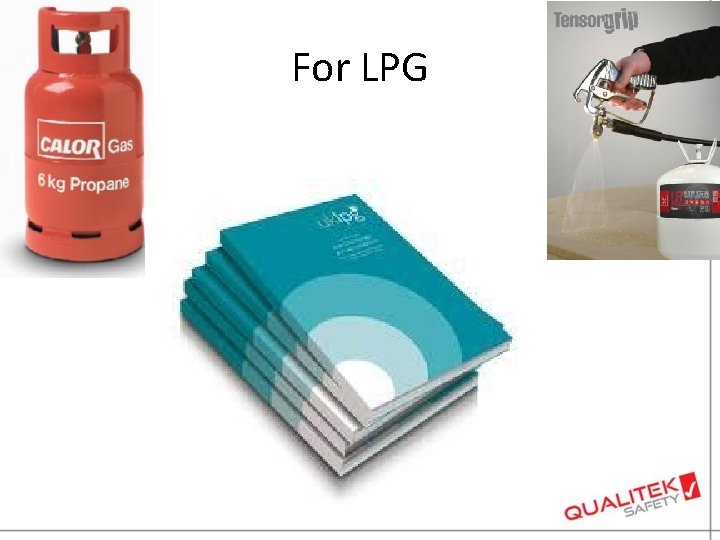
For LPG
UKLPG Codes of Practice • COP 1 Bulk LPG Storage at Fixed Installations • COP 3 Recommendations for Prevention and Control of Fire Involving LPG • COP 7 Storage of Full and Empty LPG cylinders and Cartridges • COP 24 Use of Propane in Cylinders at Commercial and Industrial Premises – Part 5 The Storage and Use of LPG on Construction Sites
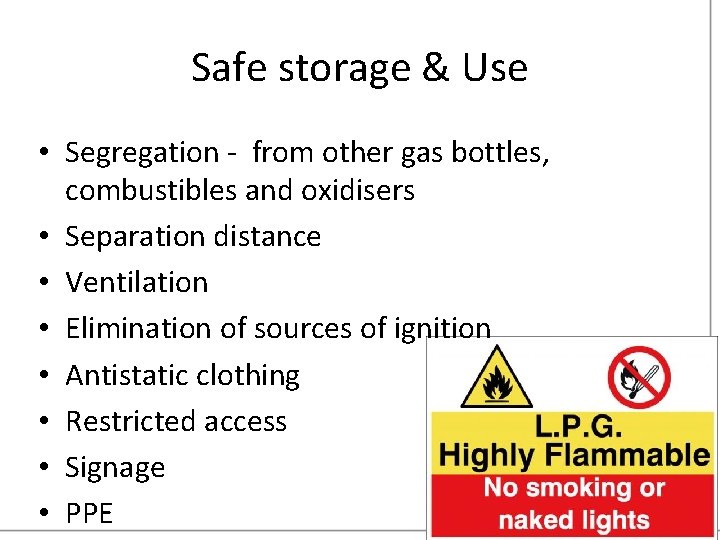
Safe storage & Use • Segregation - from other gas bottles, combustibles and oxidisers • Separation distance • Ventilation • Elimination of sources of ignition • Antistatic clothing • Restricted access • Signage • PPE
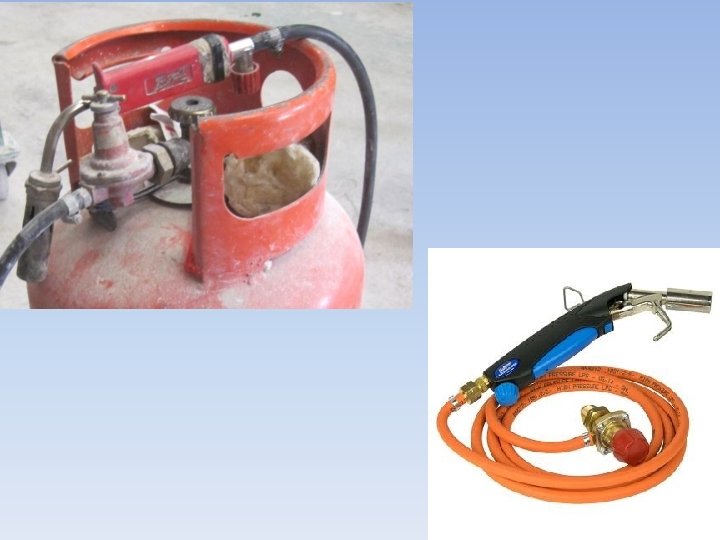
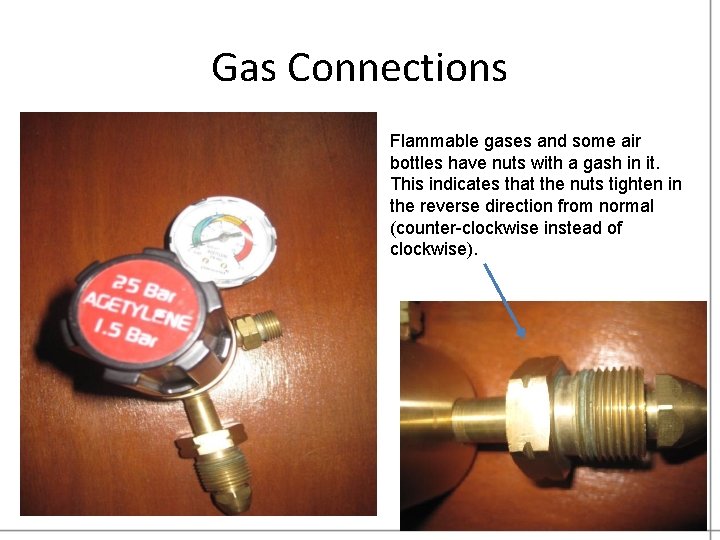
Gas Connections Flammable gases and some air bottles have nuts with a gash in it. This indicates that the nuts tighten in the reverse direction from normal (counter-clockwise instead of clockwise).
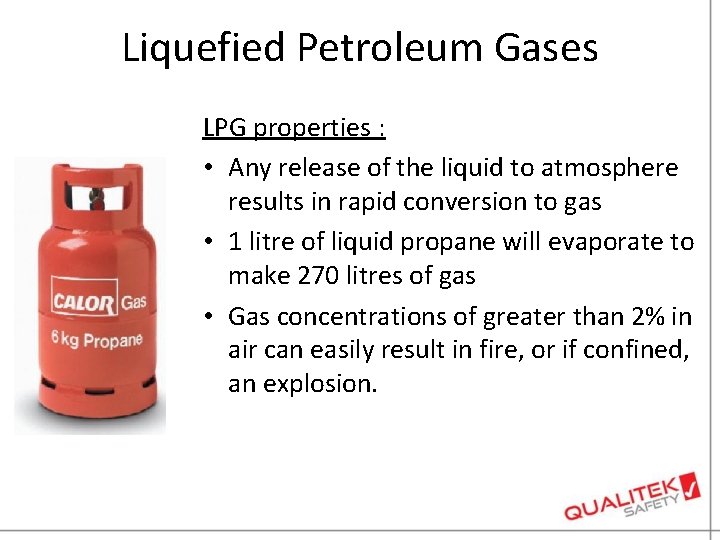
Liquefied Petroleum Gases LPG properties : • Any release of the liquid to atmosphere results in rapid conversion to gas • 1 litre of liquid propane will evaporate to make 270 litres of gas • Gas concentrations of greater than 2% in air can easily result in fire, or if confined, an explosion.
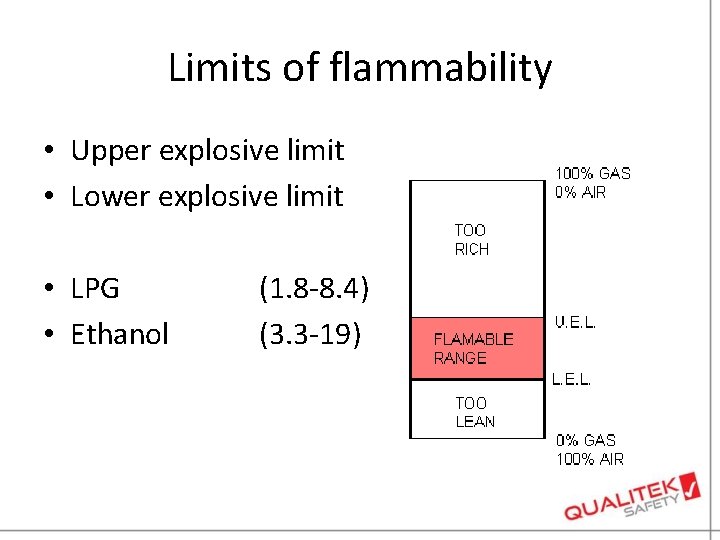
Limits of flammability • Upper explosive limit • Lower explosive limit • LPG • Ethanol (1. 8 -8. 4) (3. 3 -19)
Classification of Hazardous Areas • zones on the basis of the frequency and duration of the occurrence of an explosive atmosphere. • Zone 0 - explosive atmosphere in the form of gas, vapour or mist is present continuously or for long periods or frequently. Zone 1 - explosive atmosphere in the form of gas, vapour or mist is likely to occur in normal operation occasionally. Zone 2 explosive atmosphere in the form of gas, vapour or mist is not likely to occur in normal operation but, if it does occur, will persist for a short period only. • • (Normal operation” means the situation when used within their design parameters)
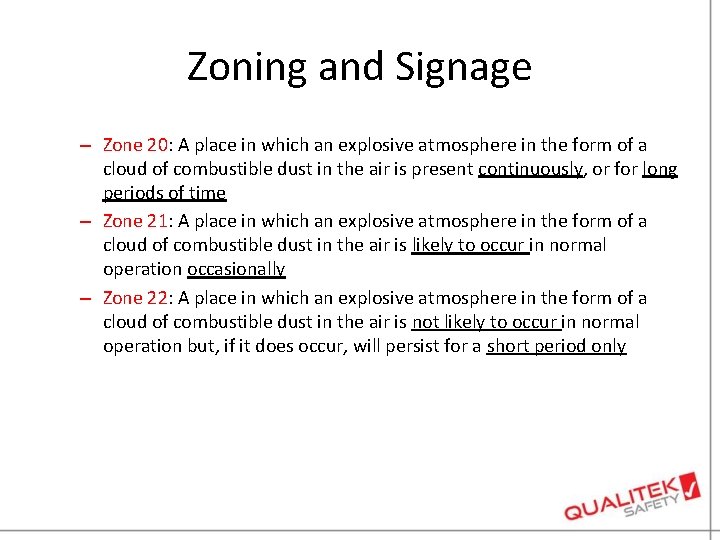
Zoning and Signage – Zone 20: A place in which an explosive atmosphere in the form of a cloud of combustible dust in the air is present continuously, or for long periods of time – Zone 21: A place in which an explosive atmosphere in the form of a cloud of combustible dust in the air is likely to occur in normal operation occasionally – Zone 22: A place in which an explosive atmosphere in the form of a cloud of combustible dust in the air is not likely to occur in normal operation but, if it does occur, will persist for a short period only
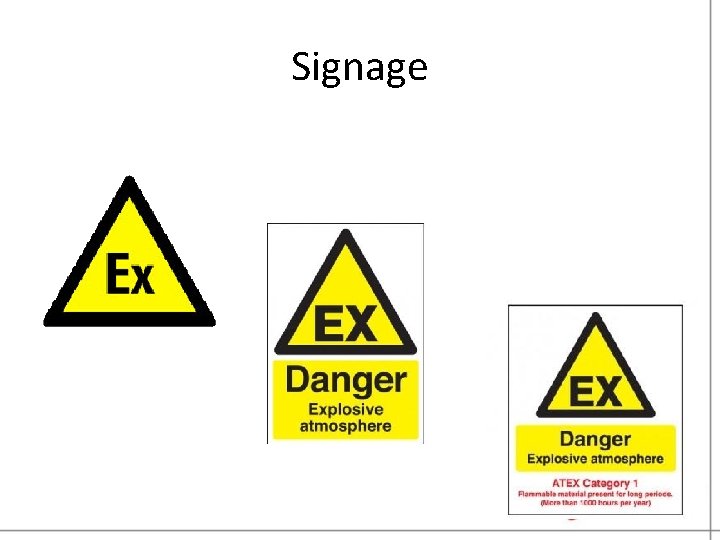
Signage
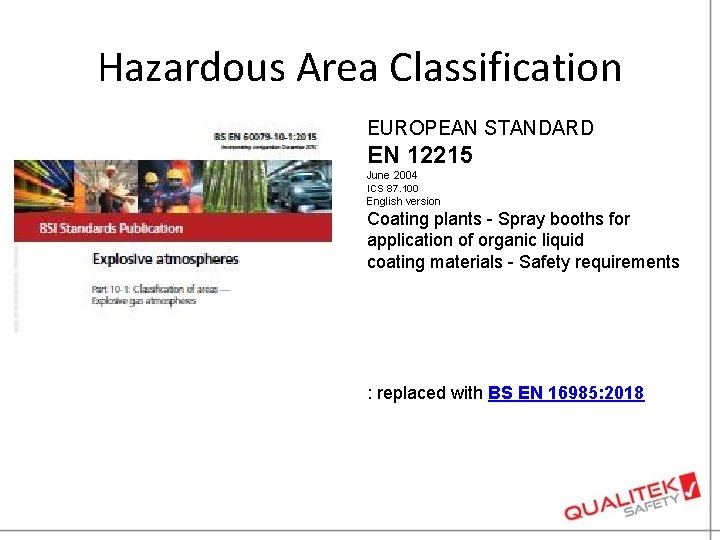
Hazardous Area Classification EUROPEAN STANDARD EN 12215 June 2004 ICS 87. 100 English version Coating plants - Spray booths for application of organic liquid coating materials - Safety requirements : replaced with BS EN 16985: 2018
Quadvent ™ • BS EN 60079 -10 -1 gives over estimated zoning areas • Especially the 2009 standard due to a typo ! • HSE Software
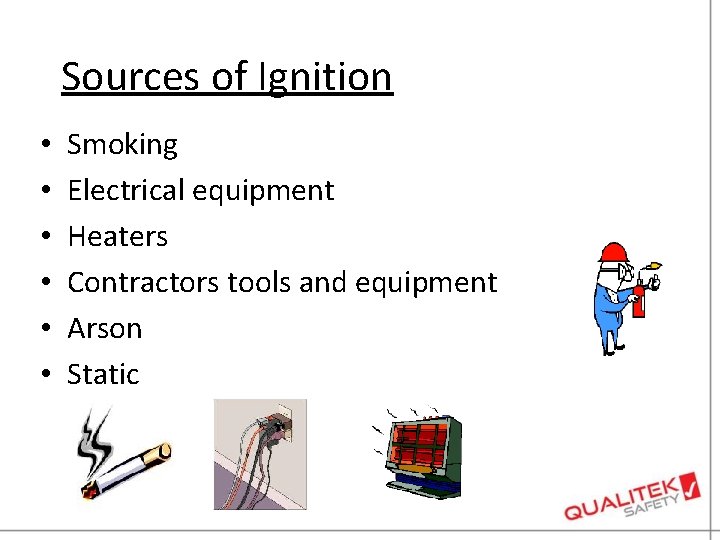
Sources of Ignition • • • Smoking Electrical equipment Heaters Contractors tools and equipment Arson Static

Minimum Ignition Energy – Carbon Disulfide <0. 1 m. J – Acetone 1 m. J – Benzene 0. 2 m. J – Toluene 0. 2 m. J – LPG 0. 46 m. J Problem when relative humidity drops below 40 percent
Electrical equipment • ATEX rated according to the zone, Surface temp, ign. temp etc. • Portable tools must be appropriate (nonsparking) and inspected regularly
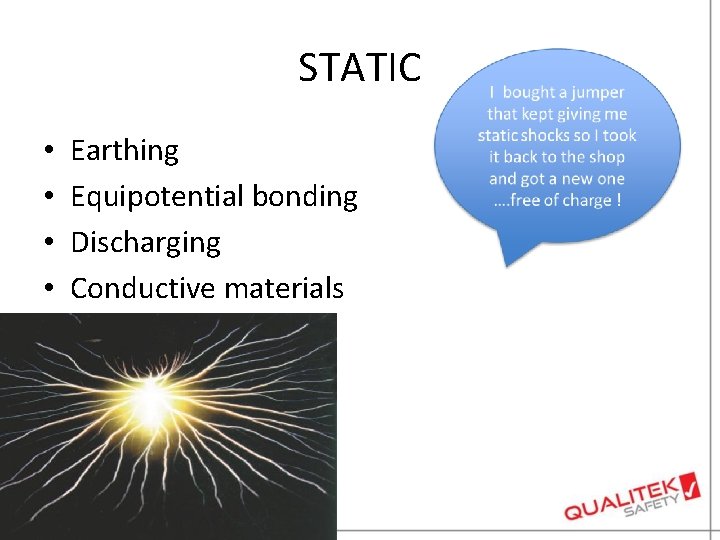
STATIC • • Earthing Equipotential bonding Discharging Conductive materials
Filling vessels/container’s with flammable solvents Avoidance of splash filling Consider rate of filling and the residence time (the latter two are related to the conductivity of the liquid).
• At start of filling tanks pumping velocity should be no greater than 1 m/s until the inlet pipe is covered to twice its diameter at which point the velocity can be increased up to a maximum of 3. 5 m/s for high conductivity solvents (tank �less than 10 m). • If solvent consists of two or more immiscible phases the velocity must be restricted to 1 m/s throughout the filling process
• The relaxation time is related to the conductivity of the solvent. For high conductivity solvents the residence time required is usually less than 1 mm of metal pipe work. High Conductivity Solvent is taken as solvent with a Conductivity >10 000 p. S/m • A residence time of least 3 x the relaxation time of the solvent (up to a max of 100 s)
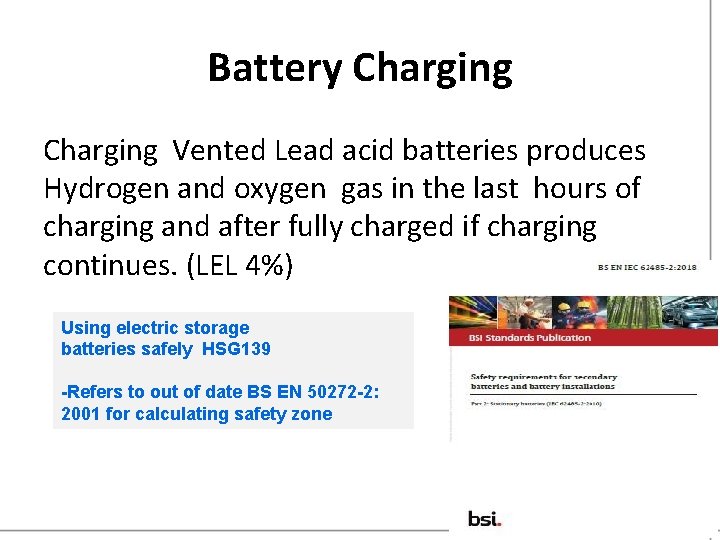
Battery Charging Vented Lead acid batteries produces Hydrogen and oxygen gas in the last hours of charging and after fully charged if charging continues. (LEL 4%) Using electric storage batteries safely HSG 139 -Refers to out of date BS EN 50272 -2: 2001 for calculating safety zone
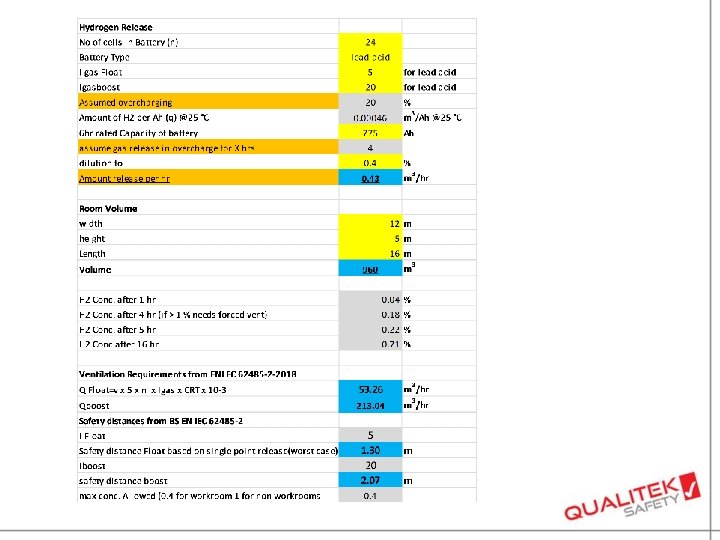
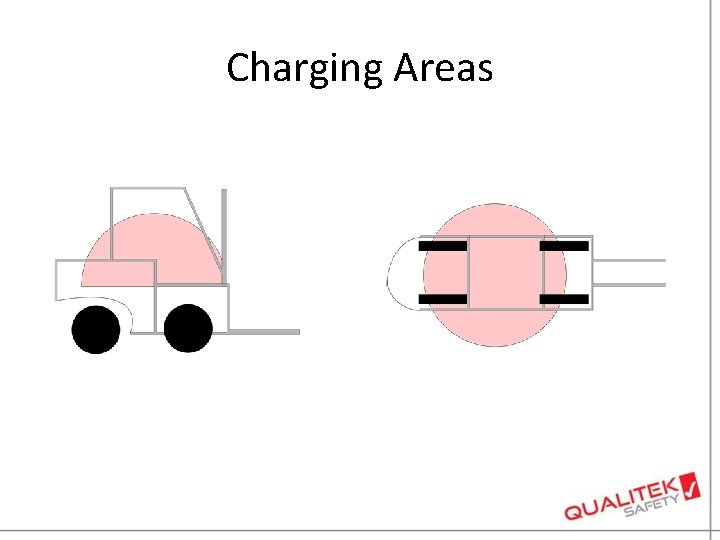
Charging Areas
Explosive dusts • • • Aluminum Iron Steel Zinc Polystyrene Cellulose Nylon Epoxy Resin Carbon • • • Powdered Milk Sugar Paper Starch Wheat dust Barley Corn flour Coffee Pea dust
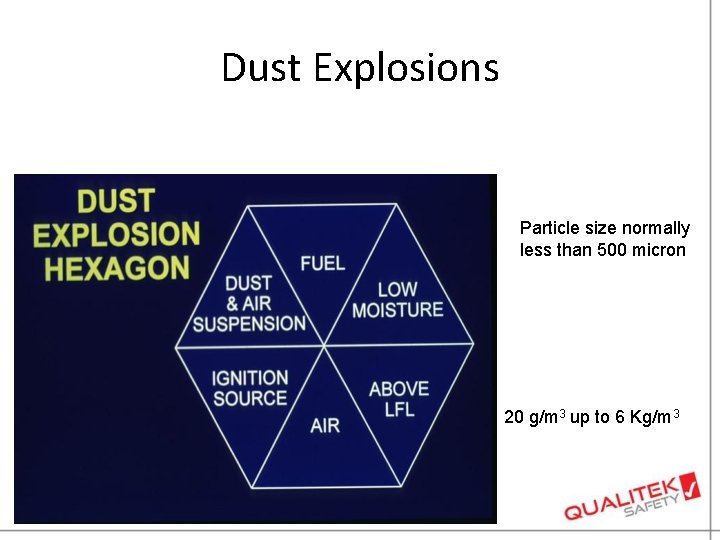
Dust Explosions Particle size normally less than 500 micron 20 g/m 3 up to 6 Kg/m 3
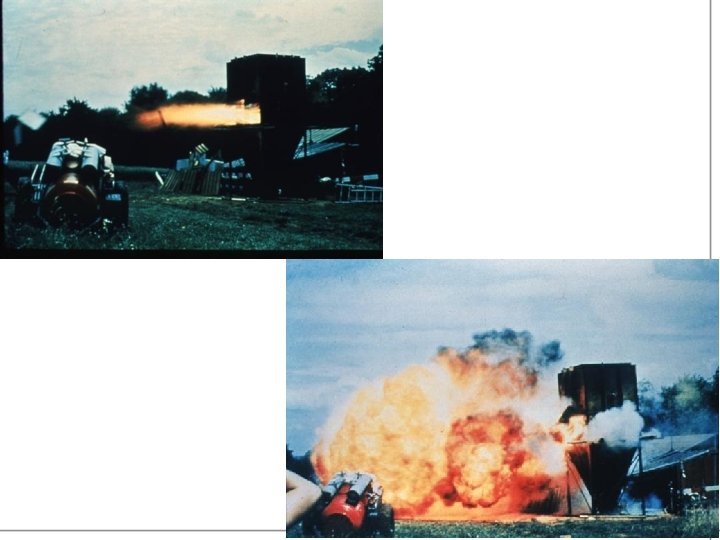
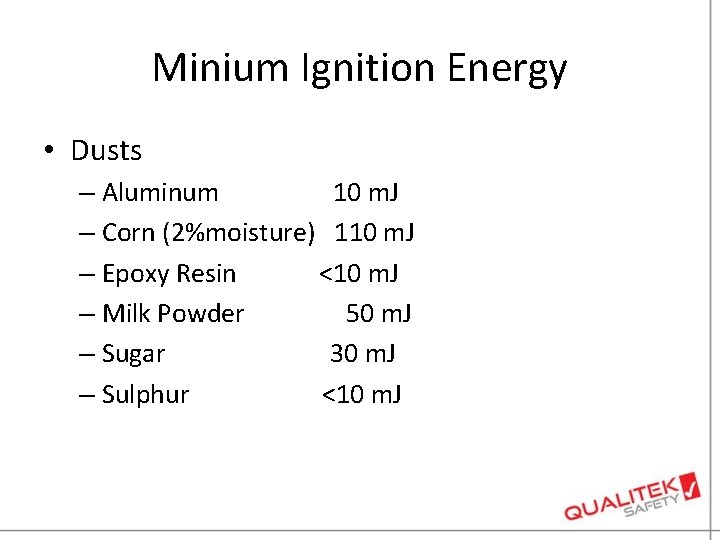
Minium Ignition Energy • Dusts – Aluminum 10 m. J – Corn (2%moisture) 110 m. J – Epoxy Resin <10 m. J – Milk Powder 50 m. J – Sugar 30 m. J – Sulphur <10 m. J
Flammable and Explosives Atmospheres • Where work is to be conducted in an area designated as a flammable / explosive zone it should be controlled by use of a permit to work • This permit should identify and control: – Sources of ignition caused by the works • Sparks (cutting, grinding and electrical), friction, hot surfaces, flames
Emergency Procedures • Emergency procedures should consider: – – – – – Regular drills First-aid provision Visual and audible warnings Escape facilities provided and maintained Liaison with the emergency services Emergency information displayed Maintenance, examination and testing of control systems Training of staff Monitoring of atmospheres
- Slides: 45