
Dance 2019 v 1 1 Reverse chronology Examples
- Slides: 18
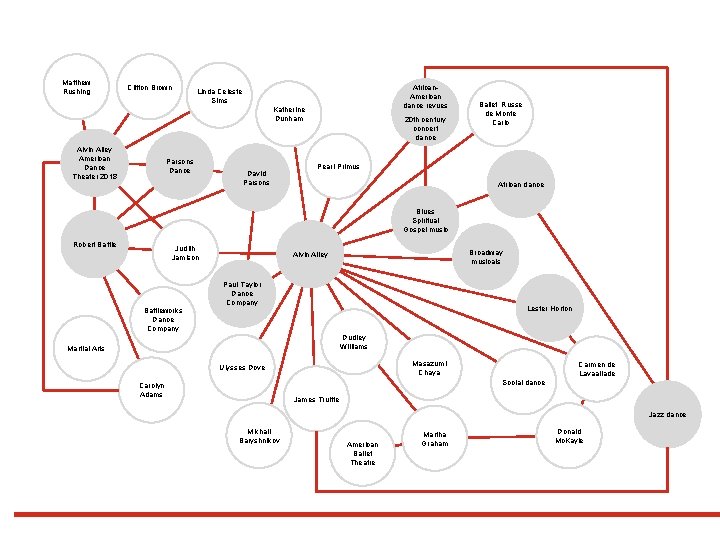
Dance 2019 v 1. 1 Reverse chronology Examples provided in this resource are not exhaustive. Teachers will find their own threads and links to investigate and make connections between aspects of background, choreographic style, and influences on chosen dance works. Highlight the bubbles and make the connections as you and students investigate influences and impacts.
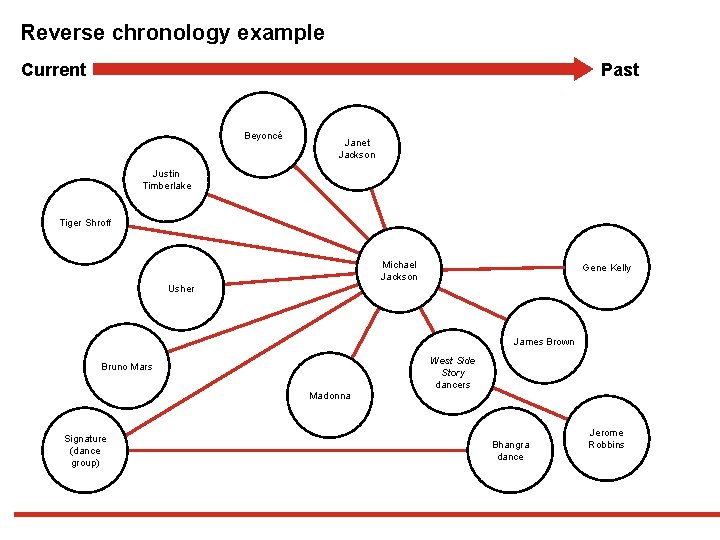
Reverse chronology for historical understanding Within each unit, reverse chronology is an effective approach to investigate arts practice. This approach begins with a contemporary focus and follows logical pathways backwards to learn about relevant historical, cultural and traditional styles and art forms. Reverse chronology follows a cause and effect pathway to understanding influences on artists, styles and practices. This differs from a customary chronological approach that would begin in the past and follow a sequential path to the present.
The benefits of a reverse chronology approach to learning about historical traditions of the art form of dance include: • helping an understanding of ourselves, and the decisions and choices made by artists in the present, by examining and acknowledging the influences and events that affected previous generations • fostering research skills in an inquiry learning model, in which students pose questions about the causes and effects of influences and compare dance of past and present times • ensuring enough time is dedicated to focus on relevant historical practices • engaging students who are more interested in ideas that relate to themselves and the time they inhabit, which enables them to follow connecting pathways more effectively • understanding how knowledge of historical forms and practices helps an understanding of those of the current day.
Reverse chronology approach This approach enables the development of an understanding of the background and life experiences of a choreographer (influences on philosophies, choreographic processes, choice of genre/s, development of personal movement style and aesthetic).
Reverse chronology example Current Past Beyoncé Janet Jackson Justin Timberlake Tiger Shroff Michael Jackson Gene Kelly Usher James Brown West Side Story dancers Bruno Mars Madonna Signature (dance group) Bhangra dance Jerome Robbins
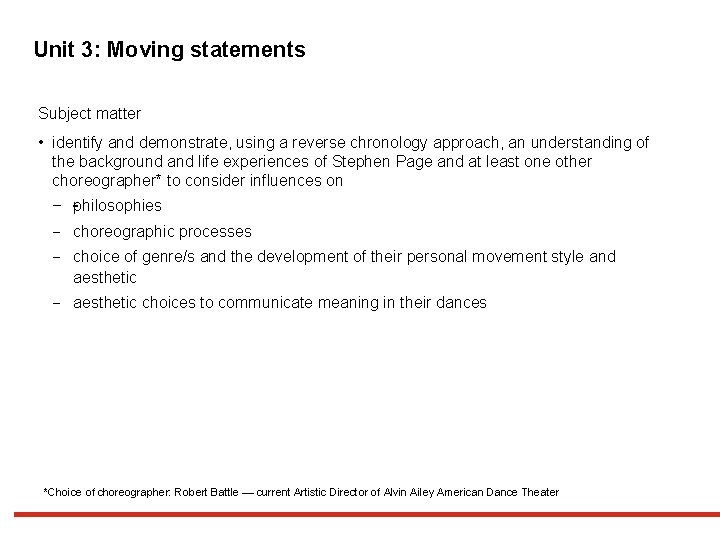
Unit 3: Moving statements Subject matter • identify and demonstrate, using a reverse chronology approach, an understanding of the background and life experiences of Stephen Page and at least one other choreographer* to consider influences on philosophies choreographic processes choice of genre/s and the development of their personal movement style and aesthetic choices to communicate meaning in their dances *Choice of choreographer: Robert Battle — current Artistic Director of Alvin Ailey American Dance Theater
Matthew Rushing Clifton Brown African American dance revues Linda Celeste Sims Katherine Dunham 20 th century concert dance Alvin Ailey American Dance Theater 2018 Parsons Dance David Parsons Ballet Russe de Monte Carlo Pearl Primus African dance Blues Spiritual Gospel music Robert Battle Judith Jamison Battleworks Dance Company Broadway musicals Alvin Ailey Paul Taylor Dance Company Lester Horton Dudley Williams Martial Arts Masazumi Chaya Ulysses Dove Social dance Carolyn Adams Carmen de Lavaallade James Truitte Jazz dance Mikhail Baryshnikov American Ballet Theatre Martha Graham Donald Mc. Kayle
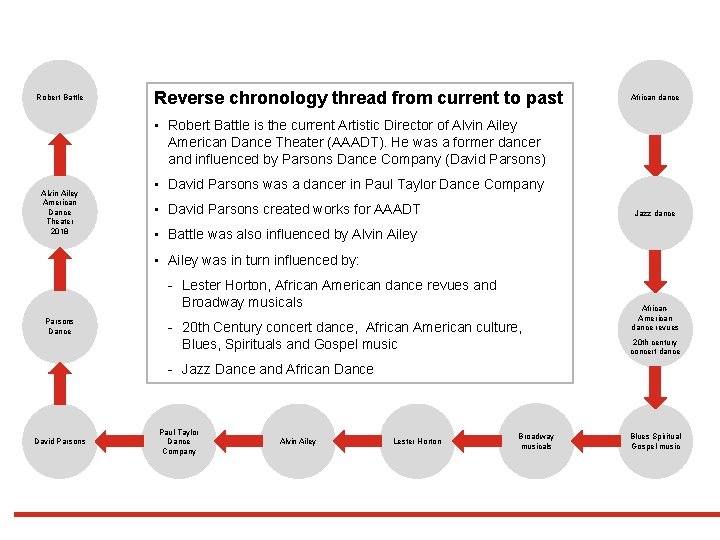
Robert Battle Reverse chronology thread from current to past African dance • Robert Battle is the current Artistic Director of Alvin Ailey American Dance Theater (AAADT). He was a former dancer and influenced by Parsons Dance Company (David Parsons) Alvin Ailey American Dance Theater 2018 • David Parsons was a dancer in Paul Taylor Dance Company • David Parsons created works for AAADT Jazz dance • Battle was also influenced by Alvin Ailey • Ailey was in turn influenced by: Lester Horton, African American dance revues and Broadway musicals Parsons Dance 20 th Century concert dance, African American culture, Blues, Spirituals and Gospel music African American dance revues 20 th century concert dance Jazz Dance and African Dance David Parsons Paul Taylor Dance Company Alvin Ailey Lester Horton Broadway musicals Blues Spiritual Gospel music
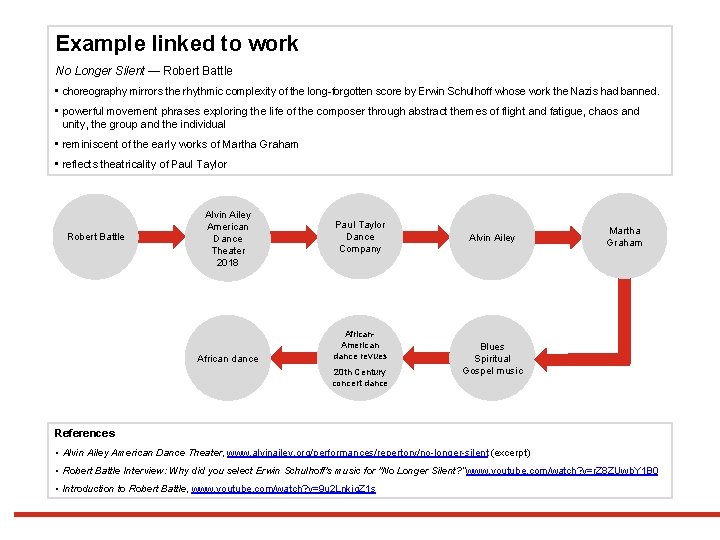
Example linked to work No Longer Silent — Robert Battle • choreography mirrors the rhythmic complexity of the long forgotten score by Erwin Schulhoff whose work the Nazis had banned. • powerful movement phrases exploring the life of the composer through abstract themes of flight and fatigue, chaos and unity, the group and the individual • reminiscent of the early works of Martha Graham • reflects theatricality of Paul Taylor Robert Battle Alvin Ailey American Dance Theater 2018 African dance Paul Taylor Dance Company African American dance revues 20 th Century concert dance Alvin Ailey Martha Graham Blues Spiritual Gospel music References • Alvin Ailey American Dance Theater, www. alvinailey. org/performances/repertory/no longer silent (excerpt) • Robert Battle Interview: Why did you select Erwin Schulhoff's music for "No Longer Silent? ” www. youtube. com/watch? v=r. Z 8 ZUwb. Y 1 B 0 • Introduction to Robert Battle, www. youtube. com/watch? v=9 u 2 Lnkjg. Z 1 s
Useful links Alvin Ailey American Dance Theater, www. alvinailey. org/alvin ailey american dance theater/robert battle Dance Consortium, ‘Robert Battle’, www. danceconsortium. com/features/choreographer/robert battle/ Battle, R 2016, ‘Alvin Ailey’s Robert Battle on His First Real Dance Shoes’, The New York Times, www. nytimes. com/2016/11/23/arts/dance/alvin aileys robert battle on his first real dance shoes. html Bauer, P 2016, ‘Robert Battle: American Dancer and Choreographer’, Encyclopaedia Britannica, www. britannica. com/biography/Robert Battle Mackrell, J 2016, ‘Revelations and revolutions: How Robert Battle put Alvin Ailey’s dancers to the test’, The Guardian, www. theguardian. com/stage/2016/aug/30/revelations robert battle alvin ailey dancers
Unit 4: Moving my way Subject matter identify and explain, using a reverse chronology approach, the effect of background and influences on choreographers* and how these are reflected in their dance through discrete and fused movement genres and styles innovative practices, including choreographic processes, integration of production elements philosophies and viewpoints the selection and manipulation of movement by the elements of dance, structure, production elements and dance skills *Choice of choreographer — Akram Khan
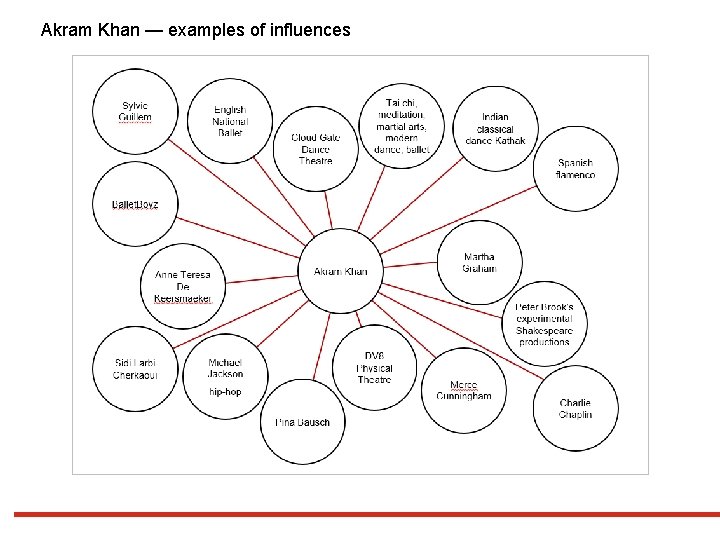
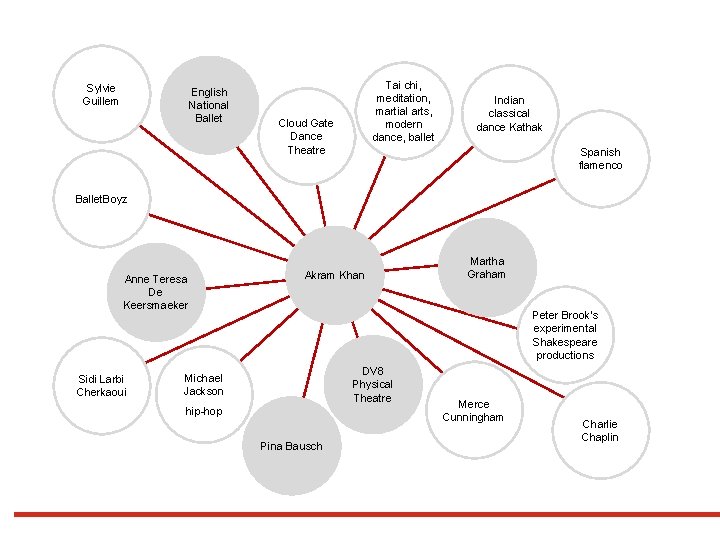
Akram Khan — examples of influences
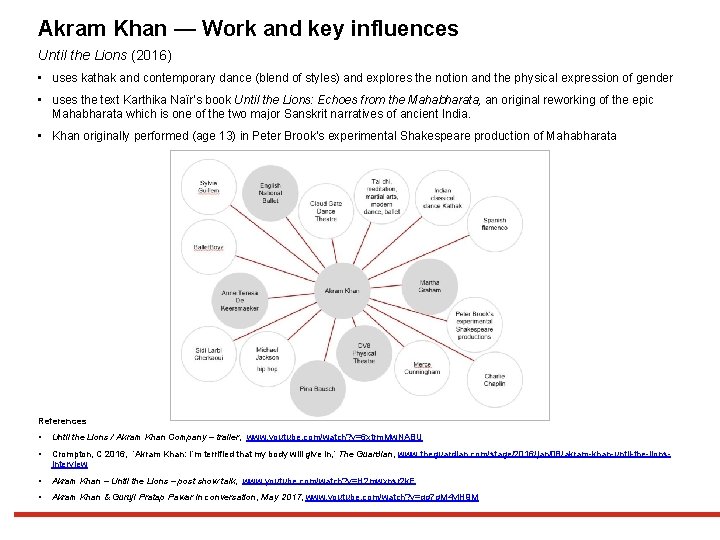
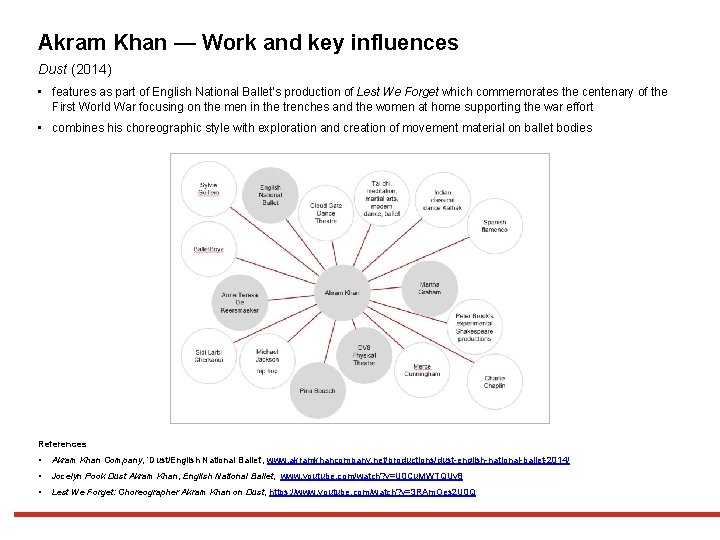
Sylvie Guillem English National Ballet Tai chi, meditation, martial arts, modern dance, ballet Cloud Gate Dance Theatre Indian classical dance Kathak Spanish flamenco Ballet. Boyz Anne Teresa De Keersmaeker Sidi Larbi Cherkaoui Akram Khan Martha Graham Peter Brook’s experimental Shakespeare productions DV 8 Physical Theatre Michael Jackson hip hop Pina Bausch Merce Cunningham Charlie Chaplin
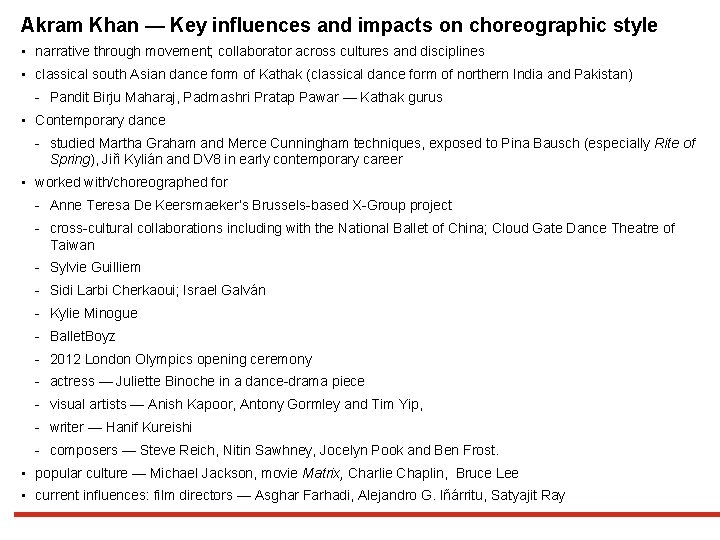
Akram Khan — Key influences and impacts on choreographic style • narrative through movement; collaborator across cultures and disciplines • classical south Asian dance form of Kathak (classical dance form of northern India and Pakistan) Pandit Birju Maharaj, Padmashri Pratap Pawar — Kathak gurus • Contemporary dance studied Martha Graham and Merce Cunningham techniques, exposed to Pina Bausch (especially Rite of Spring), Jiři Kylián and DV 8 in early contemporary career • worked with/choreographed for Anne Teresa De Keersmaeker’s Brussels based X Group project cross cultural collaborations including with the National Ballet of China; Cloud Gate Dance Theatre of Taiwan Sylvie Guilliem Sidi Larbi Cherkaoui; Israel Galván Kylie Minogue Ballet. Boyz 2012 London Olympics opening ceremony actress — Juliette Binoche in a dance drama piece visual artists — Anish Kapoor, Antony Gormley and Tim Yip, writer — Hanif Kureishi composers — Steve Reich, Nitin Sawhney, Jocelyn Pook and Ben Frost. • popular culture — Michael Jackson, movie Matrix, Charlie Chaplin, Bruce Lee • current influences: film directors — Asghar Farhadi, Alejandro G. Iñárritu, Satyajit Ray
Akram Khan — Work and key influences Until the Lions (2016) • uses kathak and contemporary dance (blend of styles) and explores the notion and the physical expression of gender • uses the text Karthika Naïr’s book Until the Lions: Echoes from the Mahabharata, an original reworking of the epic Mahabharata which is one of the two major Sanskrit narratives of ancient India. • Khan originally performed (age 13) in Peter Brook’s experimental Shakespeare production of Mahabharata References • Until the Lions / Akram Khan Company – trailer, www. youtube. com/watch? v=6 xtrm. Mw. NABU • Crompton, C 2016, ‘Akram Khan: I’m terrified that my body will give in, ’ The Guardian, www. theguardian. com/stage/2016/jan/08/akram khan until the lions interview • Akram Khan – Until the Lions – post show talk, www. youtube. com/watch? v=H 2 mwxnsr 2 k. E • Akram Khan & Guruji Pratap Pawar in conversation, May 2017, www. youtube. com/watch? v=qg 7 g. M 4 vl. H 9 M
Akram Khan — Work and key influences Dust (2014) • features as part of English National Ballet’s production of Lest We Forget which commemorates the centenary of the First World War focusing on the men in the trenches and the women at home supporting the war effort • combines his choreographic style with exploration and creation of movement material on ballet bodies References • Akram Khan Company, ‘Dust/English National Ballet’, www. akramkhancompany. net/productions/dust english national ballet 2014/ • Jocelyn Pook Dust Akram Khan, English National Ballet, www. youtube. com/watch? v=U 0 Cu. MWTQUy 8 • Lest We Forget: Choreographer Akram Khan on Dust, https: //www. youtube. com/watch? v=3 RAm. Oes 2 U 0 Q
Other useful links Dance Umbrella, ‘My dance DND | Interview with Akram Khan’, www. danceumbrella. co. uk/my dance dna/akram khan kathryn hunter/ Jaggi, M 2010, ‘A life in dance: Akram Khan’, The Guardian, www. theguardian. com/culture/2010/sep/27/akram khan dance life Akram Khan Company, www. akramkhancompany. net/ Akram Khan: an interview, www. youtube. com/watch? v=h 4 h 72 Rd 5 l. Bg Welbye, H 2014, ‘theartsdesk Q&A: Choreographer Akram Khan’, theartsdesk. com, www. theartsdesk. com/dance/theartsdesk qa choreographer akram khan Mitra, R. (2015) Akram Khan: Dancing New Interculturalism, Palgrave Macmillan, United Kingdom
Useful reverse chronology resources Daniel, J T 2014, ‘Pedagogy of teaching history: Comparing the chronological and thematic approaches’ (Honors Senior Theses/Projects) West Oregon University, Oregon, http: //digitalcommons. wou. edu/cgi/viewcontent. cgi? article=1005&context=honors_theses Hartman, J 2015 , ‘Teaching the history of rock music using reverse chronology’, i. Achieve. Learning https: //iachievelearning. com/2015/12/teaching the history of rock music using reverse chronology/ Himes, G 2015, ‘Why we should teach music history backwards’, Smithsonian. com, www. smithsonianmag. com/arts culture/why we should teach music history backwards 180955053/ Steal Like An Artist: Austin Kleon at TEDx. KC, www. youtube. com/watch? v=oww 7 o. B 9 rjgw