
Damage to where pathway Abnormal motion processing Visuspatial
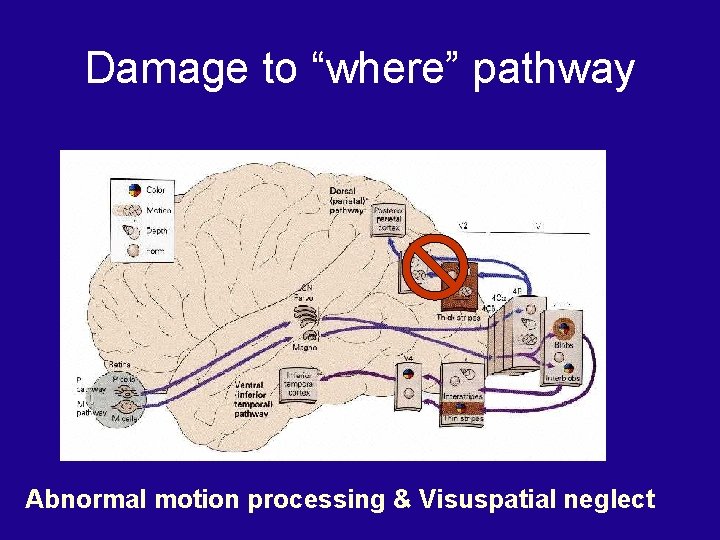
Damage to “where” pathway Abnormal motion processing & Visuspatial neglect
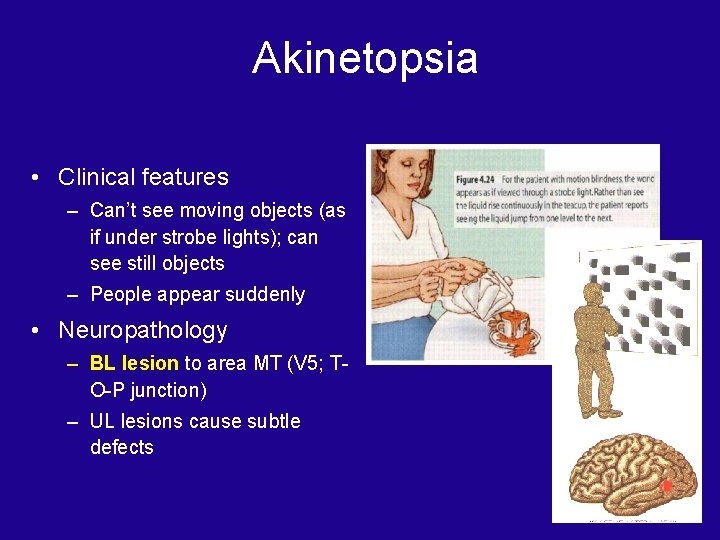
Akinetopsia • Clinical features – Can’t see moving objects (as if under strobe lights); can see still objects – People appear suddenly • Neuropathology – BL lesion to area MT (V 5; TO-P junction) – UL lesions cause subtle defects
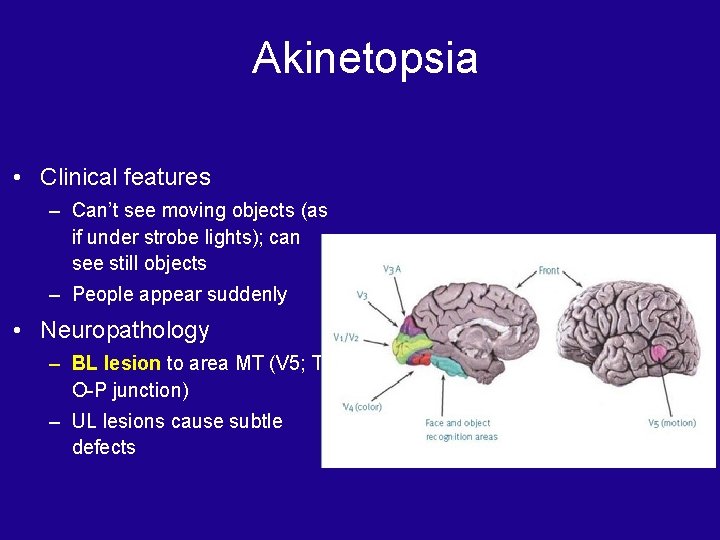
Akinetopsia • Clinical features – Can’t see moving objects (as if under strobe lights); can see still objects – People appear suddenly • Neuropathology – BL lesion to area MT (V 5; TO-P junction) – UL lesions cause subtle defects
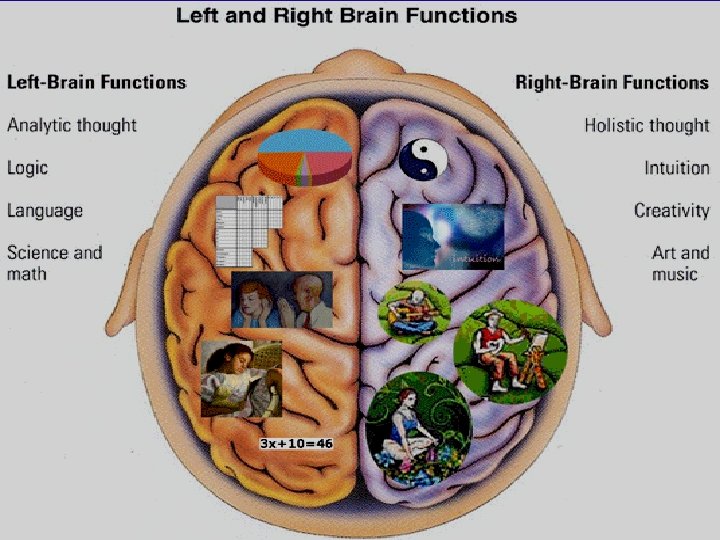
Emotion Localization
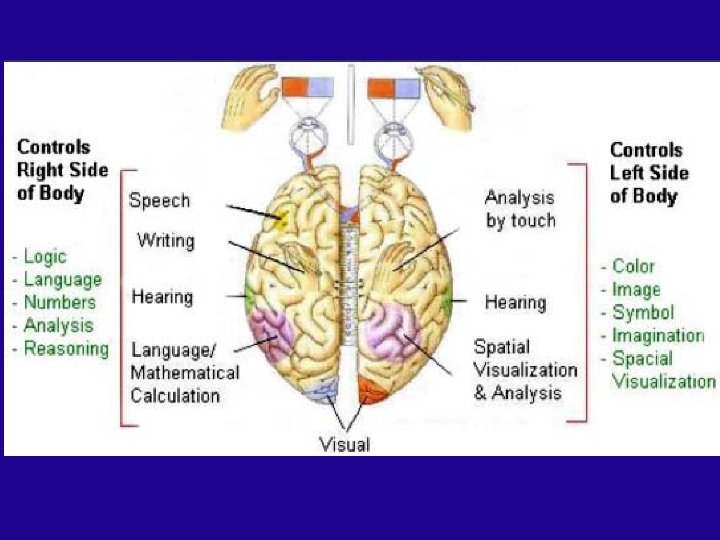
Time, sequence, attention and space
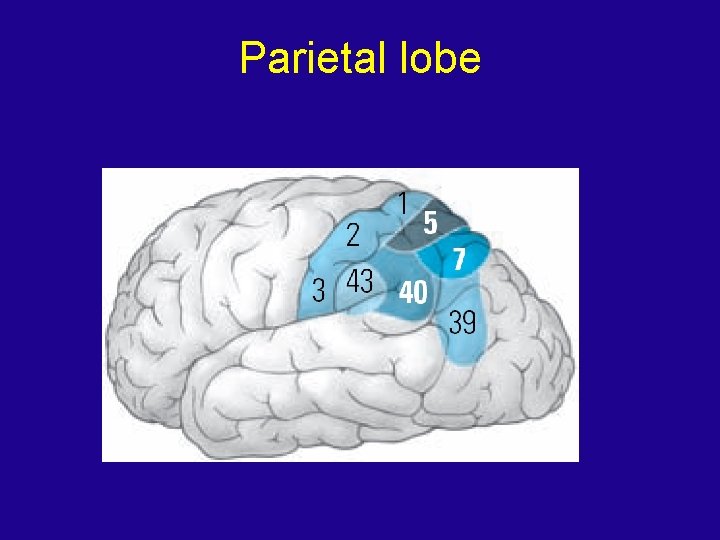
Parietal lobe
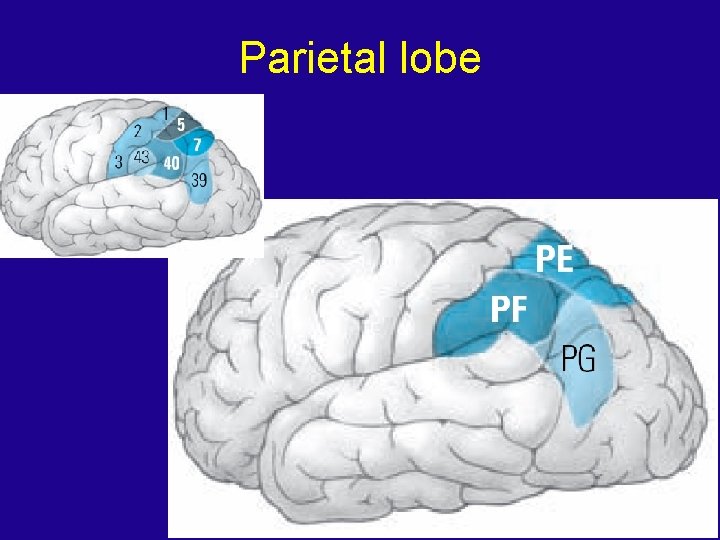
Parietal lobe

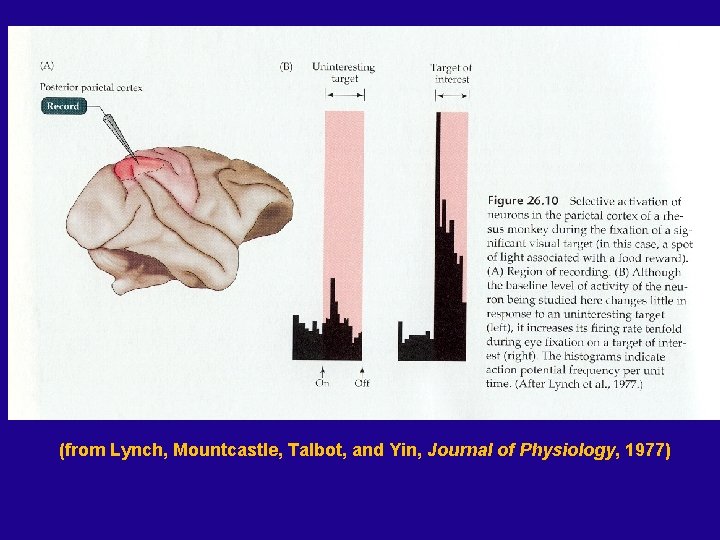
(from Lynch, Mountcastle, Talbot, and Yin, Journal of Physiology, 1977)
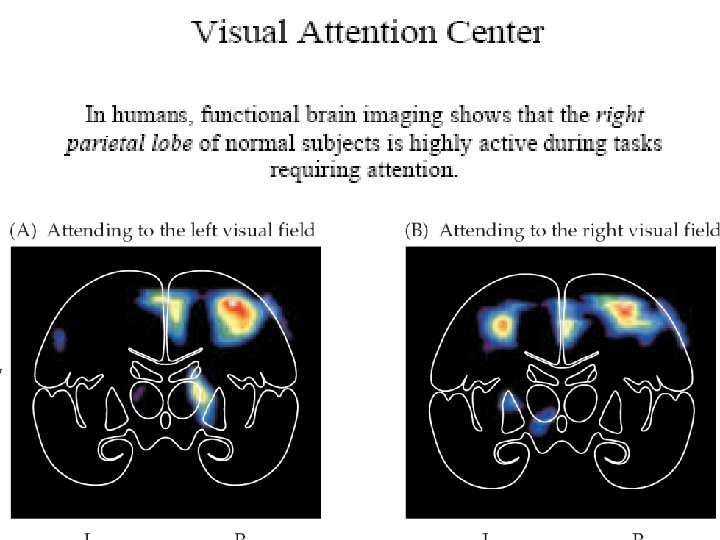
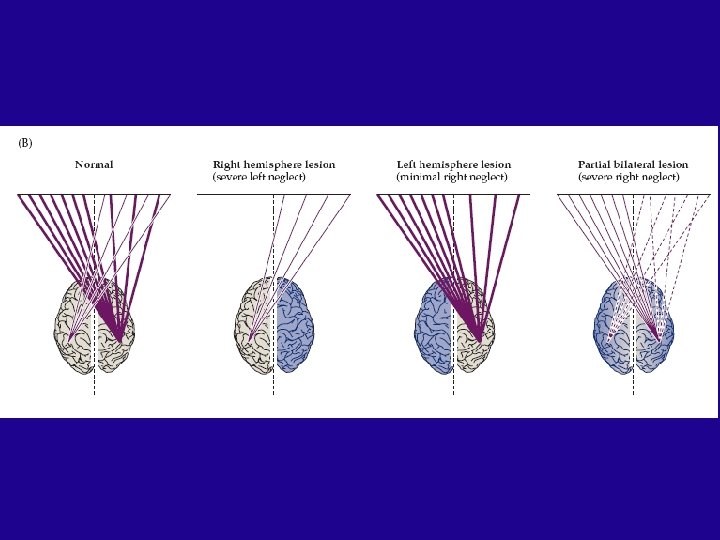
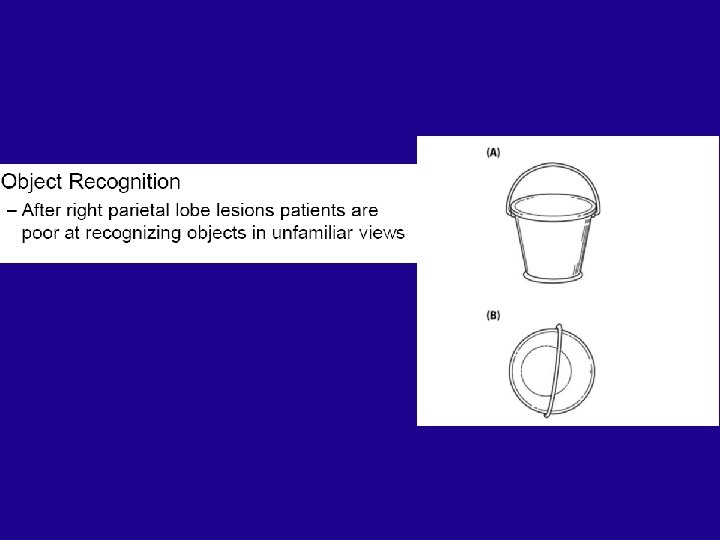
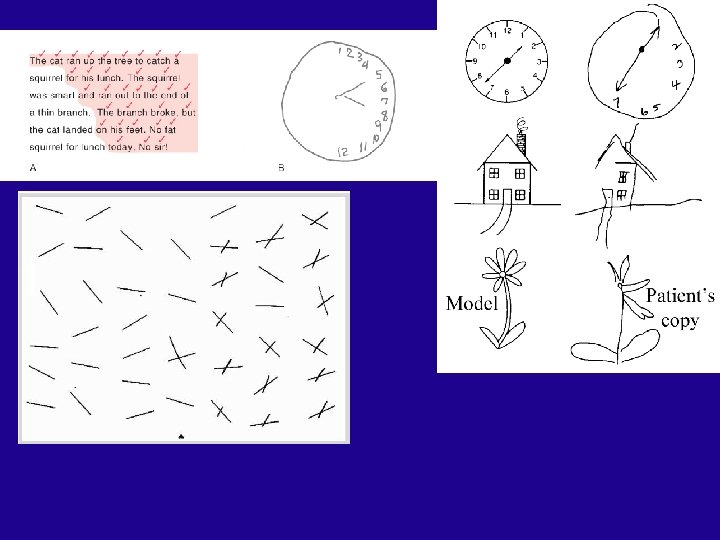
Neglect syndrome (right parietal association cortex)
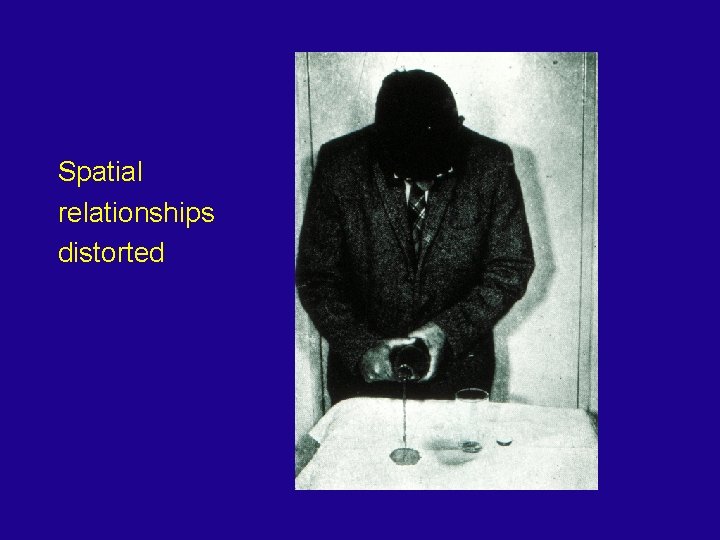
Spatial relationships distorted
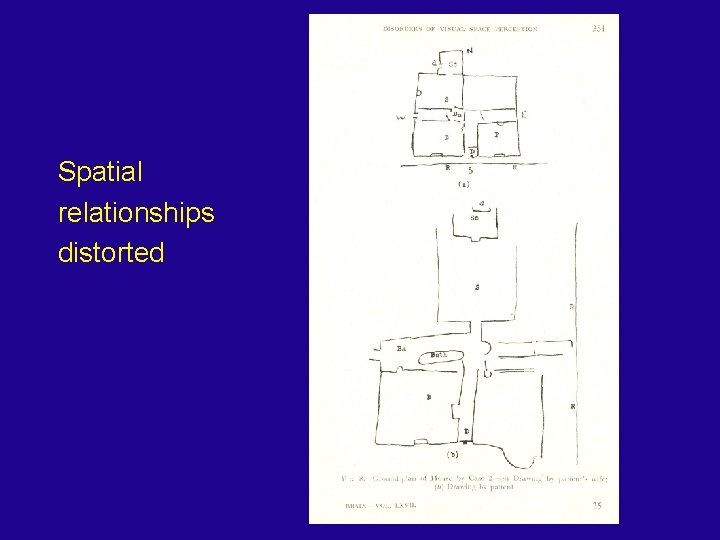
Spatial relationships distorted
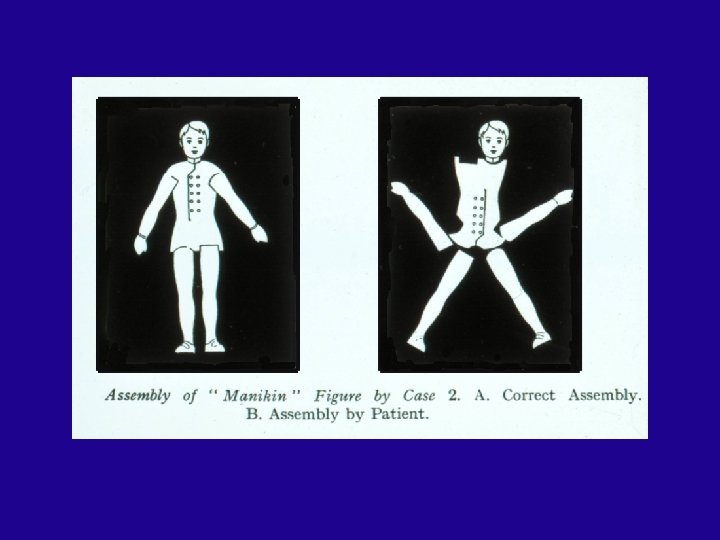
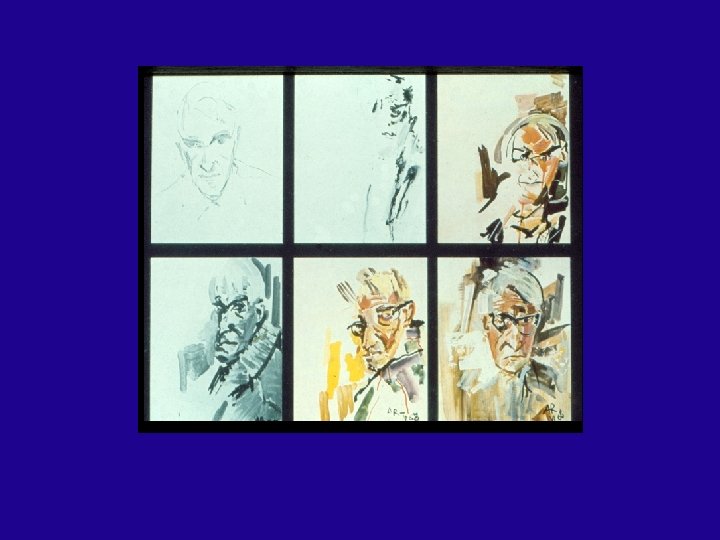
Left parietal
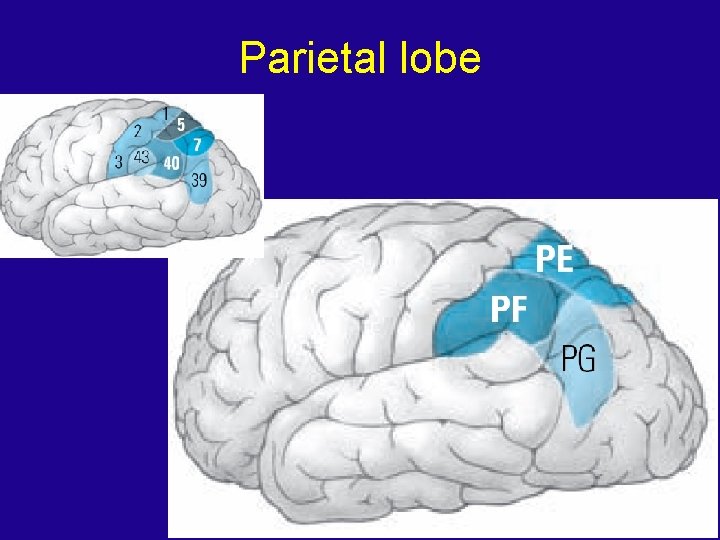
Parietal lobe
• • Acalculia Language Agraphia Apraxia
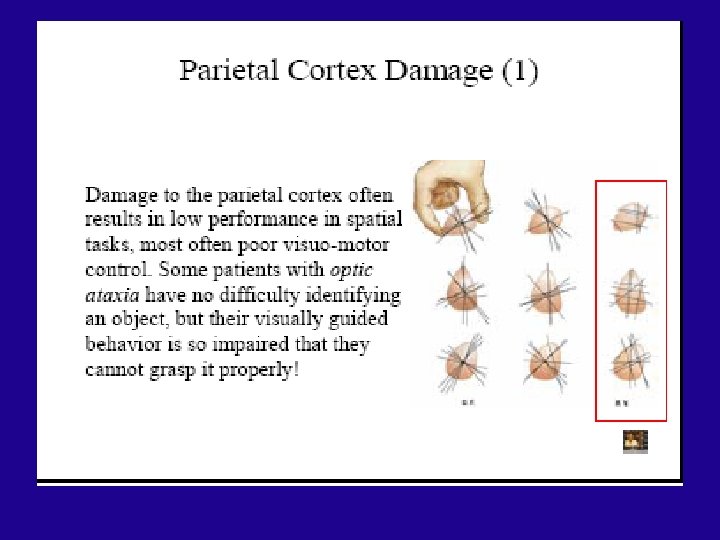
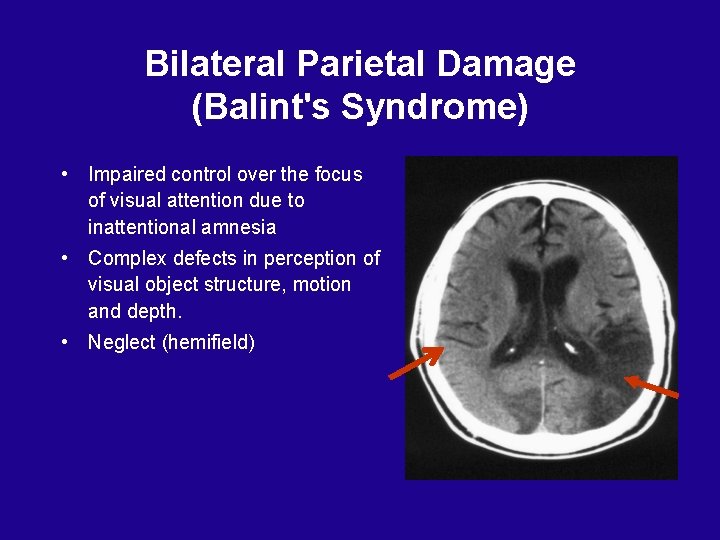
Bilateral Parietal Damage (Balint's Syndrome) • Impaired control over the focus of visual attention due to inattentional amnesia • Complex defects in perception of visual object structure, motion and depth. • Neglect (hemifield)
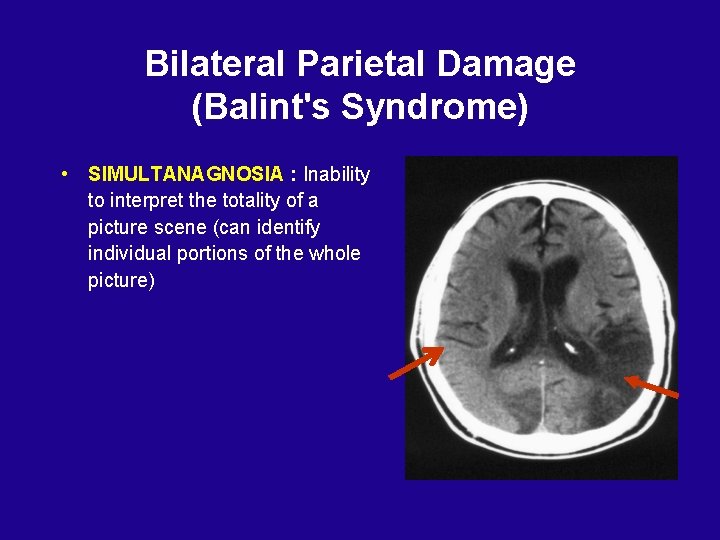
Bilateral Parietal Damage (Balint's Syndrome) • SIMULTANAGNOSIA : Inability to interpret the totality of a picture scene (can identify individual portions of the whole picture)
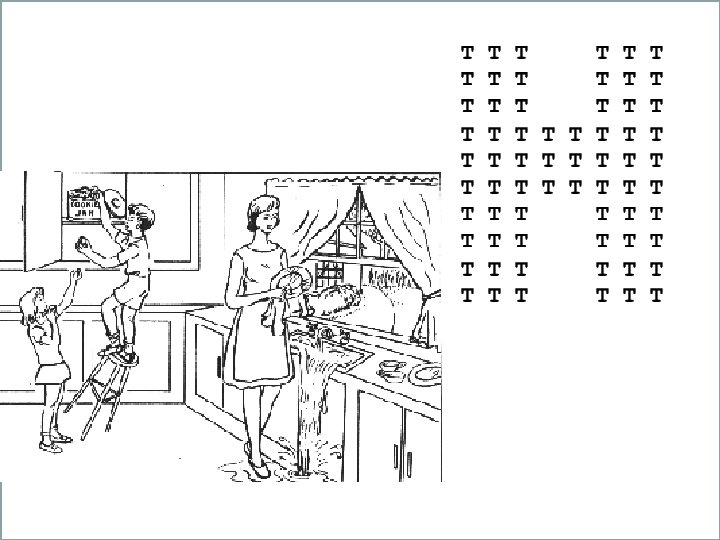
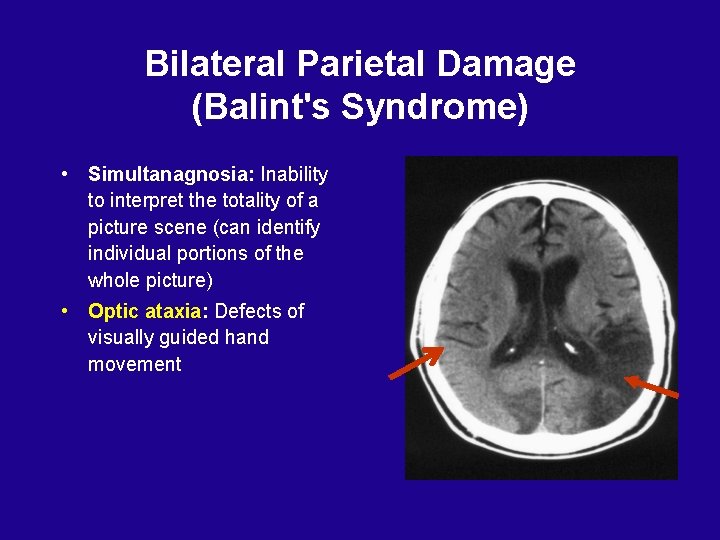
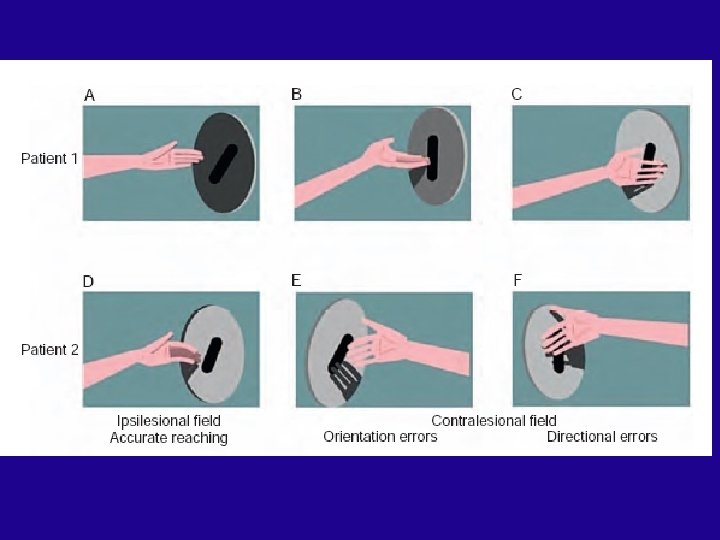
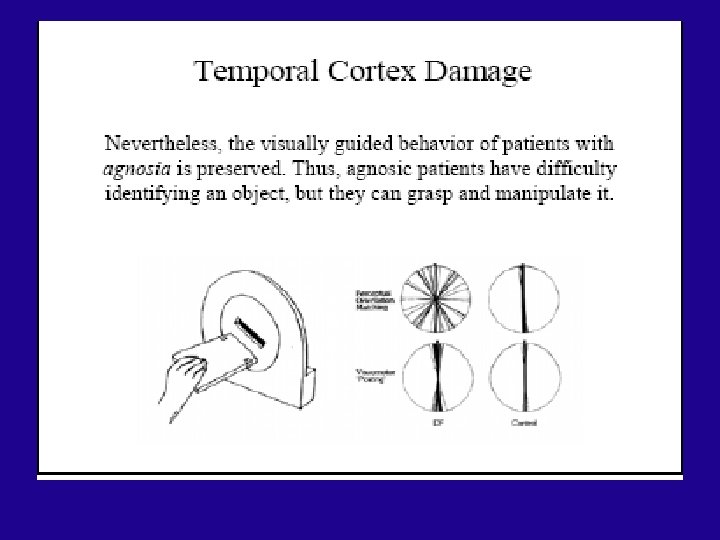
Bilateral Parietal Damage (Balint's Syndrome) • Simultanagnosia: Inability to interpret the totality of a picture scene (can identify individual portions of the whole picture) • Optic ataxia: Defects of visually guided hand movement
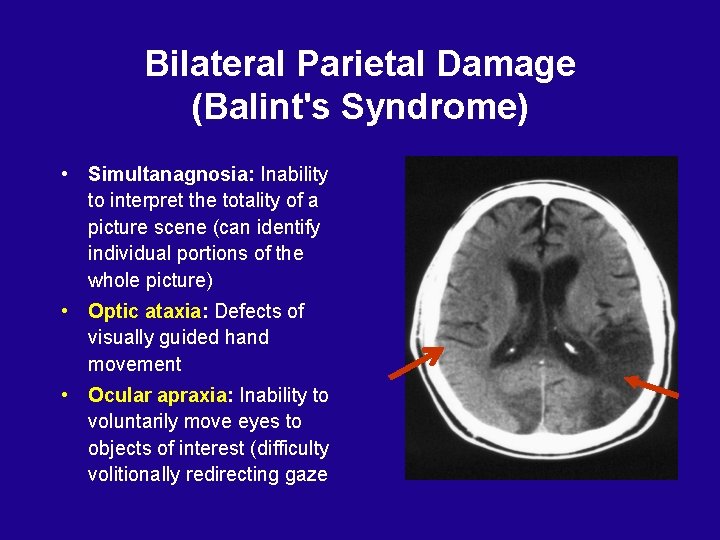
Bilateral Parietal Damage (Balint's Syndrome) • Simultanagnosia: Inability to interpret the totality of a picture scene (can identify individual portions of the whole picture) • Optic ataxia: Defects of visually guided hand movement • Ocular apraxia: Inability to voluntarily move eyes to objects of interest (difficulty volitionally redirecting gaze

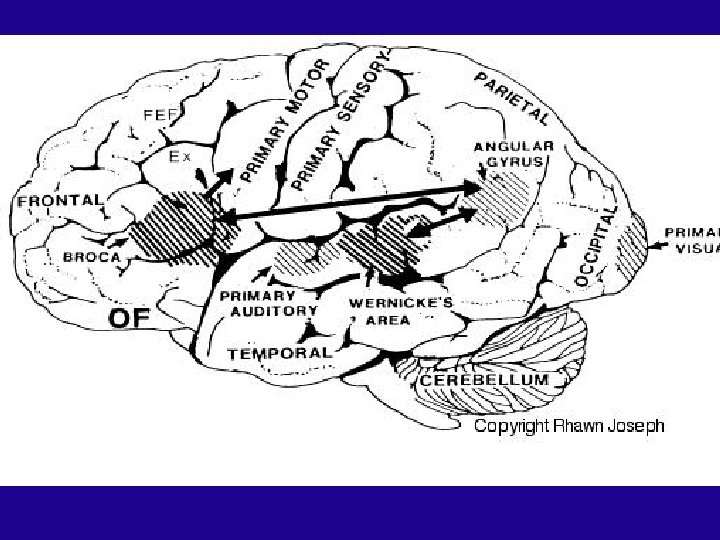
language
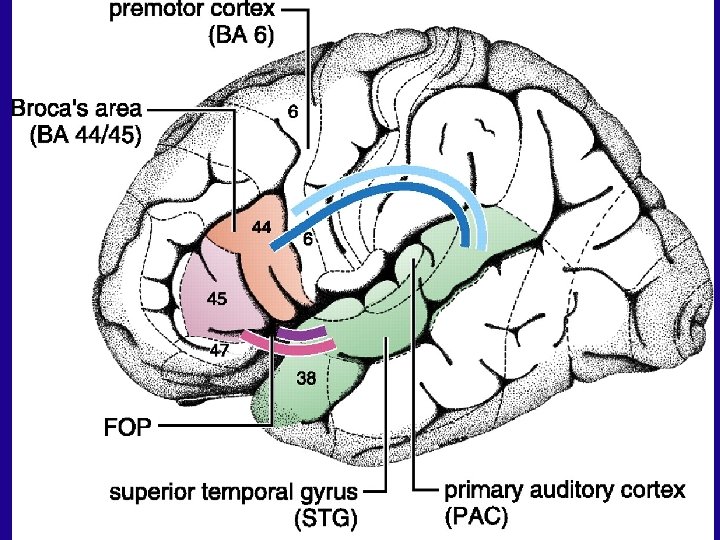
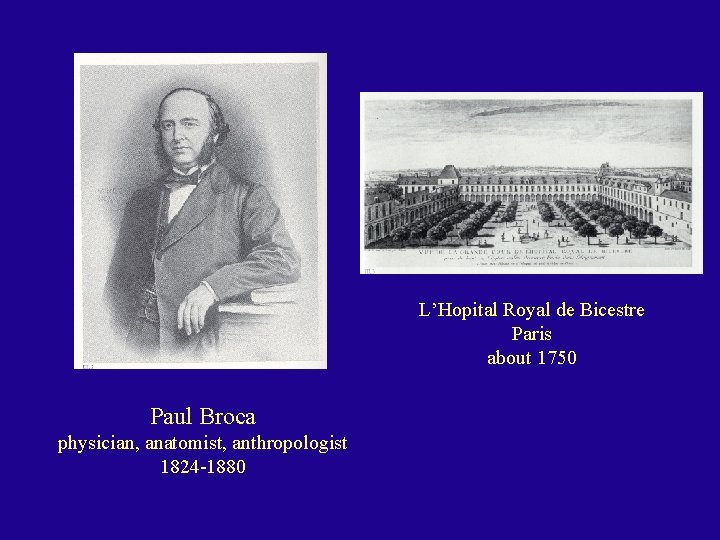
L’Hopital Royal de Bicestre Paris about 1750 Paul Broca physician, anatomist, anthropologist 1824 -1880
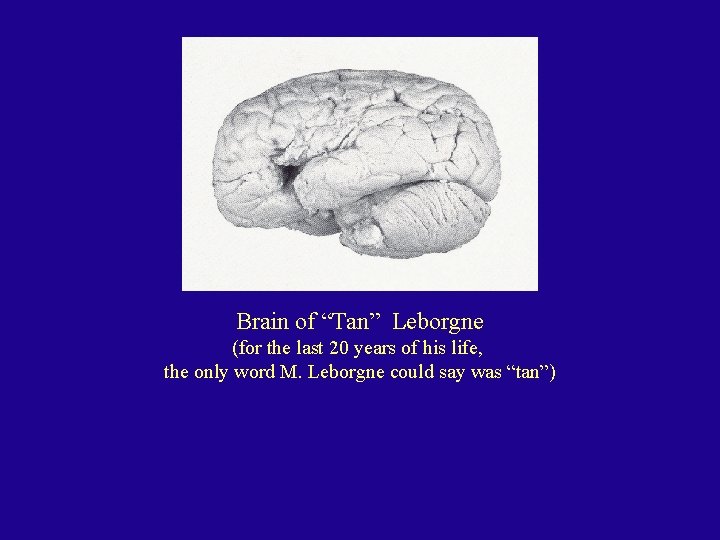
Brain of “Tan” Leborgne (for the last 20 years of his life, the only word M. Leborgne could say was “tan”)
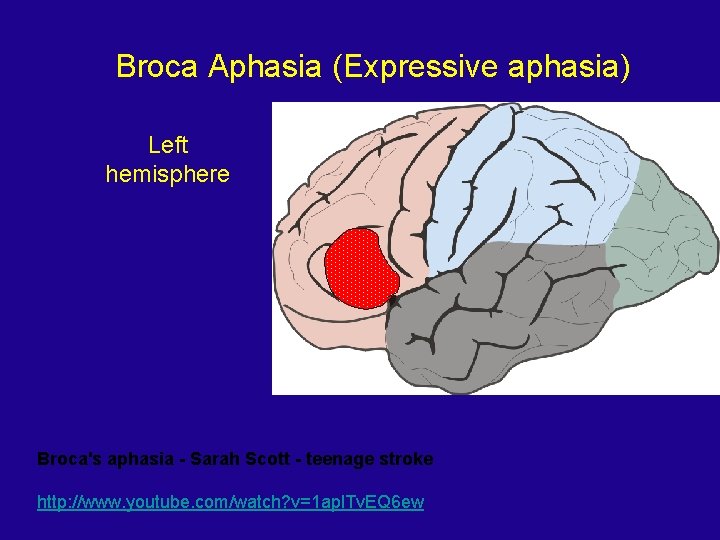
Broca Aphasia (Expressive aphasia) Left hemisphere Broca's aphasia - Sarah Scott - teenage stroke http: //www. youtube. com/watch? v=1 apl. Tv. EQ 6 ew
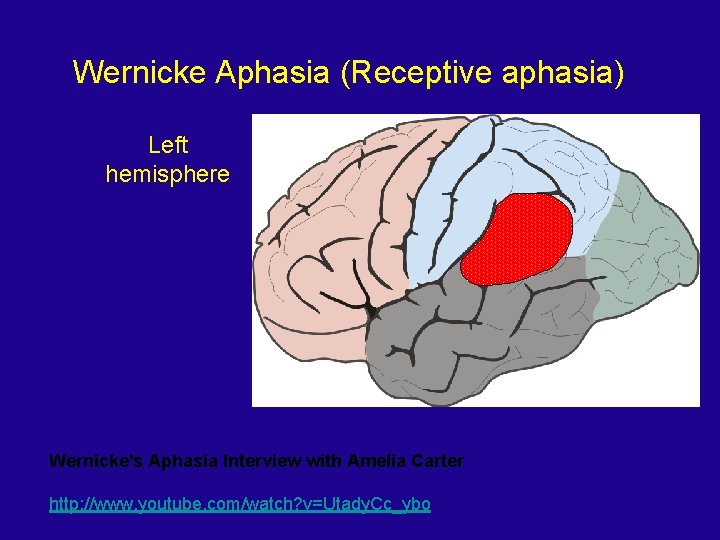
Wernicke Aphasia (Receptive aphasia) Left hemisphere Wernicke's Aphasia Interview with Amelia Carter http: //www. youtube. com/watch? v=Utady. Cc_ybo
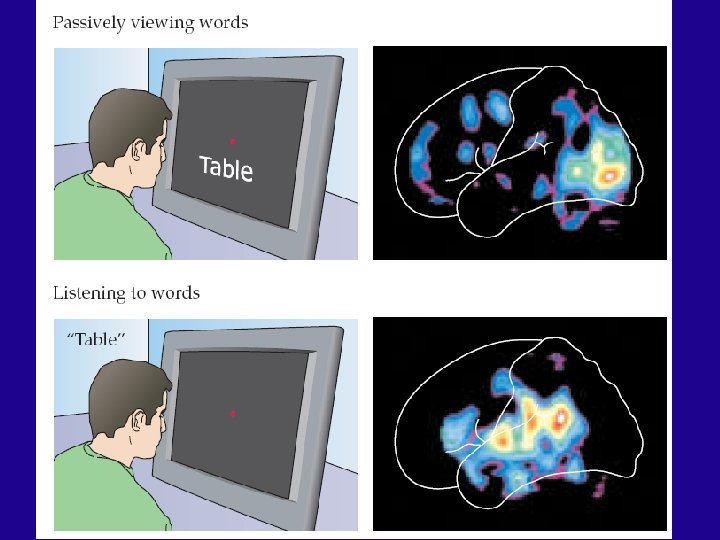
language
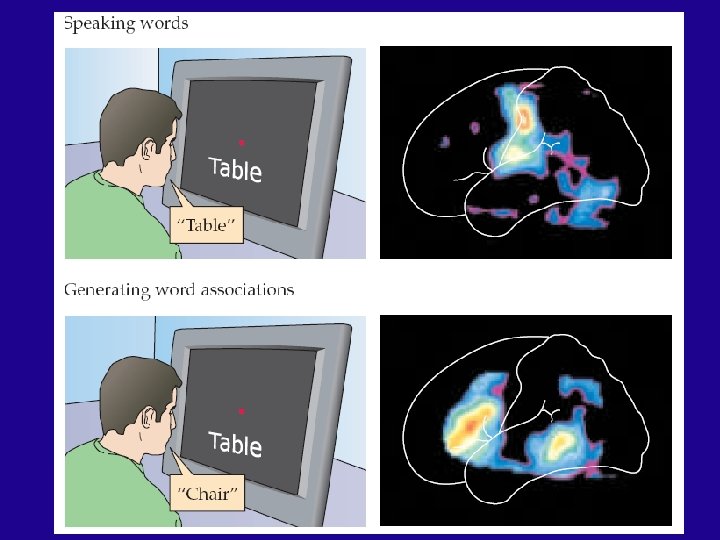
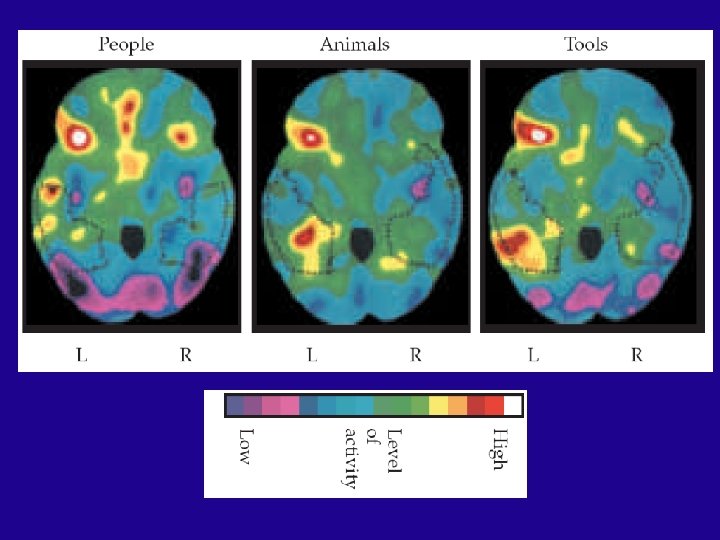
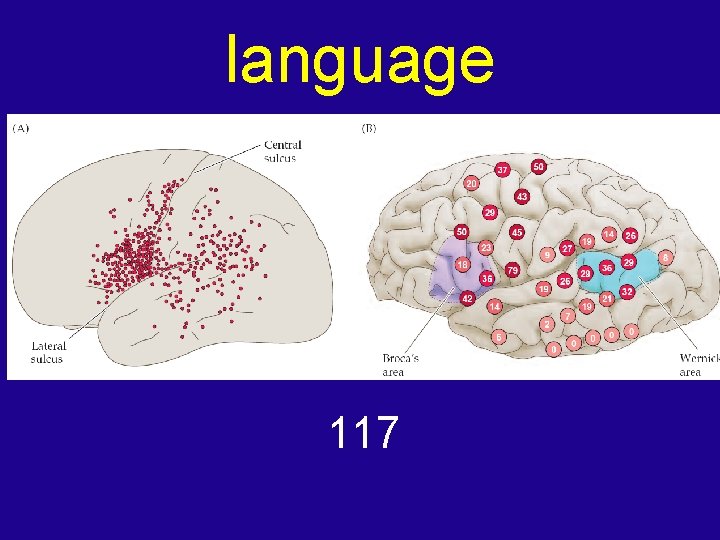
language 117
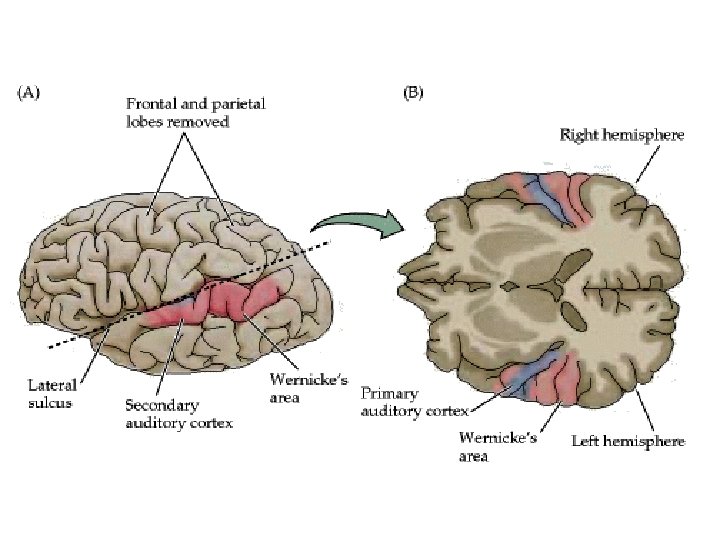

(right hemisphere)
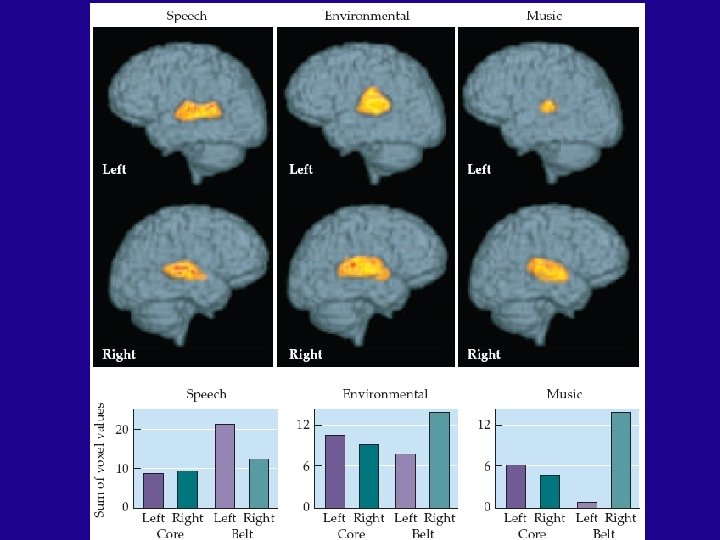
Prosody of speech (right hemisphere)
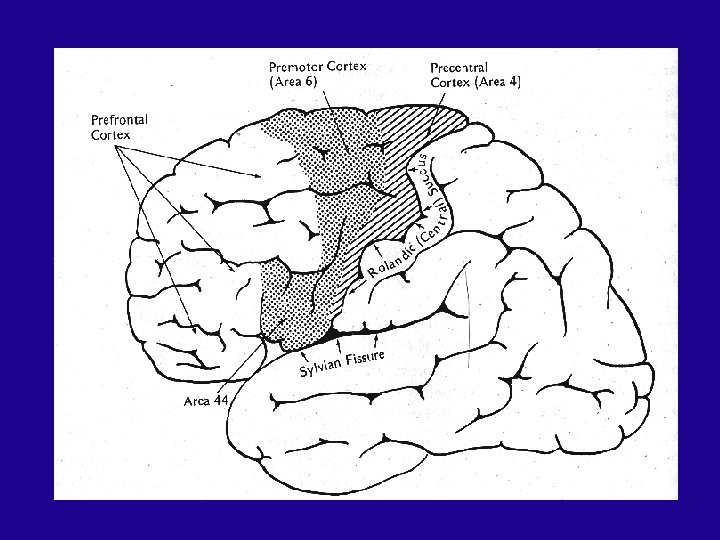
Frontal lobe
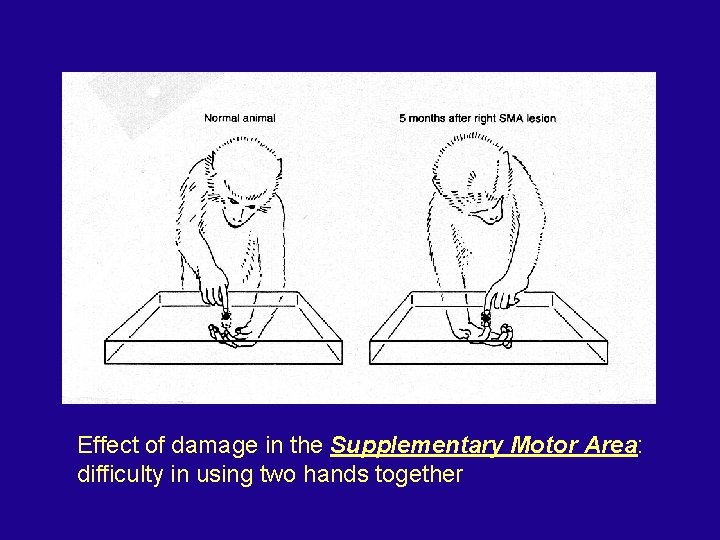
Effect of damage in the Supplementary Motor Area: difficulty in using two hands together
Plans for Action (prefrontal cortex)
Functions of the prefrontal cortex: 1) Planning This is the area where volition, thinking ahead, problem solving are located. Before you can have these, and do them flexibly, fluently, adaptively, have to inhibit more primitive, automatic, instinctive behavior patterns; hence 2) Inhibition 3) Selectivity ‘I will do this, I will not do that’
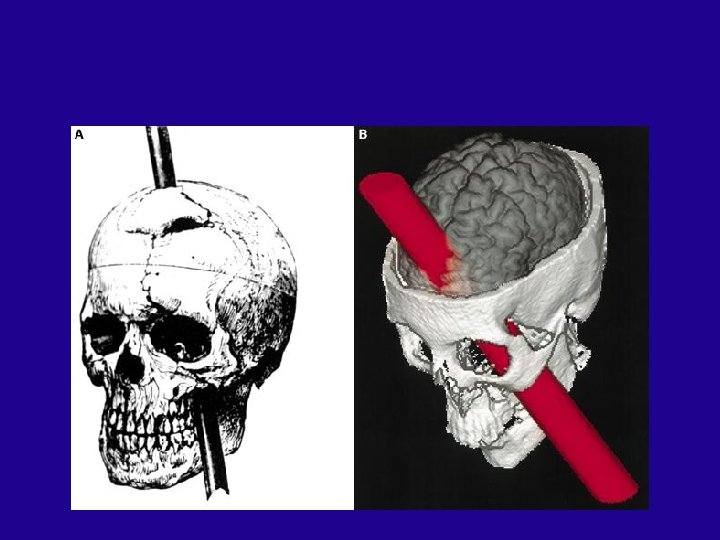
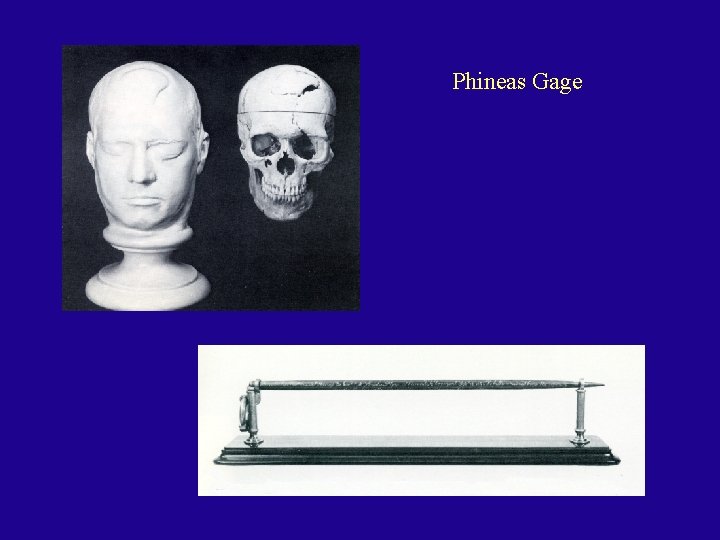
Phineas Gage
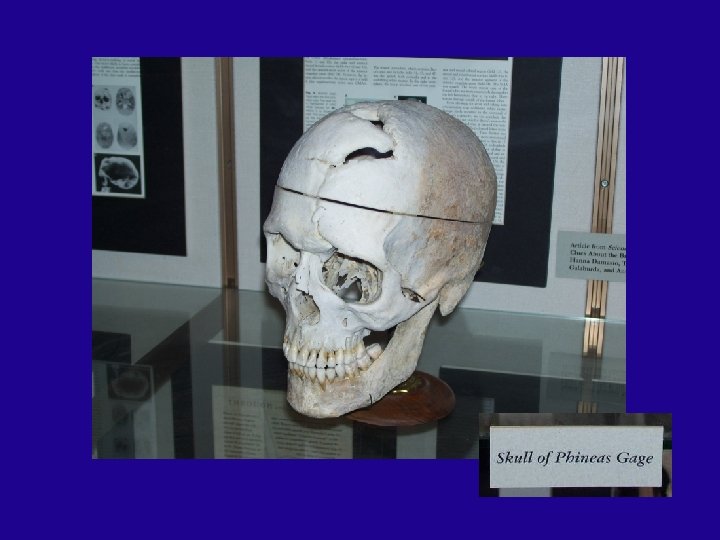
Prefrontal Cortex Damage: • Lack of foresight • Frequent stubbornness • Inattentive and moody • Lack of ambitions, sense of responsibility, sense of propriety (rude) • Less creative and unable to plan forthe future
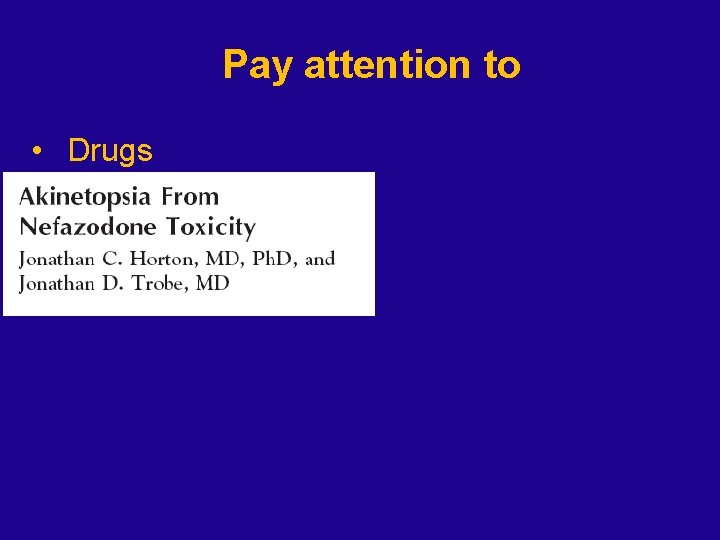
Pay attention to • Drugs
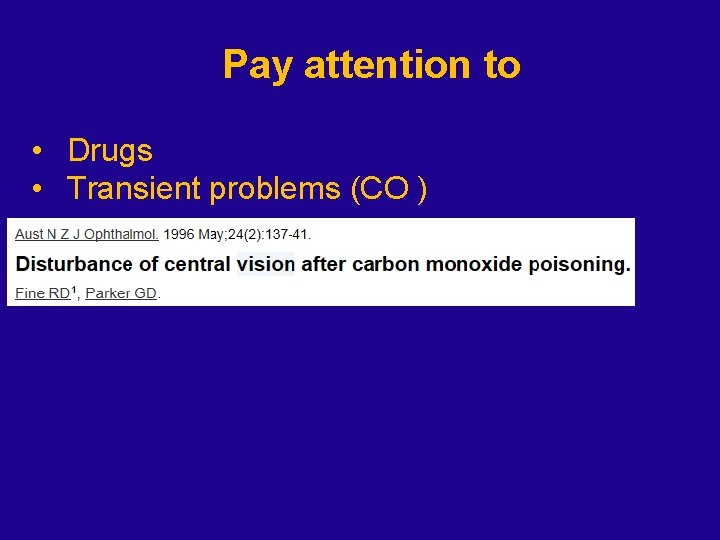
Pay attention to • Drugs • Transient problems (CO )
Pay attention to • Drugs • Transient problems (CO ) • Chronic problems (alcohol )
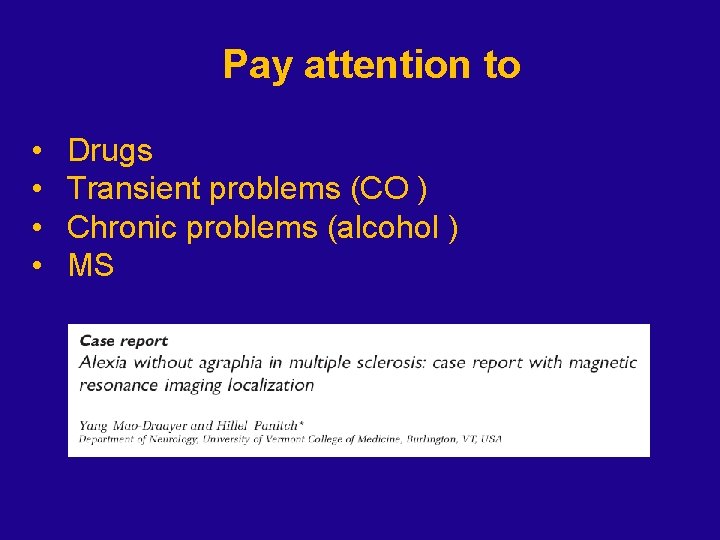
Pay attention to • • Drugs Transient problems (CO ) Chronic problems (alcohol ) MS
Pay attention to • • • Drugs Transient problems (CO ) Chronic problems (alcohol ) MS Degeneration (Alzheimer )
- Slides: 61