
Daljit Nagra Singh Song Suggests long mundane working
- Slides: 19
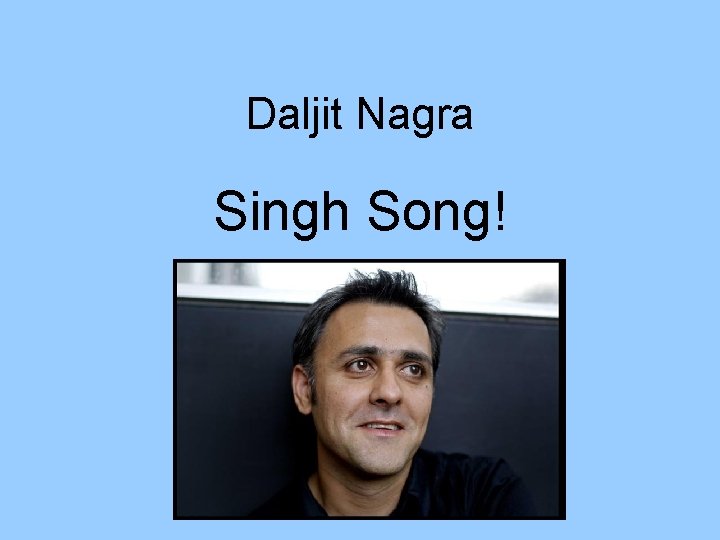
Daljit Nagra Singh Song!
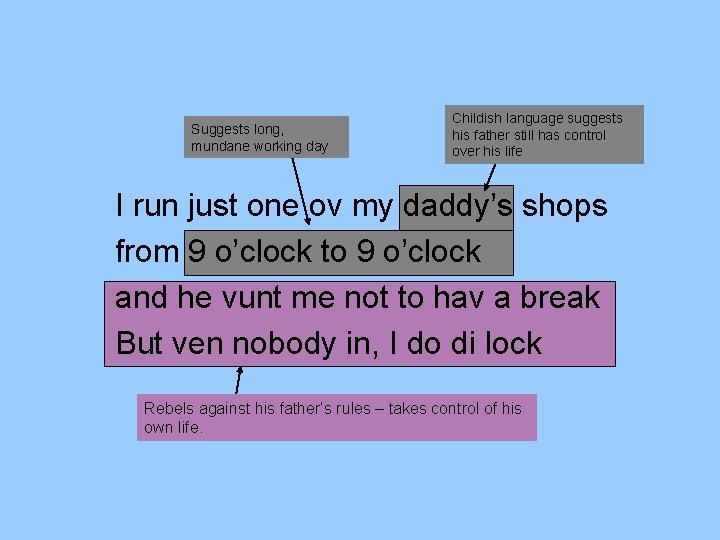
Suggests long, mundane working day Childish language suggests his father still has control over his life I run just one ov my daddy’s shops from 9 o’clock to 9 o’clock and he vunt me not to hav a break But ven nobody in, I do di lock Rebels against his father’s rules – takes control of his own life.
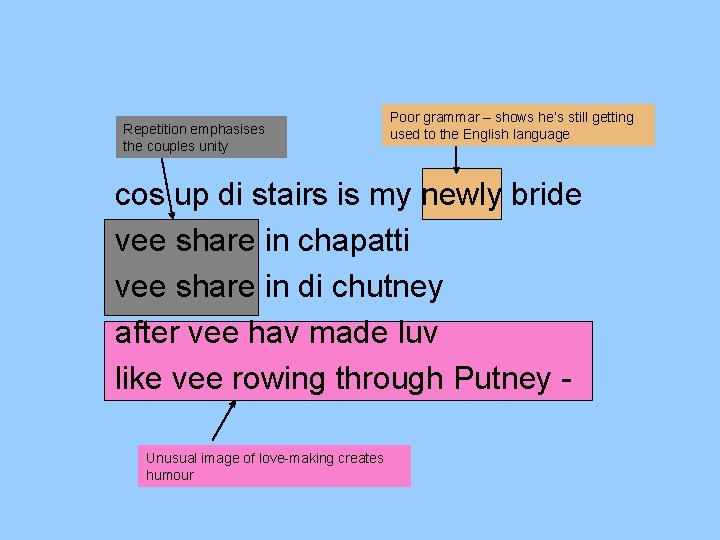
Repetition emphasises the couples unity Poor grammar – shows he’s still getting used to the English language cos up di stairs is my newly bride vee share in chapatti vee share in di chutney after vee hav made luv like vee rowing through Putney Unusual image of love-making creates humour
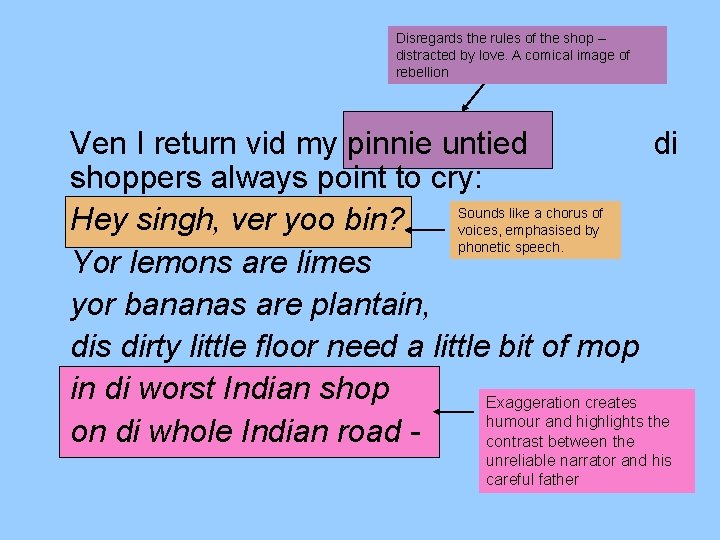
Disregards the rules of the shop – distracted by love. A comical image of rebellion Ven I return vid my pinnie untied di shoppers always point to cry: Sounds like a chorus of Hey singh, ver yoo bin? voices, emphasised by phonetic speech. Yor lemons are limes yor bananas are plantain, dis dirty little floor need a little bit of mop in di worst Indian shop Exaggeration creates humour and highlights the on di whole Indian road contrast between the unreliable narrator and his careful father
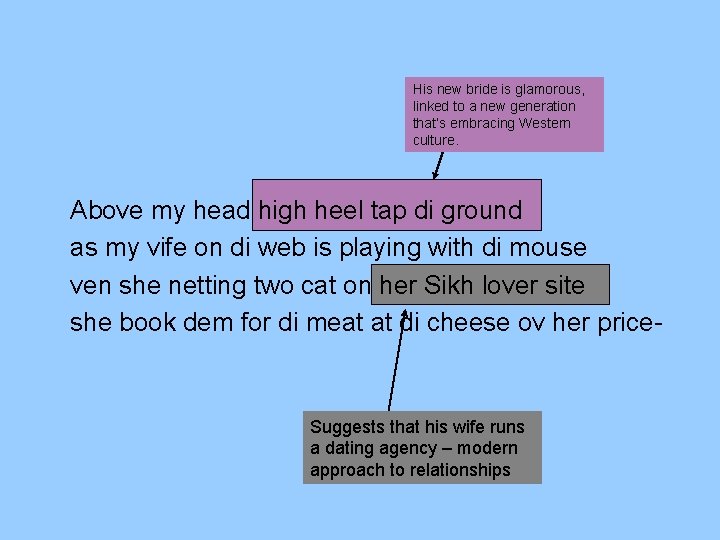
His new bride is glamorous, linked to a new generation that’s embracing Western culture. Above my head high heel tap di ground as my vife on di web is playing with di mouse ven she netting two cat on her Sikh lover site she book dem for di meat at di cheese ov her price- Suggests that his wife runs a dating agency – modern approach to relationships
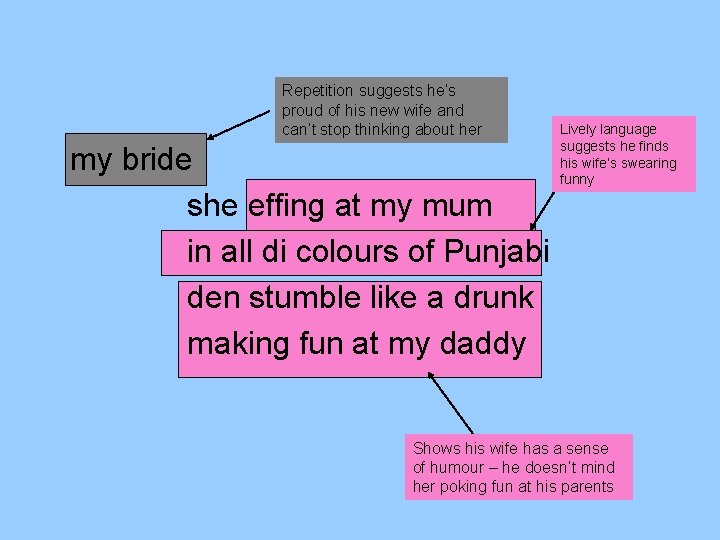
Repetition suggests he’s proud of his new wife and can’t stop thinking about her my bride she effing at my mum in all di colours of Punjabi den stumble like a drunk making fun at my daddy Lively language suggests he finds his wife’s swearing funny Shows his wife has a sense of humour – he doesn’t mind her poking fun at his parents
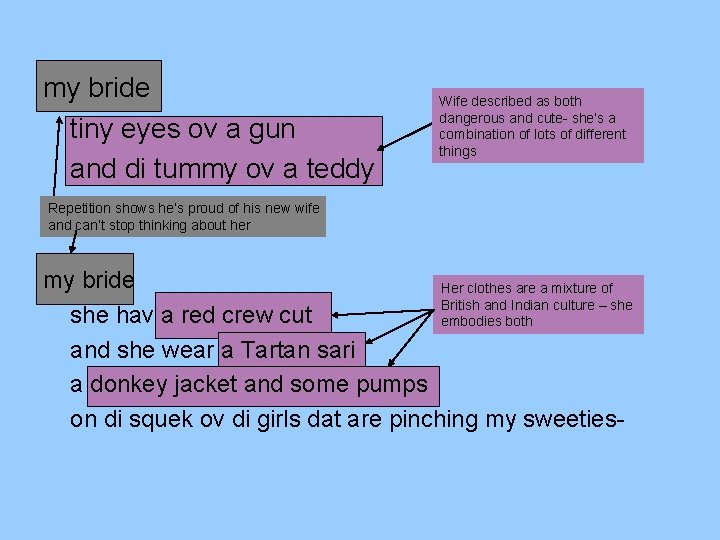
my bride tiny eyes ov a gun and di tummy ov a teddy Wife described as both dangerous and cute- she’s a combination of lots of different things Repetition shows he’s proud of his new wife and can’t stop thinking about her my bride Her clothes are a mixture of British and Indian culture – she hav a red crew cut embodies both and she wear a Tartan sari a donkey jacket and some pumps on di squek ov di girls dat are pinching my sweeties-
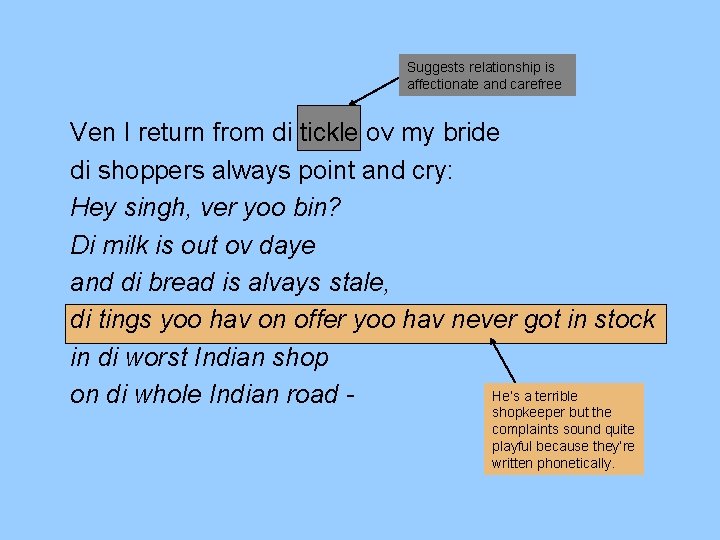
Suggests relationship is affectionate and carefree Ven I return from di tickle ov my bride di shoppers always point and cry: Hey singh, ver yoo bin? Di milk is out ov daye and di bread is alvays stale, di tings yoo hav on offer yoo hav never got in stock in di worst Indian shop He’s a terrible on di whole Indian road shopkeeper but the complaints sound quite playful because they’re written phonetically.
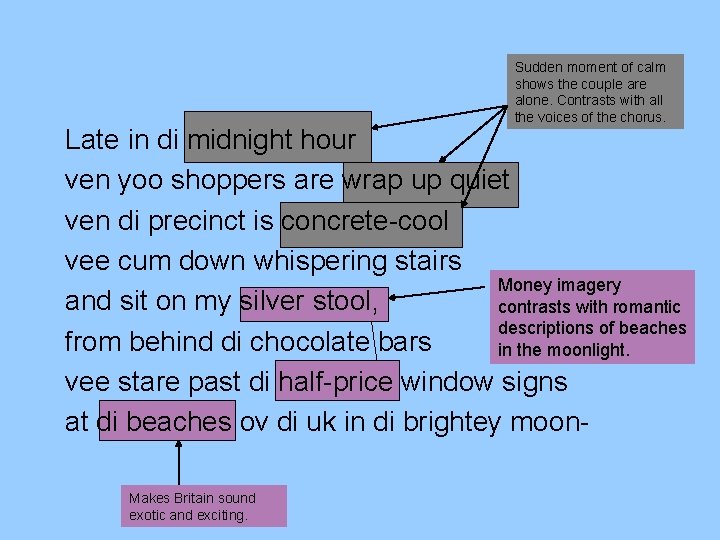
Sudden moment of calm shows the couple are alone. Contrasts with all the voices of the chorus. Late in di midnight hour ven yoo shoppers are wrap up quiet ven di precinct is concrete-cool vee cum down whispering stairs Money imagery and sit on my silver stool, contrasts with romantic descriptions of beaches from behind di chocolate bars in the moonlight. vee stare past di half-price window signs at di beaches ov di uk in di brightey moon. Makes Britain sound exotic and exciting.
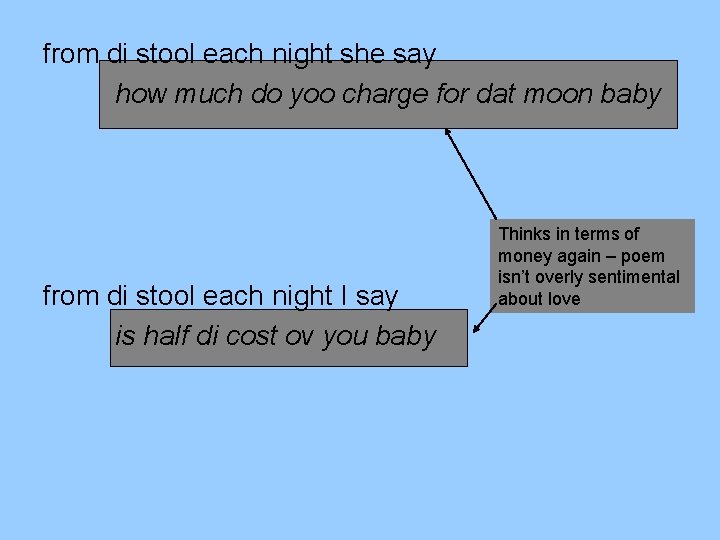
from di stool each night she say how much do yoo charge for dat moon baby from di stool each night I say is half di cost ov you baby Thinks in terms of money again – poem isn’t overly sentimental about love
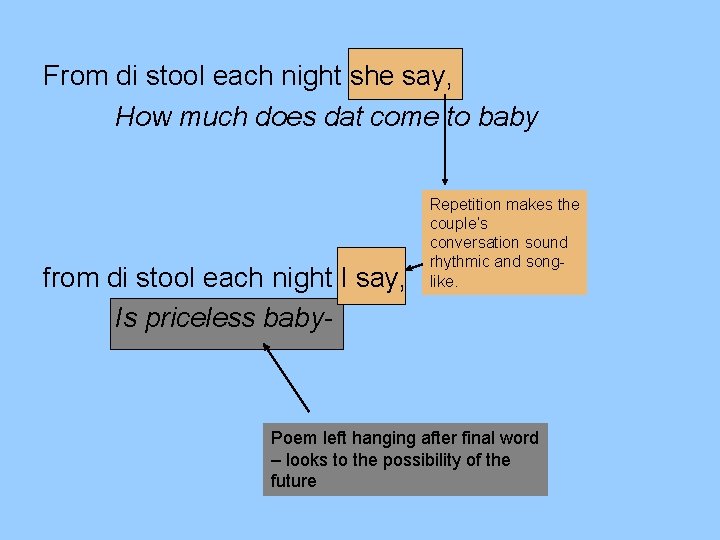
From di stool each night she say, How much does dat come to baby from di stool each night I say, Is priceless baby- Repetition makes the couple’s conversation sound rhythmic and songlike. Poem left hanging after final word – looks to the possibility of the future
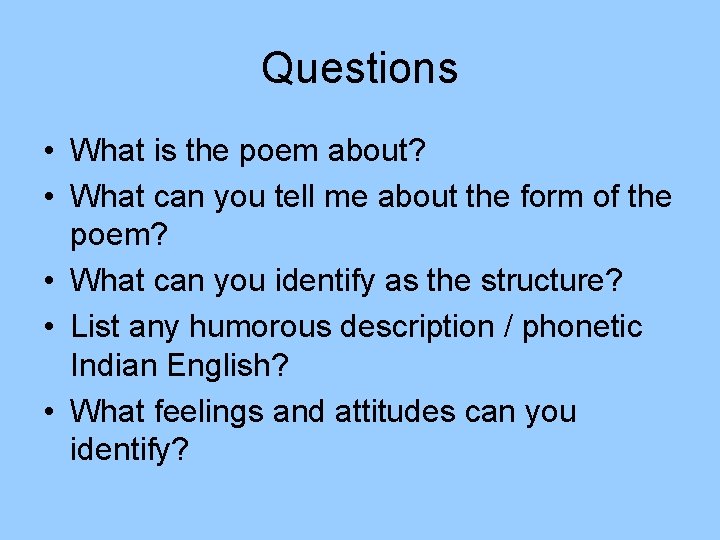
Questions • What is the poem about? • What can you tell me about the form of the poem? • What can you identify as the structure? • List any humorous description / phonetic Indian English? • What feelings and attitudes can you identify?
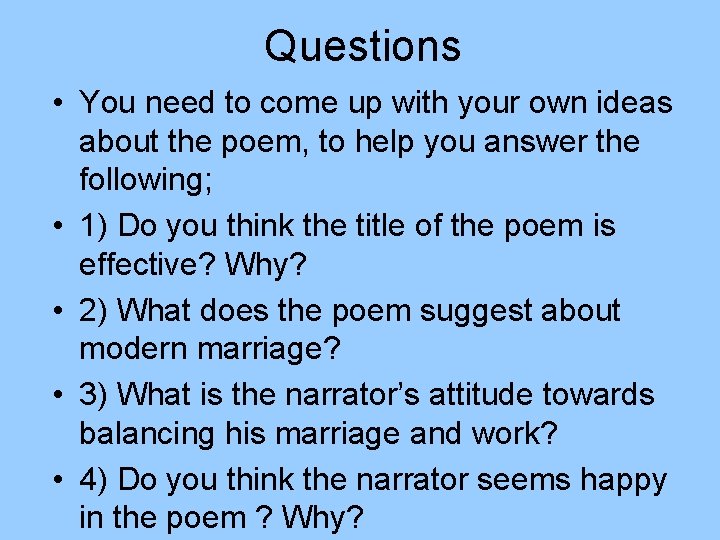
Questions • You need to come up with your own ideas about the poem, to help you answer the following; • 1) Do you think the title of the poem is effective? Why? • 2) What does the poem suggest about modern marriage? • 3) What is the narrator’s attitude towards balancing his marriage and work? • 4) Do you think the narrator seems happy in the poem ? Why?
Form • Definition – • The type of poem e. g. sonnet, ballad, and its features e. g. rhyme scheme, rhythm
Form • The poet uses some rhymes to give the poem a light hearted tone. • As well as the narrator’s voice, it features the voices of his wife and the customers he ignores, showing how he fits into the community. • It’s like a song with verses and a chorus which makes it sound lively and rhythmic.
Structure • The order of ideas and events, e. g. how the poem begins, develops and ends.
Structure • The poem alternates between descriptions or the narrator’s marriage and his customers’ complaints. • The repeated choruses emphasise how often he neglects his work.
Phonetic Indian English • Voices in the poem combine Indian and English words and accents, sometimes creating new words. • This shows the influence of both cultures on the people in the poem.
Best Comparisons • ‘Les Grands Seigneurs’ • ‘Medusa’