
Dairy Farming The Milk Production Cycle Why cows
- Slides: 28
Dairy Farming. The Milk Production Cycle
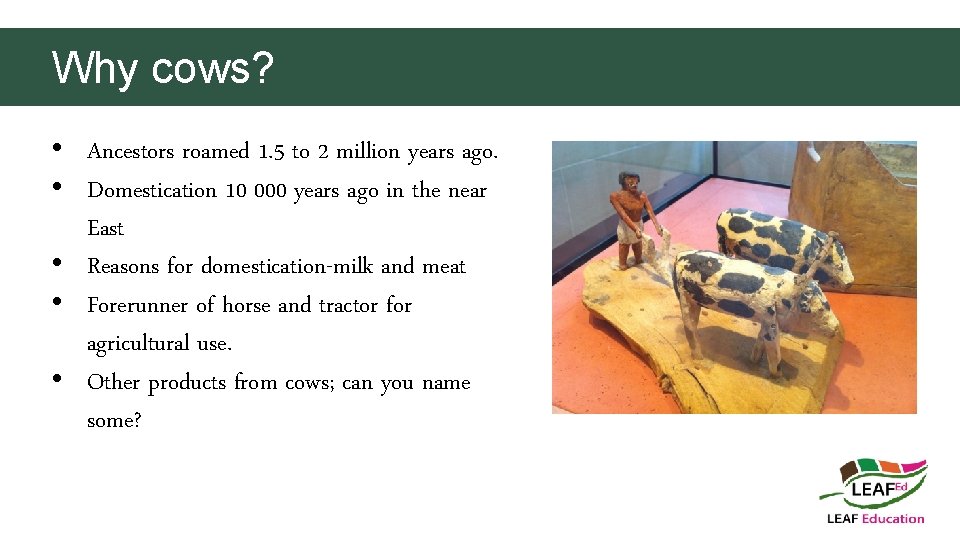
Why cows? • Ancestors roamed 1. 5 to 2 million years ago. • Domestication 10 000 years ago in the near East • Reasons for domestication-milk and meat • Forerunner of horse and tractor for agricultural use. • Other products from cows; can you name some?
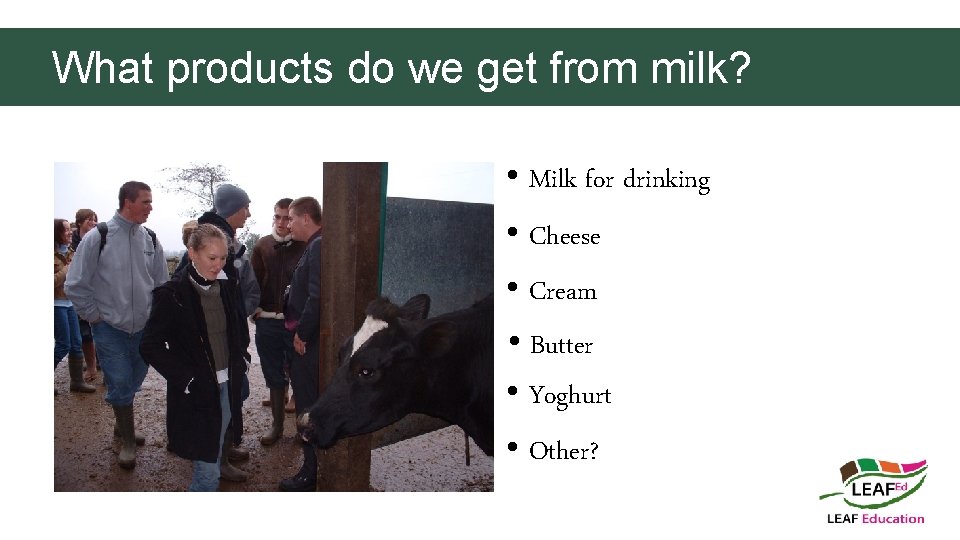
What products do we get from milk? • Milk for drinking • Cheese • Cream • Butter • Yoghurt • Other?
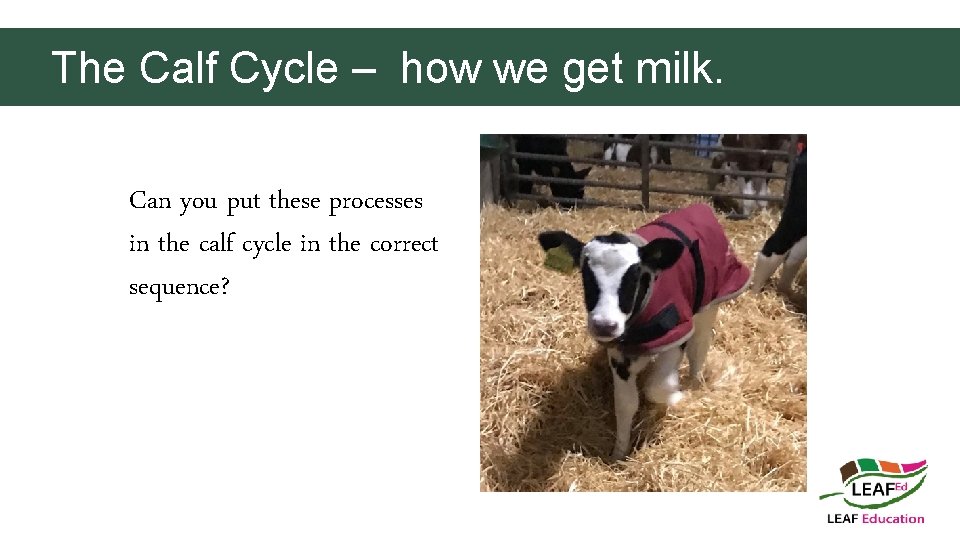
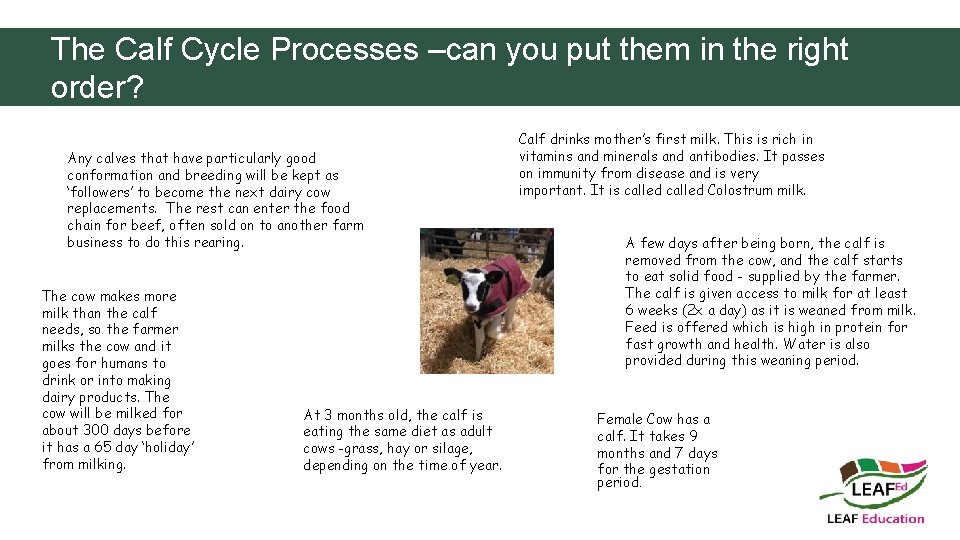
The Calf Cycle – how we get milk. Can you put these processes in the calf cycle in the correct sequence?
The Calf Cycle Processes –can you put them in the right order? Any calves that have particularly good conformation and breeding will be kept as ‘followers’ to become the next dairy cow replacements. The rest can enter the food chain for beef, often sold on to another farm business to do this rearing. The cow makes more milk than the calf needs, so the farmer milks the cow and it goes for humans to drink or into making dairy products. The cow will be milked for about 300 days before it has a 65 day ‘holiday’ from milking. At 3 months old, the calf is eating the same diet as adult cows -grass, hay or silage, depending on the time of year. Calf drinks mother’s first milk. This is rich in vitamins and minerals and antibodies. It passes on immunity from disease and is very important. It is called Colostrum milk. A few days after being born, the calf is removed from the cow, and the calf starts to eat solid food - supplied by the farmer. The calf is given access to milk for at least 6 weeks (2 x a day) as it is weaned from milk. Feed is offered which is high in protein for fast growth and health. Water is also provided during this weaning period. Female Cow has a calf. It takes 9 months and 7 days for the gestation period.
The Calf Cycle Female Cow has a calf. It takes 9 months and 7 days for the gestation period.
The Calf Cycle. . . Calf drinks mother’s first milk. This is rich in vitamins and minerals and antibodies. It passes on immunity from disease and is very important. It is called Colostrum milk.
The Calf Cycle. . . Within 24 hours of being born, the calf is removed from the cow, and the calf starts to eat solid food - supplied by the farmer. The calf is given access to milk for at least 6 weeks (2 x a day) as it is weaned from milk. Feed is offered which is high in protein for fast growth and health. Water is also provided during this weaning period.
The Calf Cycle. . . At 3 months old, the calf is eating the same diet as adult cows -grass, hay or silage, depending on the time of year.
The Calf Cycle. . . The cow makes more milk than the calf needs, so the farmer milks the cow and it goes for humans to drink or into making dairy products. The cow will be milked for about 300 days before it has a 65 day ‘holiday’ from milking.
The Calf Cycle. . . Any calves that have particularly good conformation and breeding will be kept as ‘followers’ to become the next dairy cow replacements. The rest can enter the food chain for beef, often sold on to another farm business to do this rearing.
Good Welfare Practice. Calves are removed soon after being born from the cow. The bond between them is weaker than if they are left too long together. Both calf and cow soon recover from this separation. Important not to extrapolate anthropomorphosis too far; they are sentient beings, but cows not humans. Often it is farmers who intervene to help calves feed in the first place. Sometimes cows exhibit poor mothering and push calves away, which can happen –farmer intervention is a life saver often.
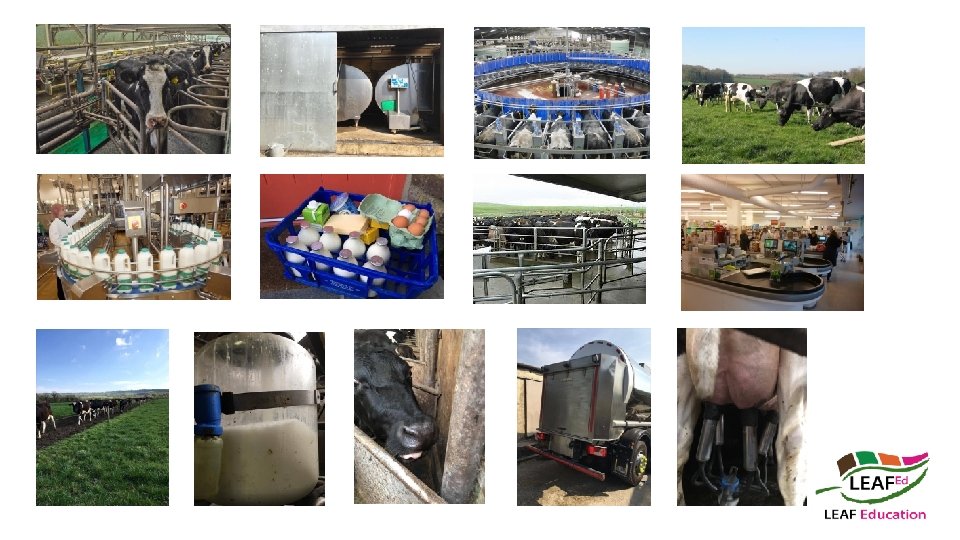
A Typical day on a dairy farm – the milking process. Can you sequence the images to show the process of milk production?
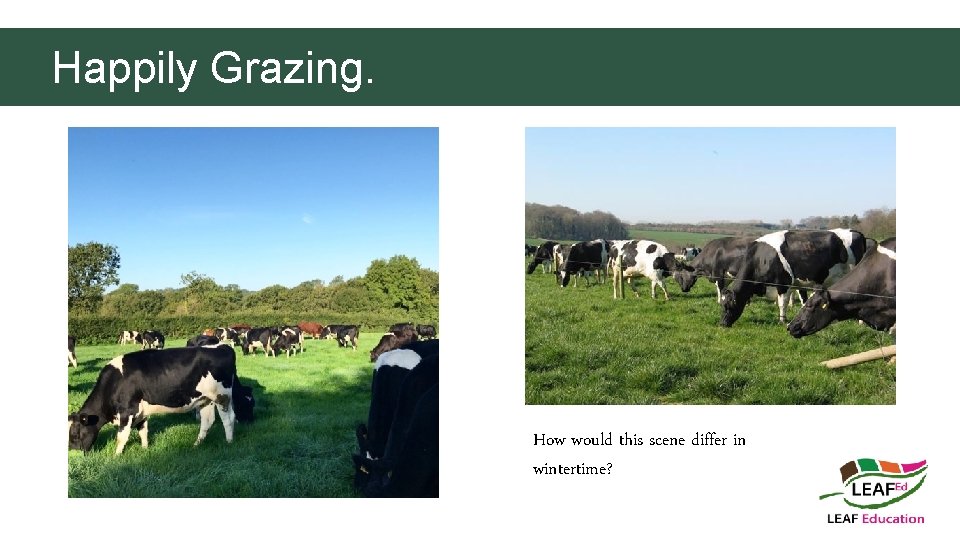
Happily Grazing. How would this scene differ in wintertime?
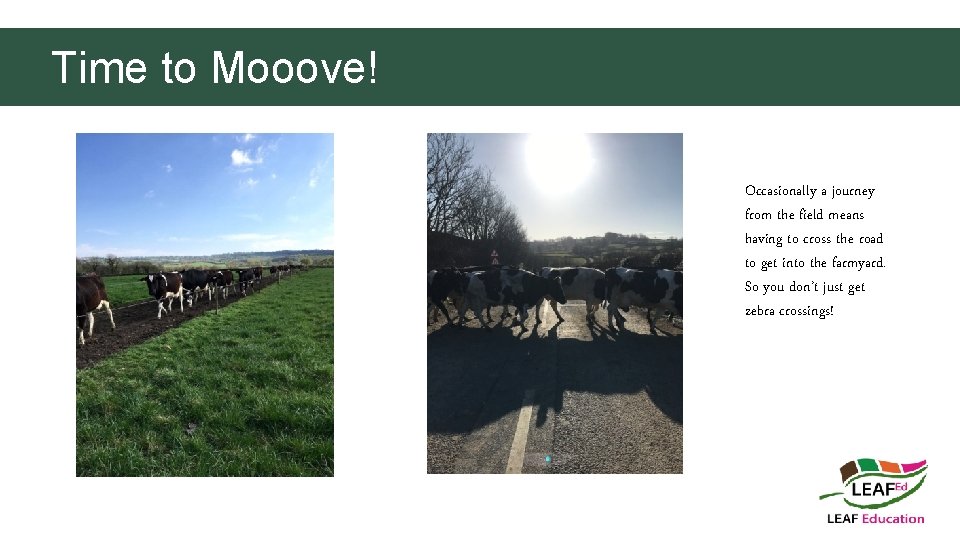
Time to Mooove! Occasionally a journey from the field means having to cross the road to get into the farmyard. So you don’t just get zebra crossings!
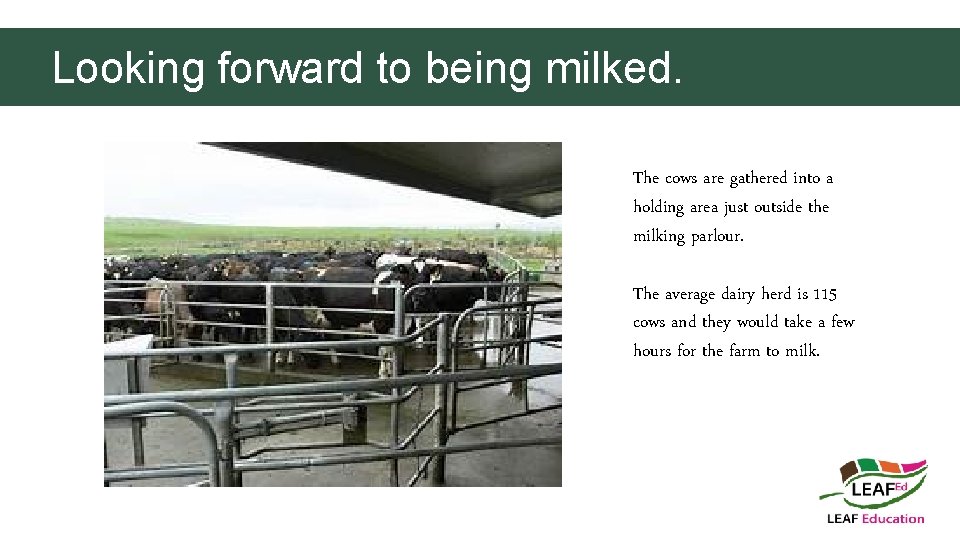
Looking forward to being milked. The cows are gathered into a holding area just outside the milking parlour. The average dairy herd is 115 cows and they would take a few hours for the farm to milk.
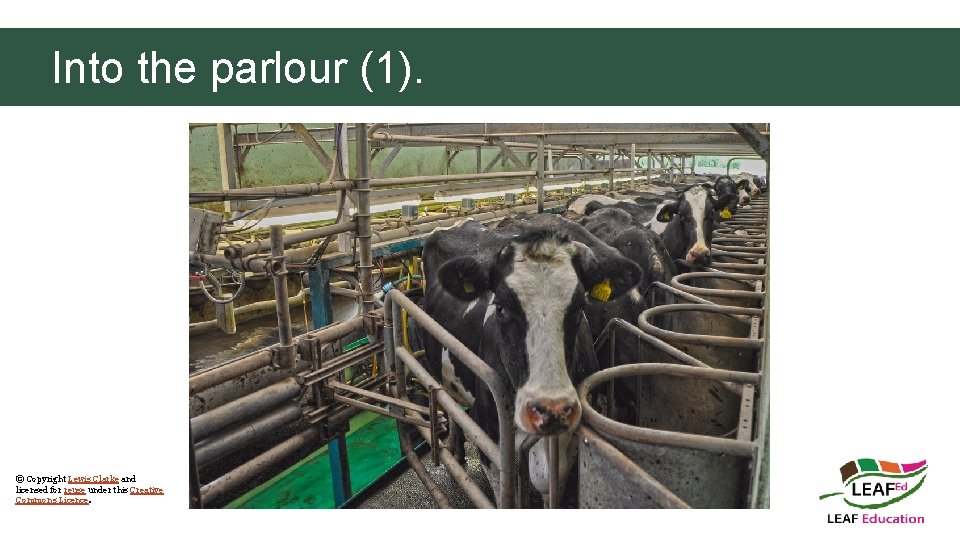
Into the parlour (1). © Copyright Lewis Clarke and licensed for reuse under this Creative Commons Licence.
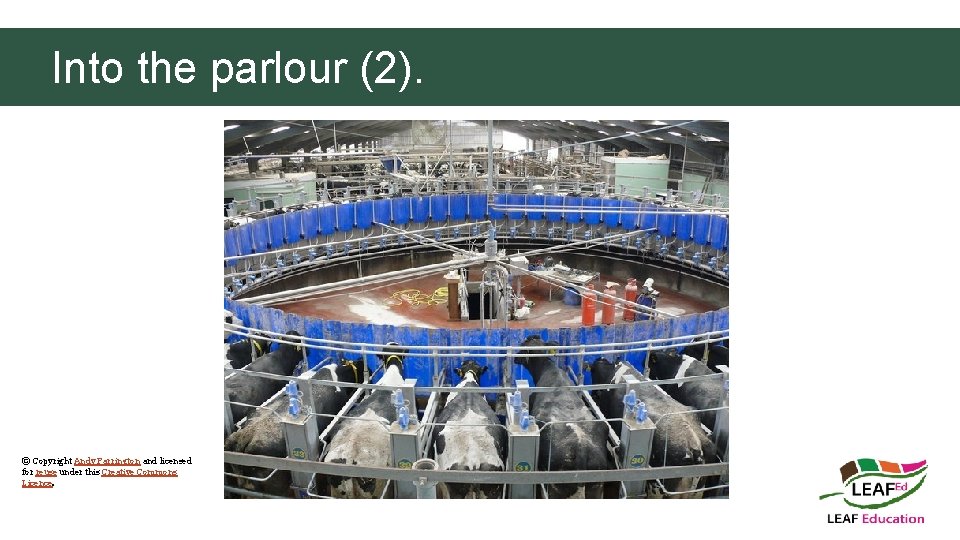
Into the parlour (2). © Copyright Andy Farrington and licensed for reuse under this Creative Commons Licence.
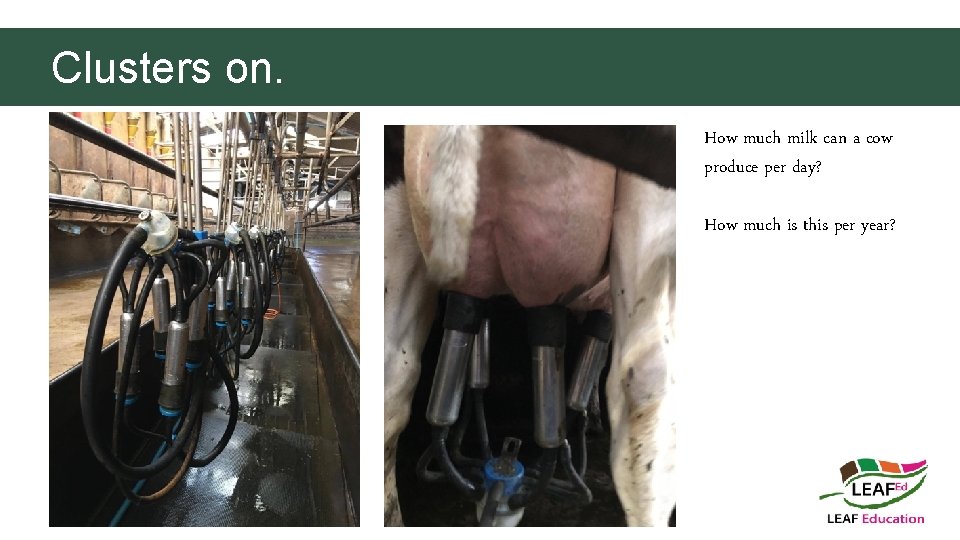
Clusters on. How much milk can a cow produce per day? How much is this per year?
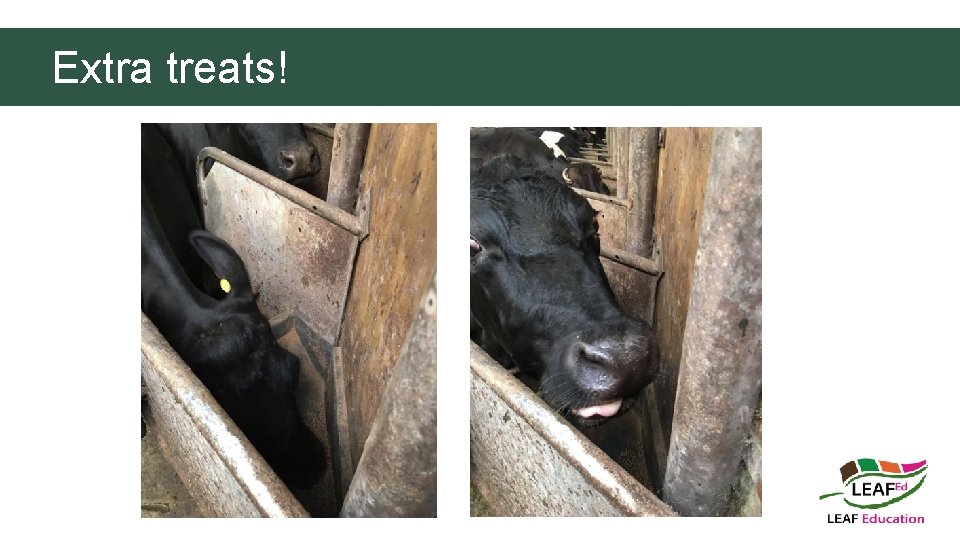
Extra treats!
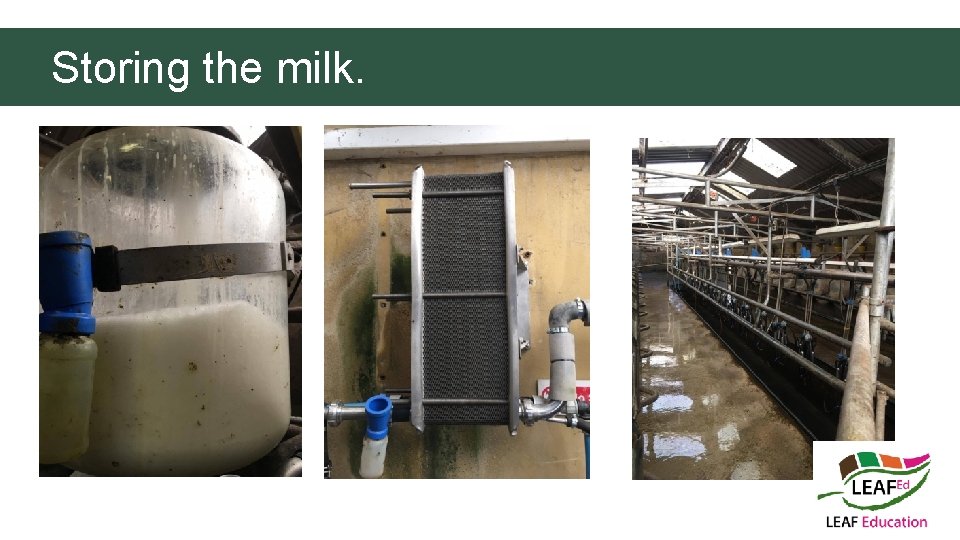
Storing the milk.
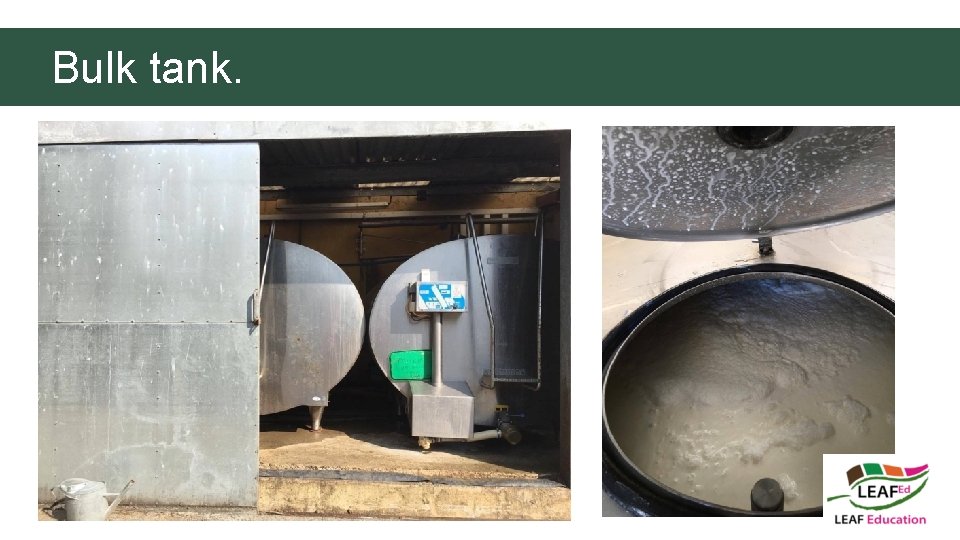
Bulk tank.
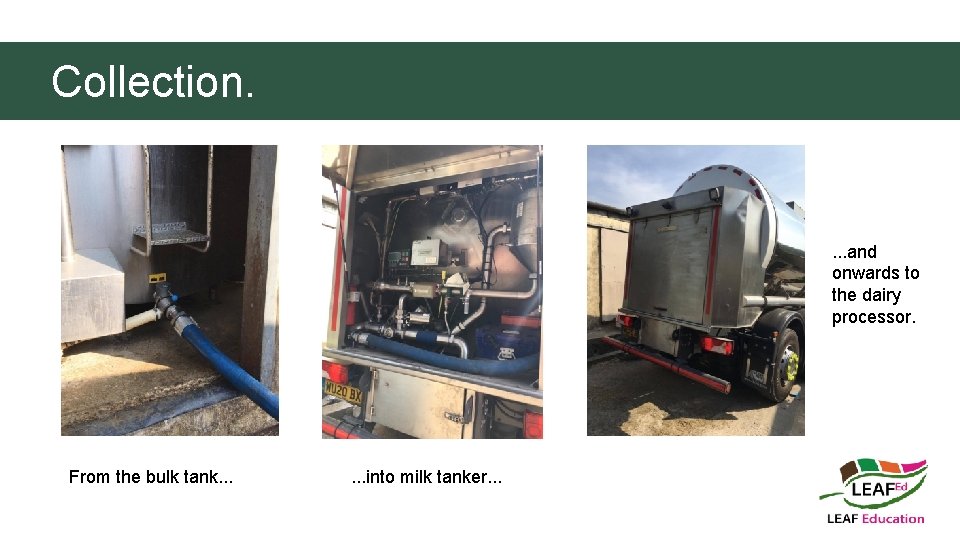
Collection. . and onwards to the dairy processor. From the bulk tank. . . into milk tanker. . .
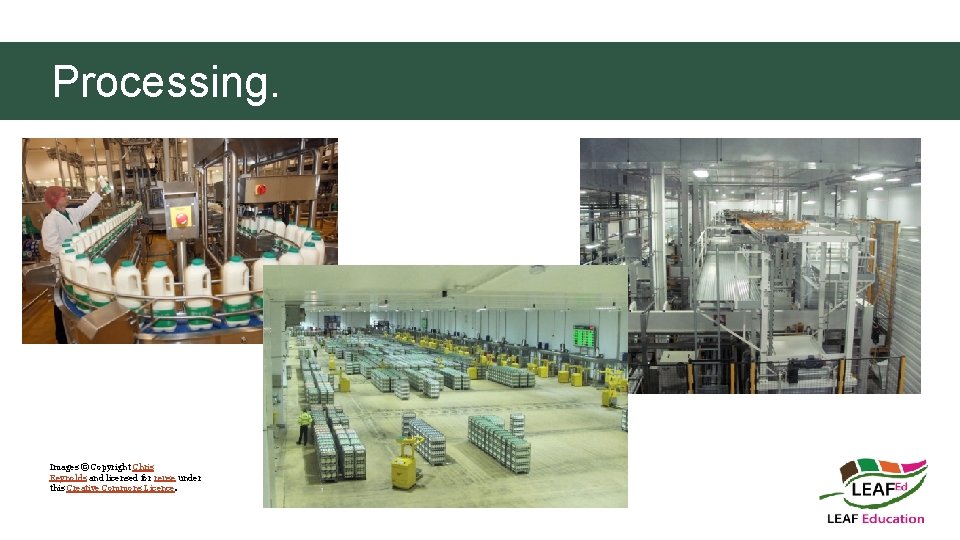
Processing. Images © Copyright Chris Reynolds and licensed for reuse under this Creative Commons Licence.
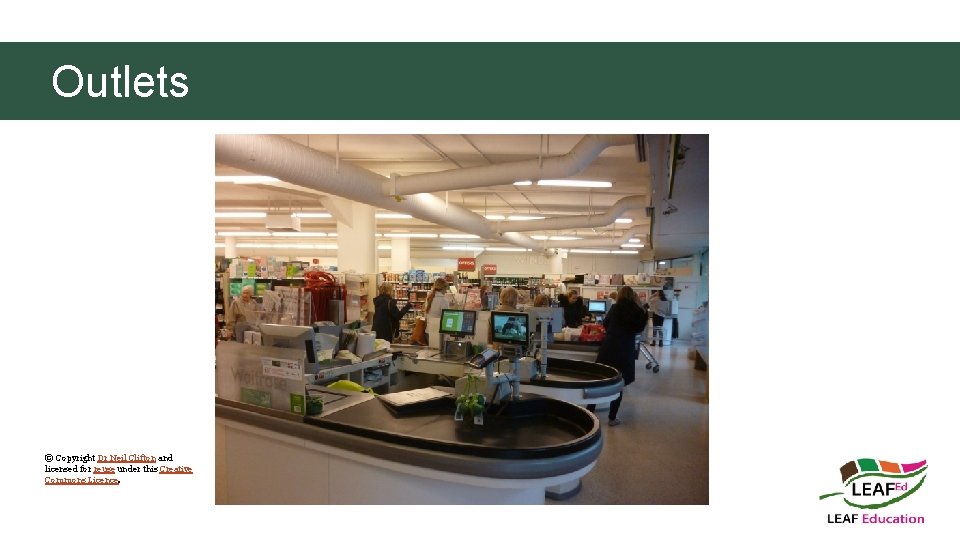
Outlets © Copyright Dr Neil Clifton and licensed for reuse under this Creative Commons Licence.
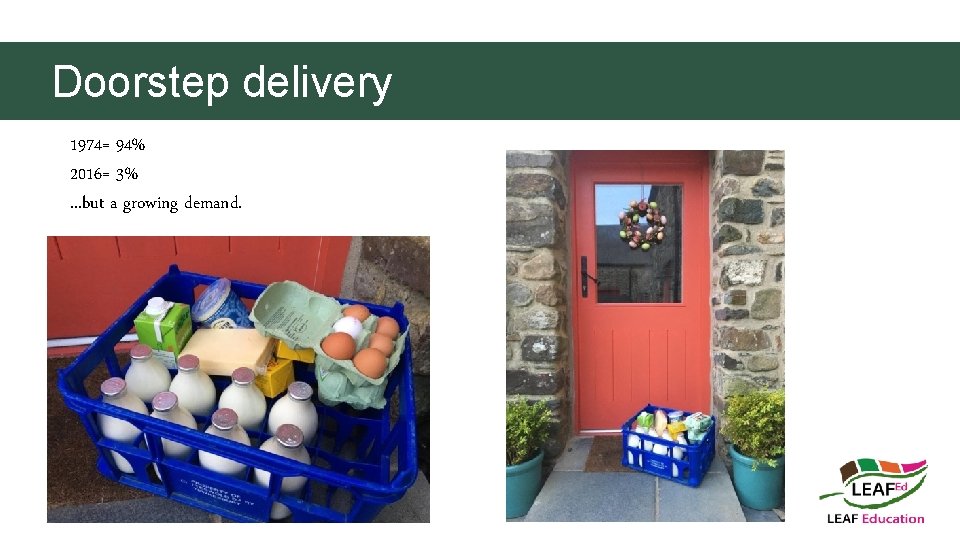
Doorstep delivery 1974= 94% 2016= 3%. . . but a growing demand.
Thank You Cows!