
Daily Life in Ancient Egypt History Alive Chapter
- Slides: 24
Daily Life in Ancient Egypt History Alive Chapter 9
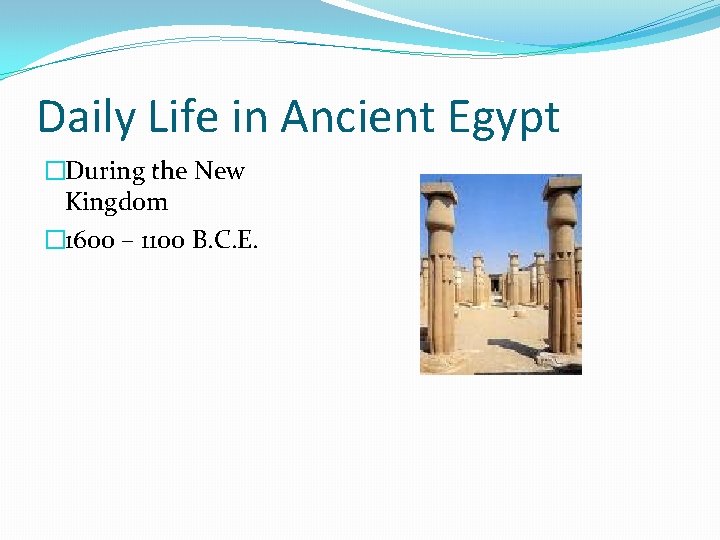
Daily Life in Ancient Egypt �During the New Kingdom � 1600 – 1100 B. C. E.
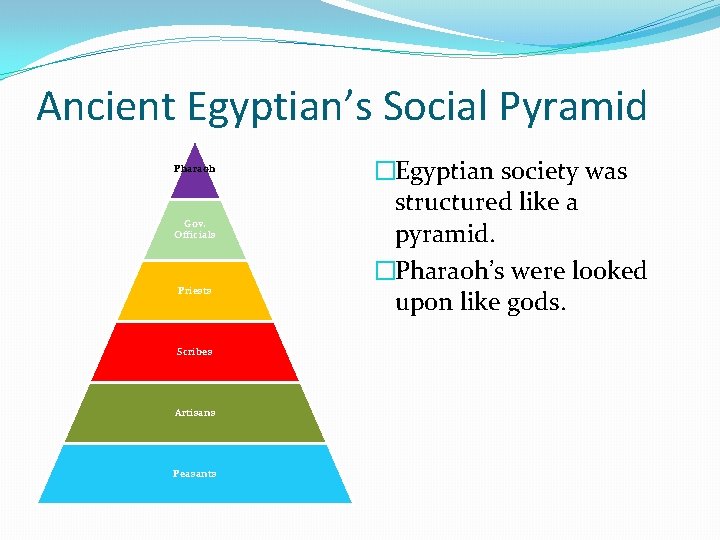
Ancient Egyptian’s Social Pyramid Pharaoh Gov. Officials Priests Scribes Artisans Peasants �Egyptian society was structured like a pyramid. �Pharaoh’s were looked upon like gods.
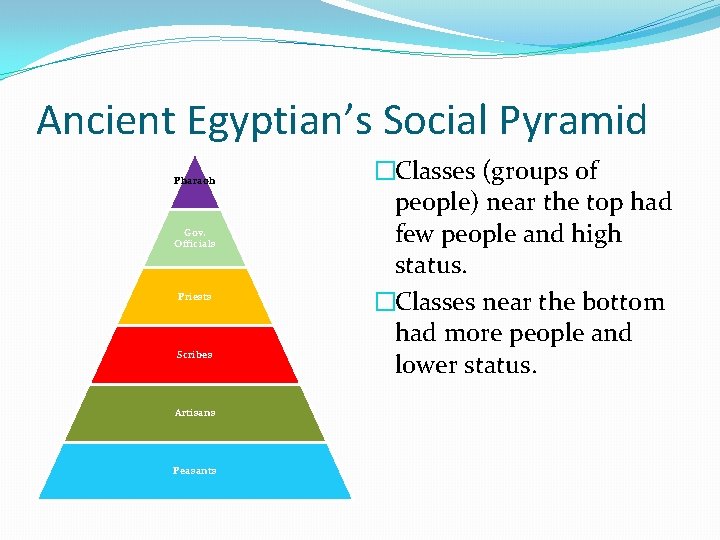
Ancient Egyptian’s Social Pyramid Pharaoh Gov. Officials Priests Scribes Artisans Peasants �Classes (groups of people) near the top had few people and high status. �Classes near the bottom had more people and lower status.
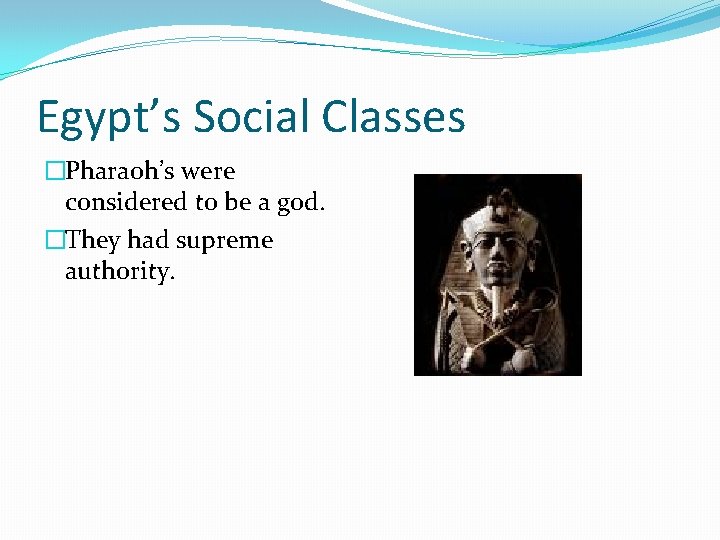
Egypt’s Social Classes �Pharaoh’s were considered to be a god. �They had supreme authority.
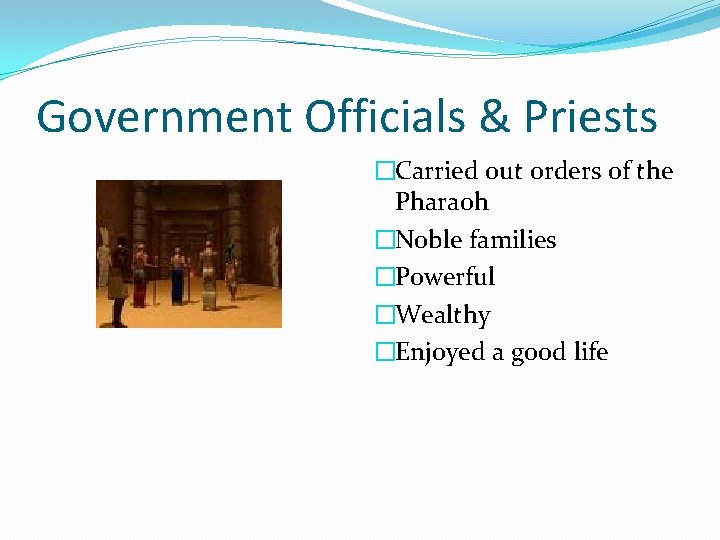
Government Officials & Priests �Carried out orders of the Pharaoh �Noble families �Powerful �Wealthy �Enjoyed a good life
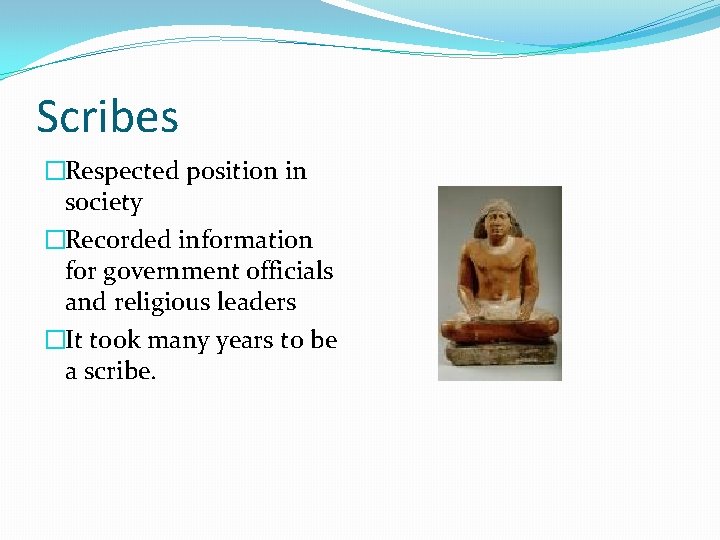
Scribes �Respected position in society �Recorded information for government officials and religious leaders �It took many years to be a scribe.
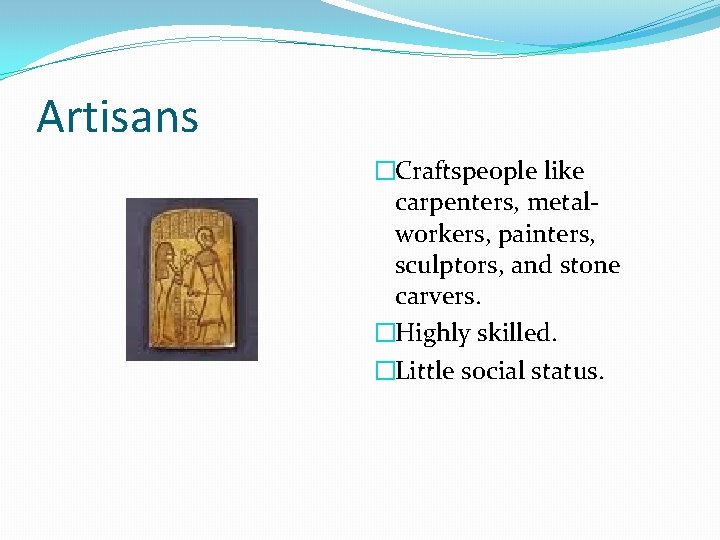
Artisans �Craftspeople like carpenters, metalworkers, painters, sculptors, and stone carvers. �Highly skilled. �Little social status.
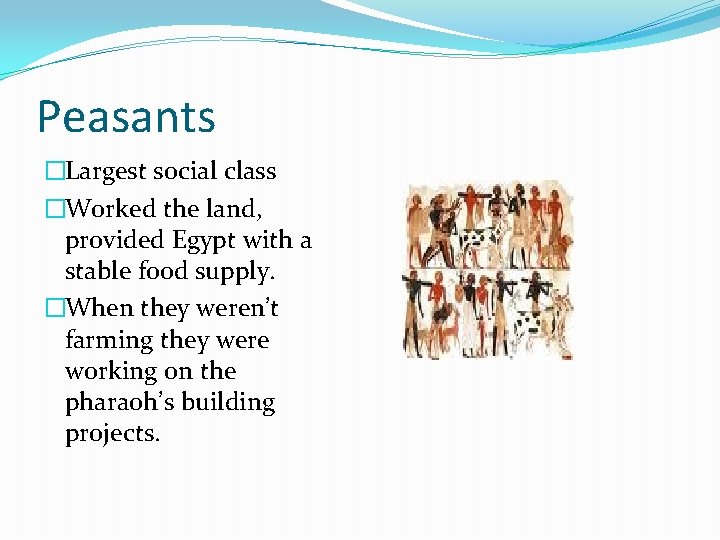
Peasants �Largest social class �Worked the land, provided Egypt with a stable food supply. �When they weren’t farming they were working on the pharaoh’s building projects.
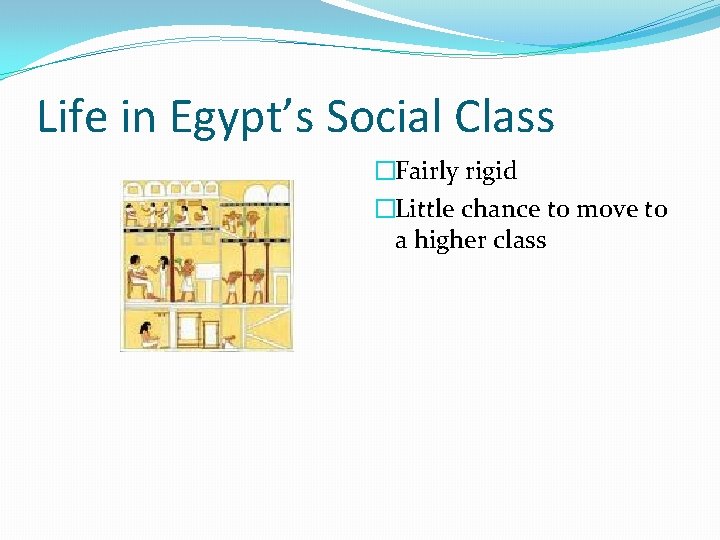
Life in Egypt’s Social Class �Fairly rigid �Little chance to move to a higher class
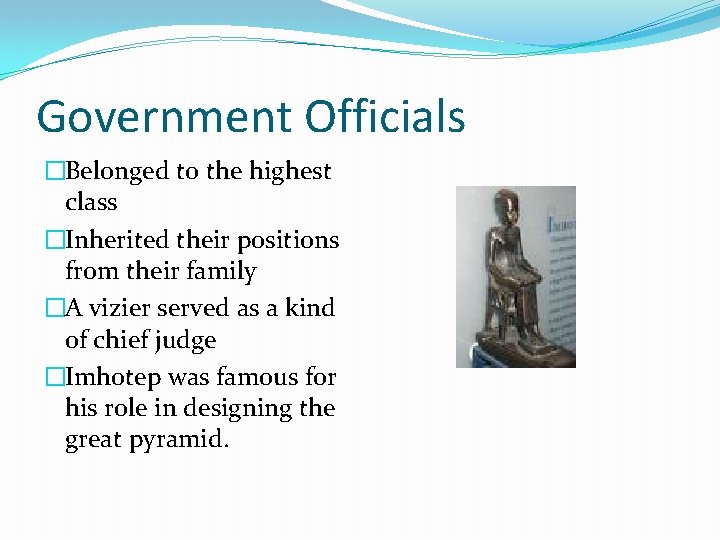
Government Officials �Belonged to the highest class �Inherited their positions from their family �A vizier served as a kind of chief judge �Imhotep was famous for his role in designing the great pyramid.
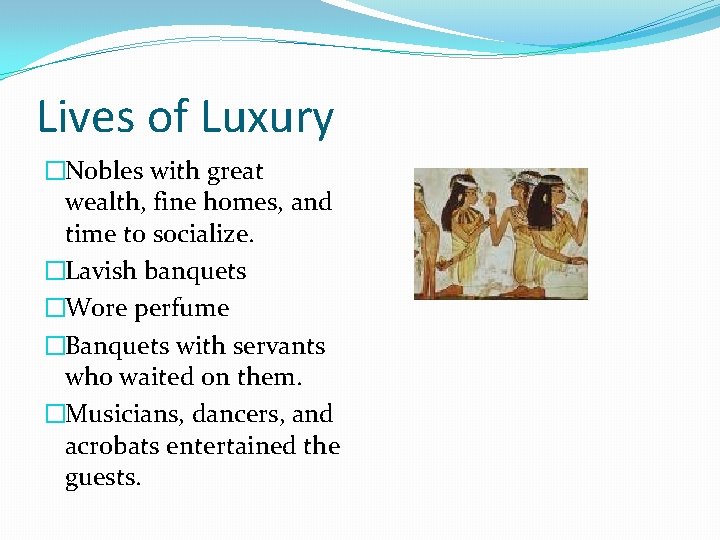
Lives of Luxury �Nobles with great wealth, fine homes, and time to socialize. �Lavish banquets �Wore perfume �Banquets with servants who waited on them. �Musicians, dancers, and acrobats entertained the guests.
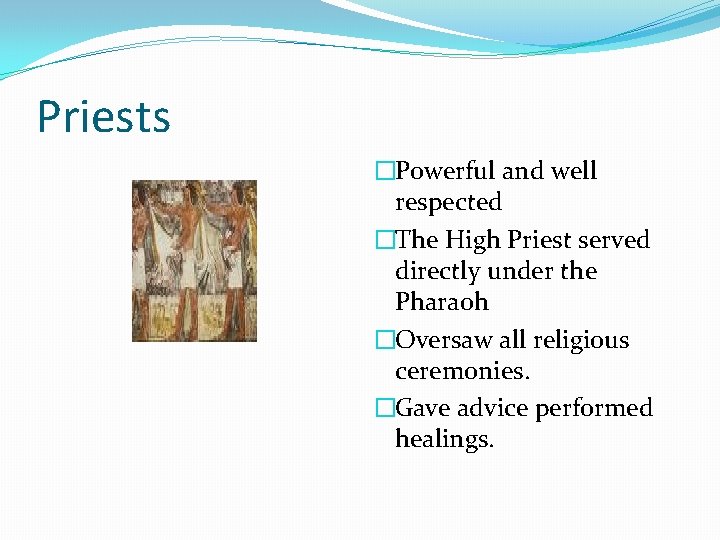
Priests �Powerful and well respected �The High Priest served directly under the Pharaoh �Oversaw all religious ceremonies. �Gave advice performed healings.
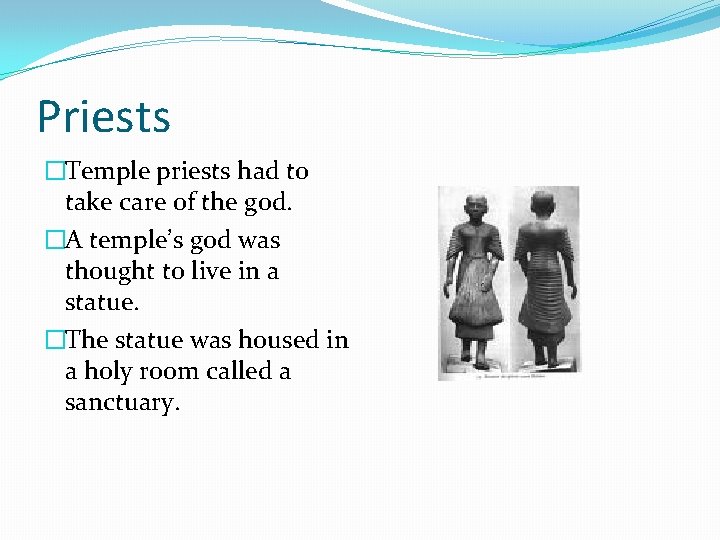
Priests �Temple priests had to take care of the god. �A temple’s god was thought to live in a statue. �The statue was housed in a holy room called a sanctuary.
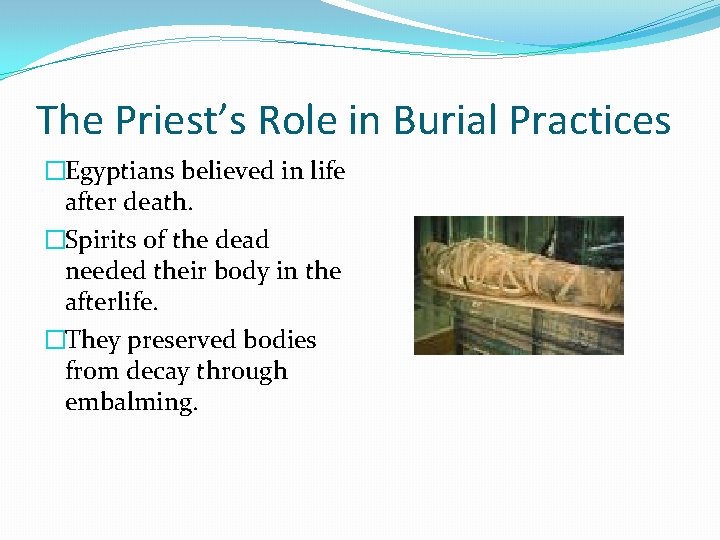
The Priest’s Role in Burial Practices �Egyptians believed in life after death. �Spirits of the dead needed their body in the afterlife. �They preserved bodies from decay through embalming.
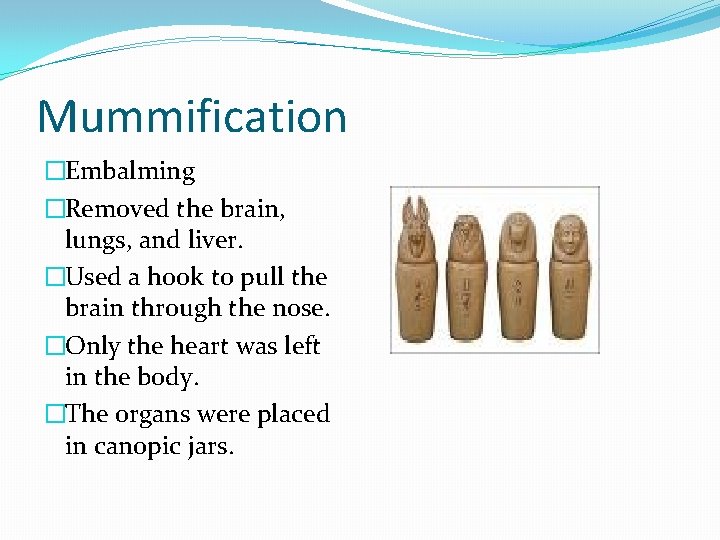
Mummification �Embalming �Removed the brain, lungs, and liver. �Used a hook to pull the brain through the nose. �Only the heart was left in the body. �The organs were placed in canopic jars.
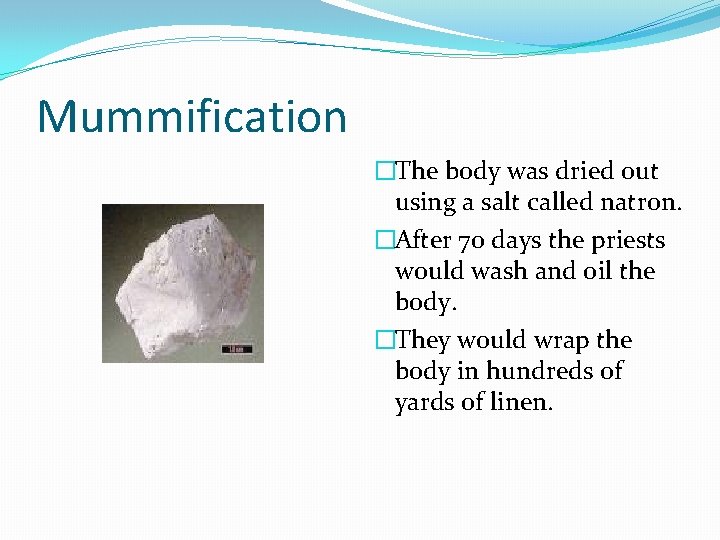
Mummification �The body was dried out using a salt called natron. �After 70 days the priests would wash and oil the body. �They would wrap the body in hundreds of yards of linen.
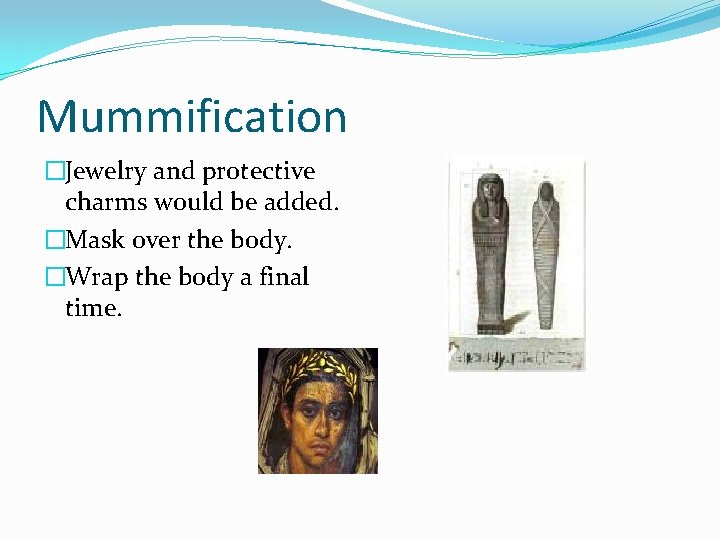
Mummification �Jewelry and protective charms would be added. �Mask over the body. �Wrap the body a final time.
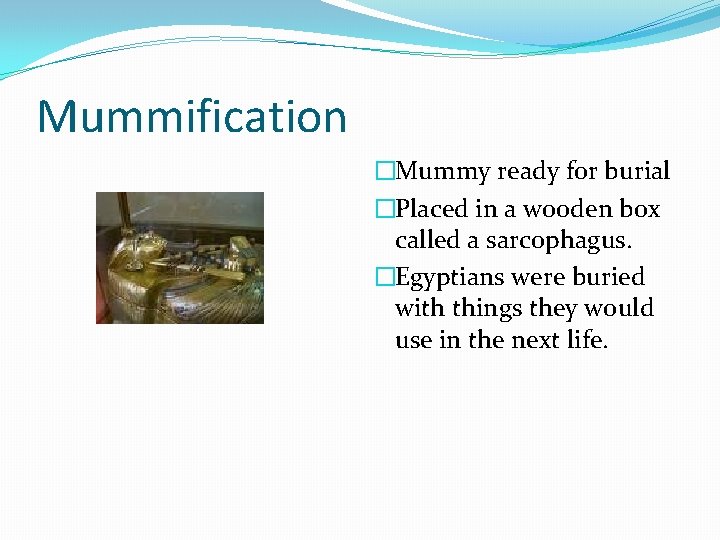
Mummification �Mummy ready for burial �Placed in a wooden box called a sarcophagus. �Egyptians were buried with things they would use in the next life.
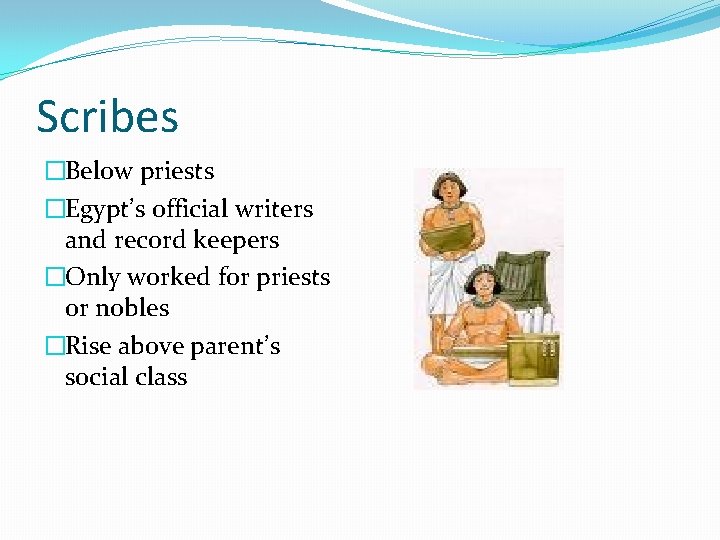
Scribes �Below priests �Egypt’s official writers and record keepers �Only worked for priests or nobles �Rise above parent’s social class
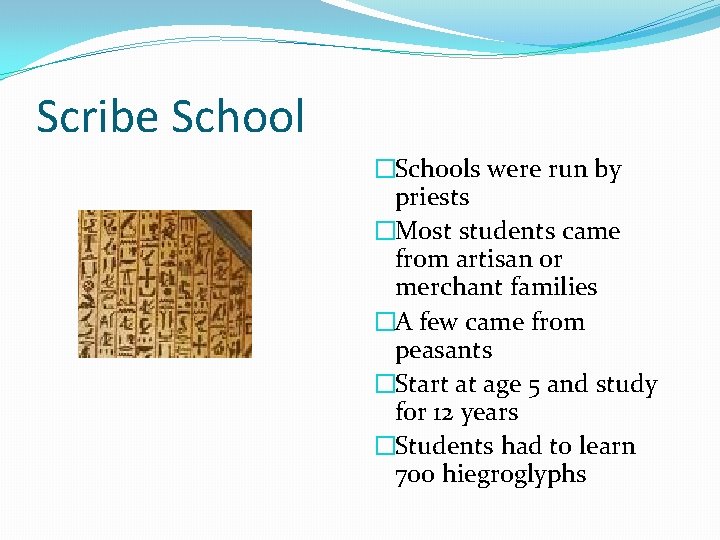
Scribe School �Schools were run by priests �Most students came from artisan or merchant families �A few came from peasants �Start at age 5 and study for 12 years �Students had to learn 700 hiegroglyphs
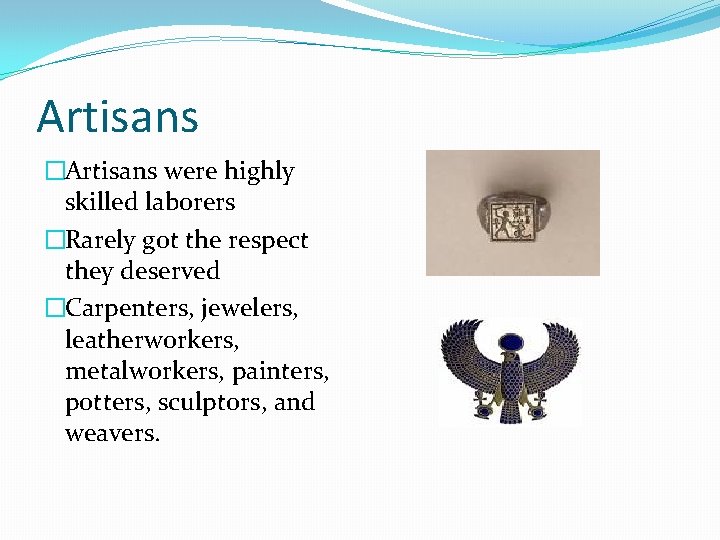
Artisans �Artisans were highly skilled laborers �Rarely got the respect they deserved �Carpenters, jewelers, leatherworkers, metalworkers, painters, potters, sculptors, and weavers.
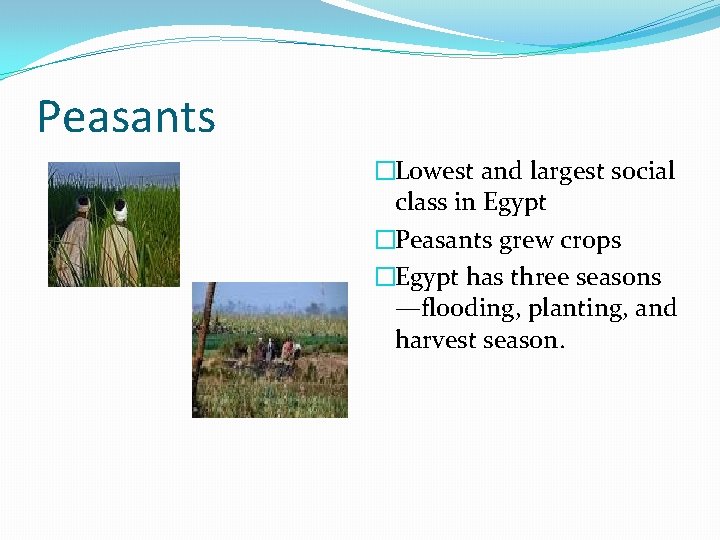
Peasants �Lowest and largest social class in Egypt �Peasants grew crops �Egypt has three seasons —flooding, planting, and harvest season.
The End