
DAGGER A sequential algorithm for FDR control on


![Special cases • Tree: Lynch and Guo [2016] • Sequence: Lynch et al. [2016]](https://slidetodoc.com/presentation_image_h/dbcf5118e80380e3074c44b24b677a42/image-21.jpg "Special cases • Tree: Lynch and Guo [2016] • Sequence: Lynch et al. [2016]")

- Slides: 38
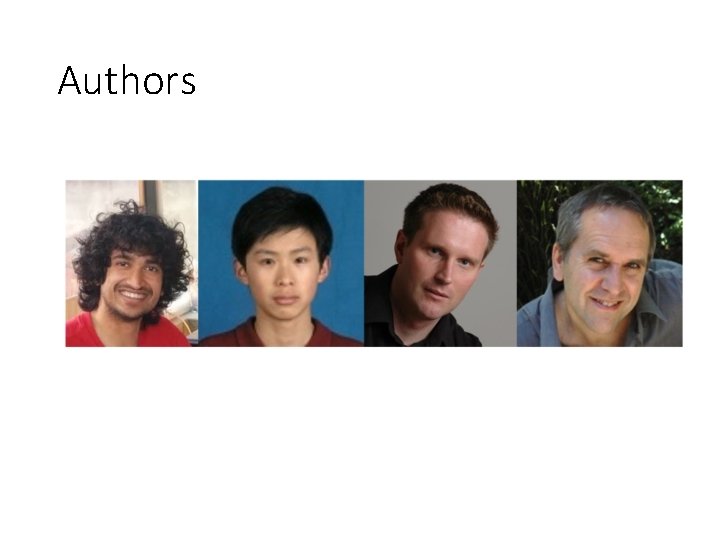
DAGGER: A sequential algorithm for FDR control on DAGs Aaditya Ramdas, Jianbo Chen, Martin Wainwright, Michael Jordan
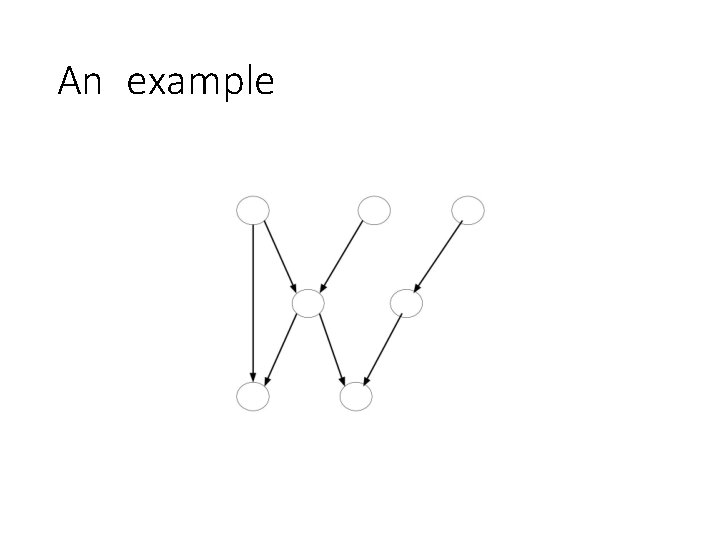
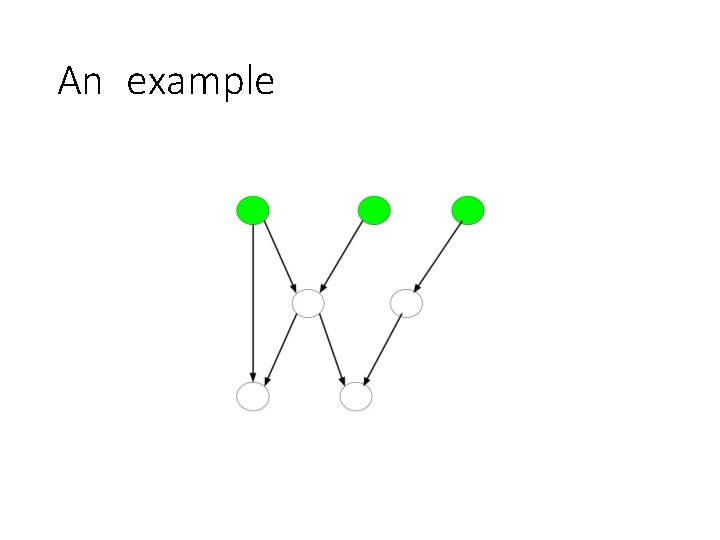
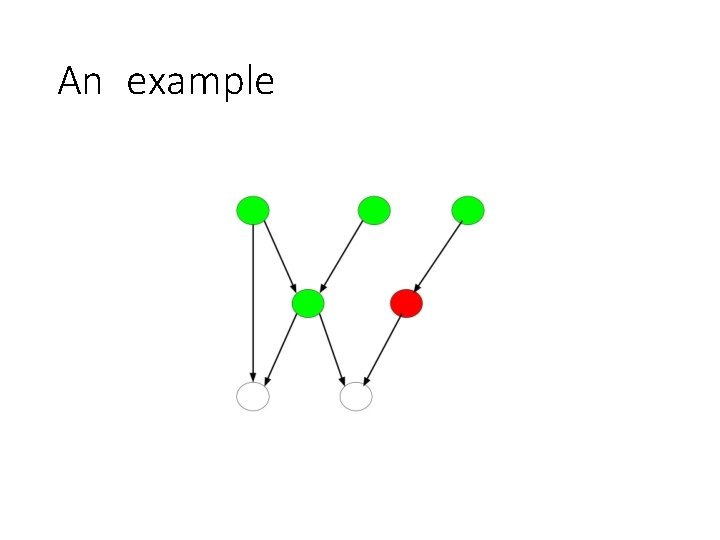
Problem and Settings • DAG is a directed graph with no directed cycles. • Each node represents a hypothesis. • Each directed edge encodes a constraint: a child is tested only if all of its parents are rejected. • Special cases: A tree; a line graph.
A Motivating Example
Why DAGs? • The process is sequential in nature. A discovery opens up new hypotheses (its children) to explore. • The process has a structural constraint for interpretability and logical coherence of the rejected set.
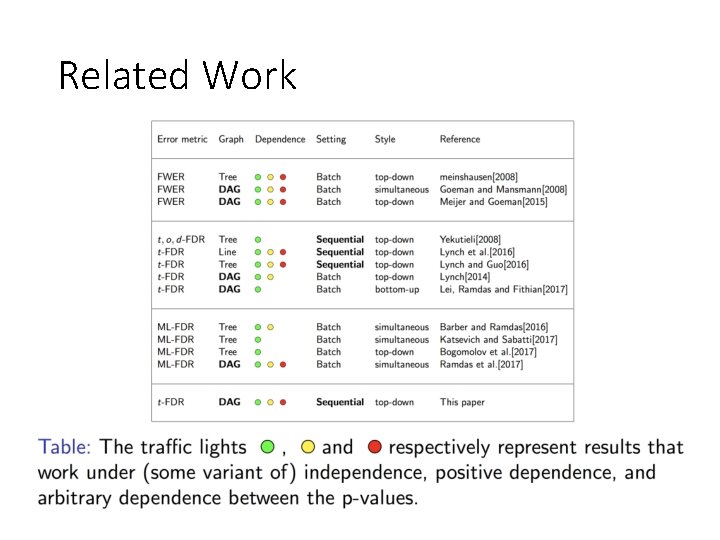
Related Work
Related Work • Jelle J Goeman and Ulrich Mansmann. Multiple testing on the directed acyclic graph of gene ontology. Bioinformatics, 24(4): 537 -544, 2008. • Rosa J Meijer and Jelle J Goeman. Multiple testing of gene sets from gene ontology: possibilities and pitfalls. Briefings in bioinformatics, 17(5): 808– 818, 2015. • Rosa J Meijer and Jelle J Goeman. A multiple testing method for hypotheses structured in a directed acyclic graph. Biometrical Journal, 57(1): 123– 143, 2015. • Gavin Lynch. The Control of the False Discovery Rate Under Structured Hypotheses. Ph. D thesis, New Jersey Institute of Technology, Department of Mathematical Sciences, 2014. • Gavin Lynch and Wenge Guo. On procedures controlling the FDR for testing hierarchically ordered hypotheses. ar. Xiv preprint ar. Xiv: 1612. 04467, 2016. • Gavin Lynch, Wenge Guo, Sanat K Sarkar, and Helmut Finner. The control of the false discovery rate in fixed sequence multiple testing. ar. Xiv preprint ar. Xiv: 1611. 03146, 2016.
Related Work • Lihua Lei, Aaditya Ramdas, and Will Fithian. Interactive multiple testing: selectively traversed accumulation rules (star) for structured fdr control. in preparation, 2017. • Nicolai Meinshausen. Hierarchical testing of variable importance. Biometrika, 95(2): 265 -278, 2008. • Daniel Yekutieli. Hierarchical false discovery rate controlling methodology. Journal of the American Statistical Association, 103(481): 309 -316, 2008. • Barber, Rina Foygel, and Aaditya Ramdas. The p-filter: multi-layer FDR control for grouped hypotheses. ar. Xiv preprint ar. Xiv: 1512. 03397 (2015). • Eugene Katsevich, et al. , Multilayer False Discovery Rate Control for Variable (2017). • Marina Bogomolov, Christine B. Peterson, Yoav Benjamini, Chiara Sabatti. Testing hypotheses on a tree: new error rates and controlling strategies. ar. Xiv: 1705. 07529 (2017). • Aaditya Ramdas, Rina Foygel Barber, Martin J Wainwright, and Michael I Jordan. A unified treatment of multiple testing with prior knowledge. ar. Xiv preprint ar. Xiv: 1703. 06222, 2017.
Notations on DAGs •
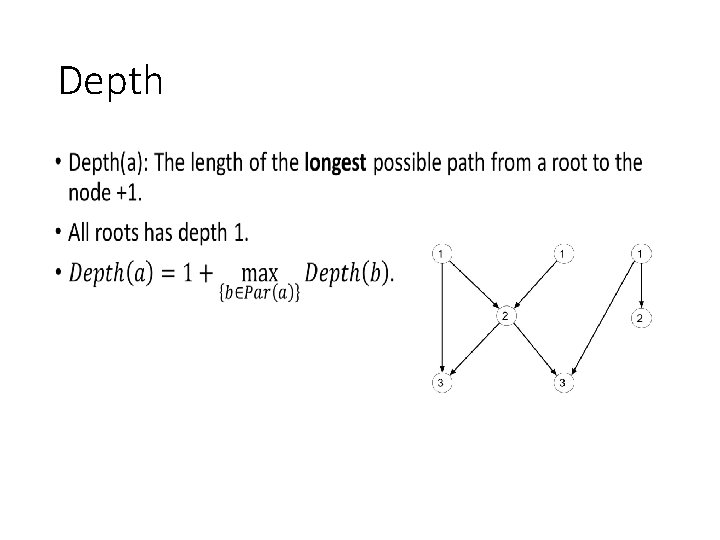
Depth •
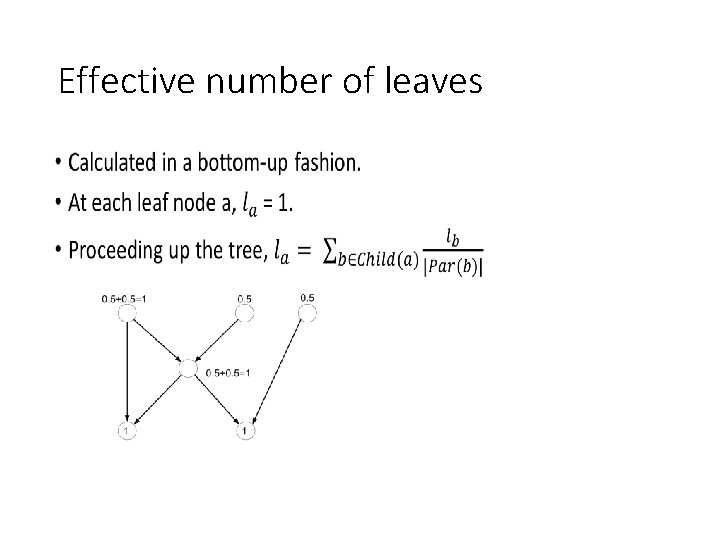
Effective number of leaves •
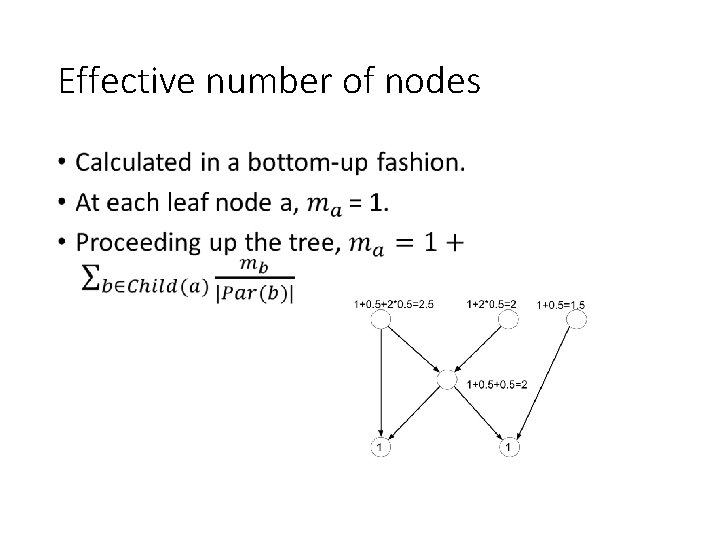
Effective number of nodes •
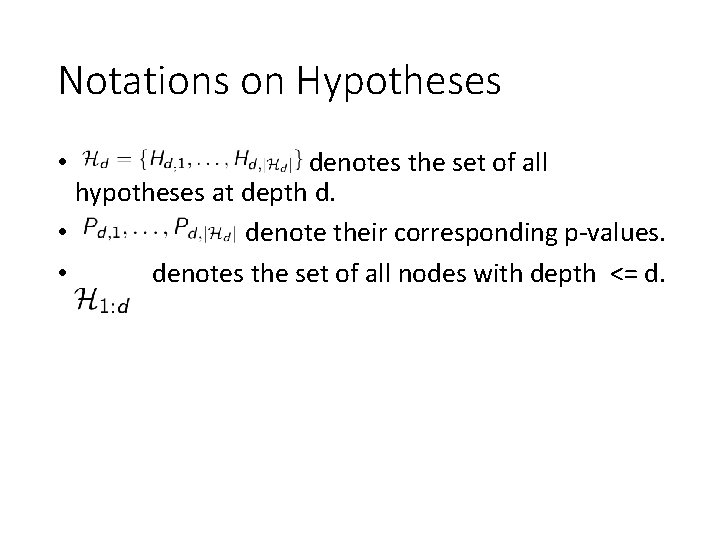
Notations on Hypotheses • denotes the set of all hypotheses at depth d. • denote their corresponding p-values. • denotes the set of all nodes with depth <= d.
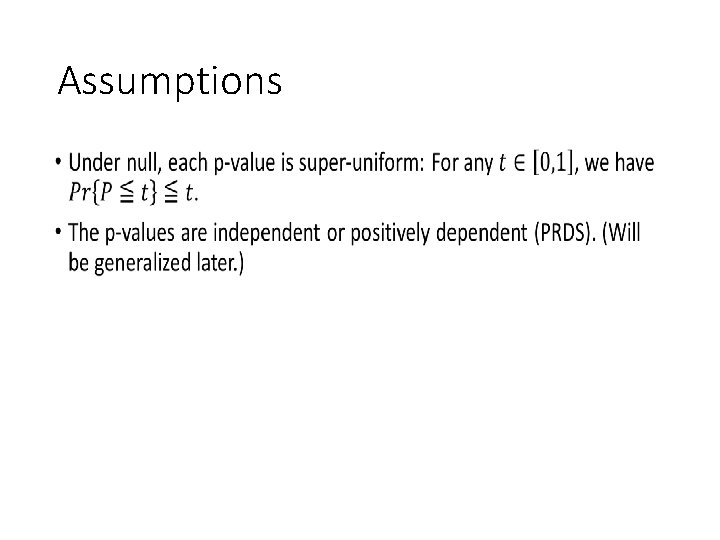
Assumptions •
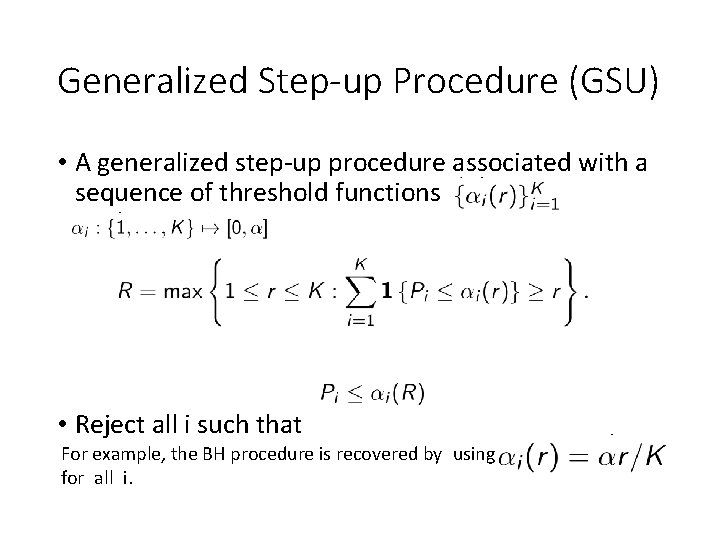
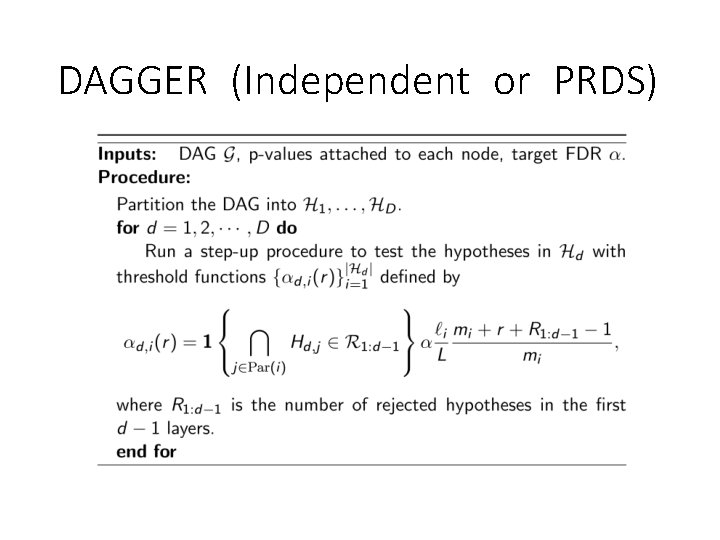
Generalized Step-up Procedure (GSU) • A generalized step-up procedure associated with a sequence of threshold functions , with • Reject all i such that For example, the BH procedure is recovered by using for all i.
DAGGER (Independent or PRDS)
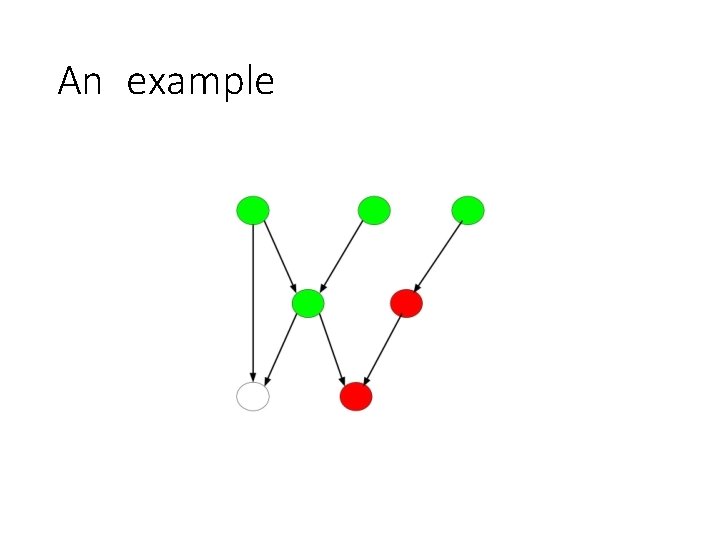
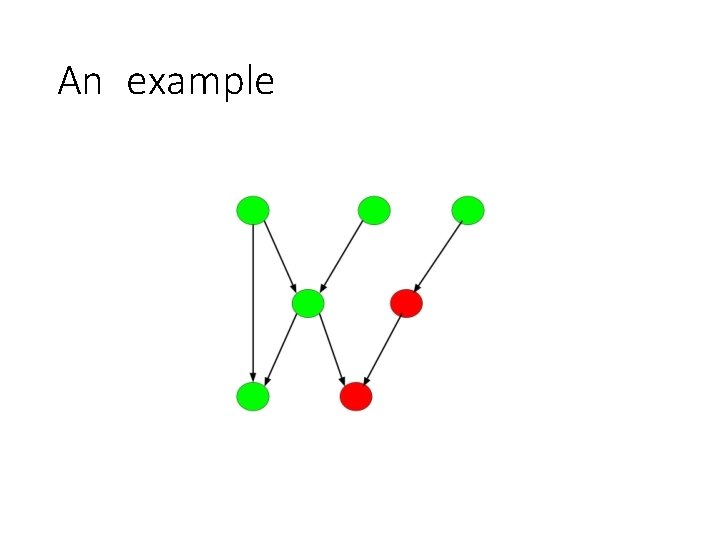
An example
An example
An example
An example
An example
Special cases • Tree: Lynch and Guo [2016] • Sequence: Lynch et al. [2016] • No edges: Benjamini and Hochberg [1995]
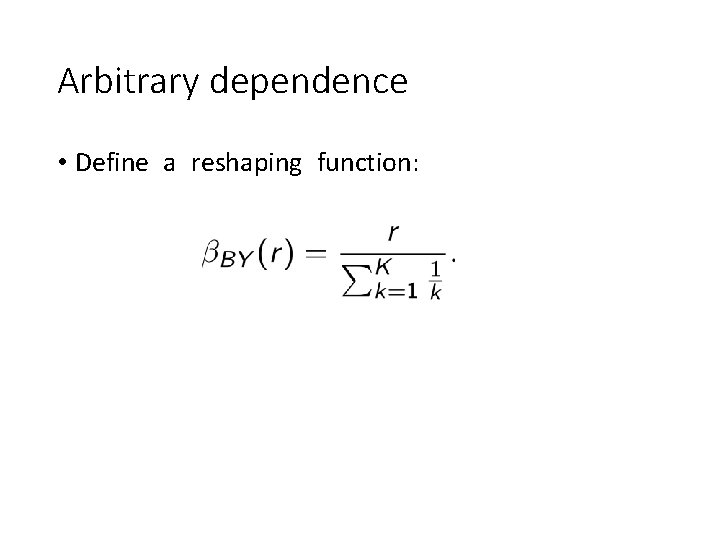
Arbitrary dependence • Define a reshaping function:
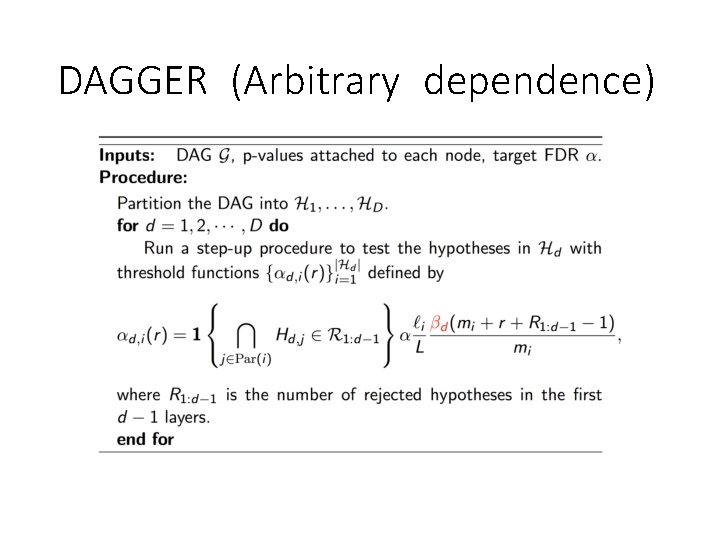
DAGGER (Arbitrary dependence)
FDR Guarantee Theorem: The GSU-DAG procedure guarantees that FDR ≤ α.
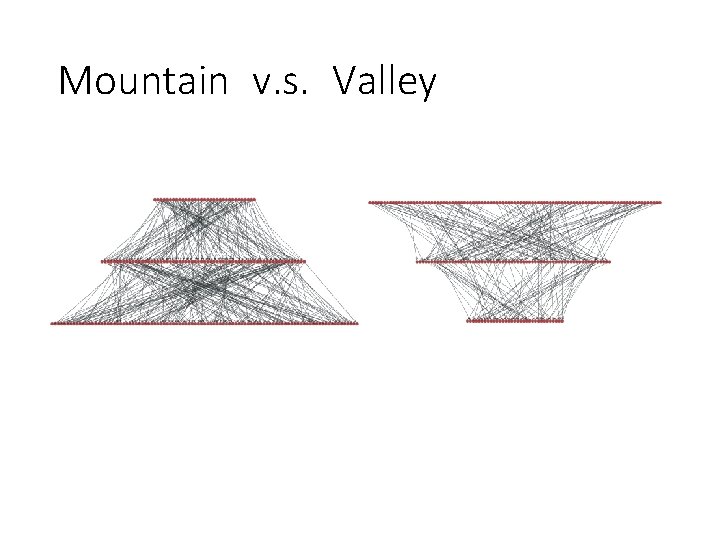
Mountain v. s. Valley
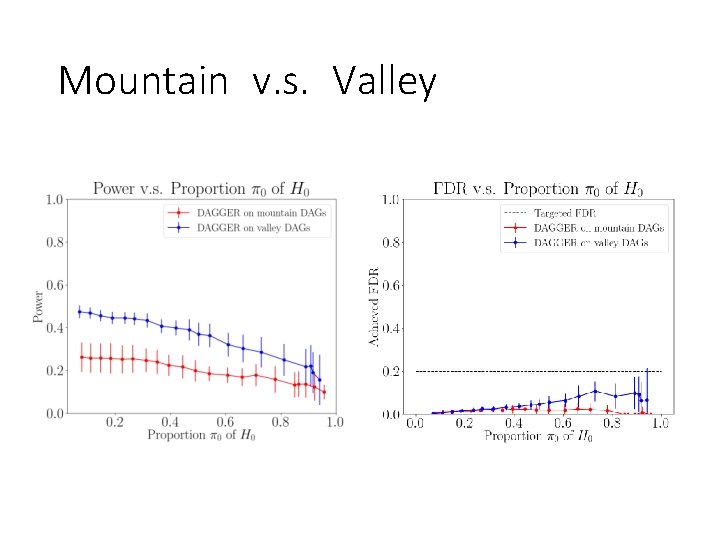
Mountain v. s. Valley
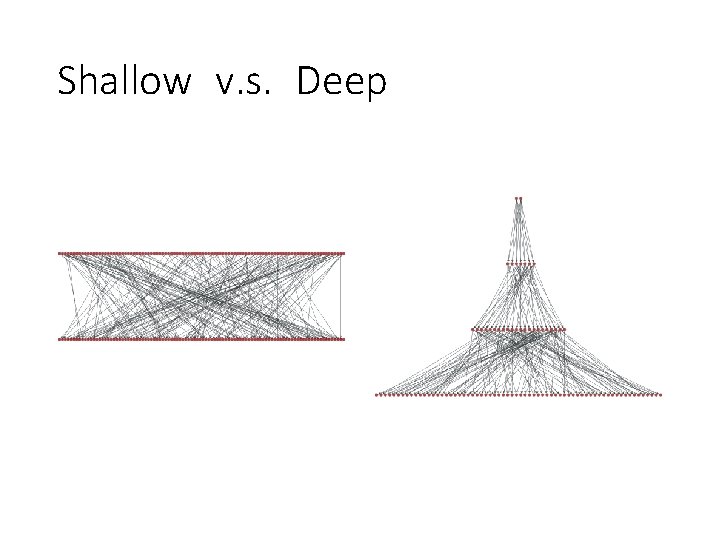
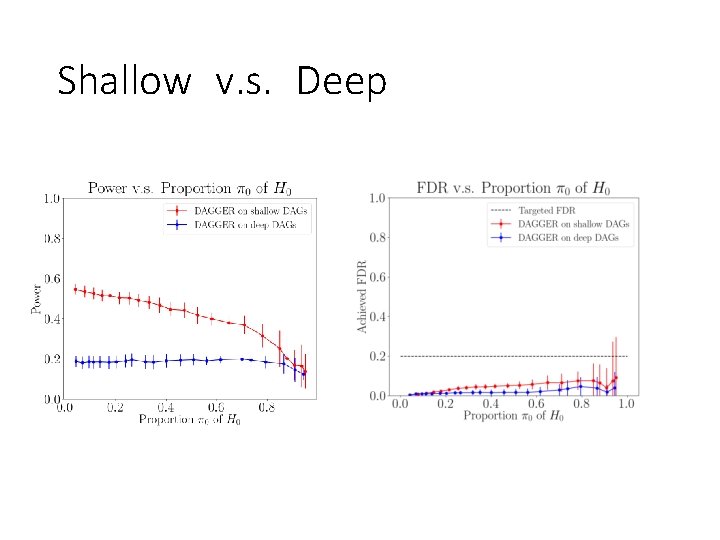
Shallow v. s. Deep
Shallow v. s. Deep
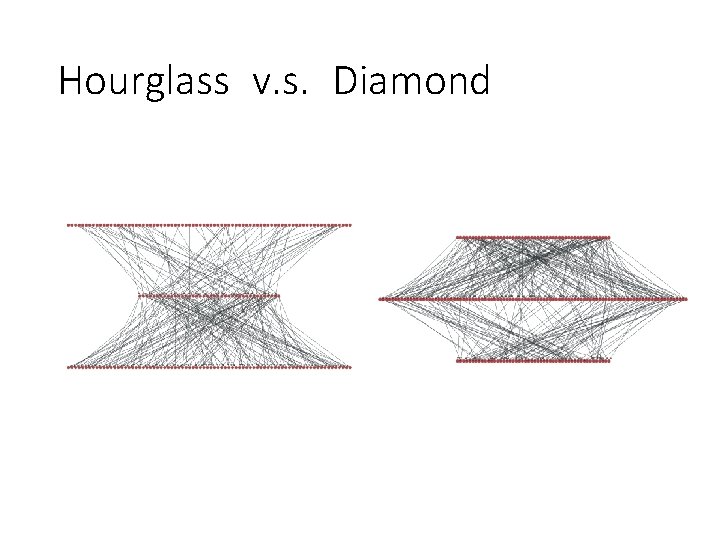
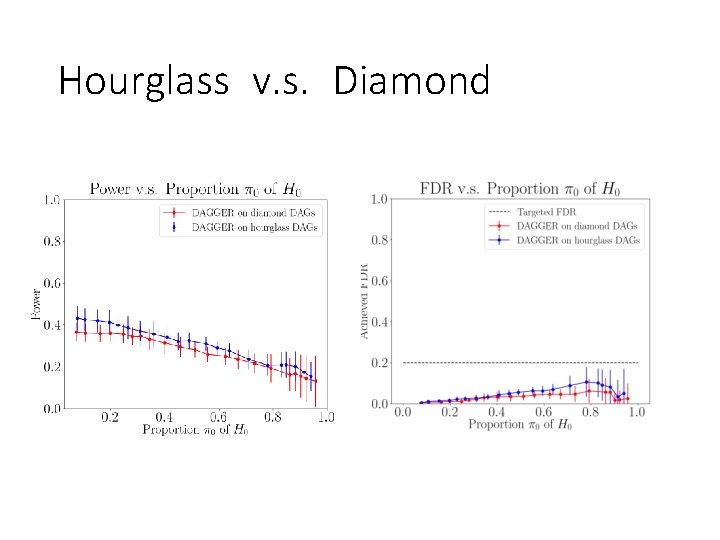
Hourglass v. s. Diamond
Hourglass v. s. Diamond
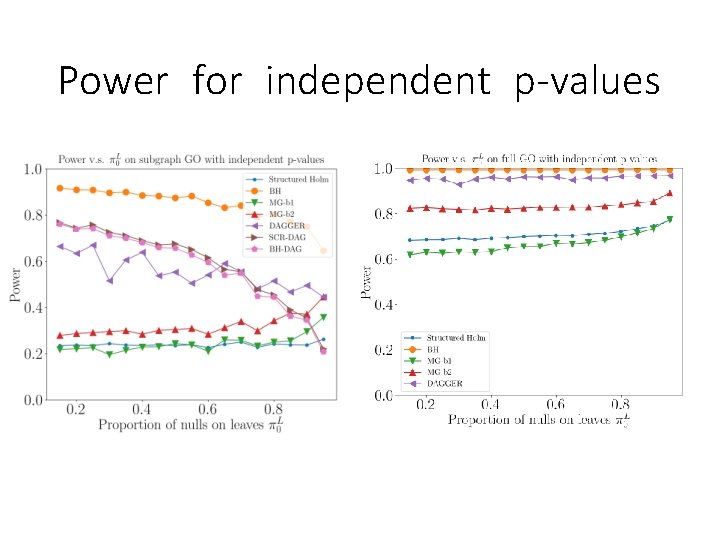
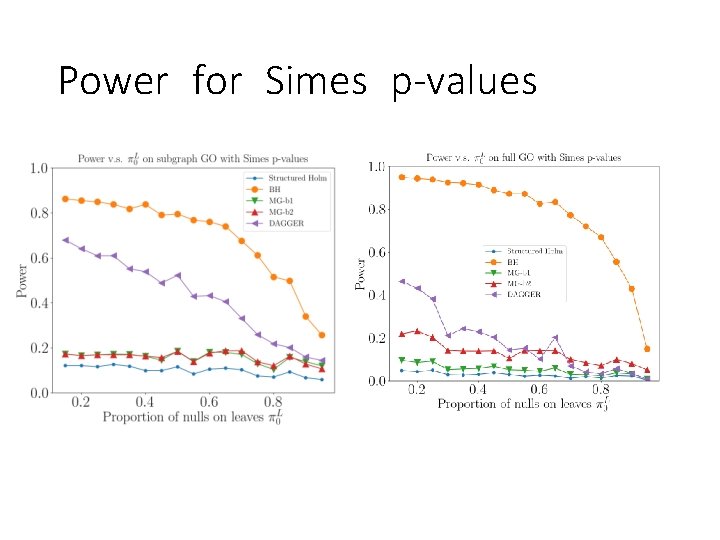
Comparison with other algorithms • Graph Structures: the Gene Ontology (GO); its subgraph. • Distribution of nulls and alternatives: randomly generated on leaves, hypotheses in the upper layers are distributed according to the logical constraints. • P-values: independent; Simes.
Power for independent p-values
Power for Simes p-values
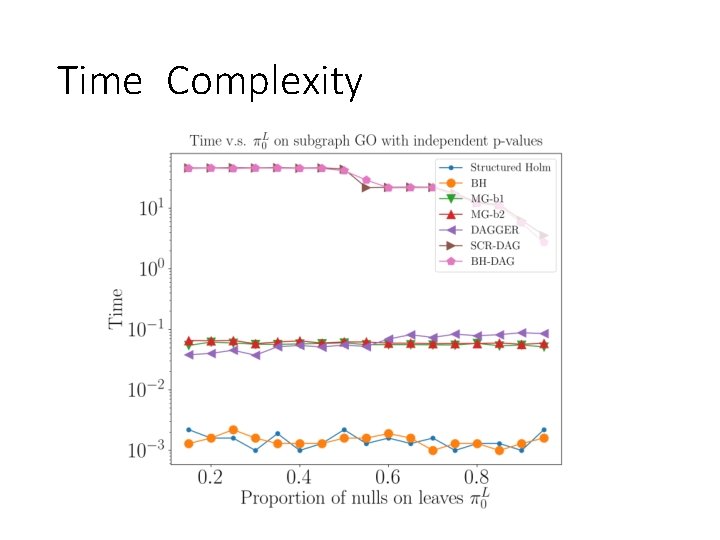
Time Complexity
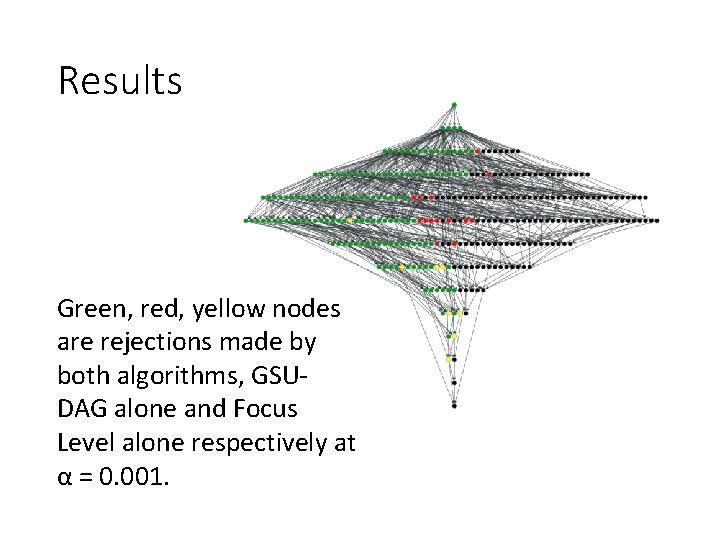
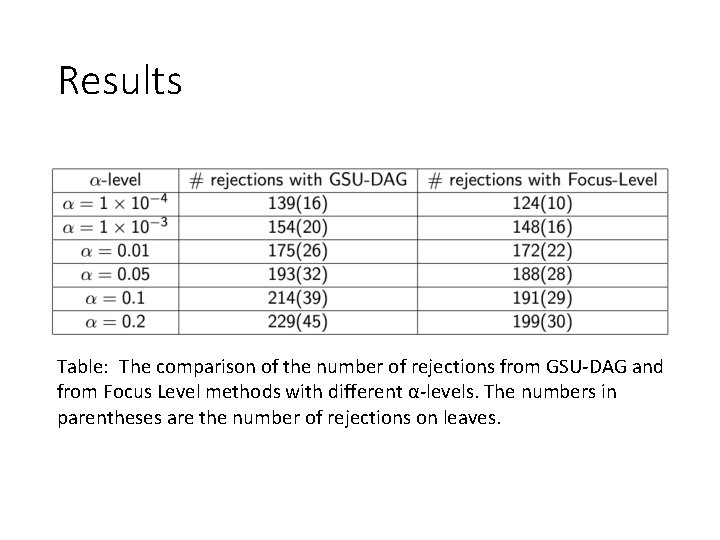
Applications • The Gene Ontology graph represents a partial order of the GO terms. Each node represents a set of genes annotated to a certain term, and the set is a subset of those annotated to its parent node. • Golub data set is from the leukemia microarray study, recording the gene expression of 47 patients with acute lymphoblastic leukemia and 25 patients with acute myeloid leukemia. • Null: No gene in the set corresposnding to the node is associated with the type of diseases. • Individual (raw) p-values are obtained by Global Ancova.
Results Green, red, yellow nodes are rejections made by both algorithms, GSUDAG alone and Focus Level alone respectively at α = 0. 001.
Results Table: The comparison of the number of rejections from GSU-DAG and from Focus Level methods with different α-levels. The numbers in parentheses are the number of rejections on leaves.
Authors