
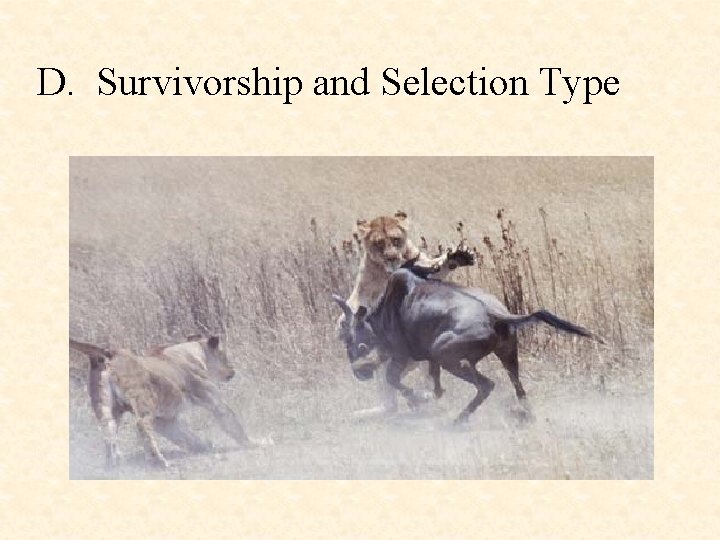
D Survivorship and Selection Type 1 Survivorship curves
![1000 Type I 100 Type II Number of survivors [log scale] 10 Type III](https://slidetodoc.com/presentation_image_h2/994e22be1cc7a43d1d0025c33cd1f82b/image-6.jpg "1000 Type I 100 Type II Number of survivors [log scale] 10 Type III")
![1000 100 Number of survivors [log scale] 10 Type III 0 0 20 40](https://slidetodoc.com/presentation_image_h2/994e22be1cc7a43d1d0025c33cd1f82b/image-12.jpg "1000 100 Number of survivors [log scale] 10 Type III 0 0 20 40")
![1000 Type I 100 Type II Number of survivors [log scale] 10 0 0](https://slidetodoc.com/presentation_image_h2/994e22be1cc7a43d1d0025c33cd1f82b/image-17.jpg "1000 Type I 100 Type II Number of survivors [log scale] 10 0 0")
- Slides: 18
D. Survivorship and Selection Type
1. Survivorship curves: tell us how long individuals survive in a population
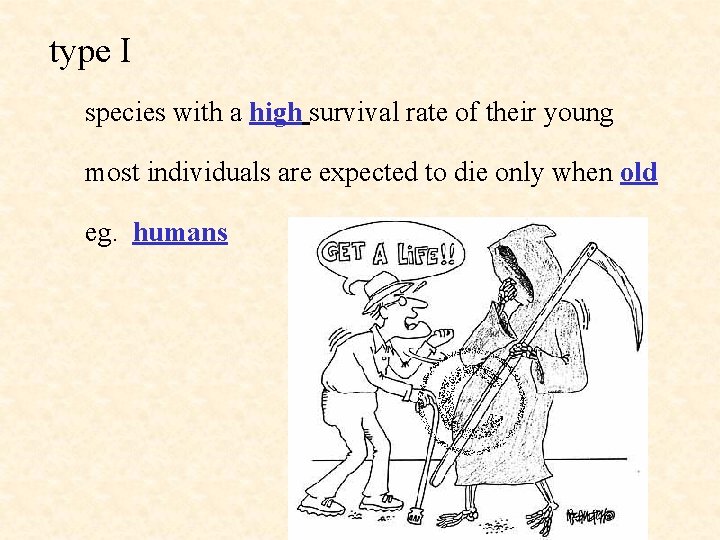
type I species with a high survival rate of their young most individuals are expected to die only when old eg. humans
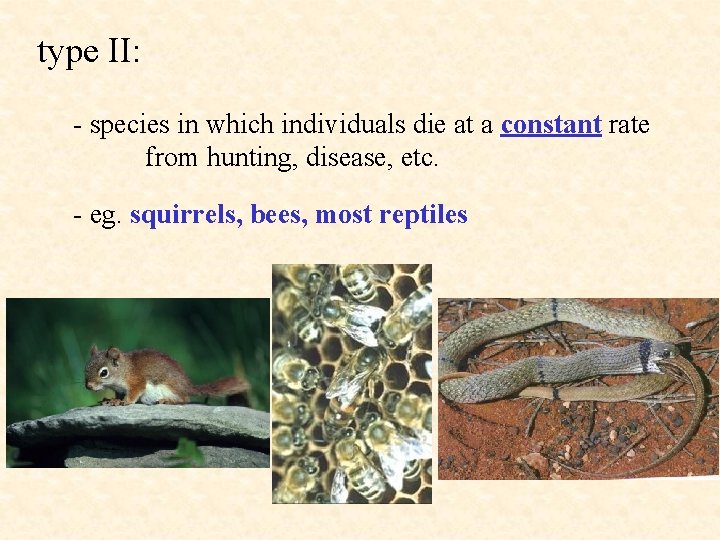
type II: - species in which individuals die at a constant rate from hunting, disease, etc. - eg. squirrels, bees, most reptiles
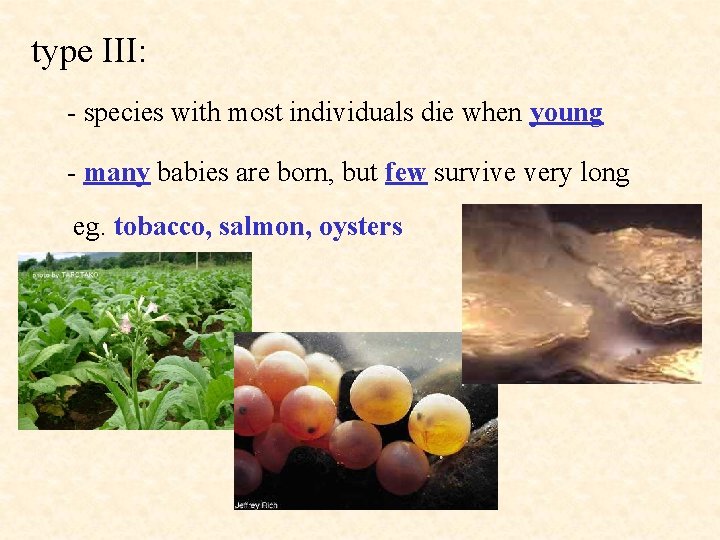
type III: - species with most individuals die when young - many babies are born, but few survive very long eg. tobacco, salmon, oysters
1000 Type I 100 Type II Number of survivors [log scale] 10 Type III 0 0 20 40 60 Percent of life span 80 100
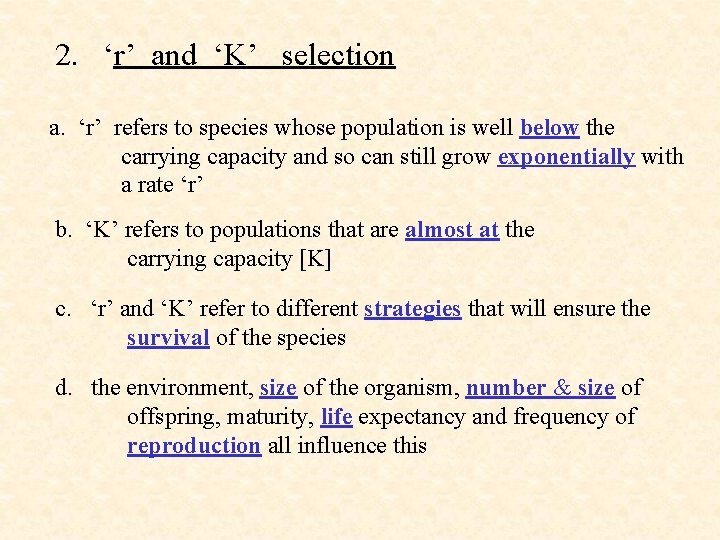
2. ‘r’ and ‘K’ selection a. ‘r’ refers to species whose population is well below the carrying capacity and so can still grow exponentially with a rate ‘r’ b. ‘K’ refers to populations that are almost at the carrying capacity [K] c. ‘r’ and ‘K’ refer to different strategies that will ensure the survival of the species d. the environment, size of the organism, number & size of offspring, maturity, life expectancy and frequency of reproduction all influence this
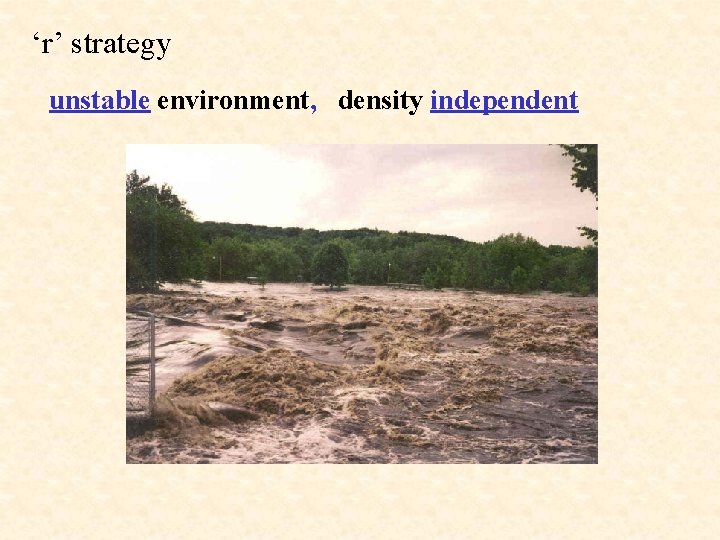
‘r’ strategy unstable environment, density independent
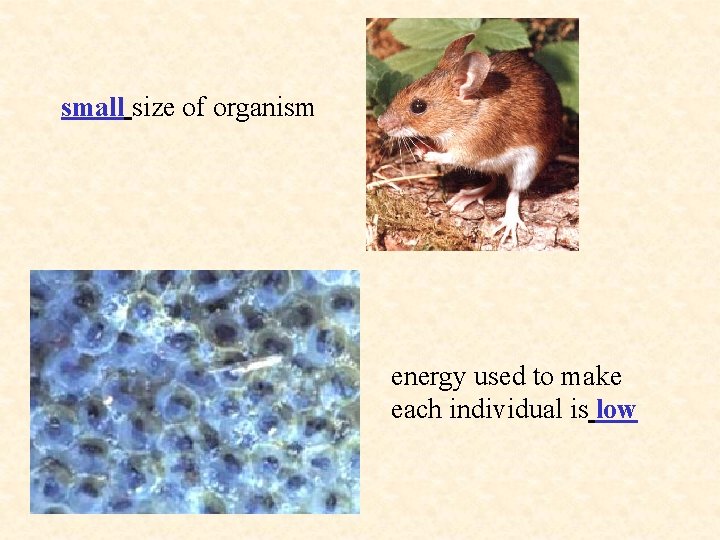
small size of organism energy used to make each individual is low
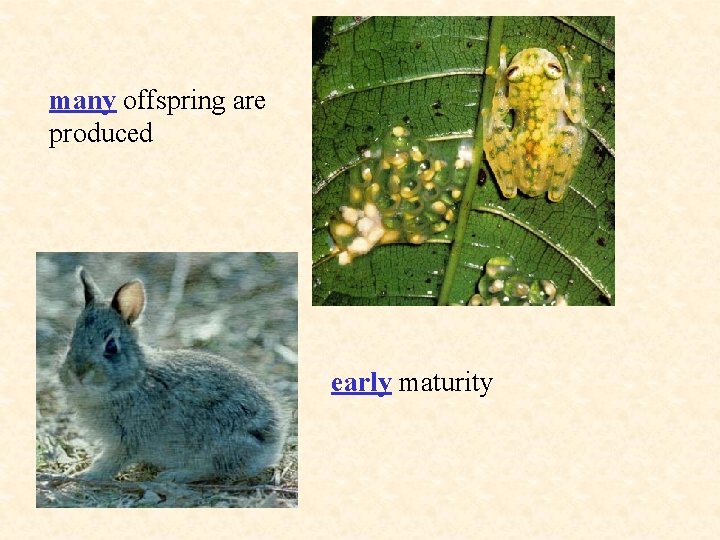
many offspring are produced early maturity
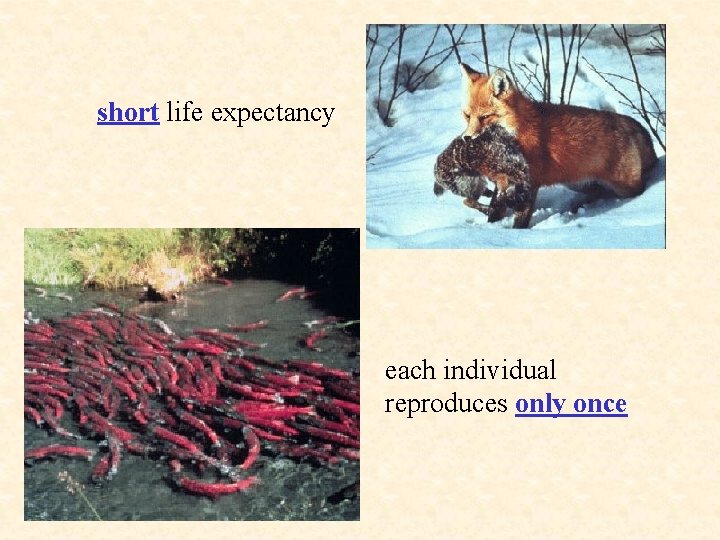
short life expectancy each individual reproduces only once
1000 100 Number of survivors [log scale] 10 Type III 0 0 20 40 60 Percent of life span 80 100
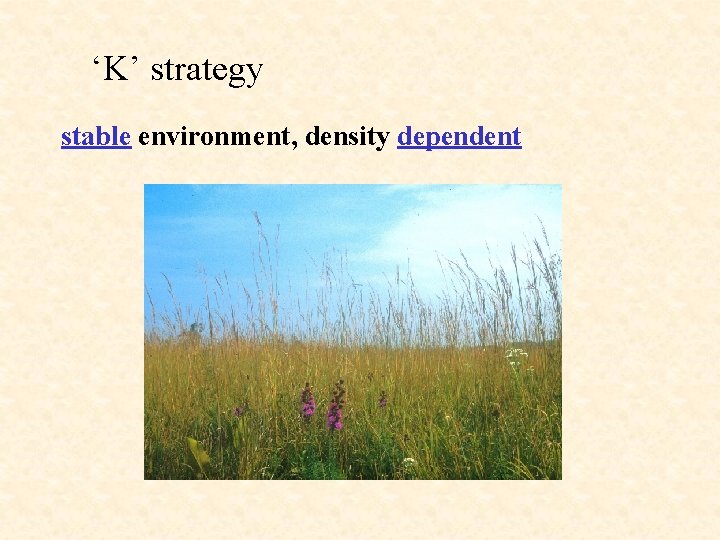
‘K’ strategy stable environment, density dependent
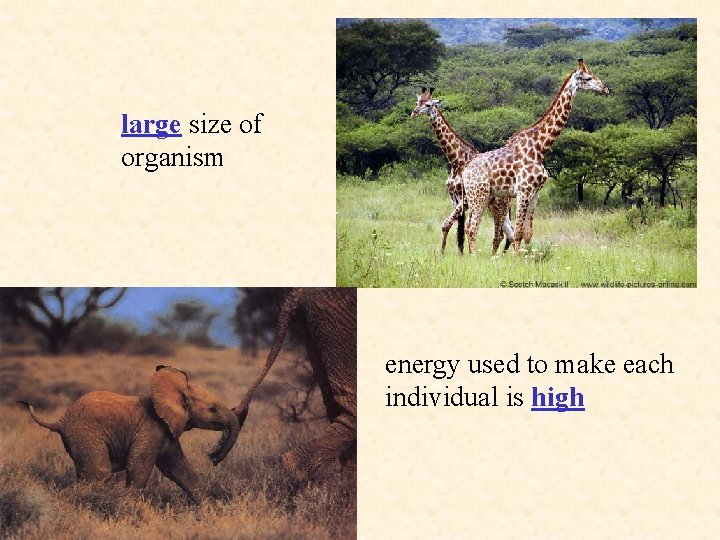
large size of organism energy used to make each individual is high
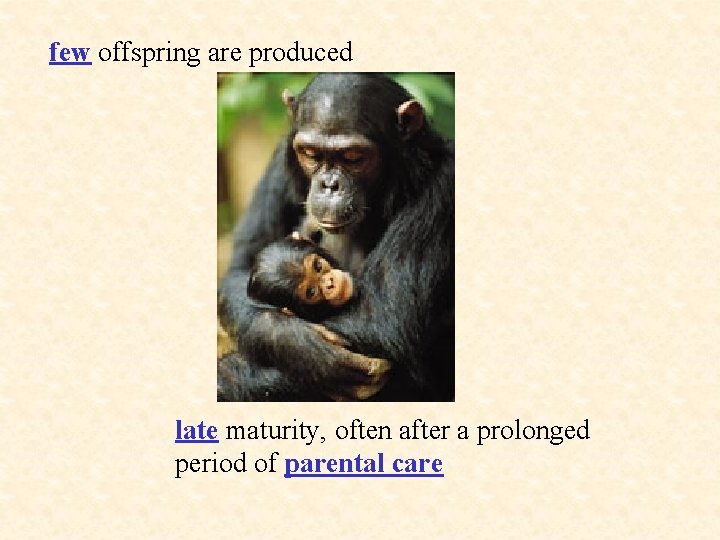
few offspring are produced late maturity, often after a prolonged period of parental care
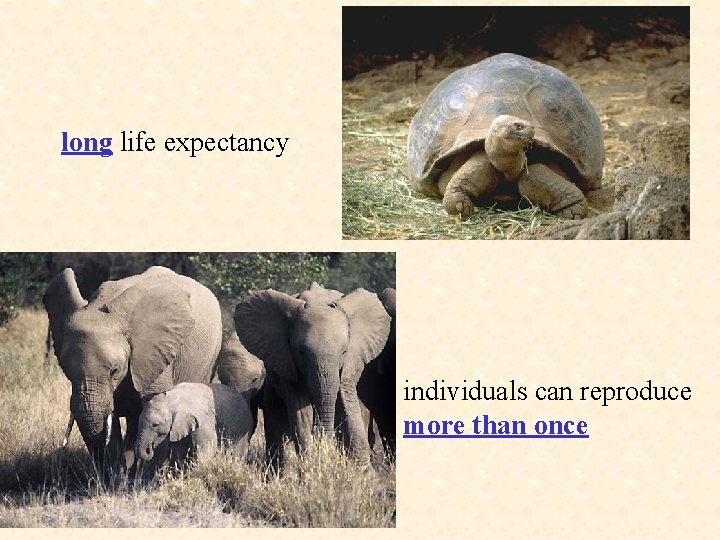
long life expectancy individuals can reproduce more than once
1000 Type I 100 Type II Number of survivors [log scale] 10 0 0 20 40 60 Percent of life span 80 100
handout; work on parts B and C