
D B SCIENCE COLLEGE GONDIA Autoimmunity And Immunodeficiency
D. B. SCIENCE COLLEGE, GONDIA Autoimmunity And Immunodeficiency B. Sc. Semester 4 Dr. S. B. Banerjee Department Of Zoology
AUTOIMMUNE DISEASES v. Autoimmunity: an abnormal response of immune system against self-antigens v. Autoimmune Diseases: diseases caused due to autoimmunity v. Reason For Autoimmunity: immune system not able to recognize between self and non-self molecules
TOLERANCE v. Tolerance: the elimination of self reactive lymphocytes before their maturation v. Central Tolerance: occurs in primary lymphoid organs i. e. bone marrow and thymus v. Peripheral Tolerance: occurs in secondary lymphoid tissues
CLASSIFICATION OF AUTOIMMUNE DISEASES v. Organ Specific Autoimmune Diseases v. Systemic Autoimmune Diseases: against the broad range of target antigens and involve several organs and tissues
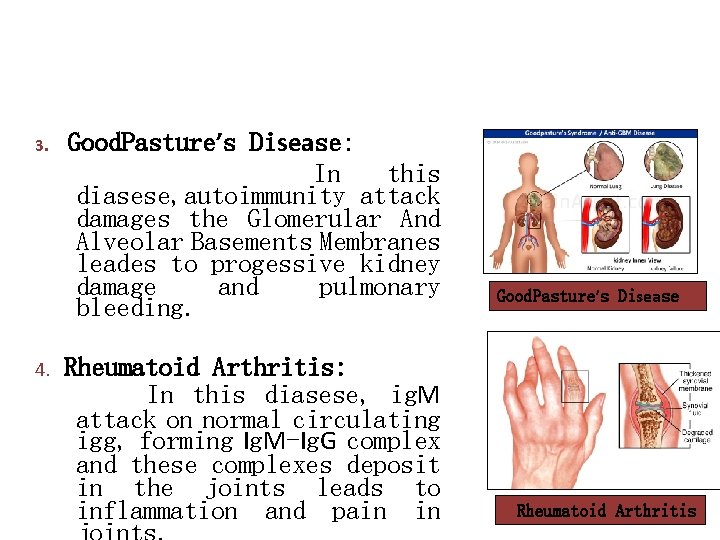
3. 4. Good. Pasture’s Disease: In this diasese, autoimmunity attack damages the Glomerular And Alveolar Basements Membranes leades to progessive kidney damage and pulmonary bleeding. Rheumatoid Arthritis: In this diasese, ig. M attack on normal circulating igg, forming Ig. M-Ig. G complex and these complexes deposit in the joints leads to inflammation and pain in Good. Pasture’s Disease . Rheumatoid Arthritis
5. Multiple Sclerosis: In this disease, patients produce self-reactive T-cells against the Myelin Basic Protein(MBP) leads to breakdown of myelin which further leads to neurological malfunctions.
TREATMENT OF AUTOIMMUNE DISEASES • No proper cure • Available drugs can reduce the problematic symptoms Some Of The Treatment Methods: 1. Immunosuppressive Drugs: reduces the rate of active lymphocyte proliferation e. g. cyclosporine A, corticosteroids, etc.
2. Plasmapheresis: In this method, plasma is removed which laeds to removal of antigenantbody complexes thereby reducing the risk of autoimmunity 3. Anti-inflammatory Drugs: § weakening of inflammation process reduces the effect of autoimmunity § e. g. Enbrel, Remicade, etc § good for treating Multiple Sclerosis and Rheumatoid Arthritis
4. By Blocking Of Antigen-activated Th Cells, reults into reduction of autoimmunity e. g. monoclonal antibody against IL-2 receptors 5. By Killing B-cells, eventually results in reduction of self reactive antibodies e. g. monoclonal antibody Rituxan 6. By Induction Of Tolerance e. g. Bovine Myelin(oral antgens) in treating Multiple Sclerosis
AIDS [Acquired Immuno Deficiency Syndome] • 1 st discovered in the group of patients in the USA in 1981 • Decrease in population of T-cells carrying CD 4 molecule • Caused by HIV[human immunodeficiency virus]
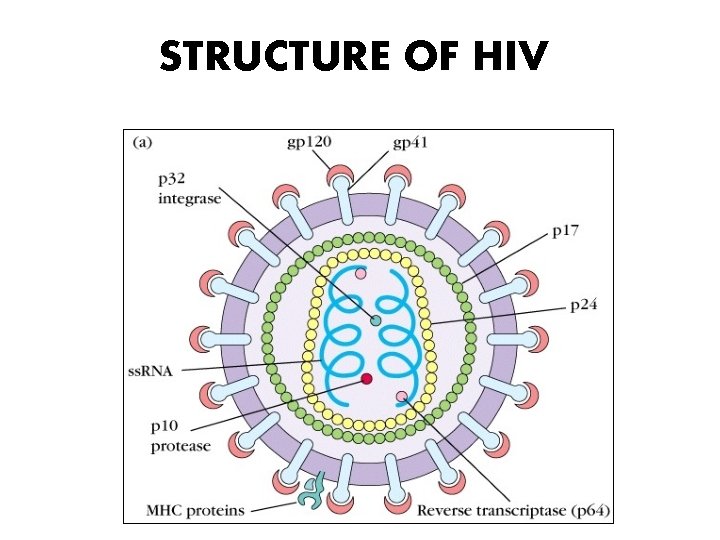
STRUCTURE OF HIV
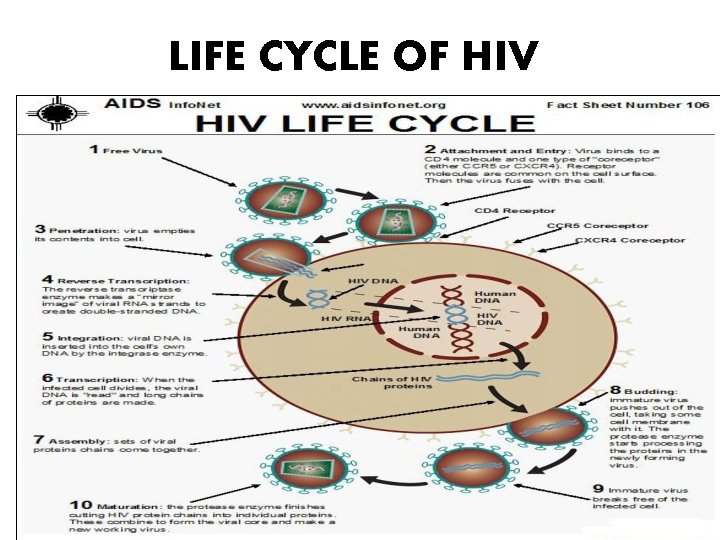
LIFE CYCLE OF HIV
TRANSMISSION OF HIV • Through Unprotected sex • Through contaminated needles • During pregnancy from infected mother to her baby
TREATMENT OF AIDS • No complete cure • But combination of certain drugs reduces the viral load, disease symptoms and treating opportunistic infections. • Antivirals approved for treatment of HIV are: Ø Reverse Transcriptase Inhibitors e. g. AZT, Retrovir, etc Ø Protease Inhibitors: blocking the activity of the HIV protease e. g. Indinavir, Ritonavir, etc.
IMMUNODEFICIENCIES • Immunodeficiency: disorder in which the ability of an immune system to protect against pathogens is defective or absent • This leads to frequent and recurrent infections and increased susceptibility to certain cancers.
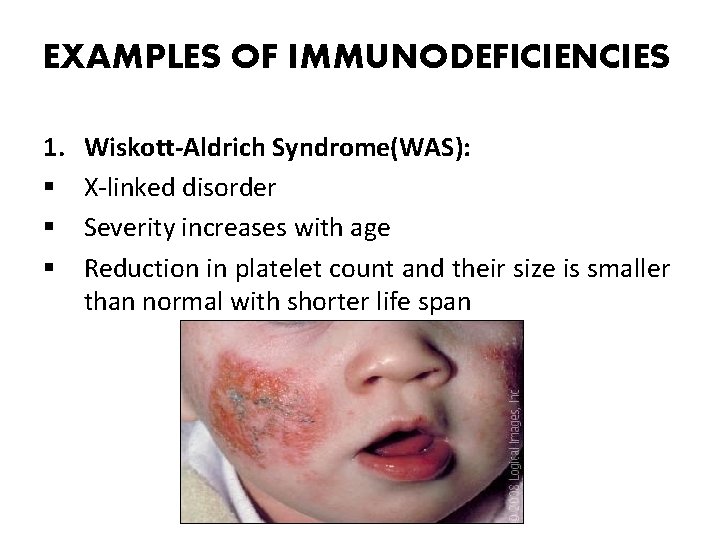
EXAMPLES OF IMMUNODEFICIENCIES 1. § § § Wiskott-Aldrich Syndrome(WAS): X-linked disorder Severity increases with age Reduction in platelet count and their size is smaller than normal with shorter life span
Interferon-Gamma Receptor Defect: § Defect in the receptor for interferon gamma (IFN-GAMMA) § Susceptible for mycobacterial infections 2.
3. X-linked Agammaglobulinemia (X-LA): § Bcell defect § Low Ig. G levels and the absence of other immunoglobulin classes § Sufferer usually dies at childhood 4. X-linked Hyper Ig. M syndrome(XHM): § Deficiency of Ig. G, Ig. A and Ig. E and increased levels of Ig. M § X-linked recessive disorder § Respiratory infections 5. Common Variable Immunodeficiency: § Profound decrease in number of antibody producing plasma cells
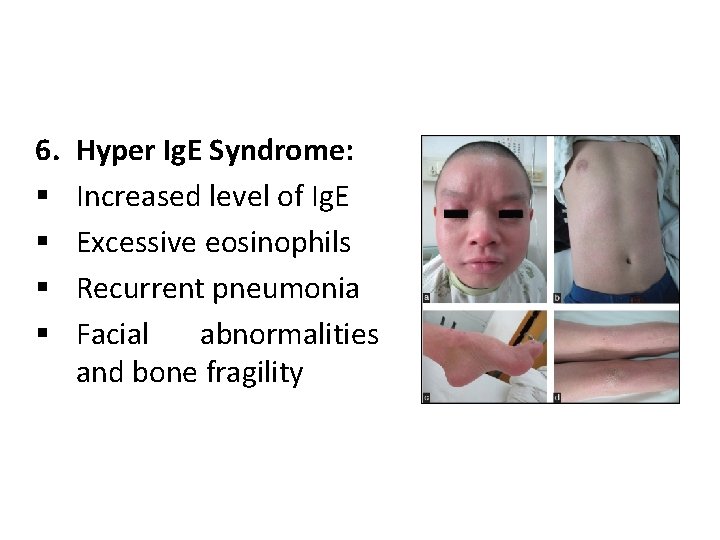
6. § § Hyper Ig. E Syndrome: Increased level of Ig. E Excessive eosinophils Recurrent pneumonia Facial abnormalities and bone fragility
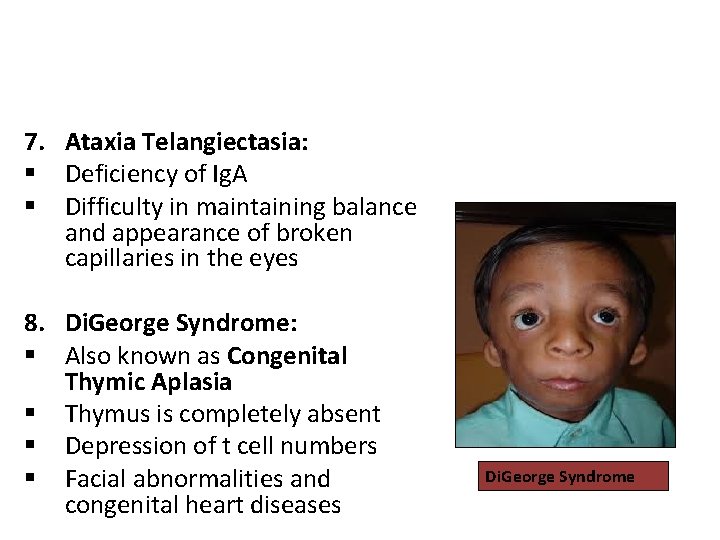
7. Ataxia Telangiectasia: § Deficiency of Ig. A § Difficulty in maintaining balance and appearance of broken capillaries in the eyes 8. Di. George Syndrome: § Also known as Congenital Thymic Aplasia § Thymus is completely absent § Depression of t cell numbers § Facial abnormalities and congenital heart diseases Di. George Syndrome
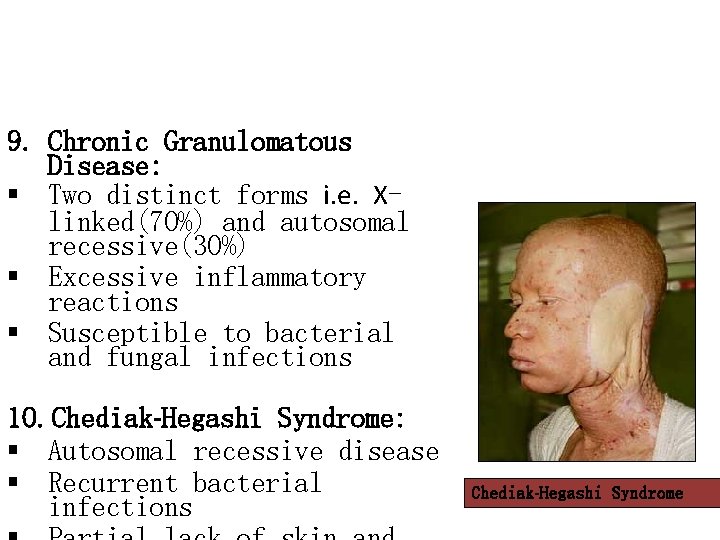
9. Chronic Granulomatous Disease: § Two distinct forms i. e. Xlinked(70%) and autosomal recessive(30%) § Excessive inflammatory reactions § Susceptible to bacterial and fungal infections 10. Chediak-Hegashi Syndrome: § Autosomal recessive disease § Recurrent bacterial infections Chediak-Hegashi Syndrome
- Slides: 24