
D 18 How to Modify Lessons Action Research
- Slides: 21
D. 18 How to Modify Lessons
Action Research Project This study involved the field testing of a lesson plan process and template that guides how to modify lessons for students on modified special education plans (SEP-Ms). Two questions were posed: 1. When secondary classroom teachers utilize the “How to Modify Your Lessons” process and template how does it impact teacher perceptions? 2. How viable is it as a planning tool?
Action Research Results �Impact of the project on participant teacher perceptions was positive. �Mixed results regarding the viability of the process and template tools, suggest that teachers require support and coaching to ensure the tools are used and the teachers are successful. �The results further suggests that teacher prior knowledge and proficiency with differentiation and project based learning, as well as an inclusive school culture positively influenced successful use of the process and template.
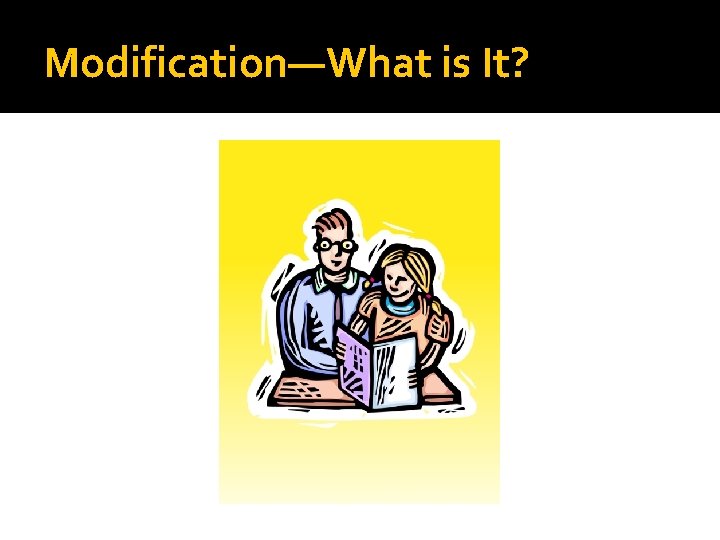
Modification—What is It?
Guidelines and Standards Modification: � With this type of planning, the grade level curriculum outcomes of a subject area have been changed to address the specific needs of the student. � With modification, the majority (50% or more) of the outcomes of the grade level curriculum have been altered. These changes could involve simplified tests, exams or assignments; material presented at a lower reading level; or simplified texts and projects. � Students’ achievement will be assessed on a different basis from that of their peers. � Decisions for modification must involve the classroom teacher(s), the resource teacher, the parent(s), as well as be discussed at the regular meetings of the school-based Student Services Team.
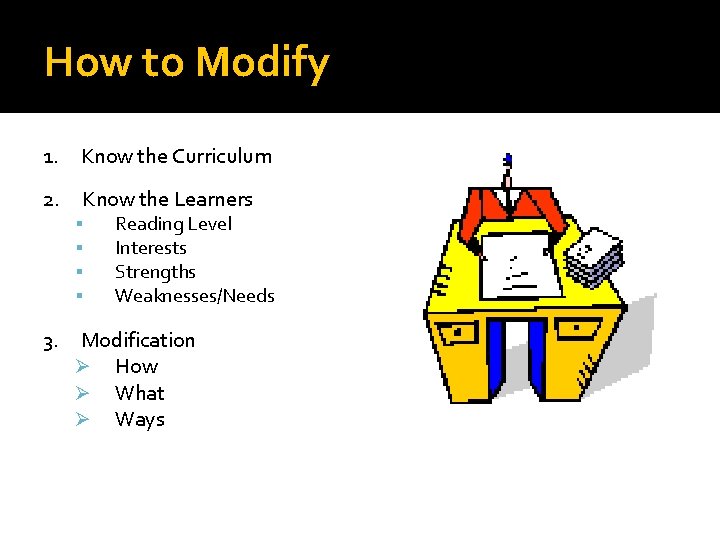
How to Modify 1. Know the Curriculum 2. Know the Learners Reading Level Interests Strengths Weaknesses/Needs 3. Modification Ø How Ø What Ø Ways
A Quick Lesson About Developmental Delay—Slower to Learners
Present Level of Performance: What has the student mastered? �Reading �Writing �Numeracy �Organizational Skills �Listening Skills �Time on Task Observe, Ask, Investigate!
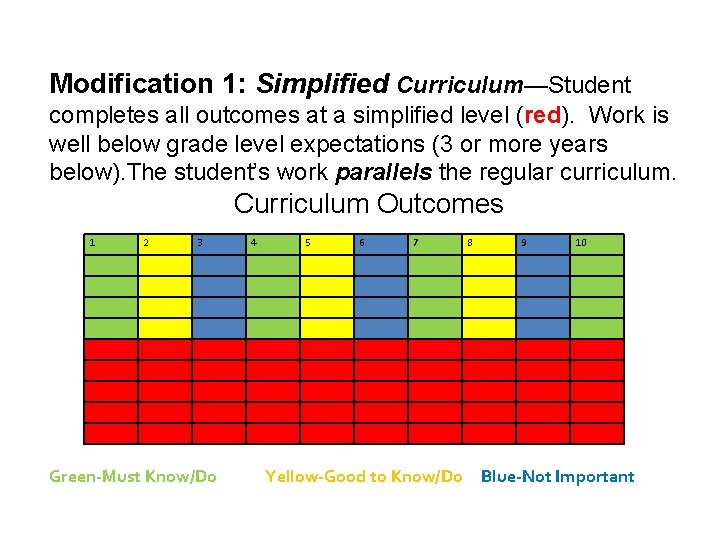
Modification 1: Simplified Curriculum—Student completes all outcomes at a simplified level (red). Work is well below grade level expectations (3 or more years below). The student’s work parallels the regular curriculum. Curriculum Outcomes 1 2 3 Green-Must Know/Do 4 5 6 7 Yellow-Good to Know/Do 8 9 10 Blue-Not Important
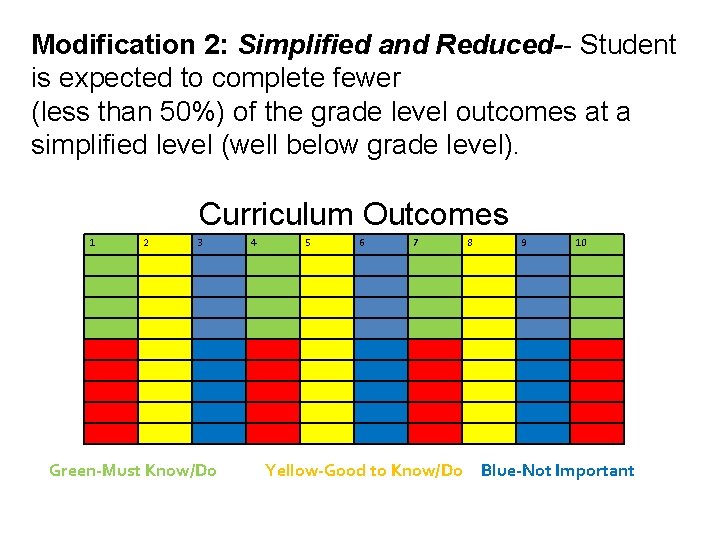
Modification 2: Simplified and Reduced-- Student is expected to complete fewer (less than 50%) of the grade level outcomes at a simplified level (well below grade level). Curriculum Outcomes 1 2 3 Green-Must Know/Do 4 5 6 7 Yellow-Good to Know/Do 8 9 10 Blue-Not Important
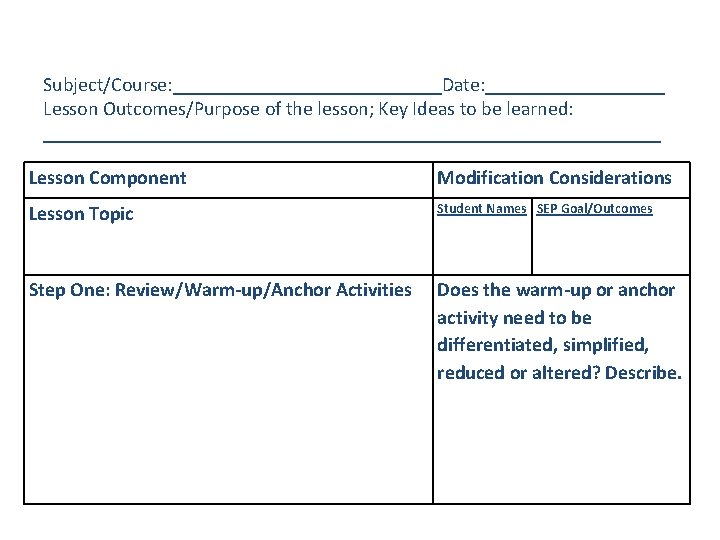
Subject/Course: ______________Date: _________ Lesson Outcomes/Purpose of the lesson; Key Ideas to be learned: _______________________________ Lesson Component Modification Considerations Lesson Topic Student Names SEP Goal/Outcomes Step One: Review/Warm-up/Anchor Activities Does the warm-up or anchor activity need to be differentiated, simplified, reduced or altered? Describe.
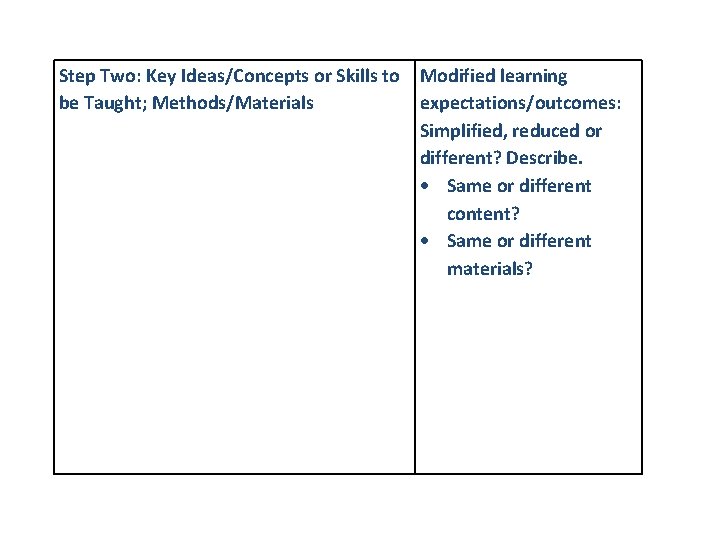
Step Two: Key Ideas/Concepts or Skills to Modified learning be Taught; Methods/Materials expectations/outcomes: Simplified, reduced or different? Describe. Same or different content? Same or different materials?
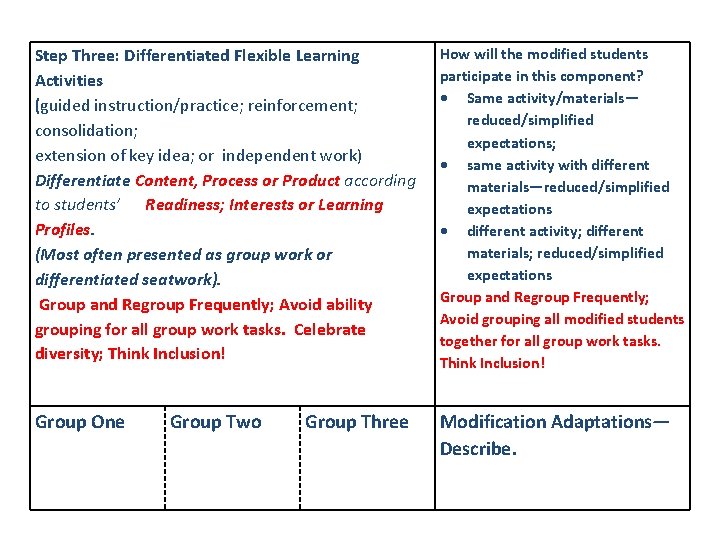
Step Three: Differentiated Flexible Learning Activities (guided instruction/practice; reinforcement; consolidation; extension of key idea; or independent work) Differentiate Content, Process or Product according to students’ Readiness; Interests or Learning Profiles. (Most often presented as group work or differentiated seatwork). Group and Regroup Frequently; Avoid ability grouping for all group work tasks. Celebrate diversity; Think Inclusion! How will the modified students participate in this component? Same activity/materials— reduced/simplified expectations; same activity with different materials—reduced/simplified expectations different activity; different materials; reduced/simplified expectations Group and Regroup Frequently; Avoid grouping all modified students together for all group work tasks. Think Inclusion! Group One Modification Adaptations— Describe. Group Two Group Three
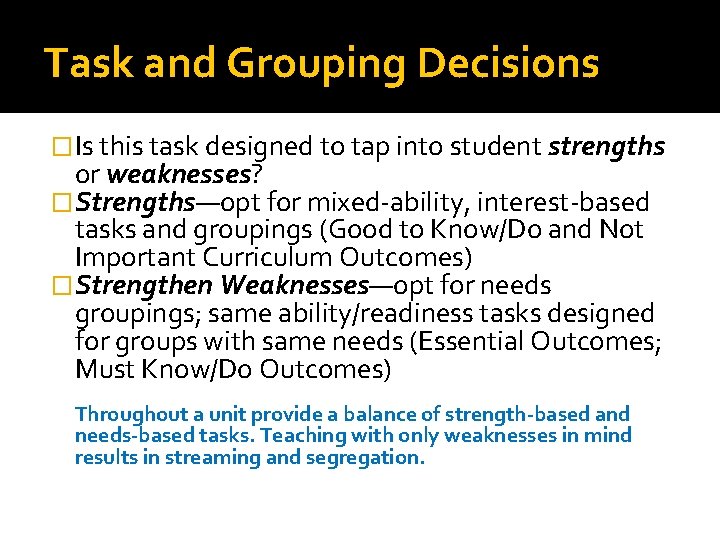
Task and Grouping Decisions � Is this task designed to tap into student strengths or weaknesses? � Strengths—opt for mixed-ability, interest-based tasks and groupings (Good to Know/Do and Not Important Curriculum Outcomes) � Strengthen Weaknesses—opt for needs groupings; same ability/readiness tasks designed for groups with same needs (Essential Outcomes; Must Know/Do Outcomes) Throughout a unit provide a balance of strength-based and needs-based tasks. Teaching with only weaknesses in mind results in streaming and segregation.
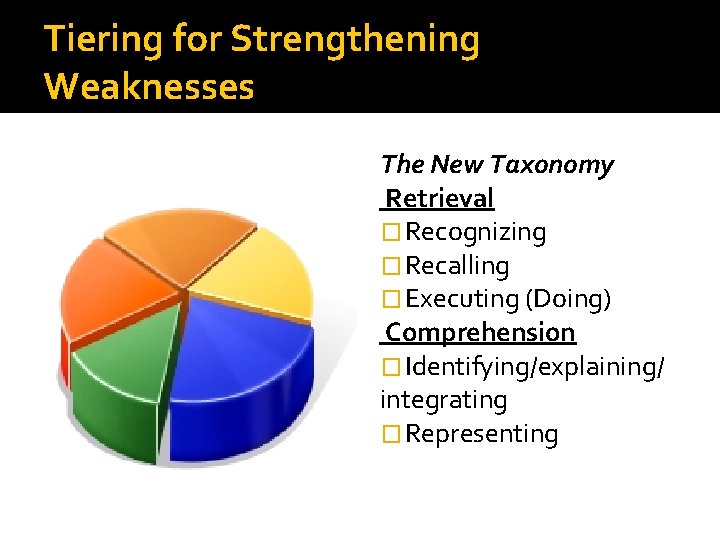
Tiering for Strengthening Weaknesses The New Taxonomy Retrieval � Recognizing � Recalling � Executing (Doing) Comprehension � Identifying/explaining/ integrating � Representing
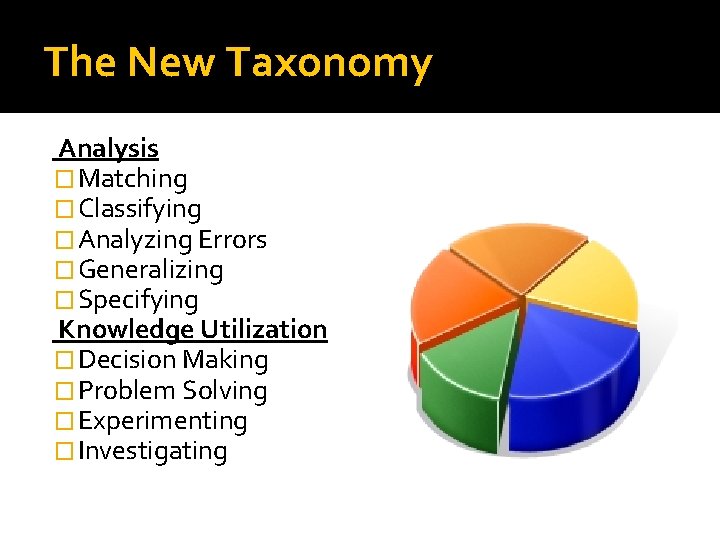
The New Taxonomy Analysis � Matching � Classifying � Analyzing Errors � Generalizing � Specifying Knowledge Utilization � Decision Making � Problem Solving � Experimenting � Investigating
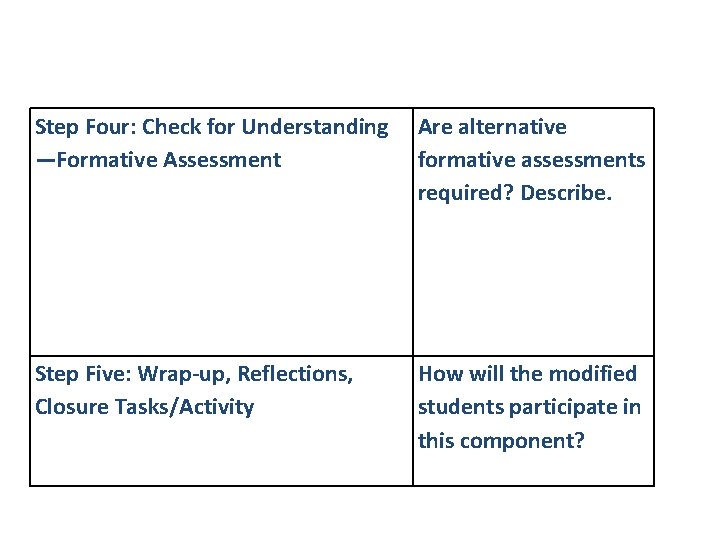
Step Four: Check for Understanding —Formative Assessment Are alternative formative assessments required? Describe. Step Five: Wrap-up, Reflections, Closure Tasks/Activity How will the modified students participate in this component?
A Success Story!! A Sample Lesson Plan -- Michelle Swan, Harvey High
Just Do it! �Discuss with a partner how you could implement the template into your lesson or unit planning process? �Discuss what would make it possible for you to implement the use of the template? �What do you see as the pros and cons of this tool?
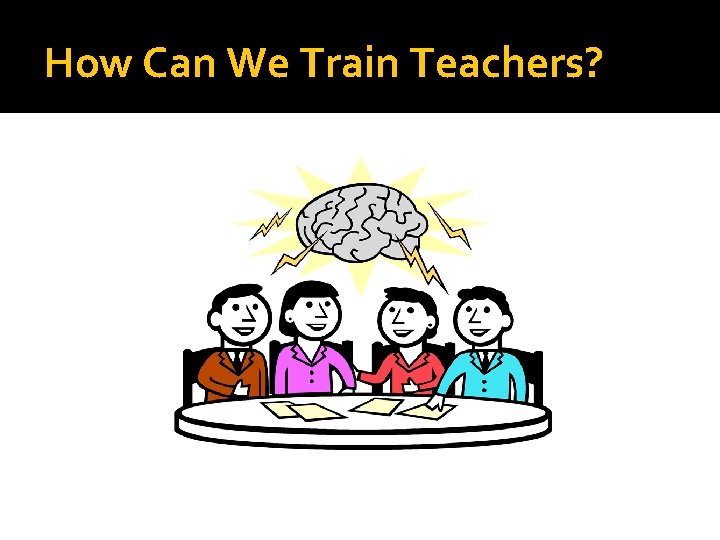
How Can We Train Teachers?
Conclusion �“Inclusion is not just about students with disabilities or “exceptionalities. ” It is an attitude and an approach that encourages all students to belong. It is an approach that nurtures the self-esteem of all students; it is about taking account of diversity in all it’s forms, and promoting genuine equality of opportunity for all students in New Brunswick. ” Wayne Mac. Kay