
CZ 3253 Computer Aided Drug design Lecture 1
- Slides: 39
CZ 3253: Computer Aided Drug design Lecture 1: Drugs and Drug Development Part I Prof. Chen Yu Zong Tel: 6874 -6877 Email: csccyz@nus. edu. sg http: //xin. cz 3. nus. edu. sg Room 07 -24, level 7, SOC 1, National University of Singapore
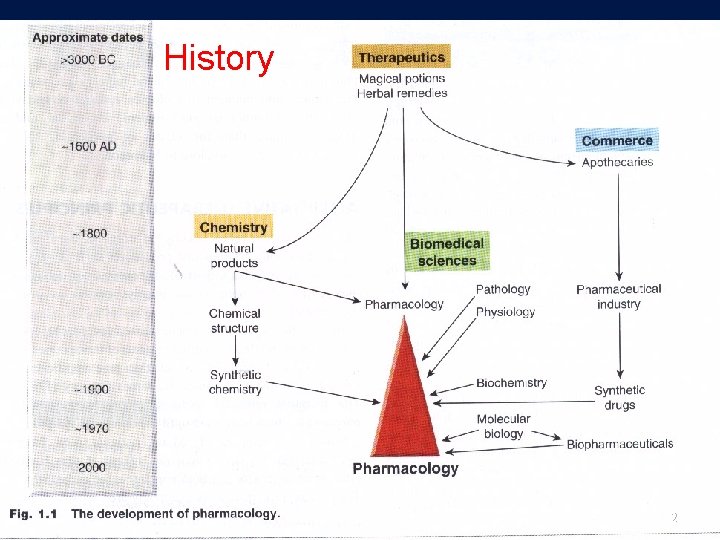
History 2
History Ancient knowledge of the materials that could relieve pain, alter moods and perceptions, aid against infection, poison etc. The first written treatises were generated by the Chinese e. g. Pen Tsao was written ~2700 B. C. , describing uses and classifications of medicinal plants. 3
History The ancient Egyptians by 1550 B. C. had written prescriptions using a range of pharmaceutically active ingredients and vehicles for their delivery. At about the same time, similar medical advances were being made in Babylonia and India. Between about 400 -300 B. C. the Greeks made enormous advances in the knowledge of anatomy and physiology. 4
History Philippus Theophrastus Bombastus von Hohenheim (1493 -1541), also known as Aureolus Paracelcus, took up the pharmacological baton. He is often referred to as the ‘grandfather of pharmacology’ and also the ‘grandfather of toxicology’ because of his impact on the understanding between dose and response “All things are poisons, for there is nothing without poisonous qualities. It is only the dose which makes a thing a poison”. 5
History No real further advances until the sciences of chemistry and physiology had developed: • To provide pure compounds. • Allow careful monitoring of their physiological effects. This combination of circumstances arose in the early 19 th Century. 6
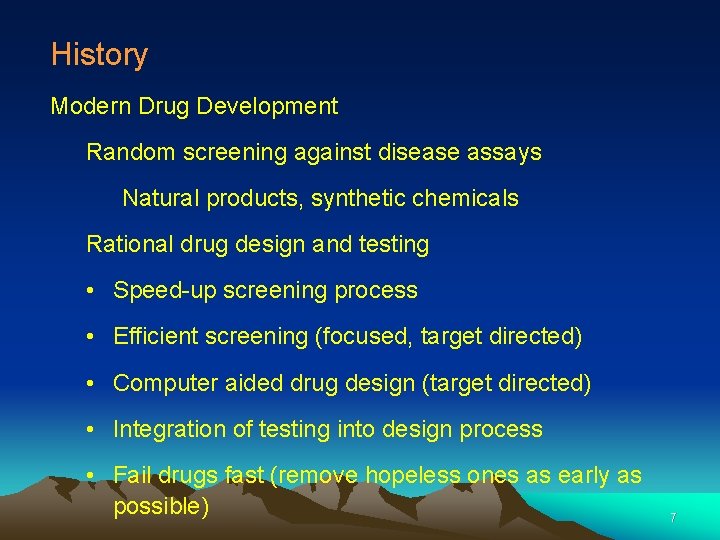
History Modern Drug Development Random screening against disease assays Natural products, synthetic chemicals Rational drug design and testing • Speed-up screening process • Efficient screening (focused, target directed) • Computer aided drug design (target directed) • Integration of testing into design process • Fail drugs fast (remove hopeless ones as early as possible) 7
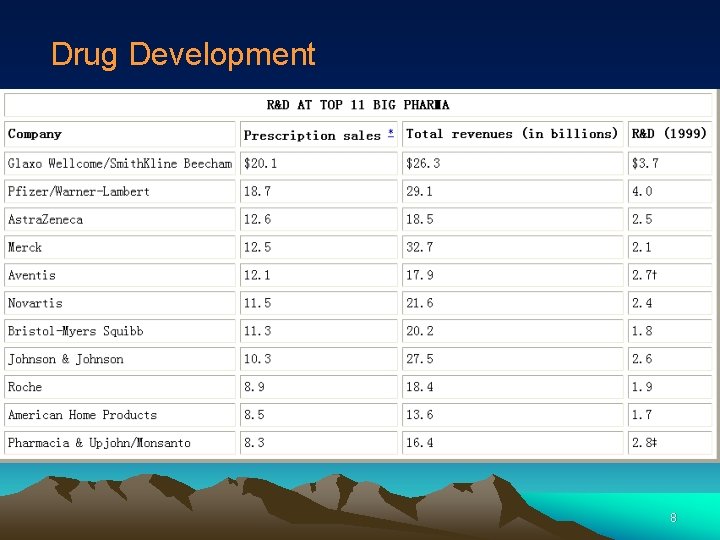
Drug Development 8
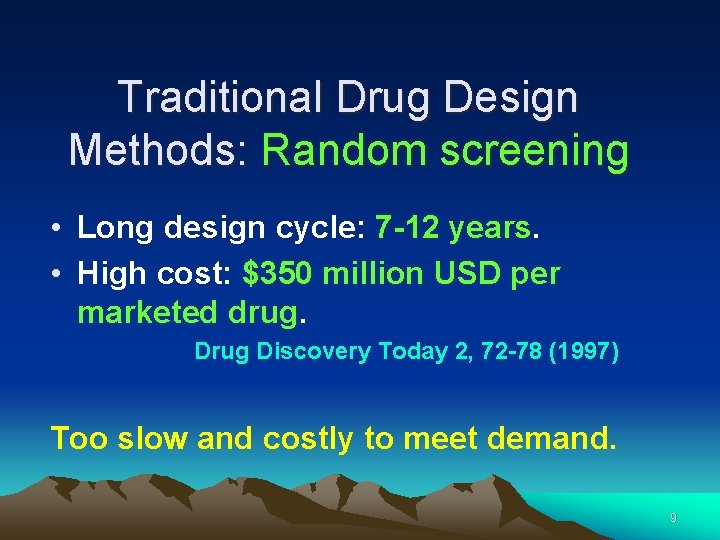
Traditional Drug Design Methods: Random screening • Long design cycle: 7 -12 years. • High cost: $350 million USD per marketed drug. Drug Discovery Today 2, 72 -78 (1997) Too slow and costly to meet demand. 9
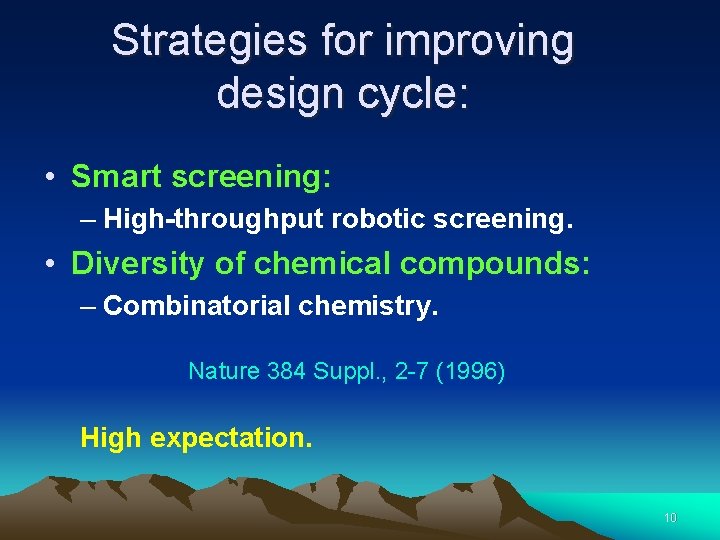
Strategies for improving design cycle: • Smart screening: – High-throughput robotic screening. • Diversity of chemical compounds: – Combinatorial chemistry. Nature 384 Suppl. , 2 -7 (1996) High expectation. 10
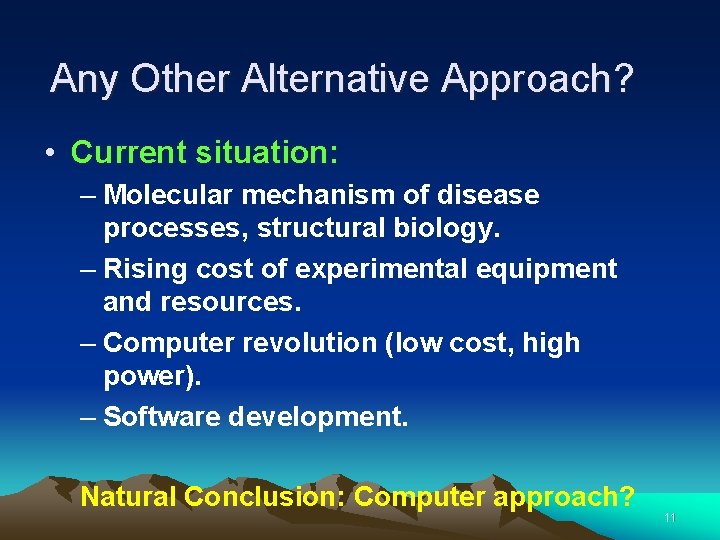
Any Other Alternative Approach? • Current situation: – Molecular mechanism of disease processes, structural biology. – Rising cost of experimental equipment and resources. – Computer revolution (low cost, high power). – Software development. Natural Conclusion: Computer approach? 11
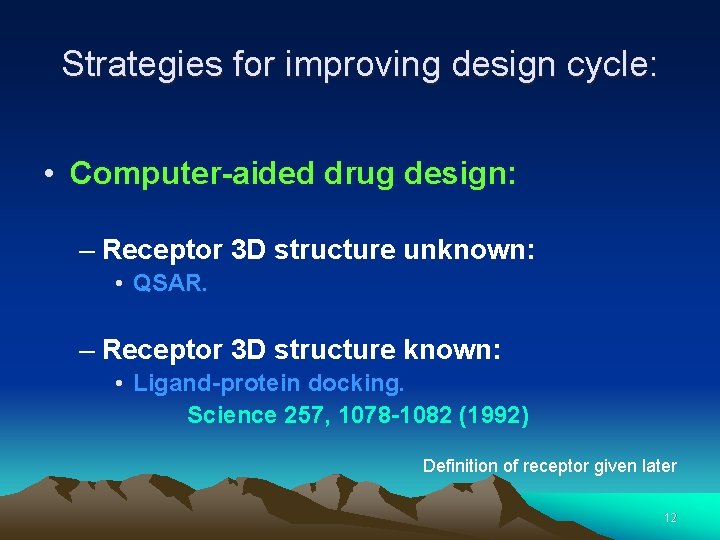
Strategies for improving design cycle: • Computer-aided drug design: – Receptor 3 D structure unknown: • QSAR. – Receptor 3 D structure known: • Ligand-protein docking. Science 257, 1078 -1082 (1992) Definition of receptor given later 12
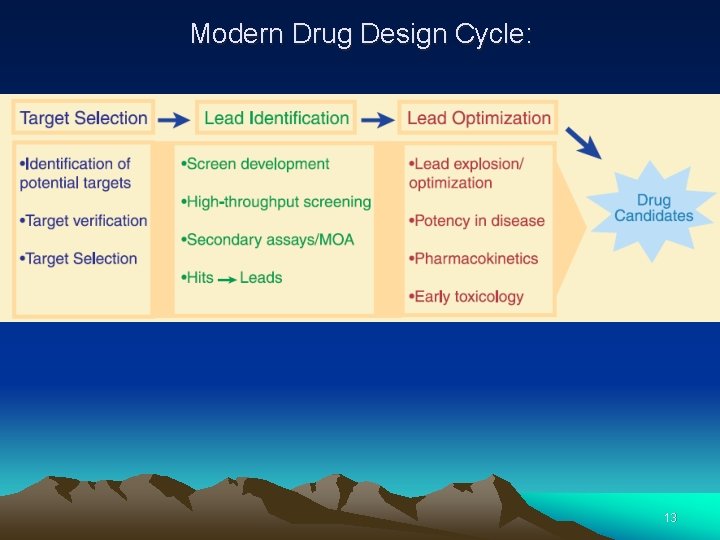
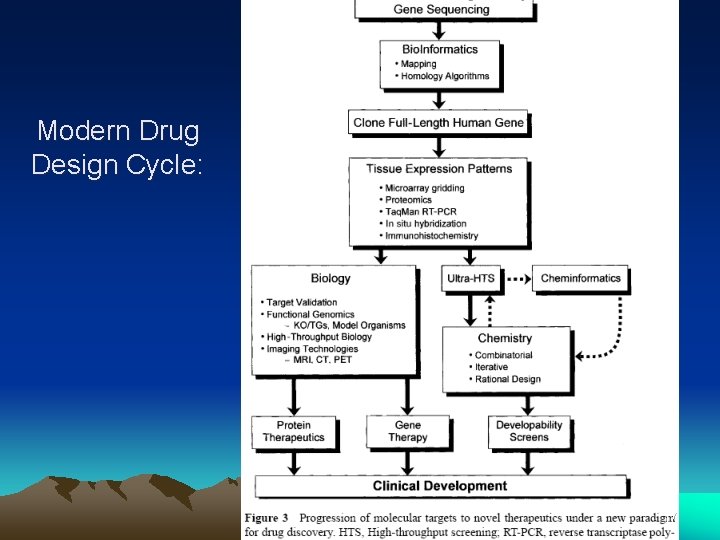
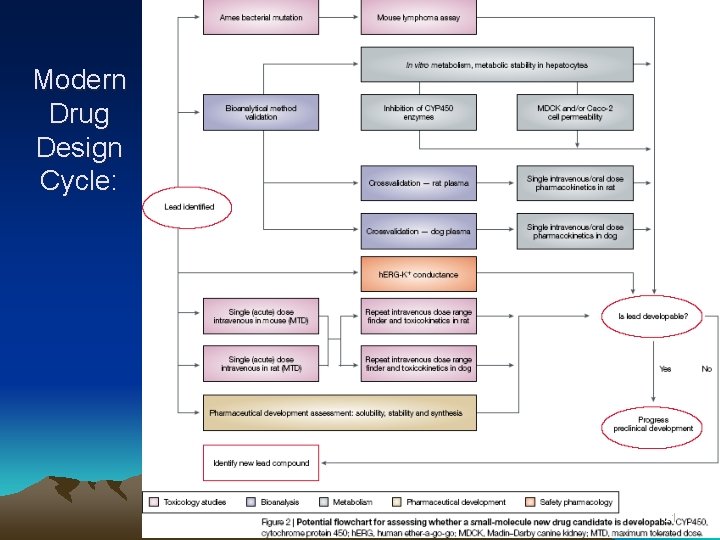
Modern Drug Design Cycle: 13
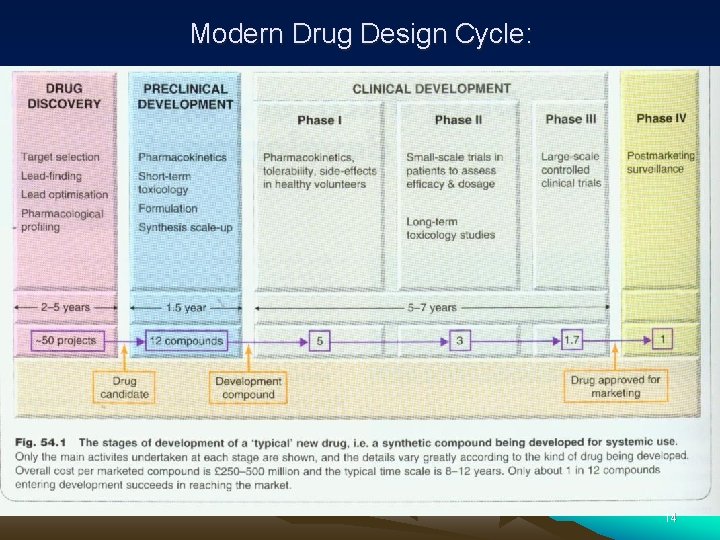
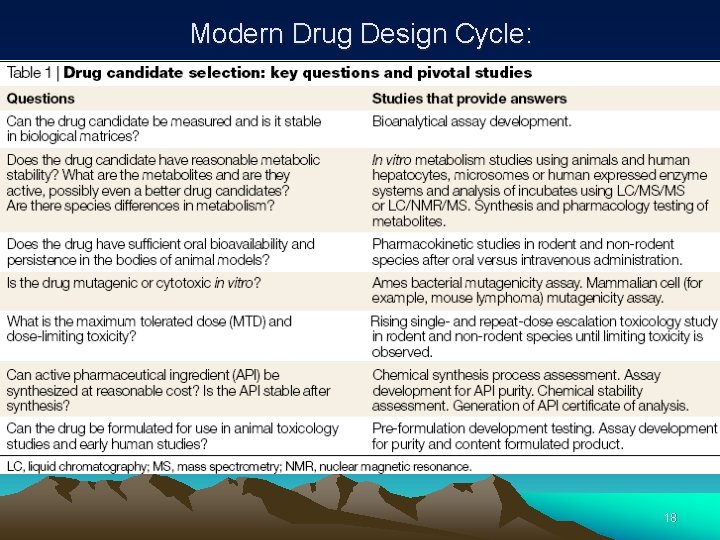
Modern Drug Design Cycle: 14
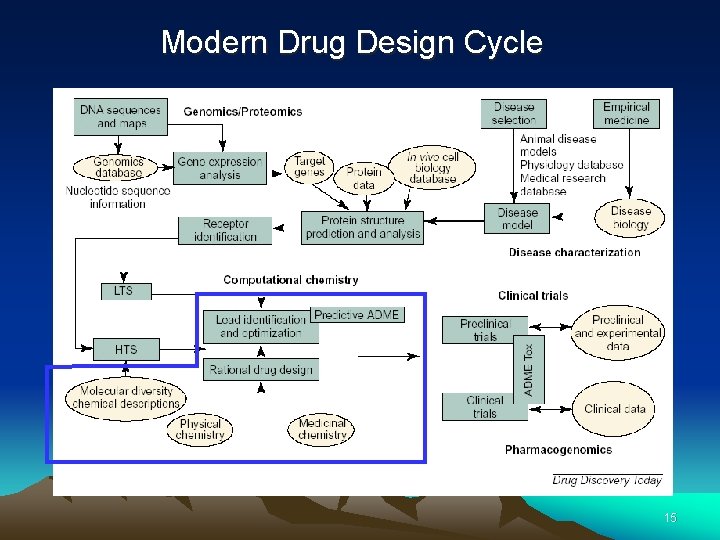
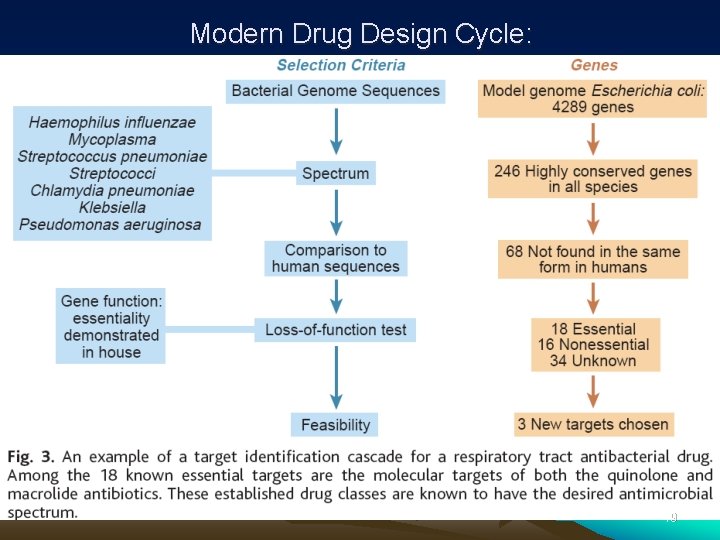
Modern Drug Design Cycle 15
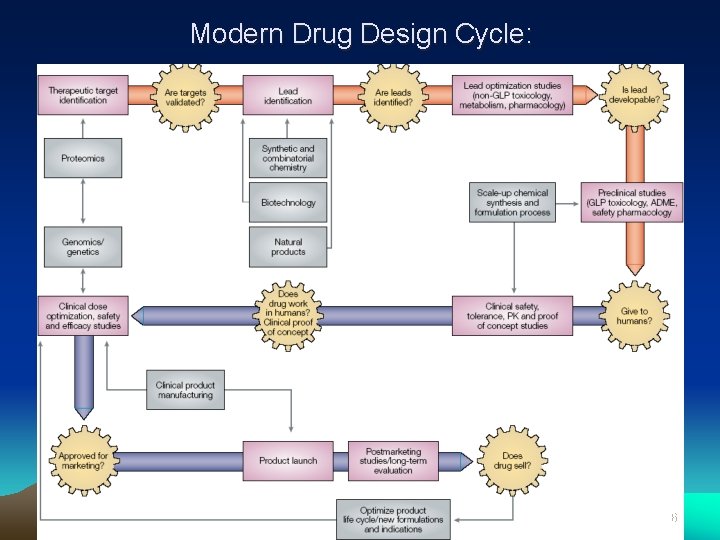
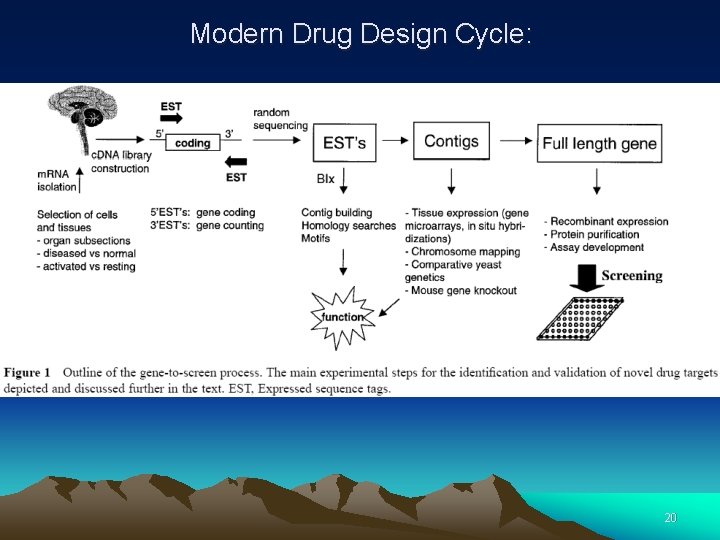
Modern Drug Design Cycle: 16
Modern Drug Design Cycle: 17
Modern Drug Design Cycle: 18
Modern Drug Design Cycle: 19
Modern Drug Design Cycle: 20
Modern Drug Design Cycle: 21
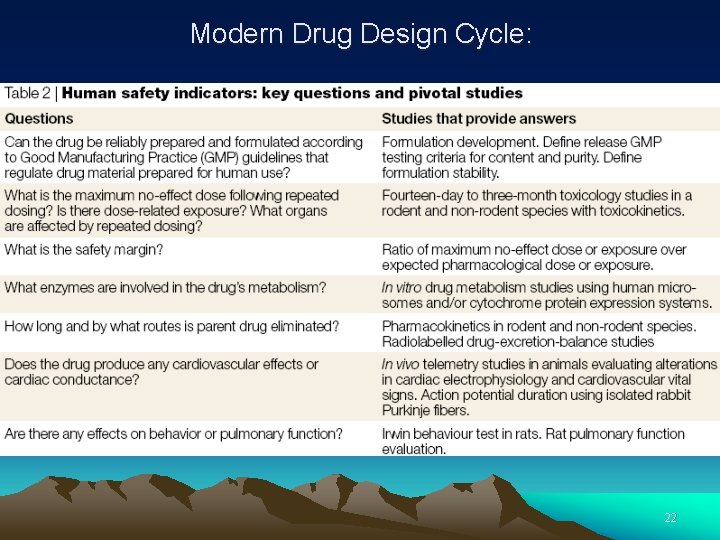
Modern Drug Design Cycle: 22
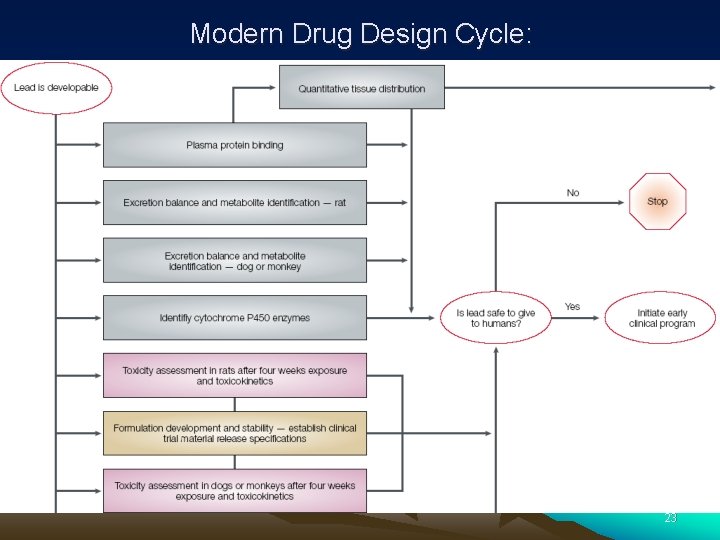
Modern Drug Design Cycle: 23
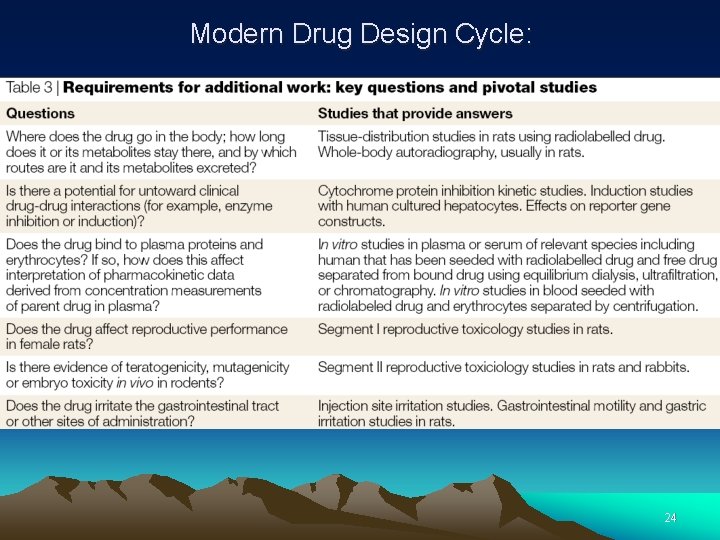
Modern Drug Design Cycle: 24
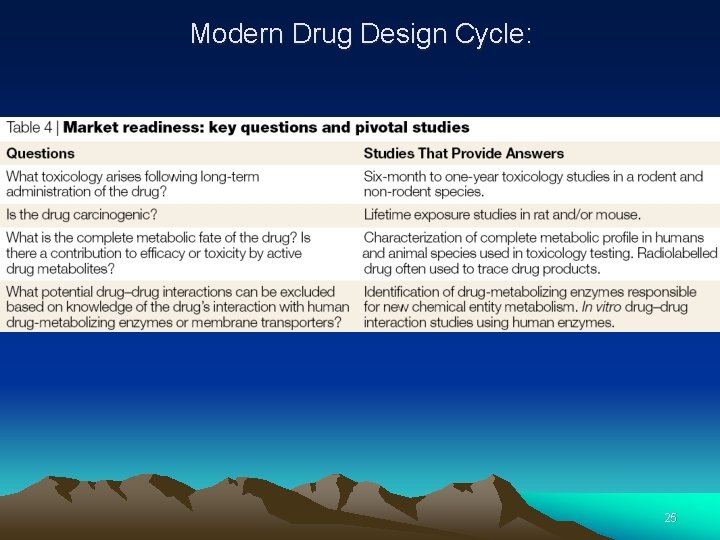
Modern Drug Design Cycle: 25
Modern Drug Design Cycle: 26
Modern Drug Design Cycle: 27
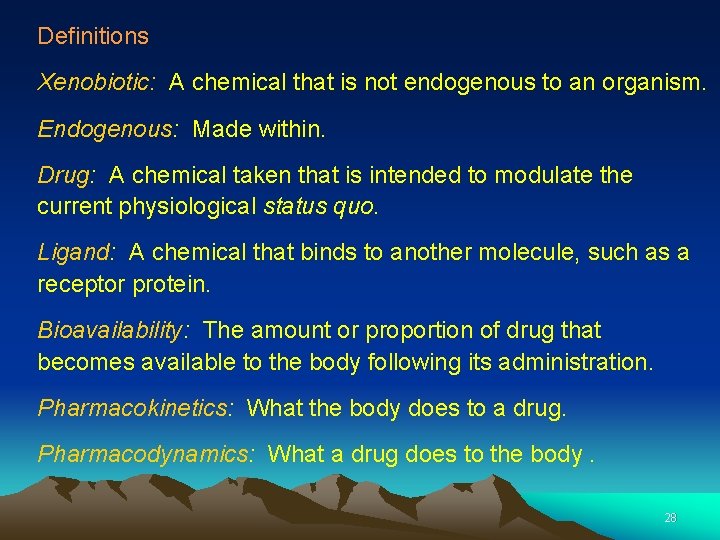
Definitions Xenobiotic: A chemical that is not endogenous to an organism. Endogenous: Made within. Drug: A chemical taken that is intended to modulate the current physiological status quo. Ligand: A chemical that binds to another molecule, such as a receptor protein. Bioavailability: The amount or proportion of drug that becomes available to the body following its administration. Pharmacokinetics: What the body does to a drug. Pharmacodynamics: What a drug does to the body. 28
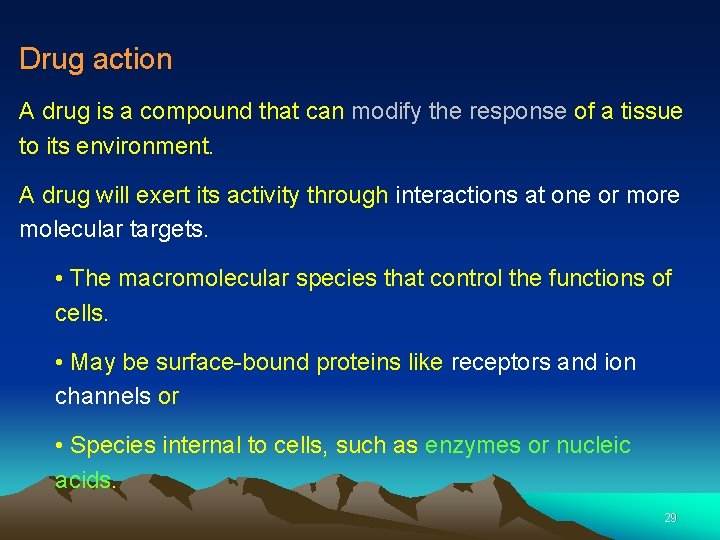
Drug action A drug is a compound that can modify the response of a tissue to its environment. A drug will exert its activity through interactions at one or more molecular targets. • The macromolecular species that control the functions of cells. • May be surface-bound proteins like receptors and ion channels or • Species internal to cells, such as enzymes or nucleic acids. 29
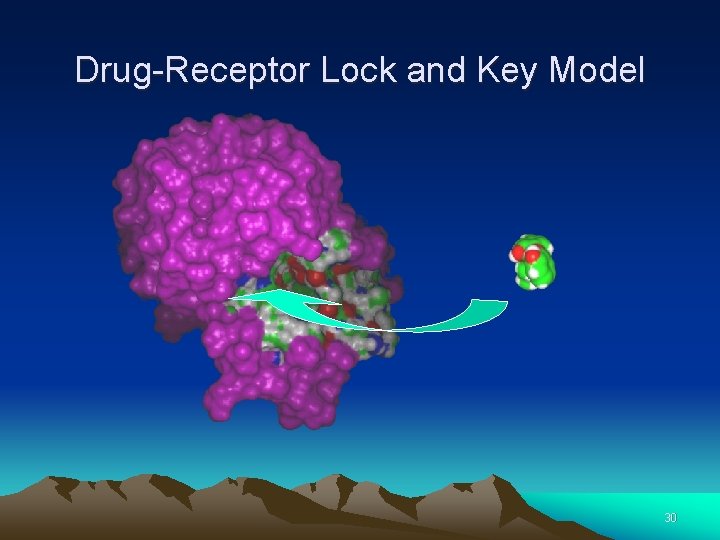
Drug-Receptor Lock and Key Model 30
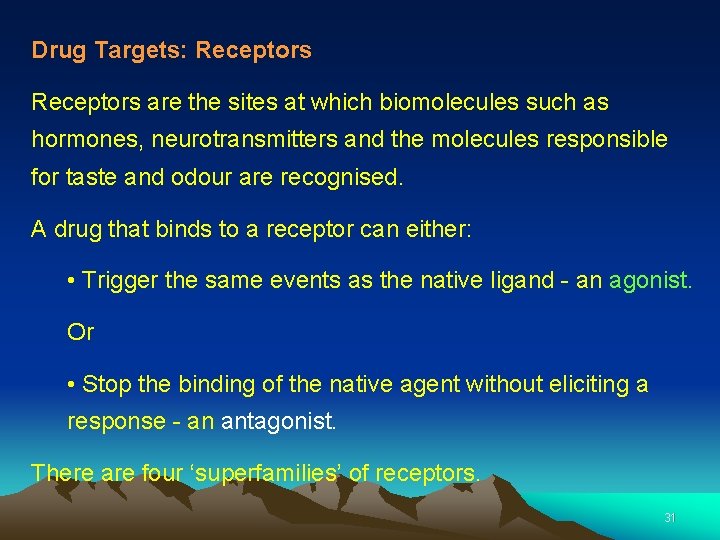
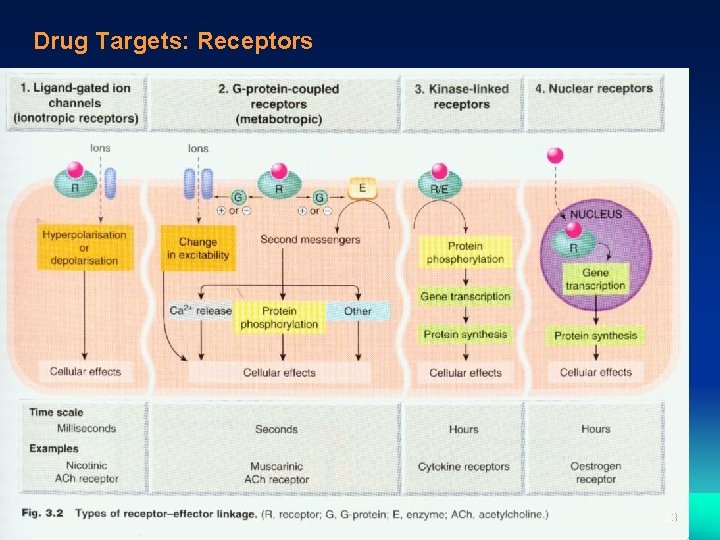
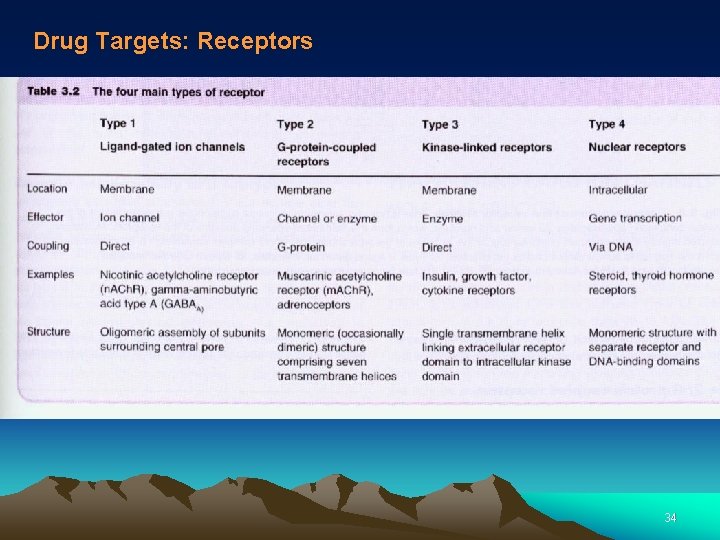
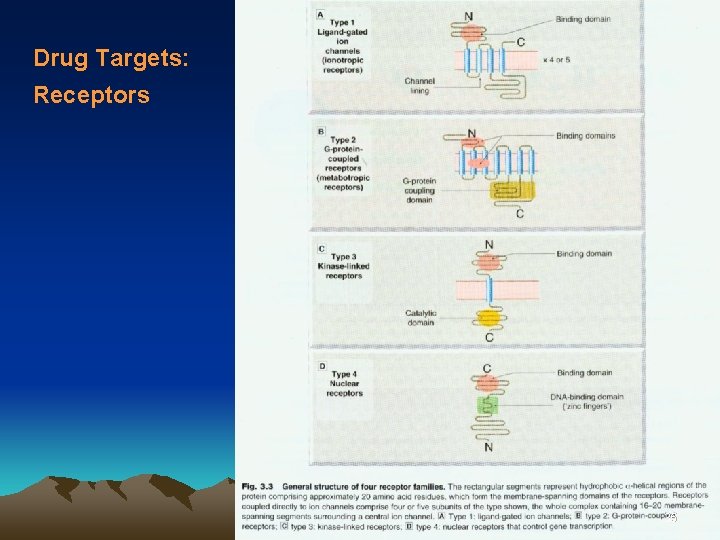
Drug Targets: Receptors are the sites at which biomolecules such as hormones, neurotransmitters and the molecules responsible for taste and odour are recognised. A drug that binds to a receptor can either: • Trigger the same events as the native ligand - an agonist. Or • Stop the binding of the native agent without eliciting a response - an antagonist. There are four ‘superfamilies’ of receptors. 31
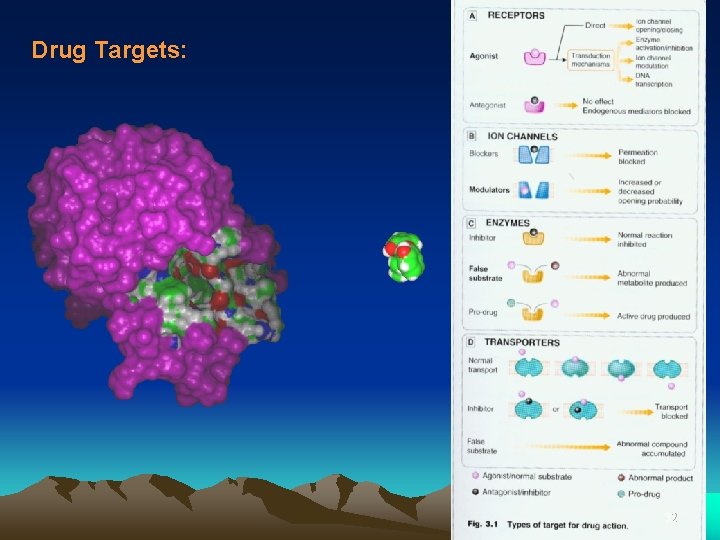
Drug Targets: 32
Drug Targets: Receptors 33
Drug Targets: Receptors 34
Drug Targets: Receptors 35
Drug Targets: Enzymes They are proteins that catalyse the reactions required for cellular function. Generally specific for a particular substrate, or closely related family of substrates. Molecules that restrict the action of the enzyme on its substrate are called inhibitors. Inhibitors may be irreversible or reversible. Reversible inhibitors may be: • Competitive. • Non-competitive. Enzyme inhibitors might be seen to allow very ‘fine control’ of cellular processes. 36
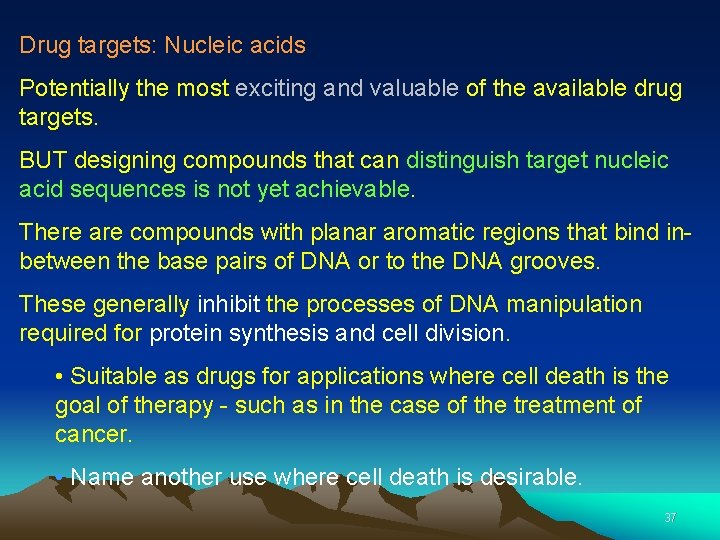
Drug targets: Nucleic acids Potentially the most exciting and valuable of the available drug targets. BUT designing compounds that can distinguish target nucleic acid sequences is not yet achievable. There are compounds with planar aromatic regions that bind inbetween the base pairs of DNA or to the DNA grooves. These generally inhibit the processes of DNA manipulation required for protein synthesis and cell division. • Suitable as drugs for applications where cell death is the goal of therapy - such as in the case of the treatment of cancer. • Name another use where cell death is desirable. 37
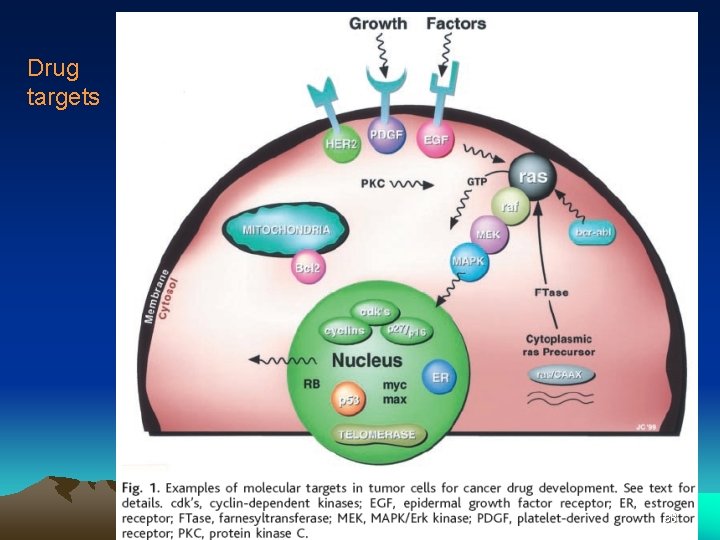
Drug targets 38
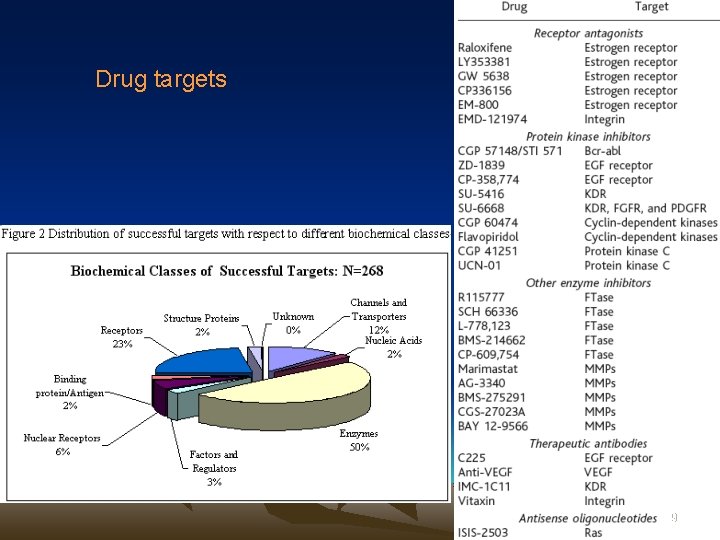
Drug targets 39