
Cytoskeleton The cytoskeleton is a network of fibers
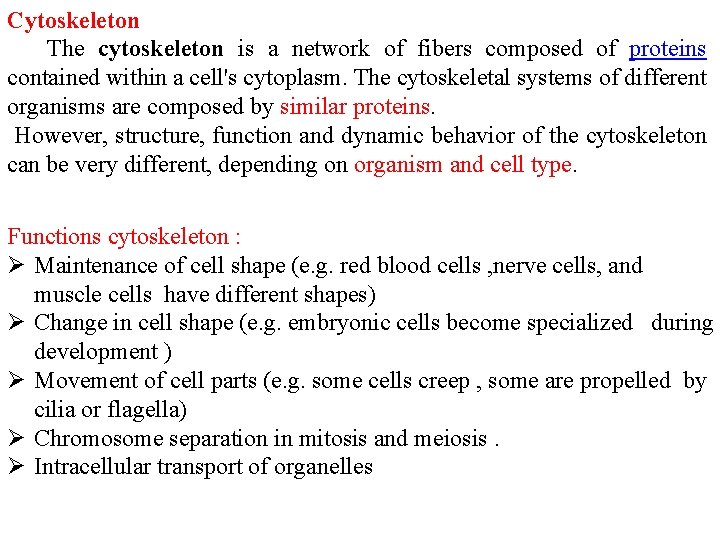
Cytoskeleton The cytoskeleton is a network of fibers composed of proteins contained within a cell's cytoplasm. The cytoskeletal systems of different organisms are composed by similar proteins. However, structure, function and dynamic behavior of the cytoskeleton can be very different, depending on organism and cell type. Functions cytoskeleton : Ø Maintenance of cell shape (e. g. red blood cells , nerve cells, and muscle cells have different shapes) Ø Change in cell shape (e. g. embryonic cells become specialized during development ) Ø Movement of cell parts (e. g. some cells creep , some are propelled by cilia or flagella) Ø Chromosome separation in mitosis and meiosis. Ø Intracellular transport of organelles
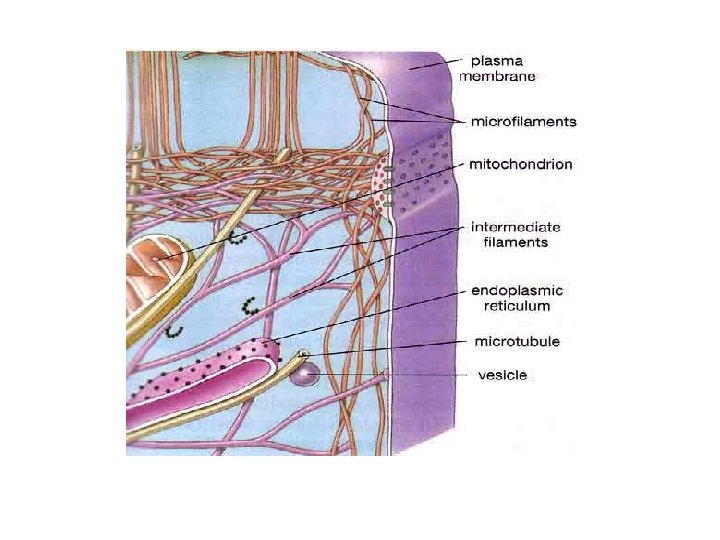
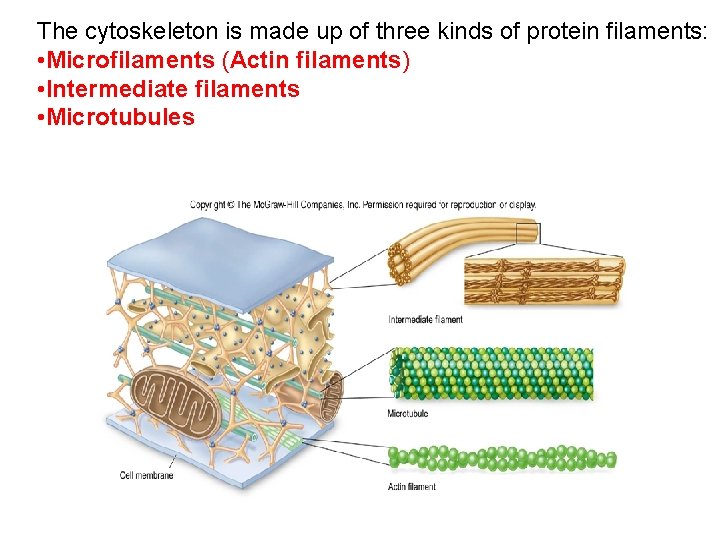
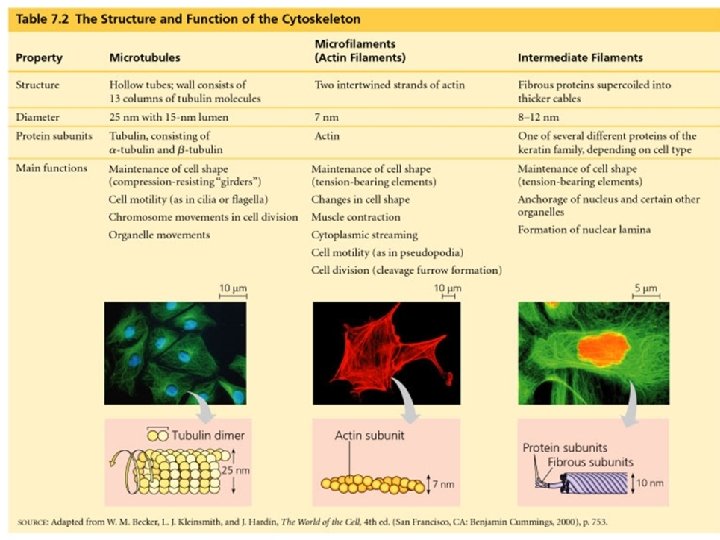
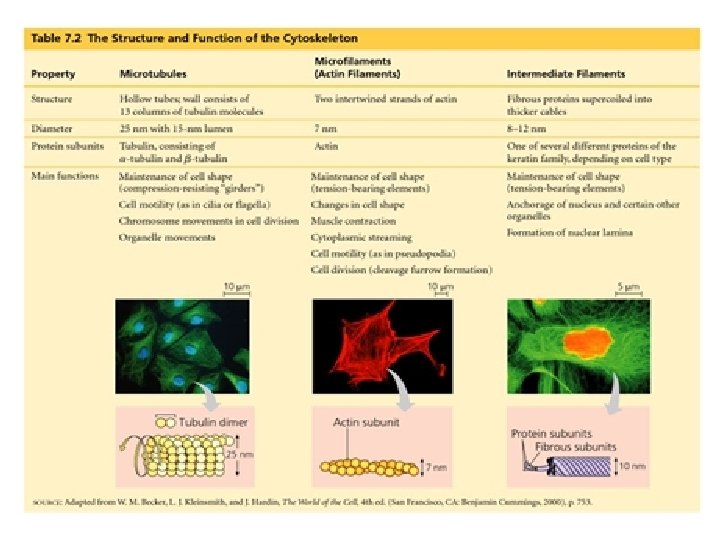
The cytoskeleton is made up of three kinds of protein filaments: • Microfilaments (Actin filaments) • Intermediate filaments • Microtubules
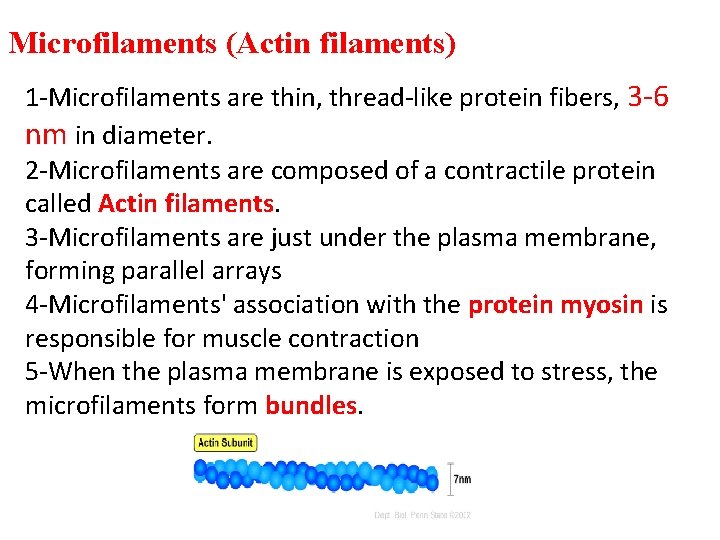
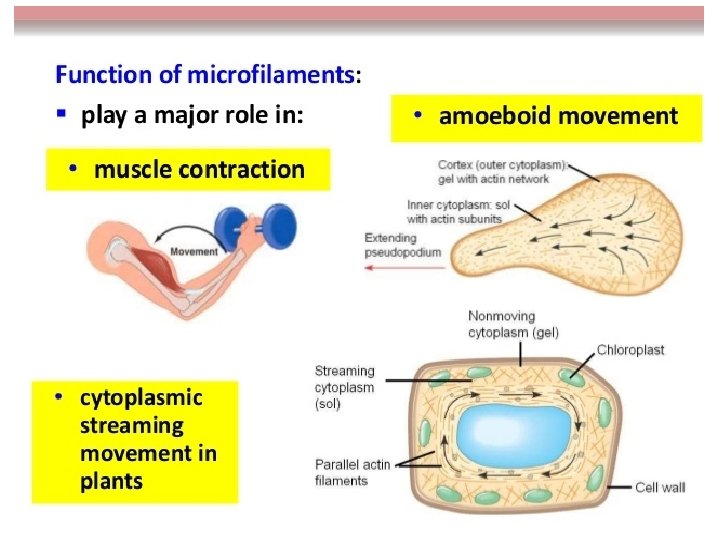
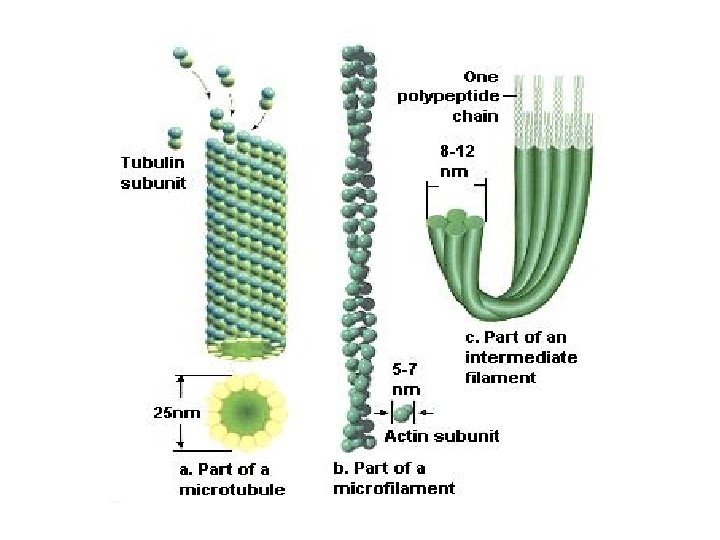
Microfilaments (Actin filaments) 1 -Microfilaments are thin, thread-like protein fibers, 3 -6 nm in diameter. 2 -Microfilaments are composed of a contractile protein called Actin filaments. 3 -Microfilaments are just under the plasma membrane, forming parallel arrays 4 -Microfilaments' association with the protein myosin is responsible for muscle contraction 5 -When the plasma membrane is exposed to stress, the microfilaments form bundles.
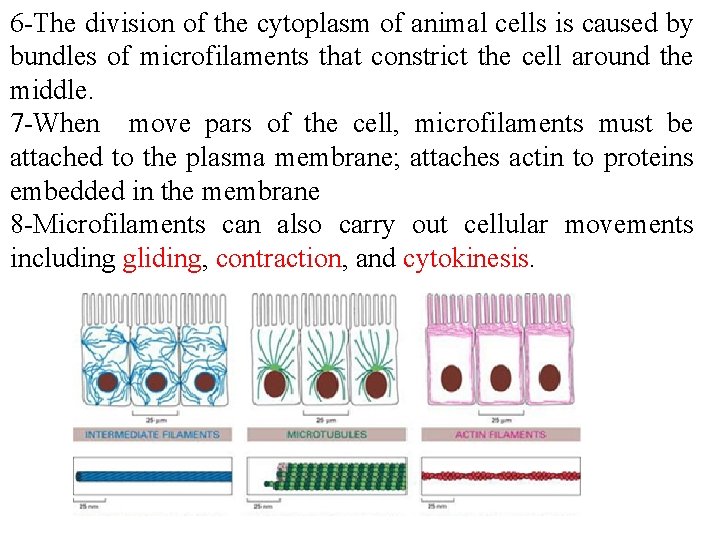
6 -The division of the cytoplasm of animal cells is caused by bundles of microfilaments that constrict the cell around the middle. 7 -When move pars of the cell, microfilaments must be attached to the plasma membrane; attaches actin to proteins embedded in the membrane 8 -Microfilaments can also carry out cellular movements including gliding, contraction, and cytokinesis.
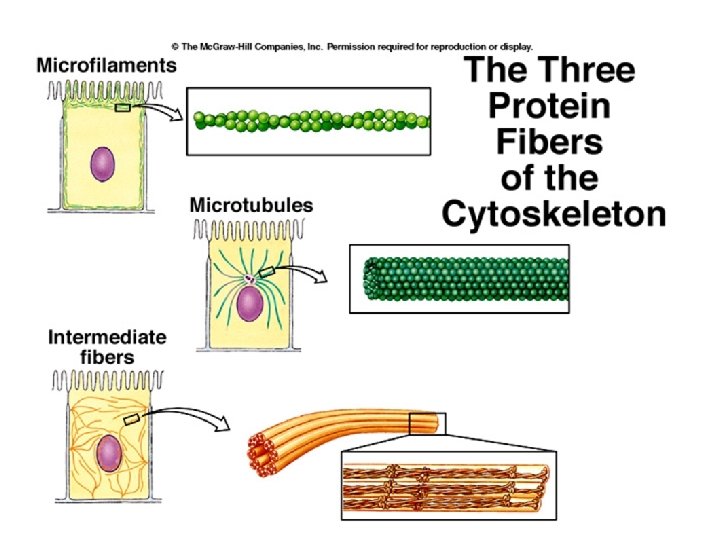
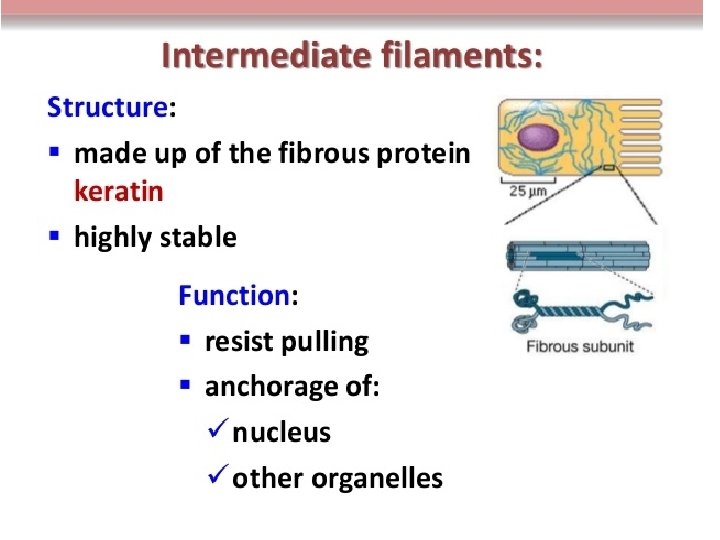
2 -Intermediary Filaments 1 -Intermediary filaments are protein fibers about 8 -12 nm diameter. 2 -They are rope-like assemblies of fibrous polypeptides. 3 -Strengthening the cell mechanically, anchored other organelles. 4 - Extend throughout the cytoplasm and inner nuclear membrane. 5 - Constructed of different molecular subunits belonging to a family keratin.
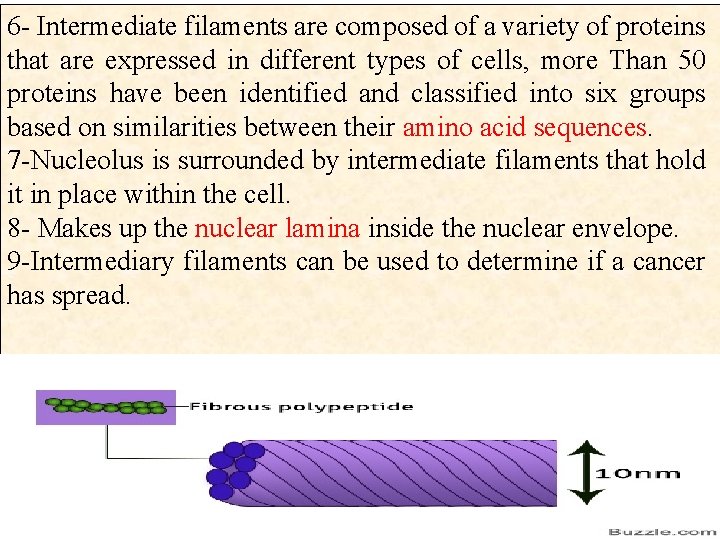
6 - Intermediate filaments are composed of a variety of proteins that are expressed in different types of cells, more Than 50 proteins have been identified and classified into six groups based on similarities between their amino acid sequences. 7 -Nucleolus is surrounded by intermediate filaments that hold it in place within the cell. 8 - Makes up the nuclear lamina inside the nuclear envelope. 9 -Intermediary filaments can be used to determine if a cancer has spread.
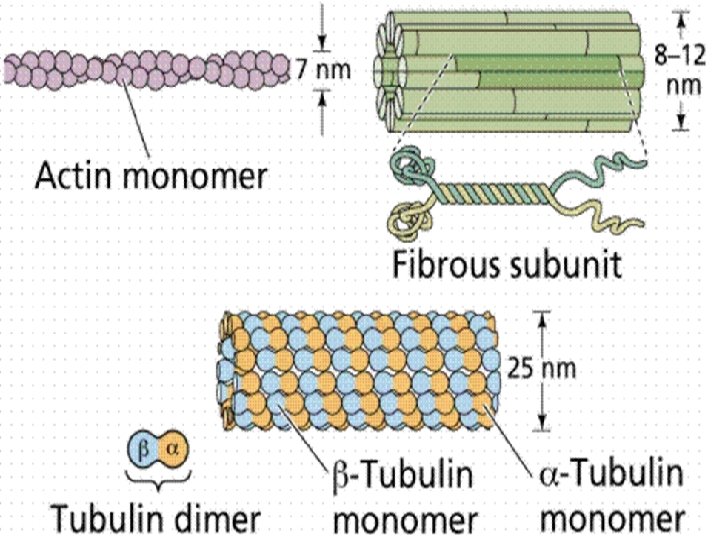
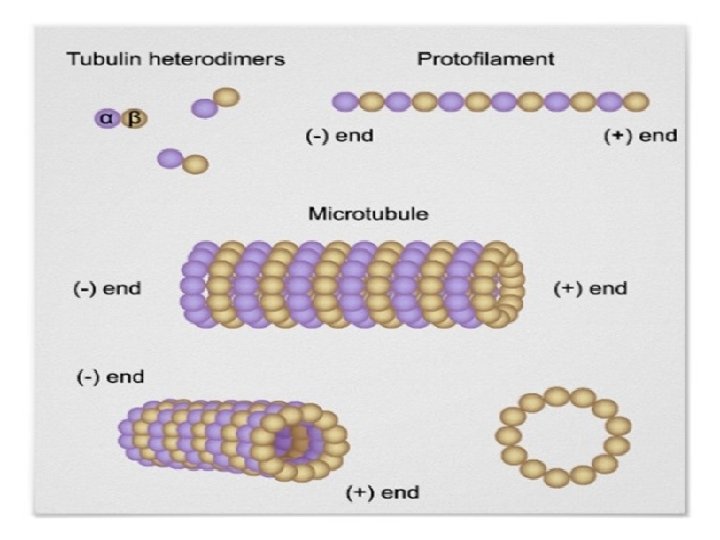
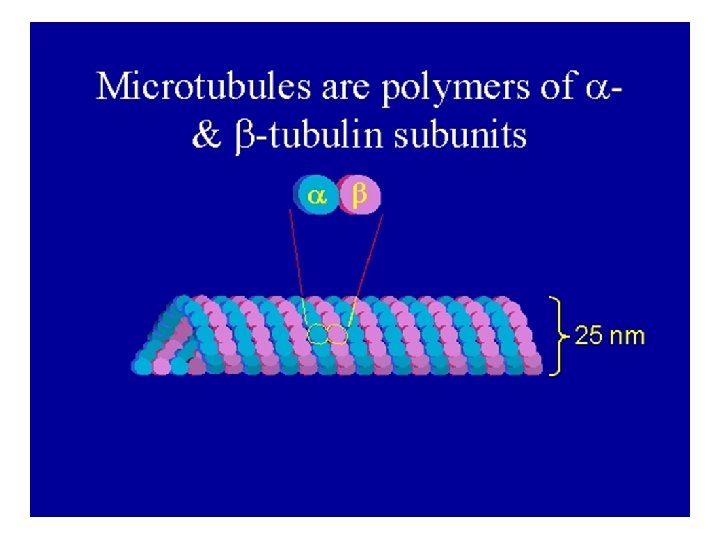
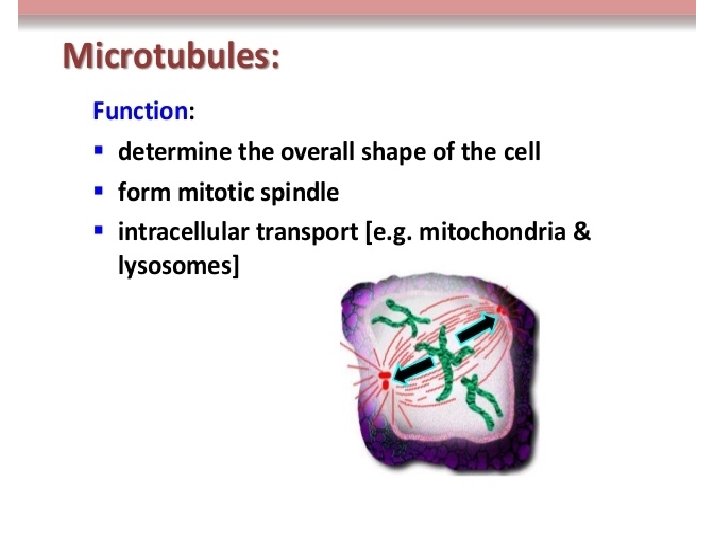
3 -Microtubules 1 -Microtubules hollow cylinders, 20 -25 nm in diameter that consists of 13 tubulin molecules. 2 - They are composed of subunits of the protein tubulin--these subunits are termed alpha and beta. 3 -Microtubules act as determine cell shape, and provide a set of "tracks" for cell organelles and vesicles. 4 -Microtubules also form the spindle fibers for separating chromosomes during mitosis. 5 -When arranged in geometric patterns inside flagella and cilia, basal bodies, centrioles.
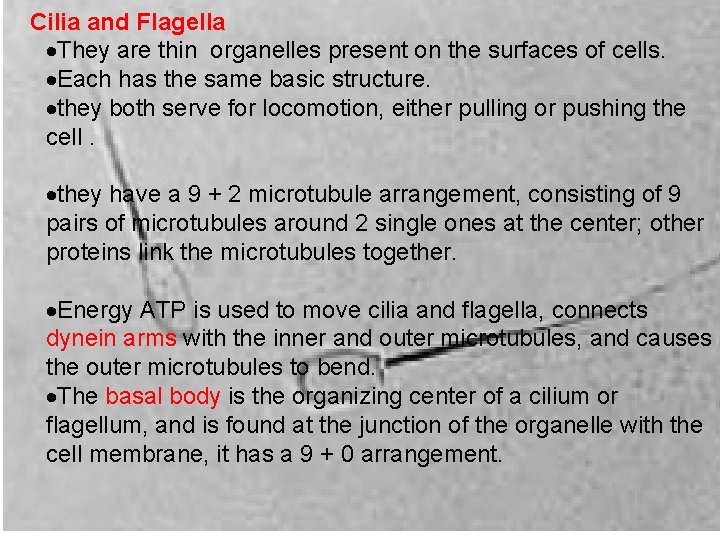
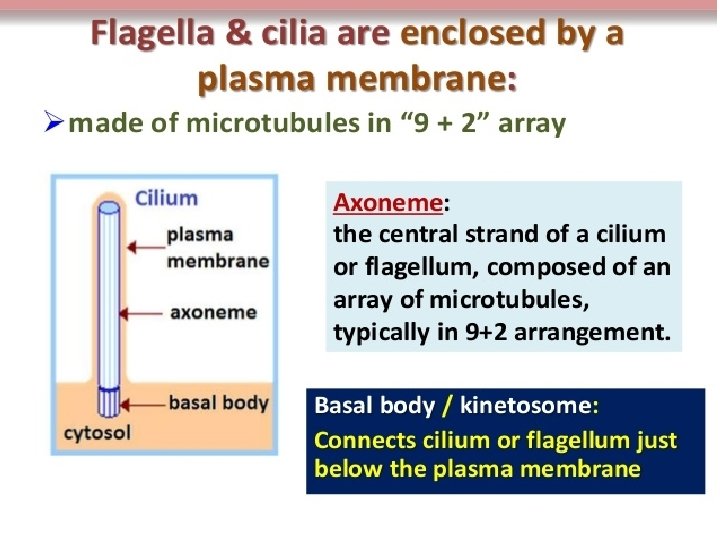
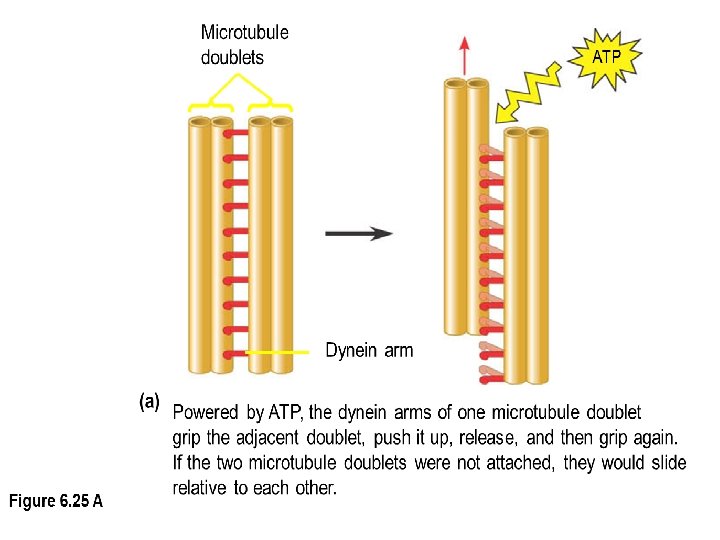
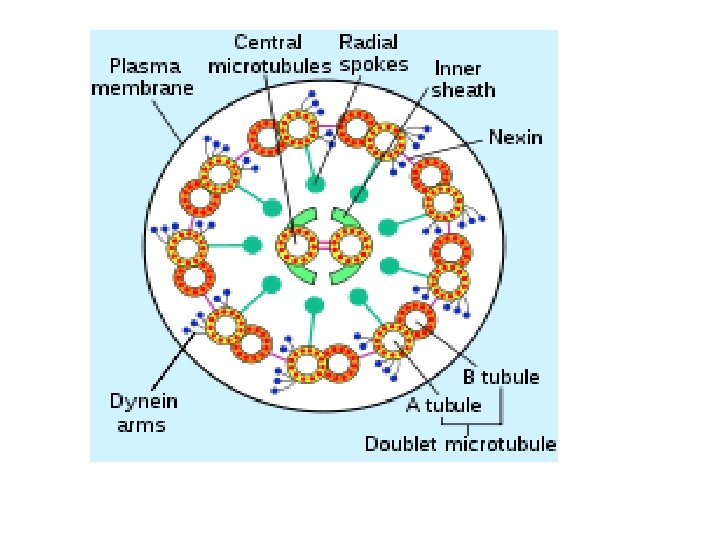
Cilia and Flagella They are thin organelles present on the surfaces of cells. Each has the same basic structure. they both serve for locomotion, either pulling or pushing the cell. they have a 9 + 2 microtubule arrangement, consisting of 9 pairs of microtubules around 2 single ones at the center; other proteins link the microtubules together. Energy ATP is used to move cilia and flagella, connects dynein arms with the inner and outer microtubules, and causes the outer microtubules to bend. The basal body is the organizing center of a cilium or flagellum, and is found at the junction of the organelle with the cell membrane, it has a 9 + 0 arrangement.
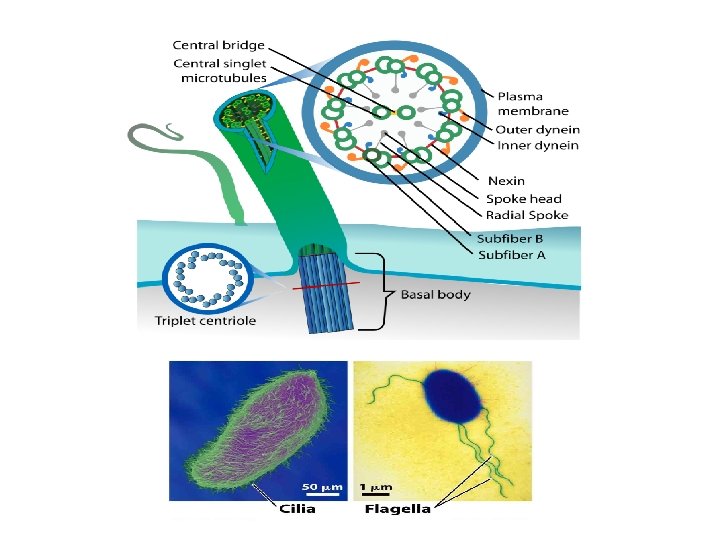
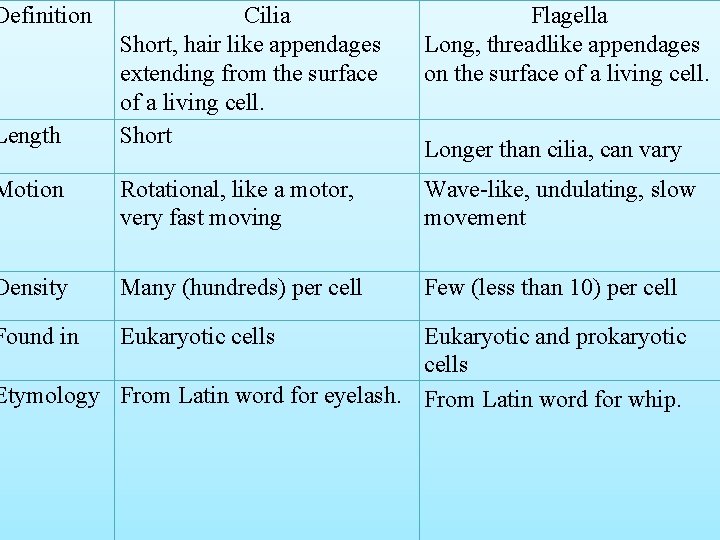
Definition Cilia Short, hair like appendages extending from the surface of a living cell. Short Flagella Long, threadlike appendages on the surface of a living cell. Motion Rotational, like a motor, very fast moving Wave-like, undulating, slow movement Density Many (hundreds) per cell Few (less than 10) per cell Found in Eukaryotic cells Length Longer than cilia, can vary Eukaryotic and prokaryotic cells Etymology From Latin word for eyelash. From Latin word for whip.

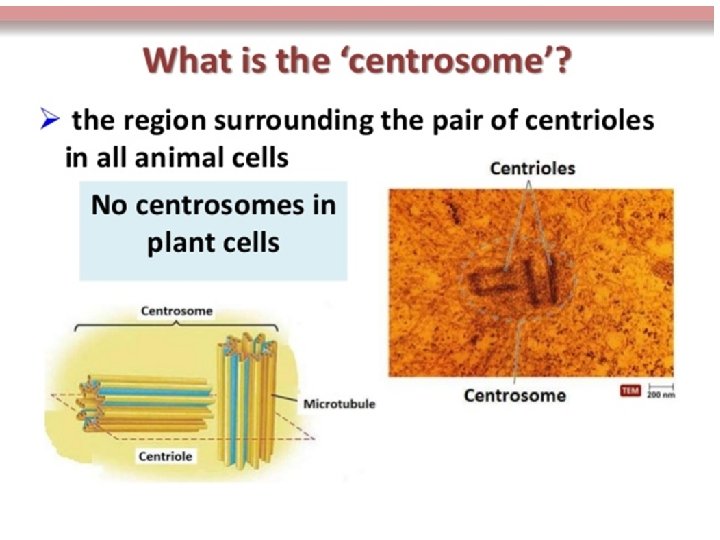
Centrosomes and Centrioles In many cells, microtubules grow out from a centrosome near the nucleus in the cytoplasm of most eukaryotic cells (absent in plants and fungi cell), In animal cells, the centrosome has a pair of centrioles, centrioles a small, cylindrical cell organelle each with nine triplets of microtubules (9 + 0 )arranged in a ring. The main function of the centriole is to help with cell division in animal cells. The centrioles help in the formation of the spindle fibers that separate the chromosomes during cell division (mitosis)
Cell Walls of Plants The cell wall is an extracellular structure , surrounds the cell membrane of plants, algae, bacteria , fungi , but animal cells absent cell wall. the cell wall made of cellulose fibers embedded in other polysaccharides and protein Function cell wall: Ø Gives the cell a shape and structure. Ø Provides structural support. Ø Protection against infection and mechanical stress. Ø Separates interior of the cell from the outer environment. Ø It enables transport of substances and information from the cell insides to the exterior and vice versa.
Ø osmotic-regulation. Ø Prevents water loss. Ø The physiological and biochemical activity of the cell wall helps in cell-cell communication. Ø It prevents the cell from rupturing due to turgor pressure. Ø Aids in diffusion of gases in and out of the cell. Ø provides mechanical protection from insects and pathogens.
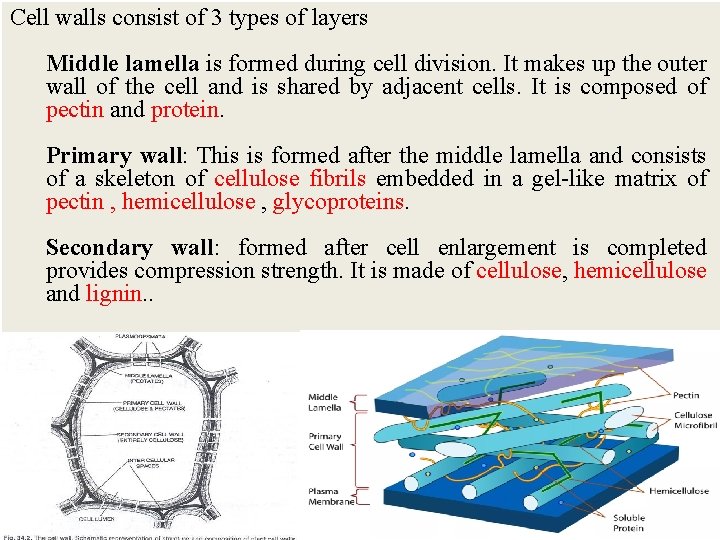
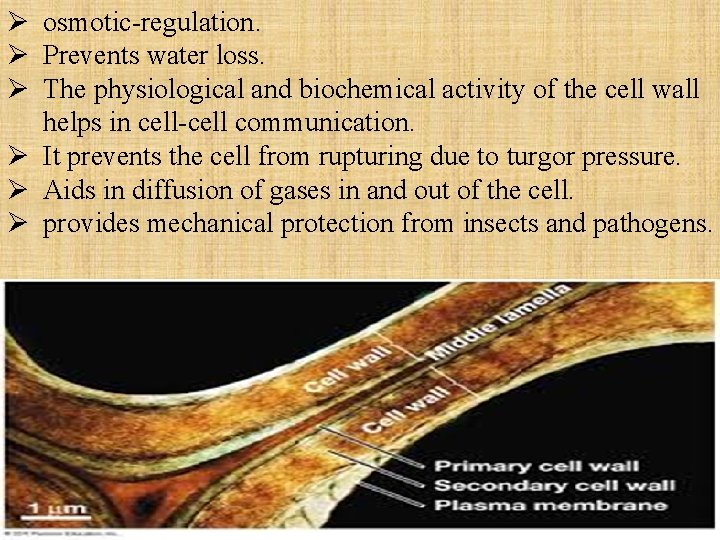
Cell walls consist of 3 types of layers Middle lamella is formed during cell division. It makes up the outer wall of the cell and is shared by adjacent cells. It is composed of pectin and protein. Primary wall: This is formed after the middle lamella and consists of a skeleton of cellulose fibrils embedded in a gel-like matrix of pectin , hemicellulose , glycoproteins. Secondary wall: formed after cell enlargement is completed provides compression strength. It is made of cellulose, hemicellulose and lignin. .
- Slides: 29