
Cytomegalovirus CMV Public Health Initiative VALERIE COLLIER GIRWAN
Cytomegalovirus (CMV) Public Health Initiative VALERIE COLLIER GIRWAN KHADKA STEPHANIE RUSK HELEN RUSSETTE FACULTY MENTOR: STEPHANIE MCVICAR, AUD, CCC-A
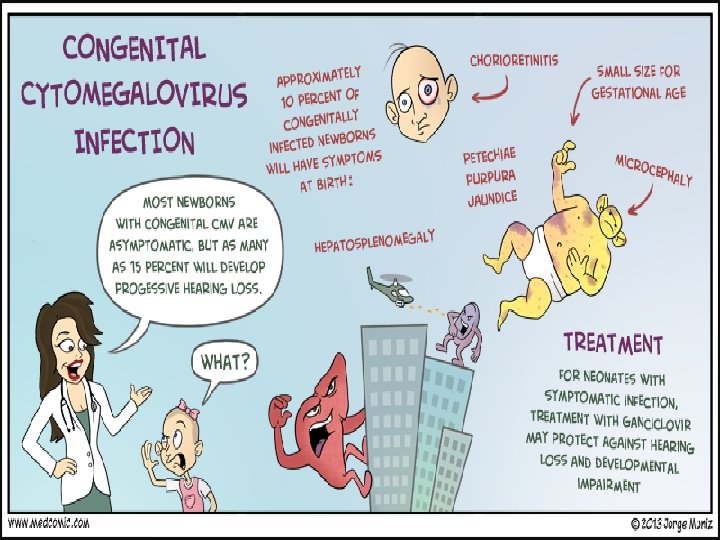
Introduction � What we know about congenital Cytomegalovirus (c. CMV): Symptoms usually aren’t present at birth Adults are usually symptomless as well It is the leading cause of non genetic hearing loss in infants, with 40 -58% of children infected with c. CMV experiencing hearing loss c. CMV can lead to other birth defects and deaths in utero Can be contracted in utero or through the birth canal � What did Utah do about it? Mandatory c. CMV testing done after two failed newborn hearing screenings Testing must be done before 21 days to be classified as congenital CMV
Prevalence & Prevention � 1 of every 5 children born with congenital CMV will develop permanent disabilities � There is no vaccine or drug to treat CMV yet. � Can be detected within 3 weeks of birth through blood, saliva, or urine testing � 50 -80 of every 100 adults contract CMV before they are 40 years old �Prevention is easy, but not many people know how easy it is to prevent. �Only 1 in 5 women are aware of the dangers of congenital CMV � Can be prevented through basic hygiene
Methods
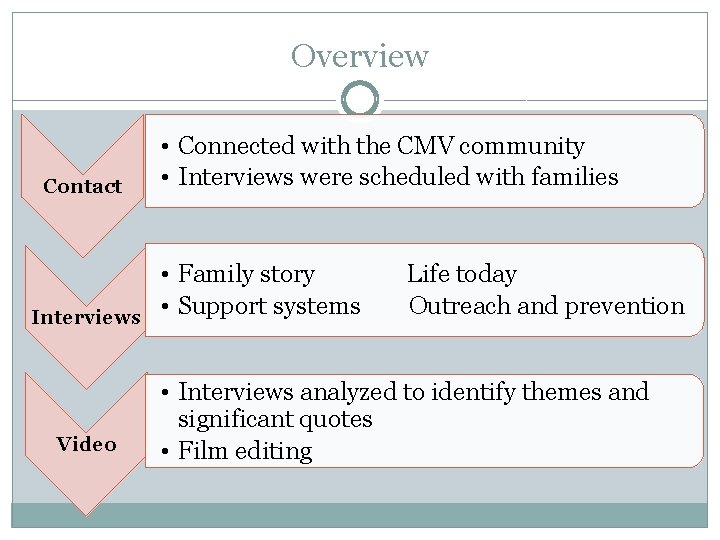
Overview Contact Interviews Video • Connected with the CMV community • Interviews were scheduled with families • Family story • Support systems Life today Outreach and prevention • Interviews analyzed to identify themes and significant quotes • Film editing
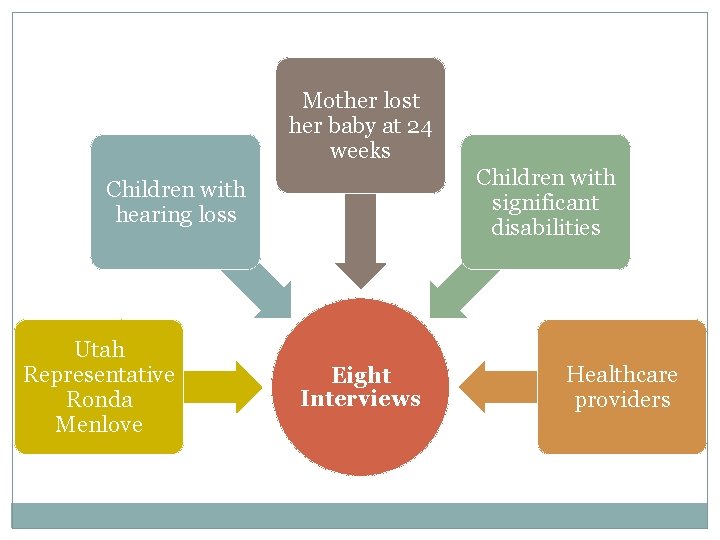
Mother lost her baby at 24 weeks Children with significant disabilities Children with hearing loss Utah Representative Ronda Menlove Eight Interviews Healthcare providers
Results
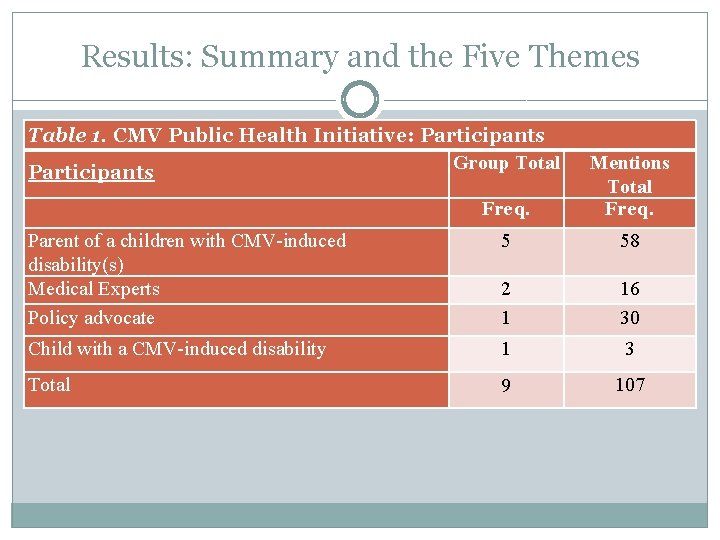
Results: Summary and the Five Themes Table 1. CMV Public Health Initiative: Participants Group Total Participants Mentions Total Freq. Parent of a children with CMV-induced disability(s) Medical Experts Policy advocate 5 58 2 1 16 30 Child with a CMV-induced disability 1 3 Total 9 107
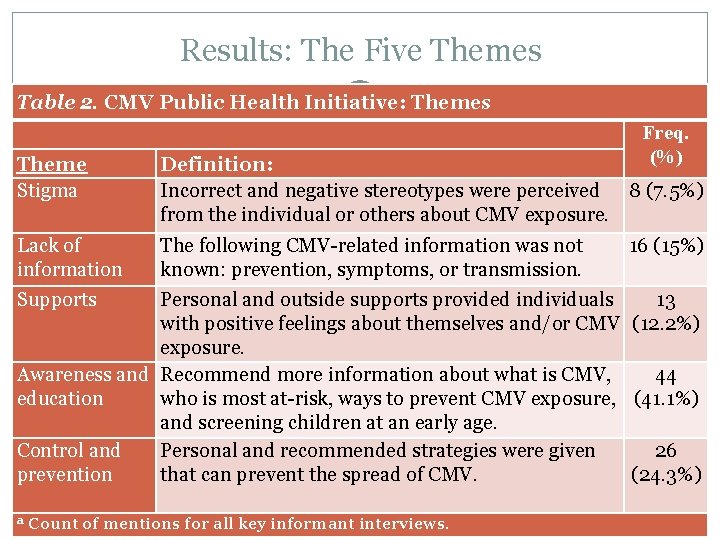
Results: The Five Themes Table 2. CMV Public Health Initiative: Themes Theme Stigma Definition: Incorrect and negative stereotypes were perceived 8 (7. 5%) from the individual or others about CMV exposure. Lack of information Supports The following CMV-related information was not known: prevention, symptoms, or transmission. Personal and outside supports provided individuals with positive feelings about themselves and/or CMV exposure. Awareness and Recommend more information about what is CMV, education who is most at-risk, ways to prevent CMV exposure, and screening children at an early age. Control and Personal and recommended strategies were given prevention that can prevent the spread of CMV. a Freq. (%) Count of mentions for all key informant interviews. 16 (15%) 13 (12. 2%) 44 (41. 1%) 26 (24. 3%)
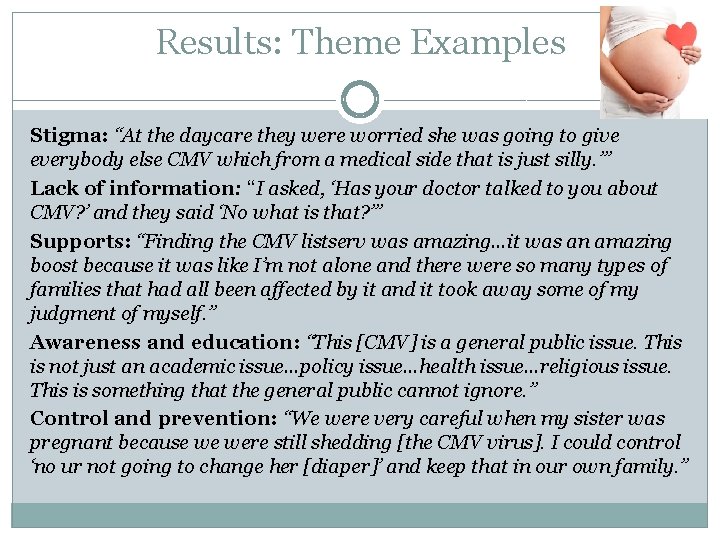
Results: Theme Examples Stigma: “At the daycare they were worried she was going to give everybody else CMV which from a medical side that is just silly. ’” Lack of information: “I asked, ‘Has your doctor talked to you about CMV? ’ and they said ‘No what is that? ’” Supports: “Finding the CMV listserv was amazing…it was an amazing boost because it was like I’m not alone and there were so many types of families that had all been affected by it and it took away some of my judgment of myself. ” Awareness and education: “This [CMV] is a general public issue. This is not just an academic issue…policy issue…health issue…religious issue. This is something that the general public cannot ignore. ” Control and prevention: “We were very careful when my sister was pregnant because we were still shedding [the CMV virus]. I could control ‘no ur not going to change her [diaper]’ and keep that in our own family. ”
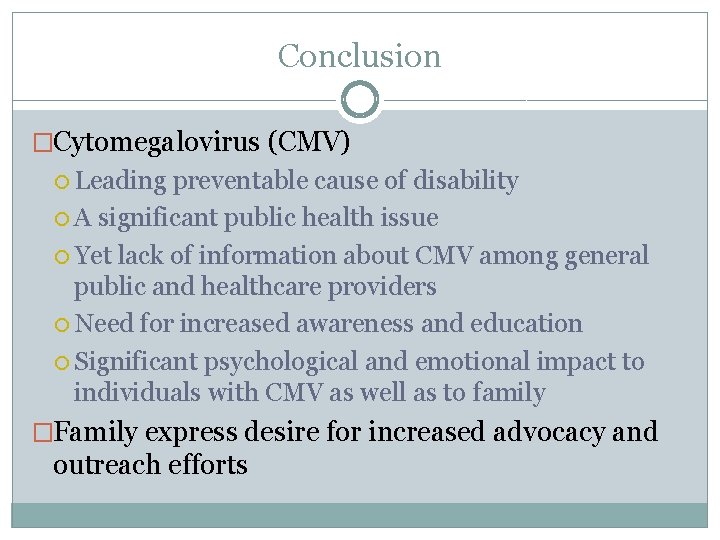
Conclusion �Cytomegalovirus (CMV) Leading preventable cause of disability A significant public health issue Yet lack of information about CMV among general public and healthcare providers Need for increased awareness and education Significant psychological and emotional impact to individuals with CMV as well as to family �Family express desire for increased advocacy and outreach efforts
URLEND Recommendations
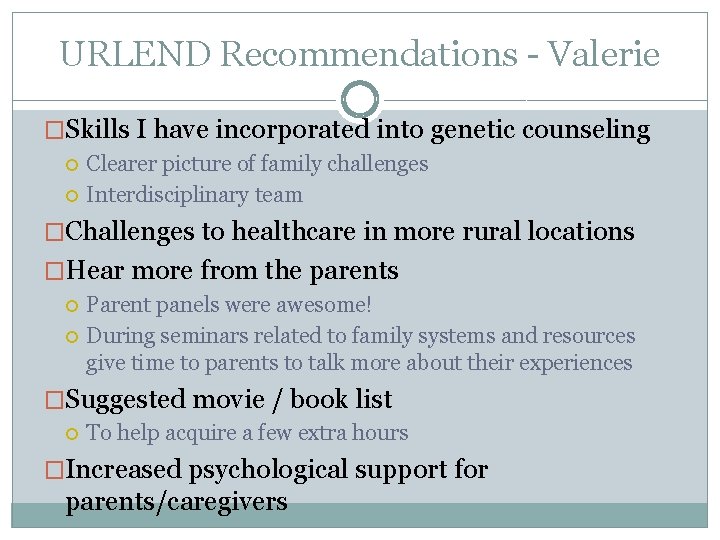
URLEND Recommendations - Valerie �Skills I have incorporated into genetic counseling Clearer picture of family challenges Interdisciplinary team �Challenges to healthcare in more rural locations �Hear more from the parents Parent panels were awesome! During seminars related to family systems and resources give time to parents to talk more about their experiences �Suggested movie / book list To help acquire a few extra hours �Increased psychological support for parents/caregivers
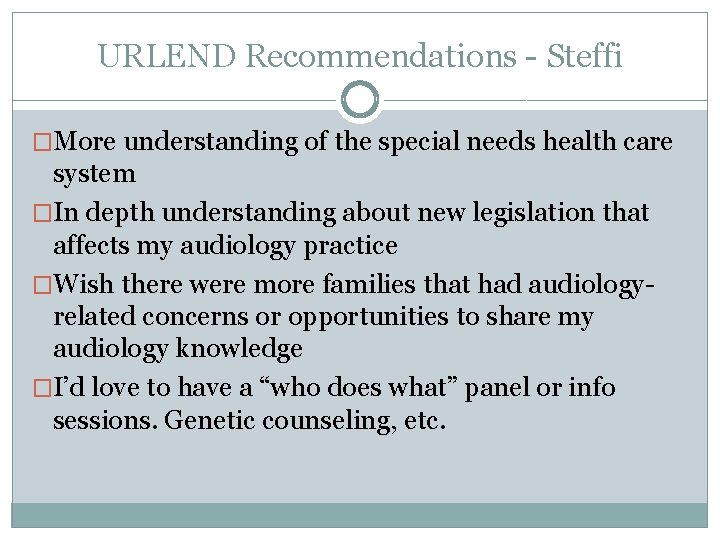
URLEND Recommendations - Steffi �More understanding of the special needs health care system �In depth understanding about new legislation that affects my audiology practice �Wish there were more families that had audiologyrelated concerns or opportunities to share my audiology knowledge �I’d love to have a “who does what” panel or info sessions. Genetic counseling, etc.
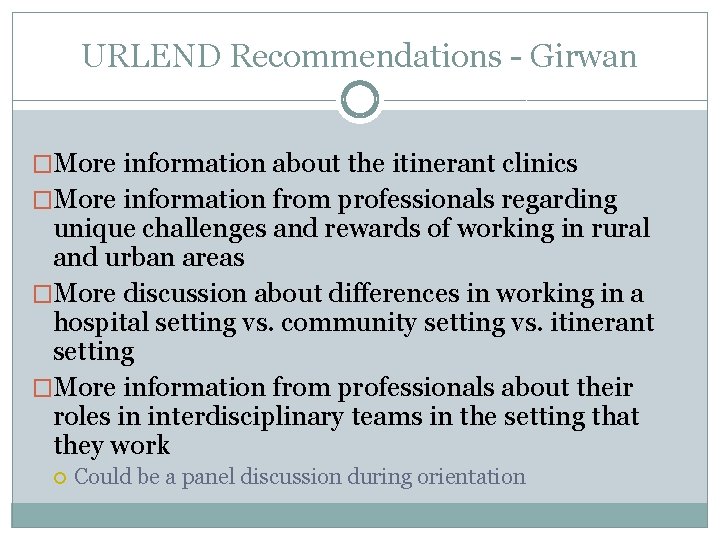
URLEND Recommendations - Girwan �More information about the itinerant clinics �More information from professionals regarding unique challenges and rewards of working in rural and urban areas �More discussion about differences in working in a hospital setting vs. community setting vs. itinerant setting �More information from professionals about their roles in interdisciplinary teams in the setting that they work Could be a panel discussion during orientation
URLEND Recommendations – Helen 1. Continue URLEND Orientation A. Leadership group: meeting time, activities, project proposals. B. Allows direct interaction and facilitates team solidarity. 2. Notification of assignments A. Consistent communications method (e. g. , email); one source for assignment dates and information (e. g. , URLEND syllabus) B. Supports meeting assignment deadlines; URLEND staff and trainees create a system with clear expectations.
Any questions? �Any questions at all?
- Slides: 18