
Cytokinesis Control Over Cell Division Cytokinesis During telophase
- Slides: 15
Cytokinesis & Control Over Cell Division
Cytokinesis • During telophase, the cytoplasm begins dividing by the process of cytokinesis • In both animal and plant cells, daughter cells are approximately equal in size. • Each new daughter cell receives an identical copy of chromosomes and about half of the parent cell’s cytoplasm and organelles
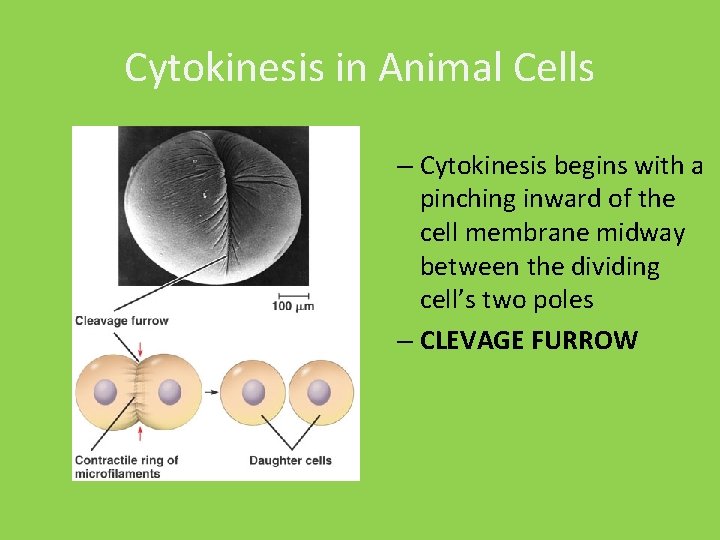
Cytokinesis in Animal Cells – Cytokinesis begins with a pinching inward of the cell membrane midway between the dividing cell’s two poles – CLEVAGE FURROW
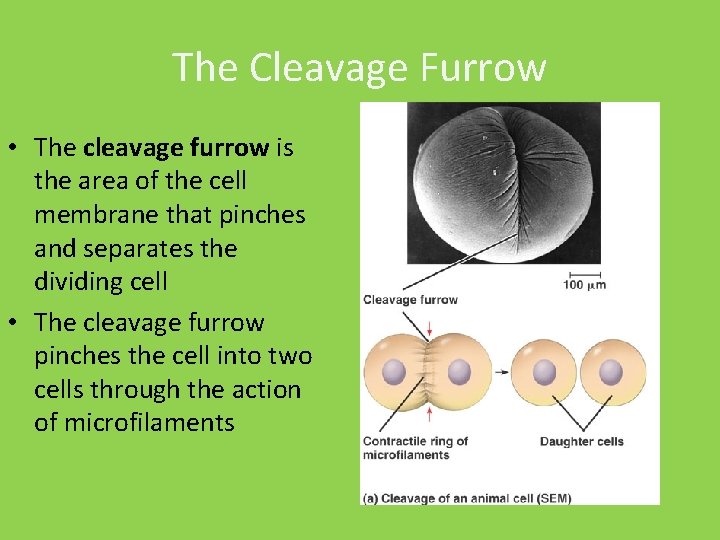
The Cleavage Furrow • The cleavage furrow is the area of the cell membrane that pinches and separates the dividing cell • The cleavage furrow pinches the cell into two cells through the action of microfilaments
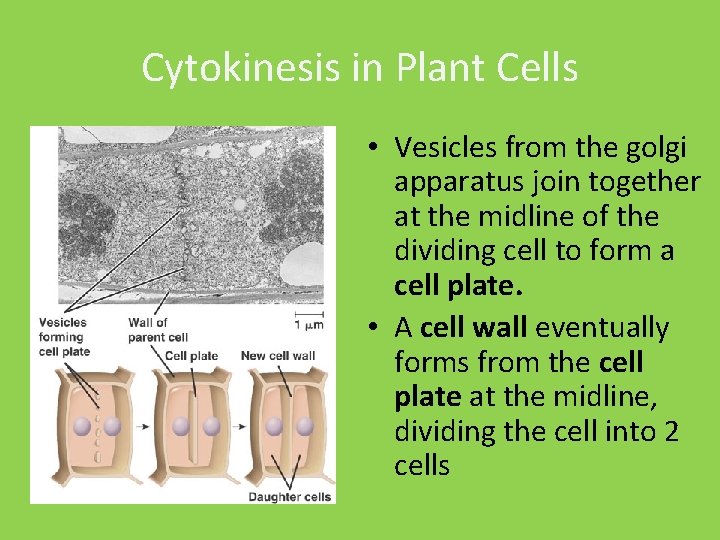
Cytokinesis in Plant Cells • Vesicles from the golgi apparatus join together at the midline of the dividing cell to form a cell plate. • A cell wall eventually forms from the cell plate at the midline, dividing the cell into 2 cells
Control of Cell Division
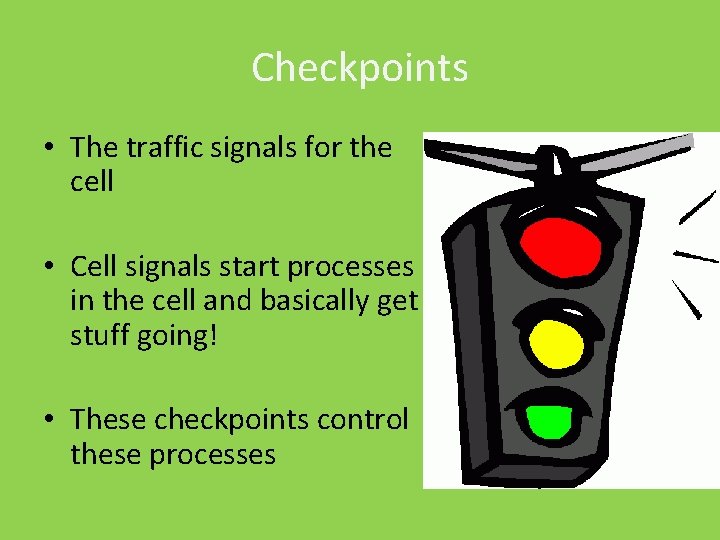
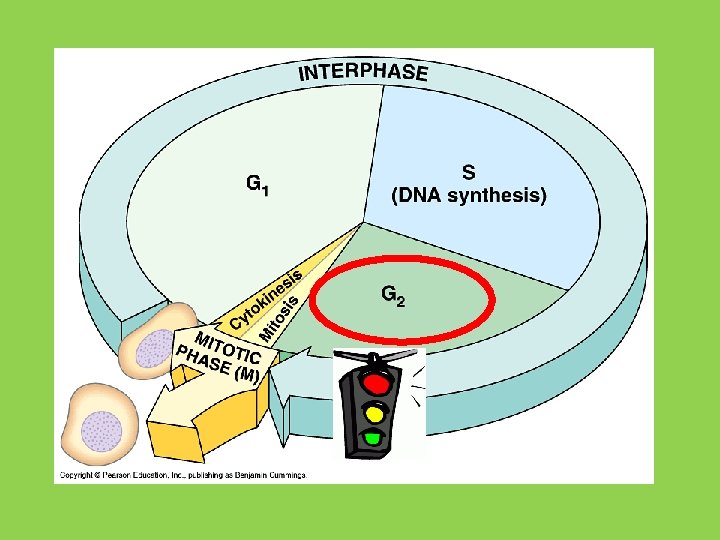
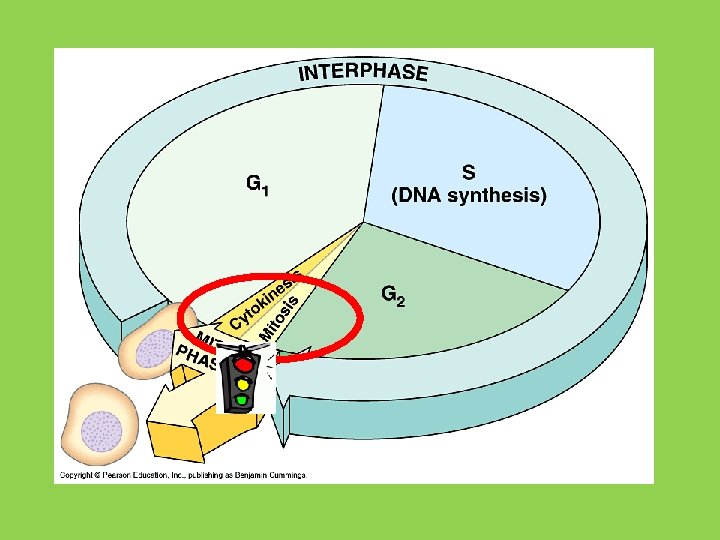
Checkpoints • The traffic signals for the cell • Cell signals start processes in the cell and basically get stuff going! • These checkpoints control these processes
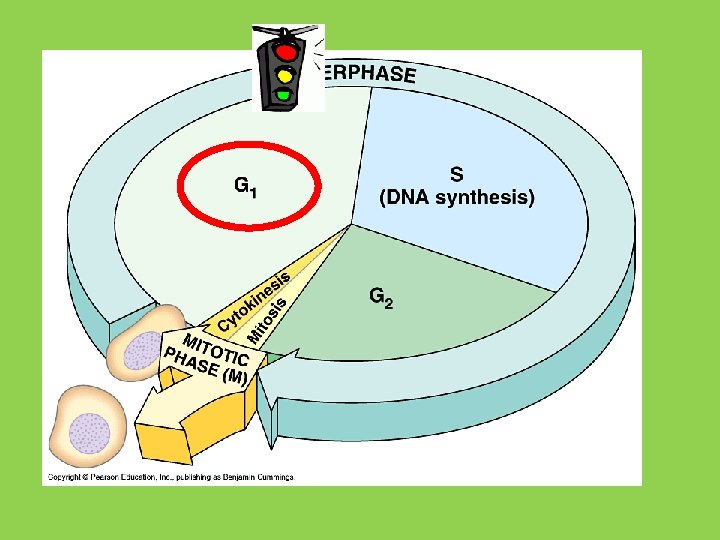
Cell Growth (G 1) Checkpoint • This checkpoint controls if the cell will divide • If the cell is healthy (grown to a reasonable size) THEN proteins will signal the cell to begin S phase (cell division) • If the cell is not healthy then proteins the cell cycle will stop at this point • G 0 Phase
G 0 Phase • Cells can also exit the cell cycle and enter a state called the G 0 phase • In G 0 cells do not copy their DNA and do not prepare for cell division • Nervous system cells!
DNA Synthesis (G 2) Checkpoint • DNA synthesis! • DNA repair enzymes check the results of DNA replication • If this checkpoint is passed, proteins will signal the cell to begin mitosis
Mitosis Checkpoint • If the cell passes this checkpoint, proteins signal the cell to exit mitosis • The cell then enters G 1 phase and the process starts all over!
When Cell Control is Lost, What Happens? Cancer • Cancer is uncontrolled cell growth • Cancer cells do not respond normally to the body’s control mechanisms