
Cytokines in immunoregulation Presented By Arunima Namdeo contents
Cytokines in immunoregulation Presented By: Arunima Namdeo
contents v Introduction v Properties of cytokines v Cytokine receptors v Cytokine signaling v Cytokine antagonists v Cytokine secretion by TH 1 and TH 2 subsets v Cytokines in hematopoiesis v Cytokine related diseases v References

INTRODUCTION Cytokines ( Greek word: cyto- “cell” kinenin- “to move”) are: - “Low molecular weight regulatory proteins or glycoproteins , secreted by white blood cells and various other cells in the body in response to a number of stimuli. ” • The cells which secrete cytokines are: monocytes, macrophages, endothelial cells, epithelial cells , dendritic cells, fibroblast cells T cells mast cells and NK cells. • Cytokines to denote their role in cell to cell communication.
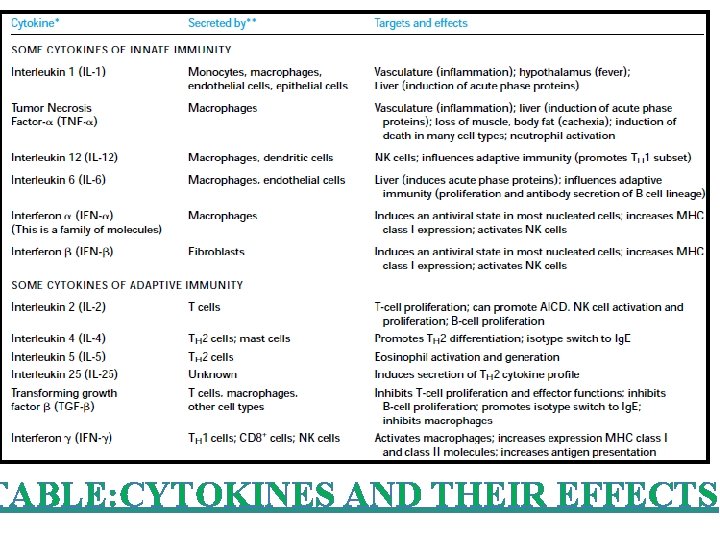
TABLE: CYTOKINES AND THEIR EFFECTS
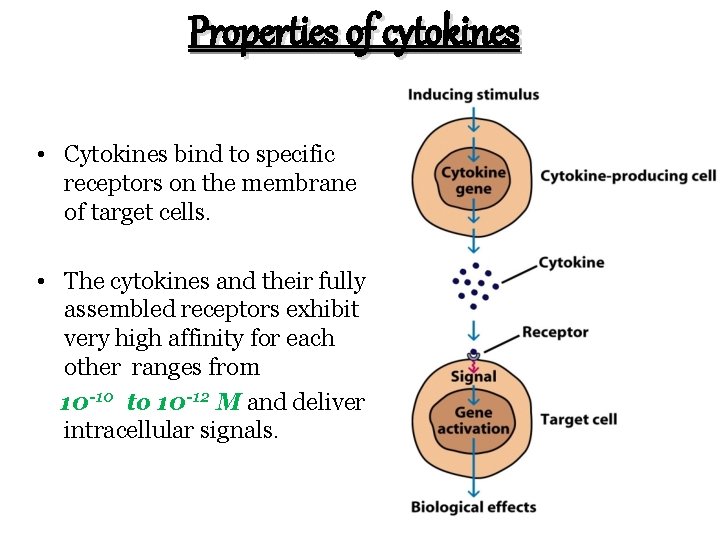
Properties of cytokines • Cytokines bind to specific receptors on the membrane of target cells. • The cytokines and their fully assembled receptors exhibit very high affinity for each other ranges from 10 -10 to 10 -12 M and deliver intracellular signals.
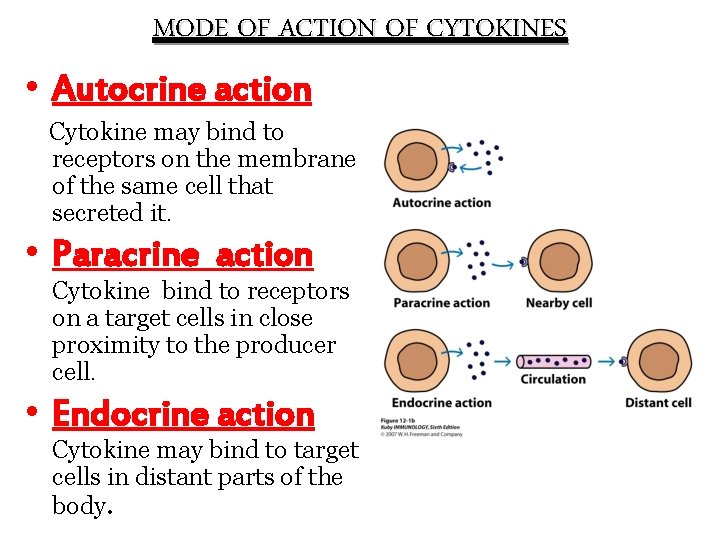
MODE OF ACTION OF CYTOKINES • Autocrine action Cytokine may bind to receptors on the membrane of the same cell that secreted it. • Paracrine action Cytokine bind to receptors on a target cells in close proximity to the producer cell. • Endocrine action Cytokine may bind to target cells in distant parts of the body.
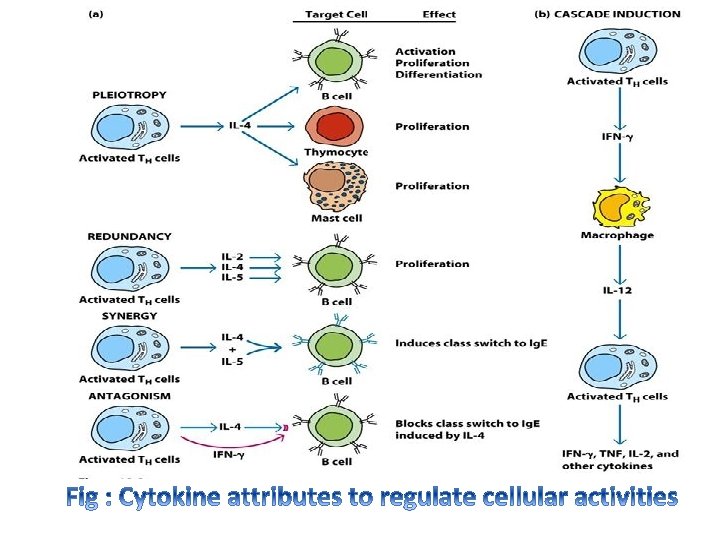
Cytokines exhibit the attributes of v Pleiotropy v Redundancy v Synergy v Antagonism v Cascade induction which permit them to regulate cellular activity in a coordinated, interactive way.
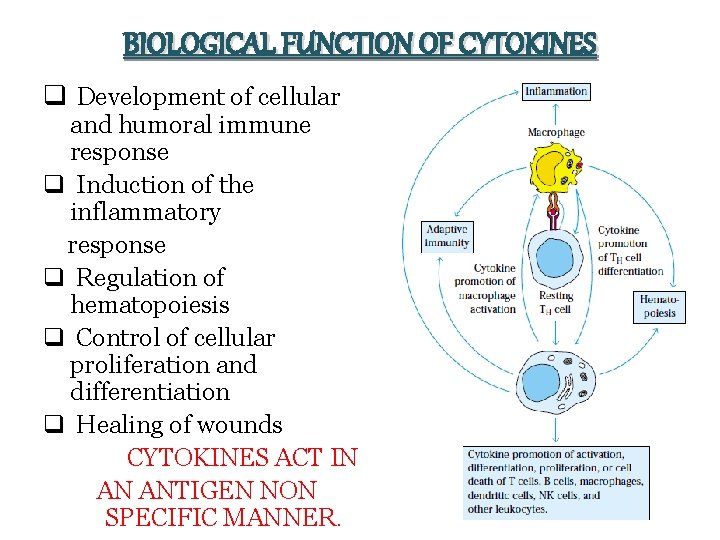
BIOLOGICAL FUNCTION OF CYTOKINES q Development of cellular and humoral immune response q Induction of the inflammatory response q Regulation of hematopoiesis q Control of cellular proliferation and differentiation q Healing of wounds CYTOKINES ACT IN AN ANTIGEN NON SPECIFIC MANNER.
Cytokine receptors are cell surface glycoproteins that bind specifically to cytokines and transduce their signals. CYTOKINE RECEPTORS fall within five families: - 1. Immunoglobulin superfamily receptors 2. Class I cytokine receptor family (hematopoietin receptor family) 3. Class II cytokine receptor family (interferon receptor family) 4. TNF receptor family 5. Chemokine receptor family
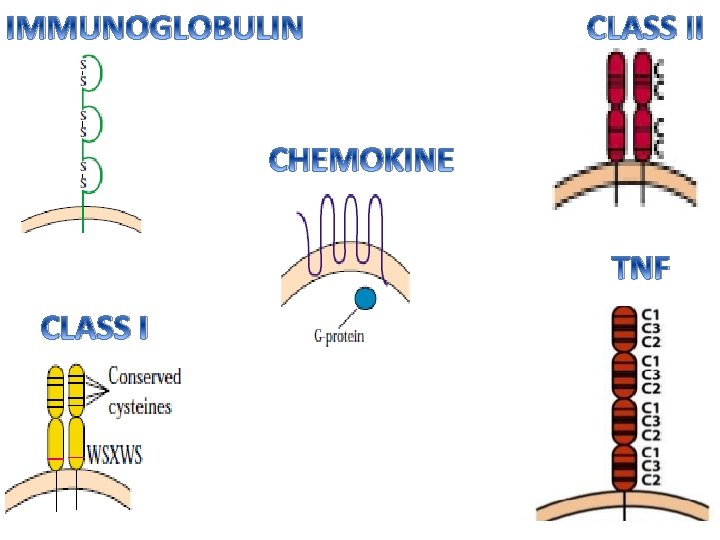
IMMUNOGLOBULIN CLASS II CHEMOKINE TNF CLASS I
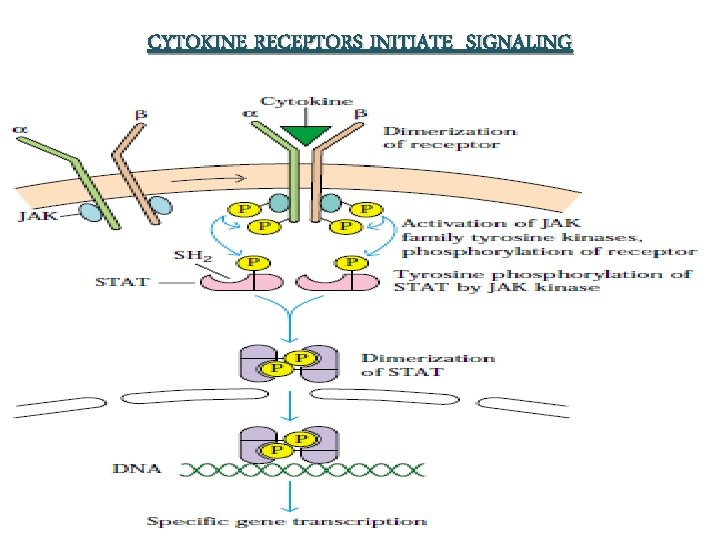
CYTOKINE RECEPTORS INITIATE SIGNALING
CYTOKINE ANTAGONISTS Proteins act in one of the two ways : - They bind directly to the cytokine receptors but fail to activate the cell. - They bind directly to the cytokine inhibiting its activity. Eg: - IL-1 receptor antagonist (IL-1 Ra) binds to the IL-1 receptor but has no activity. - Cytokine inhibitors are found in blood stream and extracellular fluid. - They arise from the enzymatic cleavage of the extracellular domains of cytokine receptors.
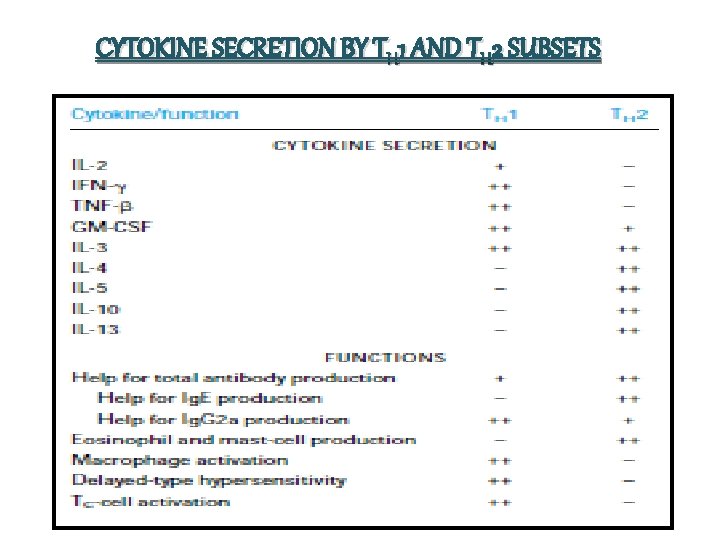
CYTOKINE SECRETION BY TH 1 AND TH 2 SUBSETS
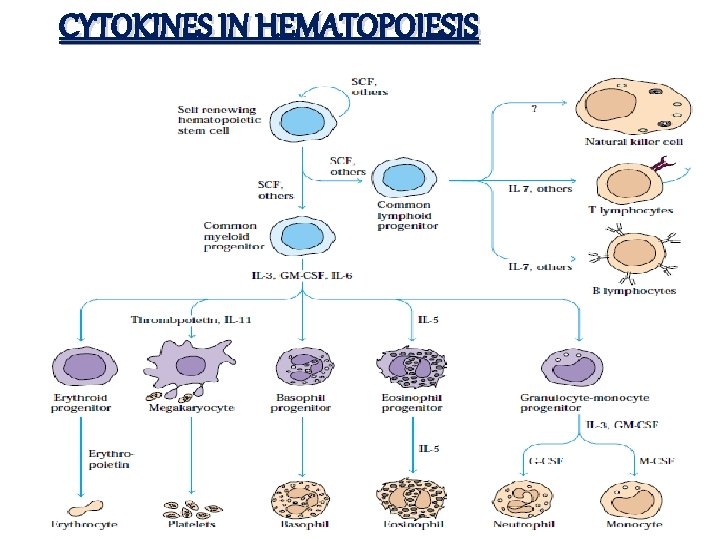
CYTOKINES IN HEMATOPOIESIS
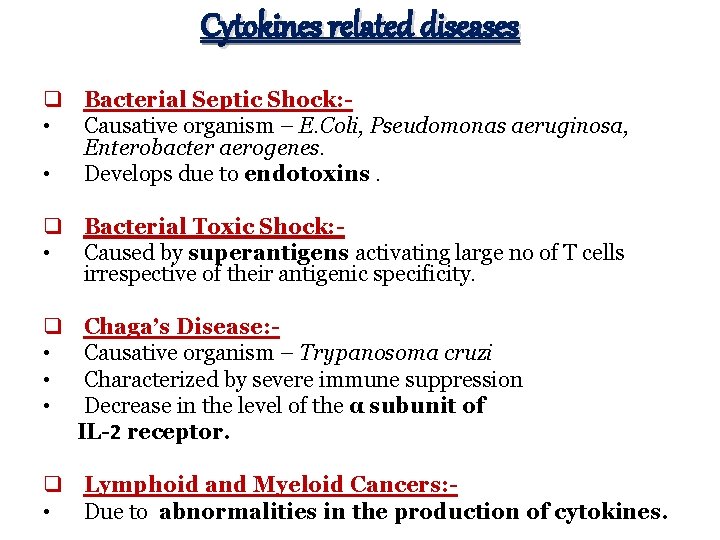
Cytokines related diseases q Bacterial Septic Shock: • Causative organism – E. Coli, Pseudomonas aeruginosa, Enterobacter aerogenes. • Develops due to endotoxins. q Bacterial Toxic Shock: • Caused by superantigens activating large no of T cells irrespective of their antigenic specificity. q • • • Chaga’s Disease: Causative organism – Trypanosoma cruzi Characterized by severe immune suppression Decrease in the level of the α subunit of IL-2 receptor. q Lymphoid and Myeloid Cancers: • Due to abnormalities in the production of cytokines.
REFERENCEs: KUBY IMMUNOLOGY SIXTH EDITION BY: - THOMAS J. KINDT RICHARD A. GOLDSBY BARBARA A. OSBORNE

- Slides: 18