
Cystitis By Dr Mona Mohammed Urinary tract infections
Cystitis By Dr/ Mona Mohammed
Urinary tract infections (UTIs) are classified by location to: 1. The lower urinary tract which includes the bladder and structures below the bladder (e. g. , Cystitis, prostatitis, urethritis). 2. The upper urinary tract which includes the kidneys and ureters (e. g. , Acute pyelonephritis, chronic pyelonephritis, renal abscess, interstitial nephritis, perirenal abscess).

Definition: Cystitis is inflammation and infection of the bladder wall. Causes: It can be caused by bacteria, viruses, fungi, or parasites. Fungal infections can occur during long-term antibiotic therapy. About 90% of UTIs are caused by Escherichia coli.
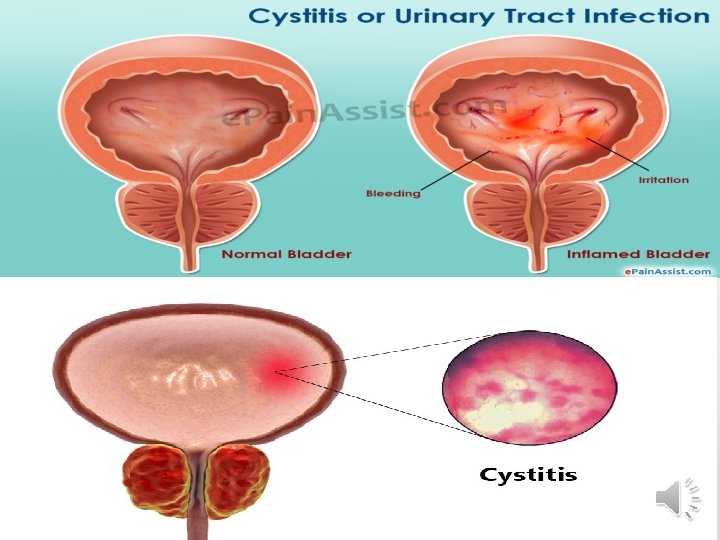
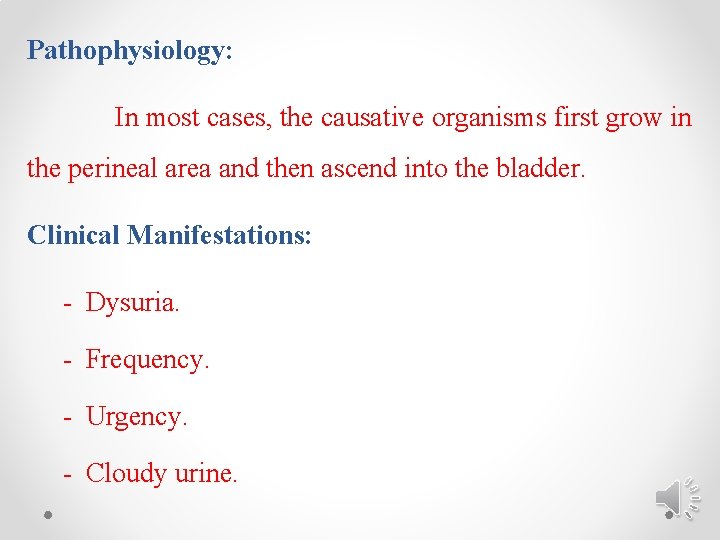
Pathophysiology: In most cases, the causative organisms first grow in the perineal area and then ascend into the bladder. Clinical Manifestations: - Dysuria. - Frequency. - Urgency. - Cloudy urine.
Assessment and Diagnostic Findings: - A routine urinalysis (Changes seen in the urinalysis include cloudy urine and the presence of WBCs, bacteria, and sometimes red blood cells (RBCs) in the specimen. - Nitrites are usually positive. - Leukocyte esterase, (which is positive if infection is present in the urine). - A urine culture and sensitivity.

Medical Management: The treatment of uncomplicated cystitis is most often a combination of sulfa medication, such as sulfamethoxazole and trimethoprim (Bactrim, Septra). Complicated cystitis is often treated with ciprofloxacin (Cipro). Other antibiotics may be prescribed depending on the results of the urine culture and sensitivity. Estrogen used as an intravaginal cream may prevent recurrent UTIs in postmenopausal women.
Patient Education: The patient is told to finish all prescribed medications, force fluids unless contraindicated, and return for a follow-up urinalysis or culture after the antibiotic course is complete to ensure that the infection is gone.

- Slides: 9