
Cystic Neoplasms of the Pancreas DONALD W WEAVER



- Slides: 28
Cystic Neoplasms of the Pancreas DONALD W. WEAVER, M. D. PENBERTHY PROFESSOR OF SURGERY AND CHAIRMAN WAYNE STATE UNIVERSITY DEPARTMENT OF SURGERY DETROIT, MICHIGAN
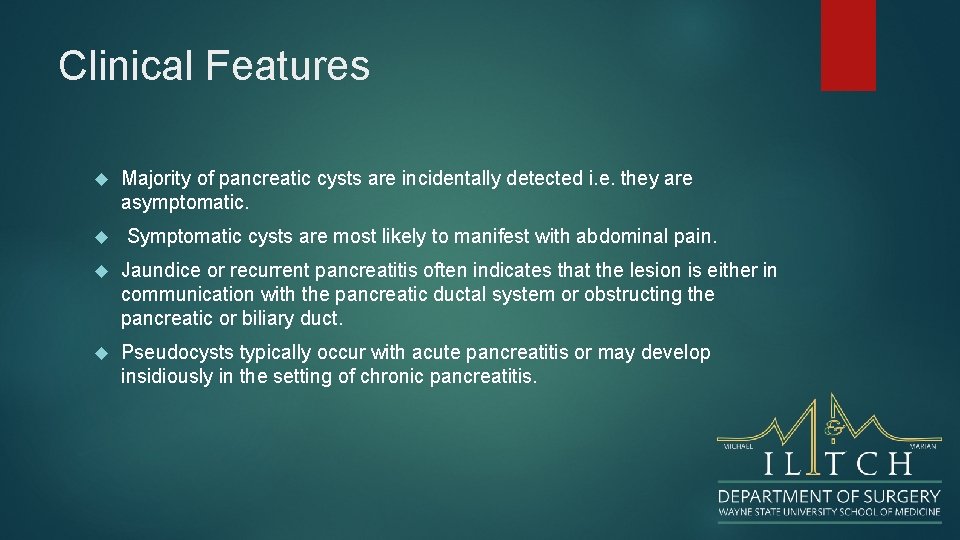
Clinical Features Majority of pancreatic cysts are incidentally detected i. e. they are asymptomatic. Symptomatic cysts are most likely to manifest with abdominal pain. Jaundice or recurrent pancreatitis often indicates that the lesion is either in communication with the pancreatic ductal system or obstructing the pancreatic or biliary duct. Pseudocysts typically occur with acute pancreatitis or may develop insidiously in the setting of chronic pancreatitis.
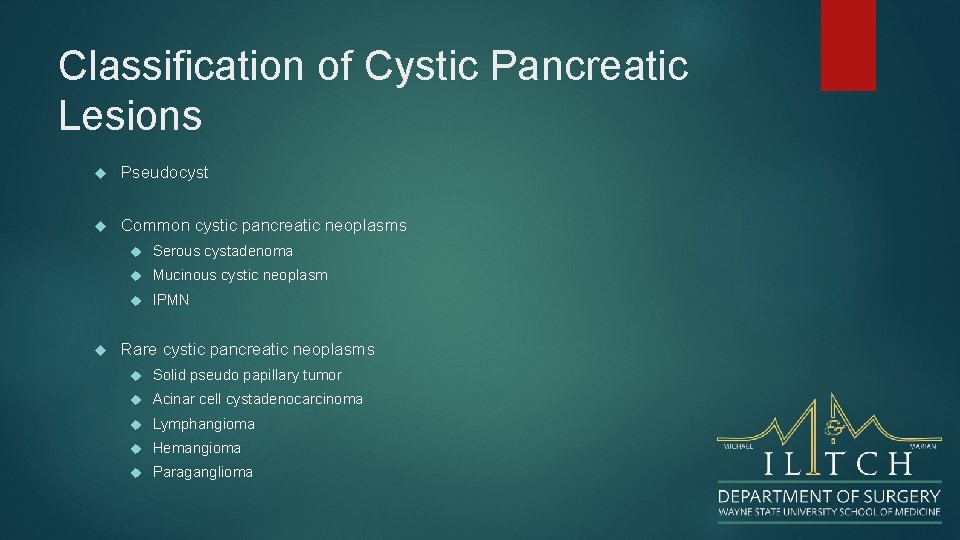
Classification of Cystic Pancreatic Lesions Pseudocyst Common cystic pancreatic neoplasms Serous cystadenoma Mucinous cystic neoplasm IPMN Rare cystic pancreatic neoplasms Solid pseudo papillary tumor Acinar cell cystadenocarcinoma Lymphangioma Hemangioma Paraganglioma
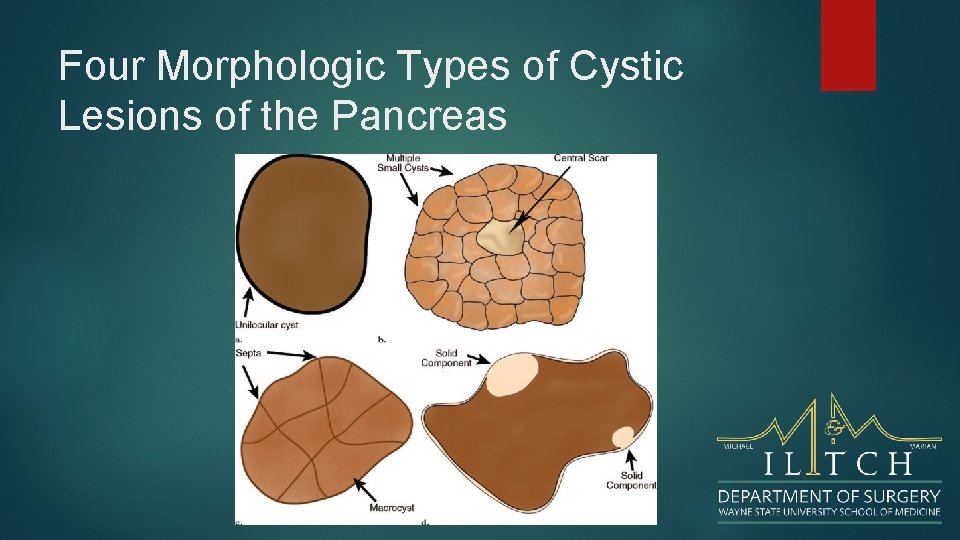
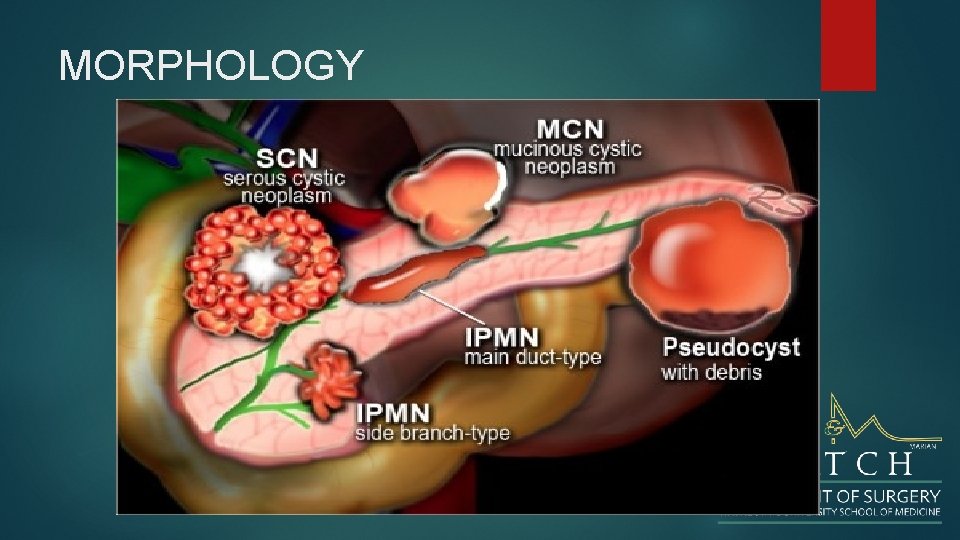
Four Morphologic Types of Cystic Lesions of the Pancreas
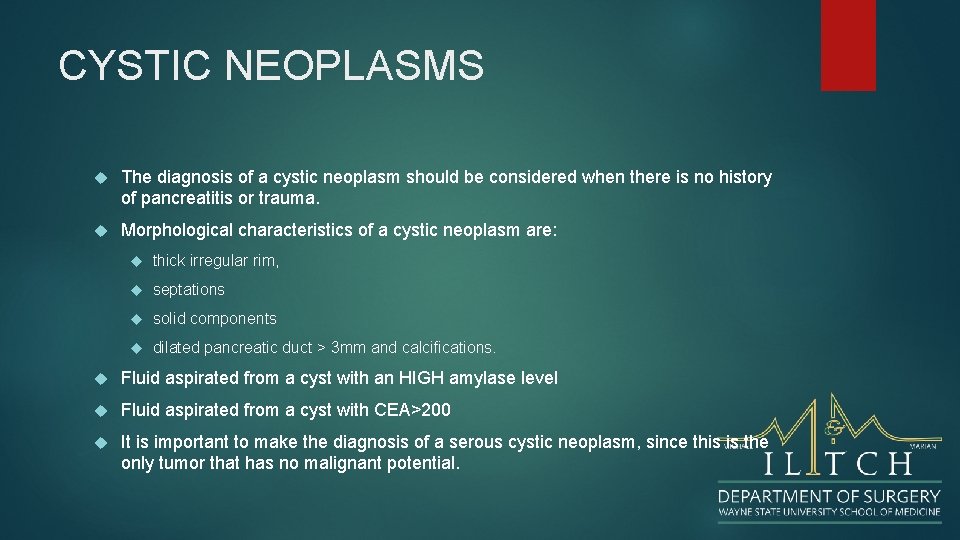
CYSTIC NEOPLASMS The diagnosis of a cystic neoplasm should be considered when there is no history of pancreatitis or trauma. Morphological characteristics of a cystic neoplasm are: thick irregular rim, septations solid components dilated pancreatic duct > 3 mm and calcifications. Fluid aspirated from a cyst with an HIGH amylase level Fluid aspirated from a cyst with CEA>200 It is important to make the diagnosis of a serous cystic neoplasm, since this is the only tumor that has no malignant potential.
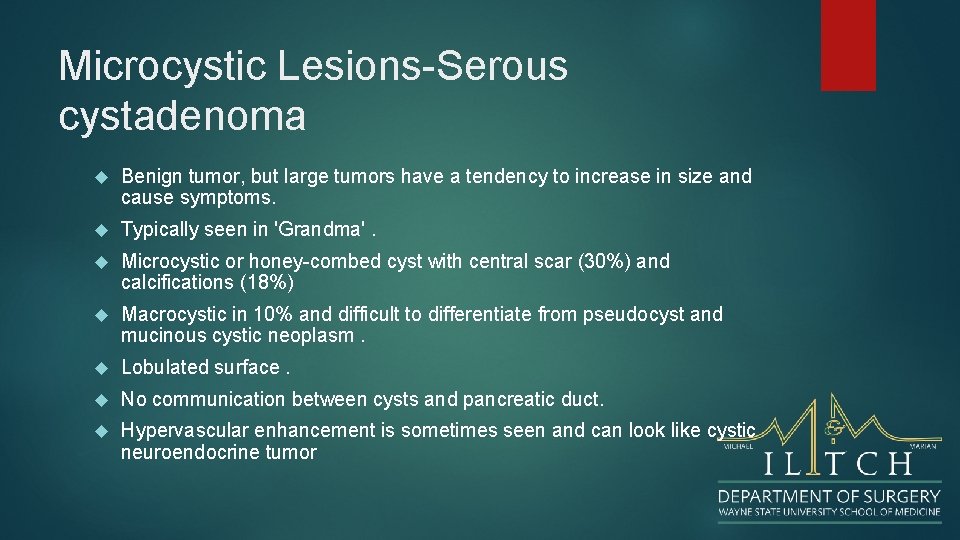
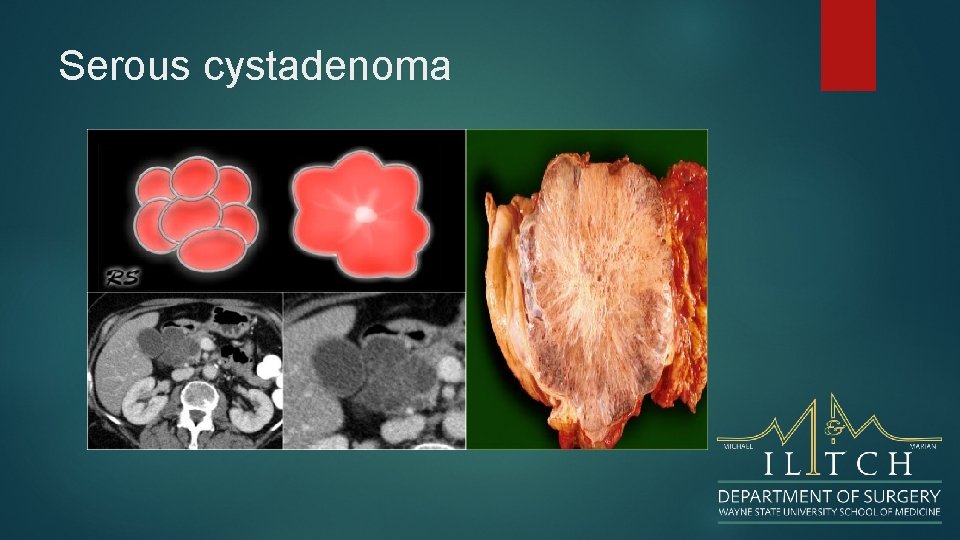
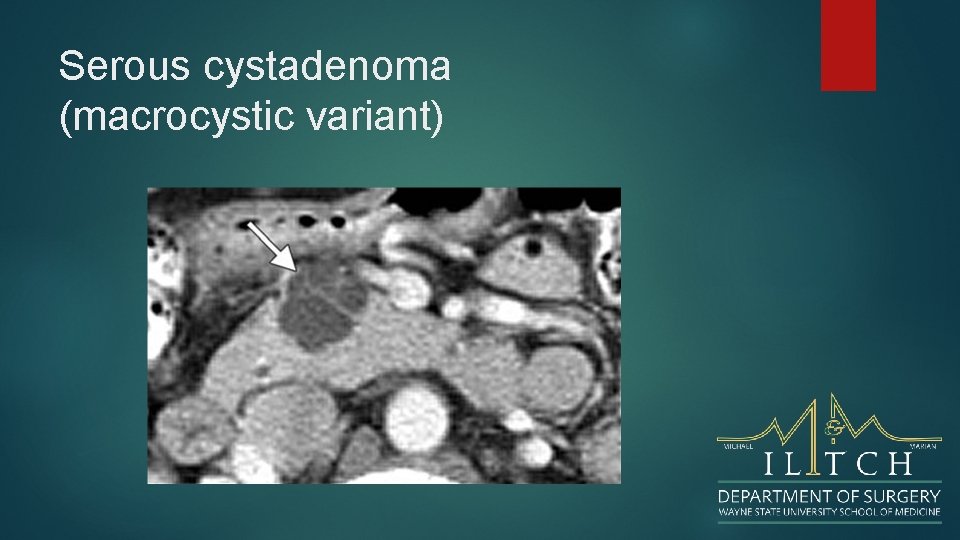
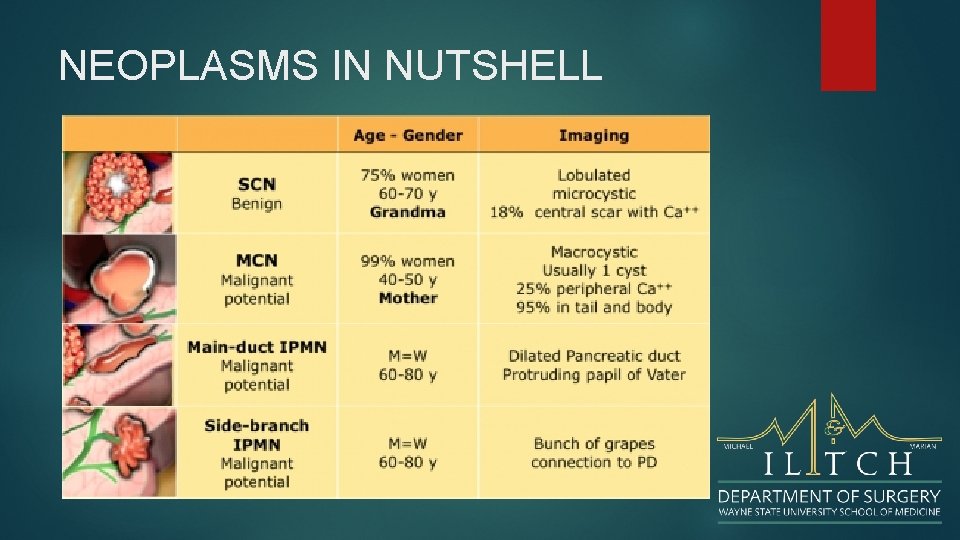
Microcystic Lesions-Serous cystadenoma Benign tumor, but large tumors have a tendency to increase in size and cause symptoms. Typically seen in 'Grandma'. Microcystic or honey-combed cyst with central scar (30%) and calcifications (18%) Macrocystic in 10% and difficult to differentiate from pseudocyst and mucinous cystic neoplasm. Lobulated surface. No communication between cysts and pancreatic duct. Hypervascular enhancement is sometimes seen and can look like cystic neuroendocrine tumor
Serous cystadenoma
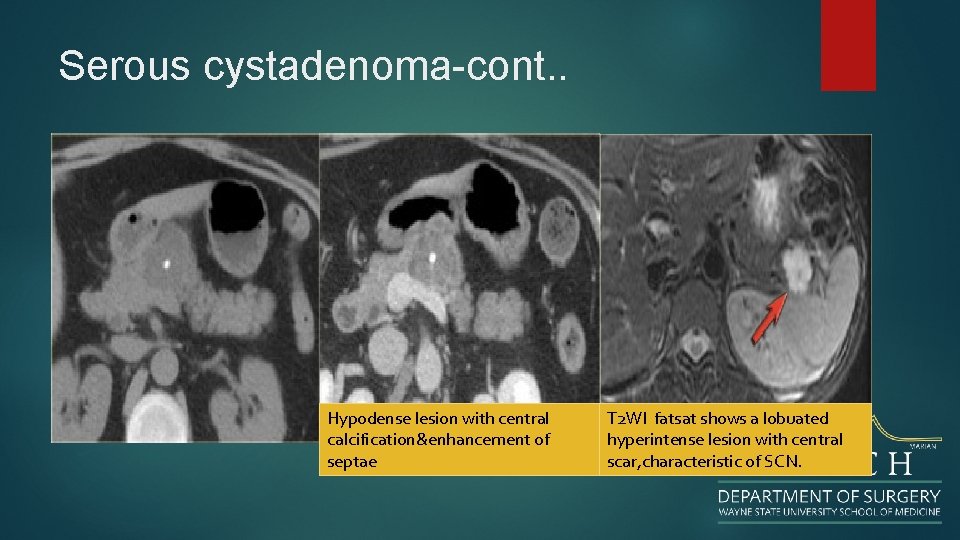
Serous cystadenoma-cont. . Hypodense lesion with central calcification&enhancement of septae T 2 WI fatsat shows a lobuated hyperintense lesion with central scar, characteristic of SCN.
Serous cystadenoma (macrocystic variant)
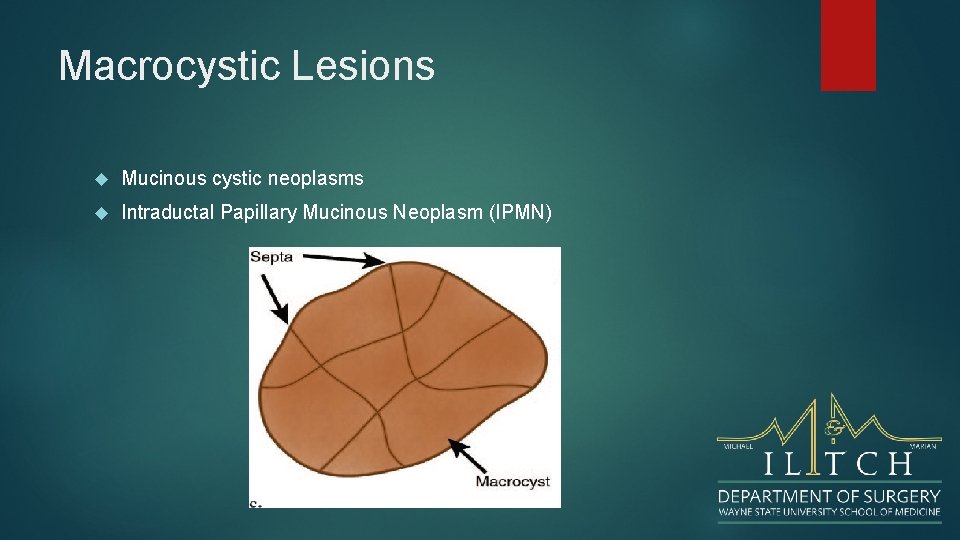
Macrocystic Lesions Mucinous cystic neoplasms Intraductal Papillary Mucinous Neoplasm (IPMN)
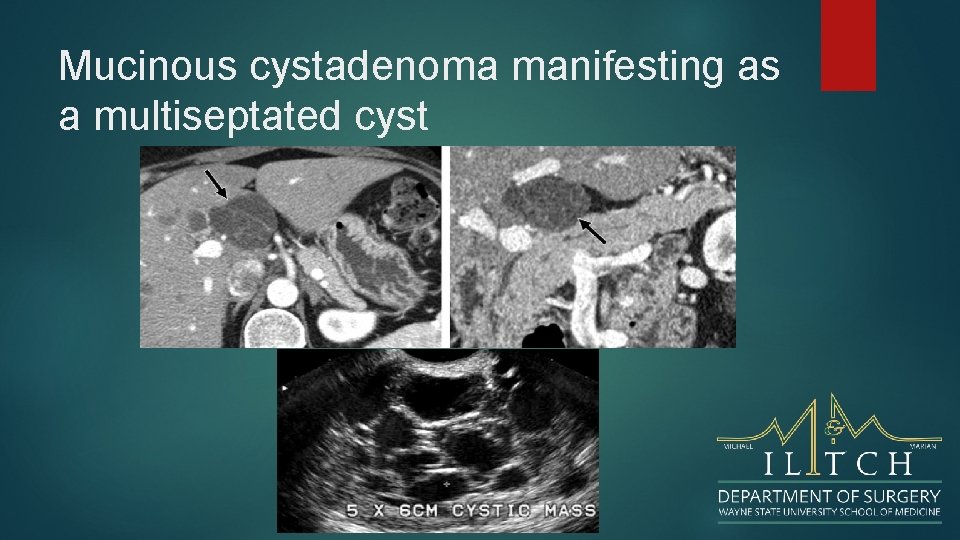
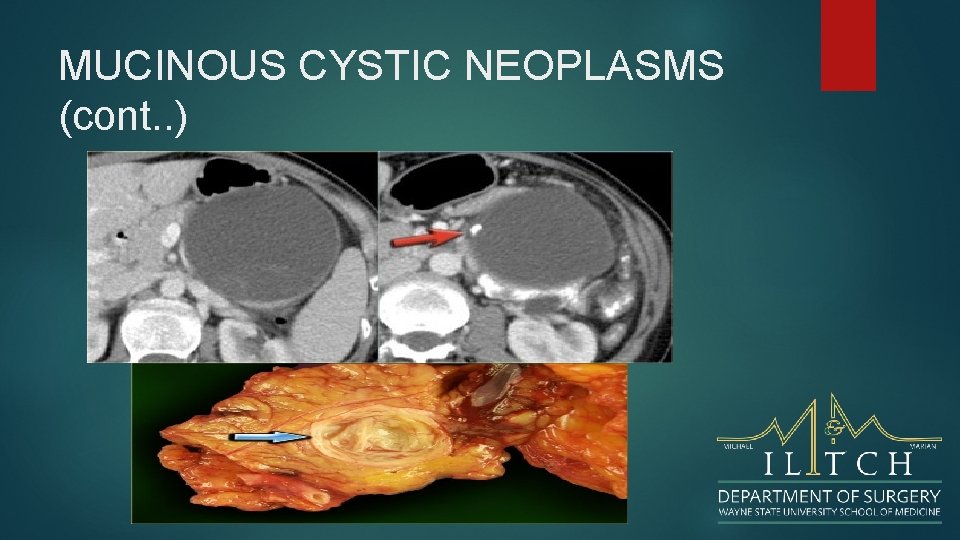
MUCINOUS CYSTIC NEOPLASMS Premalignant tumor - may transform into a mucinous cystadenocarcinoma Exclusively seen in women - Typically in 'Mother' - median age: 40 -50 years Macrocystic with thick wall septations and peripheral calcifications Peripheral calcifications seen in 25%. This finding allows you to make a specific diagnosis Location in the tail and body of the pancreas (95%). Most are symptomatic, presenting with nondescript abdominal pain
Mucinous cystadenoma manifesting as a multiseptated cyst
MUCINOUS CYSTIC NEOPLASMS (cont. . )
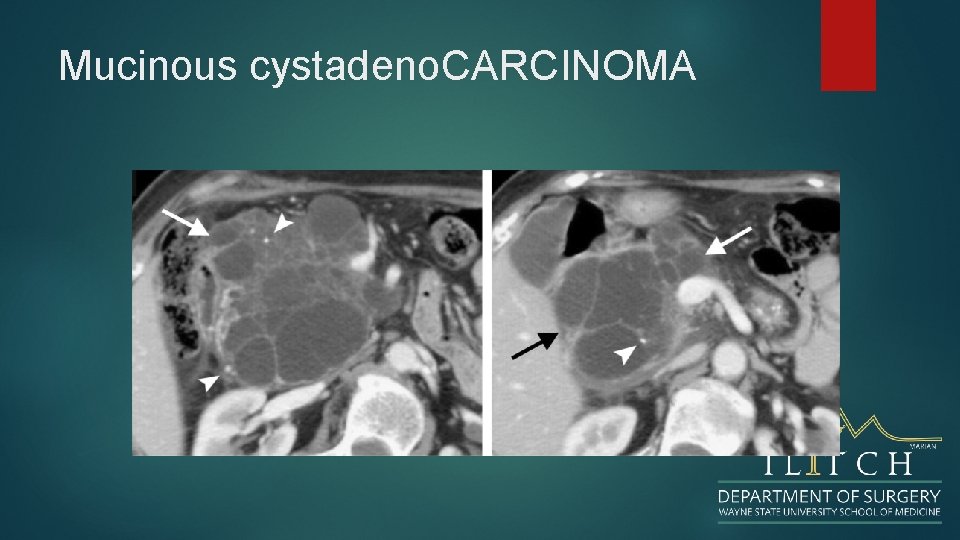
Mucinous cystadeno. CARCINOMA
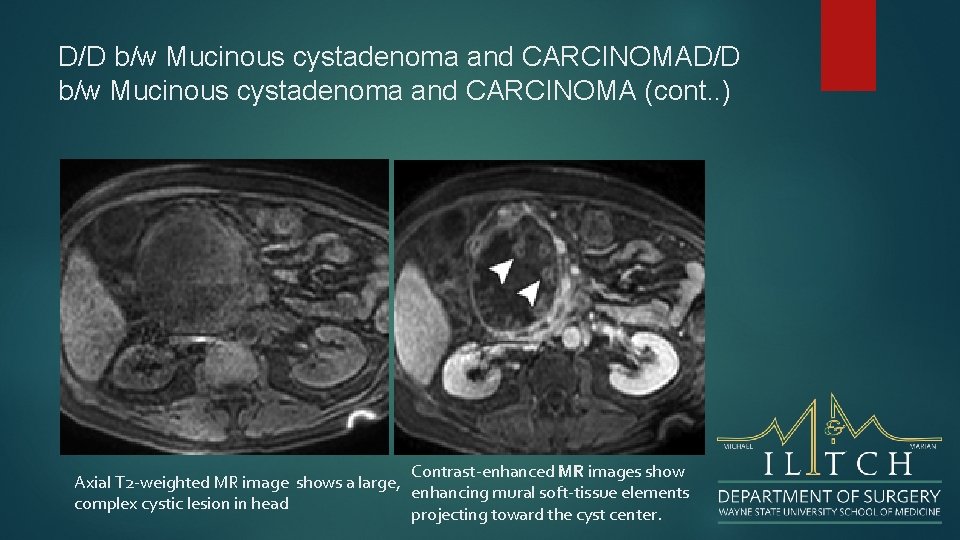
D/D b/w Mucinous cystadenoma and CARCINOMA Mucinous cystadenocarcinoma manifest at MR imaging as large complex cystic pancreatic lesions. They may be distinguished from Mucinous cystadenoma by the presence of intracystic enhancing soft tissue. Hence, any enhancing soft tissue within a cystic neoplasm depicted on MR images is considered an indication for resection
D/D b/w Mucinous cystadenoma and CARCINOMA (cont. . ) Contrast-enhanced MR images show Axial T 2 -weighted MR image shows a large, enhancing mural soft-tissue elements complex cystic lesion in head projecting toward the cyst center.
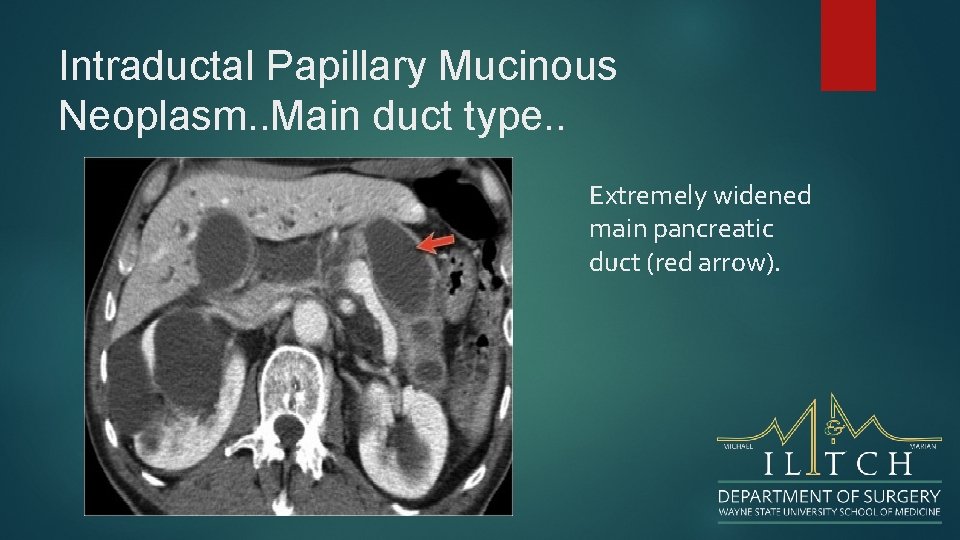
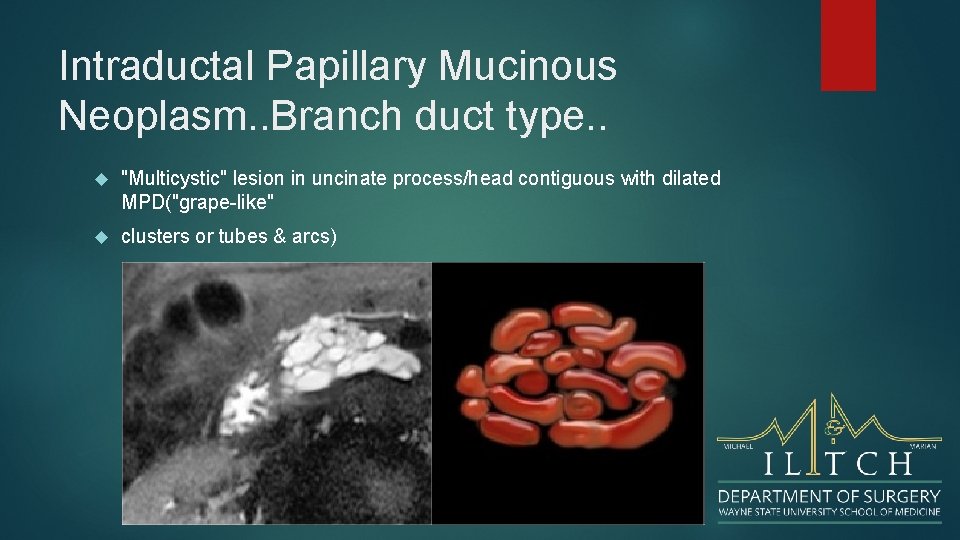
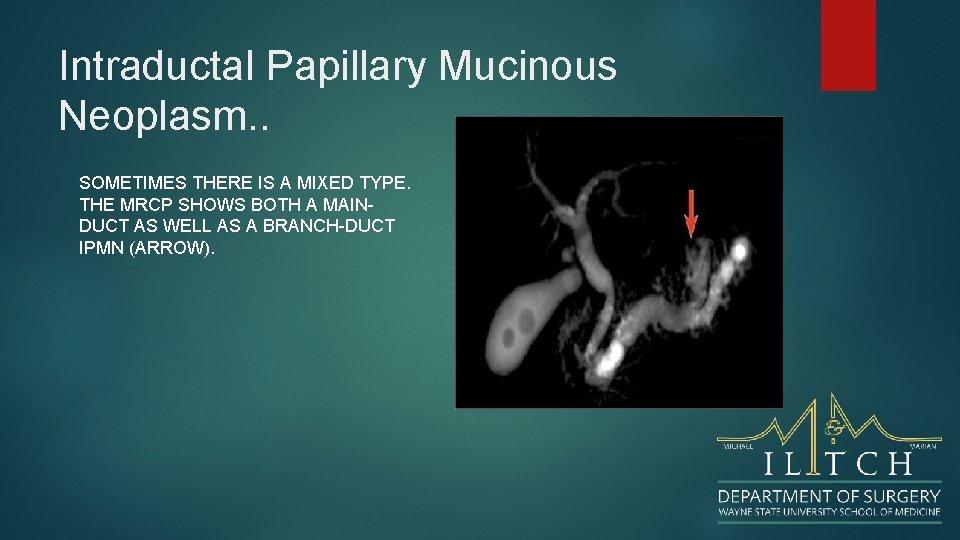
Intraductal Papillary Mucinous Neoplasm Mucin producing tumor in main pancreatic duct or branch-duct. Location: pancreatic head >> tail and corpus. Must have communication with pancreatic duct. Best seen with MRCP. Can be multifocal. Main-duct IPMN has imaging features distinct from branch-type. Branch-duct type can look like other cystic neoplasms
Intraductal Papillary Mucinous Neoplasm. . Main duct type. . Extremely widened main pancreatic duct (red arrow).
Intraductal Papillary Mucinous Neoplasm. . Branch duct type. . "Multicystic" lesion in uncinate process/head contiguous with dilated MPD("grape-like" clusters or tubes & arcs)
Intraductal Papillary Mucinous Neoplasm. . SOMETIMES THERE IS A MIXED TYPE. THE MRCP SHOWS BOTH A MAINDUCT AS WELL AS A BRANCH-DUCT IPMN (ARROW).
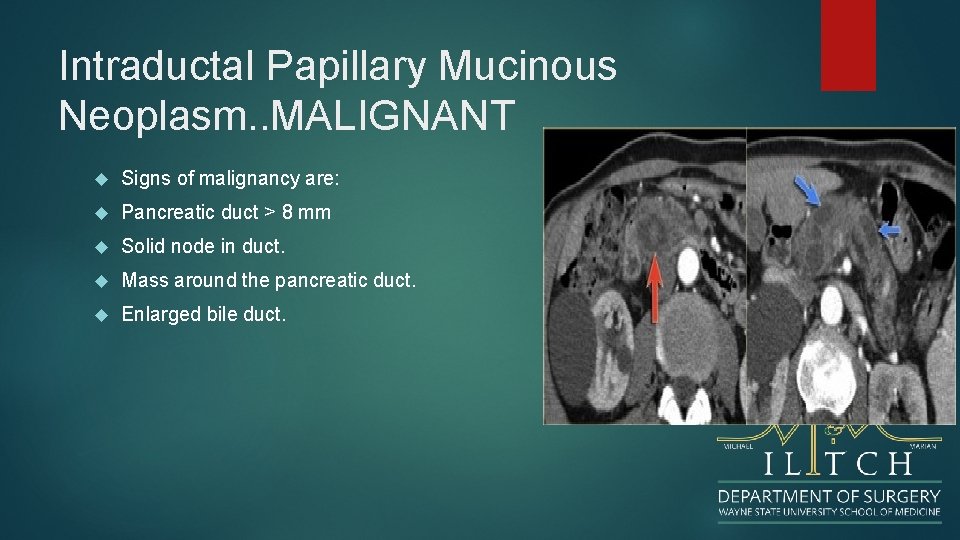
Intraductal Papillary Mucinous Neoplasm. . MALIGNANT Signs of malignancy are: Pancreatic duct > 8 mm Solid node in duct. Mass around the pancreatic duct. Enlarged bile duct.
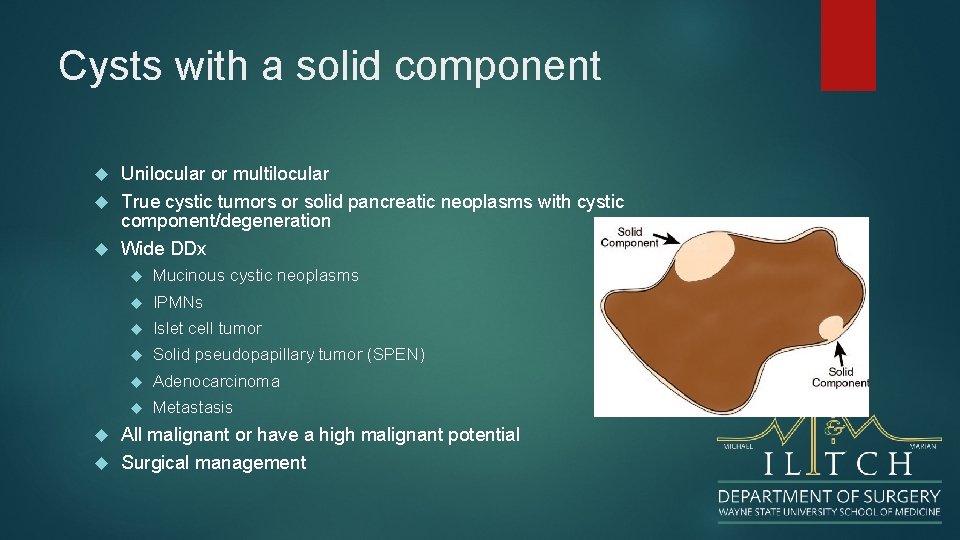
Cysts with a solid component Unilocular or multilocular True cystic tumors or solid pancreatic neoplasms with cystic component/degeneration Wide DDx Mucinous cystic neoplasms IPMNs Islet cell tumor Solid pseudopapillary tumor (SPEN) Adenocarcinoma Metastasis All malignant or have a high malignant potential Surgical management
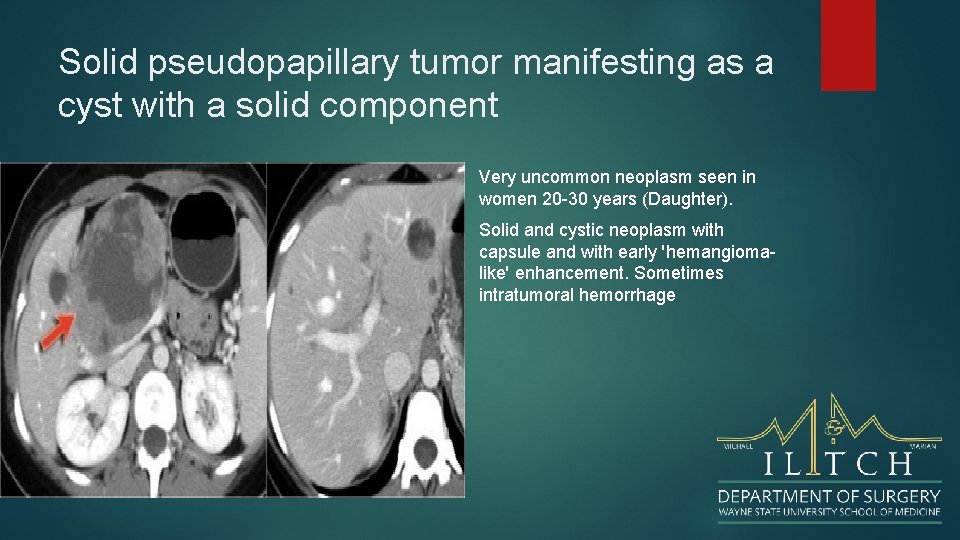
Solid pseudopapillary tumor manifesting as a cyst with a solid component Very uncommon neoplasm seen in women 20 -30 years (Daughter). Solid and cystic neoplasm with capsule and with early 'hemangiomalike' enhancement. Sometimes intratumoral hemorrhage
NEOPLASMS IN NUTSHELL
MORPHOLOGY
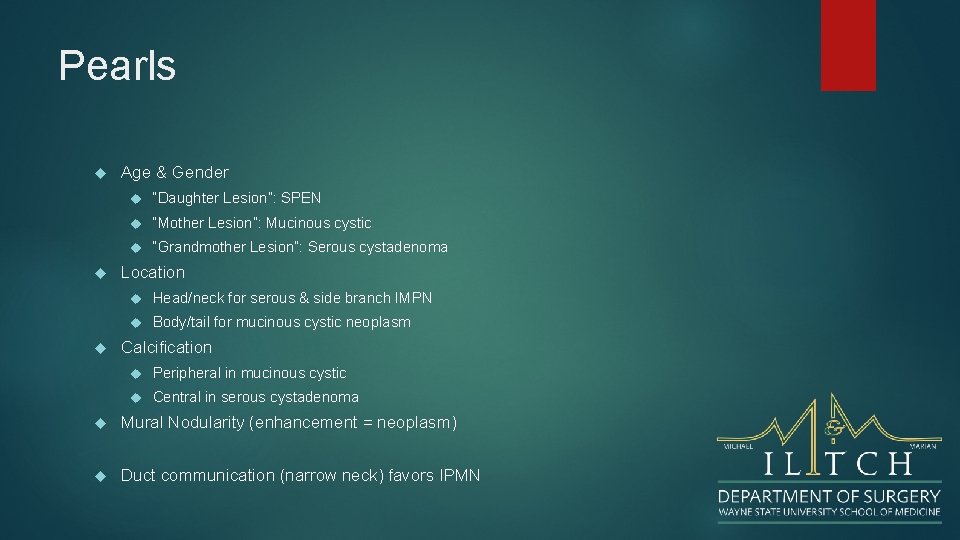
Pearls Age & Gender “Daughter Lesion”: SPEN “Mother Lesion”: Mucinous cystic “Grandmother Lesion”: Serous cystadenoma Location Head/neck for serous & side branch IMPN Body/tail for mucinous cystic neoplasm Calcification Peripheral in mucinous cystic Central in serous cystadenoma Mural Nodularity (enhancement = neoplasm) Duct communication (narrow neck) favors IPMN
TAKE HOME …
Conclusion Cystic Neoplasms of the pancreas are uncommon but with the advent of advanced diagnostic imaging we are fiinding an increasing number Differentiation between neoplasm and pseudocyst cannot be overemphasized Surgical excision is the mainstay of therapy Excellent long-term survival can be expected