
CYSTIC FIBROSIS Genetic Disorder Diagnosing Cystic Fibrosis The
CYSTIC FIBROSIS Genetic Disorder
Diagnosing Cystic Fibrosis • The patient is first checked using the sweat test. • While the patient is sweating, a patch will be rubbed into the skin wherein an electrode may be used for a mild electrical current. • After the sample is taken, this is then analyzed but for the diagnosis to be confirmed, this is almost always done twice.
Diagnosing Cystic Fibrosis � Prenatal testing to test for cystic fibrosis carrier is done invitro. � Amniocentesis and chorionic villi sampling will be taken. � A needle for amniocentesis will be inserted into the abnomnal wall going through the uterus. � A small amount of fluid from the amniotic sac will be taken. � The parents will then be examined if their genes have defective CFTR.
Diagnosis Based on the information provided from the signs and symptoms the diagnosis is Cystic Fibrosis.

Treatment Plan Treatment of a patient with Cystic Fibrosis.
Treatment Plan • Cystic fibrosis has no treatment. • Health care professionals should work to control: Lung infections • Prevent the blockage of mucus in the intestines • Help attain the optimum nutrition a child needs • Loosen and effectively remove sticky mucus in the lungs or airways. •

Treatment Plan � The patient should be given antibiotics to avoid and treating infections like respiratory problems. � Anti-inflammatory drugs, mucus-thinning medications and even broncodilators to help with lung function.

Treatment Plan • Cystic Fibrosis Diet: The diet is a high-calorie, high fat diet for the patient has a normal growth and development. • Extra nutrients should be given in compensation for the malabsorption of nutrients in the body. • The patient should drink lots of water to prevent dehydration • • Food supplements like those high in vitamins and minerals should be given because the minerals are not absorbed properly. Vitamins A, D, E, K which are known as the fat-soluble vitamins. Minerals calcium, iron, sodium and others should also be taken by the patient. • A pancreatic enzyme supplement should also be given with meals and snacks to help the digestion of food. • •
• • • What is Cystic Fibrosis? . Usually cystic fibrosis affects the digestive tract. The sticky mucus obstructs the digestive system causing the insulin, which is secreted in the pancreas cannot reach to the intestine in order for digestion to happen. With that, patients will be malnourished and other digestive problems. In newborn, babies will have me conium ileus wherein the intestine will be blocked right after birth. At present, the other terms for cystic fibrosis is CF, cystic fibrosis of the pancreas, fibrocystic disease of the pancreas, mucoviscidosis, and many others. Cystic fibrosis genes and carrier life expectancy Since cystic fibrosis is inherited, the CFTR gene is what causes the cystic fibrosis genes. This can be passed through the autosomal recessive pattern wherein both were copied from the parents in cell mutation. As a result, the patients then have clogged airways glands, because of the thick mucus secretions. Cystic fibrosis is a life-shortening problem but experts say that there is no exact timeline wherein the person will only live. But if the problem is not addressed and the symptoms are noted, then the patient will now live long because of the poor nutrition. According to statistics, there about 4000 children in the United States that are born with this problem. and 30, 000 them acquired the condition. This affects either male or female and Latinos or Native Americans are more prone to having this problem.
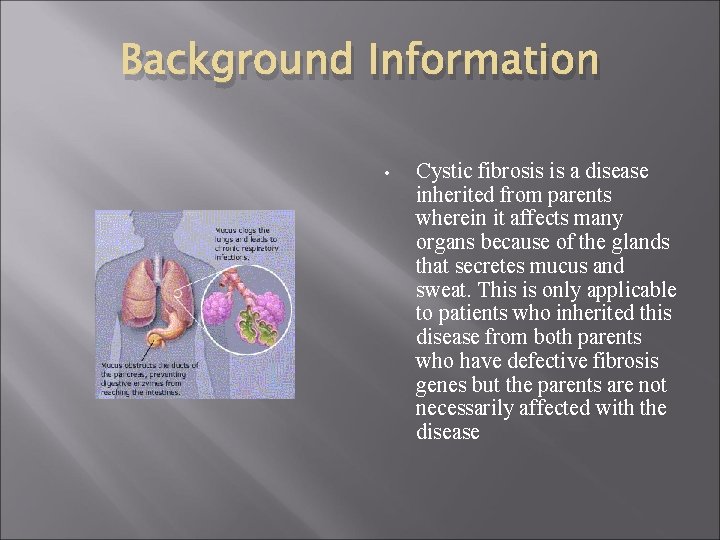
Background Information • Cystic fibrosis is a disease inherited from parents wherein it affects many organs because of the glands that secretes mucus and sweat. This is only applicable to patients who inherited this disease from both parents who have defective fibrosis genes but the parents are not necessarily affected with the disease
Background Information � Mucus is an essential part of the linings in all tissues. � It keeps the organ moist, slippery and has a watery substance. � In the digestive system, it helps in the peristalsis. � Once there is not enough mucus secretion, it will then dry it can cause infection and greater consequences to the problem. � In patients with cystic fibrosis, the mucus secretions are thick and affect organs like pancreas, liver, intestine, the sex organs and sinuses.
Internist • The sticky mucus obstructs the digestive system causing the insulin, which is secreted in the pancreas cannot reach to the intestine in order for digestion to happen. • Patients will be malnourished and other digestive problems. In newborn, babies will have me conium ileus wherein the intestine will be blocked right after birth.
Genetics • Since cystic fibrosis is inherited, the CFTR gene is what causes the cystic fibrosis genes. • This can be passed through the autosomal recessive pattern wherein both were copied from the parents in cell mutation.
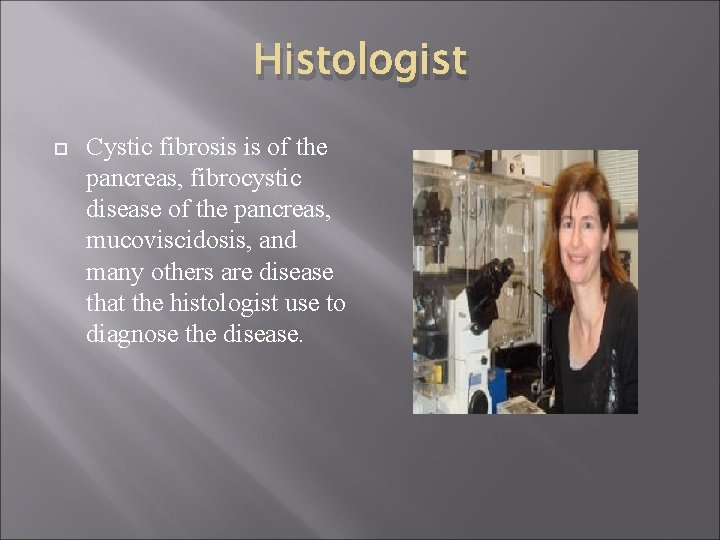
Histologist Cystic fibrosis is of the pancreas, fibrocystic disease of the pancreas, mucoviscidosis, and many others are disease that the histologist use to diagnose the disease.
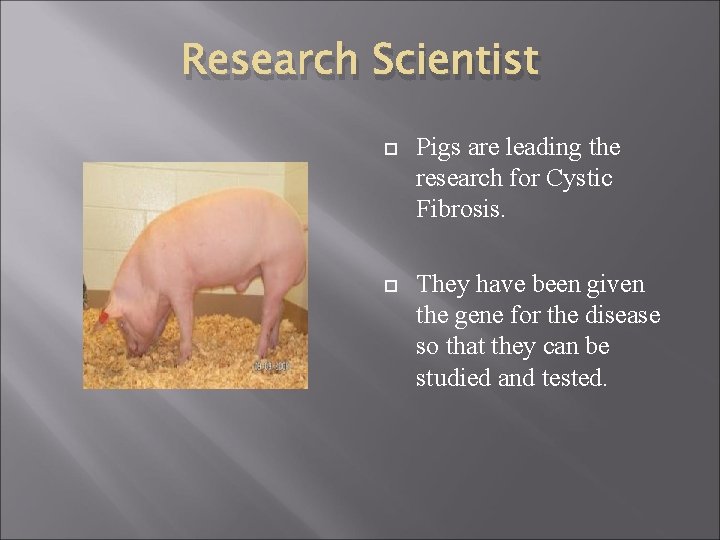
Research Scientist Pigs are leading the research for Cystic Fibrosis. They have been given the gene for the disease so that they can be studied and tested.
- Slides: 15